In this guide
- 01The Five Lakes From the Summit
- 02Where Wakasa Bay Is, and Why It Is a Drive
- 03The Mikata Five Lakes and the Rainbow Line
- 04The Beaches: Wakasa Wada and Suishohama
- 05Obama: The Old District, Myotsuji and the Miketsukuni Story
- 06The Summer: Season, Humidity and the Numbers
- 07Getting There: Tsuruga, the Obama Line and a Car
- 08How the Concierge Team Plans the Coast Day
- 09Frequently Asked Questions
The Five Lakes From the Summit
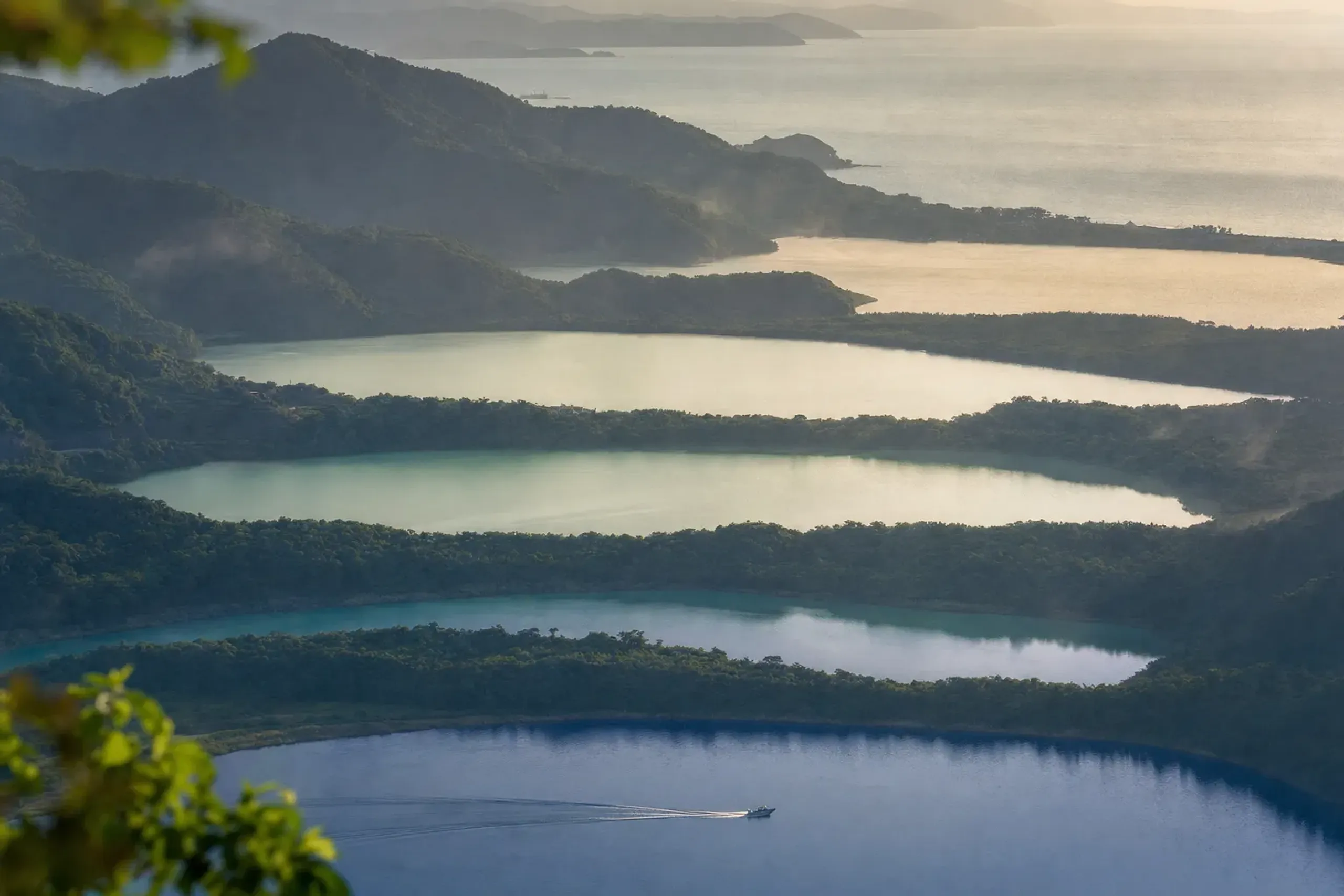
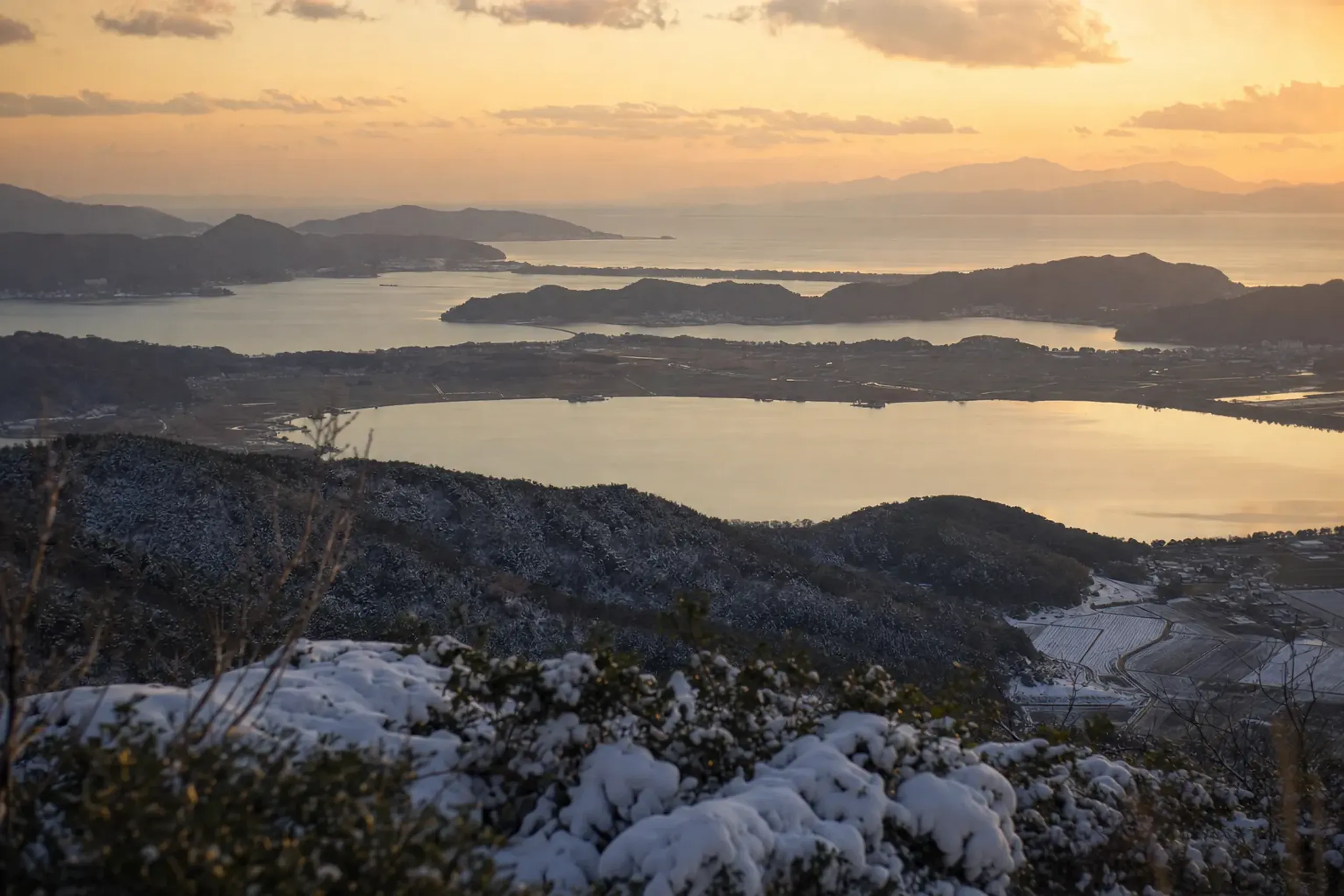
From the first parking lot, the lift takes about two minutes, and then the hillside falls away beneath you. Below, the Mikata Five Lakes lie in a loose chain between green ridges, each one holding the light a little differently, laid out like glass. Beyond them, Wakasa Bay opens toward the Sea of Japan, and on a clear summer morning the line between water and sky is hard to find.
This is the summit of Mt. Umetake. According to the Rainbow Line's brochure, the viewpoint stands at 395 metres. From here the coast makes sense: lakes on one side, the bay on the other, and somewhere to the west, past the headlands, the beaches of Takahama and the old streets of Obama.
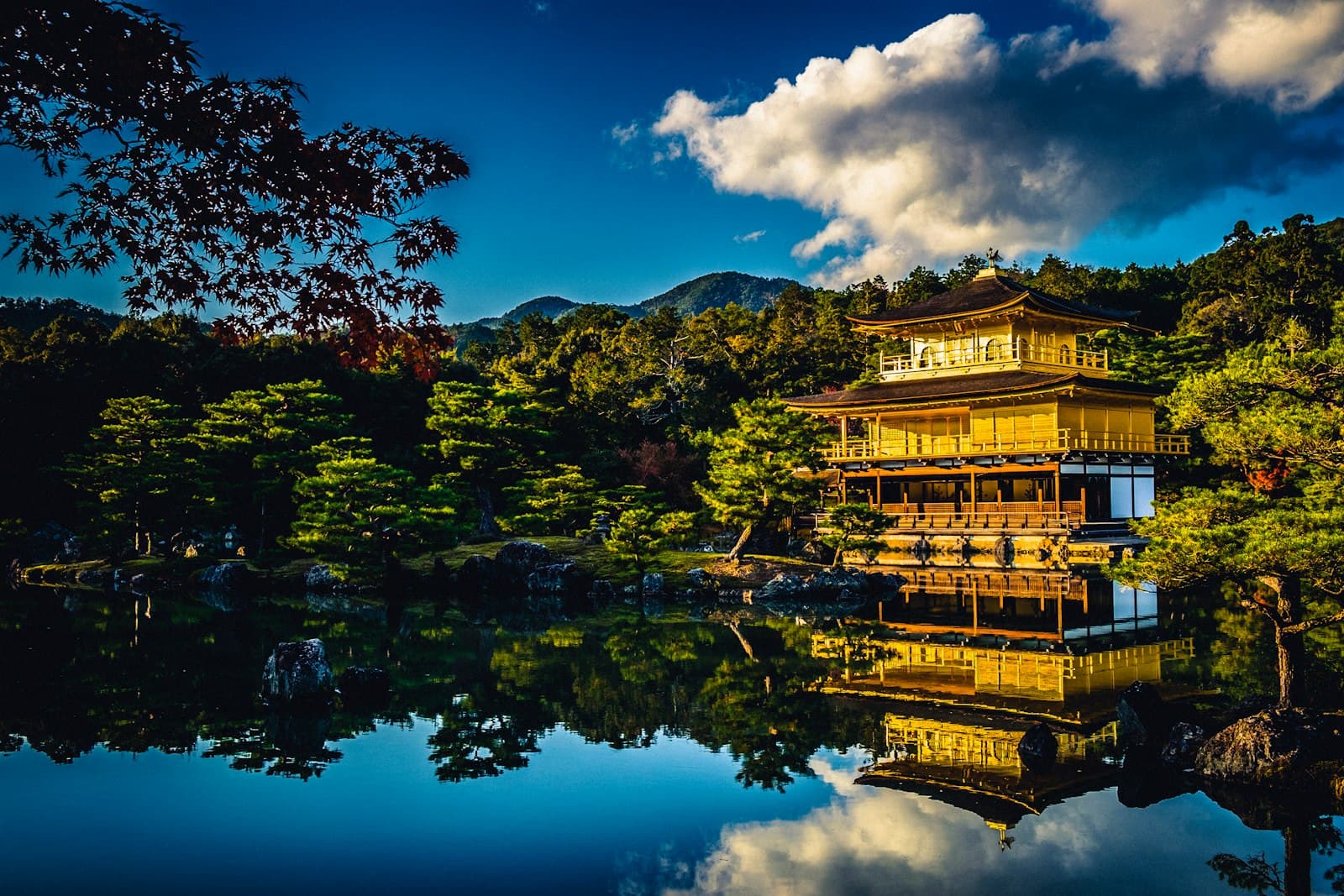
A summer day on Wakasa Bay can hold all of it: the lakes from above, white sand beside clear water, and by late afternoon the narrow lanes of a former teahouse district and a temple hall raised in the thirteenth century.
Where Wakasa Bay Is, and Why It Is a Drive
Wakasa Bay curves along the southern coast of Fukui Prefecture, facing the Sea of Japan. The Hokuriku Shinkansen reaches Tsuruga, at the eastern end of the bay, and from there the JR Obama Line runs west to Obama in about an hour.
The train brings you to the coast. It does not carry you through it. The summit park above the lakes is reached by vehicle, and walking in is not allowed.
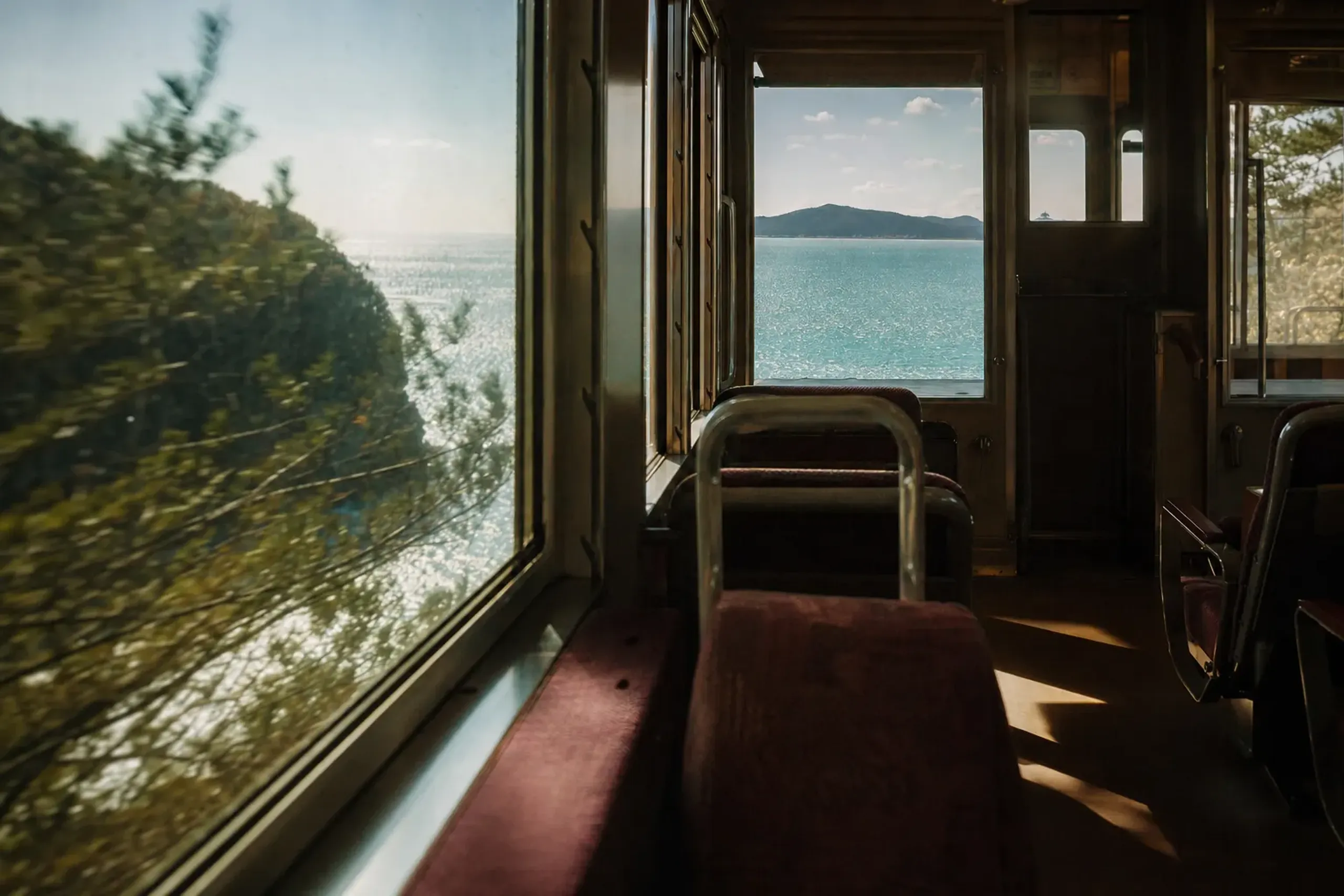
Taxis and buses to the lakes are limited, and the seasonal loop bus around them runs only on weekends and public holidays. The two beaches covered here sit far apart, one on the Mihama coast near Tsuruga and one in Takahama at the western end, with Obama between them.
So Wakasa Bay is planned as a rail journey to Tsuruga followed by a day by car.
West of Takahama, the coast continues into northern Kyoto Prefecture, toward Amanohashidate and the boathouses of Ine. Inland Fukui is a different trip: the Zen temple of Eiheiji and Maruoka Castle in spring have their own guides. The Echizen coast to the north, including Tojinbo, is a separate journey.
The Mikata Five Lakes and the Rainbow Line
Five lakes, five waters
The Mikata Five Lakes are Mikata, Suigetsu, Suga, Kugushi and Hiruga. They lie across the towns of Wakasa and Mihama, and they were registered under the Ramsar Convention in 2005.
What sets them apart is the water. According to the Ministry of the Environment, Lake Mikata holds fresh water, Lake Hiruga holds full sea water, and the other three are brackish, a mix of the two.
The name "lakes of five colours" comes from that difference, though each source explains it in its own words. The Ministry of the Environment says differences in water quality make the lakes look subtly different. The Rainbow Line's brochure points to differences in depth and salt levels.
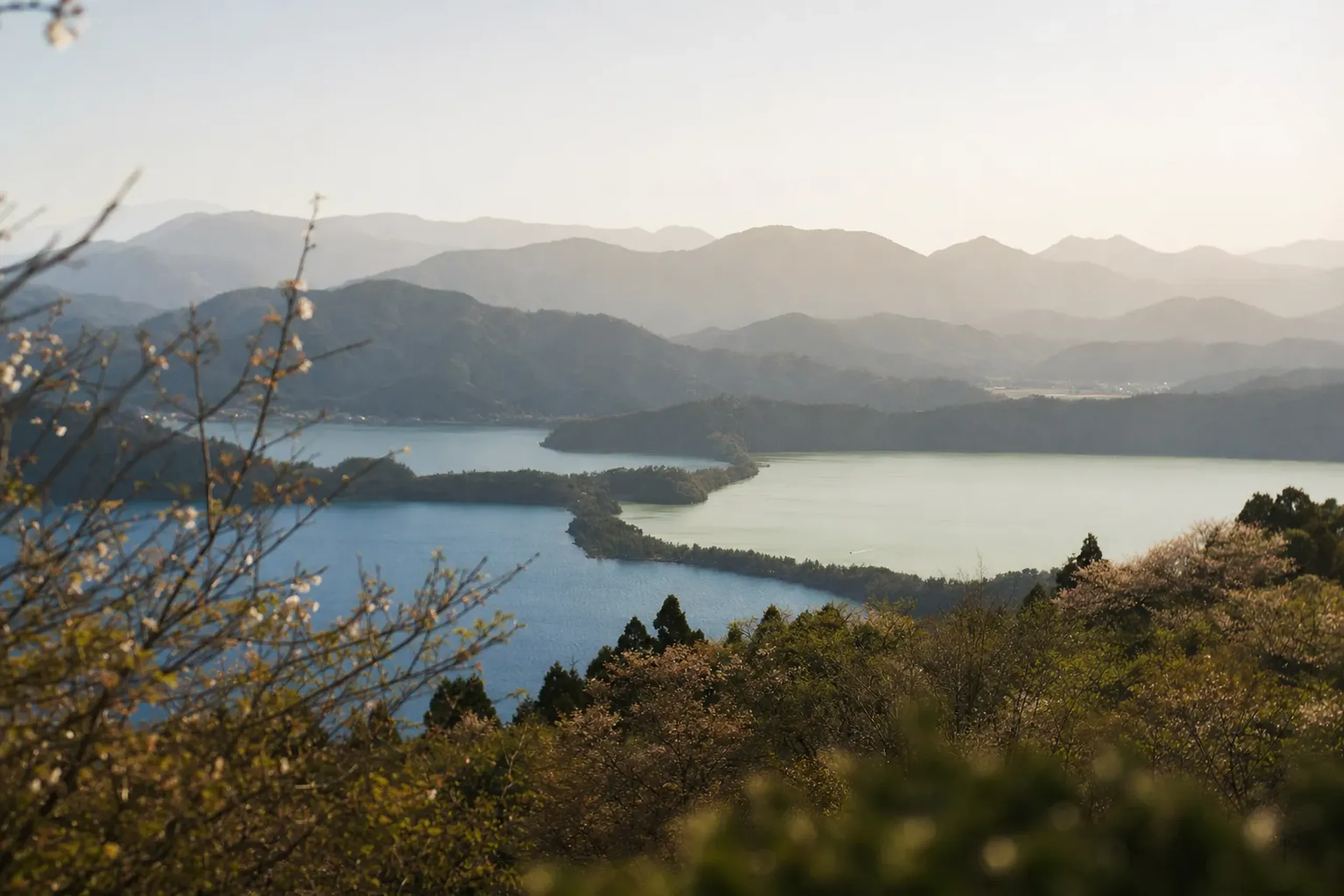
Fukui's tourism site describes each lake as "a different shade of blue". On the day you visit, the light, the cloud and the season decide how clearly the colours show.
The road to Mt. Umetake
The Rainbow Line is an 11.4-kilometre prefectural road that leads to the summit of Mt. Umetake. Fukui's tourism site explains that the "rainbow" in its name refers to seven shades of blue: the five lakes, the sea and the sky.
At the first parking lot, a chairlift or cable car carries you up in about two minutes. It runs year-round, with shorter hours in winter. The road is closed to vehicles at night, and parking at both lots is paid. The summit park is reached by vehicle, not on foot, and drones are prohibited at the summit park and its parking area.
At the top, the park opens onto viewing terraces that face the lakes and the bay. The operator's brochure notes that roses bloom here from late May to mid-June and again from late October to mid-November. In summer, the colour comes from the water.
Lift hours, road hours and any closure dates change through the year; the JRS concierge team confirms directly with the guest at time of arrangement.
On the water
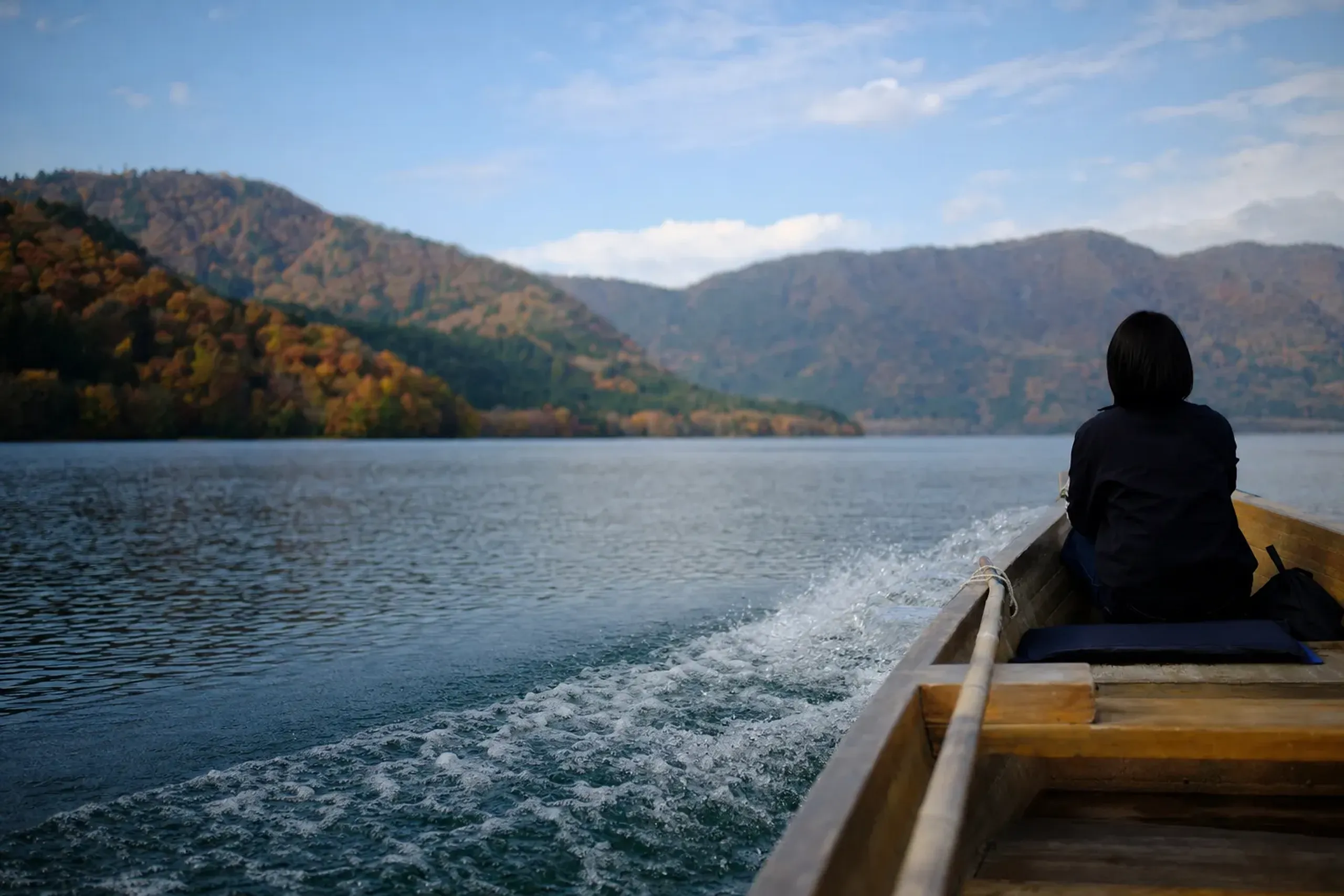
Boat tours of the lakes run below the ridge, including an electric-boat tour. JRS does not arrange these tours, but if you would like one and the operator is running that day, the concierge team can fit it into the day.
The Beaches: Wakasa Wada and Suishohama
Wakasa Wada Beach, Takahama
At the western end of the bay, Wakasa Wada Beach in Takahama was Blue Flag certified in April 2016. Takahama Town describes it as the first Blue Flag beach in Asia. The certificate is renewed every year. As Takahama Town sets them out, the Blue Flag criteria run to 33 points across four categories: water quality, environmental management, environmental education and information, and safety and services.
The swimming season runs from July to August, with dates set each year. Lifeguards are on duty during the season, flags on the beach show the day's status, and a town ordinance makes the local sea rules mandatory. Camping and barbecues on the sand are prohibited.
Local rules apply and can change; follow your guide's briefing, and the JRS concierge team confirms current conditions directly with the guest at time of arrangement.
Suishohama, Mihama
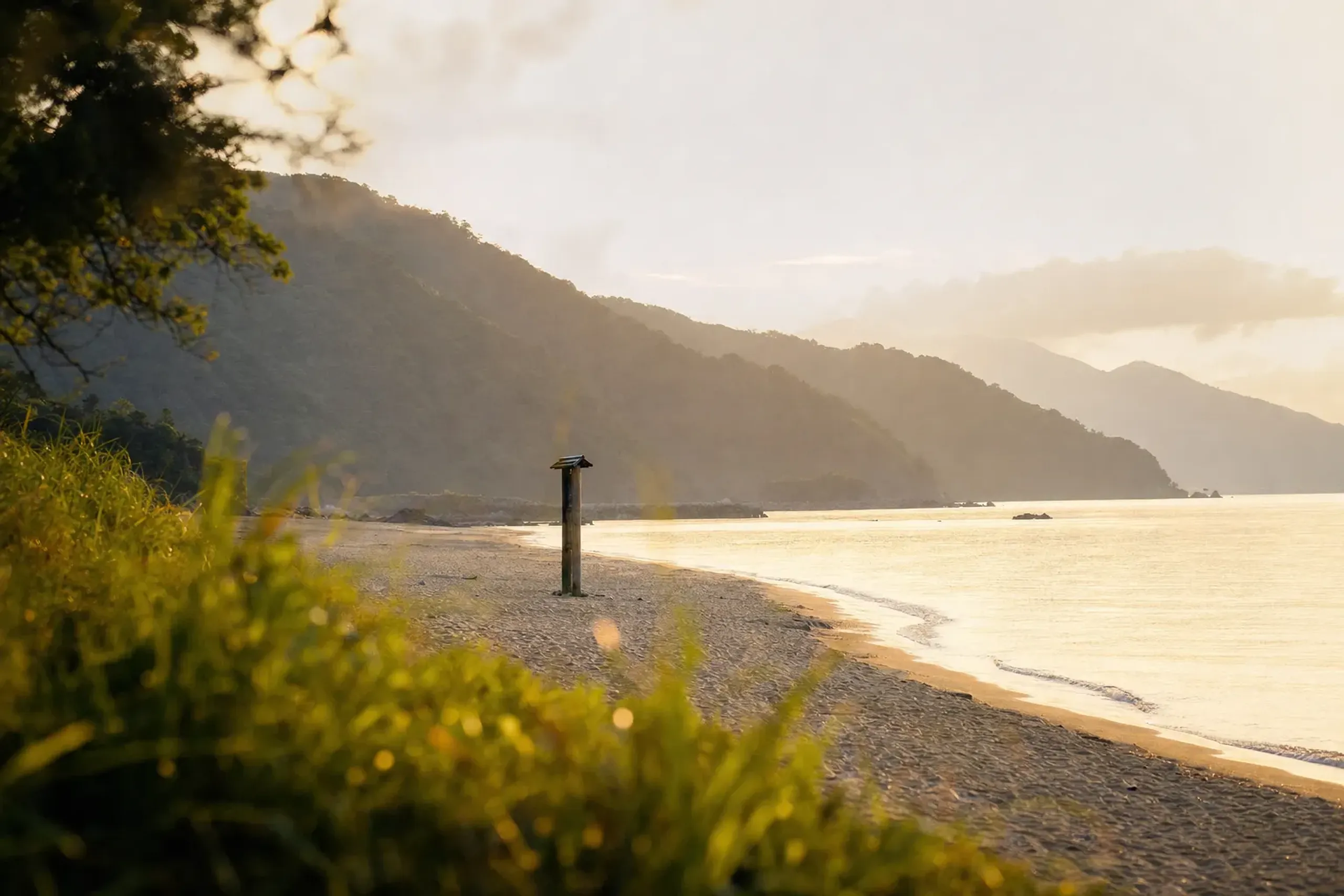
To the east, Suishohama lies on the Mihama coast. Fukui's tourism site describes its "crystal-clear water" and "fine, sparkling white sand". Its season also runs from July to August, with dates set each year. Camping and barbecues are prohibited on all beaches in Mihama Town, and parking is paid.
A bus from Tsuruga Station serves the beach. By car, it is about 30 minutes from the Wakasa-Mihama interchange.
Obama: The Old District, Myotsuji and the Miketsukuni Story
Obama-Nishigumi and Sancho-machi
Obama's old quarter is a place to walk.
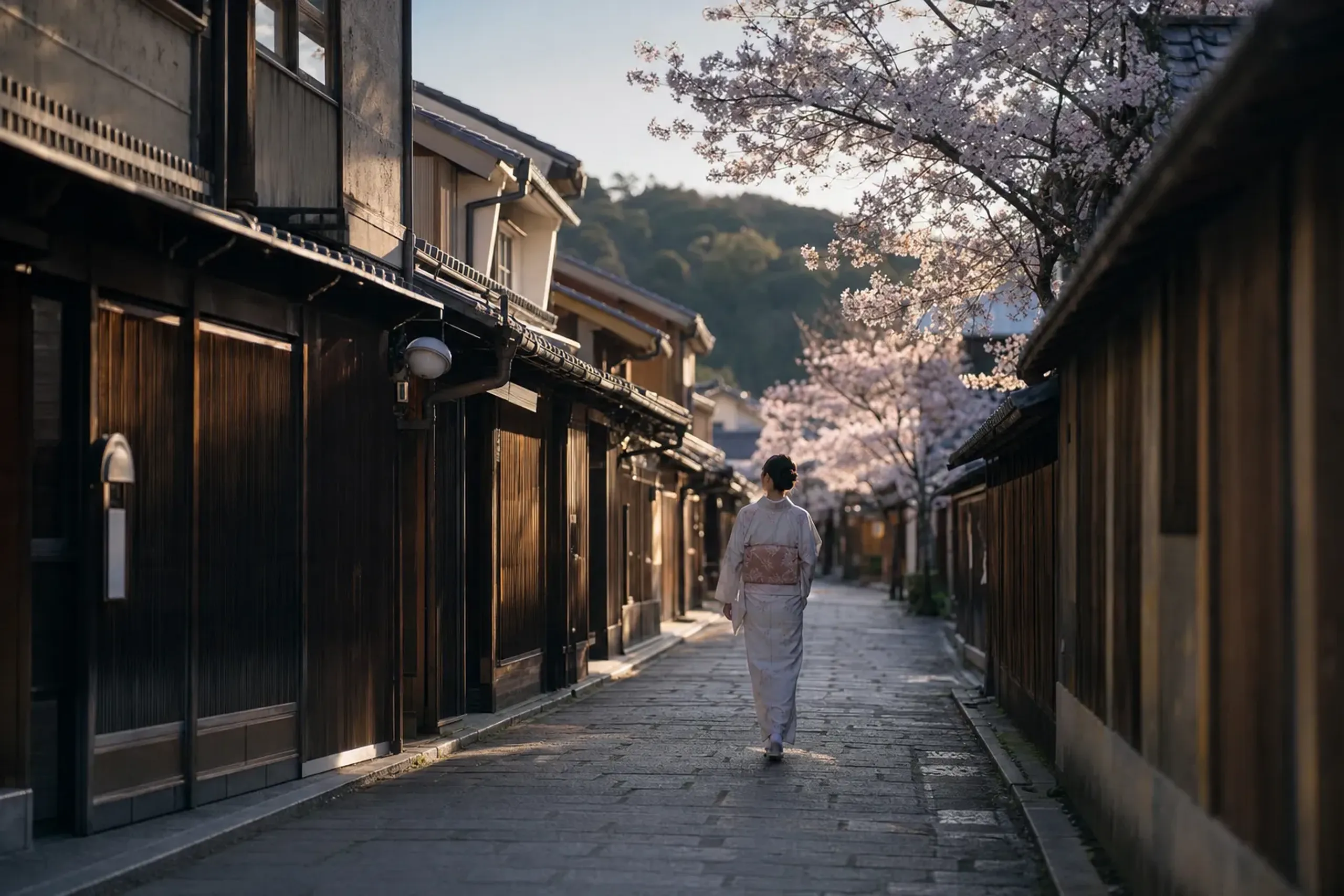
The Obama-Nishigumi district, a former merchant and teahouse town, was selected in 2008 as an Important Preservation District for Groups of Traditional Buildings, covering 19.1 hectares. At its western end lies Sancho-machi, the former teahouse district, where the lanes narrow and the wooden house fronts stand close on either side.
The car stays at the edge, and you go on foot. An English-speaking guide can explain what the street fronts, the layout of the houses and the old trade tell you about the town.
Myotsuji
About ten minutes by car from Higashi-Obama Station, Myotsuji is said to have been founded in 806 by Sakanoue no Tamuramaro. Its main hall was raised in 1258 and consecrated in 1265, in the Kamakura period. The three-storey pagoda was built in 1270. Both were designated National Treasures in 1953.
Standing before the hall, you are looking at timber more than seven and a half centuries old. The pagoda rises nearby, its three roofs stepping up into the trees.
The Miketsukuni story
A story put forward by Obama City and Wakasa Town was certified in fiscal 2015 among the first 18 Japan Heritage stories. Its Japanese title is 海と都をつなぐ若狭の往来文化遺産群~御食国若狭と鯖街道~, which can be rendered in translation as "Cultural heritage of Wakasa's routes between the sea and the capital: Miketsukuni Wakasa and the Mackerel Road".
The title reads this coast as a place tied to the old capital by routes that ran inland from the sea, and a guide can carry that story through the day.
If the day allows
Haga-dera, Uriwari Waterfall and the old post town of Kumagawa-juku can be added to an Obama day. The JRS concierge team confirms distances and timing at time of arrangement.
The Summer: Season, Humidity and the Numbers
The beach season is short, running from July to August with dates set each year, and August is warm and humid. At Obama, the Japan Meteorological Agency's 1991–2020 normals give an August mean temperature of 27.0°C, a mean maximum of 32.1°C and a mean minimum of 23.0°C. August rainfall averages 157.1 mm, with about 9.8 days of 1.0 mm or more.
With the summit and the beach in the open and Obama's streets walked on foot, the day leaves room for shade and an unhurried pace, with a fallback ready if cloud settles over the lakes.
Getting There: Tsuruga, the Obama Line and a Car
From Tokyo, the Hokuriku Shinkansen runs to Tsuruga. From Kyoto, limited express trains run to Tsuruga. The JRS concierge team confirms journey times directly with the guest at time of arrangement.
The JR Obama Line runs west to Obama in about 60 minutes. By car, the Rainbow Line's first parking lot is about 20 minutes from the Wakasa-Mikata interchange and about 40 minutes (28 km) from the Tsuruga interchange.
From Obama, Wakasa Wada Beach is roughly 25 minutes by car, and the beach is about 10 minutes from the Oi-Takahama interchange.
For the drives between Obama and the lakes, and between the lakes and Suishohama, the JRS concierge team confirms the driving times at time of arrangement.
Without a car, taxis from Mihama Station serve the Rainbow Line, and the seasonal loop bus around the lakes runs only on weekends and public holidays. Because the summit park is reached by vehicle and the sights are spread along the bay, a private transfer with an English-speaking driver holds the day together.
How the Concierge Team Plans the Coast Day
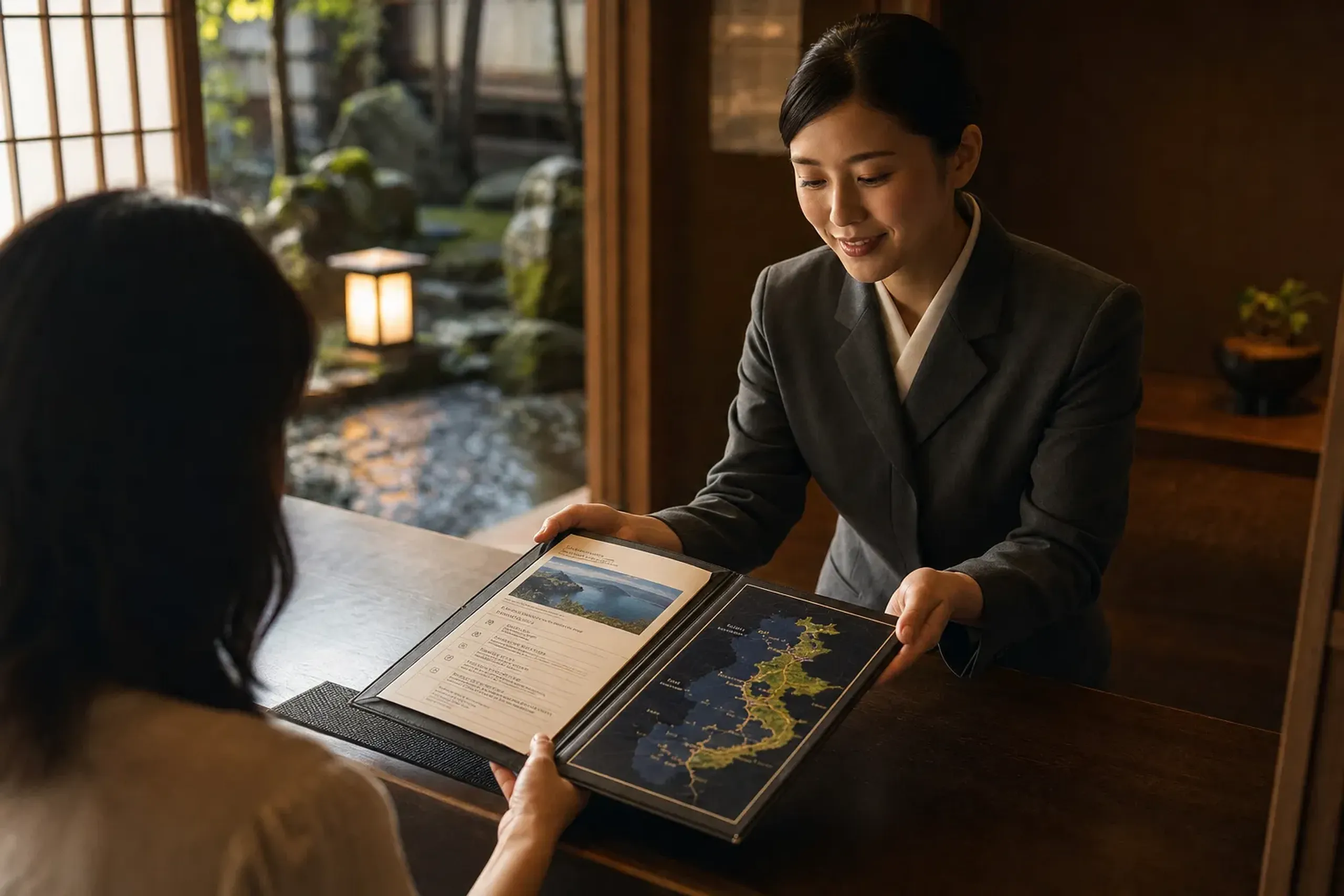
The JRS concierge team arranges, within this coast:
- Planning: a coast day built around the roads, the sea and the weather, with a fallback plan if the lakes and the bay are under cloud.
- Private transfer: a vehicle from a partner company with an English-speaking driver, from Tsuruga or Obama to the Rainbow Line, the beach and the old town. JRS arranges partner-supplied vehicles; it does not own them.
- Guiding: an English-speaking cultural interpreter guide, booked separately from the driver, for Myotsuji, Obama's old streets and the Miketsukuni story.
- Rail: tickets for the Hokuriku Shinkansen to Tsuruga and the Obama Line, including Green Car where available, platform assistance, and luggage forwarding.
- Accommodation and meals: ryokan and restaurant booking in the Obama or Wakasa area, with dietary needs passed ahead.
- Same-day re-planning when the weather changes.
The JRS concierge team confirms directly with the guest at time of arrangement the lift and park status, the beach season and the road status.
Every site here is open to the public.
Frequently Asked Questions
How do you reach Wakasa Bay from Kyoto or Tokyo?
Take the Hokuriku Shinkansen from Tokyo, or a limited express from Kyoto, to Tsuruga. From there, the JR Obama Line reaches Obama in about an hour, or a car follows the coast. The JRS concierge team confirms journey times directly with the guest at time of arrangement.
What are the five colours of the Mikata Five Lakes?
The lakes hold different waters, from fresh to full sea water. The Ministry of the Environment points to differences in water quality, the Rainbow Line's brochure to depth and salt levels, and Fukui's tourism site calls each lake "a different shade of blue".
When can you swim at Wakasa Bay?
The beach season at Wakasa Wada and Suishohama runs from July to August, with dates set each year. Local rules apply and can change; follow your guide's briefing, and the JRS concierge team confirms current conditions directly with the guest at time of arrangement.
Can you walk into the summit park?
No. The summit park on Mt. Umetake is reached by vehicle along the Rainbow Line, then by a chairlift or cable car of about two minutes.
How humid is August?
Warm and humid. At Obama, the JMA's 1991–2020 normals give an August mean of 27.0°C, a mean maximum of 32.1°C and 157.1 mm of rain.
To begin planning, contact our team here.