In this guide
- 01What Is Gero Onsen, And Why Is It Famous?
- 02The One Detail Nobody Writes About: Gero's Central Water System
- 03How Do You Choose A Ryokan In Gero When The Water Is The Same?
- 04What Is The Yumeguri Tegata, And How Does It Work?
- 05Gero On Foot: A Town Built For Walking
- 06The White Heron: Why The Town Sits Where It Does
- 07When Is The Best Time To Visit Gero Onsen?
- 08How Do You Get To Gero Onsen?
- 09What Japan Royal Service Arranges In Gero
- 10Frequently Asked Questions
- 11Why Choose Japan Royal Service
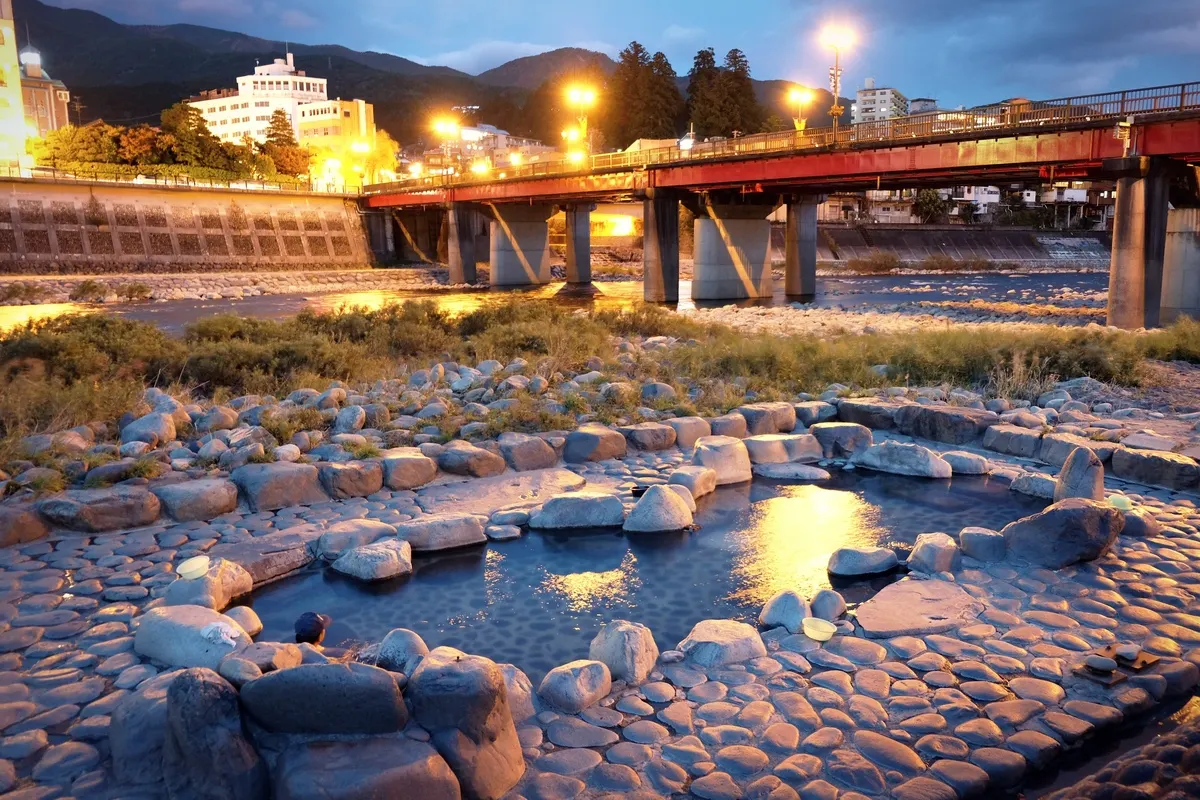
Steam lifts off the Hida River at dusk. It curls between the stone embankments, catches the last light, and thins into the cold. Below the Ide-yu Bridge, an open-air bath sits fully exposed to the water — most guests never step in, but the sight of it, half-hidden in vapour, tells you what kind of town this is. Along both banks, ryokan press close together. Guests move between them in yukata and geta, wooden soles clicking on wet stone, towels folded on their heads. The river carries the sound downstream.
Gero is one of Japan's most visited hot-spring towns. It is not a secret, and pretending otherwise would set up a poor arrival. What makes it worth understanding is something almost no guide bothers to explain — a quiet piece of municipal engineering that changes how you should choose where to sleep.
What Is Gero Onsen, And Why Is It Famous?
Gero Onsen sits in Gifu Prefecture, in the Hida region, on the JR Takayama Main Line. It is counted among Japan's three famous springs — Nihon San-meisen — alongside Arima in Hyōgo and Kusatsu in Gunma. That ranking came from the Edo-period Confucian scholar Hayashi Razan, and the Muromachi-era monk Banri Shūkyū had praised the place earlier still.
The water is an alkaline simple spring, pH around 9.18. Colourless. Clear. Faintly scented, and notably smooth to the touch. That is the honest description, and we will leave it there.
The town itself is compact. Ryokan and restaurants cluster along the river, close enough that walking between them barely counts as a walk.
Three public bathhouses serve the town, and eight free footbaths are scattered through the streets — you will find people resting their feet at them without ceremony, mid-errand, mid-conversation.
The One Detail Nobody Writes About: Gero's Central Water System
Since 1974, Gero has run a central distribution system. One managed source feeds every ryokan, every day-use bath, every public footbath in town. The water is identical everywhere.
Read that again, because it inverts how you normally choose an onsen. At most hot-spring towns the water differs house to house. One property draws a milky sulphur spring; the next taps something iron-rich and rust-brown. The bath is the reason you pick a place. You chase the source.
At Gero, that logic collapses. The water is a constant. So the choice becomes entirely about everything else — the room, the view, the food, the service. Nowhere else does the decision come apart so cleanly. It makes the town unusually legible once you know it.
Key fact: Since 1974, a single managed source supplies every bath in Gero. The water quality does not vary between ryokan. What varies is the building, the setting, and the kitchen.
How Do You Choose A Ryokan In Gero When The Water Is The Same?
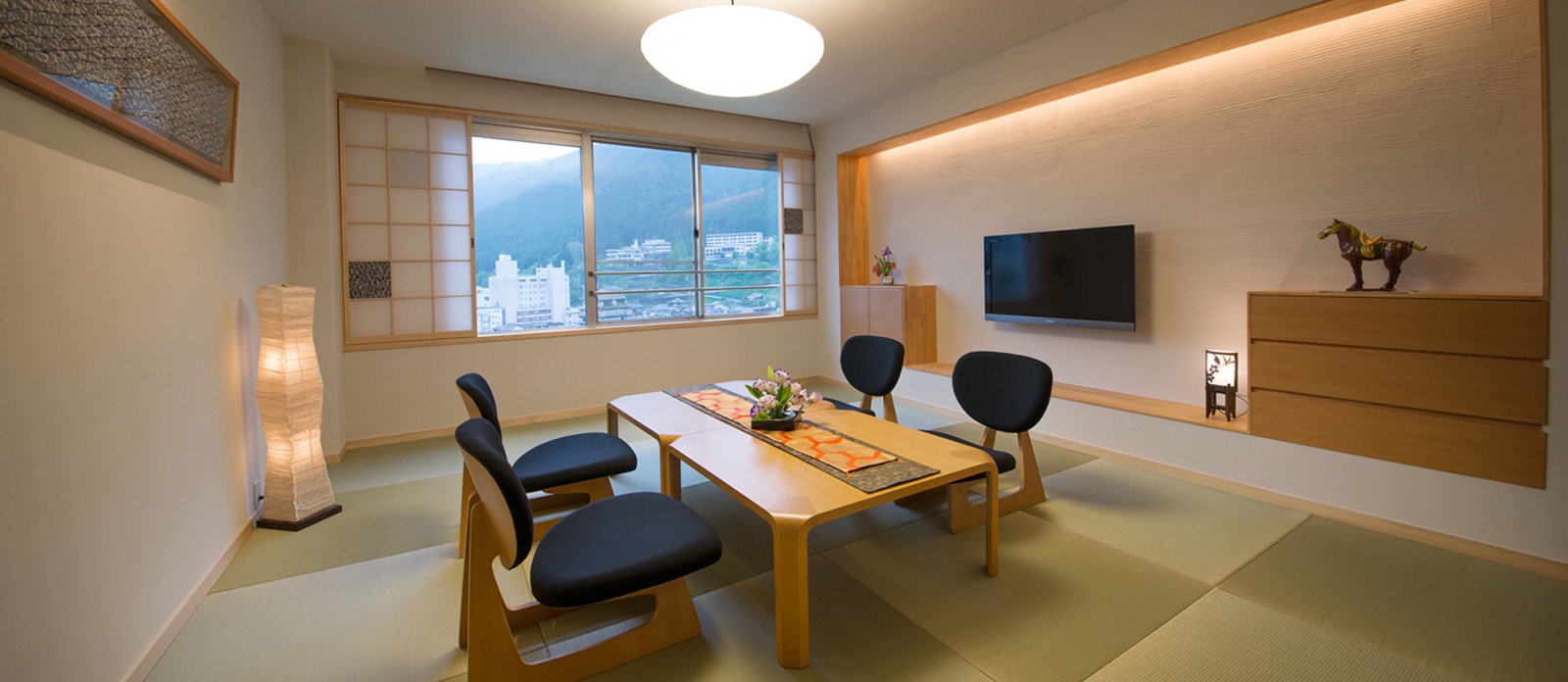
You choose on everything the water isn't. Because the spring is uniform, the differences that matter are architectural and culinary — the view, the bath's setting, the size of the house, and how seriously the kitchen treats Hida beef.
Here is what actually separates one Gero ryokan from another once you stop thinking about the source.
River-Facing Versus Hillside
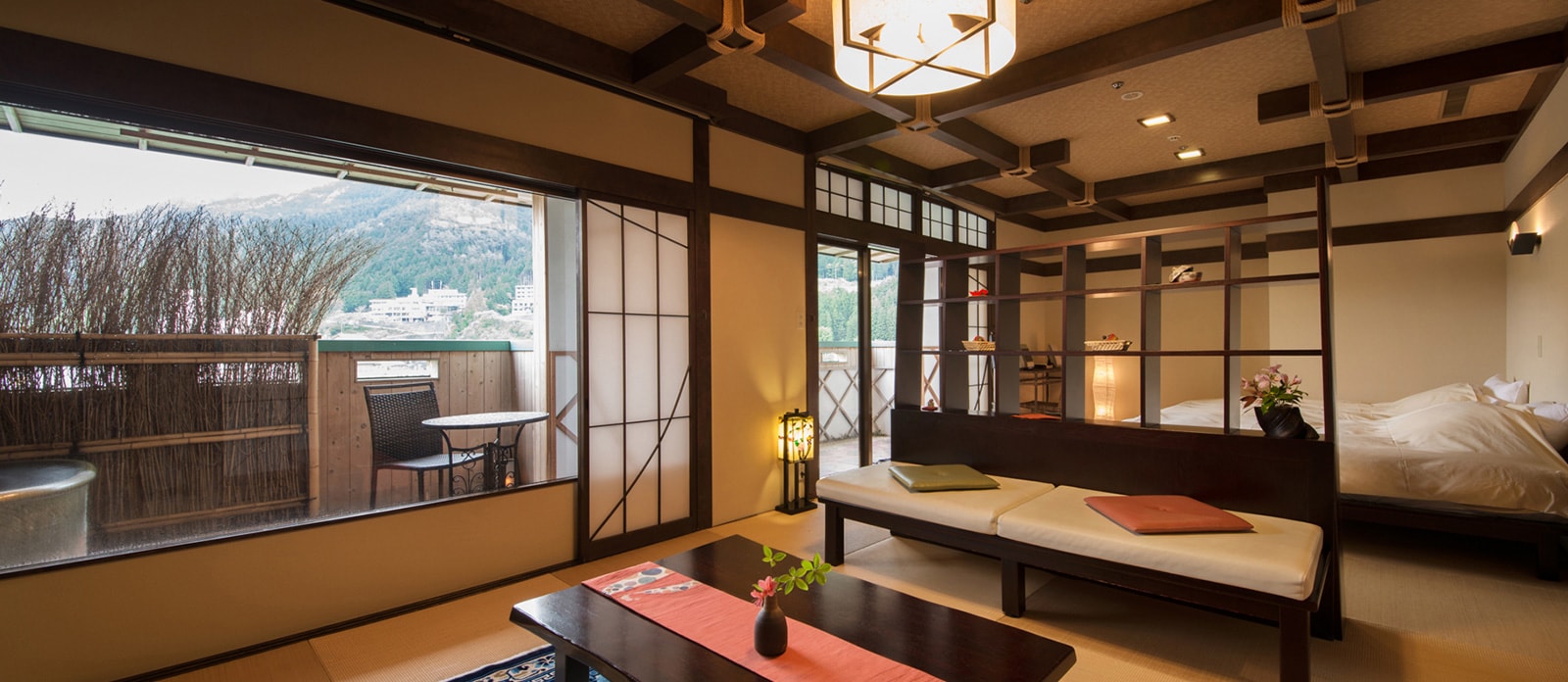
A river-facing room puts the Hida below your window — the steam, the current, the far bank at dusk. Hillside properties trade the water view for elevation and quiet, with the town spread beneath them. Neither is better. It depends on whether you want to watch the river or watch the town.
Indoor Versus Open-Air Bathing
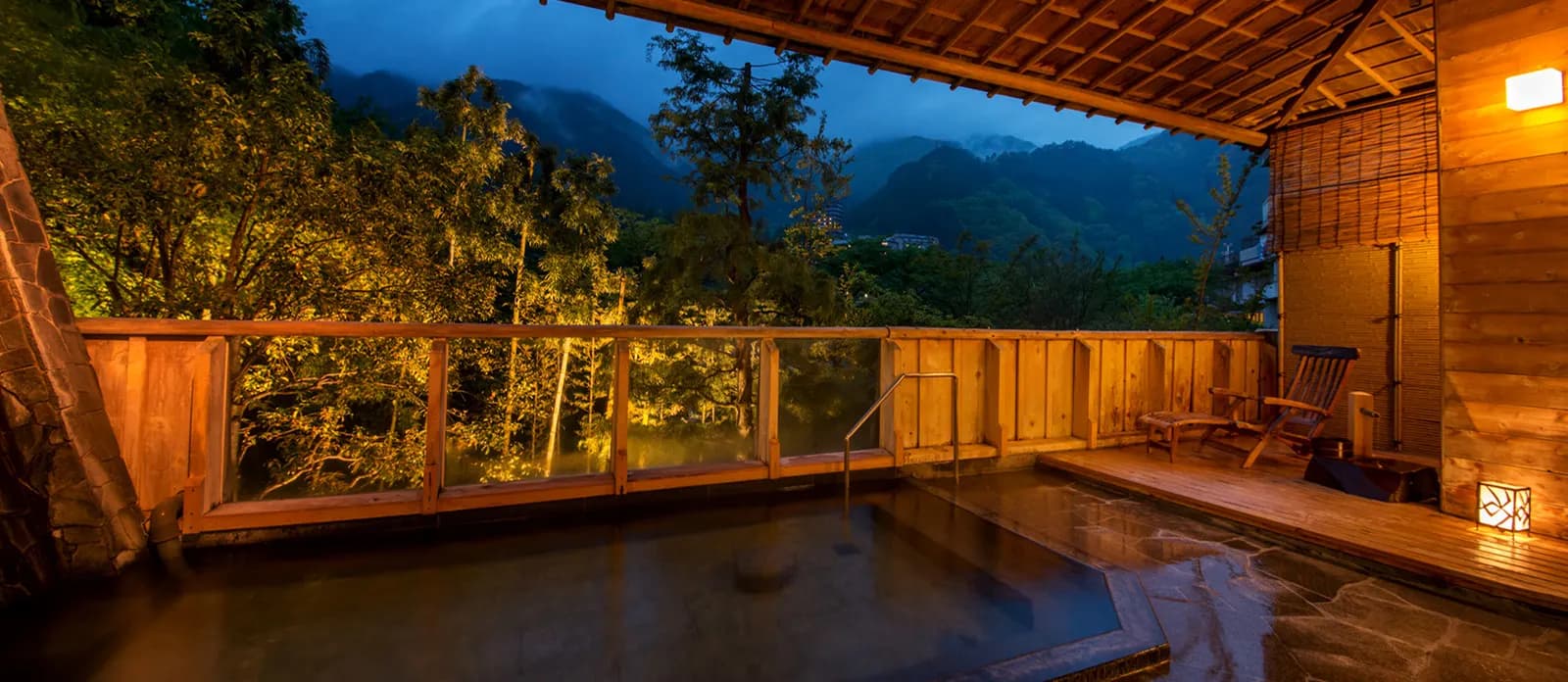
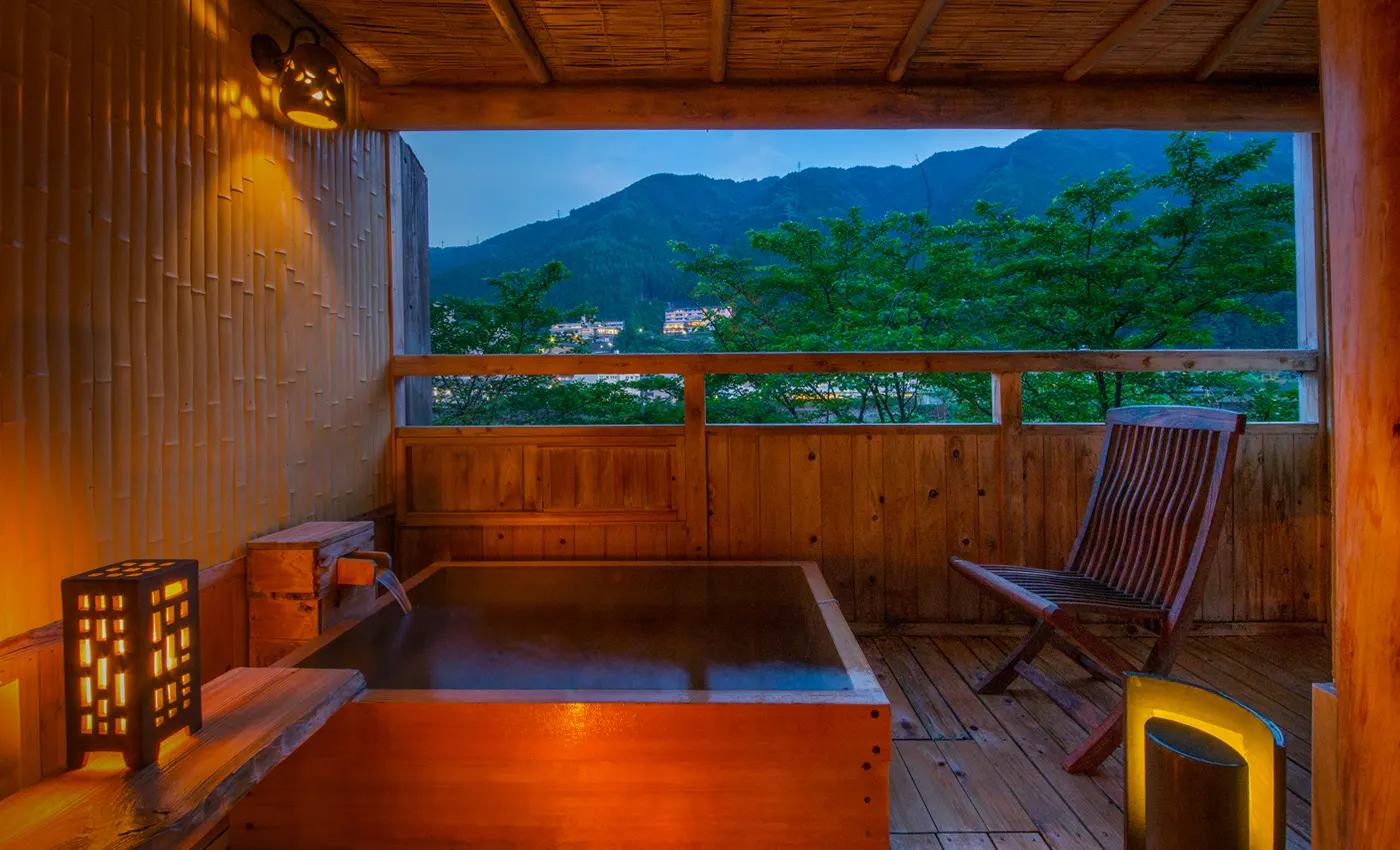
Some houses offer a private open-air bath — a rotenburo cantilevered toward the river, where you sit in the cold air with the water steaming around you. Others keep bathing indoors, warmer and more sheltered. In winter the open-air option is the whole point; in summer's humidity, less so. Private open-air baths also solve the privacy question directly, which matters to many of our guests.
The Kitchen
This is where a stay is made or lost. Hida beef is the regional prize, and a serious ryokan kitchen treats it accordingly. The house that plates it with restraint — a few perfect slices, seared at the table — is telling you something about the rest of the meal. When we place a client, the kitchen is often the deciding factor, precisely because the water can't be.
This is the part of planning Gero where an outside eye earns its keep. We know which houses face the river, which have cantilevered baths, which kitchens are genuinely committed to the beef.
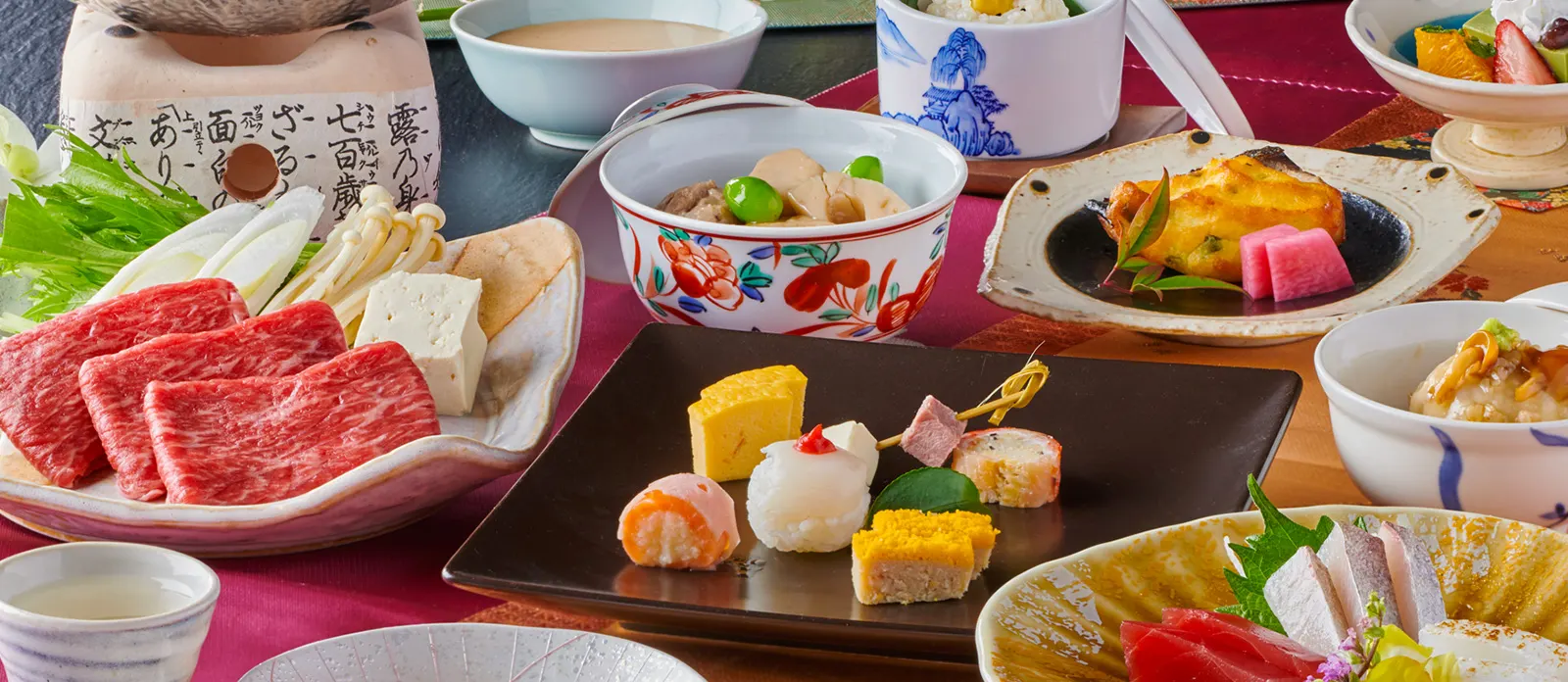
We do not name properties on this page — those recommendations belong in a private conversation, shaped around your party and your dates. Our approach to a tailor-made itinerary starts exactly here.
What Is The Yumeguri Tegata, And How Does It Work?
The yumeguri tegata is a wooden token, ¥1,500 including tax, valid six months from purchase, admitting the bearer to three baths among 15 participating houses. It is the intended way to experience the town.
Because the water is the same everywhere, bath-hopping here isn't about chasing a different spring. It is about architecture and setting. Three baths, three buildings, three different views of the same river. That is a genuinely good reason to do it.
You can buy the tegata at member ryokan, souvenir shops, convenience stores, the tourist information centre, and local travel operators. Children three and under bathe free. Ages four to twelve may share one adult's token, though a sticker is still required per child. Junior-high age and above count as adults.
The Catch: Bathing Windows Are Narrow
Here is the part that trips people up. Most houses admit tegata holders only in a short early-afternoon window, commonly 12:00 to 14:00, with different hours at weekends and on holidays. Some open only in the evening. A few decline day bathers arriving by car, having no parking. And on busy days, availability can be refused even within the stated hours.
Bath-hopping in Gero rewards planning, not wandering. You cannot drift from house to house and expect doors to open.
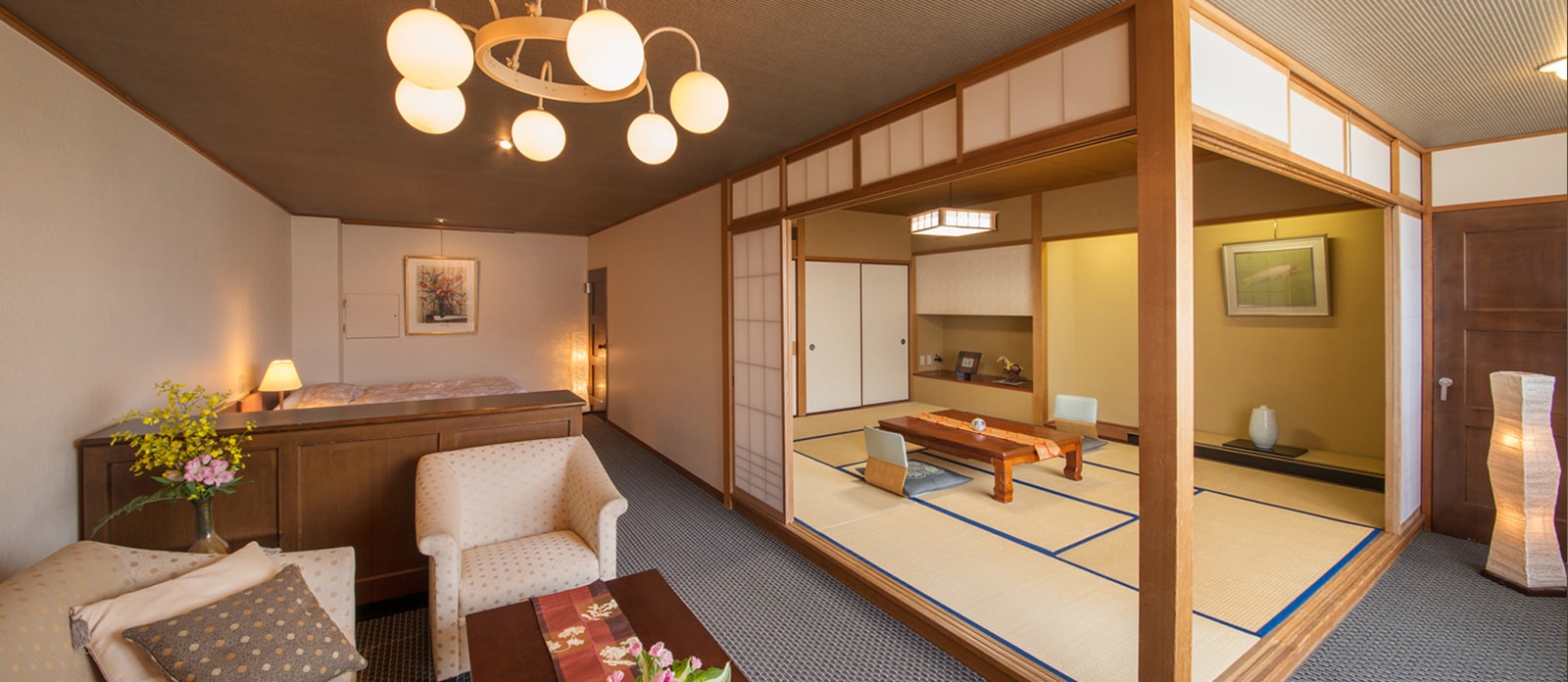
The schedule has to be read against the calendar, and a route built before you set out. That is a small thing to arrange in advance and a frustrating thing to improvise on the day.
Plan ahead: Individual tegata bathing hours differ by house and change with the day of the week. Sequence your three baths in advance rather than hoping doors happen to be open.
Gero On Foot: A Town Built For Walking
Everything sits within a few minutes of everything else. The ryokan and the restaurants line the Hida River in a tight cluster, so moving between baths in yukata and geta is simply how the town works — not a staged photograph, but the ordinary rhythm of an evening here.
You will pass the footbaths. You will hear geta on stone before you see anyone. In winter the river throws off enough steam to soften the far bank, and the whole scene goes quiet and grey and slow. It is a modest pleasure, and it is the real one.
For a broader sense of how the Japanese hot-spring town works — the etiquette, the rhythm, the private-bath question — our writing on reservation timelines for Japan gives useful context on when to lock in a room during peak weeks.
The White Heron: Why The Town Sits Where It Does
The legend is short and it explains the map. The original spring on Mount Yugamine stopped flowing in 1265. The villagers thought they had lost it.
Then a white heron settled in the bed of the Hida River below, and where it rested, they found the spring had surfaced again. The bird, the story says, was Yakushi Nyorai — the Buddha of Healing — in another form.
So the town moved down to meet the water. That is why Gero sits on the river rather than up the mountain. The heron still turns up on signs and lanterns around town, a quiet civic mascot with a thirteenth-century pedigree.
When Is The Best Time To Visit Gero Onsen?
Winter is the strongest season — snow on the hills, steam rising off the river, and a bath at dusk while the cold sits on your shoulders. Autumn brings foliage to the surrounding slopes. Summer is humid, and worth stating honestly.
The summer humidity is real, and heavy. What summer offers in return are the festivals — the Gero Onsen Summer Festival runs in early August, with fireworks over the river. If you go in that window, go for the festival, not the weather.
Winter also carries a small, reliable pleasure: fireworks over the Hida on Saturday evenings across the colder months, best watched from a warm room above the water. For travellers weighing the wider question of Japanese autumn timing, our piece on why the foliage averages stopped working is worth reading before you fix dates.
How Do You Get To Gero Onsen?
Gero Station is on the JR Takayama Main Line, and every limited express Hida service stops there.
It is roughly 100 minutes from Nagoya, about 50 minutes further on to Takayama, and around three and a half hours from Tokyo via Nagoya.
The station sits a short walk from the town centre, and many ryokan run shuttles for arriving guests. Gero pairs naturally with Takayama — the two are less than an hour apart, and a Nagoya–Gero–Takayama line reads well on a map and better in practice.
| From | Approx. travel time to Gero |
|---|---|
| Nagoya (Limited Express Hida) | ~100 minutes |
| Takayama (Limited Express Hida) | ~50 minutes |
| Tokyo (via Nagoya) | ~3.5 hours |
That said, the train is not always the best way in. A client arriving from Nagoya, or continuing north into the Hida valleys, is better served door to door — luggage handled, no platform changes, no timing the shuttle. And because several bath houses turn away day visitors who arrive by car, having your own private chauffeured transfer with a driver who knows the parking situation removes a very specific friction that catches self-drivers out.
What Japan Royal Service Arranges In Gero
Our role in Gero is practical rather than promotional. We arrange the ryokan, the transfers, and private guiding — the three things that turn a good hot-spring town into a stay shaped precisely around you.
On the ryokan itself, our value is in the choosing. When the water is fixed, the decision is entirely about the room, the view, the bath's setting, and the kitchen — and we know the houses well enough to match those to your party rather than to a listing page.
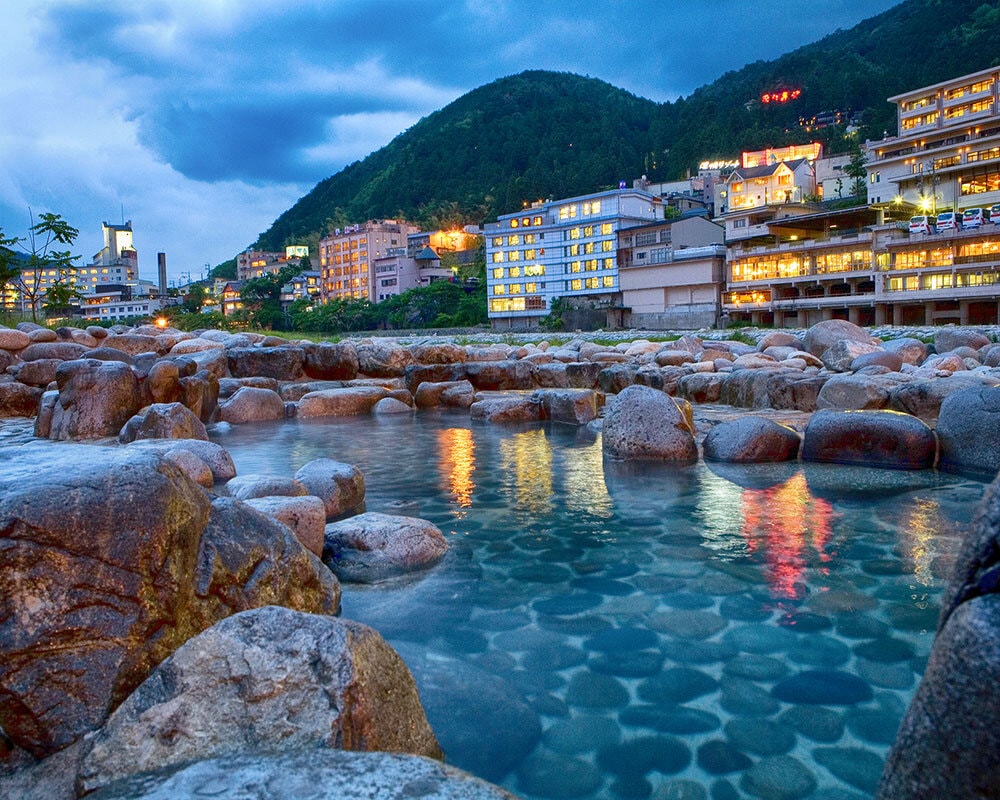
River-facing or hillside. Open-air or indoor. A kitchen serious about Hida beef, or a lighter table.
On transfers, the point is flow. Gero is a limited express stop, but door-to-door service from Nagoya or onward to Takayama removes the platform friction and sidesteps the parking problem that turns some day bathers away. On the tegata, we sequence your three baths against the day's actual hours, so the afternoon works instead of stalling at a closed door.
None of this requires overselling. Gero is a mainstream Japanese onsen town, beloved and busy, and it is better arrived at honestly than dressed up as something it isn't.
Frequently Asked Questions
Is the hot spring water really the same at every ryokan in Gero Onsen?
Yes. Since 1974, Gero has used a central distribution system supplying one managed source to every ryokan, day-use bath, and public footbath. The water — alkaline, pH around 9.18, clear and smooth — is identical town-wide.
How much does the Gero Onsen yumeguri tegata cost, and how does it work?
The wooden tegata token costs ¥1,500 including tax and is valid six months. It admits the bearer to three baths among 15 participating houses. Bathing hours are narrow — often 12:00–14:00 — and vary by house, so sequence your baths in advance.
How far is Gero Onsen from Nagoya and Takayama?
Gero is roughly 100 minutes from Nagoya and about 50 minutes from Takayama on the Limited Express Hida, and around three and a half hours from Tokyo via Nagoya.
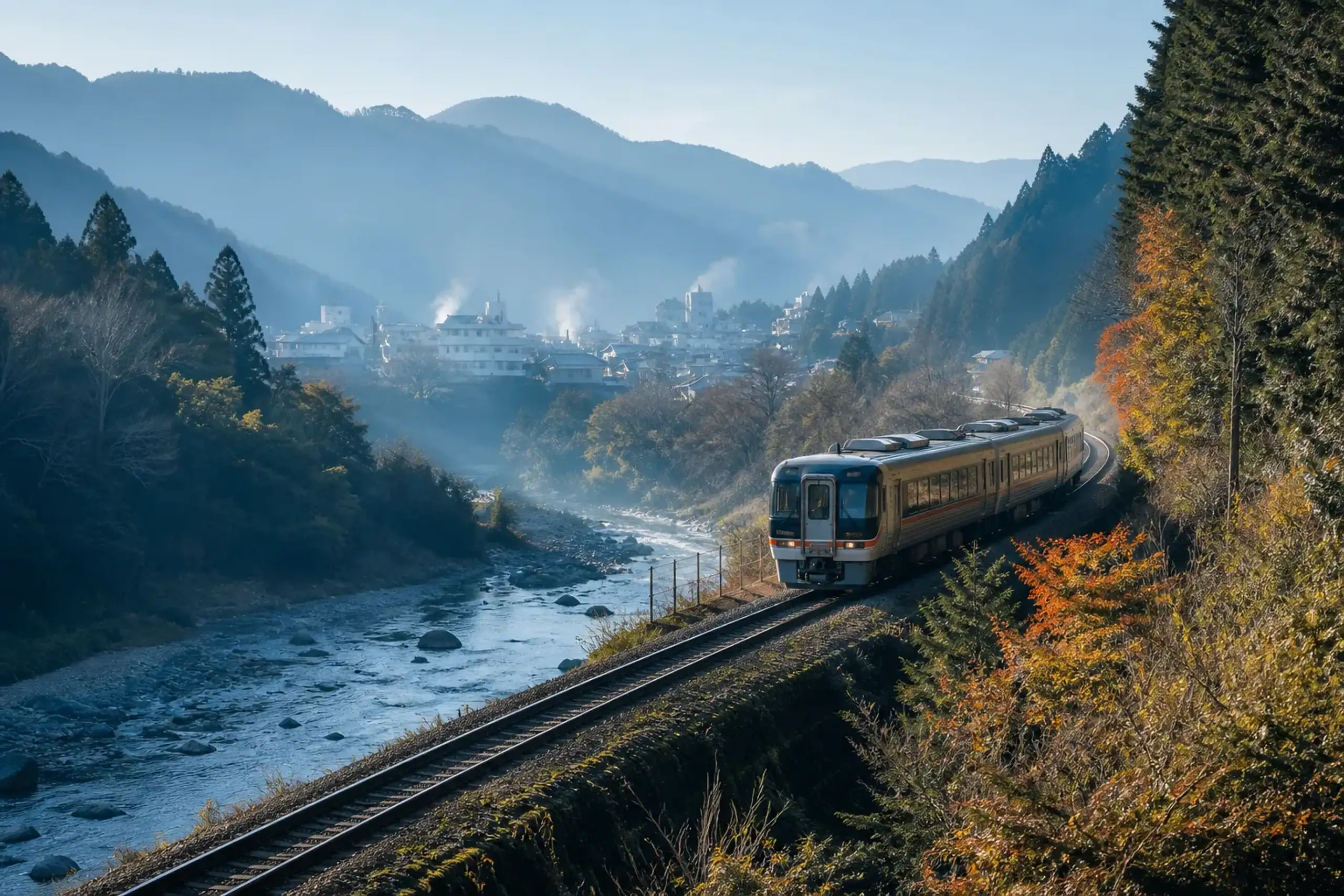
The station is a short walk from the town centre.
When is the best season to visit Gero Onsen?
Winter is the strongest season, for snow on the hills and steam over the Hida River, with Saturday-evening fireworks through the colder months. Autumn brings foliage; summer is humid but hosts the early-August festival and fireworks.
Can you visit Gero's bath houses as a day guest arriving by car?
Sometimes, but not reliably. A few bath houses decline day visitors arriving by car because they have no parking, and availability can be refused on busy days even within stated hours. Arriving by train or private transfer avoids this.
Why Choose Japan Royal Service
Most guides tell you what to see in Gero. Few explain the one fact that changes how you should choose — that the water is the same everywhere, and the decision is really about the house, the view, and the kitchen. That is the kind of thing our team at Japan Royal Service is built to know.
We are a Tokyo-based concierge with our own fleet and long relationships across the Hida region. Our coordinators place clients into the right room for their party, sequence the tegata against the real daily hours, and move guests door to door so the arrival is calm and the parking problem never surfaces. We hold your itinerary in strict confidence, and we do not oversell a town that is better met honestly.
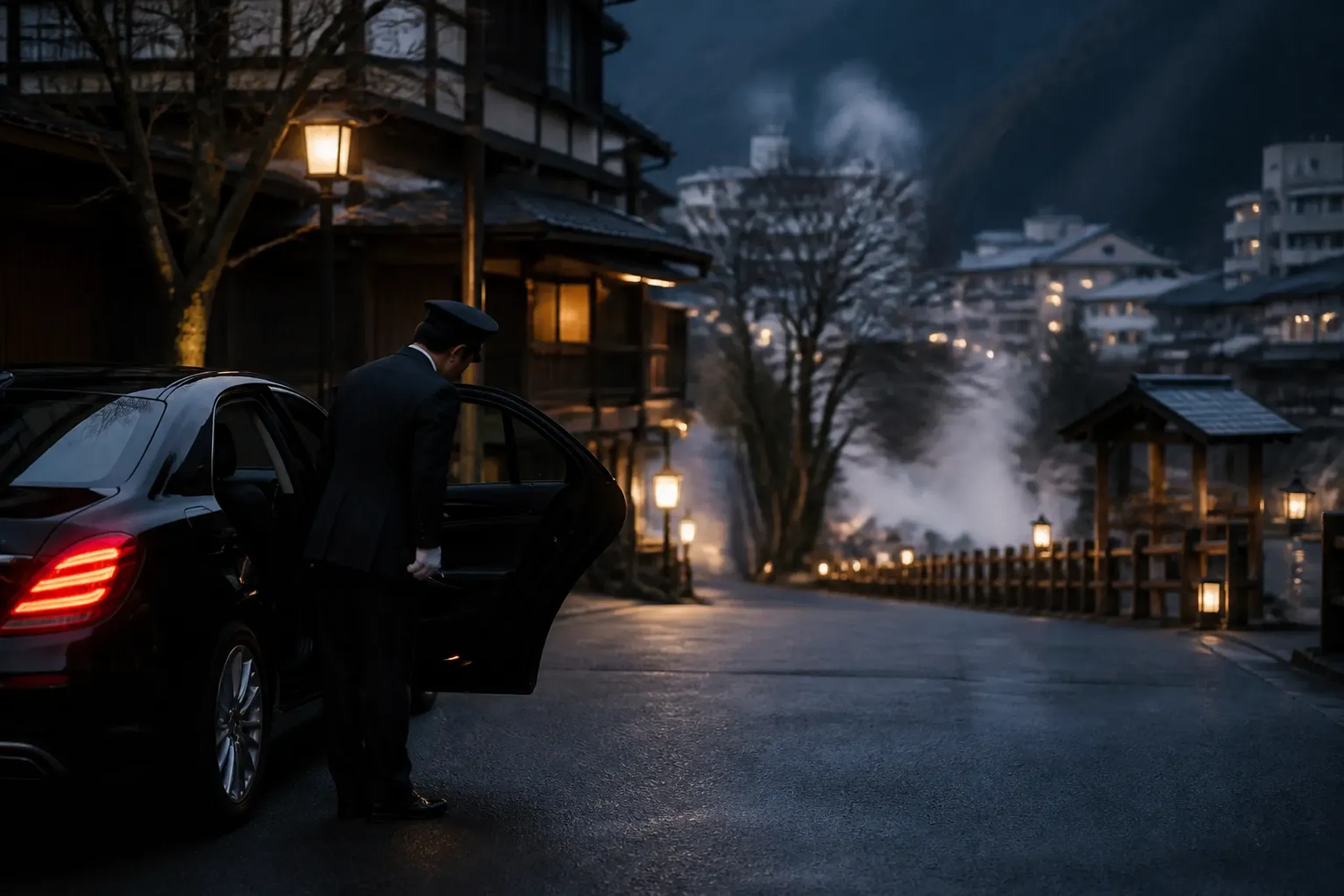
Whether Gero is your quiet base between Nagoya and Takayama or one night in a longer Hida route, we shape the stay around you — not around a listing.
To plan a private Gero Onsen stay, reach our team directly via WhatsApp or LINE, or contact us here. We will reply with a tailored proposal shaped around your dates and your party.