In this guide
- 01What Is Hakusan, And Why Do People Climb It?
- 02When Does The Hakusan Summer Hiking Season Open?
- 03What Does The Betta-Deai Road Restriction Mean For Drivers?
- 04The Climb In Order: Betta-Deai To Murodo
- 05How Long Does It Take To Climb Hakusan From Betta-Deai?
- 06Murodo And The Summit: Where The Mountain Turns Quiet
- 07Flowers On Hakusan: What Blooms, And When
- 08Snow, Weather, Bears, And Volcano Alerts: The Unromantic Truth
- 09Do I Have To Submit A Climbing Plan For Hakusan?
- 10Access From Kanazawa: The Straightforward Way To Reach Ichinose
- 11One-Line Detours: White Road, Shirakawa-Go, And Tedori Gorge
- 12How Our Concierge Team Builds A Hakusan Summer Plan (Without Guesswork)
The shuttle door slides shut with a soft thud. It is early at Bettodeai (Betta-deai), and the valley air still feels rinsed clean, carrying the cool mineral scent of snowmelt. A bell taps lightly somewhere in your group, not for ceremony, but for bears.
You shoulder your pack and step onto the trailhead gravel. Cold water moves under the bridge, steady and unhurried. The forest ahead is dark, then suddenly bright where the first shafts of sun strike the leaves.
This is Hakusan in summer. Not a casual outing. It is a serious mountain climb on a sacred volcanic peak, with snow that can linger into July and weather that can turn faster than you expect. The reward for respecting it, however, is a stretch of the Japan that lies far beyond the familiar circuits — quiet, unguarded, and genuinely wild.
What Is Hakusan, And Why Do People Climb It?
Hakusan (Mt. Haku) is a 2,702-meter peak on the Ishikawa–Gifu border and the main attraction of Hakusan National Park. It has been a focus of mountain worship since the eighth century, and the summit holds the Okumiya (rear shrine) of Hakusan Shirayama-hime Shrine — a detail that frames every ascent less as a conquest than as a pilgrimage.
Names matter here. The main peak is Gozengamine (2,702 m). Nearby rise Onanji-mine (2,684 m) and Kengamine (2,677 m).
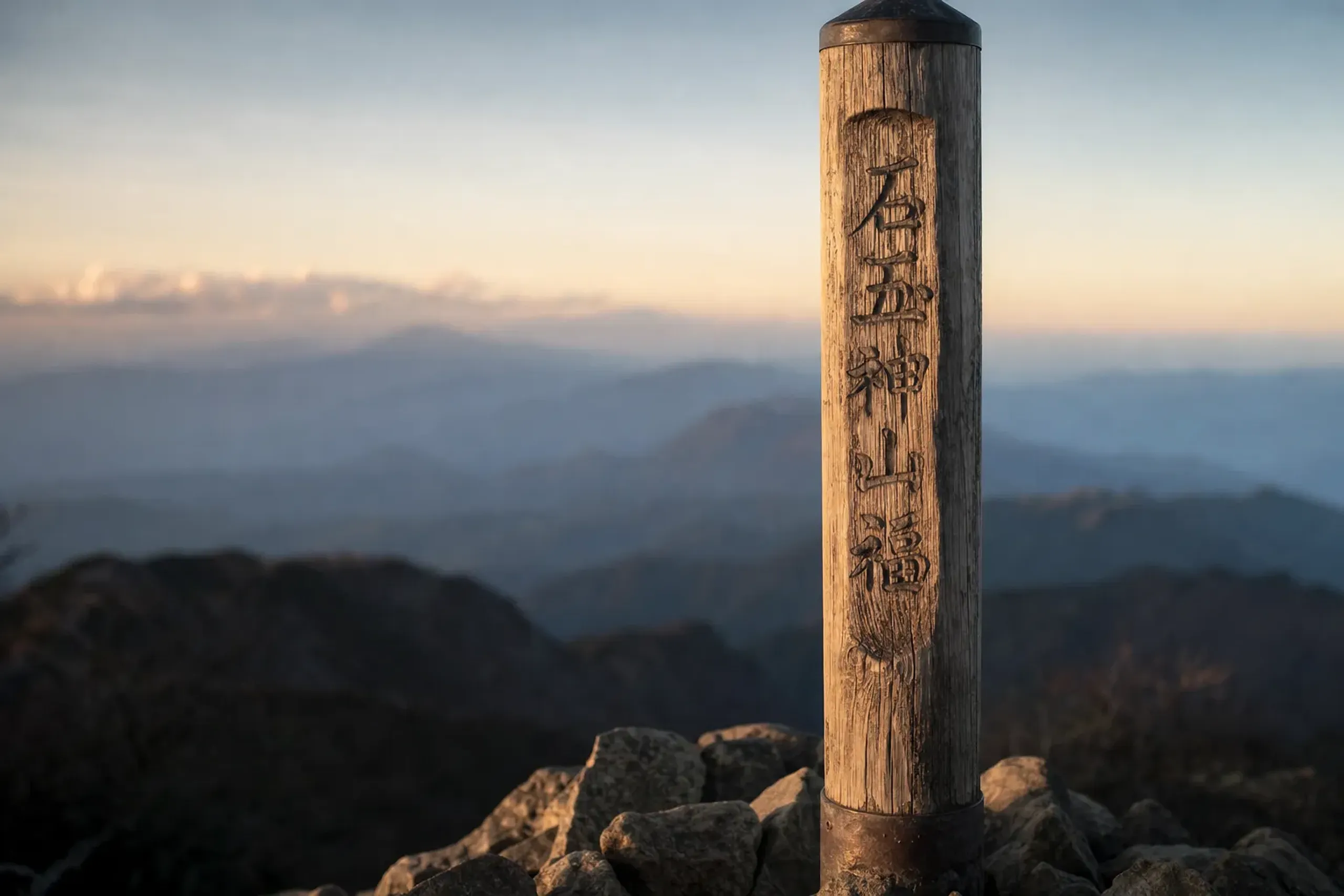
On clear mornings you feel their presence before you can separate their ridgelines from the paling sky.
Hakusan National Park was designated on 12 November 1962 and covers 49,900 hectares across Ishikawa, Fukui, Gifu, and Toyama. It sits within the Mount Hakusan Biosphere Reserve (listed in 1980 in the multilingual database). Big geography. Small human.
Hakusan City and Japan’s multilingual tourism database describe Hakusan as “one of the three most sacred mountains in Japan,” alongside Mount Fuji and Mount Tateyama. Other official sources often phrase it as one of the “three most famous.” Either way, the pull is real — and the restraint of the place, the wabi quiet of its moss and stone, is precisely what draws travelers who have already seen the loud wonders of the world.
When Does The Hakusan Summer Hiking Season Open?
The public hiking season for Hakusan runs roughly from the first half of July to mid-October, and the exact opening day should be confirmed each year.
Take 2026 as an illustration: the Hakusan Tourism Association (a secondary source) reported the summer season opening on Wednesday 1 July, with less snow than usual. Treat that as one season’s snapshot. Every spring, Ishikawa Prefecture updates the calendar that actually controls your access and timing.
Mid-October can feel like a different world than July. The light sharpens. The wind has teeth.
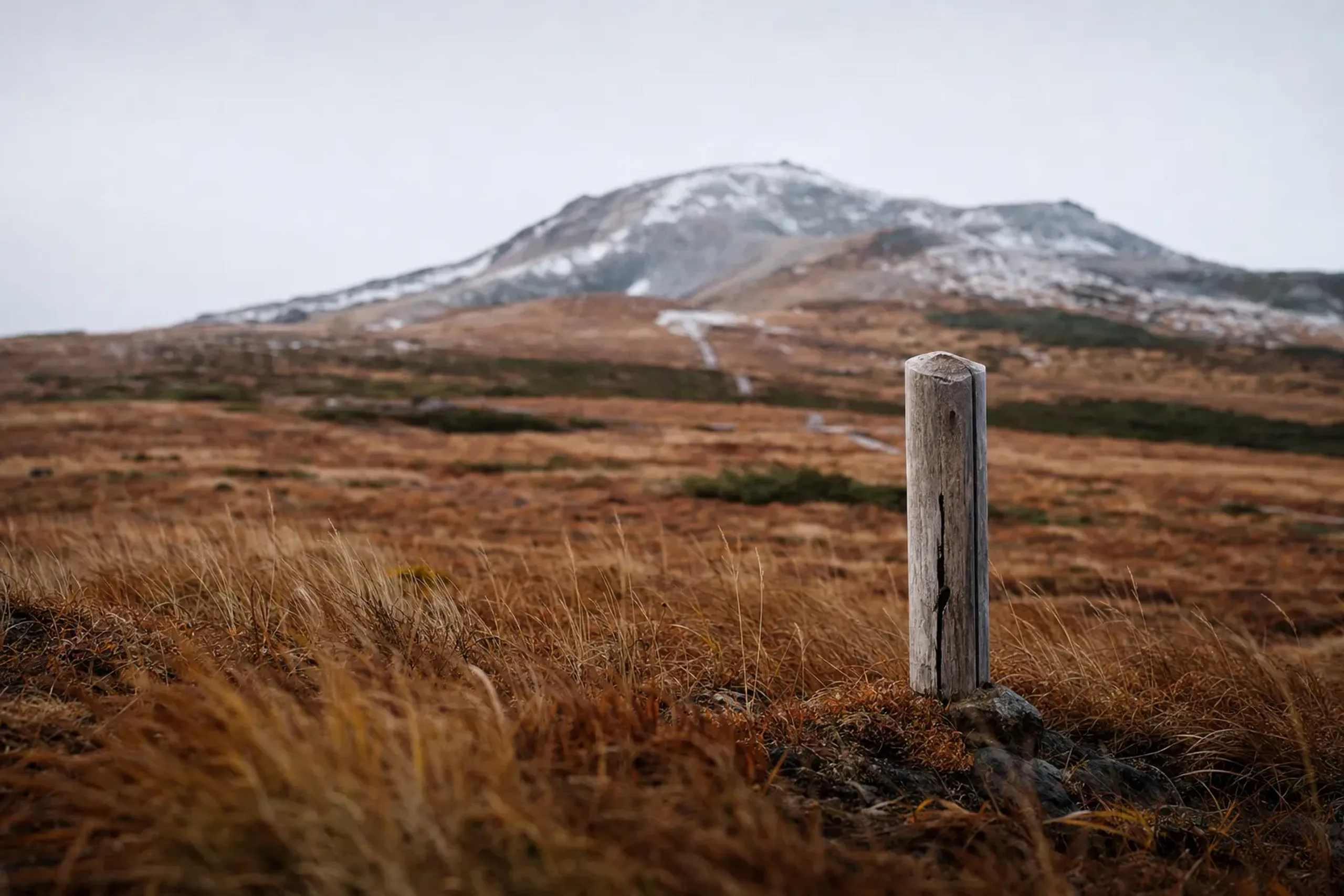
You plan for summer, and you still pack for cold. This is where the Japanese sense of shun — the instinct for exactly what to experience, and precisely when — earns its keep: the flowers, the light, and the snow line each occupy their own narrow window, and timing your climb to the right week transforms the entire day.
What Does The Betta-Deai Road Restriction Mean For Drivers?
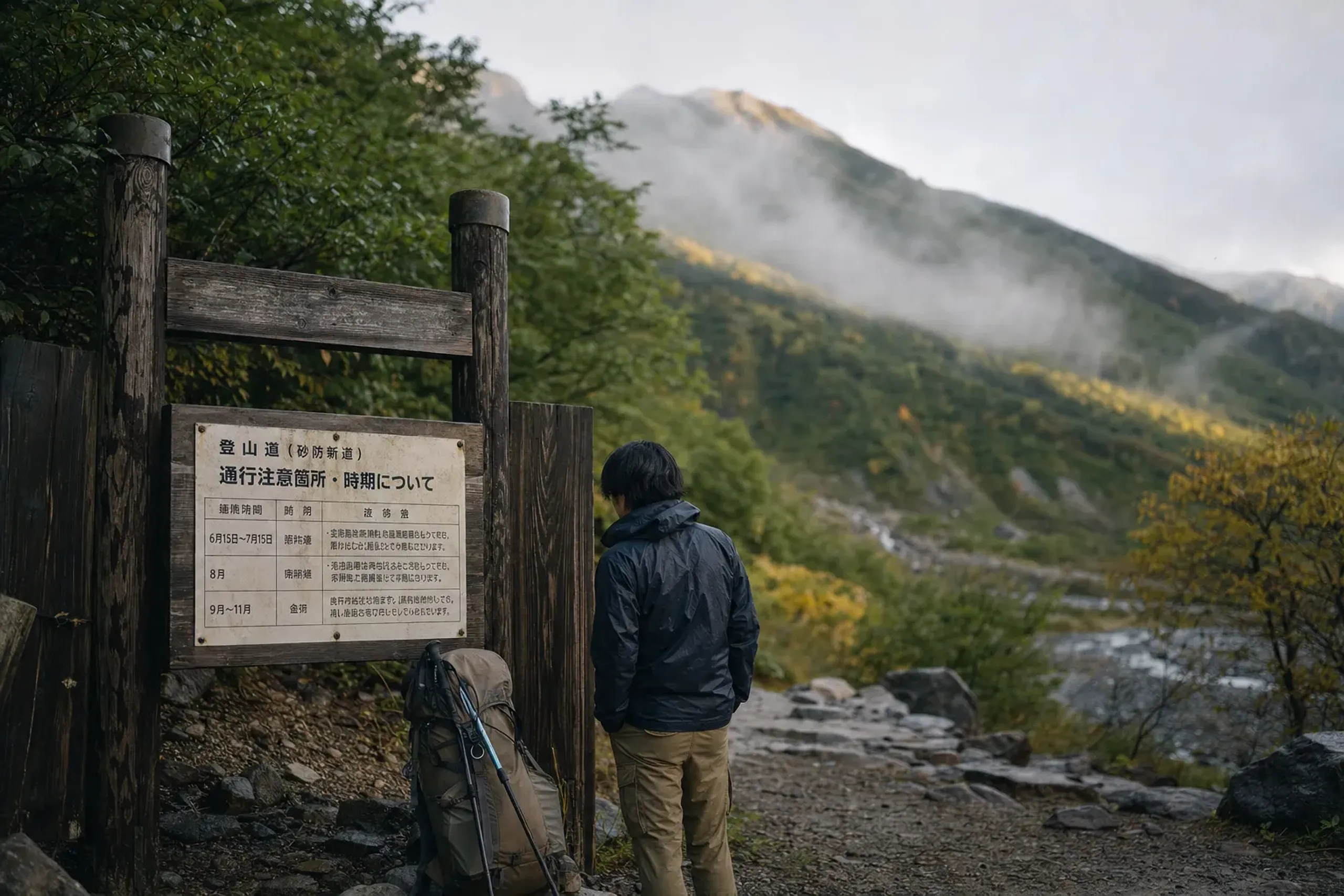
On designated busy days, private cars are restricted on the roughly 6 km road from Ichinose to Betta-deai, so hikers park at Ichinose and use the official shuttle.
Ishikawa Prefecture’s 2026 traffic-regulation notice is the model to understand. The restriction period was listed as about 4 July to 12 October 2026, mainly weekends and holidays per the official calendar, with the shuttle operating on those days and the day after.
Key fact: Large buses (30 seats or more), motorcycles, and bicycles are barred during the regulation, and roadside parking is banned (listed until 30 November in the 2026 notice).
There are also practical wrinkles. The shuttle can be suspended in bad weather, and the notice lists departures roughly every 20 minutes (no need to gamble your day on the last bus). Medium buses, taxis, and descending vehicles were listed as exempt in 2026, but you still check the current year’s calendar before you lock plans.
If you are based in Kanazawa, this restriction shapes your morning more than you might think.
You cannot “make up time” later. The mountain does not bargain.
The Climb In Order: Betta-Deai To Murodo
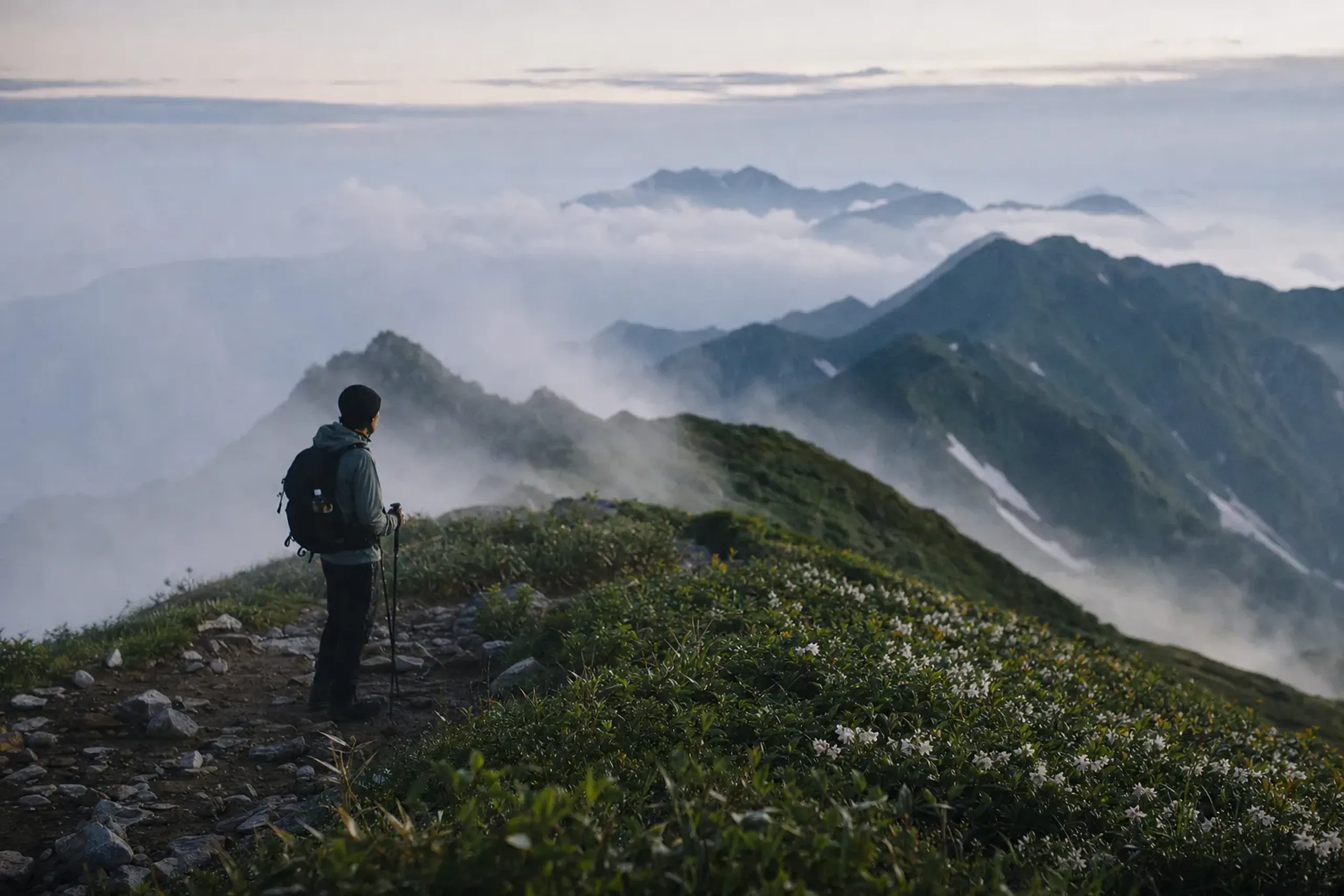
The most popular approach is from the Betta-deai trailhead, and the day reads like a slow unfolding: forest shade, long switchbacks, then open slopes where wind and cloud do their own choreography. Quiet work.
From Betta-deai, two main routes climb toward the Murodo area: Sabo Shindo and Kanko Shindo. Both are public hiking trails. Both demand steady legs.
Sabo Shindo: The Standard Line Up
Sabo Shindo is often treated as the baseline route in Ishikawa-side planning. Roughly speaking, official sources describe the ascent to the Murodo lodge area as about 4 to 4.5 hours, with a descent around 2.5 hours.
The distance varies by source (commonly described around 5.4 to 6.0 km), and Ishikawa’s time table is dated (2015), so we treat the numbers as guidance, not a promise. Bring a watch anyway. You will use it.
Kanko Shindo: A Longer Rhythm
Kanko Shindo is typically listed as longer in time. A common set of figures is about 4 hours 50 minutes up and around 3 hours down.
The payoff is not “better.” It is different. The same mountain gives you a different day depending on your line, the wind, and where the cloud breaks open.
Hirase-Do: The Gifu-Side Alternative
Hirase-do is a major route from the Gifu side. For travelers staying on the Ishikawa side (Kanazawa and the foothills), it is usually not the simplest logistics, but it matters for understanding the park’s scale.
How Long Does It Take To Climb Hakusan From Betta-Deai?
The popular Betta-deai round trip to Hakusan’s summit is commonly described as about 8–10 hours, but Ishikawa’s own guidance discourages day climbs for anyone not confident in their fitness.
That “8–10 hours” is a planning anchor often cited for the standard approach. It does not include the stress of starting late, the drag of wet weather, or the way a snow patch can slow a group that expected summer trail.
The Hakusan Tourism Association recommends one night and two days, and that advice matches what our team at Japan Royal Service sees in the field. A night at altitude changes everything. Sleep. Water. A calmer summit attempt.
If your instinct is to force a day trip, pause. Big mistake. Hakusan rewards patience, and it punishes haste.
Murodo And The Summit: Where The Mountain Turns Quiet
Murodo is the high resting point, where people stop, eat, and re-check the sky. In the 2026 example (secondary and prefectural information), the Murodo-level lodge opened for the season on 1 May and was due to close on 16 October.
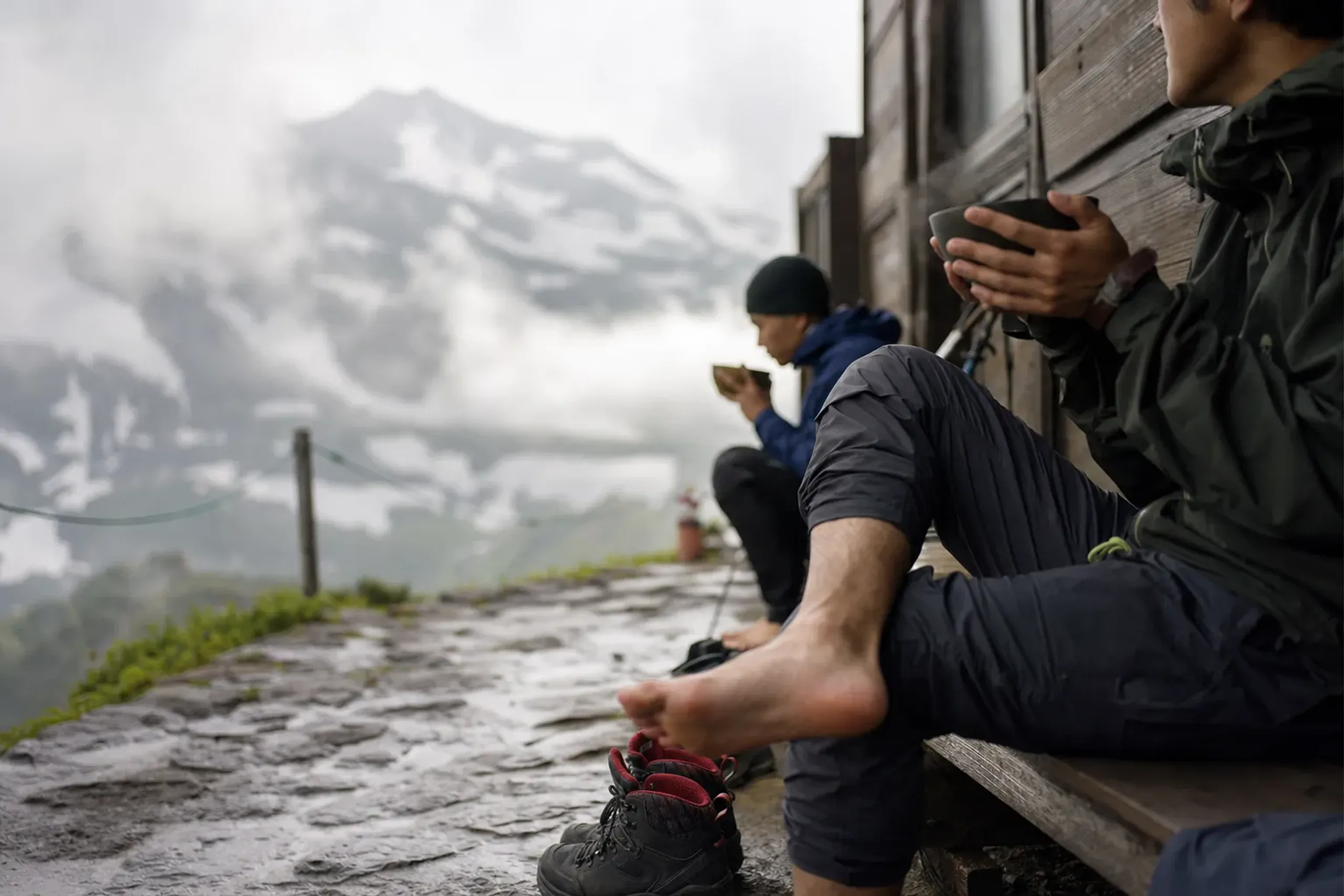
Overnight stays require a reservation made through the lodge’s official channels. Camping is prohibited in Hakusan National Park outside designated campsites. That rule is not negotiable.
From the Murodo area to the summit, the Hakusan Tourism Association describes the distance as about 900 meters. We do not treat that as “quick.” At altitude, the last stretch can feel like a separate climb.
At dawn, even in summer, the air can sting your fingers. You see why people come. The crater-like contours. The long volcanic lines. The sense that the landscape is older than language. For those who value discretion above all, there is also something quietly rare in standing at a place so few reach, with no audience and no spectacle — only the mountain and the first light.
Flowers On Hakusan: What Blooms, And When
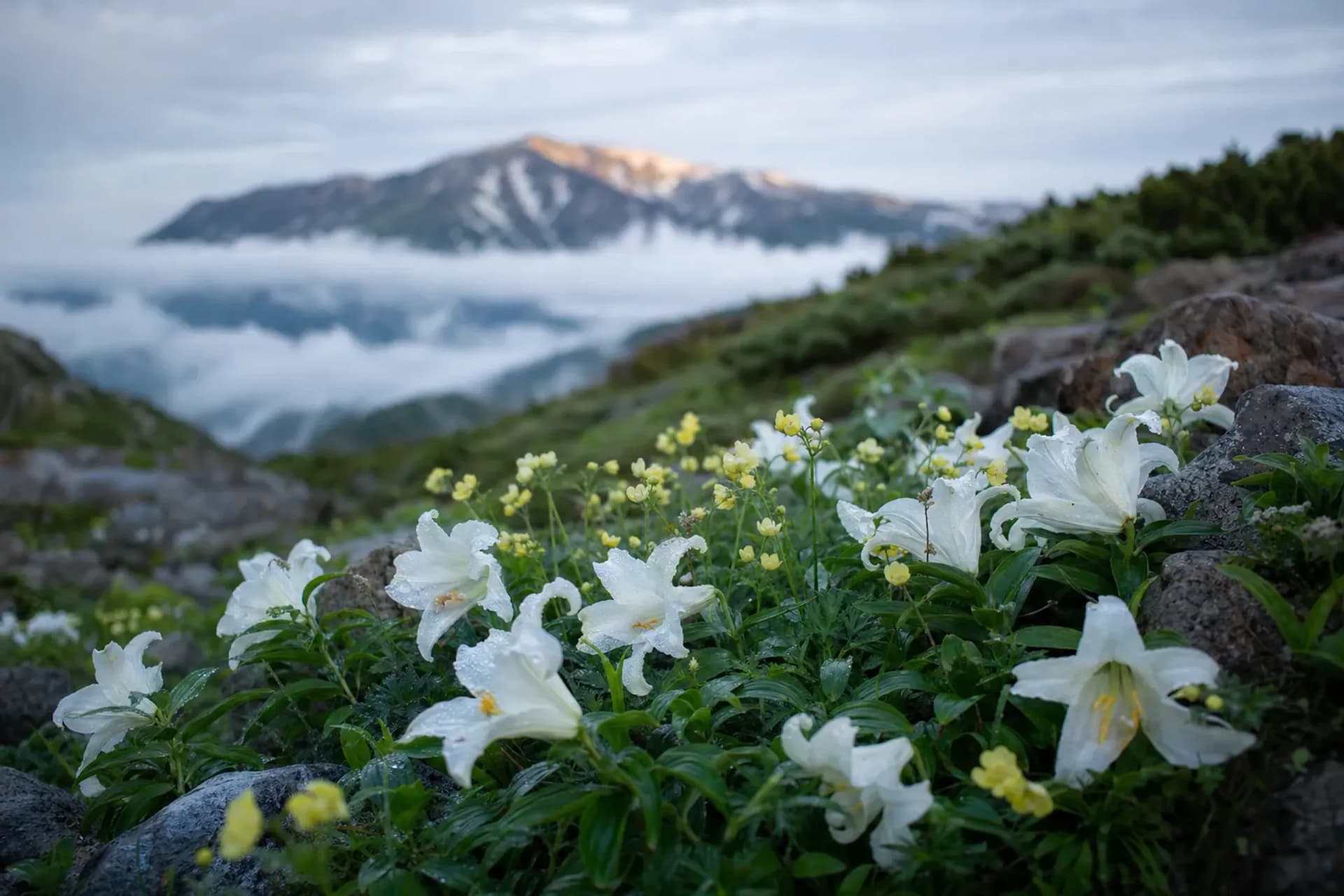
Hakusan’s alpine zone blooms from early July to late September, with over 250 varieties recorded, and the peak scene shifts week by week as the snow retreats.
Hakusan City’s older English materials describe hakusan-ichige blooming in the first half of July, and hakusan-furo from July into August. These are the details you notice when you stop rushing — a small cup of white petals beside a shrinking snow tongue, so easily missed by the hurried.
The famous mass bloom is associated with the Ohanamatsubara slope, often described as cresting around mid-August.
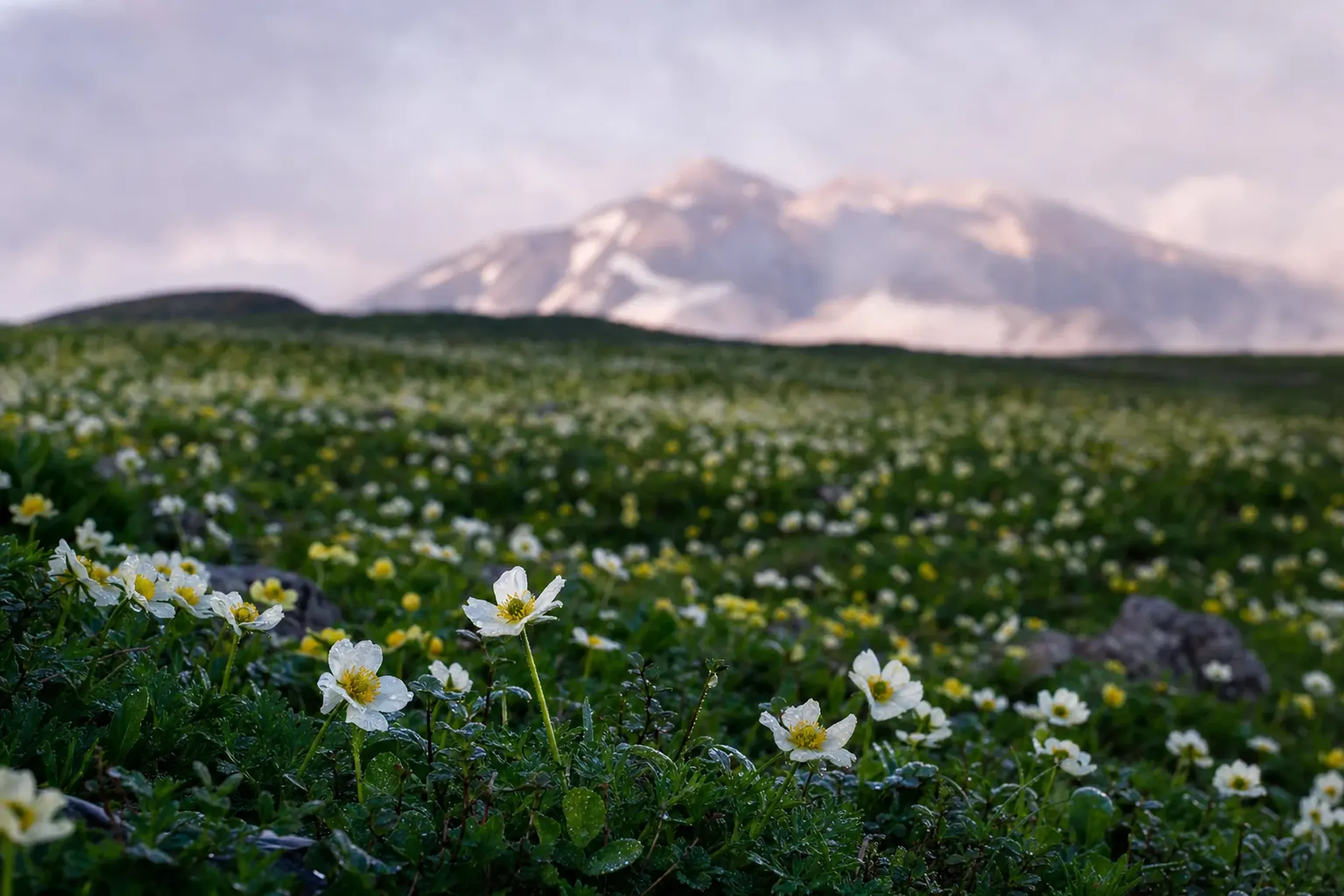
Timing moves with weather. You treat “mid-August” as a target, then you confirm conditions before you commit. Here again, shun is everything: arrive a week early or a week late, and the slope is simply green.
Some people come for the summit. Others come for the flowers and never feel the need to stand on the highest point. Both are valid. The mountain is not a checklist.
Snow, Weather, Bears, And Volcano Alerts: The Unromantic Truth
Hakusan in summer still demands winter thinking: snow can linger until mid-to-late July, the weather shifts quickly, bears are present, and the mountain is classified as an active volcano with official alert reporting.
Ishikawa’s mountain guide (2023) warns that snow usually remains until the middle to end of July and that routes should be chosen carefully. As an example of how late snow can persist, Japan’s Ministry of the Environment reported in July 2025 that some routes required crampons and an ice axe. That is not a guarantee for any other year. It is a reminder.
Weather is the real boss. Official guidance warns that mountain conditions become dangerous in bad weather, and that mornings and evenings can be 10°C or below even in summer. Pack rain gear and spare layers. Then pack one more dry layer.
Bears are not a story to romanticize. Advisories were in effect in Ishikawa Prefecture (page updated 24 September 2026) and in Gifu Prefecture (page updated 17 August 2026).
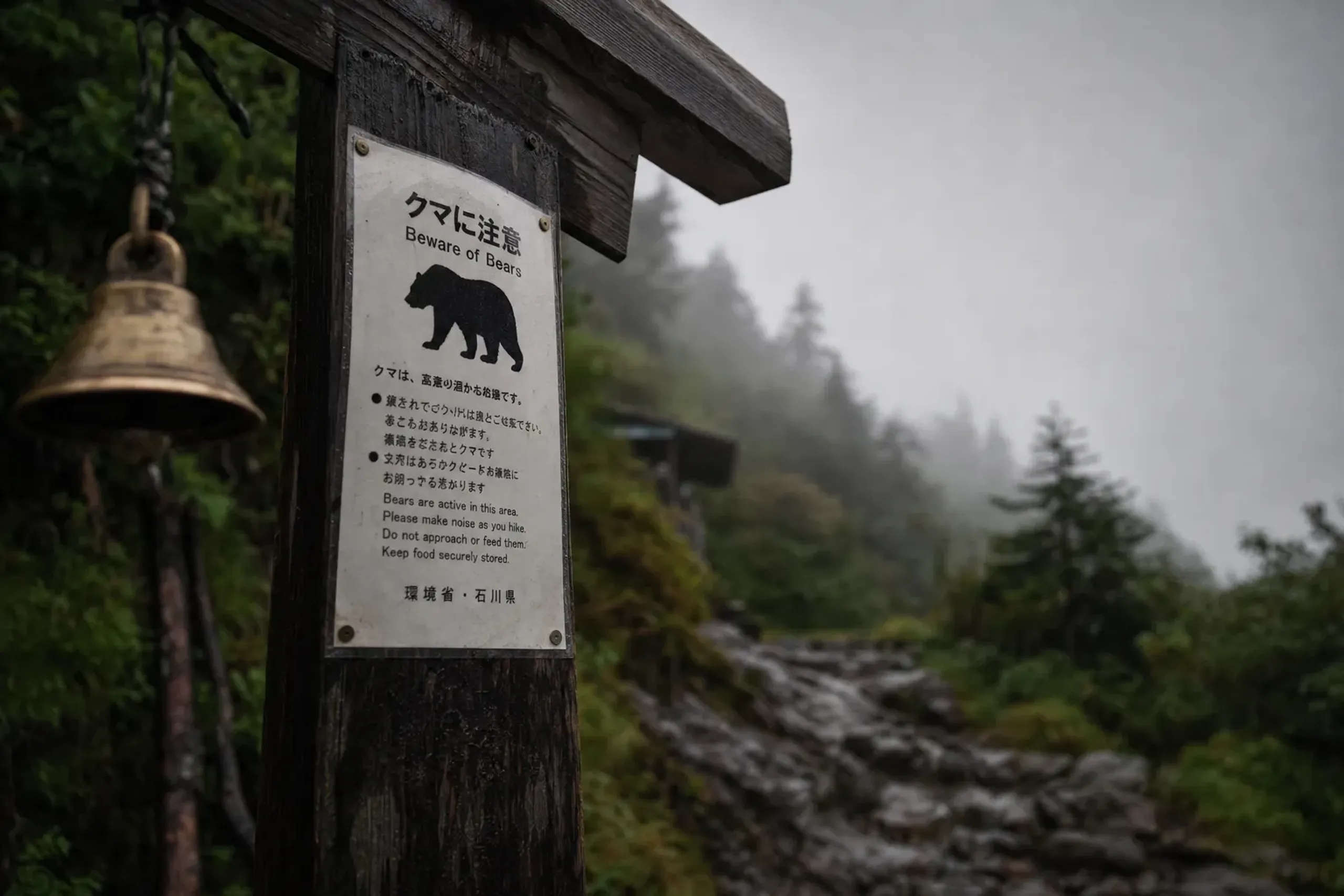
Carry a bear bell and check the prefecture notice before you go.
And the volcano. The Japan Meteorological Agency (JMA) listed Hakusan at Volcano Alert Level 1 in its report published on 8 October 2026 (September 2026 reporting period), with the next report due on 10 November. You check the latest bulletin before any peak-day plan. Always.
Do I Have To Submit A Climbing Plan For Hakusan?
Yes—under an Ishikawa ordinance, submitting a climbing plan is mandatory, either via the trailhead box or online.
Hakusan City (page updated 27 May 2026) states this requirement plainly. It is about safety, search timing, and accountability. Even strong hikers get lost when fog drops and paths braid into one another.
We suggest you write the plan as if someone else will need it. Because they might. Include your route choice, intended overnight point, and turnaround time. Then stick to it unless conditions force change.
Access From Kanazawa: The Straightforward Way To Reach Ichinose
From Kanazawa Station, seasonal public transport reaches the Hakusan trailhead area, with published travel times around 110 minutes to Ichinose by the Hokuriku Railroad climbing bus.
The Ministry of the Environment’s access guidance cites that roughly 110-minute bus ride to Ichinose. The Hakusan Tourism Association (secondary) has also described Kanazawa Station to Betta-deai as about 2 hours, and Matto Station to Betta-deai as about 1 hour 40 minutes.
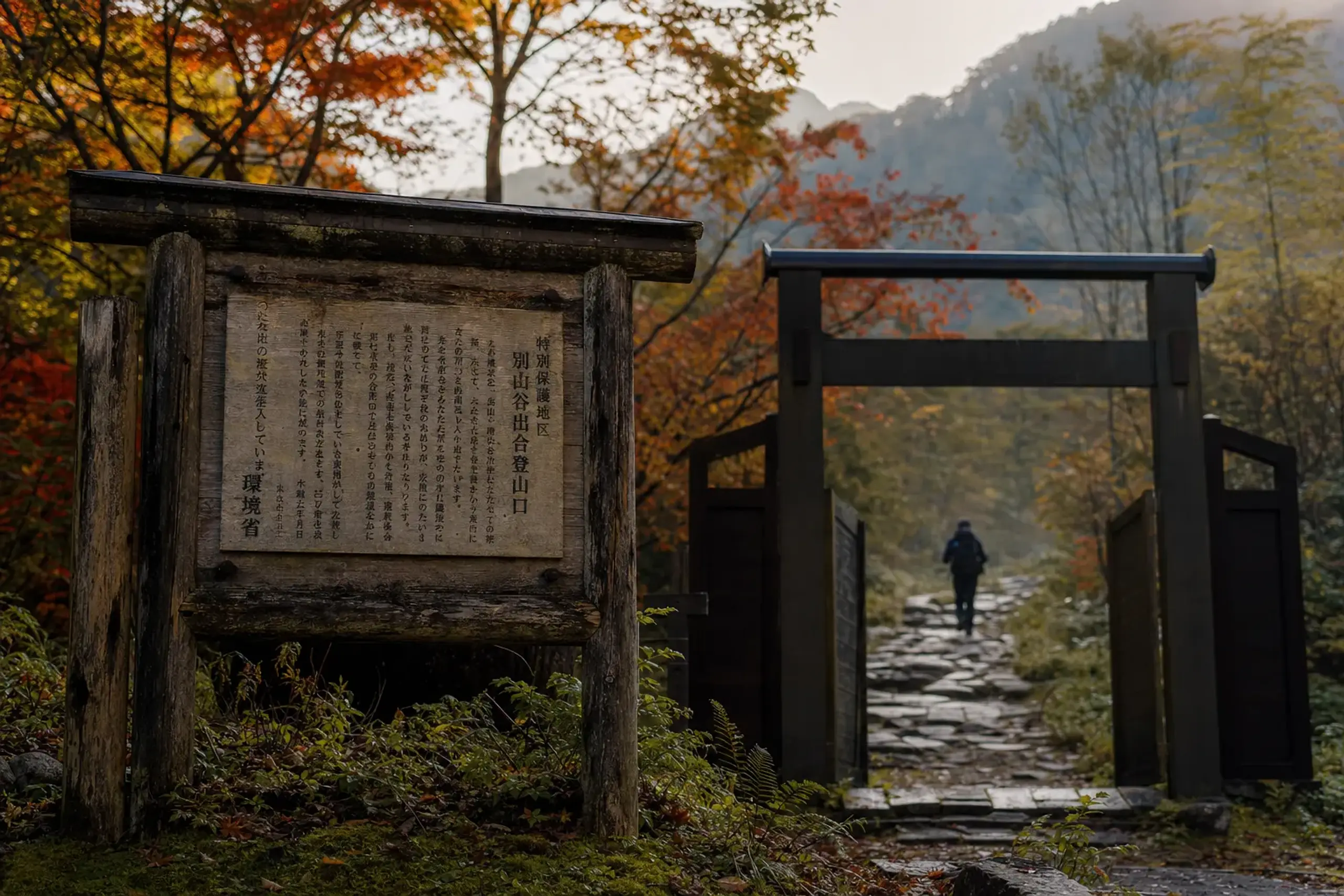
Bus operating dates vary by season. You check the calendar.
If you prefer comfort and timing control for an early start, our guests often consider a private transportation day anchored around Ichinose, with the Betta-deai leg handled by the official shuttle on regulation days. No improvising in the dark, and no wasted hours on an unfamiliar bus timetable.
One practical note: Kanazawa’s climate is not the summit’s climate. JMA normals for Kanazawa (lowland) list a July mean of 25.8°C (mean max 29.5°C, mean min 22.9°C) with 233.4 mm rainfall, and an August mean of 27.3°C (max 31.3°C, min 24.1°C) with 179.3 mm rainfall (1991–2020). Up high, you can be shivering in gloves while Kanazawa bakes.
The Ministry’s Chubu office offers a useful illustration: when it is about 30°C near the coast, the summit can be around 14°C. Treat that as a mental model. Not a measurement.
One-Line Detours: White Road, Shirakawa-Go, And Tedori Gorge
Some travelers pair the climb with a slower day before or after. Not as a “bonus.” As recovery.
- Hakusan Shirakawa-go White Road: Ishikawa Prefecture’s 27 May 2026 notice listed full opening planned from 12 June to 10 November, with June–August hours of 07:00–18:00; it is a toll road (no price here), formerly called the Hakusan Super Rindo.
- Shirakawa-go: The UNESCO-listed Historic Villages of Shirakawa-go and Gokayama are within reach as a separate day if you are building a wider Hokuriku and Gifu arc.
- Tedori Gorge: Hakusan City describes cliffs of roughly 20–30 meters stretching about 8 km, and the area ties into the Hakusan Tedorigawa UNESCO Global Geopark (2023).
If you are collecting mountain-season ideas across Japan, you may also enjoy our guides to Climbing Mt. Fuji In Summer and Hakuba In Summer. Different mountains. Different risks.
How Our Concierge Team Builds A Hakusan Summer Plan (Without Guesswork)
Hakusan planning is mostly about removing fragile assumptions, then building a schedule that can absorb bad weather and regulation days. Calm logistics. Serious pacing.
Our team at Japan Royal Service typically starts with the known constraints, then works outward. We verify the opening and restriction calendar with Ishikawa Prefecture each spring, along with current trail-status updates, bear advisories, and the latest JMA volcano reporting for Hakusan. Around that foundation, we quietly assemble the softer layers — the right ryokan in the foothills, a knowledgeable mountain guide, discreet door-to-door logistics — so that the only thing left for you to do is climb.
If Hakusan belongs on your summer in Japan, let us build the climb around your pace and your window. For a confidential, tailor-made itinerary timed to the season and handled with complete discretion, contact us here.