In this guide
- 01Why Must Travelers Visit Hirosaki Castle In Spring 2026?
- 02The Oldest Somei-Yoshino And The Hirosaki Method
- 03When Is The Best Time To See The Hanaikada Petal Moat In Aomori?
- 04The Water Vantage: Rowboats And Shunyō-Bashi
- 05The Wardens' Seven Sakura Views
- 06The "Three Great Night Blossoms" Connection
- 07How Does Early Flowering Shift The 2026 Hirosaki Sakura Matsuri?
- 08Frequently Asked Questions
- 09Why Choose Japan Royal Service?
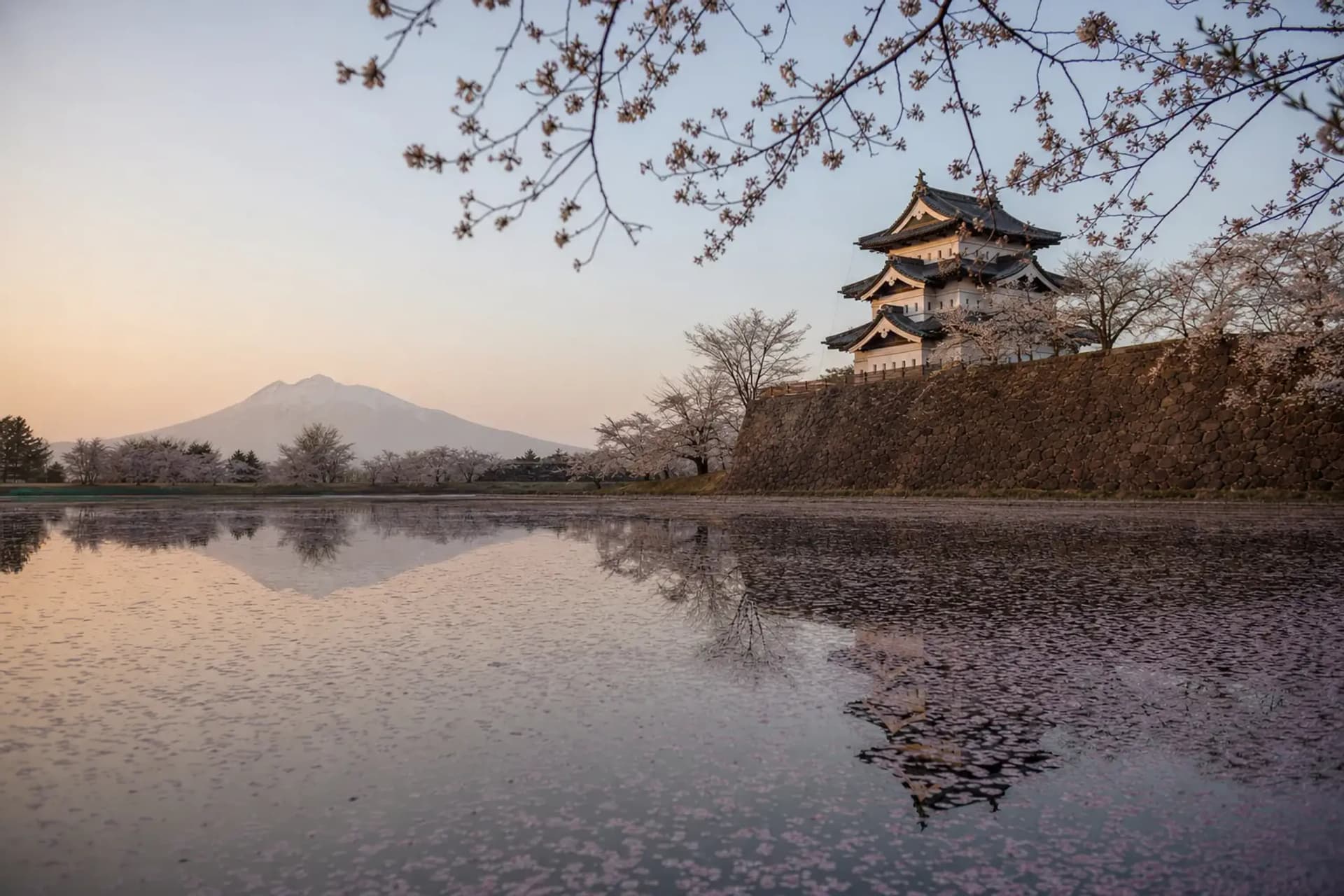
A white keep framed against a canopy of pink. Mount Iwaki looming sharply in the distance. The visual is striking. It is also expiring. For eleven years, Hirosaki Castle's original 1611 keep has sat on a temporary platform, separated from its historic stone foundation. Spring 2026 marks the final blossom season to capture this exact architectural composition.
Our team at Japan Royal Service monitors these subtle shifts in Japan's cultural landscape. While many travelers chase the Sakura front northward purely for the blooms, Tohoku offers something rarer this year. A brief, closing window to witness a centuries-old structure just before it moves again.
Why Must Travelers Visit Hirosaki Castle In Spring 2026?
Spring 2026 is the final opportunity to photograph the original 1611 keep on its temporary platform against Mount Iwaki before relocation work begins in July.
In 2015, the threat of a collapsing stone wall forced a drastic intervention. Rather than dismantle the structure, engineers employed hikiya. This traditional Japanese building-relocation technique lifted the three-story keep intact, sliding it roughly 70 meters outward. A quiet marvel of engineering.
The return journey starts in July 2026. The keep is scheduled to settle back onto its reinforced foundation by mid-November. The specific photographic framing allowed by the temporary platform—where the keep pairs perfectly with Tsugaru's own "Fuji"—will vanish entirely. That exact angle simply will not exist next year.
Interior viewing has been paused throughout this eleven-year hiatus. However, the exterior spectacle remains intact. For those seeking the genuine, unrepeatable moments of Tohoku travel, this season demands attention.
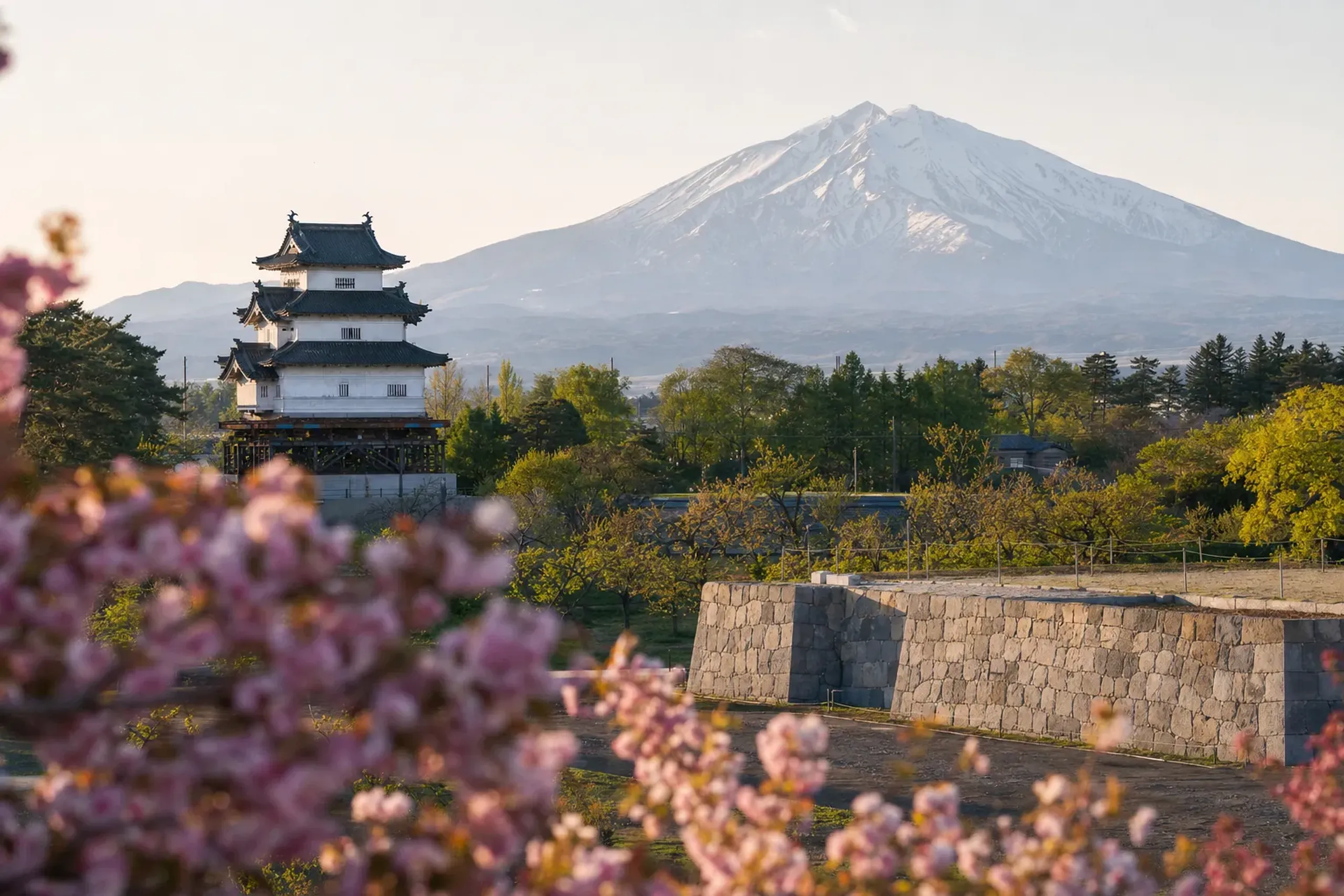
Key fact: The keep relocation (hikiya) restarts in July 2026. The structure's interior remains strictly closed to the public until it rests on its original foundation after November 2026.
The Oldest Somei-Yoshino And The Hirosaki Method
Hirosaki Park hosts roughly 2,600 cherry trees spanning 52 varieties. Yet one specific specimen commands quiet reverence. Planted in 1882, Japan's oldest Somei-Yoshino tree still blooms here. Time tests all living things. This tree has survived 140 years, completely defying the typical 60 to 80-year lifespan of its variety.
It endures because of a distinct local craft. The park's sakura-mori (cherry blossom wardens) apply pruning techniques borrowed directly from Aomori's famous apple orchards. They cut back the older wood aggressively, forcing nutrients into younger, vigorous shoots. This is the essence of shokunin—a mastery of localized, generational knowledge.
The result is a floral density rarely seen in younger parks. A typical Somei-Yoshino blossom cluster holds three to four flowers. In Hirosaki, the local method pushes that number to five or seven. The branches sag heavily under the sheer weight of the petals.
When Is The Best Time To See The Hanaikada Petal Moat In Aomori?
The optimal window to witness the hanaikada petal carpet forms three to five days after full bloom, when fallen blossoms completely cover the moat's surface.
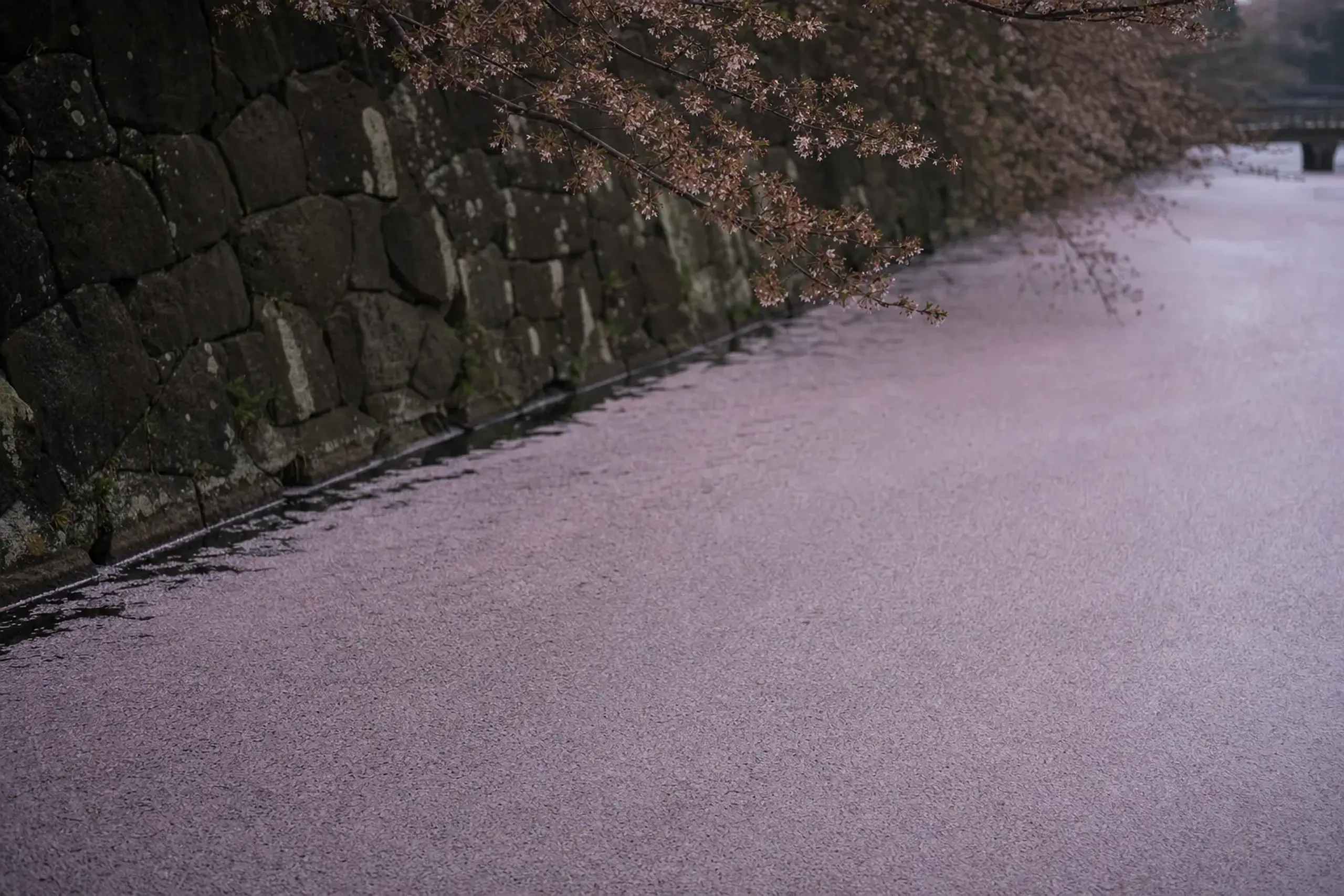
A heavy breeze strips the branches. The blossoms do not simply vanish. They drift downward, landing on the still waters of the outer and inner moats.
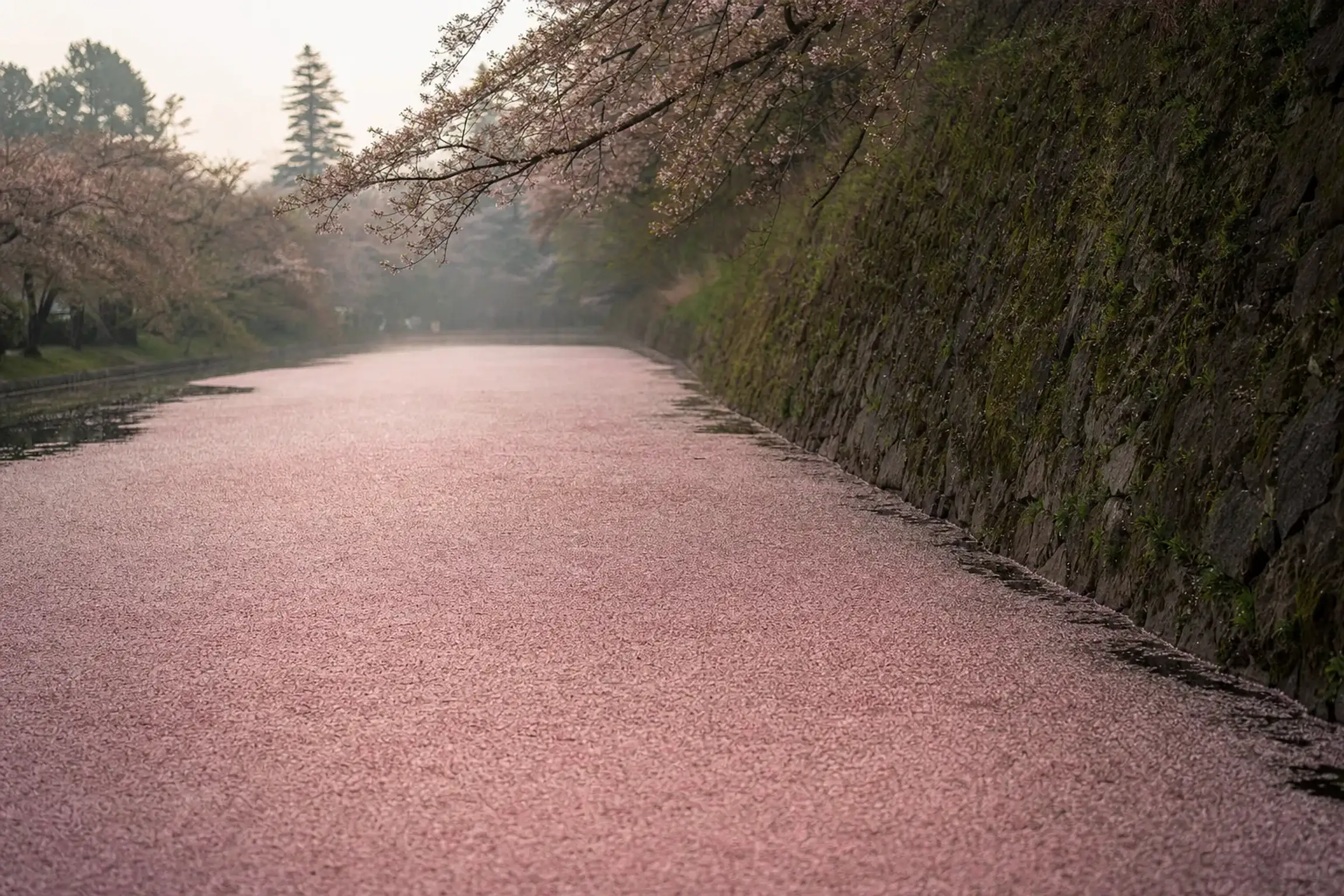
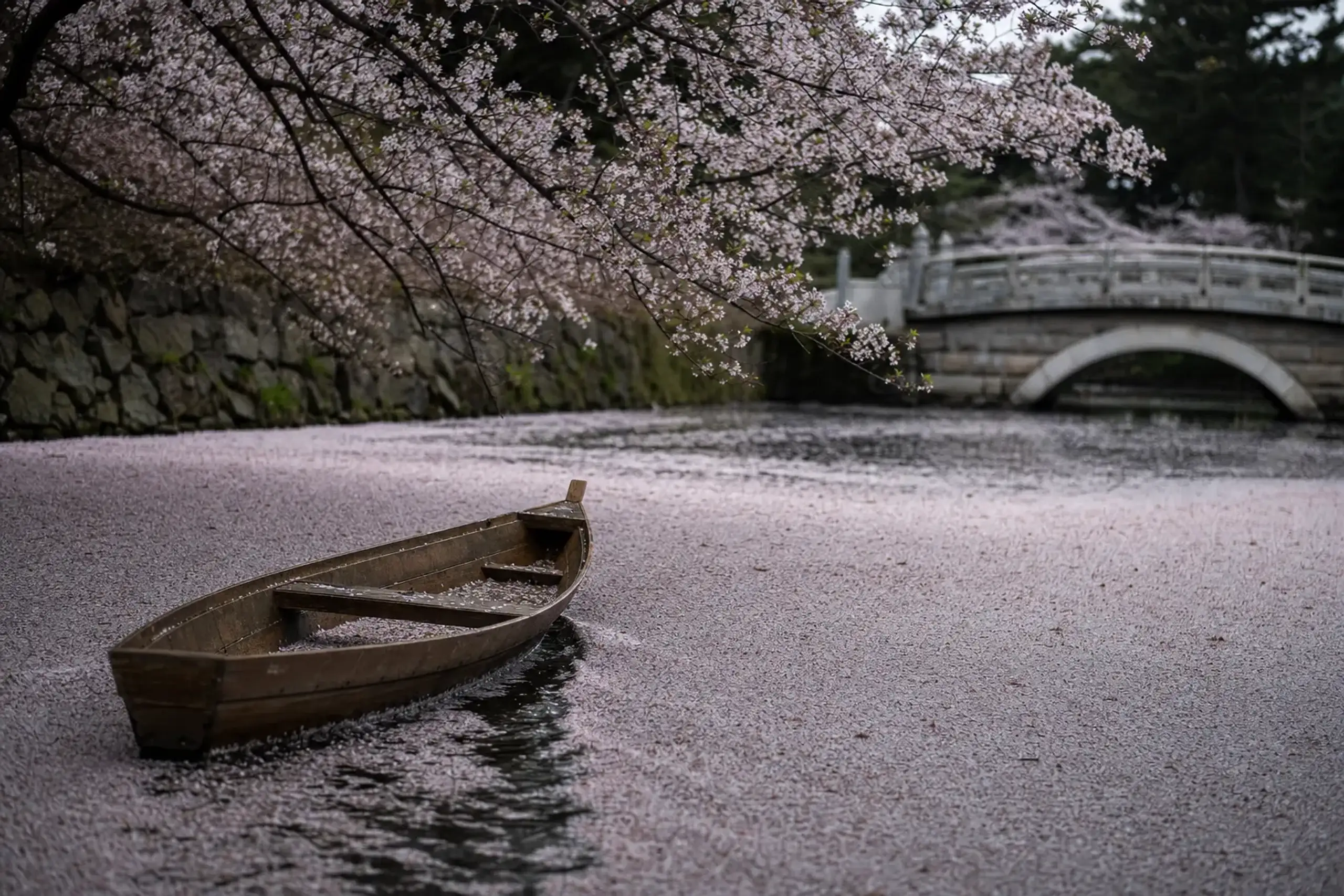
This phenomenon, known as hanaikada (flower rafts), becomes a thick, textured carpet of pale pink.
It transforms the water into solid ground. In a landscape dominated by the restraint of wabi-sabi aesthetics, the hanaikada feels almost lavish. The fading petals represent beauty in its final, most striking stage. Monitoring this exact transition requires precise, real-time forecast tracking.
The Water Vantage: Rowboats And Shunyō-Bashi
Walking the park grounds provides one perspective. Drifting beneath the low-hanging branches offers another entirely. Rental rowboats operate on the inner moat (Naka-bori) during the daytime, allowing travelers to navigate directly through the floating petal carpets.
The experience alters your vantage point. From the water near Shunyō-bashi bridge, the cherry branches form an immersive tunnel above you. The noise of the festival grounds fades. You hear only the oars breaking the water.
For a distinct evening perspective, official Yozakura-bune (night cherry blossom) boat tours run during a narrow window in mid-April. These dedicated night boats glide through the illuminated petals. Guests interested in learning more about integrating these specific scheduled departures into their itinerary may contact our concierge for tailored guidance.
The Wardens' Seven Sakura Views
The local sakura-mori have curated a specific list of the park's finest visual compositions. Following their guidance reveals a deeper, more intentional way to experience the grounds.
The Heart-Shaped Sky
Two overlapping cherry trees in the Ninomaru area form a perfect heart shape against the sky. It is a subtle formation that requires standing in exactly the right spot, a quiet detail easily missed by rushing crowds.
The Weeping Cherry and the Keep
The contrast of the bright Yaebeni-shidare (weeping cherry) drooping elegantly in front of the stoic, white walls of the temporary keep. This is the exact composition that expires in July 2026.
The Shunyō-Bashi Bridge Tunnel
Standing on the bridge and looking down the moat. The trees lean so heavily over the water that they interlock, creating a complete corridor of pink. It is particularly striking just after sunset.
The "Three Great Night Blossoms" Connection
Hirosaki is widely recognized as one of Japan's Three Great Night Cherry Blossoms, sharing the designation with Takada Castle in Niigata and Tokyo in blossom at Ueno Onshi Park. Each location wields light differently.
Here, the defining characteristic is the mirror world. As dusk settles and the wind drops, the dark, still surface of the moat perfectly reflects the illuminated branches above. The horizon line vanishes entirely. The illuminated blossoms seem to stretch infinitely in both directions.
Achieving the best view requires patience. The calmest waters usually appear in the brief window immediately after sunset, before the evening temperatures shift and stir the breeze.
How Does Early Flowering Shift The 2026 Hirosaki Sakura Matsuri?
Due to early bloom projections, organizers have shifted the 2026 festival forward to run from April 10 through May 5, requiring flexible travel planning.
Nature sets the final schedule. Recognizing the broader warming trend, the city adjusted the dates a full week earlier than initially planned. Travelers must remain adaptable.
Securing private transportation allows you to adjust your regional movements dynamically based on the morning's weather and crowd density.
During the festival, roughly 200 food stalls operate in the free outer areas of Ninomaru and Sannomaru. The park extends its hours, with the paid inner zones remaining open until 21:00. Special illumination activates at sunset, turning the historic grounds into a glowing theater.
Frequently Asked Questions
Is the interior of the Hirosaki Castle keep open to visitors?
No. The keep's interior remains closed to the public while it rests on its temporary platform. Access will not resume until the structure is safely secured on its original stone foundation after November 2026.
How late does the night cherry blossom illumination run?
Special illumination during the festival typically operates from sunset until around 10:00 PM. Hours extend during peak bloom, so visitors should verify exact timings upon arrival in Aomori.
How can foreigners book the Yozakura-bune night boat tours?
Official reservations for the dedicated night boats open closer to the festival dates and sell out rapidly. Guests interested in learning more may contact our concierge for tailored guidance on navigating this process.
Why Choose Japan Royal Service?
Approaching a destination as renowned as Hirosaki Park requires strategy. Navigating peak bloom without yielding to overwhelming crowds is an art form. Our concierge team ensures your bespoke itinerary remains fluid, adjusting to the very latest floral forecasts.
We prioritize your discretion and comfort. By securing luxury lodging in Aomori and arranging seamless regional transit, we allow you to focus entirely on the fleeting beauty of the landscape.
Hidden Japan is not always an undiscovered village; sometimes, it is experiencing a famous landmark at the exact right hour, from an exclusive vantage point.
For private coordination, reach our team directly via WhatsApp or LINE, or contact us here, to start planning your dream journey.