In this guide
- 01Why Tohoku's Peak Runs Before Kyoto's
- 02The Most Useful Planning Fact: Elevation Beats Latitude
- 03When Do Tohoku Cities Peak For Autumn Colour?
- 04Yellow Before Red, And The Gap Between Them
- 05Choosing A Base: What Each Kind Is For
- 06The Onsen Pairing That Tohoku Does Best
- 07Why You Need To Drive Tohoku, Not Just Ride The Rail
- 08Accommodation In Tohoku, Honestly
- 09How Crowded Does Tohoku Get In Autumn?
- 10Planning Around A Date That Moves
- 11What To Do If The Timing Misses
- 12Frequently Asked Questions
- 13Why Choose Japan Royal Service
Most travellers believe Japanese autumn means late November in Kyoto. They fly in, join the crush at Tofuku-ji, and go home thinking they saw the season. What they missed sat three weeks earlier and several hundred kilometres north. In Tohoku, the colour arrives first, and almost nobody plans for it.
This is a timing problem before it is a scenery problem. If you cannot travel in late November, you can still stand under peak colour by going north in late October. That single fact reorders the whole trip. Below is how the front moves through Tohoku, where to base, and how to hold a moving date without gambling your week on it.
Why Tohoku's Peak Runs Before Kyoto's
Tohoku's overall foliage season runs roughly mid-October to late November. That is weeks ahead of the famous Kansai peaks, and it is the reason a northern trip solves a scheduling conflict that Kyoto cannot.
Before you fix any date, read our companion piece on why the old averages have stopped holding: the forecast cycle now matters more than the calendar. In 2024 and 2025 the peaks ran one to two weeks late nationally, and Tohoku followed the same pattern. We assume that argument here rather than repeat it. What that post did not carry was Tohoku data. This one does.
For the broader case on why Tohoku rewards the detour at all, our regional writing on the north covers it. Here we stay narrow: bases, timing, and how the colour moves.
The Most Useful Planning Fact: Elevation Beats Latitude
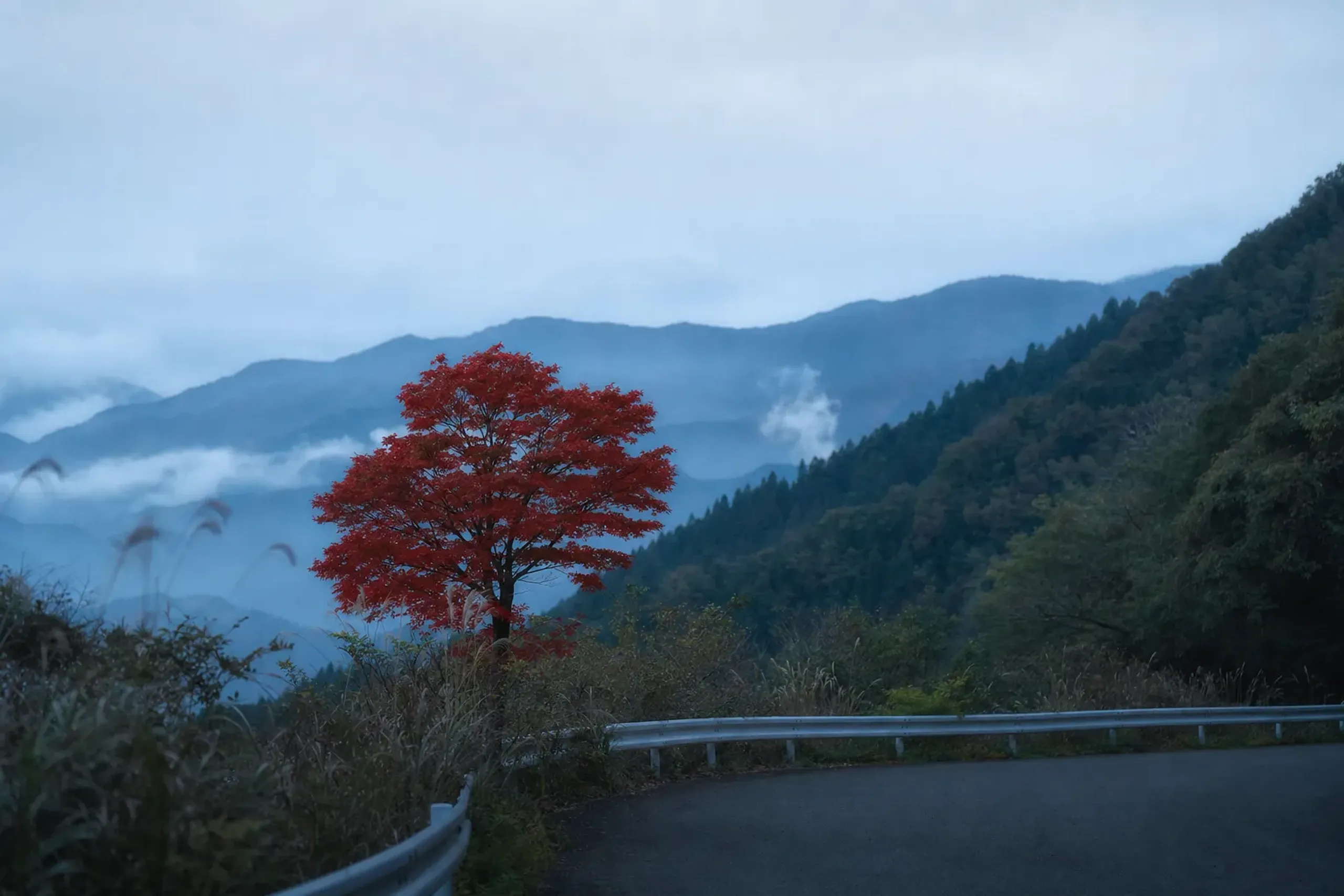
In Tohoku, height turns the leaves before north does. The mountains and gorges peak in late October to early November; the cities peak weeks later, in mid-to-late November. Elevation is the lever, not latitude.
This gives you something Kyoto never offers: a moving target instead of one nervous week. When the high ground has already turned, you drop into the valleys. When the gorges fade, the cities are just coming on. A base with both high and low ground within reach lets you chase the peak by moving an hour or two, rather than betting everything on a single altitude.
Think of it as two seasons stacked on top of each other. The upper one runs first. The lower one follows. Plan for the gap, and you are rarely off-peak.
When Do Tohoku Cities Peak For Autumn Colour?
In 2025, forecast peak dates for red foliage in the main Tohoku cities were: Aomori November 15, Akita November 18, Morioka November 19. These are forecasts, not observed dates.
Read them as the lowland end of the season. The cities sit at the tail because they sit low. By the time Aomori's streets are fully red in mid-November, the mountain gorges an hour inland have often already turned and begun to drop. The city dates are useful precisely because they mark where the front finishes, not where it starts.
Key fact: The 2025 city peaks (Aomori Nov 15, Akita Nov 18, Morioka Nov 19) are the late end of Tohoku's season. The high ground turns two to three weeks earlier. If your dates fall in late October, look up, not down.
Yellow Before Red, And The Gap Between Them
Yellow arrives first. In those same three cities in 2025, the yellow foliage ran earlier than the red — around November 5 to 8, roughly a week to ten days ahead of the reds.
This matters more than it sounds. If your window lands early, you are not too soon for colour; you are on time for a different colour. The gingkos and beeches carry gold while the maples are still turning. A traveller who arrives in early November and sees mostly yellow has not missed the season. They have caught its first half. Knowing that keeps a good week from feeling like a near-miss.
Choosing A Base: What Each Kind Is For
Tohoku does not reward a single fixed base as neatly as Kyoto does. Choose by function rather than by name.
Coastal And City Bases
These suit the late end of the season and travellers who want a room they do not have to leave every night. A city base gives you restaurants, easy arrivals, and the lowland colour that peaks in mid-to-late November. It is the wrong base for late October, when the colour is still high in the mountains and a long drive away.
Mountain And Gorge Bases
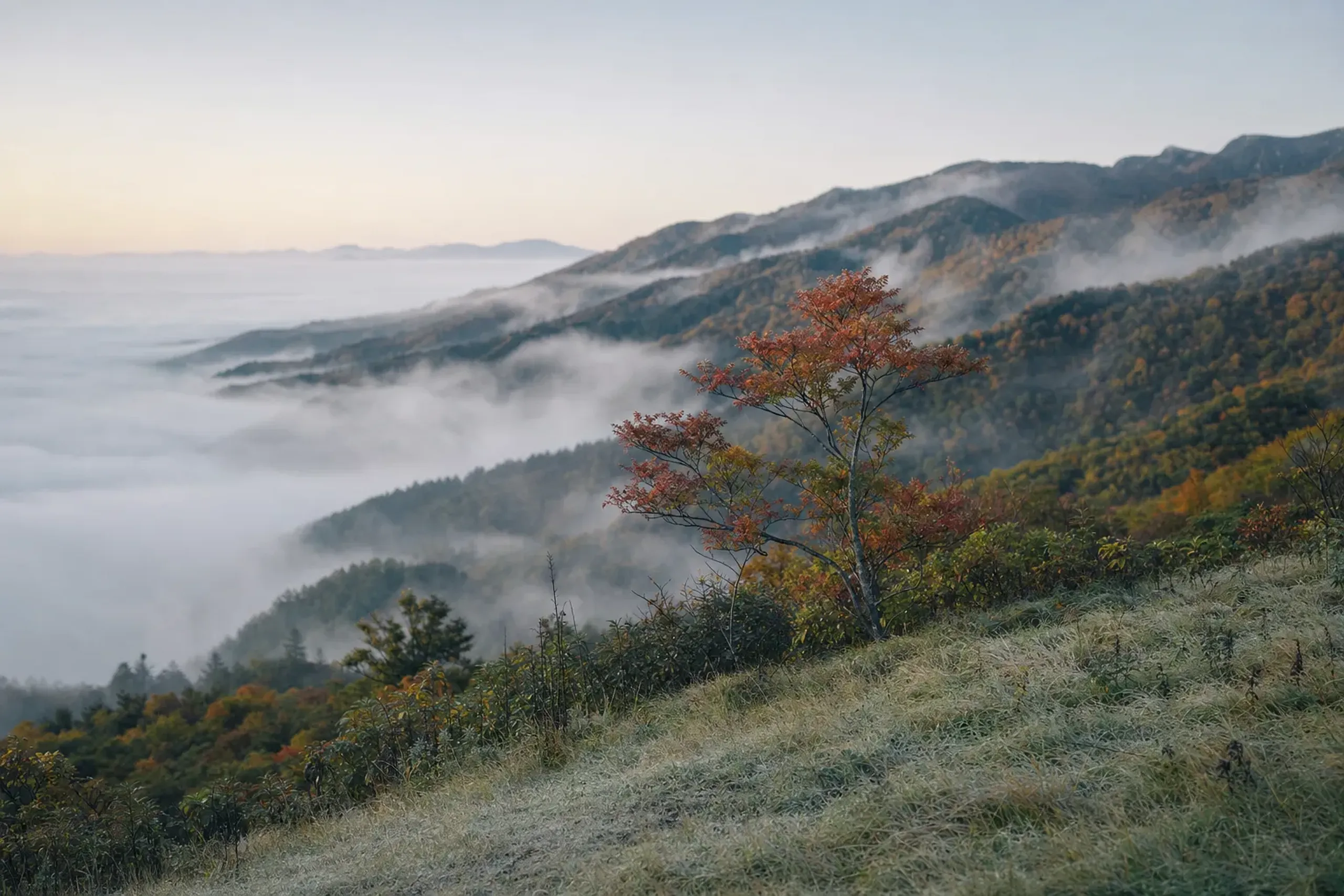
These are for the early season. Staying near the high ground puts you under the first colour, at first light, before the day-trippers arrive from the cities.
The trade-off is honest: inventory up here is thin, and the right room is often a ryokan rather than a hotel.
Onsen Towns As Bases
This is Tohoku's quiet advantage. The hot-spring areas sit close to the foliage corridors, so an onsen town gives you a base that is both comfortable and correctly placed. You walk the colour by day and soak at night, with very little transit in between. For much of the region, this is the answer.
The Onsen Pairing That Tohoku Does Best
The region's real edge is proximity: its hot-spring areas and its foliage areas overlap. You are rarely choosing between colour and a good soak. If you want to understand the onsen-town choice itself — the difference in character between towns — our comparison of three kinds of onsen town covers the ground. We will not repeat bathing here; the point for foliage is simply that the right onsen base doubles as the right viewing base.
Why You Need To Drive Tohoku, Not Just Ride The Rail
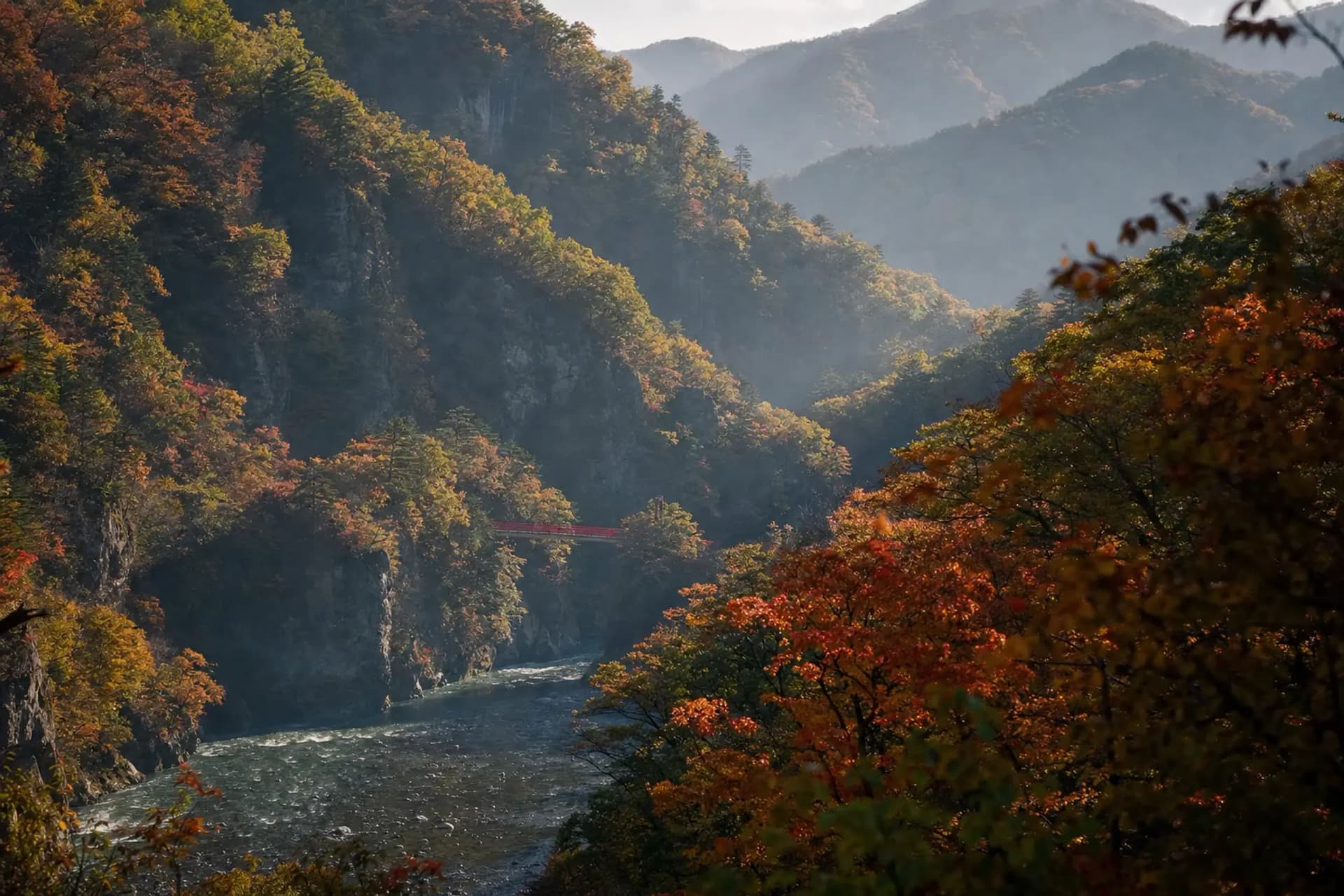
Rail reaches the cities. It does not reach the colour. The earliest and best foliage in Tohoku sits in the gorges and along the mountain roads, and those need a car.
This is the single logistics fact that changes the trip. The cities the trains serve are the late, lowland end of the season — the November dates above. The high ground that turns three weeks earlier is off the rail map. A private chauffeured vehicle is not a luxury flourish here; it is what makes the early season reachable at all. It also solves the crowding problem at the well-known gorges, where the seasonal shuttle buses fill and parking tightens on peak weekends. With a car and a driver, you arrive early, move on your own timing, and leave before the buses do.
Accommodation In Tohoku, Honestly
Here is the plain truth. Luxury hotel inventory is thin across most of Tohoku, and it is concentrated in a few onsen and resort areas. Outside those, the correct answer is a good ryokan, not a compromise hotel.
That is not a downgrade. In much of the region the finest room you can take is a well-run ryokan with its own kitchen and its own bath, and it will beat any business hotel nearby by a wide margin. If you are weighing the two registers against each other, our piece on traditional versus modern stays is the honest guide. The traveller who insists on hotel-standard rooms every single night will find Tohoku frustrating. The traveller who accepts a ryokan where a ryokan is the best thing available will stay closer to the colour and eat better for it.
How Crowded Does Tohoku Get In Autumn?
Far lighter than Kyoto or Nikko. But the well-known gorges do fill on weekends in season, and that pressure is domestic — Japanese visitors, not foreign ones.
This changes your tactics. Because the crowds are domestic and weekend-driven, midweek is quiet even at the famous spots. The Japan National Tourism Organization itself flags the seasonal bus and the autumn crowding at Naruko Gorge in Miyagi; that is a real pressure, not a rumour. The counter is simple: go on a weekday, go early, and go by car so you are not tied to the shuttle. Do that and the same gorge that heaves on a Sunday afternoon is nearly your own on a Tuesday morning.
Planning Around A Date That Moves
Do not fix a single day. Book a window, and choose a base from which both high and low ground are reachable. Treat any date you set in summer as provisional.
The logic follows everything above. The peak now runs later than the old averages promised, and it runs at different times at different heights. A window gives you room to move up or down as the forecast firms in September and October. A base with range gives you somewhere to move to. If your first choice of stay is full for the week you want, our note on handling the peak weeks when your first choice is taken applies here as much as anywhere. The principle is the same north or south: hold flexibility in the dates, not just the itinerary.
What To Do If The Timing Misses
You have two moves, and they are opposites of the ones people reach for. If you arrive and the colour has not come yet, go higher — the gorges and mountain roads turn first.
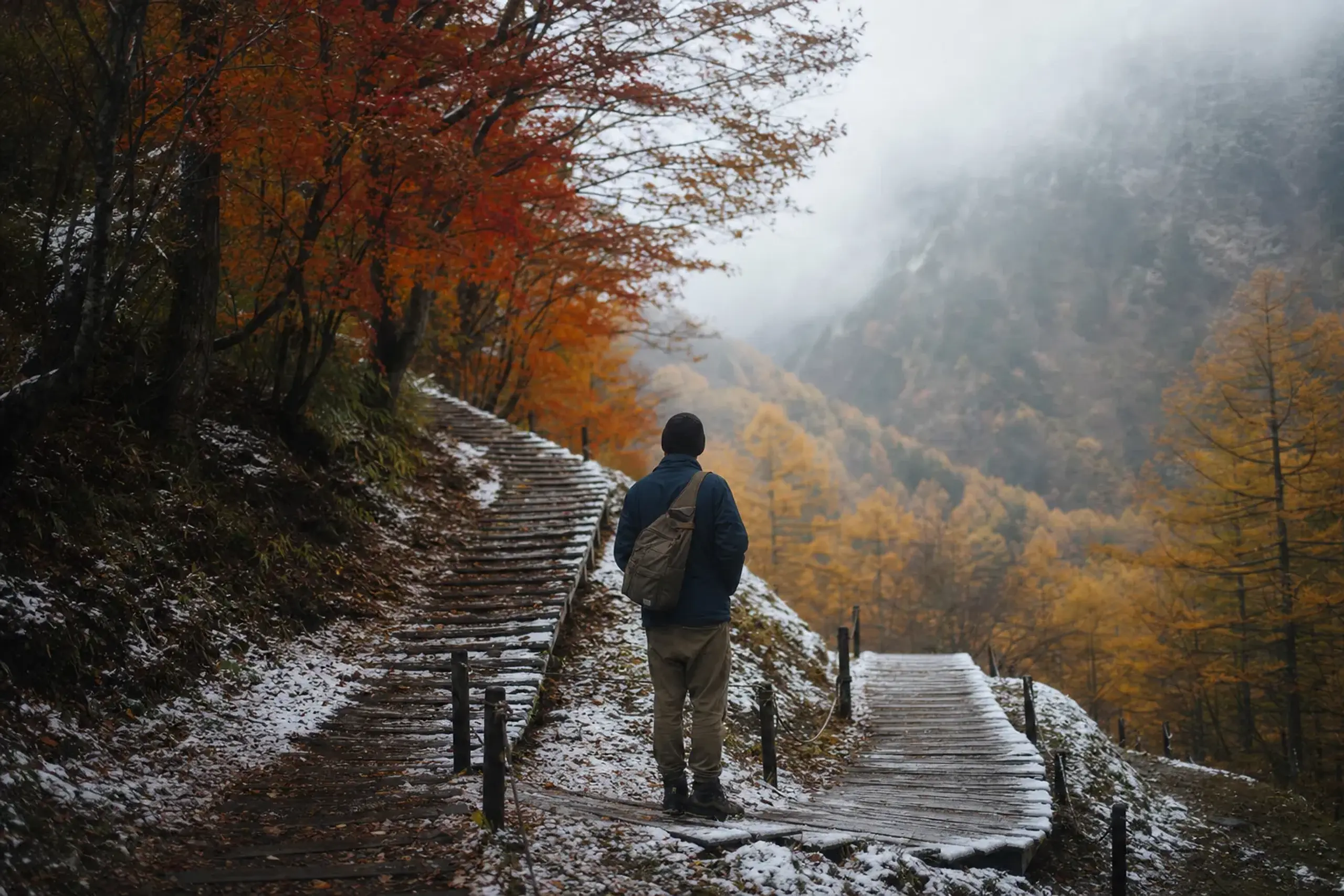
If you arrive and it has already dropped in the lowlands, go higher again, or go further north, where the season lingers.
Elevation is your correction in both directions. Too early, climb. Too late in the valleys, climb, because the upper reaches held on. This is exactly why a car and a base with range matter: they turn a mistimed week into a fixable one. In Kyoto a late peak simply means you missed it. In Tohoku, you drive to it.
Frequently Asked Questions
Is Tohoku's autumn foliage really earlier than Kyoto's?
Yes. Tohoku's season runs roughly mid-October to late November, weeks ahead of Kansai. A traveller who cannot make late November can still catch peak colour by going north in late October, when Tohoku's mountains and gorges turn.
When did Aomori, Akita and Morioka peak for autumn colour in 2025?
The 2025 forecast red-foliage peaks were Aomori November 15, Akita November 18, and Morioka November 19. These are forecast city dates and mark the late, lowland end of the season; the mountains turned two to three weeks earlier.
Do I need a car to see the best foliage in Tohoku?
In practice, yes. Rail reaches the cities, which peak latest, but the gorges and mountain roads that turn earliest need a car. A private vehicle also lets you avoid seasonal shuttle crowds at busy gorges like Naruko.
Will Tohoku be as crowded as Kyoto in autumn?
No. Tohoku is far quieter than Kyoto or Nikko. The famous gorges do fill on weekends, but the pressure is domestic and weekend-driven, so a weekday visit by car keeps even well-known spots calm.
What accommodation should I expect across Tohoku in autumn?
Luxury hotel inventory is thin outside a few onsen and resort areas. Across much of the region, a good ryokan is the right choice rather than a hotel, and it often sits closer to the colour and serves better food.
Why Choose Japan Royal Service
Tohoku rewards a concierge who can hold a moving date and drive the region on the day the colour arrives. That is the work. Our team at Japan Royal Service books accommodation across Tohoku — the onsen ryokan near the gorges, the city rooms for the later lowland peak — and we drive the region ourselves, which is what puts you under the early high-ground colour that rail cannot reach.
In our experience the trip fails on two things: a date fixed too early and a base with no range. We plan against both. We place you where both high and low ground are within a morning's drive, hold your dates as a window until the forecast firms, and adjust as the front moves. Discretion is assumed throughout; your itinerary stays yours. When the timing shifts, we go higher or go north, and you stay on peak.
Tell us your available dates and we will place a base and a window against them. To plan privately, reach our team via WhatsApp or LINE, or contact us here.