In this guide
- 01Fixed Calendars Versus Forecasts
- 02Spring: The Alpine Route Opens As The Squid Peak
- 03Summer: Alpine Flowers And The Obon Squeeze
- 04Autumn: Foliage, Ropes Going Up, And Crab
- 05Winter: Ropes, Illumination, And Honest Snow Expectations
- 06How Hard Is Each Hokuriku Window To Book?
- 07Which Windows Combine And Which Conflict
- 08Honest Limits: Transport And Lotteries
- 09Frequently Asked Questions
- 10Why Choose Japan Royal Service
A traveler once booked ten nights in Hokuriku for "winter." The plan sounded right on paper. But the trip landed two weeks after the female snow crab had left the market, three weeks before the Kenrokuen night illumination, and on a stretch of dates with no Shirakawa-go light-up at all. Ten nights, and not one of the windows that actually mattered lined up.
That is the mistake this guide exists to prevent. Hokuriku's best moments are short, and each runs on its own clock.
Fixed Calendars Versus Forecasts
Most of Hokuriku's signature moments run on fixed calendars, not on nature's guesswork. The Alpine Route opens on an announced day. Kenrokuen's pines get their ropes on a set schedule. The snow crab season opens on a fixed date. This makes planning far more predictable than the moving targets of cherry blossom or autumn foliage, which shift with the weather each year.
Bloom and leaf timing are a different problem entirely, and we have written about how to read those forecasts elsewhere. Here, the harder skill is not prediction. It is knowing which weeks matter and which are hard to book.
Spring: The Alpine Route Opens As The Squid Peak
Spring in Hokuriku carries two of the year's tightest windows at once.
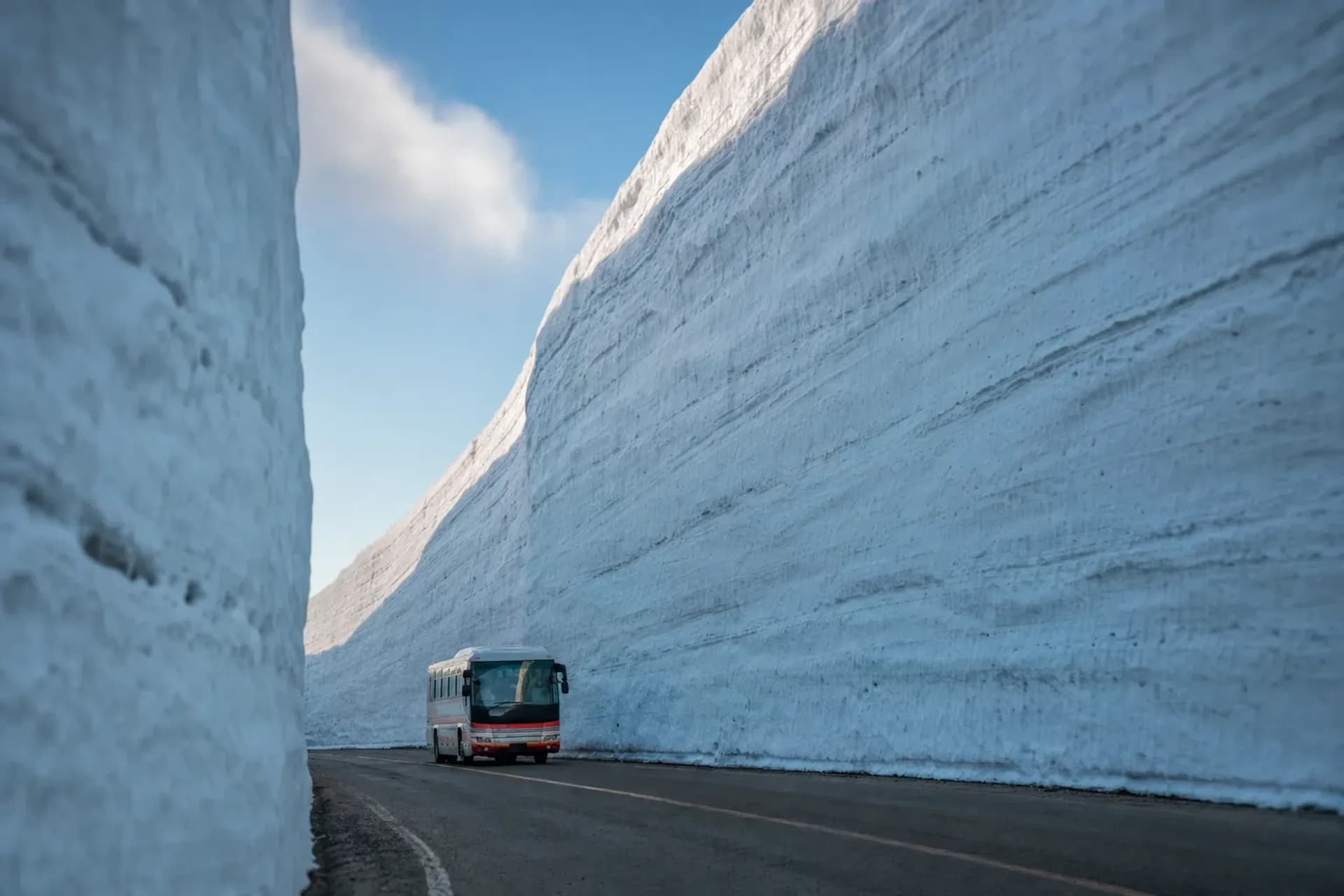
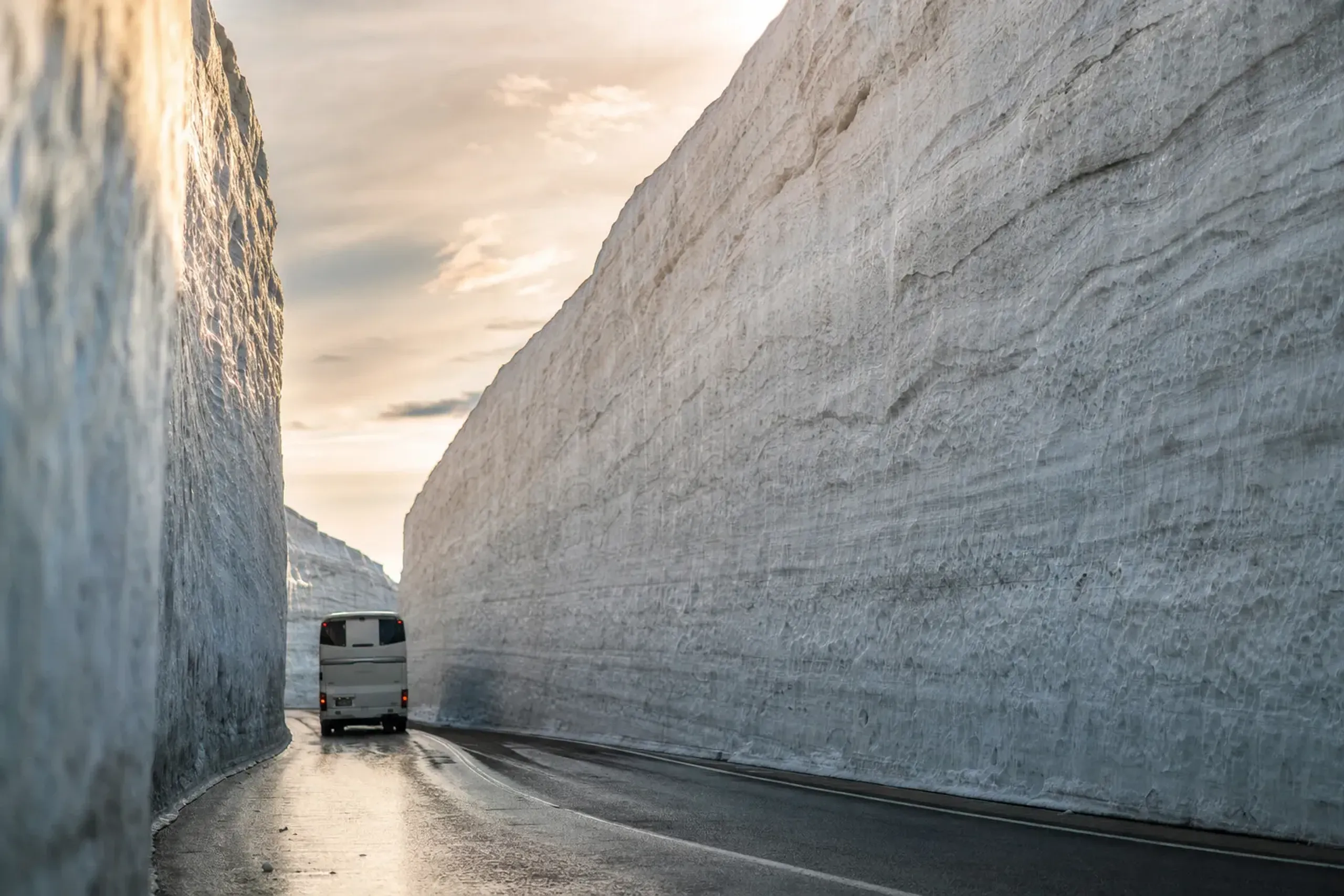
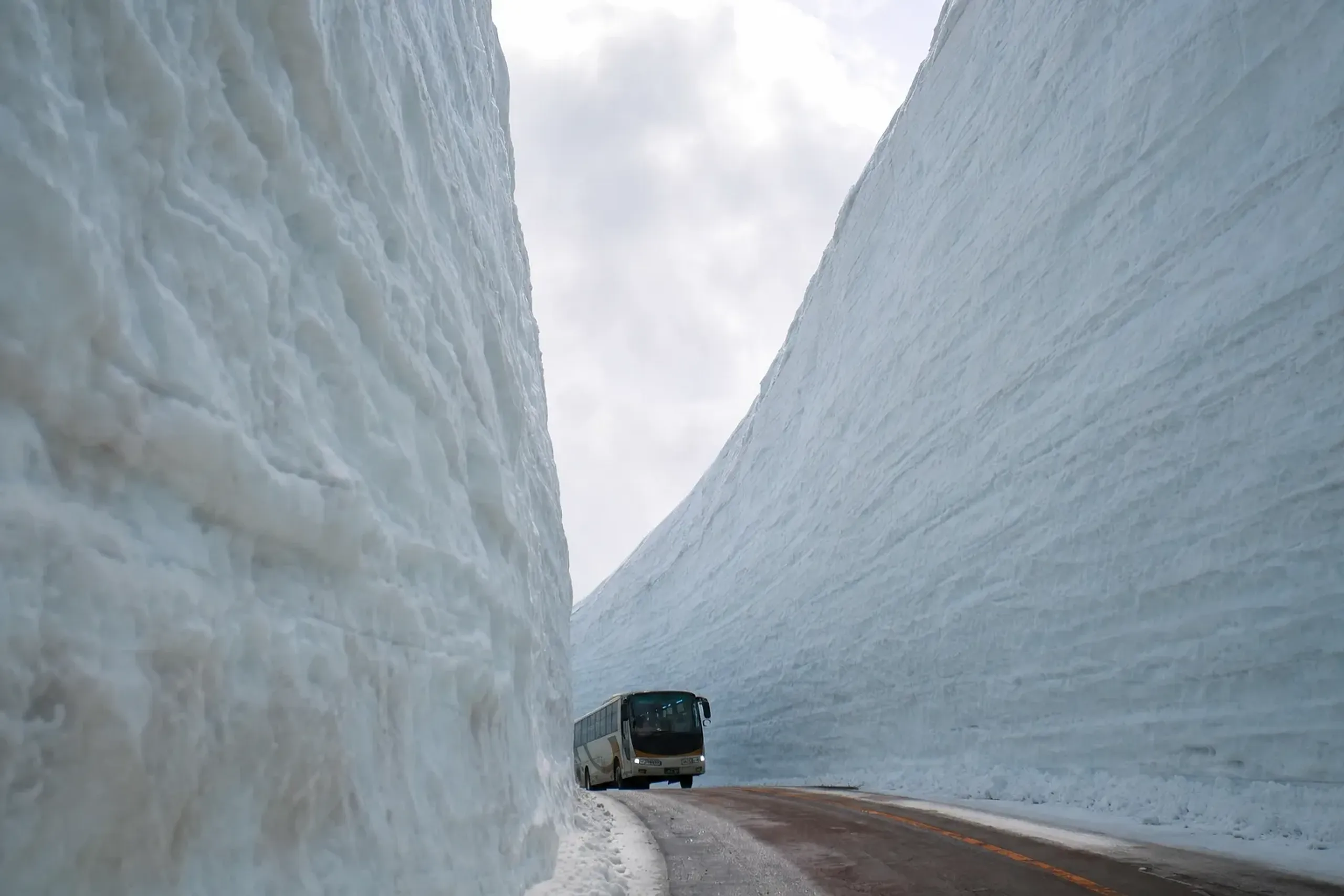
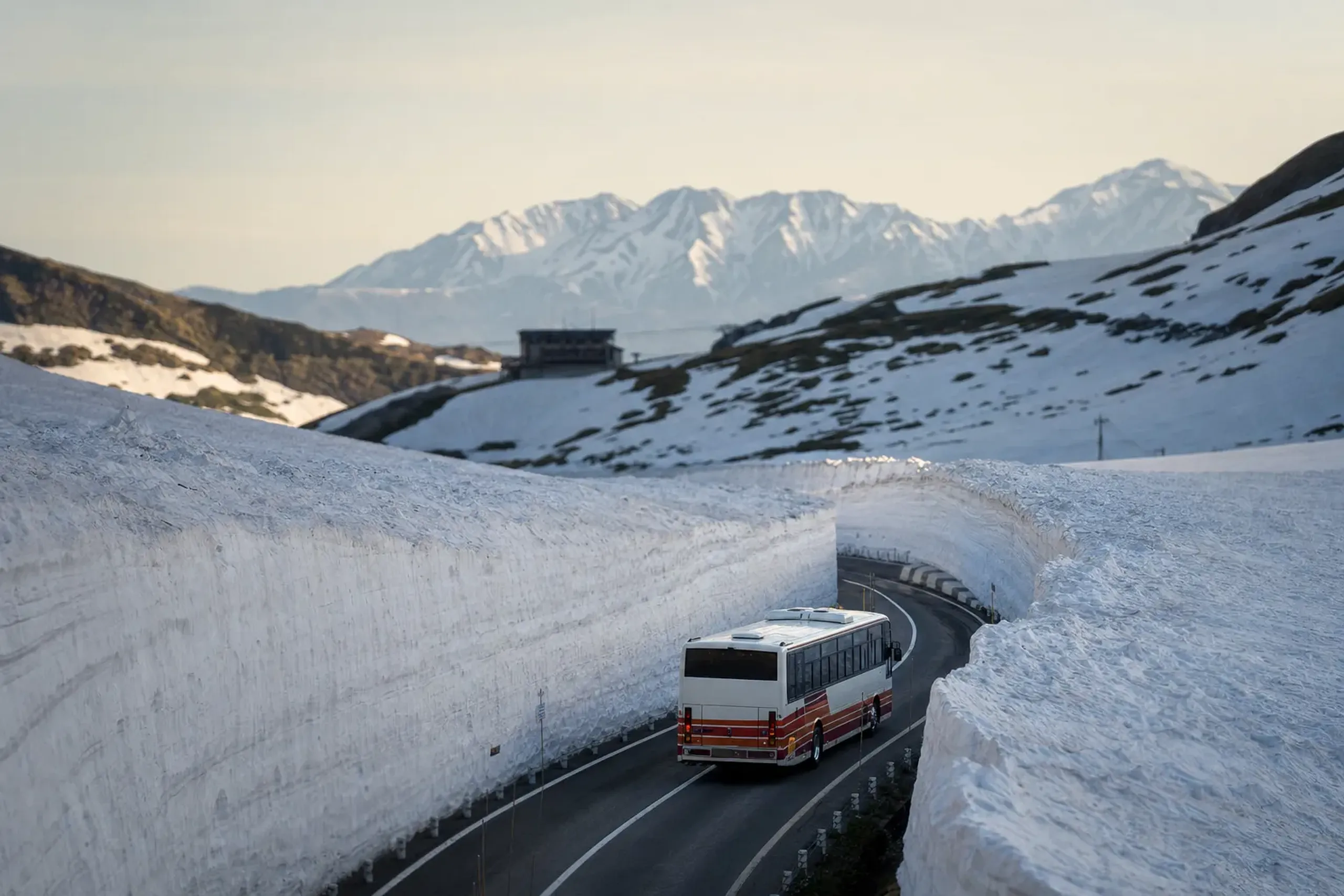
The Tateyama Kurobe Alpine Route reopens roughly mid-April after its long winter closure. This is when the Snow Corridor appears: walls of packed snow that reach up to twenty meters, standing beside the buses as they climb. The walls are visible from opening until about late June, then the mountain shifts to alpine flowers as summer arrives.
At almost the same moment, Toyama Bay's firefly squid reach their peak. The run stretches from late March to the end of May, with April the strongest month. The two phenomena fit inside a single trip. That is the good news.
Key fact: Mid-April to early May is the Alpine Route's busiest stretch of the entire year. Peak-season transport slots sell out, and a full traverse is an all-day trip.
So spring rewards the traveler who commits early and accepts crowds, or who times a shoulder week in late May and June when the walls are lower but the route is quieter. For the squid in detail, see our full account of Toyama's firefly squid and the blue light only spring brings.
Summer: Alpine Flowers And The Obon Squeeze
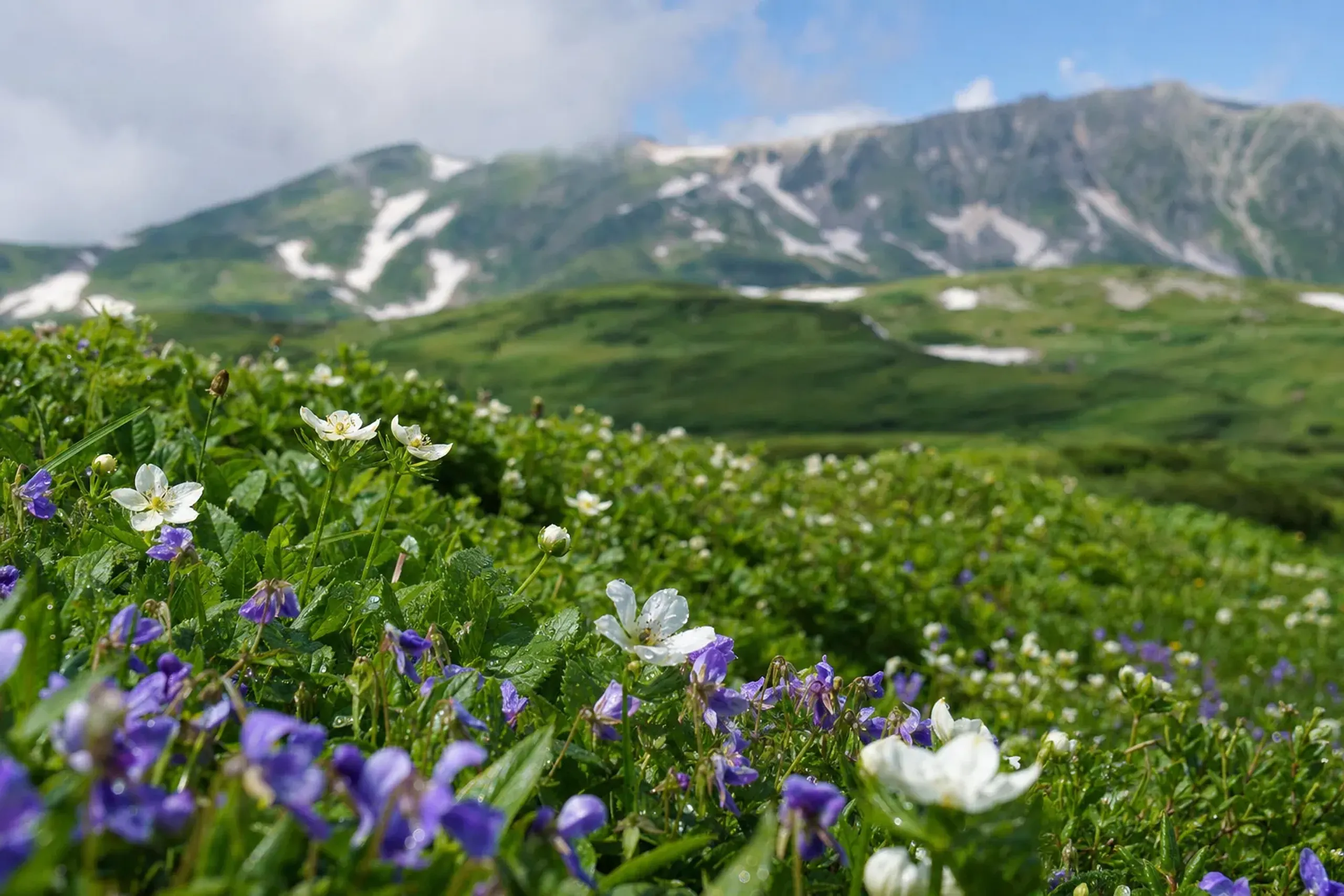
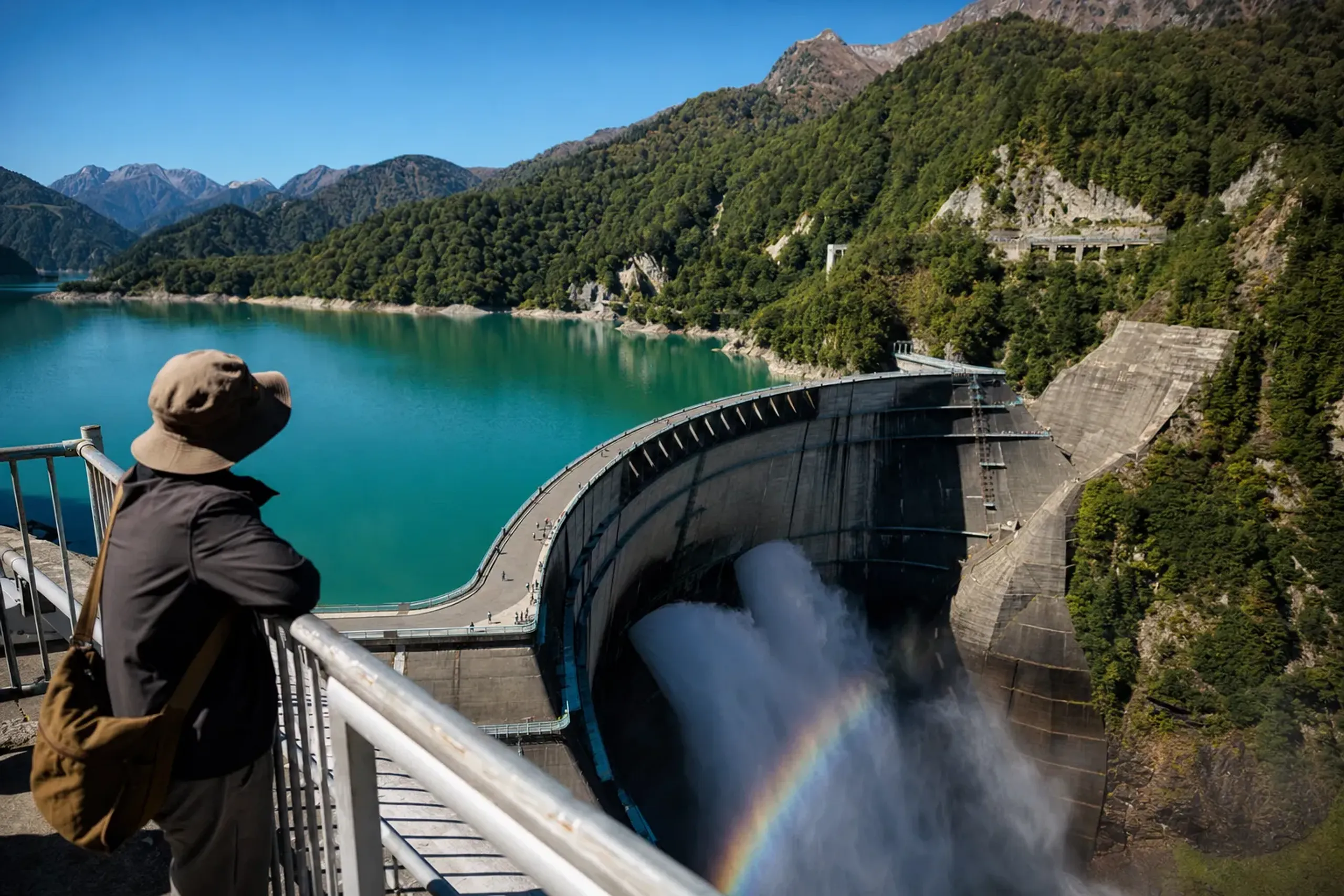
By summer the snow walls are gone and the high country turns green. Alpine flowers open across the Tateyama plateau, and the route becomes a walking destination rather than a snow spectacle. Clear summer days bring the dam's water discharge into view, though that falls in a different window than the spring walls. One does not replace the other.
Summer's real planning hazard is the calendar, not the weather. The mid-August Obon period is one of the three busiest stretches on the Alpine Route, alongside the mid-April opening and autumn weekends.
During Obon, domestic travel surges across the whole country, and mountain transport slots that already run on fixed capacity fill fast.
If you want the flowers without the press of people, the weeks on either side of Obon are far calmer. The route is the same. The crowd is not.
Autumn: Foliage, Ropes Going Up, And Crab
Autumn is when three separate clocks start ticking within weeks of each other.
Alpine Route Foliage
Foliage on the Alpine Route runs roughly mid-September to late October, working down the mountain as the season cools. High elevations turn first. Autumn weekends are busy, so a weekday traverse is the quieter choice.
Kenrokuen's Yukitsuri Begins
Around November 1, Kanazawa's Kenrokuen garden begins rigging its yukitsuri: the conical rope supports that protect the pines from heavy snow. The work takes about six weeks to complete and the structures stay up until mid-March. The best-known is the radial ringo-zuri pattern, ropes fanning down from a central pole like the spokes of an open umbrella.
Early November is a rewarding time to watch the rigging in progress. You see the garden being dressed for winter rather than finished.
Snow Crab Season Opens
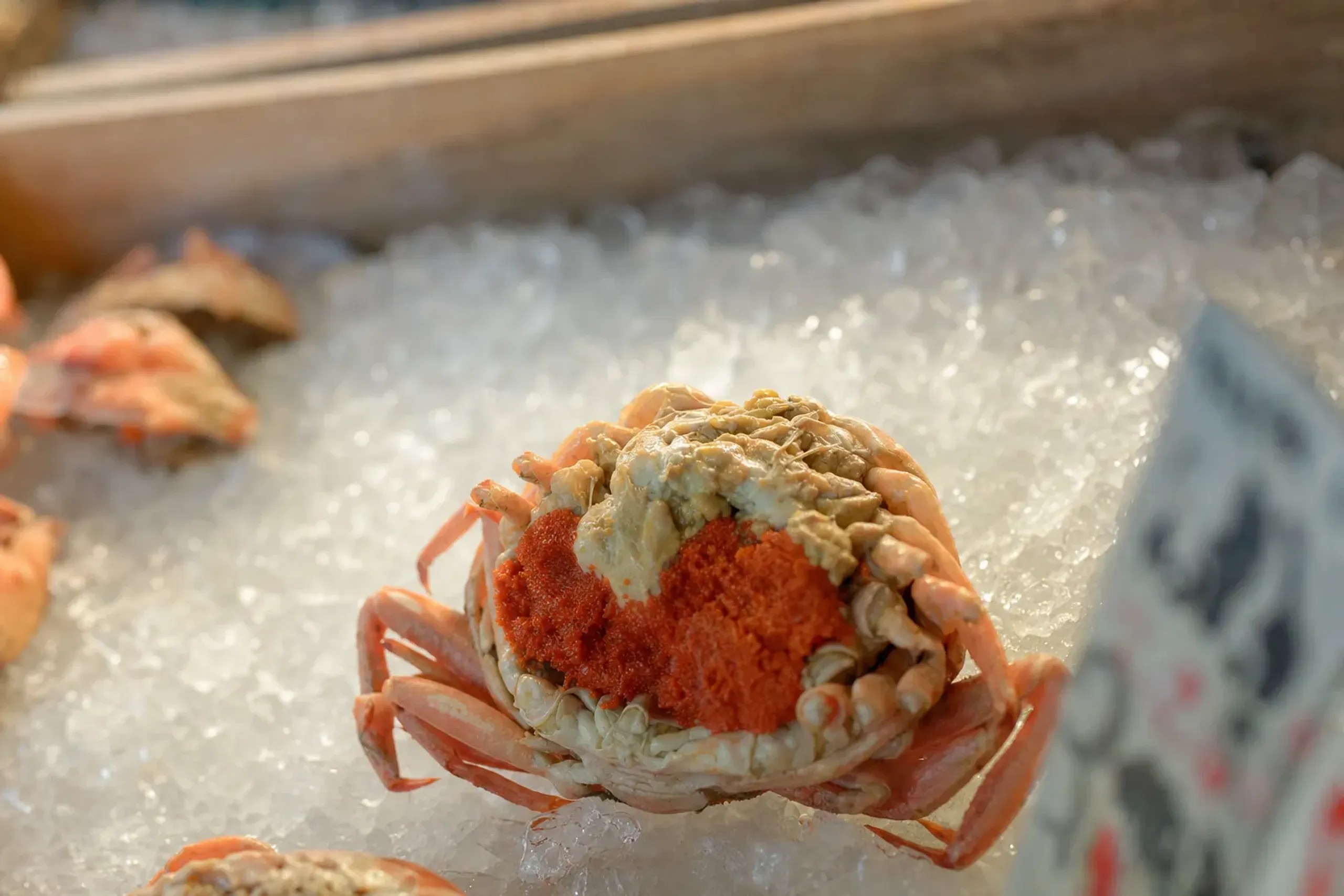
Kanazawa's snow crab season opens in early November. The smaller female crab is available for roughly two months, ending around year-end. The larger male crab continues after that. This is the single most time-sensitive food window in the region, and it is easy to miss by a fortnight, as the traveler in our opening did.
Winter: Ropes, Illumination, And Honest Snow Expectations
By deep winter the yukitsuri are fully in place, and Kenrokuen holds a night illumination on select evenings in February. The lit pines under their ropes, dusted with snow, are the image most people carry home from Kanazawa in winter.
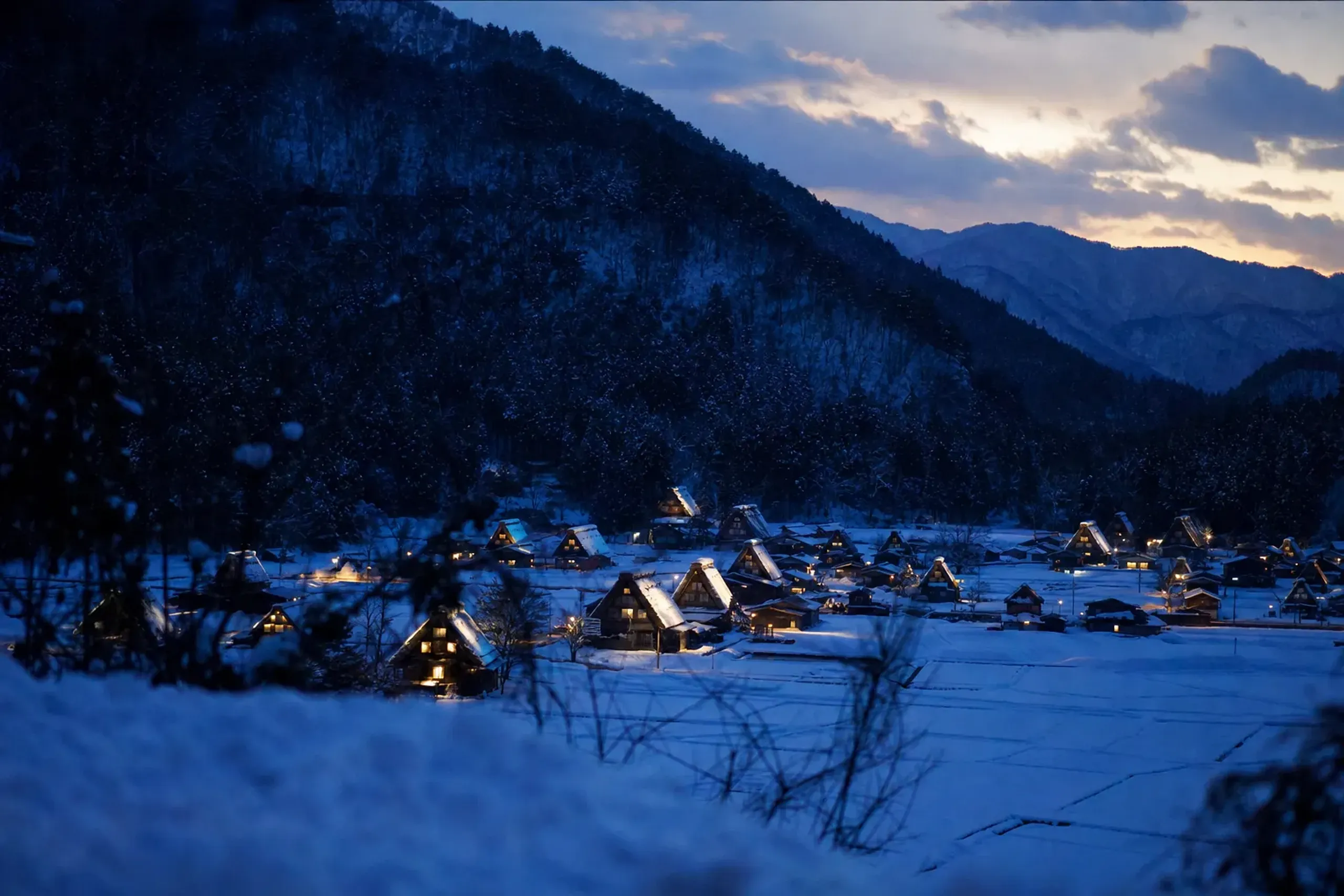
Shirakawa-go's light-up runs on select January and February evenings, mostly weekends, in a two-hour window after dark. The gassho-zukuri farmhouses glow against one to two meters of snow at peak. This post covers the light-up timing only; for the village itself and the road to it, see our guide to the Kanazawa to Takayama route via Shirakawa-go. For the wider Japan Sea winter beyond Hokuriku, we have written about the Noto coast separately.
Now the honest part. Kanazawa city in winter is wet and cold more than deep snow. The postcard drifts belong to Shirakawa-go and the mountains, not to the city streets. A traveler expecting a snowbound Kanazawa will find rain, dark skies, and slush more often than powder. Plan the city for atmosphere and food, and reserve the deep-snow scenery for the villages.
How Hard Is Each Hokuriku Window To Book?
The Shirakawa-go light-up is the hardest to secure, the Alpine Route's peak slots come next, and snow crab season is the easiest.
Ranking booking difficulty plainly is the most useful thing a planner can do.
| Window | Difficulty | Why |
|---|---|---|
| Shirakawa-go light-up | Hardest | Evening access limited to overnight guests and select bus tours; village lodging allocated by lottery, with applications the autumn before |
| Alpine Route peak slots | Difficult | Fixed transport capacity; mid-April to early May, Obon, and autumn weekends sell out |
| Kenrokuen illumination | Moderate | Runs on select February evenings only |
| Snow crab season | Easiest | A two-month window; the constraint is timing, not scarcity |
The one detail worth repeating: the Shirakawa-go light-up lodging lottery takes applications in October, months before the event. If you want the village at night, the decision has to be made in autumn, not in the new year.
Which Windows Combine And Which Conflict
Some of these moments were built to travel together. Others fight for the same weeks.
Combines Well
- Alpine Route opening plus firefly squid — both peak in April, both near Toyama, and both sit inside a single spring trip.
- Kenrokuen yukitsuri rigging plus snow crab opening — both begin around early November, both in Kanazawa. A first-week-of-November visit catches the ropes going up and the crab arriving.
- Kenrokuen February illumination plus Shirakawa-go light-up — both fall in February, close enough to pair across a few nights if the light-up dates and lodging line up.
Conflicts
- Snow walls versus alpine flowers — you cannot have both. The walls fade by late June; the flowers arrive after. Pick one.
- Golden Week and Obon — the Alpine Route is at its most crowded during these weeks. Great scenery, worst logistics. If flexibility exists, avoid them.
- Deep-winter city expectations versus reality — a January trip planned for snowy Kanazawa streets will disappoint. The snow is in the mountains.
Honest Limits: Transport And Lotteries
Two facts about Hokuriku cannot be arranged away, and it is fairer to state them plainly.
First, the Tateyama Kurobe Alpine Route is a fixed chain of public transport across the Northern Alps between Toyama and Nagano. It cannot be done by private vehicle. What can be shaped is everything around it: the timing of your entry, the sequencing of tickets, and the days on either side. Our private chauffeured transport handles the approach and the departure, and the Alpine crossing itself sits in the middle as the fixed public segment it is.
Second, Shirakawa-go's evening access runs through lodging allocation and select tours, with village lodging decided by lottery. Applications are taken in October. No planner can promise a lottery outcome. What can be done is a correct, early application and a strong alternative held in reserve.
The Alpine Route also has genuine weather risk. Fixed-calendar windows are more predictable than bloom forecasts, but snow, wind, and fog still decide what a given day on the mountain actually looks like. The calendar tells you when to go. It cannot tell you what the sky will do.
Frequently Asked Questions
When Can You See The Tateyama Kurobe Snow Walls?
The Snow Corridor walls, reaching up to twenty meters, are visible from the Alpine Route's mid-April opening until about late June. After that, the walls fade and the high country turns to alpine flowers for summer.
When Does Snow Crab Season Start In Kanazawa?
Kanazawa's snow crab season opens in early November. The smaller female crab is available for roughly two months, ending around year-end, while the larger male crab continues after that. Timing your visit within this window is the main constraint.
How Do You Attend The Shirakawa-Go Winter Light-Up?
Evening access to the Shirakawa-go light-up is limited to overnight guests and select bus tours, because regular buses leave before the two-hour event begins. Village lodging is allocated by lottery, with applications taken the previous October, so the decision must be made months ahead.
Is Kanazawa City Deep In Snow During Winter?
No. Kanazawa city in winter is wet and cold more than deeply snowbound. The heavy snow belongs to Shirakawa-go and the mountains. Plan the city for food and atmosphere, and reserve the villages for the snow scenery.
Can You Drive The Alpine Route In A Private Car?
No. The Tateyama Kurobe Alpine Route is a fixed chain of public transport across the Northern Alps and cannot be traversed by private vehicle. Private transport can handle the approach and departure, but the crossing itself remains a public segment.
Why Choose Japan Royal Service
Hokuriku rewards travelers who plan by window rather than by region, and that is precisely the work our concierge team does. At Japan Royal Service, we build the trip around the one or two peaks that matter most to you: the snow walls in April, the ropes going up in November, the crab, the February light. We arrange property, transport, guiding, and timing across all of it, and we submit the Shirakawa-go lodging applications on your behalf in autumn, well ahead of the deadline.
In our experience, the difference between a trip that catches its window and one that misses by two weeks is almost always how early the planning began. We coordinate the Alpine Route ticket sequencing, shape the days around the fixed public segment, and design a tailor-made itinerary that keeps you clear of Golden Week and Obon crowds while still landing on the phenomena you came for. We cannot promise the weather, and we do not promise lottery outcomes. We can promise accurate timing and a discreet, watchful hand on every detail in between.
To build a Hokuriku trip around one or two windows, reach our team privately via WhatsApp or LINE, or contact us here. Start early — the best windows here are short, and the hardest ones close in autumn.