In this guide
- 01The First Thing To Know: The 607 Buildings Burned In 670
- 02Where Is Hōryū-ji, And Why It Feels Different From Central Nara?
- 03How Does Hōryū-ji Fit The Kyoto–Tokyo–Hōryū-ji “Buildings” Argument?
- 04What Makes The Architecture At Hōryū-ji So Technically Remarkable?
- 05Why These Buildings Needed Restoration, And Why That Does Not Reduce Their Authenticity
- 06Western Precinct And Eastern Precinct: What You See In Each
- 07The Closed Chūmon Gate Is Preservation You Can See Happening
- 08Is Hōryū-ji A UNESCO World Heritage Site, And What Exactly Was Inscribed?
- 09A 2026 Two-City Way To Understand Hōryū-ji: Ikaruga And Tokyo
- 10Conservation-Aware Planning: Why Scaffolding Risk Matters At Hōryū-ji
- 11What To Expect On The Day: A Quieter, Foundational Visit
- 12Suggested Add-Ons In Ikaruga: A Quiet Nara Micro-Itinerary
- 13How To Get To Hōryū-ji From Osaka Or Nara Without Guesswork
- 14Frequently Asked Questions
You arrive expecting a simple miracle: wood from 607, still standing. The label “oldest wooden buildings” invites that assumption. It feels like continuity, untouched and pure. That is not the real story.
At Hōryū-ji, age is something built. Then rebuilt. Then protected again, generation after generation, through decisions that sometimes reshape how visitors move through the site. That is precisely why this place matters—and why understanding it changes the way you see it.
The First Thing To Know: The 607 Buildings Burned In 670
The original buildings, founded in 607, were destroyed by fire in 670, and what you see today was rebuilt in the late 7th to early 8th century. That single correction sharpens the entire visit.
Hōryū-ji was founded in 607 by Prince Shōtoku, regent to Empress Suiko and a central figure in the early establishment of Buddhism in Japan. The site’s origin is genuinely early. But the surviving timber is not a frozen snapshot of 607.
What stands now is the result of a turning point. After the 670 fire, the rebuilt precincts endured—because people kept them alive through patient maintenance and restoration, rather than leaving them to “prove” their age by neglect.
This is also the honest way to understand the temple’s fame. Hōryū-ji is celebrated for the world’s oldest surviving wooden buildings, and that claim rests on structures dating to the late 7th or early 8th century—not on an unbroken physical continuity from 607.
Where Is Hōryū-ji, And Why It Feels Different From Central Nara?
Hōryū-ji sits in Ikaruga, southwest of Nara, and it is noticeably quieter than Nara Park’s main visitor corridor.
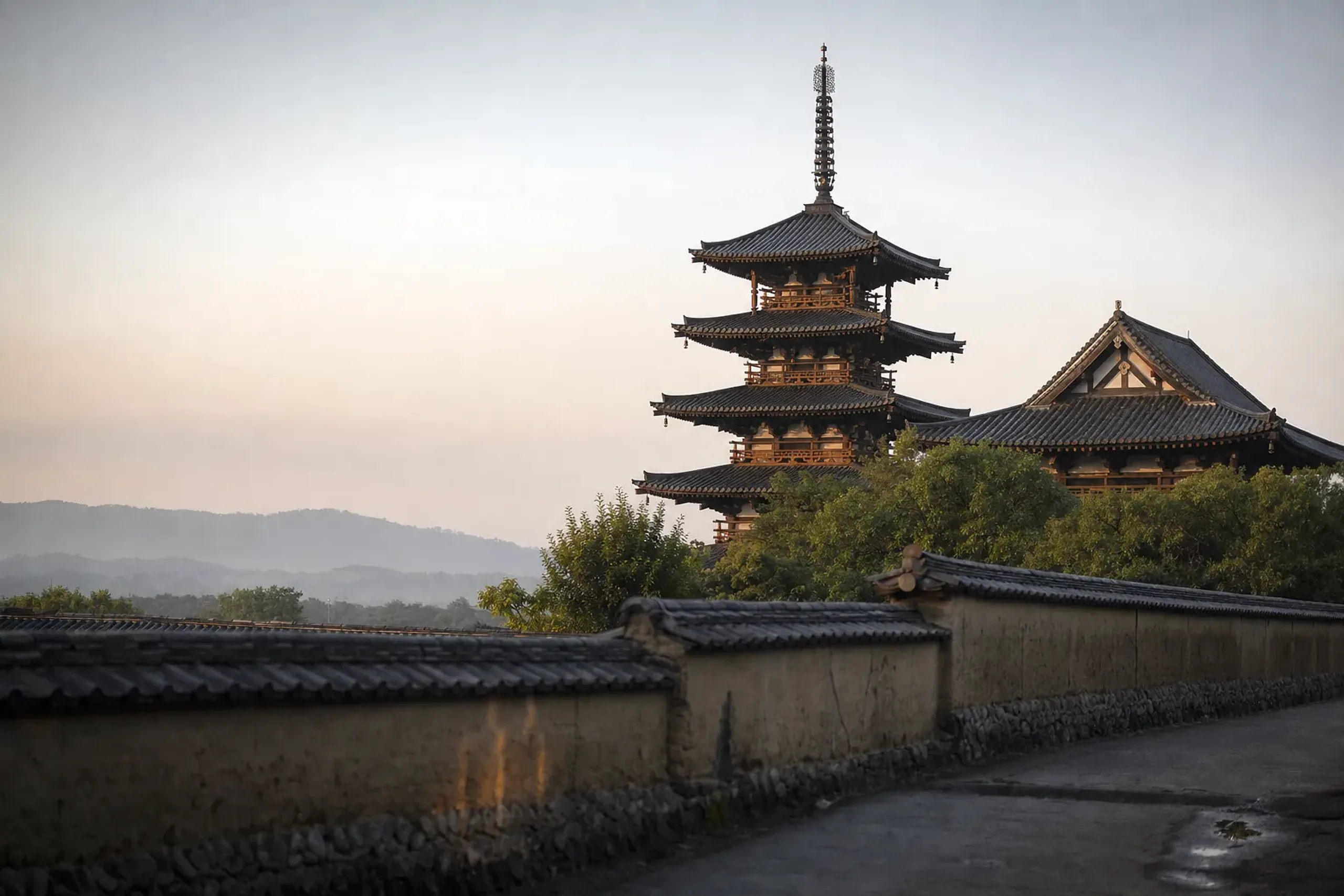
That quiet changes what you notice. It is the wabi of a place that has nothing to prove—weathered timber, moss underfoot, and the restraint of a site that lets time speak for itself.
You do not come here for a dramatic skyline or a quick “must-see” sweep. You come to stand close to woodwork and rooflines that shaped Japanese temple architecture at its very beginning, and to feel how a spare, disciplined place can hold time without needing spectacle.
The address, for those who prefer precision when briefing a driver or guide, is 1-1 Horyuji Sannai, Ikaruga-cho, Ikoma-gun, Nara, Japan. A small detail—but a meaningful one on travel days.
JNTO notes access via JR, with trains to JR Hōryūji Station on the Yamatoji Line. We keep the logistics simple within the plan, but the experience itself is anything but “simple.” It is layered.
How Does Hōryū-ji Fit The Kyoto–Tokyo–Hōryū-ji “Buildings” Argument?
Hōryū-ji is the third answer in our “cities by building” lens: not pure continuity and not total erasure, but continuity achieved through repeated, deliberate restoration. That is the point.
Kyoto often reads as continuity: dense with surviving streetscapes, inherited craft, and layered rebuilding that still feels like the same city. Tokyo often reads as erasure: so much has been rebuilt that the question becomes what, exactly, survived—and what “survival” even means.
Hōryū-ji sits between those poles. The originals burned. The site rebuilt. Then the rebuilt site survived through recorded restoration campaigns—without being replaced by something “new” that breaks the lineage.
If you enjoy this architectural way of reading Japan, we recommend pairing this visit with our related pieces on continuity and replacement in the country’s built environment: One Reversed Pillar Is Famous. A Guide To Nikkō Tōshō-gū (power and display), and Hōryū-ji: The Temple Standing Today Is A 1,300-Year Rebuild (the blunt, necessary correction).
What Makes The Architecture At Hōryū-ji So Technically Remarkable?
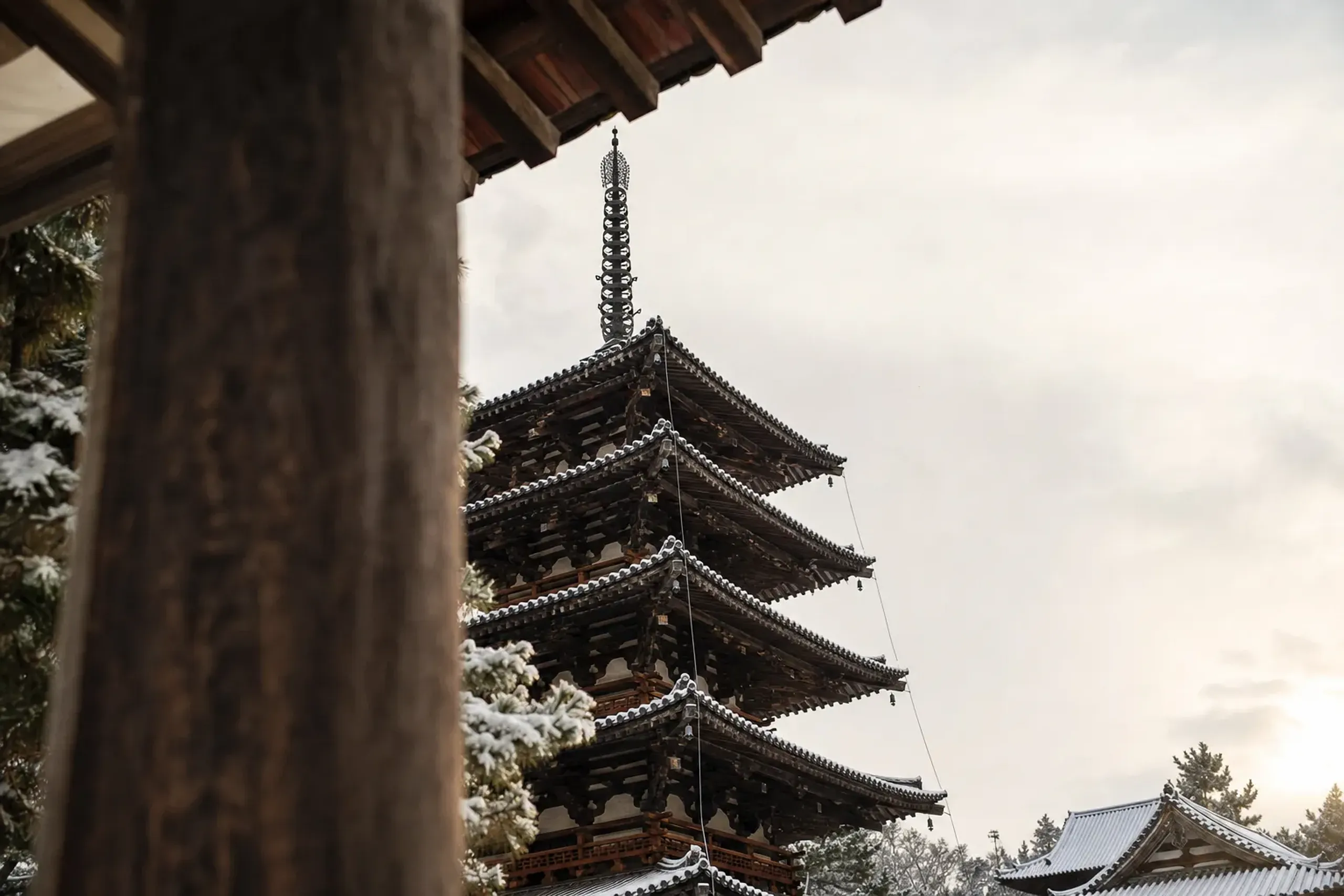
The surprise at Hōryū-ji is not only age; it is the engineering clarity of Asuka-period temple design, still legible today. You can stand in one spot and see structural logic made visible—the quiet handwriting of the shokunin who first raised these halls.
One detail to look for is entasis in the columns: a subtle taper that makes a column appear perfectly straight when viewed from a distance. It is the same optical technique associated with ancient Greek columns, and seeing it here resets the way many visitors think about early Japanese architecture.
Look down as well as up. The double terrace platforms are not decorative afterthoughts; they are integral to the building’s presence and proportion, lifting the halls and changing how the rooflines sit against the sky.
Then there is weight. Heavy tiled roofs demand a bracket system that can bear load and distribute stress, and Hōryū-ji’s wooden bracket assemblies are a study in how timber construction can be both resilient and precise—carpentry as a form of thinking.
Why These Buildings Needed Restoration, And Why That Does Not Reduce Their Authenticity
Hōryū-ji survived because it was maintained and restored across centuries, with major campaigns recorded in 1374, 1603, and the mid-20th century. That ongoing work is the achievement.
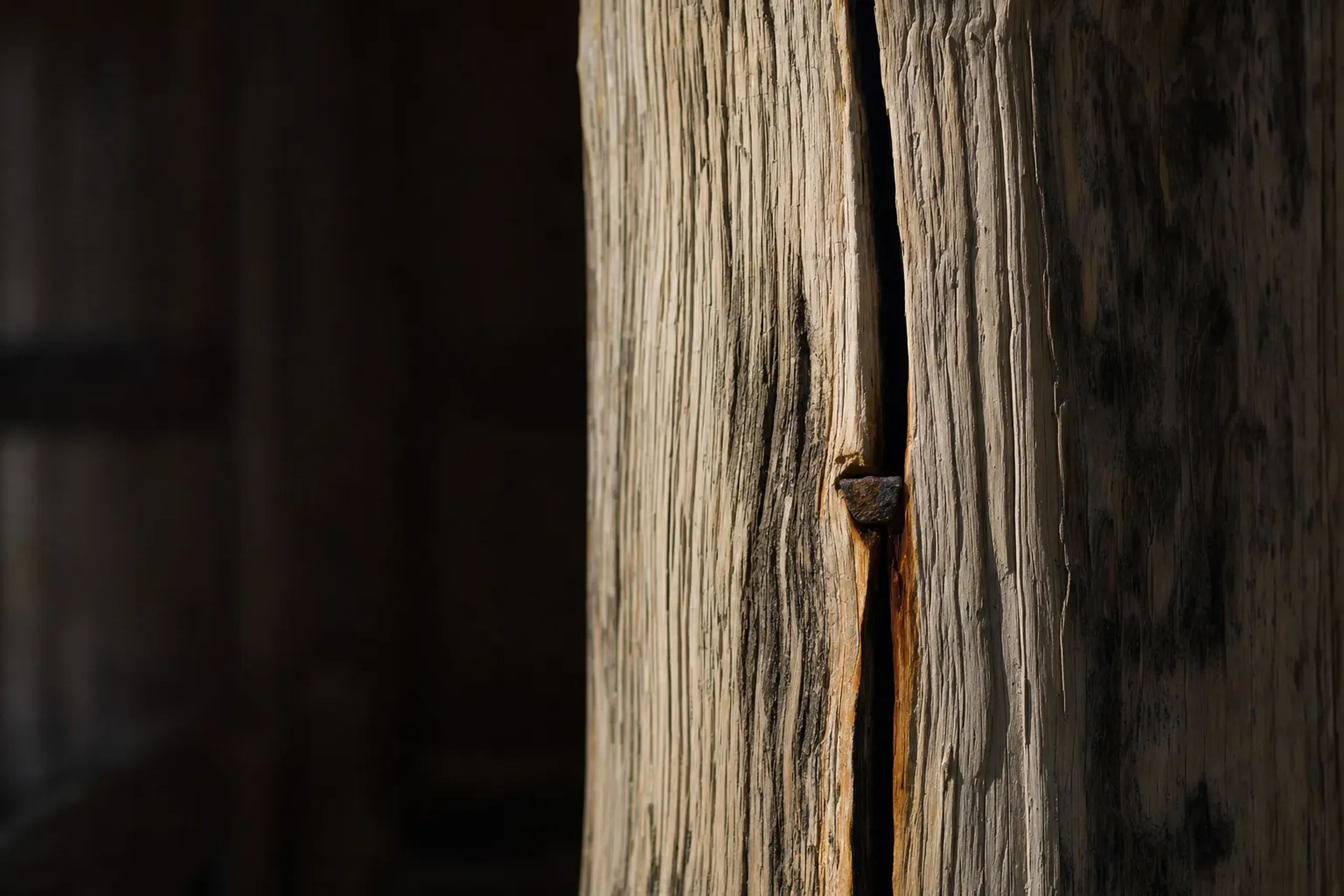
Wood is honest. It moves. It weathers, it cracks, it absorbs moisture, and it remains vulnerable to fire—especially in structures designed long before modern firefighting.
Japan is also earthquake-prone, and heavy tiled roofs create their own demands over time.
So preservation becomes a series of choices. Replace a damaged element, or risk losing the whole. Restrict access to protect fragile fabric, or let foot traffic slowly grind it down. The “oldest” label can tempt people to want an untouched relic, but Hōryū-ji’s reality is far more responsible—and, in its own way, more moving.
In our experience, discerning travelers come to appreciate this once it is framed plainly. Authenticity is not only about never touching something. It can also mean a continuous tradition of technical care—the sabi of a structure that carries the marks of every hand that has kept it standing—done in a way that respects what the building is and how it was made.
Western Precinct And Eastern Precinct: What You See In Each
Hōryū-ji is divided into two main precincts, and the split is part of how the story is told on the ground. This is not a single-courtyard experience. It is two related worlds.
Sai-in (Western Precinct): Kondō And The Five-Story Pagoda
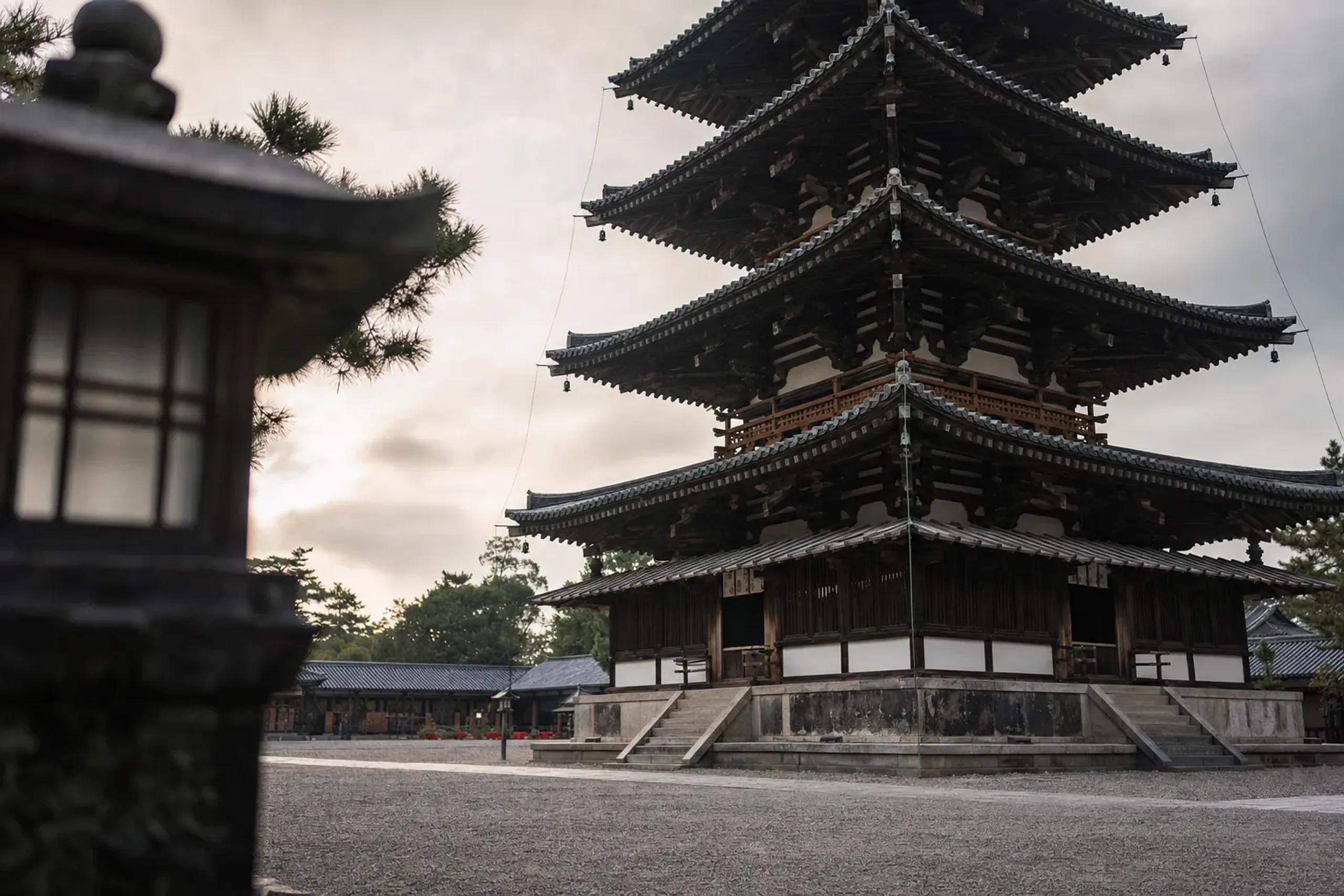
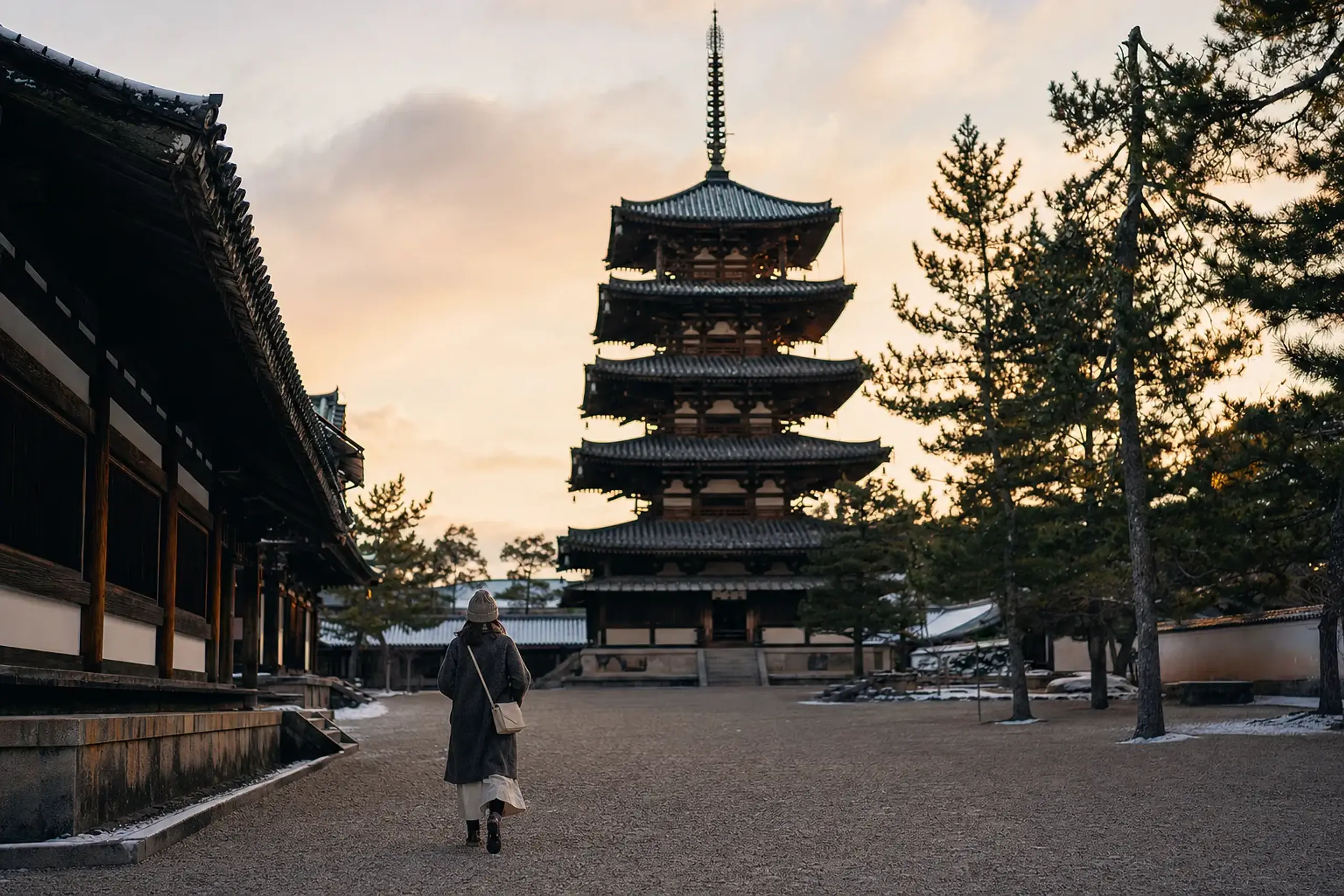
The Western Precinct (Sai-in) holds the Kondō (Golden Hall) and the five-story pagoda. The temple describes the Kondō as the world’s oldest extant wooden structure, and it is also where important treasures are enshrined.
The five-story pagoda is described by the temple as the oldest pagoda of its type in Japan and among the oldest surviving wooden towers in the world. Even without technical commentary, the form communicates stability: stacked, centered, quietly exact.
Move slowly here.
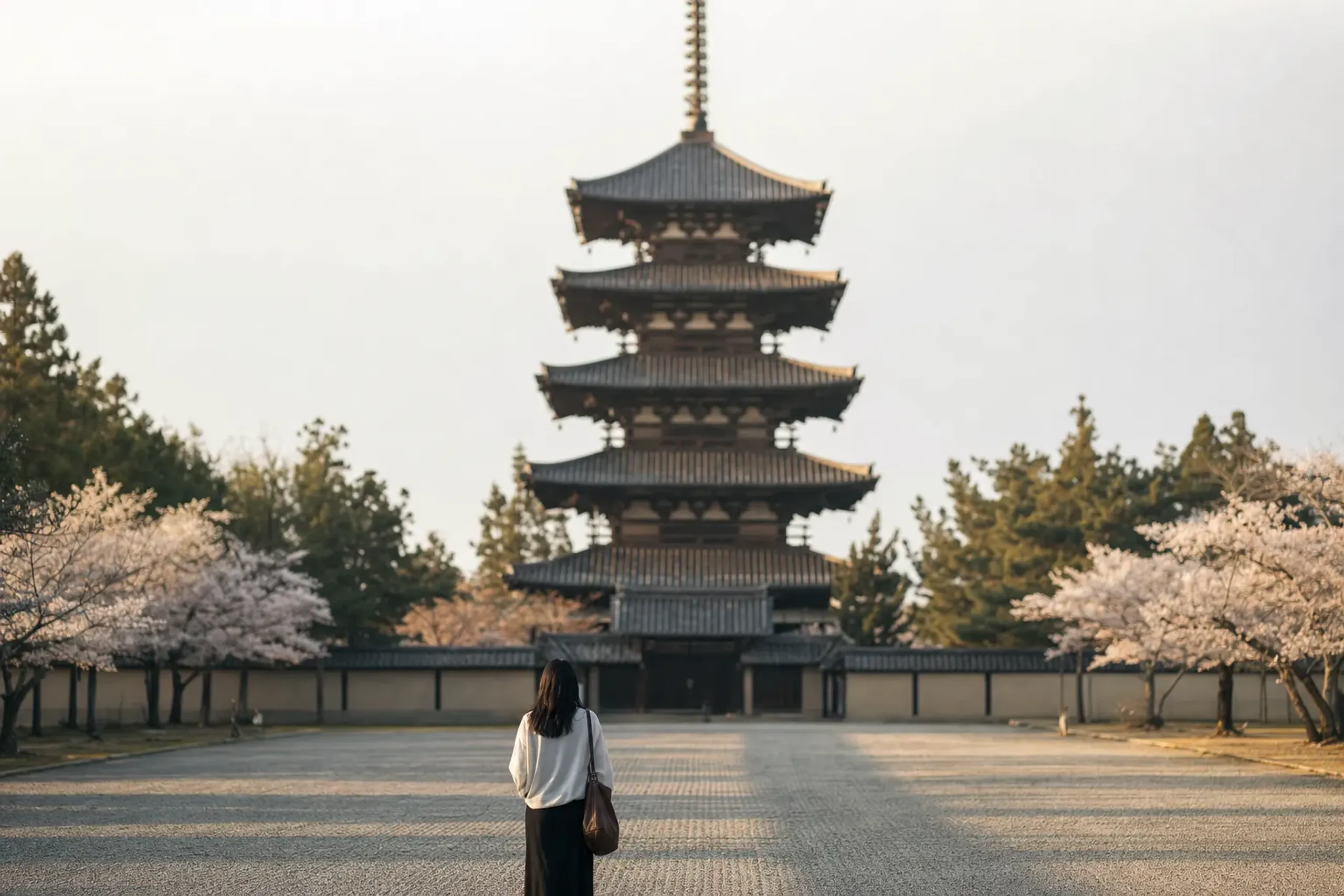
The common mistake is trying to “collect” views like photographs. Stand back. Then come closer and read the joinery and brackets with your eyes, not your camera.
Tō-in (Eastern Precinct): Yumedono As A Memorial To Prince Shōtoku
The Eastern Precinct (Tō-in) contains the octagonal Yumedono (Hall of Dreams). The temple presents it as one of its most impressive buildings, and its shape alone signals a different mood from the rectilinear halls.
Yumedono was built on the site of Prince Shōtoku’s former residence as a memorial to him. That detail matters, because it ties the precinct back to a human figure—not only to an architectural lineage.
The shift between precincts can feel like changing chapters. The Western side reads as monumental survival. The Eastern side reads as remembrance, designed into space.
The Closed Chūmon Gate Is Preservation You Can See Happening
The Chūmon (Middle Gate) is closed to foot traffic to protect it, and visitors now detour around it rather than passing through. That detour is not an inconvenience; it is a living sign of conservation decisions.
The gate is flanked by two of the oldest Kongō Rikishi (guardian) statues in Japan. Even if you do not linger on iconography, the guardians create a threshold effect—one now managed differently because the physical structure needs protection.
This is how a 1,300-year-old site stays standing: not by pretending it is indestructible, but by adjusting modern behavior around fragile points. Quietly. Firmly.
If your travel style values discretion and calm, this kind of controlled access often feels reassuring rather than restrictive.
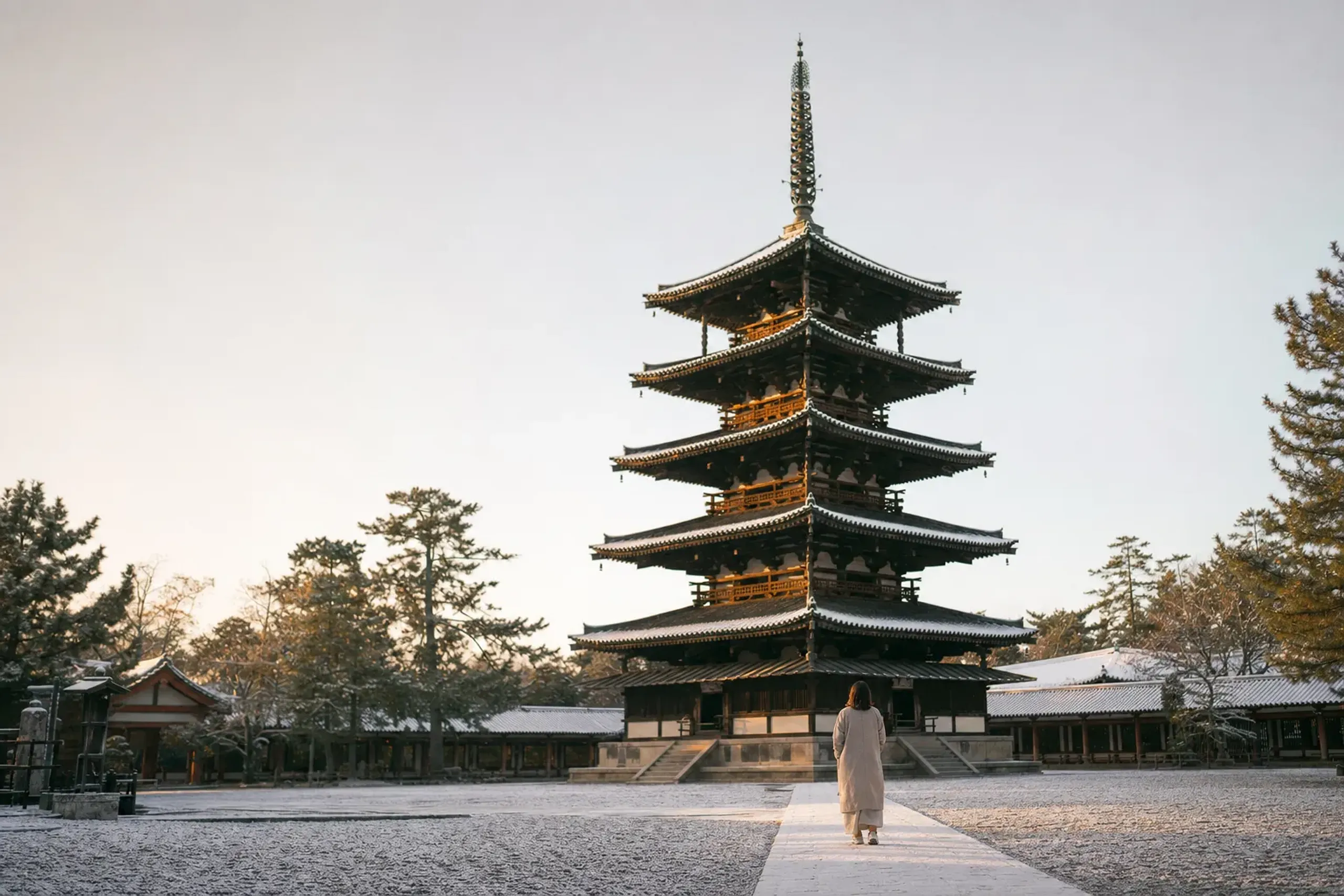
The site is not performing for crowds. It is being conserved for time.
Is Hōryū-ji A UNESCO World Heritage Site, And What Exactly Was Inscribed?
Hōryū-ji was inscribed in December 1993 as part of “Buddhist Monuments in the Hōryū-ji Area,” Japan’s first UNESCO World Heritage Site listing. That is the formal frame.
The significance is not only institutional. Eleven buildings on the site date to the late 7th or early 8th century, which is why they are recognized as the oldest surviving wooden buildings in the world.
It is easy to let UNESCO status turn a visit into a checkbox. Resist that. Use it instead as permission to go deeper: to ask what kinds of repair allow wood to keep carrying load, and what kinds of access limits keep a gate from being worn down by thousands of steps.
Hōryū-ji is also part of the traditional “Seven Great Temples of Nara.” That designation places it within a larger historical network, even as Ikaruga itself feels set apart from central Nara’s bustle.
A 2026 Two-City Way To Understand Hōryū-ji: Ikaruga And Tokyo
The cleanest 2026 add-on is Tokyo National Museum’s Gallery of Hōryū-ji Treasures (Hall 16), together with the Digital Gallery of Hōryū-ji Treasures reopening on March 10, 2026. One visit shows the architecture; the other changes how you interpret what you saw.
Tokyo National Museum maintains a dedicated hall for the Hōryū-ji Treasures. For travelers who like context without “temple fatigue,” the museum setting is a reset: controlled light, close viewing, and a different quality of attention.
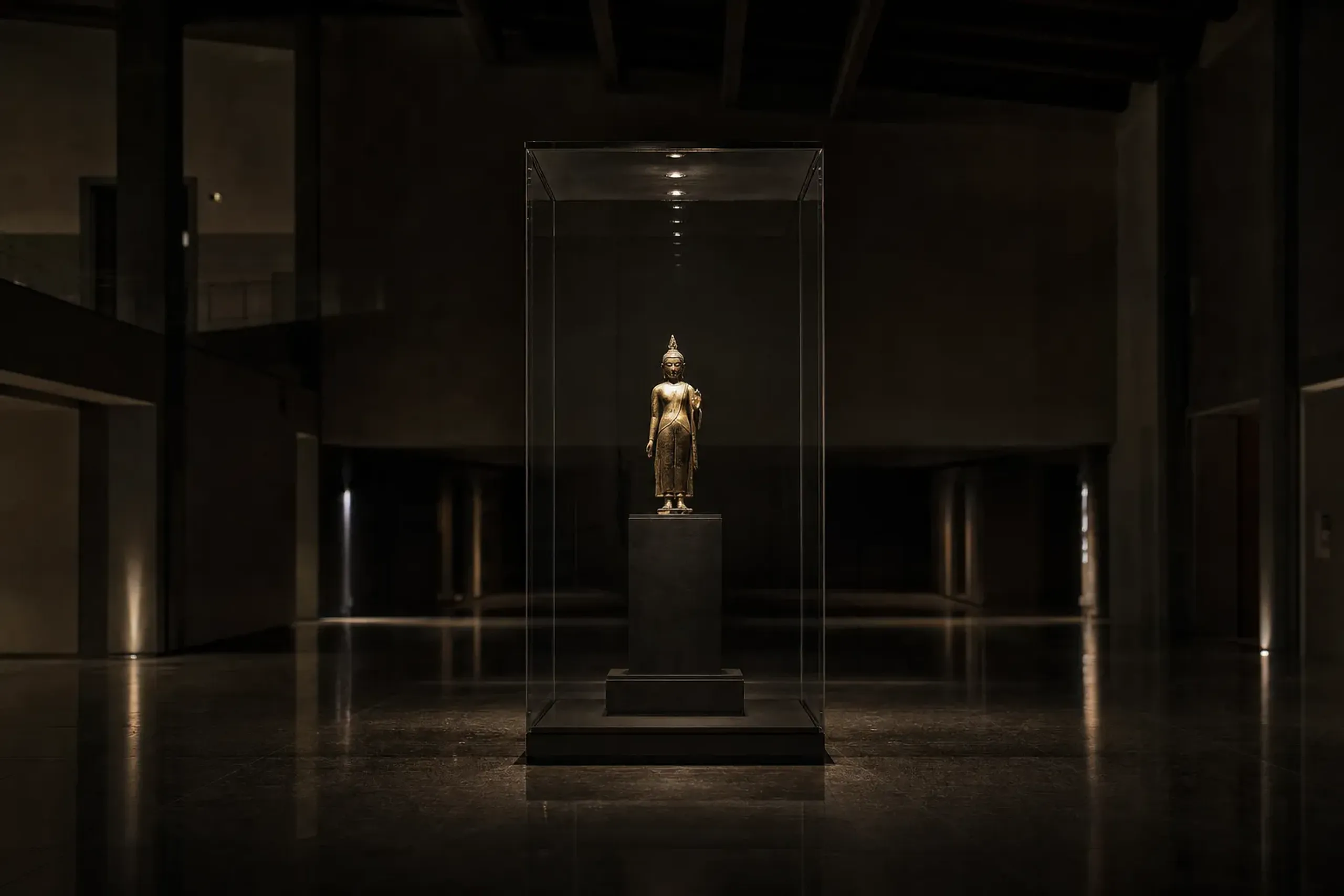
The Digital Gallery of Hōryū-ji Treasures is scheduled to reopen on March 10, 2026 with new interactive experiences, according to the NICH/TNM digital gallery information and related press materials dated March 9, 2026. That reopening is a genuine timing hook for repeat visitors to Japan.
In practical itinerary terms, this pairing also suits well-traveled guests who want depth with fewer moving parts. One cultural narrative, two cities. Clean lines.
Conservation-Aware Planning: Why Scaffolding Risk Matters At Hōryū-ji
Nara Prefecture publishes official updates on current preservation repair projects at Hōryū-ji, and those projects can affect what you see on the day. This is why we plan with a conservation mindset, not a checklist mindset.
You do not need to memorize project details to benefit from them. What matters is the expectation: a site famous for survival is also a site where repair work is part of the normal cycle. Sometimes that means partial views, altered paths, or a different visual experience than the postcard angle.
We treat this as a feature, not a flaw. It is evidence of continuity-through-restoration, happening in the present tense—the same living tradition of care that has carried the buildings this far.
Key fact: Hōryū-ji’s “oldest wooden buildings” status exists because the rebuilt structures were maintained and restored over centuries, not because they were left untouched.
What To Expect On The Day: A Quieter, Foundational Visit
Set your expectations correctly and Hōryū-ji can become one of the most rewarding stops in Kansai.
Set them wrong and it can feel subdued.
This is a place of measured observation. Weathered timber. The sound of your own steps on the gravel. Ikaruga’s pace is different from central Nara, and that calm often helps you notice proportion, carpentry logic, and the way the tiled roofs settle against open sky.
It also rewards a guide briefed to point out details like entasis and bracket systems. Without those cues, many first-time visitors leave with only the headline—“very old”—and miss what makes the buildings intelligible as engineering. This is where a knowledgeable presence, and quiet anticipation of what you will want to understand, quietly transforms the visit.
If you are traveling with family, a tight loop works best: fewer stops, more meaning per stop. The story of Prince Shōtoku, the fire of 670, and the fact of ongoing preservation can keep the visit grounded and memorable without overloading anyone.
Suggested Add-Ons In Ikaruga: A Quiet Nara Micro-Itinerary
Ikaruga holds other important sites that let you stay in the same quiet register after Hōryū-ji. Keep the radius small. Stay with the mood.
JNTO highlights the Ikaruga area beyond central Nara and points to nearby heritage, including Chūgū-ji Temple. Another option close by is Hōrin-ji (Ikaruga), which publishes its address as 1570 Mii, Ikaruga, Ikoma District, Nara, Japan, and provides access guidance via local bus stops near Hōryū-ji/Chūgū-ji.
We do not treat these as “more temples for the sake of it.” We treat them as a way to extend a single idea: early Buddhism in Japan, seen through place rather than through a crowded sequence of landmarks.
If you prefer to keep the day lean, that is equally valid.
One excellent site, properly read, can be more than enough.
How To Get To Hōryū-ji From Osaka Or Nara Without Guesswork
JNTO’s official guidance is to use JR: from JR Osaka Station, take the Yamatoji Line and alight at JR Hōryūji Station. That is the simplest public-transport spine.
After arrival, you will still choose how you want the day to feel: independent walking, or a privately paced visit with a driver and guide. Timing matters. So does your tolerance for transfers.
We do not publish exact travel times or day-by-day schedules here, because they shift with your starting point, the season, and on-the-ground conditions. Instead, our team confirms the best routing and timing directly with you when building the plan—part of a fully bespoke itinerary shaped around how you actually want to move.
If you are incorporating private transportation, this is usually the point where the trip becomes calmer—fewer frictions, more attention on the site itself. See our service overview for how we think about vehicles and pacing.
Frequently Asked Questions
Are The Buildings At Hōryū-ji Literally Unchanged Since 607?
No—Hōryū-ji’s original 607 buildings burned in 670, and the structures celebrated today were rebuilt in the late 7th to early 8th century. That rebuilt complex then survived through centuries of restoration.
This is the nuance many guides skip, and it is the key to appreciating the site honestly. The “oldest wooden buildings” story is really about continuity created through care.
What Should I Focus On At Hōryū-ji If I Only Have A Short Visit?
Focus on the Western Precinct’s Kondō and five-story pagoda, then add Yumedono in the Eastern Precinct if you can.
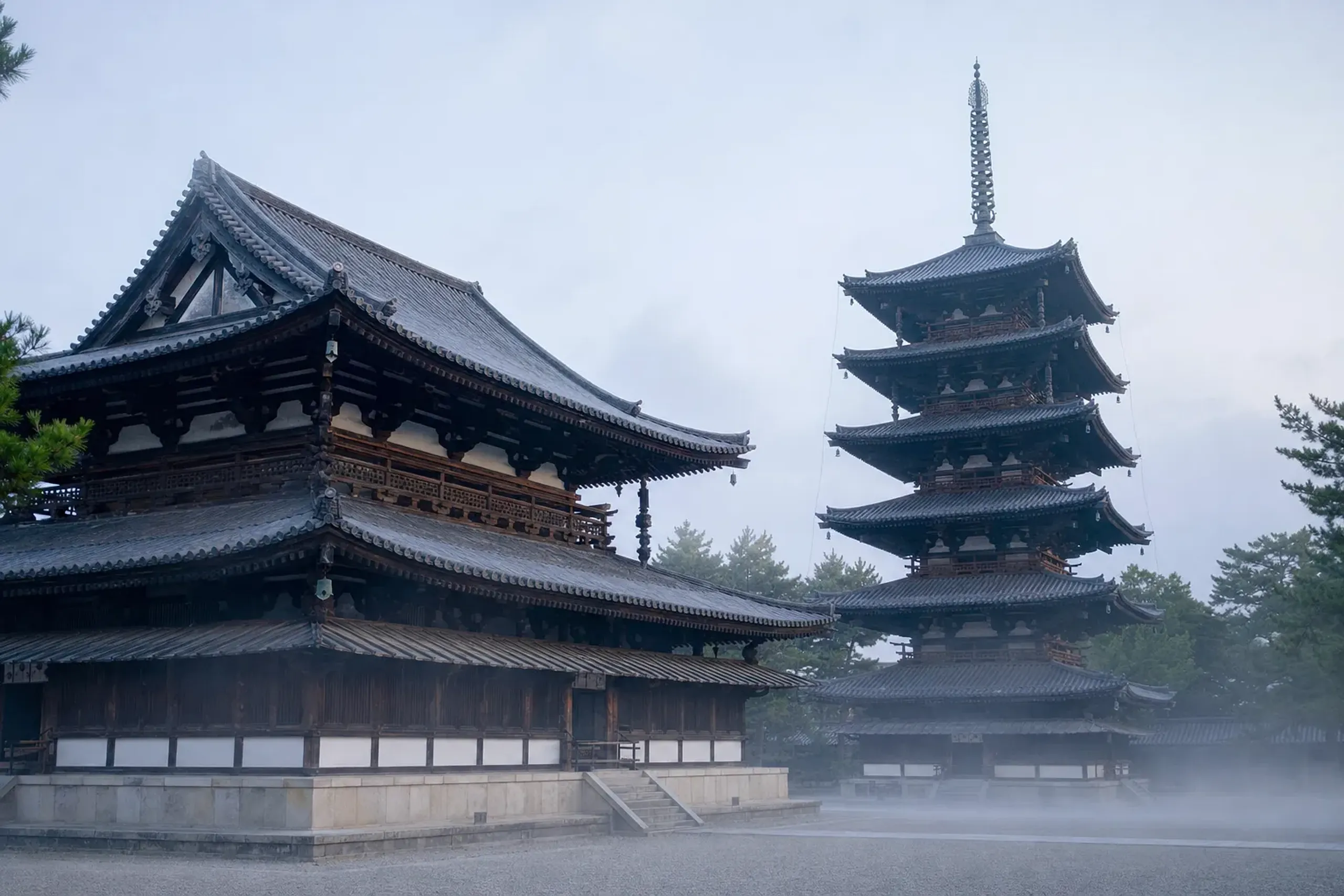
Those points show the core architecture and the Prince Shōtoku memorial story.
If you enjoy technical detail, ask a guide to explain the entasis columns and the wooden bracket systems beneath the tiled roofs. These are easy to miss when you move too fast.
Is Hōryū-ji A UNESCO World Heritage Site, And What Was Listed?
Yes—Hōryū-ji was inscribed in December 1993 as “Buddhist Monuments in the Hōryū-ji Area,” Japan’s first UNESCO World Heritage listing. The listing recognizes the site’s exceptional early wooden architecture.
Eleven buildings on the site date to the late 7th or early 8th century. That is the factual basis for its global “oldest surviving wooden buildings” status.
What Is The Best 2026 Museum Pairing After Visiting Hōryū-ji In Nara?
Tokyo National Museum’s Gallery of Hōryū-ji Treasures (Hall 16) is the most direct pairing, and the Digital Gallery of Hōryū-ji Treasures is scheduled to reopen on March 10, 2026. This turns one temple visit into a two-city cultural narrative.
Many travelers find this reduces repetition: you see the architecture in Ikaruga, then interpret the objects and context in Tokyo under museum conditions.