In this guide
- 01Saihoji: Kyoto's Moss Temple And Why Access Is Controlled
- 02Moss In Kyoto Beyond One Temple
- 03Hydrangeas In Kamakura: The Tokyo-Adjacent Option
- 04The Quiet Window Before Summer
- 05The Honest Cost Of A June Trip
- 06What A June Day Actually Looks Like
- 07Packing For Sustained Damp, Not One Wet Day
- 08When The Window Closes
- 09Who June Actually Suits
- 10Frequently Asked Questions
- 11Why Choose Japan Royal Service
Picture the traveller who crossed June off the calendar. They saw the rainy season on a chart, moved their dates to late May, and flew home before the wet weeks began. What they never saw was the moss in a Kyoto temple garden after four days of rain — the green so saturated it looks lit from beneath. They missed the hydrangeas too, banked against grey stone on a Kamakura hillside. The weather they planned around is the exact thing that produces the two sights most associated with a Japanese June.
That is the premise of this guide, and we want to state it plainly. Moss and hydrangeas are not there despite the rain. They exist because of it. June's humidity is what deepens Kyoto's moss to that famous color, and hydrangeas bloom in direct response to the wet season most visitors are avoiding. At Japan Royal Service, we plan a number of quiet June trips around precisely this. Below is who June rewards, who it does not, and how the month actually behaves.
Saihoji: Kyoto's Moss Temple And Why Access Is Controlled
Saihoji, Kyoto's famous moss temple, requires an advance application to visit — a controlled system that exists to protect the moss itself. There is no walk-up entry. The temple limits who comes and when.
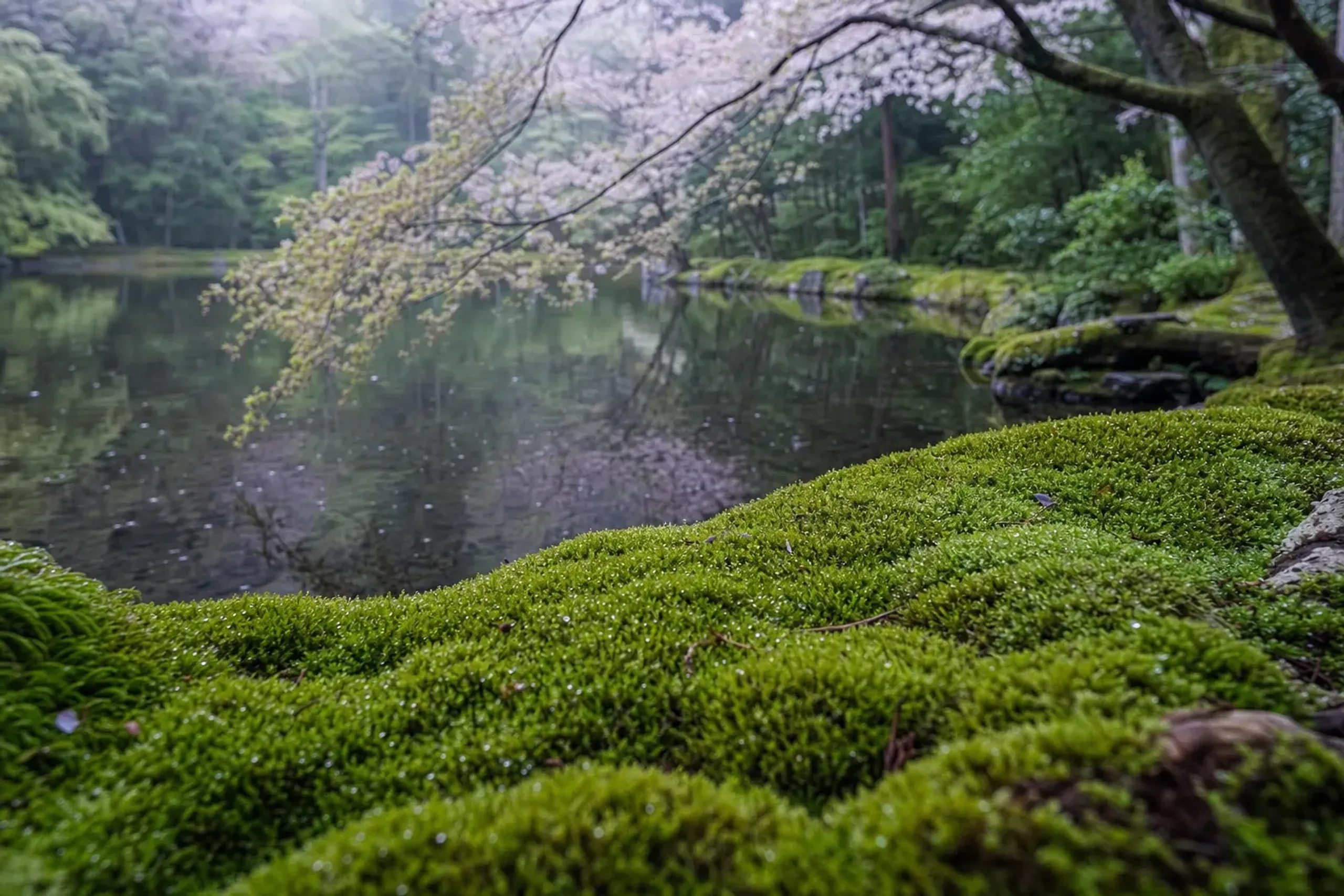
The reason matters. Saihoji's moss is not incidental groundcover that happened to spread. It is maintained. Over a hundred varieties carpet the grounds around the pond garden, and that landscape survives only because visitor numbers stay low and the ground stays undisturbed.
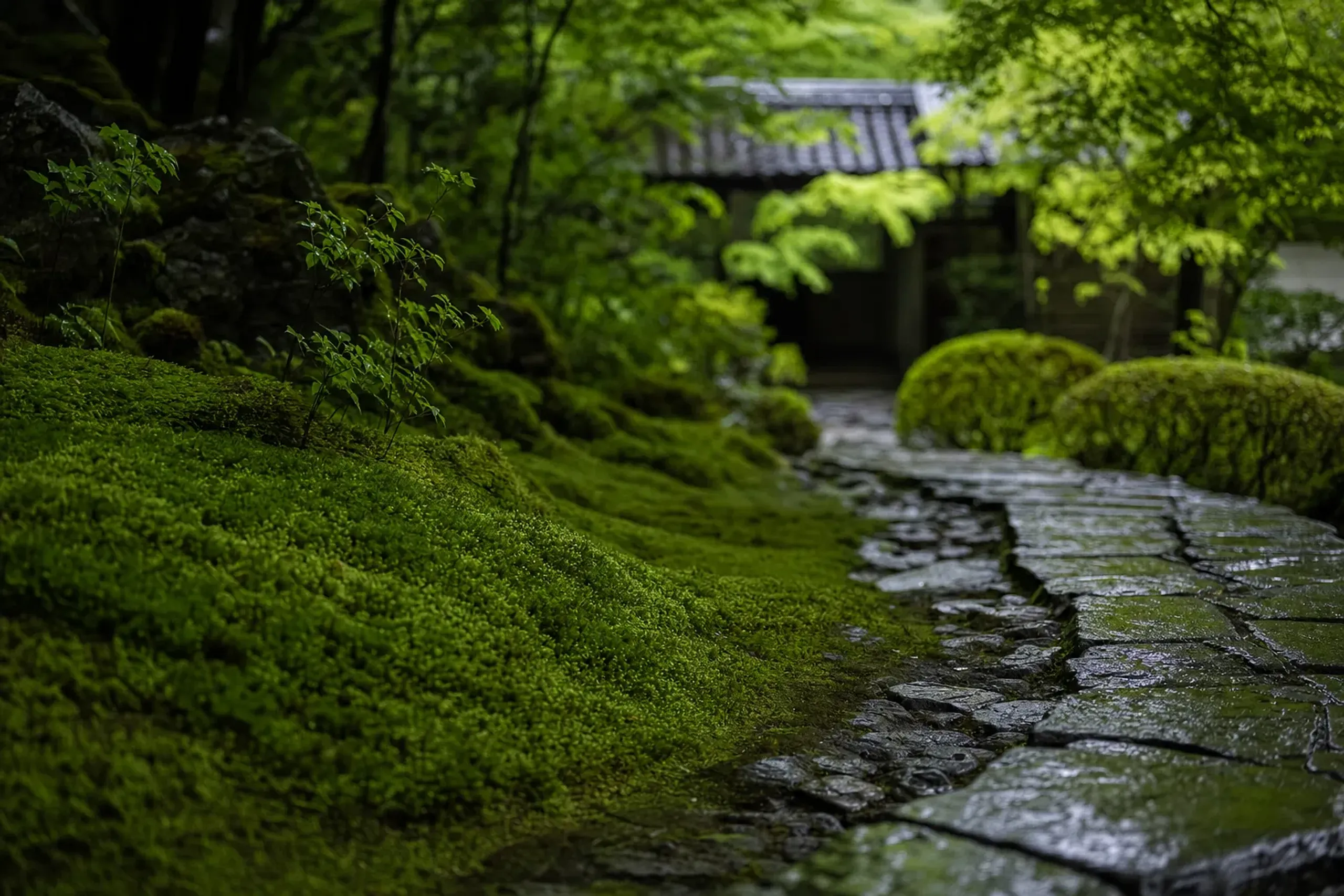
The application process is the mechanism that keeps it that way.
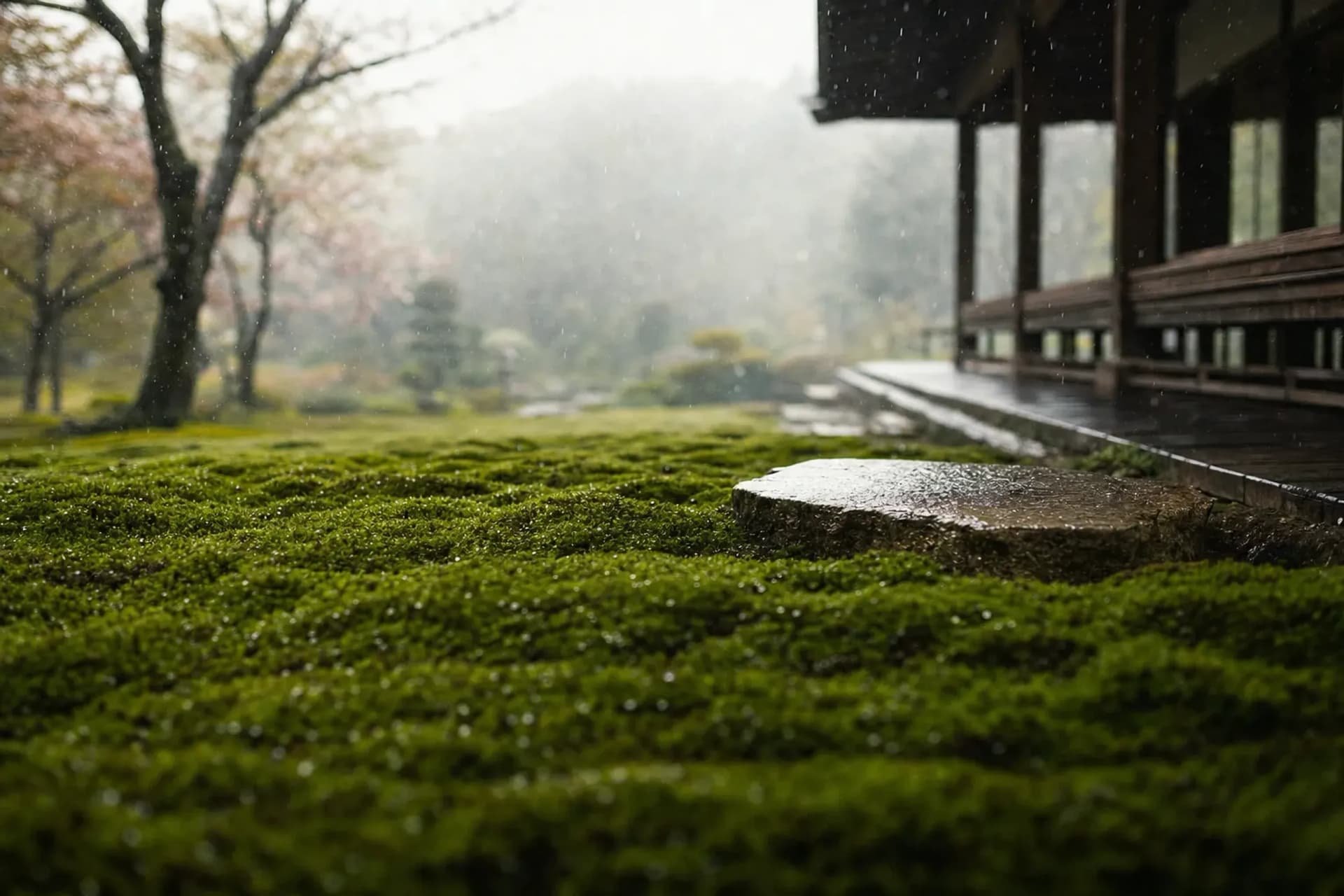
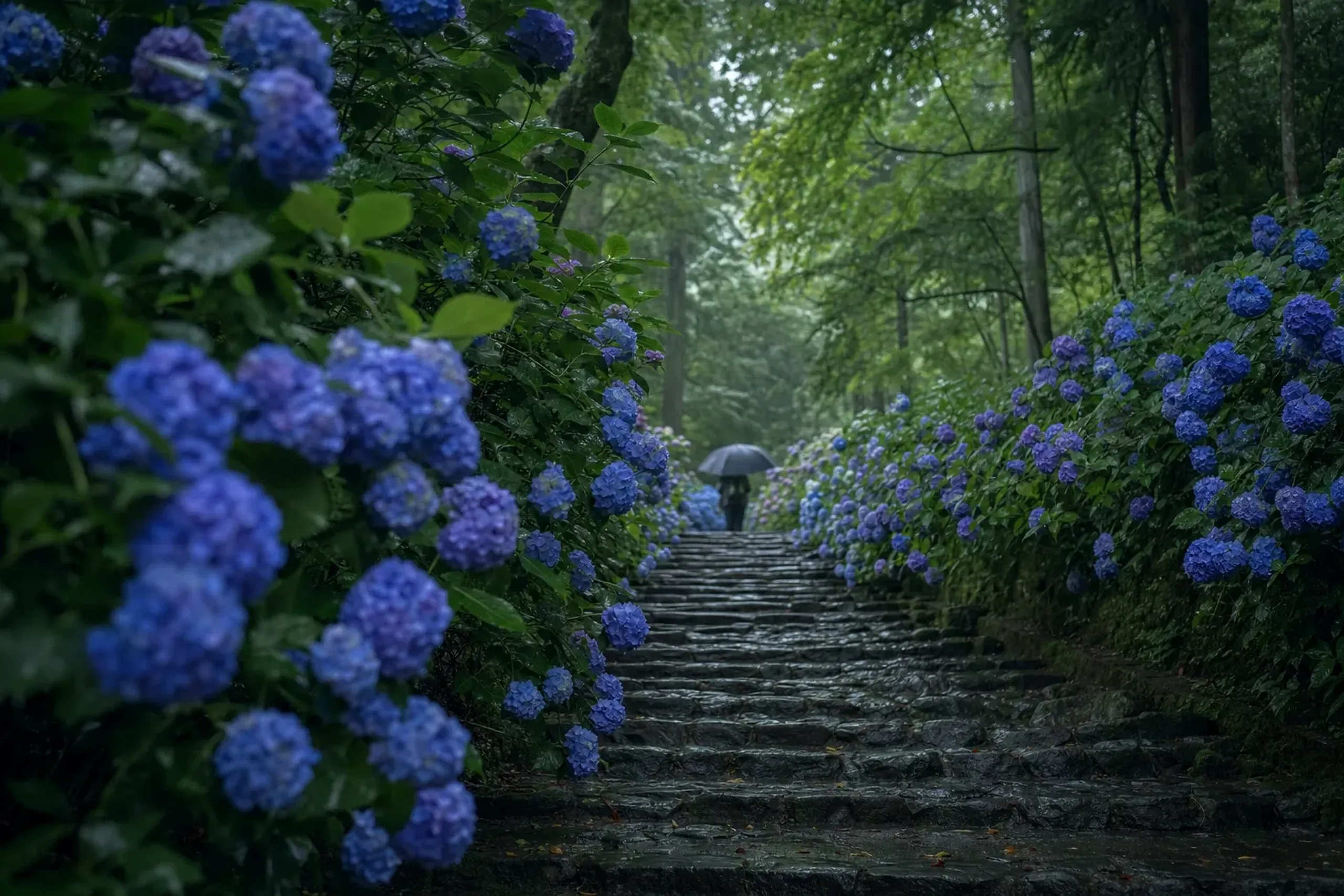
June is when this garden makes its case. After sustained rain the moss holds water, thickens, and turns the deep emerald that photographs never quite prepare you for. Walk the path slowly. The light under the canopy is soft and even, which is exactly what the color needs.
The application process is real, and it takes some doing. Our team at Japan Royal Service arranges it on your behalf, so you do not spend part of your trip navigating a Japanese-language postal system. We handle the application; you walk the garden.
Moss In Kyoto Beyond One Temple
Saihoji is the name everyone knows. It is not the only place the rain does this work.
Across Kyoto, temple and villa gardens carry moss as a designed element — under maples, along stone paths, around the edges of raked gravel. In the dry months this moss can look tired, even brown at the margins. June changes it entirely. The same beds that struggle in August turn plush and vivid, and the contrast against wet stone and dark timber sharpens.
A private chauffeur makes this style of day work. You move between gardens on a covered schedule, step out for the moss when the rain eases, and return to the car when it strengthens. Our private chauffeured transport exists for exactly this rhythm — short outdoor stretches, dry transitions, no waiting at a taxi rank in the rain. If you are still deciding where to base yourself, our guide to where to stay in Kyoto lays out the neighbourhoods.
Hydrangeas In Kamakura: The Tokyo-Adjacent Option
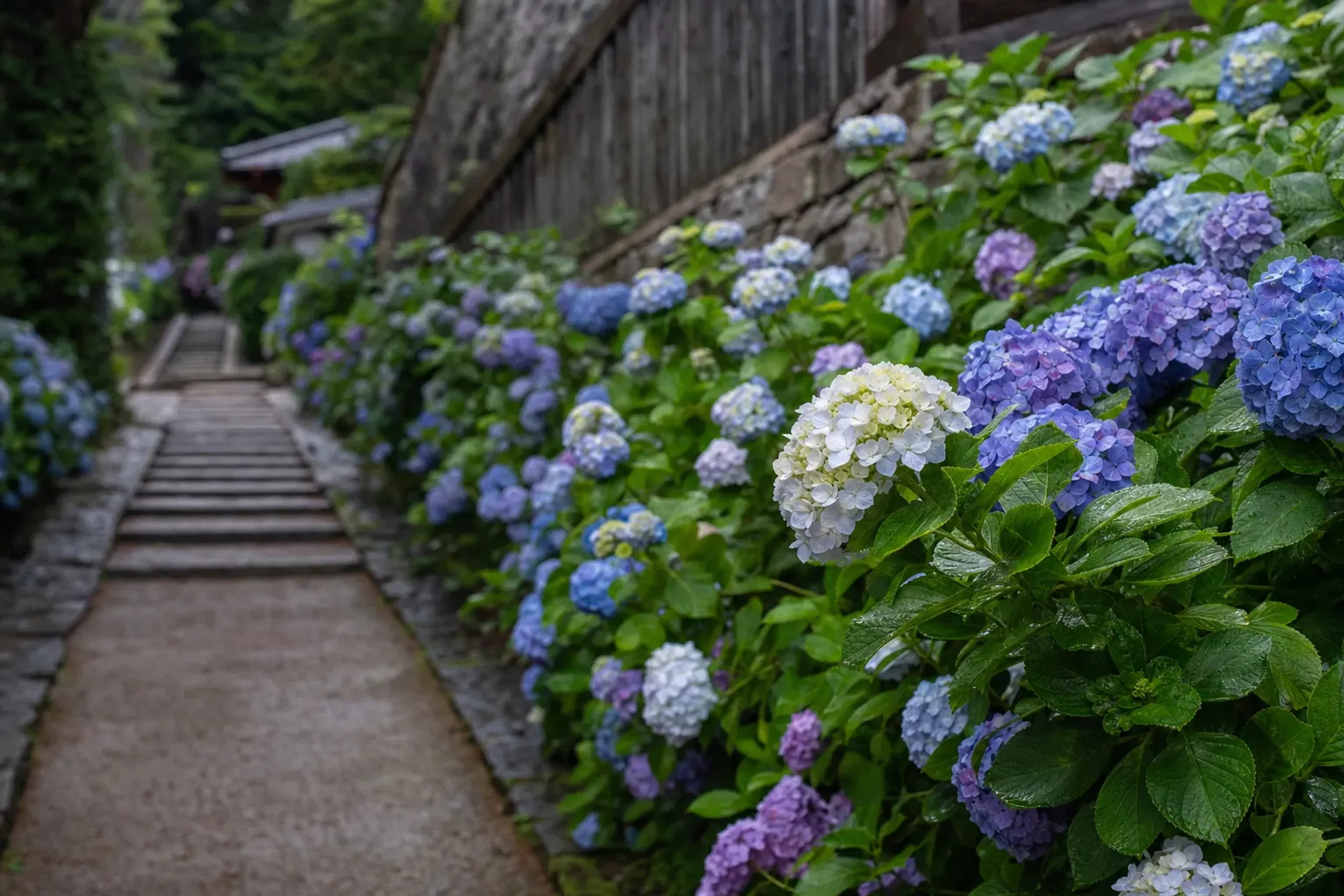
Kamakura is where June's flowers make their argument near Tokyo. Under an hour from the city, its temple grounds and hillside paths fill with hydrangeas — ajisai — through the month, blue and violet and white massed against old stone and wooden gates.
Several temple hillsides in Kamakura are known specifically for their hydrangea paths, where the flowers line stepped routes up through the trees. The effect against grey rock and damp timber is the whole reason to come in June rather than another month. This is a category of experience, not a single spot, and the town rewards an unhurried morning more than a checklist.
Timing within June shifts what you see. Earlier in the month the blooms open and the color is fresh; later they reach full mass but the heat begins to build. If you have flexibility, we weigh your dates against how the season is progressing that year. Hakone offers hydrangeas too — the line-side blooms along its mountain railway earn the trains their "hydrangea" nickname from mid-June — but Kamakura is the more direct option from a Tokyo base.
The Quiet Window Before Summer
Early June sits in a genuine gap. Spring's cherry-blossom crowds have gone home. The mainland summer surge has not yet arrived. For a few weeks the major sites breathe.
This is the practical upside people miss when they focus only on the rain. Fewer visitors at the gardens, easier restaurant reservations, calmer streets in Kyoto and Kamakura both. If crowd timing is part of how you plan, our guide to the quieter windows across the year puts June in context against the peak seasons. You trade weather certainty for space and quiet — a trade that suits some travellers precisely.
The Honest Cost Of A June Trip
June has a real price, and we would rather you hear it now than discover it on day three. The humidity is not a rumor. It builds through the month, and it is the kind of damp that sits on you.
Rain in June is not always the polite afternoon shower of a brochure. Some days deliver a genuine washout — steady, heavy, all-day rain that no clever routing fully solves. Heat also climbs as the month goes on, and the combination of warm and wet is the part sensitive travellers find hardest.
Who June does not suit: anyone who finds humidity difficult, anyone wanting to be outdoors most of the day, and anyone on a tight schedule that cannot absorb a full washout. If that is you, another month serves you better, and we will say so.
None of this is a reason to avoid June on principle. It is a reason to go in knowing the shape of it, so the trip is built to hold up.
What A June Day Actually Looks Like
A well-planned June day is not a march through the rain.
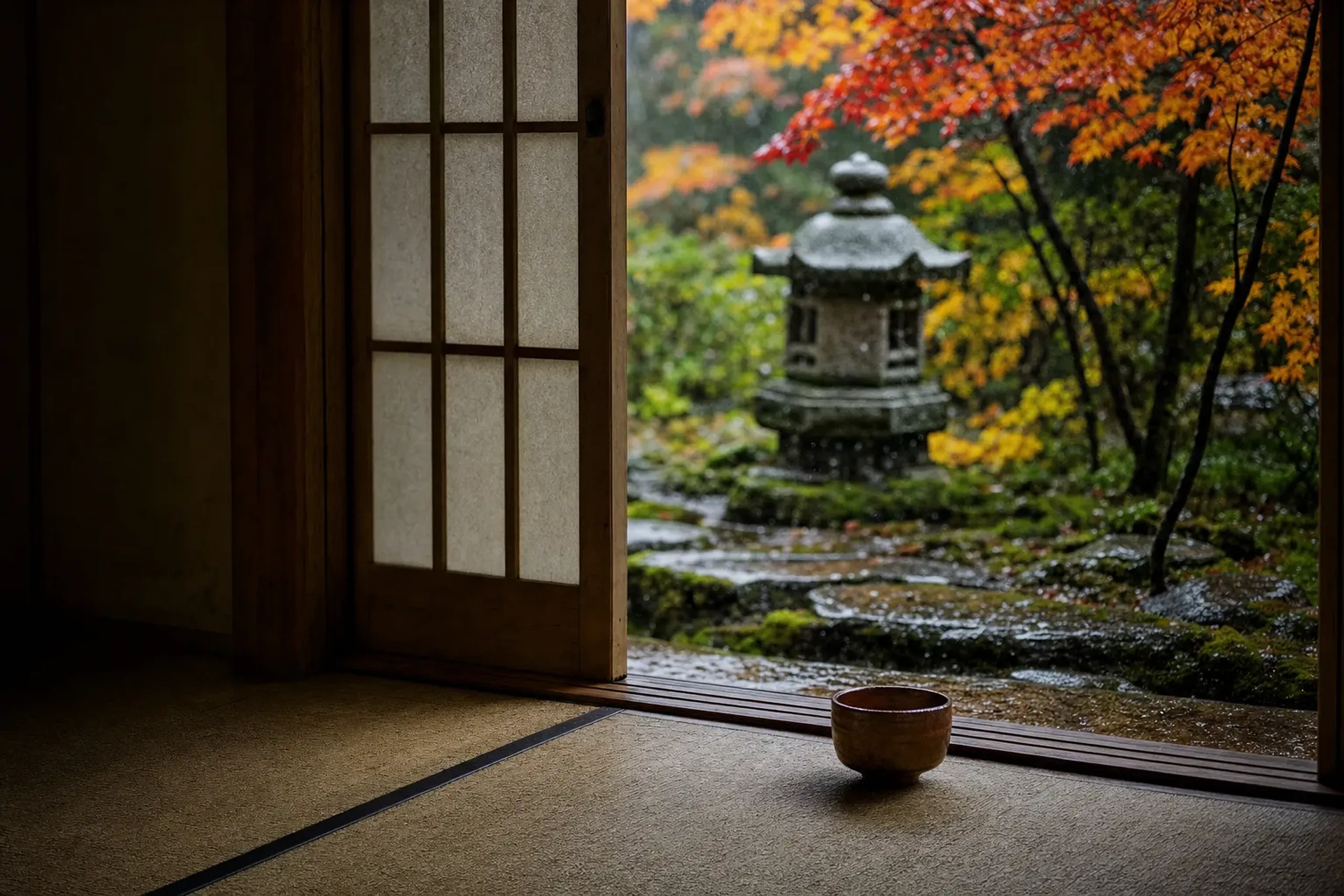
It is shorter outdoor stretches strung between interiors and covered spaces.
You spend the morning at a garden while the weather cooperates, then move under cover — a tea room, a ceramics atelier, a museum, a long lunch — while it does not. A private car removes the worst friction: no wet queues, no soaked walk between the station and the site. The rhythm is deliberate rather than reactive.
The day-level mechanics of adjusting a booked trip around rain deserve their own treatment, and we have written it.
Packing For Sustained Damp, Not One Wet Day
The packing mistake people make in June is planning for a single shower. Plan instead for continuous damp.
The difference is footwear above all. You want shoes that shrug off water and dry overnight, ideally two pairs so one is always ready. A single wet-out pair can compromise several days of walking on moss paths and stone steps.
- Water-resistant walking shoes, plus a second pair to rotate.
- Quick-drying layers rather than heavy fabrics that hold moisture.
- A compact umbrella — most sites and cars carry them, but yours should be reliable.
- A dry bag or cover for cameras and phones on the wetter days.
Think in terms of a week of moisture, not one afternoon of it. That single shift makes June comfortable rather than merely tolerable.
When The Window Closes
Late June begins the handover to summer. The rain does not stop cleanly; it gives way to heat, and the heat that follows Japan's rainy season is serious.
Once the season lifts, temperatures and humidity climb fast, and the calm-window advantage disappears as summer travel picks up. The sweet spot is the earlier and middle part of the month, when the moss is at its deepest and the hydrangeas are opening, before the heat takes over. If your dates fall late, we adjust the plan toward mornings, interiors, and hotels built for the warmth ahead.
Who June Actually Suits
June is a specialist's month, and it rewards a specific traveller.
It suits anyone with a real interest in gardens and plants — the people who came to see moss and hydrangeas at their peak, not around it. It suits photographers who want saturated color and soft, even light rather than hard midday sun. And it suits anyone deliberately avoiding the two big crowd seasons, willing to trade weather certainty for space and quiet.
If that description fits, June is not a compromise. It is the correct month, and the rain is the reason.
Frequently Asked Questions
Can I Visit Saihoji, Kyoto's Moss Temple, Without An Advance Application?
No. Saihoji requires an advance application and does not admit walk-up visitors. The system exists to limit numbers and protect the moss. Our team at Japan Royal Service arranges the application on your behalf.
When Is The Best Time In June To See Hydrangeas In Kamakura?
Earlier-to-mid June generally offers fresher color, while later June brings fuller mass alongside rising heat.
Exact timing shifts each year, so we weigh your dates against how the season is progressing before finalising the plan.
Is June A Good Month To Visit Japan Despite The Rain?
Yes, for garden lovers, photographers, and crowd-averse travellers. Moss and hydrangeas peak because of June's rain. It does not suit anyone sensitive to humidity or wanting full outdoor days, so the fit depends on the traveller.
Does The Rainy Season Make Getting Around Kyoto Difficult?
It complicates walking and taxi queues but not a chauffeured itinerary. A private car lets you time outdoor stops to breaks in the weather and stay dry between gardens, which is how we structure June days.
Why Choose Japan Royal Service
June is a month you plan into, not around. The difference between a damp, frustrating week and a quiet, saturated one is almost entirely in the planning — the routing that keeps you dry between gardens, the dates weighed against the season, the access that most visitors never arrange.
Our concierge handles the parts that make June work. We arrange the Saihoji application so the moss temple is open to you, we book the trip around it, and we build each day with covered space between the outdoor stretches. In our experience the travellers who love June are the ones who came for exactly what the rain produces — and who let someone else manage the logistics of getting there dry. We plan every one of these journeys as a tailor-made itinerary, shaped to your dates and your interests, with total discretion.
To place June against your own dates — and to have us arrange the Saihoji application and the trip built around it — reach our team privately via WhatsApp or LINE, or contact us here.