In this guide
- 01Tokyo Winter Illumination: Concentration And Convenience
- 02What Is Kobe Luminarie, And Why Is It Different?
- 03Nabana No Sato: The Scale Argument
- 04Crowd Strategy For Each Display
- 05How Do These Illuminations Fit Into A Wider Japan Trip?
- 06What Winter Illuminations Are Not
- 07Pairing Dinner With An Illumination Evening
- 08Who Should Skip Winter Illuminations?
- 09Frequently Asked Questions
- 10Why Choose Japan Royal Service
For much of winter, illumination season passes as background scenery. Streets glow, a photograph gets taken, and the traveller moves on to dinner. That is a waste, because Japan does not offer one illumination experience but at least three genuinely different ones. Tokyo gives you ease, Kobe gives you meaning, and Nabana no Sato gives you scale — and choosing well depends on what you actually want from a winter evening.
At Japan Royal Service, we plan these evenings often, and the first thing we tell guests is that these three are not interchangeable. Pick the one that matches your trip, not the one that photographs best on someone else's feed. Below is how each works — what it is, its scale and character, its timing, its crowd pattern, and who should choose it.
Tokyo Winter Illumination: Concentration And Convenience
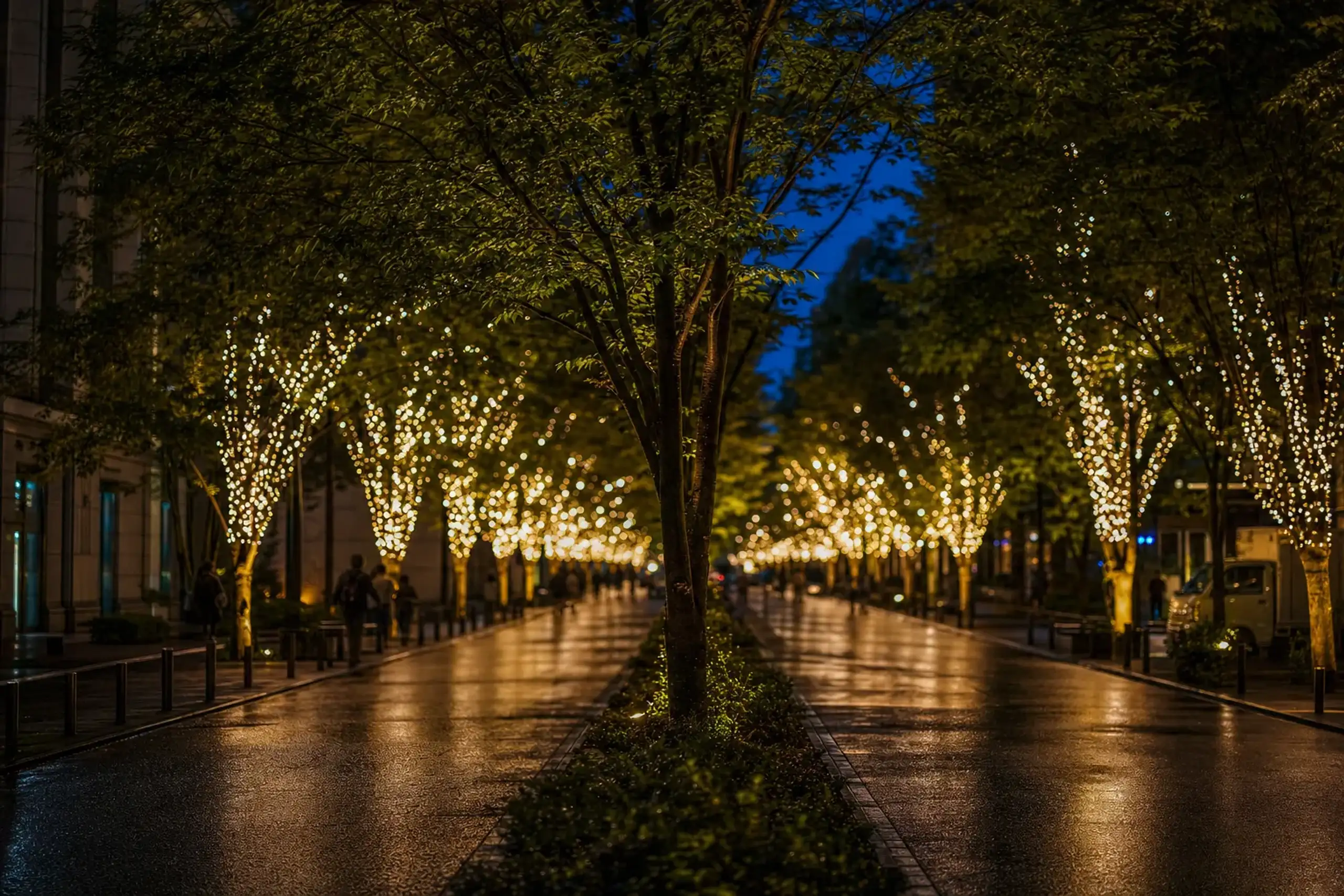
Tokyo's winter illuminations are concentrated in a handful of well-known districts, mostly free to view from the street, and easy to see several in a single evening. That last point is the whole argument. Several major displays sit a short chauffeured hop apart, so one evening covers a great deal without heavy planning.
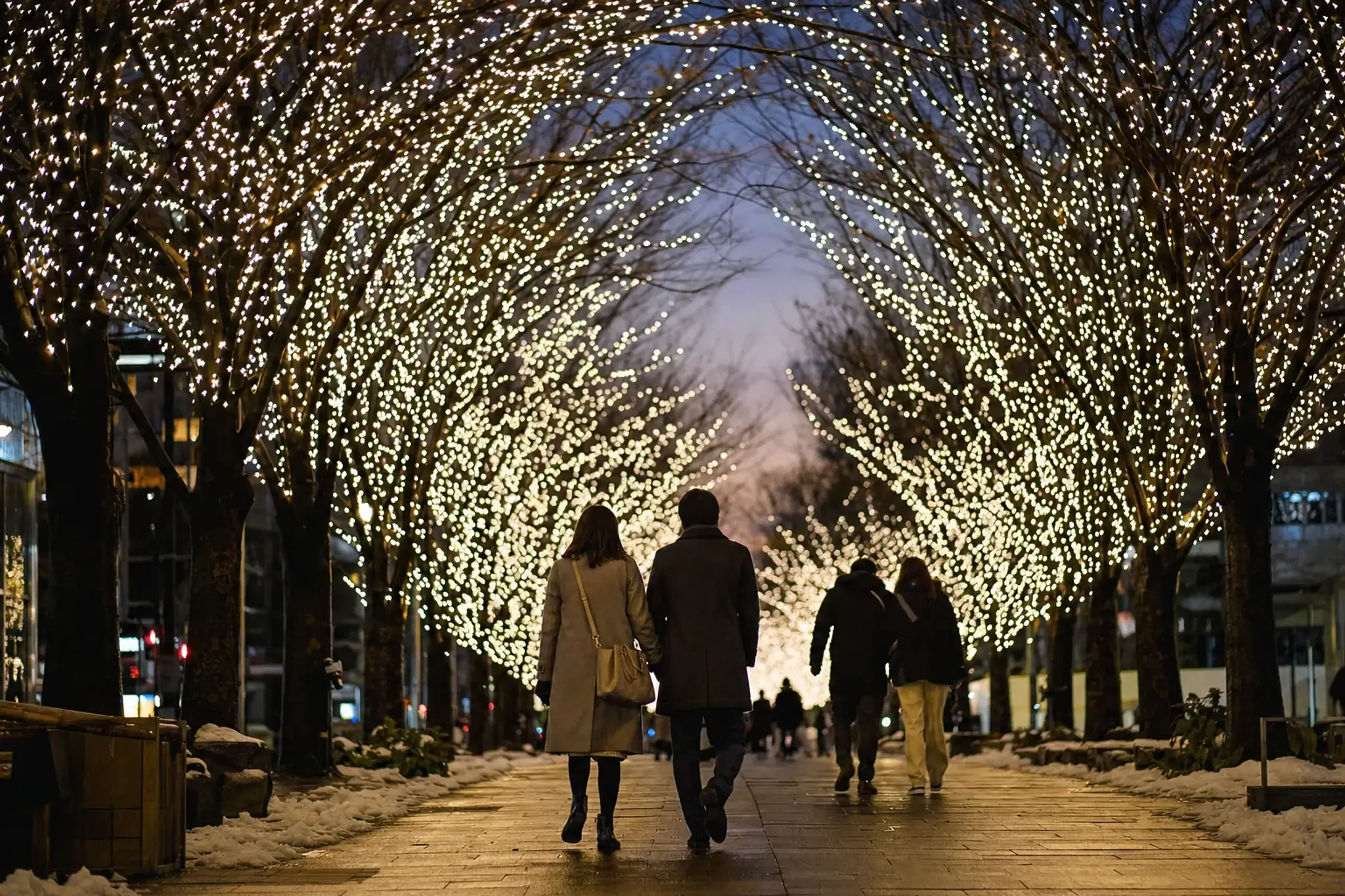
You know the shape of it already. A wide avenue lined with trees strung in white or champagne light. Cold, dry air. Couples moving slowly. Office workers cutting through on the way home, coats buttoned to the chin.
The season generally runs from around mid-November through late December, with some displays carrying on into January or February. Lights switch on near sunset and run into the evening. The districts change their programs year to year, so rather than list every one, understand the pattern: a small number of major clusters, close together, that a single well-routed evening can string into a sequence.
An illumination stop also folds neatly into a larger evening. If you are thinking about how the lights sit within dinner, a bar, and a late walk, our note on how Tokyo's seasonal displays compare gives useful context on pacing a night around a single anchor.
Key timing fact: Christmas week, especially December 23–25, is the single busiest period across nearly every Tokyo display. January is a genuine quiet window — many displays stay lit while the pre-Christmas crowd has gone home.
What Is Kobe Luminarie, And Why Is It Different?
Kobe Luminarie is a memorial. It was created in 1995 in memory of the more than 6,000 people killed in the Great Hanshin earthquake, and it has never stopped carrying that weight. This is not a Christmas market with a backstory. It is a light festival born from grief.
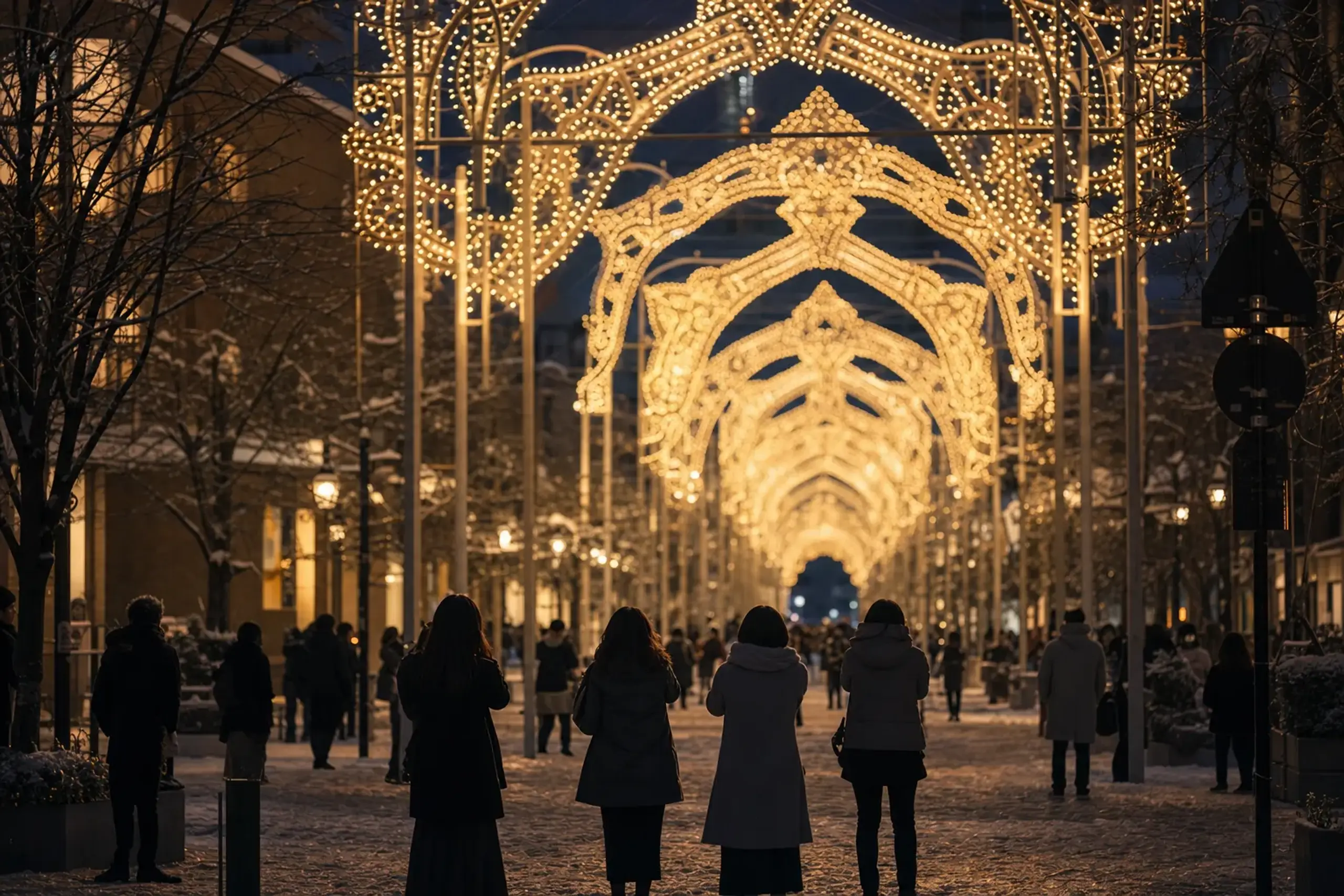
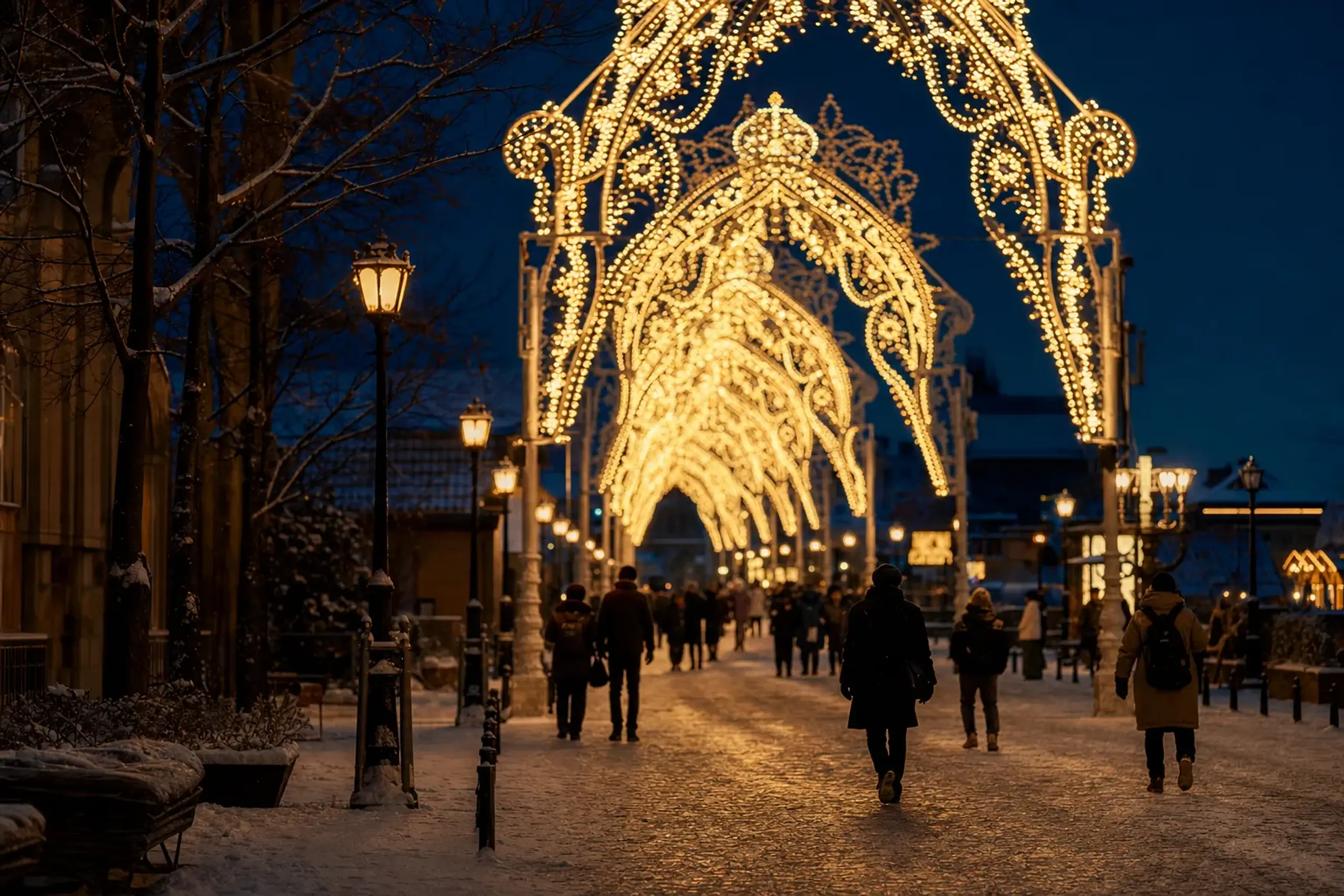
The design reflects that origin. Kobe Luminarie uses Italian-style light architecture — arches and structures of light rather than trees wrapped in bulbs — a legacy of the support Italy gave in the aftermath of the disaster. The effect is closer to walking through a cathedral of light than through a shopping district dressed for the holidays. People speak quietly. Many who come are local, and for them it is remembrance first, spectacle second.
We think it matters that visitors understand this before they arrive. Treating Kobe Luminarie purely as a photo opportunity misreads the room. Stand in the cold with a subdued crowd, under structures built to honour the dead, and the mood explains itself.
Timing And Format
Since 2024, Kobe Luminarie has run across multiple sites in the city rather than one single central display, typically in late January for roughly ten nights. The lights come on in the early evening and run through mid-to-late evening. Most of the event is free to view; one area offers a paid, more photogenic viewing zone. The distributed format means you move between sites rather than standing in one place, which changes how you plan the evening.
Exact dates shift year to year and are confirmed by the organisers close to the event. Our concierge team confirms the current run and site layout directly with guests when placing it against travel dates.
Nabana No Sato: The Scale Argument
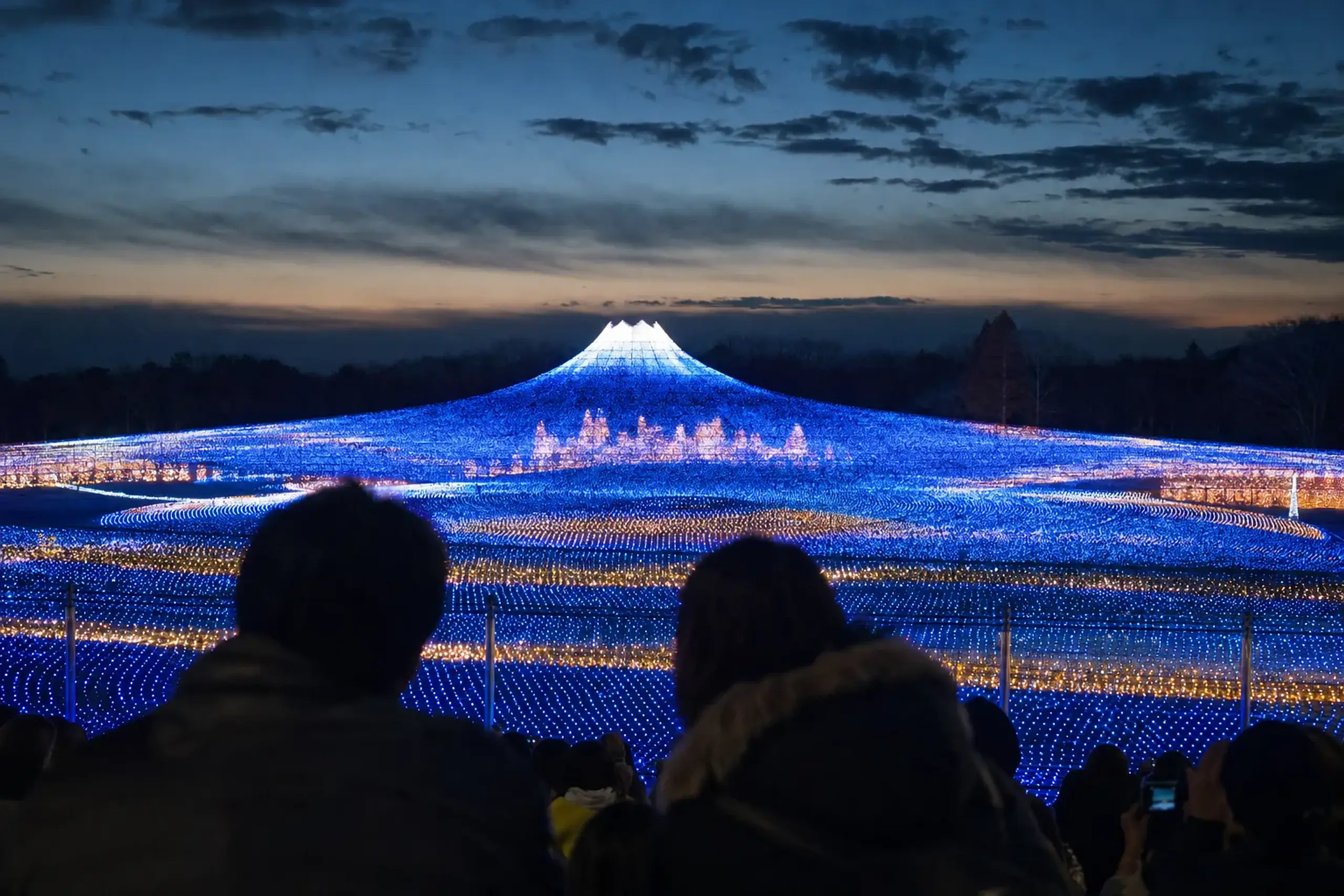
Nabana no Sato, near Nagoya, is cited as one of the largest and most elaborate illumination displays in the country. If Tokyo is convenience and Kobe is meaning, this is scale — plainly, the biggest single display Japan puts on, and worth building a trip around rather than tacking on as an extra.
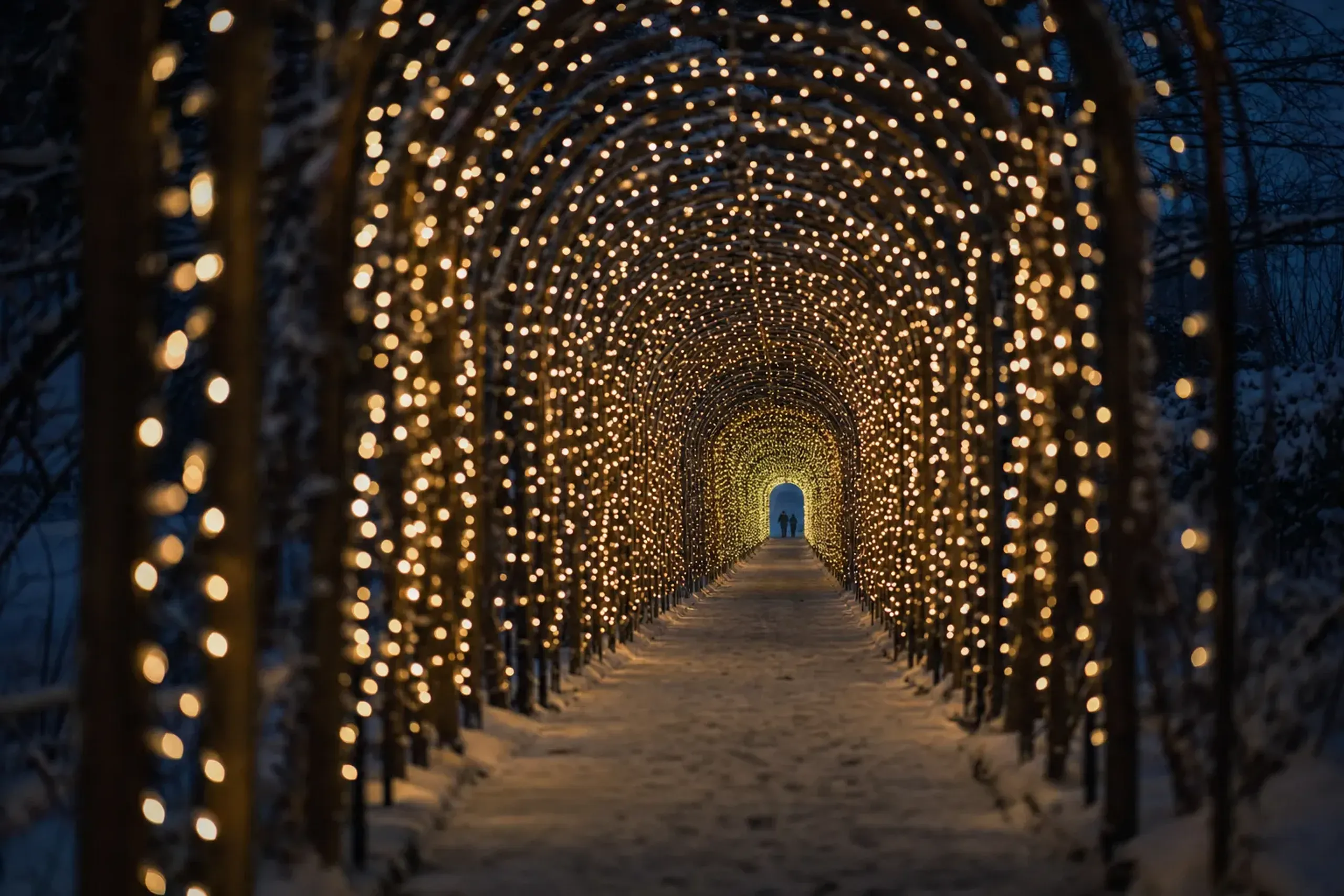
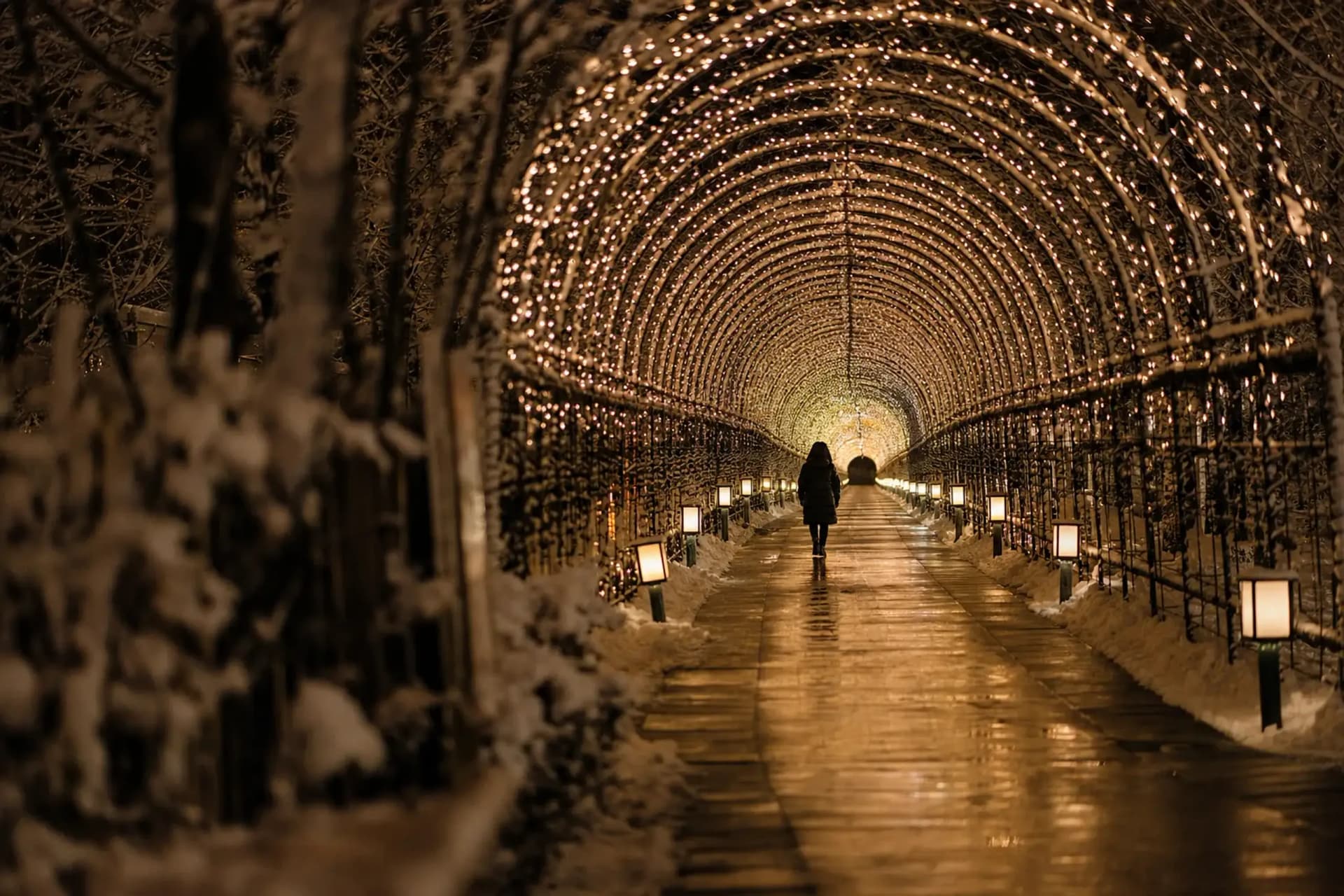
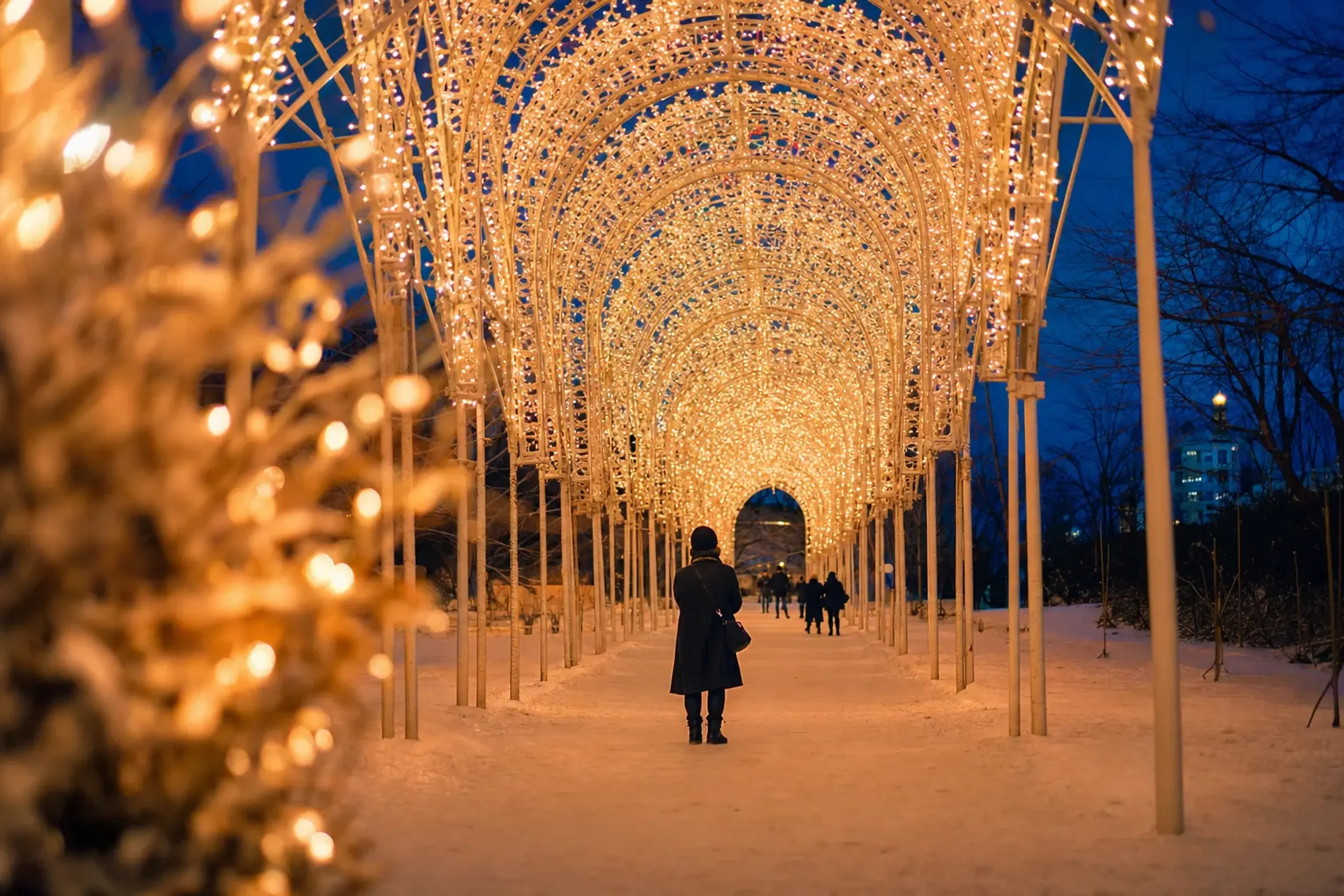
The site is a flower park in Kuwana, Mie Prefecture, that turns itself over to light in the cold months. It is known in particular for a long illuminated tunnel you walk through, and for a central themed display that changes each season. Unlike a street illumination glimpsed in passing, this is a ticketed park you enter and spend real time inside.
Its season is unusually long. Rather than the tight November-to-December window most illuminations keep, Nabana no Sato runs from mid-October well into spring — roughly seven months.
That length is a practical gift, because it takes the pressure off finding a single perfect week and gives you room to choose a quieter night.
Crowd Strategy For Each Display
The best crowd strategy is different for all three, and treating them the same is the common mistake.
Tokyo: Play The Calendar
In Tokyo the lever is timing. Avoid Christmas week and, if your dates allow, favour January. The displays that carry into the new year are just as lit, and the crowd thins dramatically once the holiday rush ends. This is the single most useful piece of planning advice in the whole post: same lights, a fraction of the people.
Kobe: Arrive Early, Choose Free
Kobe rewards an early arrival in the evening, before the after-dinner crowd builds. If crowds matter to you more than the single best photograph, stay in the free viewing areas rather than paying for the dedicated zone. Given the memorial character, an early, unhurried walk suits the event better than jostling for a peak-hour angle anyway.
Nabana No Sato: Pick A Weekday
Nabana's long season is its own crowd strategy. Because the display runs for months, you are not forced into a peak weekend. Choose a weekday and much of the pressure disappears. The park handles volume well, but a Tuesday in the run is a different experience from a Saturday near Christmas.
How Do These Illuminations Fit Into A Wider Japan Trip?
Each pairs with a different part of the country, which often decides the choice for you. Kobe folds into a Kansai itinerary with Kyoto and Osaka. Nabana no Sato works as a Nagoya stop between Tokyo and Kyoto on the main rail line.
Tokyo needs no pairing at all.
If you are already spending time in Kansai, Kobe Luminarie's late-January window slots in without bending the trip. Nabana no Sato sits conveniently for anyone travelling the Tokyo–Nagoya–Kyoto corridor, making it a natural evening on a day that would otherwise be pure transit. And Tokyo's clustered displays ask nothing of your wider plan — they are simply there, a short drive from most central hotels, ready for whichever evening suits.
Getting between sites in the cold, on a schedule that beats the crowds, is where a private chauffeured car earns its place. Warm, direct, and waiting — no cold platform, no last train to catch.
What Winter Illuminations Are Not
Illuminations are an evening, not a winter. They are not a substitute for the deeper cold-season content Japan offers — the snow country, the New Year rites, the long ryokan nights. Those overlap on the calendar but answer a different desire entirely.
If you are shaping a genuine winter journey, especially anything built around the New Year period, treat the lights as one bright evening within it rather than the point of the trip. Our guide to snow country in the cold months covers that broader argument, and the two ideas sit happily side by side without doing each other's job.
Pairing Dinner With An Illumination Evening
Illuminations run in the evening, which makes a dinner arranged around the display's location and timing a natural addition rather than an afterthought. The logic is simple: eat before or after the lights depending on the crowd pattern, and choose a restaurant close enough that the transition is short and the cold is brief.
In Tokyo that might mean dinner in a district near one of the clusters. In Kansai, a Kobe or Osaka table timed around the Luminarie evening. Near Nagoya, a meal built around the drive to Nabana no Sato. We keep this general on purpose — the right table depends on your dates, your party, and where the lights are that year — but the principle holds across all three.
Who Should Skip Winter Illuminations?
Skip them if you are travelling in high summer or otherwise outside the season entirely — the displays simply are not lit. Skip them, too, if the crowd risk during peak weeks outweighs your interest, and January timing or a weekday visit cannot be arranged around your fixed dates.
There is no shame in it. A single crowded hour under lights you feel lukewarm about is worse than a quiet dinner and an early night. The point of choosing carefully is knowing when the answer is no.
Frequently Asked Questions
When Is The Best Time To See Tokyo Winter Illuminations Without The Crowds?
January is the quiet window. Many Tokyo displays stay lit into the new year while the pre-Christmas crowd has left. Avoid December 23–25, the single busiest period across nearly every display in the city.
Is Kobe Luminarie A Festive Event Or A Memorial?
It is primarily a memorial. Kobe Luminarie was created in 1995 for the more than 6,000 victims of the Great Hanshin earthquake, and its mood remains reflective rather than festive. Understand its origin before treating it as spectacle.
How Long Does Nabana No Sato's Illumination Season Last?
Unusually long — roughly seven months, from mid-October well into spring. That length lets you choose a quieter weeknight instead of competing for a peak December weekend, which is its main crowd advantage.
Which Winter Illumination Should I Choose For A Kansai Trip?
Kobe Luminarie. Its late-January window pairs naturally with a Kyoto and Osaka itinerary. For the Tokyo–Nagoya–Kyoto corridor choose Nabana no Sato; if you are only in Tokyo, its clustered displays need no pairing at all.
Can I See Kobe Luminarie For Free?
Yes, most of it is free to view. Since 2024 the event runs across multiple city sites, and only one area offers a paid, more photogenic viewing zone. Choose the free areas if avoiding crowds matters more than the best angle.
Why Choose Japan Royal Service
These three displays reward being placed correctly against your dates, and that is the work we do. Our team at Japan Royal Service arranges private viewing, chauffeured transport between sites, and dinner paired to the display's location and timing — including steering you toward the quiet January window in Tokyo, an early arrival at Kobe, or a weeknight at Nabana no Sato when crowds matter.
We treat an illumination not as a checklist entry but as one considered evening within a larger, well-shaped journey. If you already know your dates, we can tell you which of the three actually fits — and which to skip.
To place a winter illumination against your travel dates, reach our team privately via WhatsApp or LINE, or contact us here.