In this guide
- 01What Is Kitakami Tenshōchi Park, And What Makes It Worth Visiting?
- 02The 2 km Cherry Avenue: How The Walk Actually Feels
- 03When Do Cherry Blossoms Bloom At Kitakami Tenshōchi In Iwate?
- 04Why Is Kitakami’s Bloom Later Than Tokyo Or Kyoto?
- 05Carp Streamers Over The Kitakami River: What You’ll See During The Festival
- 06Evening Illuminations And River Reflections: A Quiet Peak Moment
- 07How Do You Get To Kitakami Tenshōchi From Tokyo?
- 08Getting Around On The Ground: Walk, Taxi, Bicycle, Shuttle
- 09Traffic Controls, Drop-Off Planning, And Parking: What Luxury Travelers Should Know
- 10A Calm Half-Day Plan: Tenshōchi + Michinoku Folklore Village
- 11How Japan Royal Service Plans A Tenshōchi Visit (Without Overpromising)
- 12Begin Planning Your Tōhoku Spring
- 13Frequently Asked Questions
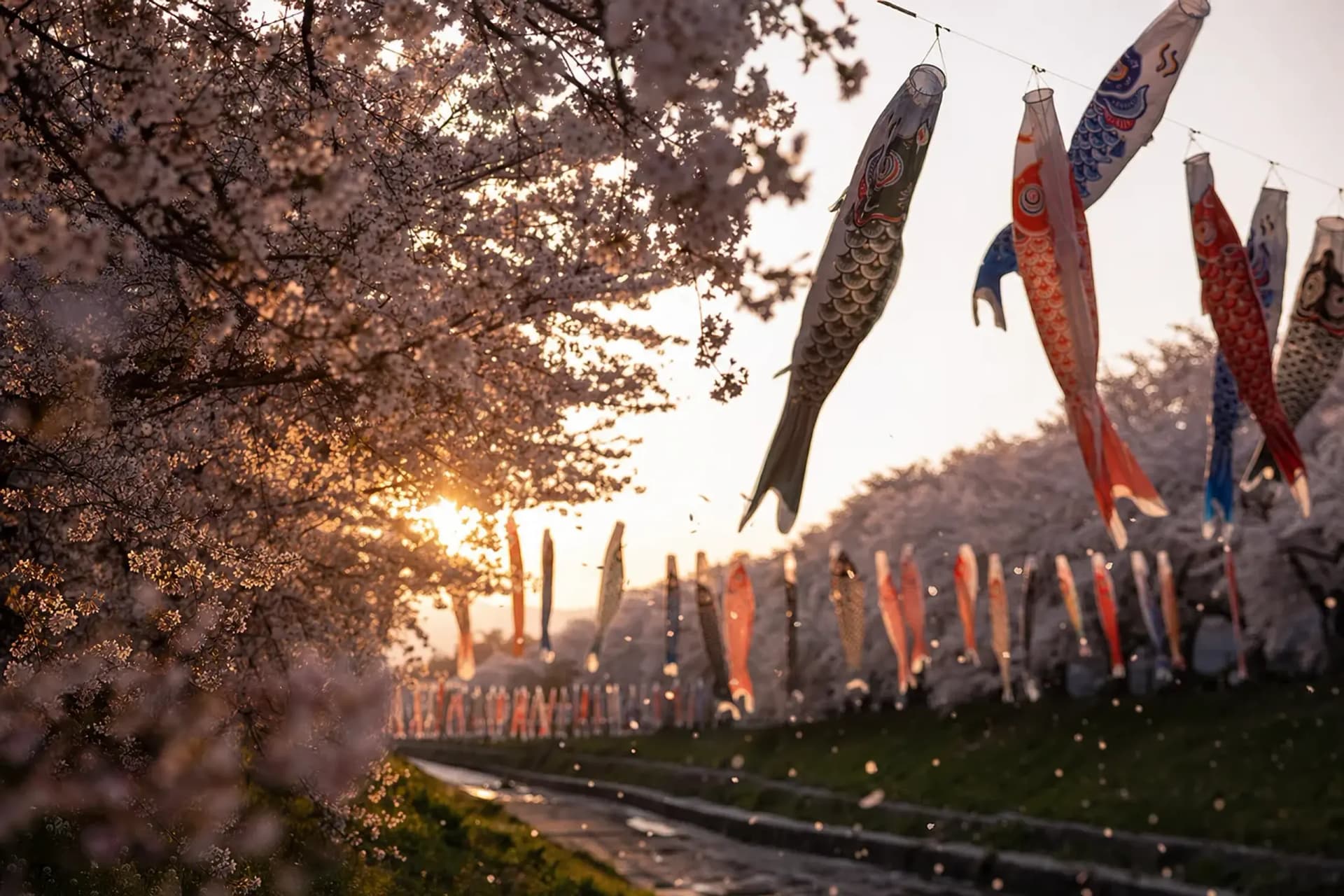
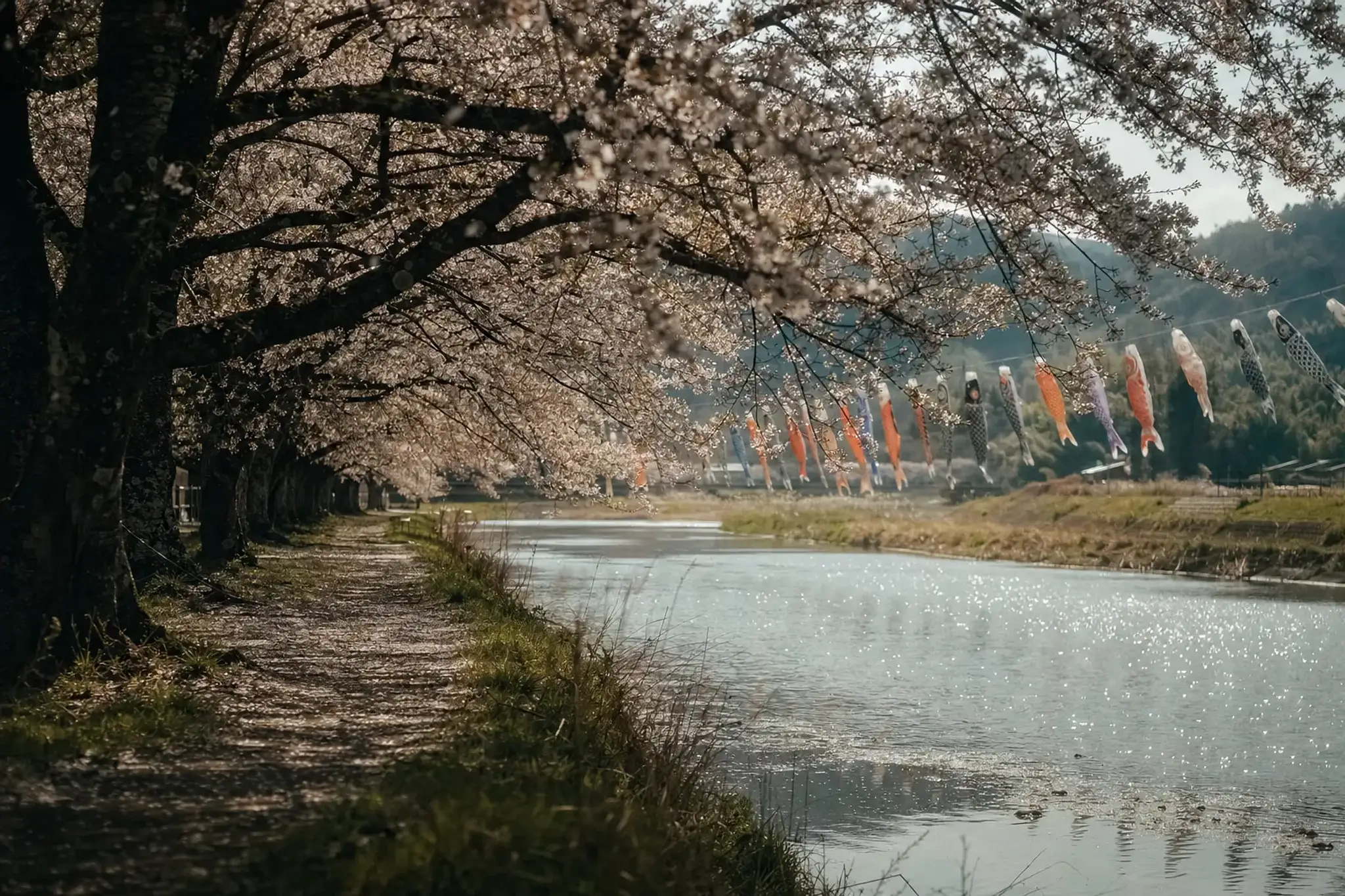
Carp streamers tilt in the river wind, strung high over the Kitakami. Below them, a long band of cherry trees runs along the bank, pale petals set against dark water. It is a scene that rewards stillness rather than spectacle.
Kitakami Tenshōchi is not the “first blossom” story. It is the second chapter. For travelers who arrived a week too late in Tokyo or Kyoto, this riverside park in Iwate often opens the door again—quietly, and on its own terms.
What Is Kitakami Tenshōchi Park, And What Makes It Worth Visiting?
Kitakami Tenshōchi Park is a public riverside park in Kitakami, Iwate, known for a roughly 2 km cherry avenue and a spring festival where carp streamers fly above the Kitakami River.
There are bigger names in the cherry conversation. No argument. But Tenshōchi keeps a different rhythm, because the river gives the scenery a spine: trees along the bank, sky-wide koinobori above, and—after dusk—reflections that make the blossoms feel doubled. The appeal here is restraint, not flash; a wabi sensibility of quiet water and soft petals rather than grand display.
The scale is real. JNTO describes over 10,000 cherry trees across the park, and many sources repeat its “Japan’s 100 best cherry blossom viewing spots” recognition. Not every list agrees on every label. Still, Tenshōchi surfaces often enough that seasoned Japan travelers keep it in their back pocket.
One more thing. This is a city park, not a gated garden. That is part of the charm. You share it with families, photographers, and locals on an evening walk—a texture of ordinary life that no private estate can manufacture.
The 2 km Cherry Avenue: How The Walk Actually Feels
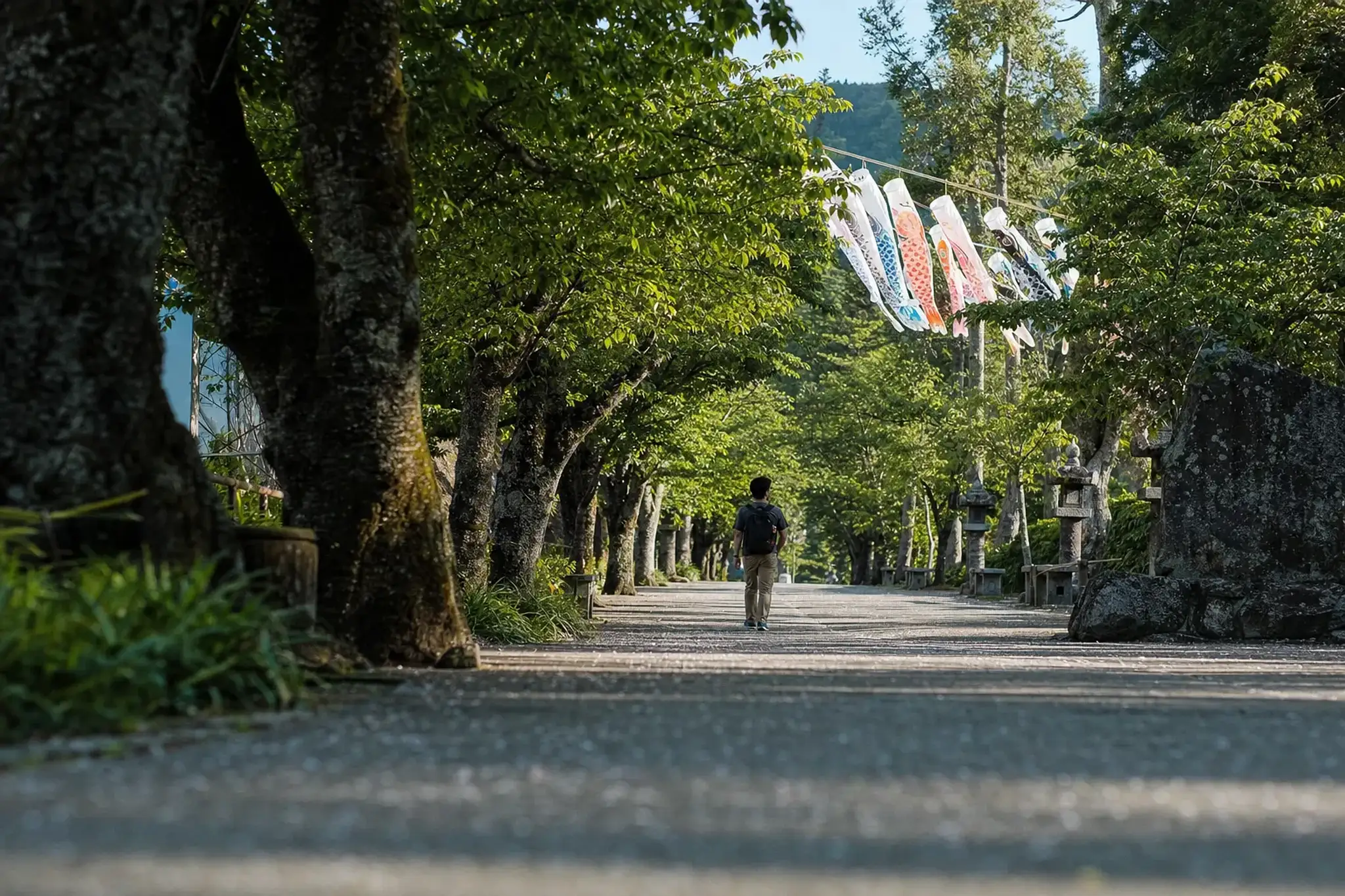
The headline detail is the length: about two kilometres of cherry trees lining the Kitakami River, stretching from the Sangō Bridge area toward the Tenshōchi rest house.
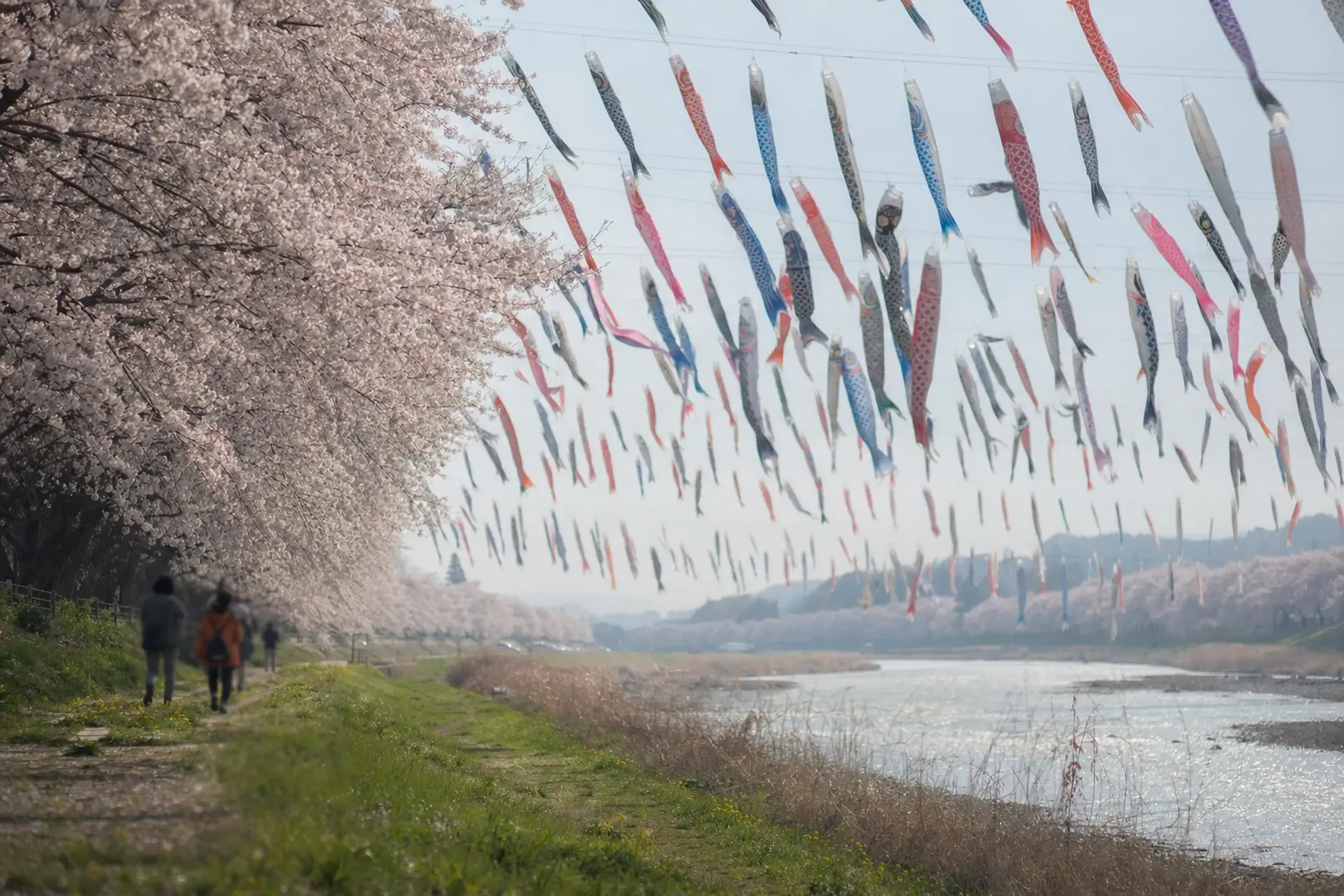
Two kilometres is not a quick loop. It is a committed stroll. In our experience, guests enjoy it more when they treat it like a promenade—slow starts, pauses for photographs, and a clear turn-around point agreed in advance.
Footwear matters. So does timing. If you arrive at midday on a peak weekend, the avenue can feel like a corridor. Arrive instead with late-afternoon light, and the walk opens up, the crowds thinning while the river breeze keeps the temperature honest.
Bring one small habit from Kyoto: don’t rush the “main view.” The best moments here are the side glances—petals pressed to the embankment stones, a kite line drawn against the sky, the low sound of water beneath the bridge. This is the Japan that reveals itself only to those who slow down.
When Do Cherry Blossoms Bloom At Kitakami Tenshōchi In Iwate?
Kitakami Tenshōchi usually blooms in mid to late April, with some later-flowering cherry varieties continuing into early May.
That single fact changes how you use spring in Japan. Many itineraries burn their sakura days early, then spend the rest of April “after the bloom.” Tenshōchi can flip that feeling, because it often arrives later than the Kantō cities. This is the quiet art of shun—knowing not only what to experience, but precisely where and when.
We avoid promising exact dates. Sensible travelers do too. Instead, we plan around windows, stay flexible between bases, and keep travel days light so you can move with the bloom rather than fight it.
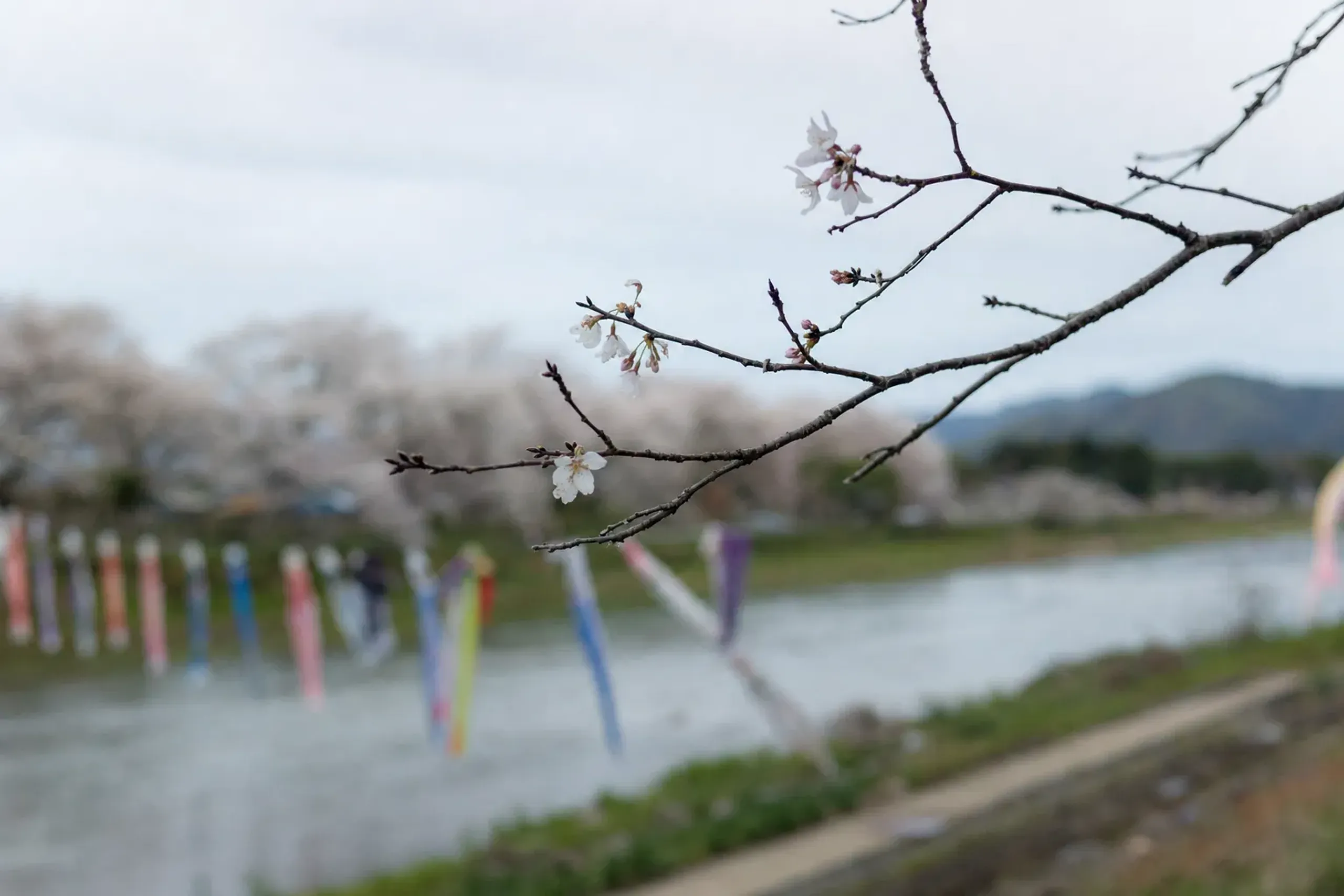
If you want a fixed illustration, the Kitakami Tenshōchi Sakura Festival in the 2026 season ran from April 10 to April 29. That is not a forecast. It is simply one documented season that helps you visualize the calendar.
Why Is Kitakami’s Bloom Later Than Tokyo Or Kyoto?
Kitakami’s bloom tends to be later because Iwate sits farther north in Tōhoku, where spring temperatures usually rise later than in Tokyo or Kyoto.
For the discerning traveler, that “later” is not trivia. It is leverage. You can plan Tenshōchi as a calm correction if Tokyo’s blossoms ran early, or as a deliberate finale after Kyoto’s busiest weeks.
We often describe it to clients as a second chance that never feels like consolation. The river scenery is distinct. The mood is less hurried. And the light can turn remarkably soft in late April.
Think of it as editing, not adding. One park. One long walk. A clean, memorable chapter.
Carp Streamers Over The Kitakami River: What You’ll See During The Festival
During the Kitakami Tenshōchi Sakura Festival, carp streamers (koinobori) are hung over the Kitakami River.
They look playful in photographs. In person, they read differently. Large fish silhouettes move slowly, tugged by a wind you cannot see, while the river below stays dark and steady.
On the bank, blossoms do their usual work: softening edges, turning crowds into silhouettes, lending even a simple food stall the dignity of the season. Overhead, the streamers add a second “ceiling” to the scene, so your eyes keep lifting off the cherry line and back toward the water.
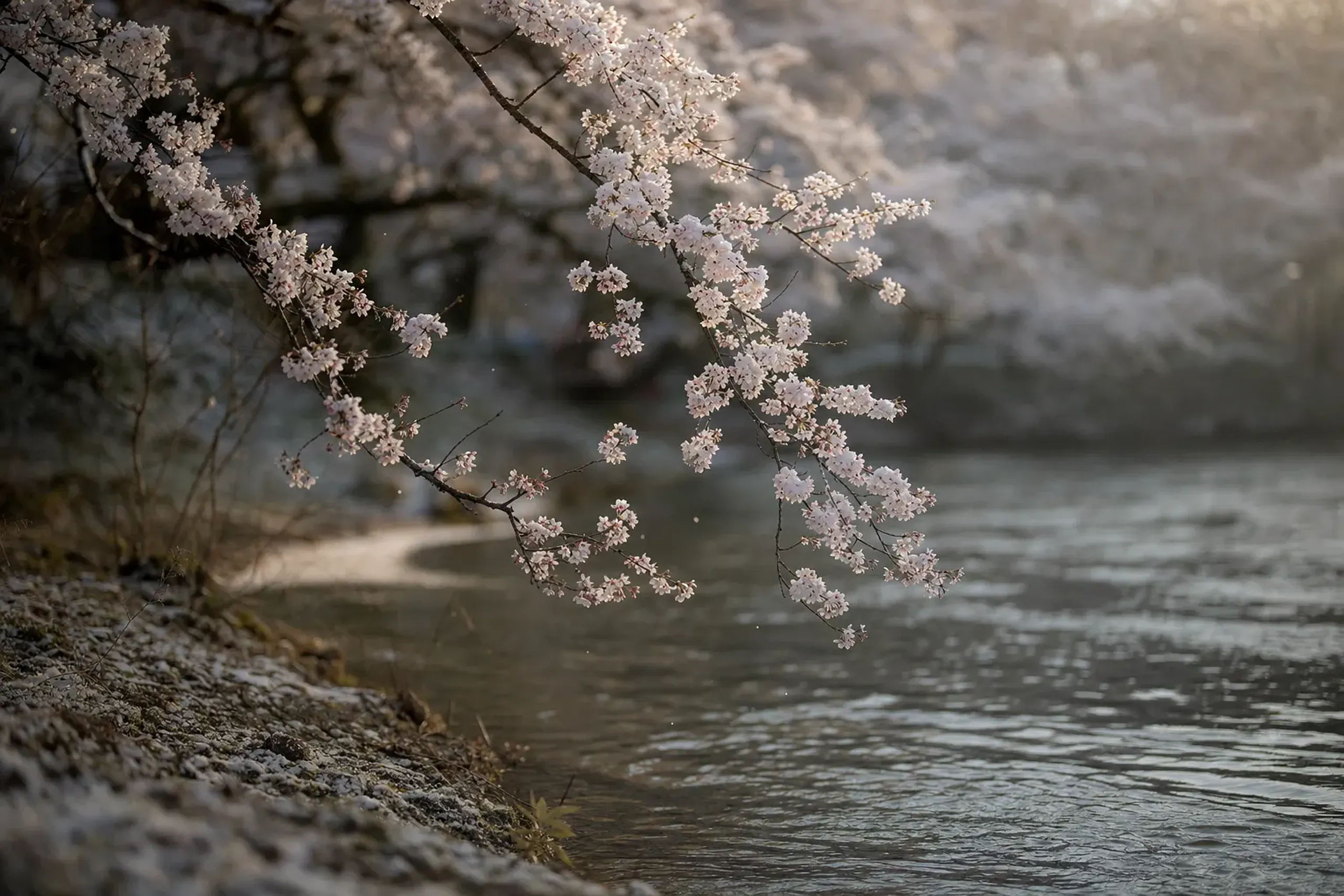
JNTO’s FAQ page also notes viewing the blossoms from a riverboat cruise beneath the streamers. Availability and operating details can change by season. If a river view matters to you, our concierge team at Japan Royal Service can share tailored guidance once you tell us your dates and party size.
Evening Illuminations And River Reflections: A Quiet Peak Moment
Kitakami Tenshōchi offers night cherry-blossom viewing with illuminations during the blossom period, lighting the pathway after dusk.
This is where Tenshōchi becomes fully itself, not a “late substitute.” The river turns into a mirror. The pink shifts cooler. People talk more softly, as if the dark asks it of them.
As one 2026-season illustration, some listings described illumination hours around 18:00–21:00, with parking hours extended to 20:00 on illumination nights. Those specifics are set each year. Check current announcements before you commit to an evening plan.
Our practical note: decide your exit before you arrive. Not glamorous. Necessary. If you plan a pick-up point and a time buffer, you keep the evening feeling intact—and the anticipation of your unspoken needs is precisely the kind of quiet care we build into every hour.
How Do You Get To Kitakami Tenshōchi From Tokyo?
From Tokyo, take the Tōhoku Shinkansen to JR Kitakami Station, then reach Tenshōchi by a roughly 15–20 minute walk from the east exit, or about 10 minutes by car or taxi.
JR Kitakami Station is the hinge. It is served by the Tōhoku Shinkansen and local lines, and it keeps the visit straightforward even if you base yourself in a nearby Tōhoku city.
Walking is pleasant on a fair day.
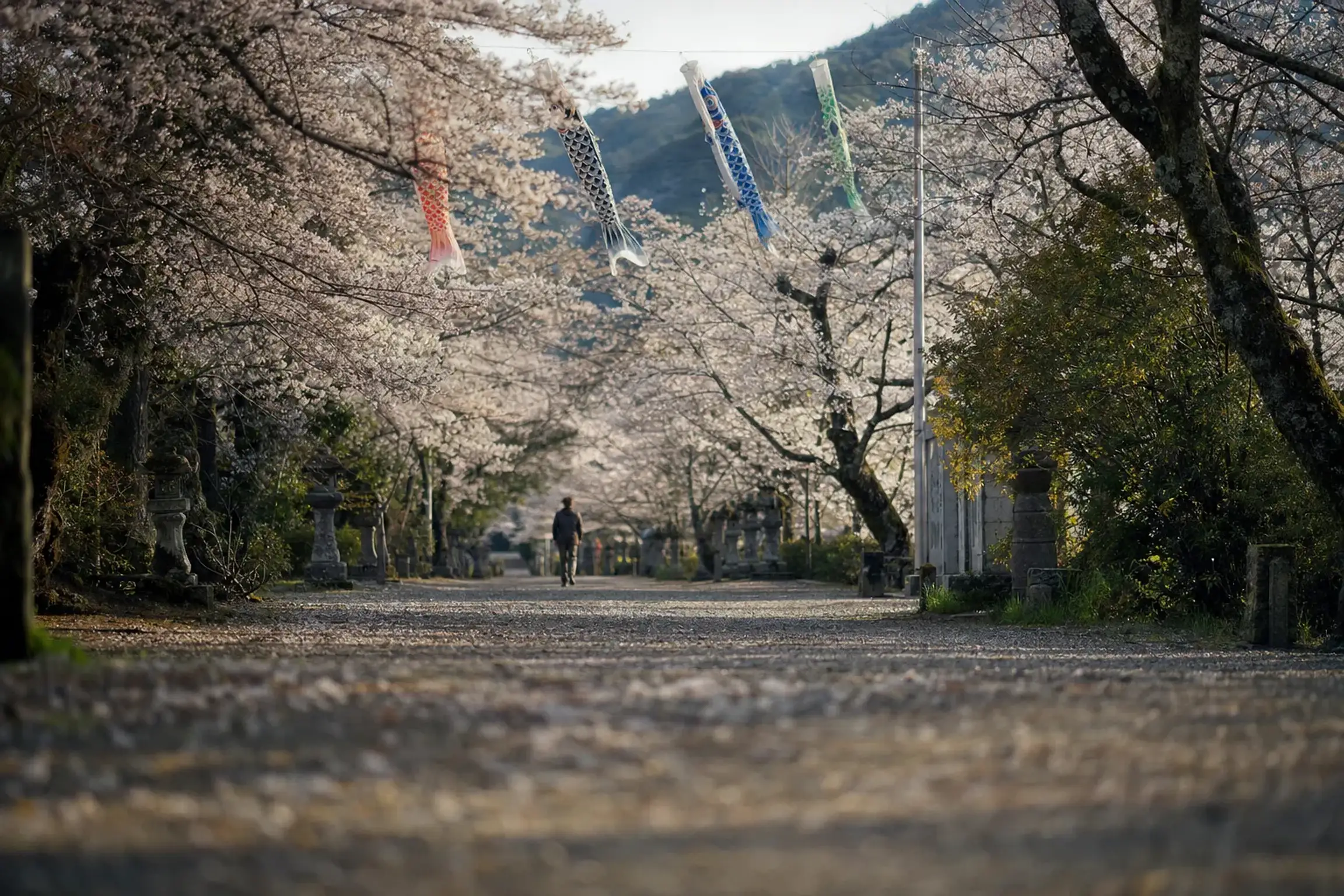
Still, the last stretch can feel longer than the map suggests when you are dressed for dinner, carrying camera gear, or traveling with children.
If you prefer wheels, there is also a practical middle ground. In the 2026 season, a temporary paid shuttle ran from the station’s east exit on festival-period weekends and holidays. Shuttle arrangements can change. Confirm current service details before relying on it.
Getting Around On The Ground: Walk, Taxi, Bicycle, Shuttle
Most visitors experience Tenshōchi on foot, but the last-mile options from Kitakami Station include walking, taxi, rental bicycle, and (in some seasons) a temporary festival shuttle.
- Walk: JNTO describes about 20 minutes from Kitakami Station (east exit). Other guides suggest a 15–20 minute walk. It is easy to follow. It is also exposed if the wind comes up.
- Taxi / car: Roughly 10 minutes by car or taxi from the station under normal conditions. On peak bloom days, “normal” can vanish. This is where traffic controls matter.
- Rental bicycle: About 15 minutes by rental bicycle, with rentals available from the east exit through the local tourism association. A bicycle can be the smartest option for a solo traveler who wants independence without a parking headache.
- Festival shuttle: As noted above, the 2026 season included a temporary paid shuttle on weekends and holidays during the festival period. Treat that as an example, not a guarantee.
Traffic Controls, Drop-Off Planning, And Parking: What Luxury Travelers Should Know
On peak weekends, vehicle restrictions may limit access near Sangō Bridge, so plan drop-offs, pick-ups, and walking time in advance—and confirm current rules before you go.
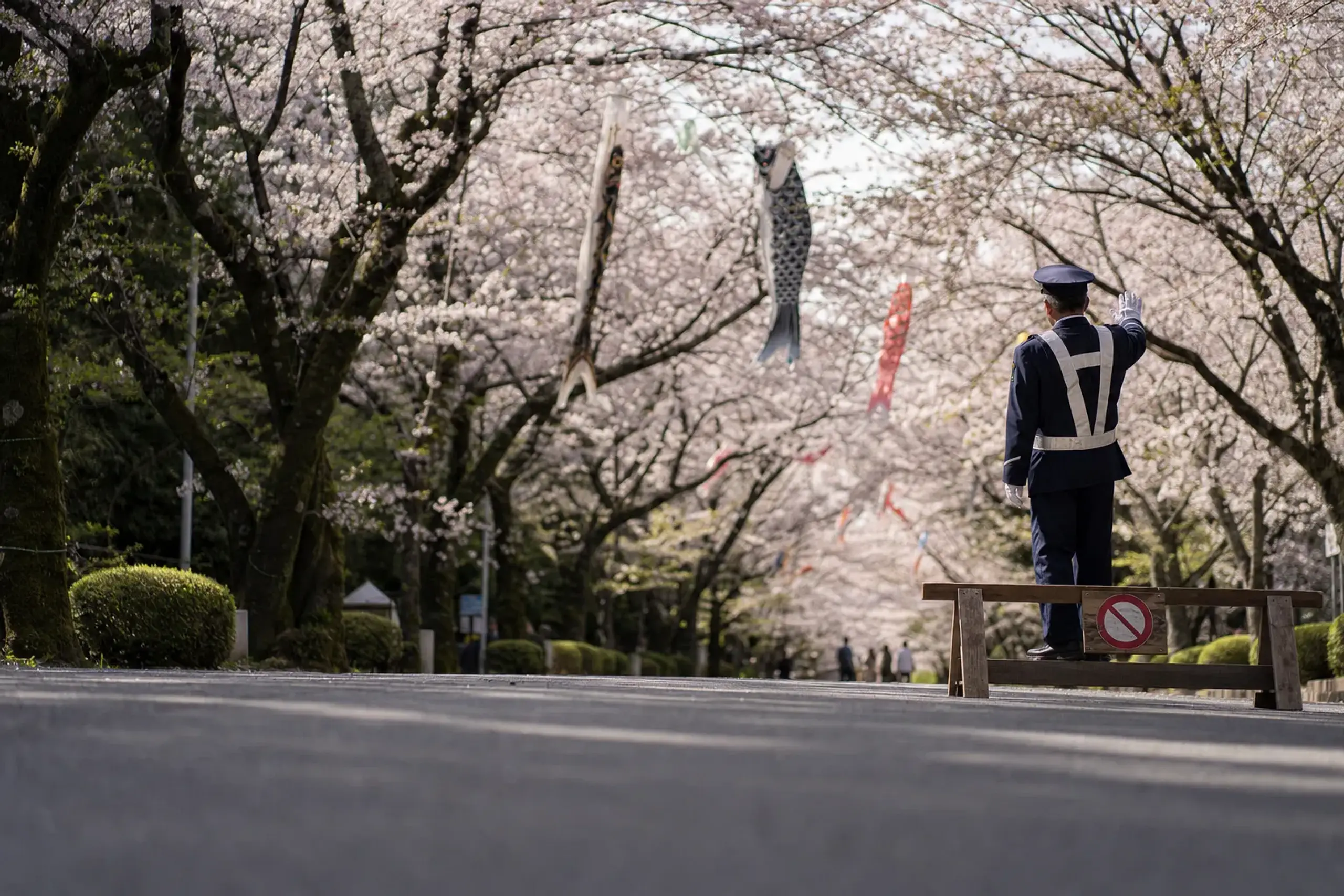
This is the part many glossy itineraries skip. A city document describing one recent set of regulations explained that general vehicles could be banned near Sangō Bridge on certain peak-bloom weekends, while taxis, shuttle buses, tour buses, emergency vehicles, and permitted vehicles may pass.
No assumptions. Not here. Whether a particular partner vehicle qualifies must be verified, and the dates can shift based on bloom timing and annual planning.
Key fact: Traffic-control days and “permitted vehicle” rules are announced season-by-season; our concierge team verifies entry arrangements ahead of the visit so your day plan stays realistic.
Parking exists, but treat it as finite. Sources commonly cite around 400 paid spaces, and fees and hours vary by season. If you are aiming for illuminations, assume the parking plan may differ on illumination nights.
Our preferred approach for guests is simple: stage early, walk the best stretch, and keep a backup pick-up point. The park remains public. Your experience, handled with discretion, can still feel composed and entirely your own.
A Calm Half-Day Plan: Tenshōchi + Michinoku Folklore Village
Pair Tenshōchi’s cherry avenue with Michinoku Folklore Village next door for a half-day that balances scenery with cultural depth.
JNTO describes Michinoku Folklore Village as being next door to Tenshōchi, with 28 preserved buildings from different periods. The oldest farmer’s house is designated an Important Cultural Property. This is not an “add-on.” It changes the texture of the day.
Start with the avenue while your legs are fresh. Stop when the river view feels complete, not when the map says you should. Then shift into the folk village, where timber and thatch pull your attention down to the joinery, the smoke-darkened beams, and the quiet logic of old rural life—evidence of the shokunin hand that shaped them, generation upon generation.
If you want one extra layer, ask your guide to slow down at thresholds. Doors. Steps. Hearth edges. That is where the craft reveals itself.
How Japan Royal Service Plans A Tenshōchi Visit (Without Overpromising)
Our team at Japan Royal Service focuses on timing, pacing, and clear handoffs—so a public park visit still feels private in the way that matters: calm, discreet, and well-held.
We can provide a cultural interpreter guide along the avenue and river, and we can plan a private chauffeured transfer from Kitakami Station or from your Tōhoku base, built around the season’s access rules and realistic drop-off points.
For multi-day travel, we also design a tailor-made itinerary that treats Tenshōchi as a purposeful chapter, not a leftover day. Quiet dinners. Sensible rail connections. A schedule that leaves room for bloom variability.
We do not claim private or after-hours access to the park. We do not imply special entry through traffic controls. We do the practical work: verifying what is permitted, then shaping a day that fits the rules—so nothing about your visit is left to chance.
If you are building a wider Tōhoku spring narrative, you may also enjoy Iwate’s heritage sites such as Chūson-ji Konjikidō, or, if you are chasing “late winter meets spring,” this guide to Aomori’s Hakkōda Snow Corridor. One line. No detours.
Begin Planning Your Tōhoku Spring
A late bloom along the Kitakami deserves a plan that moves with the season rather than against it.
If you would like us to shape a quiet, well-paced spring itinerary around Tenshōchi—verified access, thoughtful transfers, and a schedule that leaves room for the blossoms to decide—contact us here to begin a tailored conversation.
Frequently Asked Questions
When Does Kitakami Tenshōchi Usually Reach Full Bloom?
Kitakami Tenshōchi usually blooms in mid to late April, and some later-flowering cherry types can continue into early May.
Exact timing shifts each season. If your trip has tight dates, we suggest treating Tenshōchi as a flexible “second-chance” bloom option rather than a fixed appointment.
Are The Carp Streamers (Koinobori) Up Every Year?
The carp streamers are typically displayed during the Kitakami Tenshōchi Sakura Festival period.
Because festival programming can change, confirm the current season’s schedule before you plan a trip around the streamers specifically.
Can I Drive Directly To The Cherry Avenue On A Peak Weekend?
Not always—peak-bloom weekends may bring vehicle restrictions near Sangō Bridge, and general vehicles can be prohibited in controlled areas.
Some vehicles such as taxis, shuttles, tour buses, and permitted vehicles may be treated differently. Our concierge team can verify the season’s rules and help you plan realistic drop-off and pick-up points.
How Long Should I Budget For The 2 km Avenue Walk?
Most guests enjoy Tenshōchi more when they budget at least 60–120 minutes for the avenue, with stops for photographs and short rests.
If you add Michinoku Folklore Village next door, a calm half-day plan often feels right.
Is Kitakami Tenshōchi Easy To Visit Without A Car?
Yes—Tenshōchi is about a 15–20 minute walk from JR Kitakami Station’s east exit, and some festival seasons add a temporary shuttle on weekends and holidays.