In this guide
Base yourself in Kyoto for a week and most of your days out will run on rails. The main lines are quick, direct, and well worth using. But a few places sit off those lines, or ask for a looser day than a timetable allows. For those, a car earns its keep.
This is a short list. Three trips from a Kyoto base that suit a private car with a driver: Ohara in the northern mountains, Miyama's thatched village further out, and Amanohashidate on the Sea of Japan, with an optional night in the boathouse village of Ine. Our team at Japan Royal Service arranges each one door to door, so your day starts when you want it to.
Ohara: A Half Day In A Mountain Valley
Ohara is a rural town in the mountains of northern Kyoto, still within the city limits, about an hour from Kyoto Station by direct bus. A car does something the bus cannot: it lets you leave early, reach the temples before the day warms up, and be back in the city for lunch. That is the whole argument for driving here. Ohara is close enough to be a half day, and a half day is best done on your own clock.
The main temple is Sanzen-in, set partway up the forested mountains on the east side of the valley.
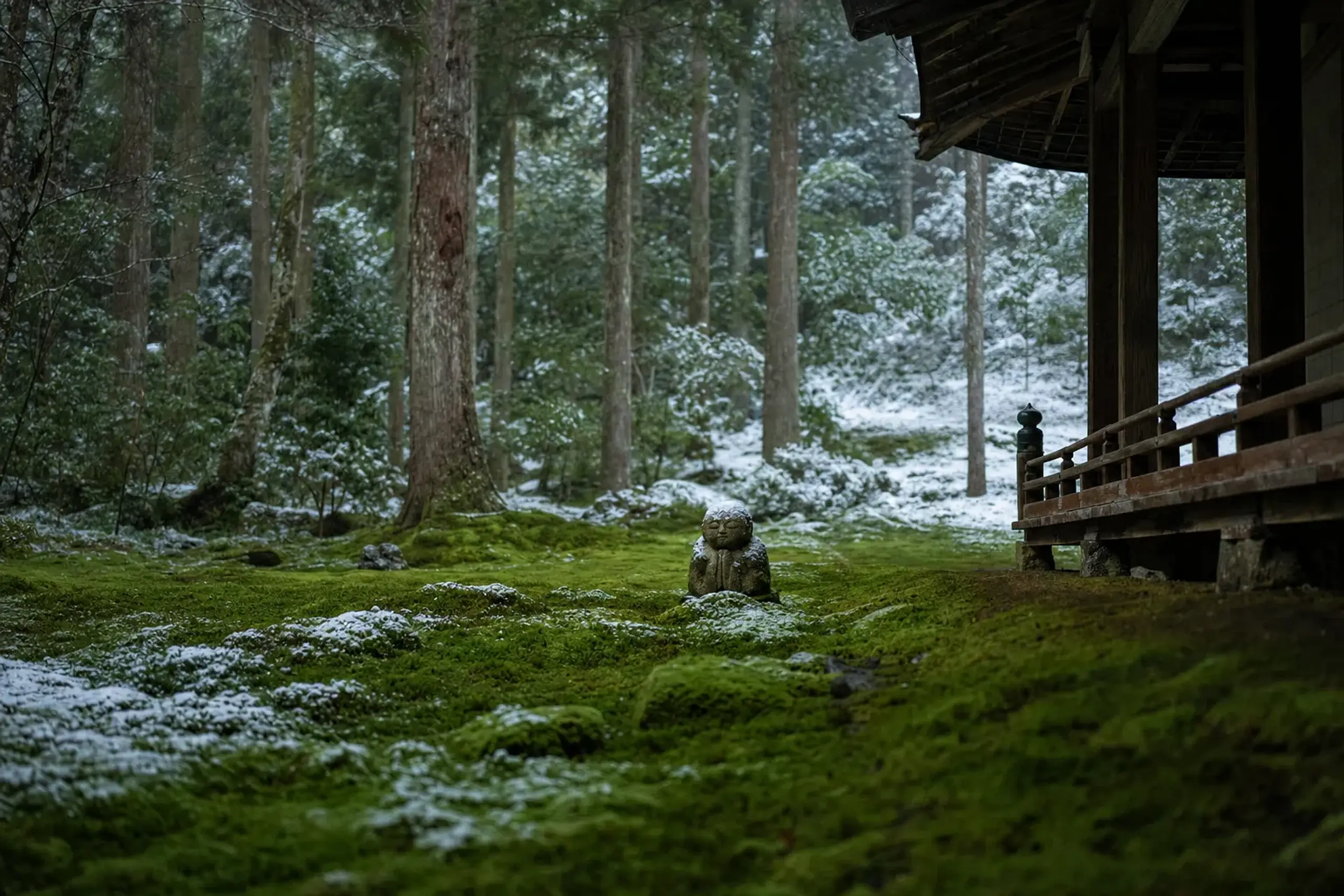
It was established in the early Heian period by the monk Saichō. The approach climbs gently through cedar and the grounds open onto moss gardens that hold the light differently through the day. Early morning is the quiet hour. Go then.
The Three Temples
Sanzen-in anchors one side of the valley. On the opposite side sits Jakkō-in, a smaller temple with a longer walk to reach it. Its main hall burned in 2000 and has since been rebuilt, so what you see is recent work in an old setting. A short detour brings you to Hōsen-in, known for its garden and a pine roughly 700 years old, trained and tended across generations.
You can see all three without rushing in a morning. The valley is compact. A car waiting between stops means no backtracking to a bus stand and no watching the clock.
When Ohara's Colour Peaks
Ohara's autumn colour typically peaks in mid-November, about a week earlier than central Kyoto. That gap matters when you are pacing a longer stay. You can take the Ohara maples at their height, then let the city catch up a week later. Timing shifts year to year with the weather, so our concierge team confirms the likely window directly with you when we plan the day.
Miyama: A Working Village Of Thatched Roofs
Miyama sits in Nantan City, in the mountains of central Kyoto Prefecture.
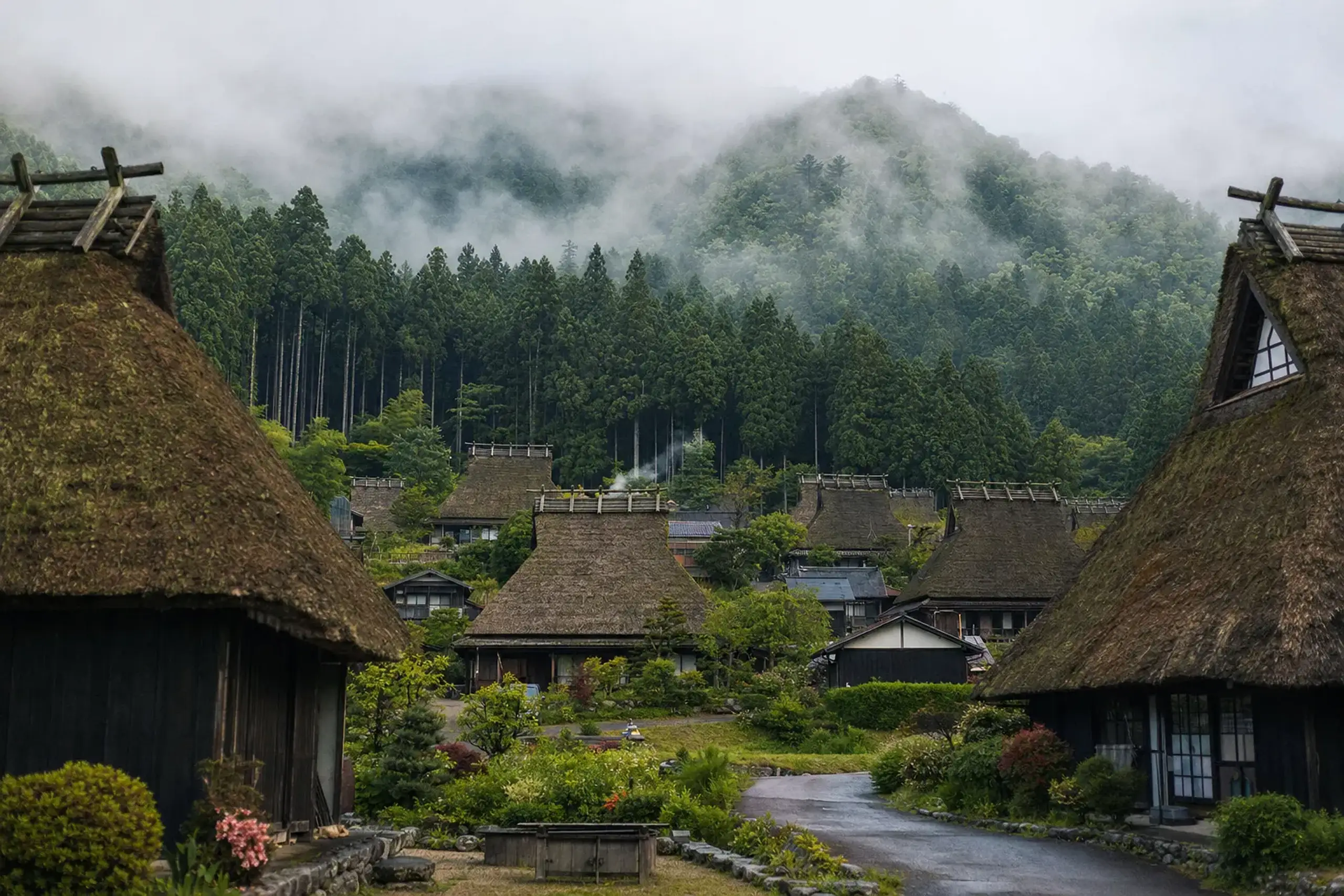
It has more than 200 thatched-roof buildings scattered across the area. About 40 of them stand together on a hillside at Kayabuki no Sato. The cluster was designated in 1993 as a Preservation District for Groups of Traditional Buildings. Residents still live in the houses and maintain the thatch, which is the first thing to understand before you go.
This is not an open-air museum. People wake here, farm here, hang their washing here. Walk the lanes quietly, stay on the paths, and photograph the roofs rather than the windows. The reward for that restraint is a village that still feels like itself.
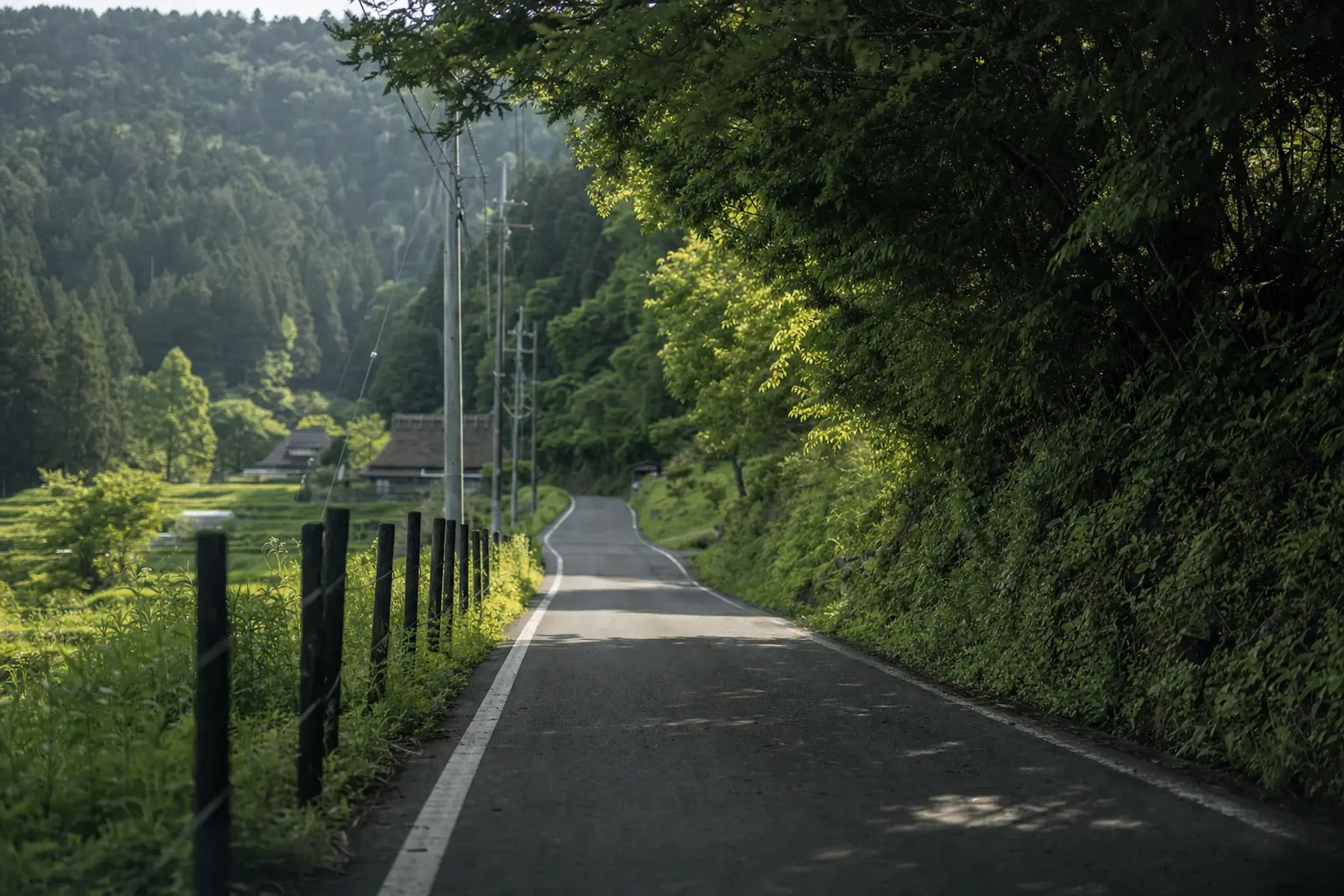
A car suits Miyama for two reasons. The approach winds through quiet hill country that rewards an unhurried pace, and there is no bus schedule pulling you home before you are ready to leave. You arrive, you walk, you sit for a while, you go. In our experience the people who enjoy Miyama most are the ones who gave it extra time rather than slotting it between two other stops.
The Winter Snow Lantern Evening
In winter, Miyama holds an annual Snow Lantern Festival. For one evening the village and its roofs sit under small lanterns set into the snow. It is a quiet spectacle rather than a loud one. The date moves with the season and the weather, so we give no fixed date here; the Japan Royal Service concierge team confirms it directly when we build the trip around it.
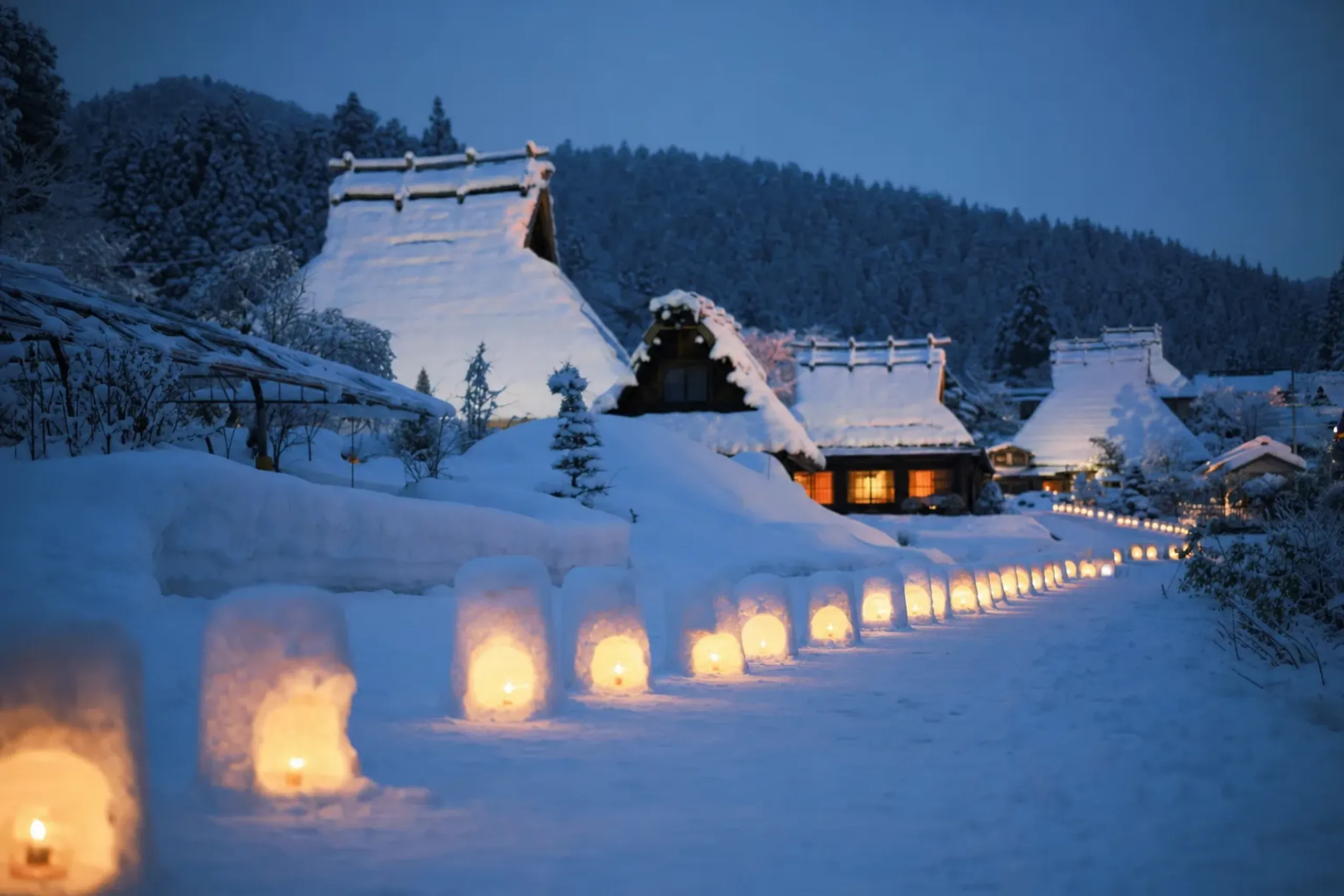
Miyama reads differently across the year. Snow in winter, deep green in summer, the thatch dark against either. Any of those make a good day. If the lantern evening is what draws you, plan the rest of the day around a late finish and a comfortable drive back in the dark.
Amanohashidate And Ine: A Long Day Or A Quiet Night
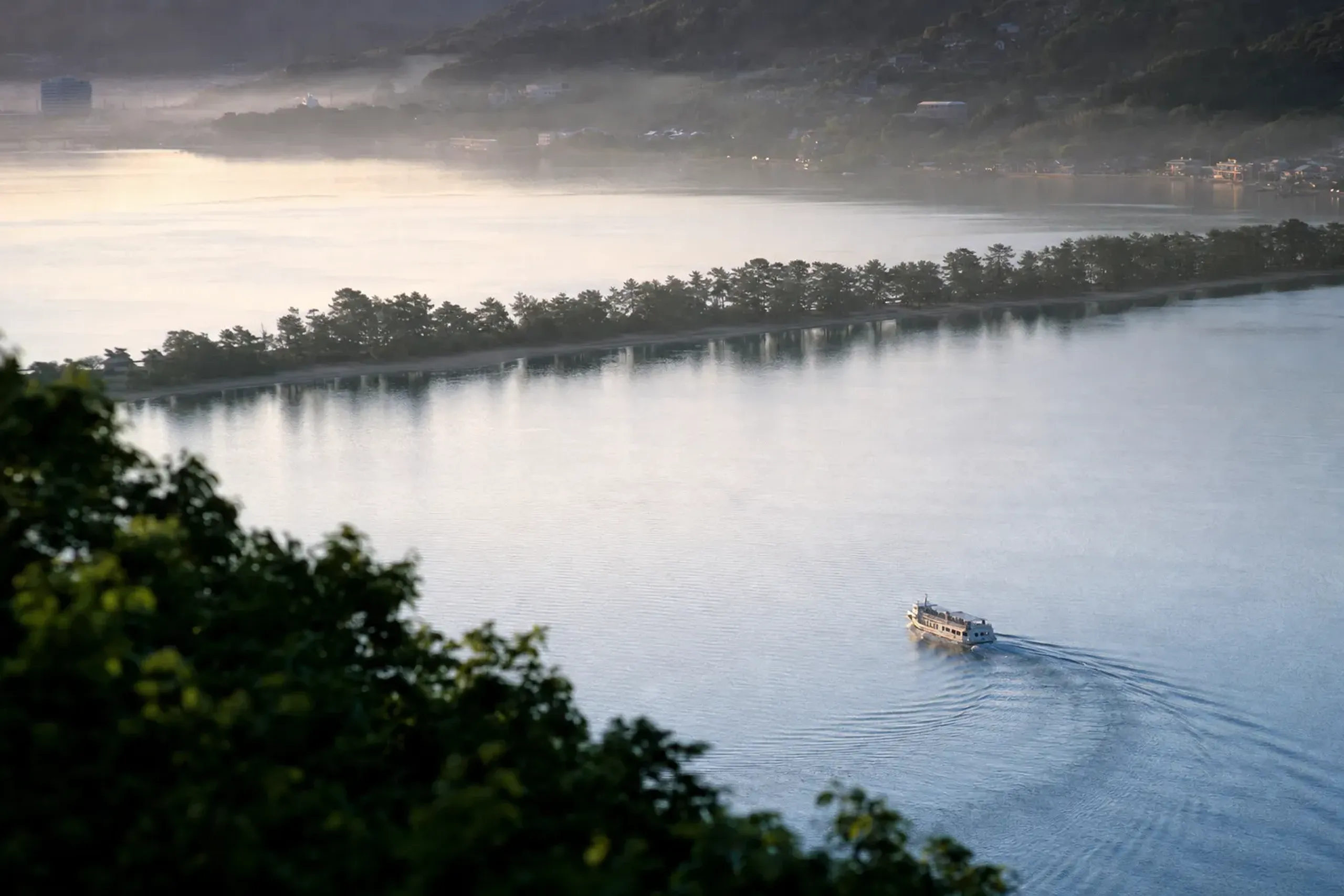
Amanohashidate is one of Japan's Three Famous Views: a pine-lined sandbar about 3.6 km long reaching across Miyazu Bay, on the Sea of Japan coast. Its two viewpoints, Hiryūkan and Shōryūkan, sit at either end of the bay. Visitors traditionally turn their backs to the view and bend to look at it upside down between their legs, which makes the sandbar seem to float in the sky. Try it. The name earns itself that way.
By rail, the Hashidate limited express from Kyoto Station takes around two hours to reach Amanohashidate. That is a long way out and back in one day. It can be done, and done well, but it is a full day with little margin. This is where the trip divides into two shapes.
Amanohashidate As A Long Day
Taken as a single day, Amanohashidate is the longest of the three trips here.
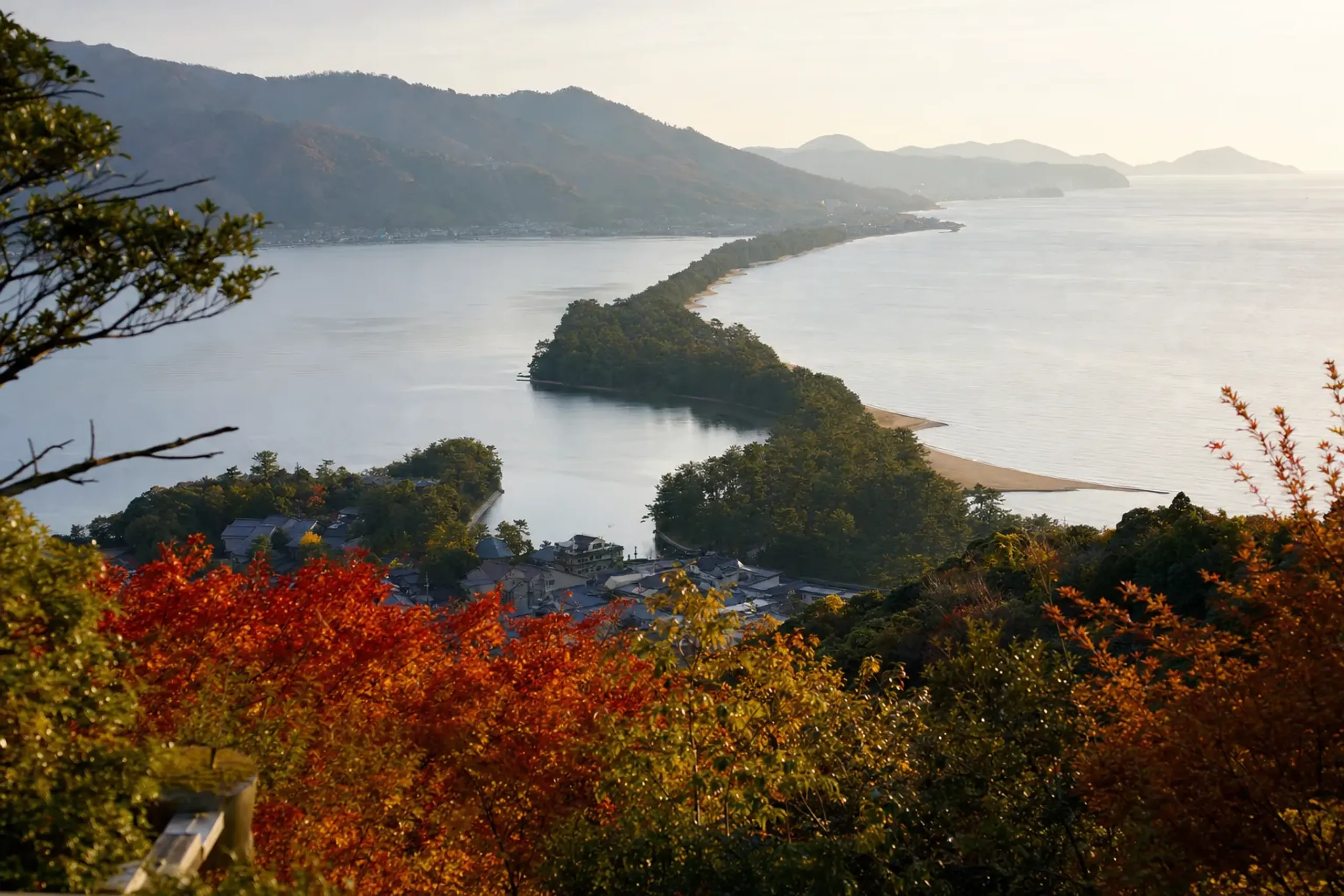
You go out, see both viewpoints and the sandbar, perhaps walk or cycle part of its length, and return. A car gives you the flexibility to adjust as the weather and light move, and to stop where the day suggests rather than where the next train departs. Pick a clear day. The view wants one.
Ine: The Overnight That Changes The Trip
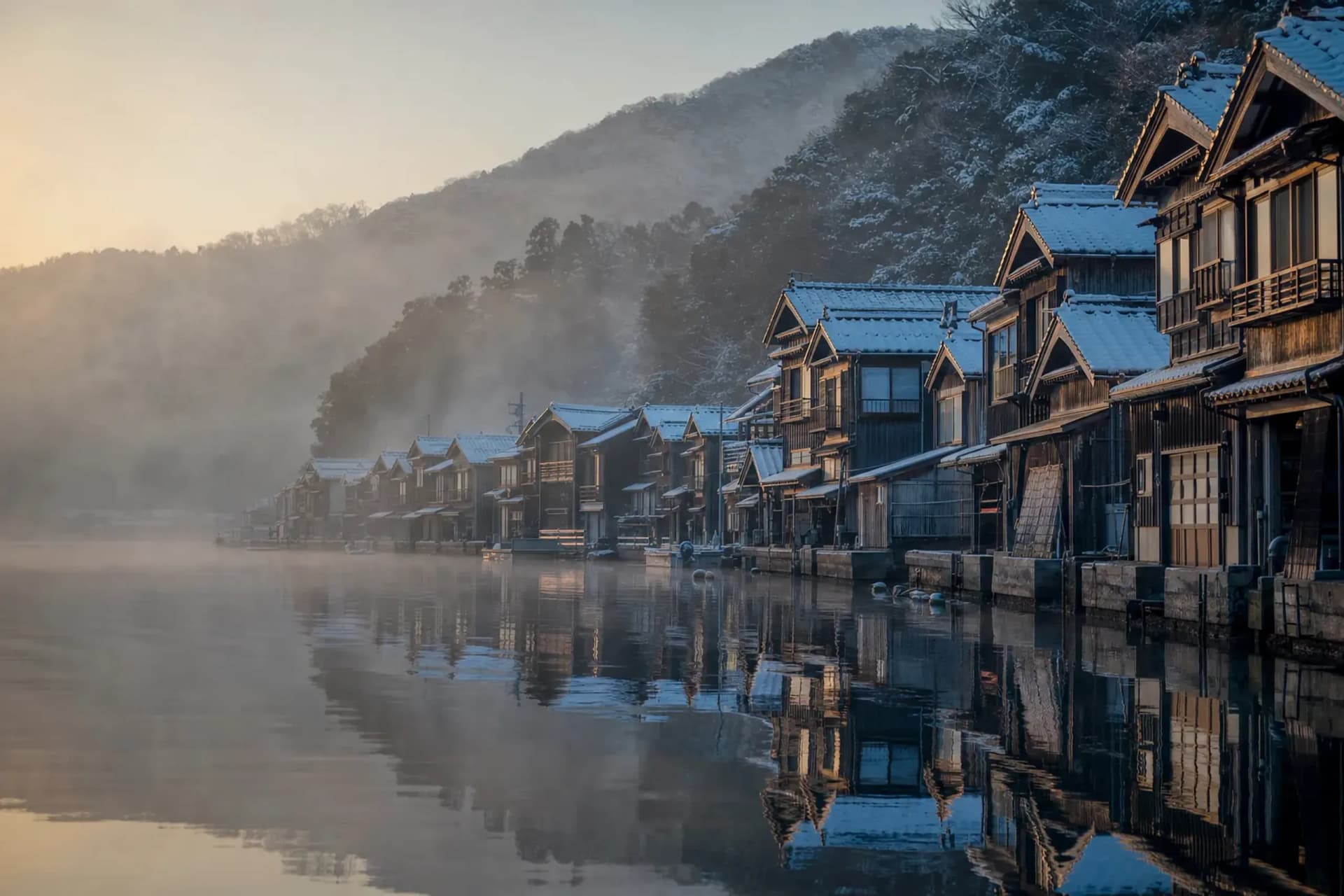
Ine is about 30 minutes by car from Amanohashidate, further still around the coast. It has around 230 funaya: boathouses built right at the water's edge, with boat storage on the ground floor and living space above. The village curves along the shore of its small bay, and the funaya stand in a near-continuous line at the waterline.
This is the distinctive piece of the trip, and the reason to let it run long. Where a funaya stay is available, a night in Ine turns the furthest, busiest-seeming day into the slowest, quietest evening of a Japan trip. The day crowds leave. The bay settles. You sleep over the water.
In the morning a sightseeing boat circles the bay to view the boathouses from the water, which is how they are best understood: a wall of wood rising straight from the sea. Our team arranges the overnight stay and the bay boat as part of the day, subject to availability, which the concierge team confirms directly with you.
Ine, like Miyama, is a lived-in village. The funaya are homes and working boathouses, not a set. Keep that in mind on the water and on the lanes, and the place stays what it is.
Choosing By Season And Pace
These three trips pair naturally with different times of year, and with how much of your stay you want to spend on the road.
Ohara is the one to hold for mid-November, when its maples peak a week ahead of the city. It is also the shortest and gentlest, a good half day for a slower morning. Miyama works in snow or in summer green, and the Snow Lantern evening gives winter a reason of its own. Amanohashidate and Ine ask only for clear weather; the view and the bay both want an open sky.
Think about rhythm too. If you are building a longer Japan trip, a day out by car reads very differently from a day of trains and transfers. We set out the case for staying put and travelling out in Three Bases, Not Seven Cities, and the broader question of when a car beats the train in Private Driver or Rail in Japan. For foliage timing in particular, the old calendar rules have slipped, which we cover in Japan in Autumn.
How Japan Royal Service Arranges These Days
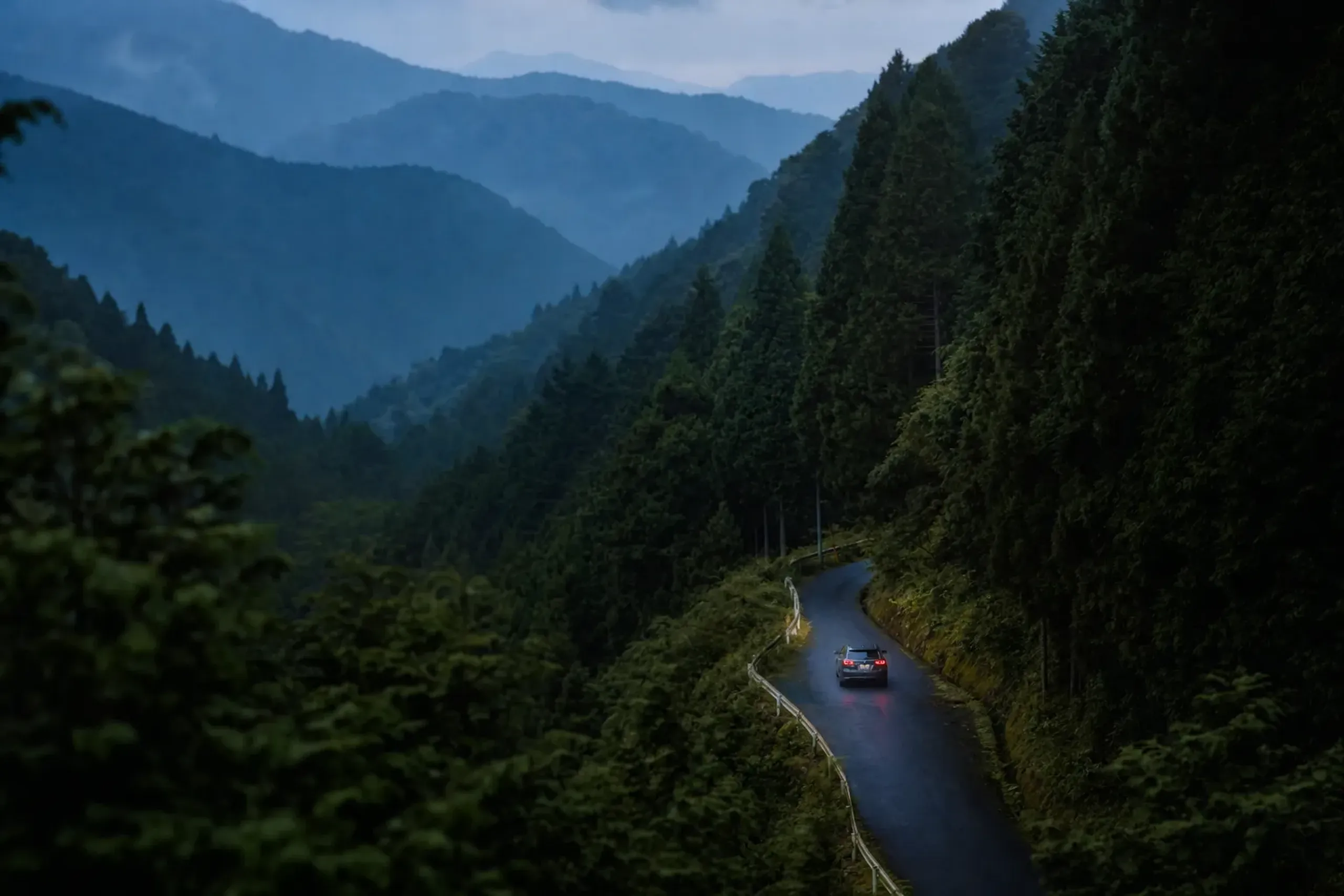
Each of these trips runs on a private, partner-supplied vehicle with an English-speaking driver, meeting you at your Kyoto accommodation and carrying you door to door. The driver handles the road, the parking, and the timing. Where you want deeper context at the temples or the village, we add a licensed guide as a separate role, so the two jobs do not blur. Our fleet choices run from the Lexus LM 500 and Toyota Executive Alphard for couples and small groups up to a Mercedes V-Class for families; the right private chauffeured vehicle depends on your party size and luggage.
For Amanohashidate, we arrange the overnight stay in an Ine funaya where it is available, along with the morning boat around the bay. Availability for the funaya, the boat schedule, foliage timing in Ohara, and the date of Miyama's Snow Lantern Festival all shift, so our concierge team confirms each one directly with you at the time of arrangement rather than leaving it to chance.
All of this sits inside a tailor-made itinerary built around your stay. If you are already looking at the sea-and-mountain fringe of Kansai, two nearby trips have their own guides: Lake Biwa to the east, and the river-platform dining of Kibune's kawadoko season to the north.
Frequently Asked Questions
Can I visit Ohara and be back in Kyoto for lunch?
Yes. Ohara is about an hour from central Kyoto, and its three main temples fit comfortably into a morning. With a private car leaving early, you can see Sanzen-in, Jakkō-in, and Hōsen-in and return to the city by midday.
Is it worth staying overnight in Ine rather than visiting Amanohashidate as a day trip?
For many guests, yes. Amanohashidate is about two hours from Kyoto by limited express, making a day trip long. A night in an Ine funaya, where available, lets the crowds leave and gives you a quiet evening over the water plus a morning bay boat.
Why travel to Miyama by car instead of public transport?
Miyama sits off the main rail lines in rural Nantan City, so a car gives a direct door-to-door arrival and freedom from bus timetables. It lets you walk the thatched-roof village of Kayabuki no Sato at your own pace and leave when you are ready.
When is the best time to see autumn colour in Ohara?
Ohara's autumn colour typically peaks in mid-November, roughly a week earlier than central Kyoto. Exact timing moves with the weather each year, so our concierge team confirms the likely window when planning your day.
Can you arrange an English-speaking driver and a separate guide for a Kyoto day trip?
Yes.
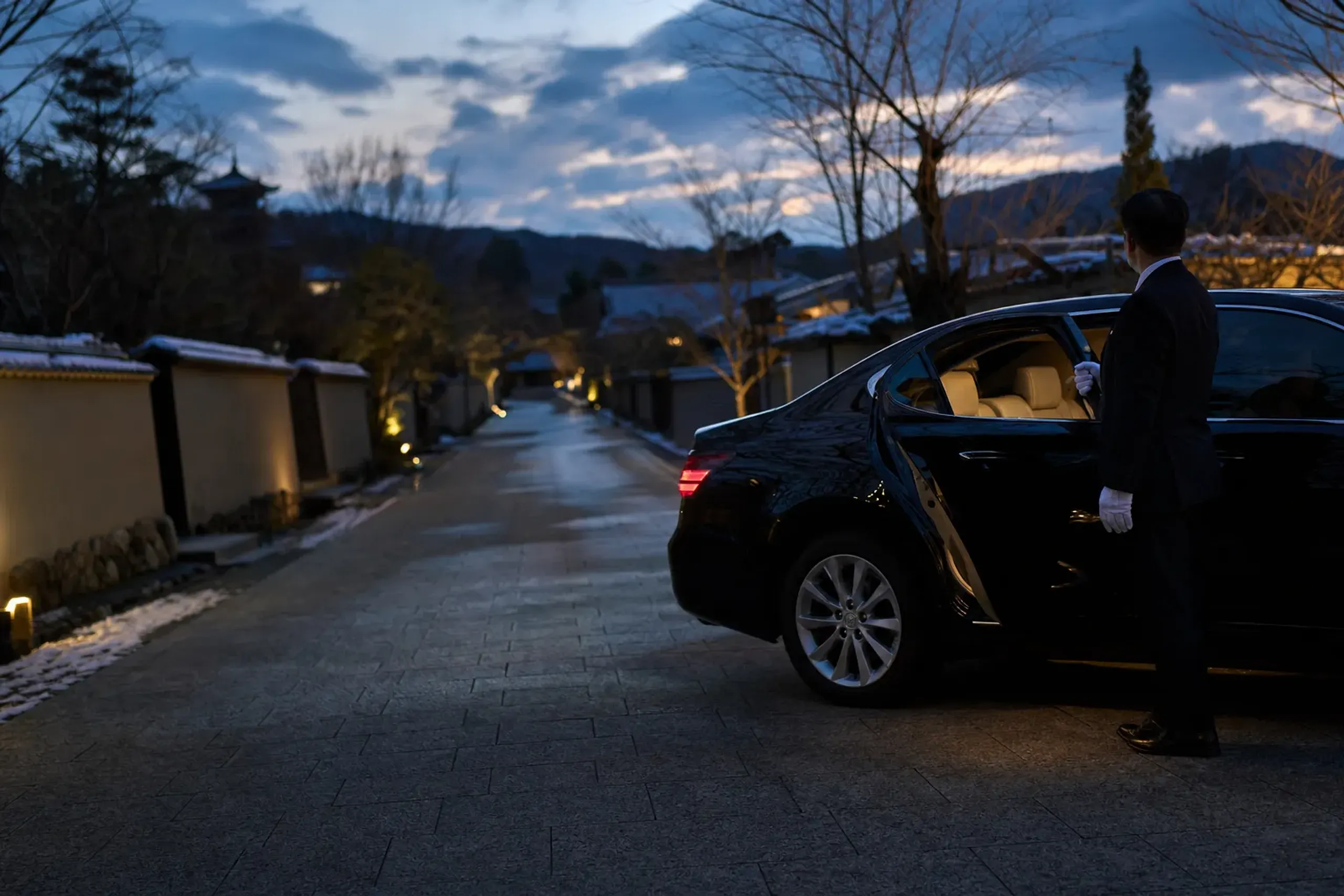
Japan Royal Service arranges a private vehicle with an English-speaking driver for every trip, and adds a licensed guide as a separate role on request, so one handles the road and the other handles the context.
Why Choose Japan Royal Service
These are quiet trips, and they reward being handled quietly. Our strength is in the parts that do not advertise themselves: a driver who knows which road into Miyama is worth the slower pace, a guide who reads a temple garden rather than reciting it, and the restraint to treat Ine and Miyama as the lived-in villages they are. We hold a native base in Japan and work with vetted partner drivers rather than one-size listings, so what you are promised is what arrives at your door.
We also plan around the things that move. Foliage that shifts by a week, a funaya that opens up for a single night, a boat that runs only in fair weather. Our concierge team confirms each of these with you directly, so the day holds together.
To plan Ohara, Miyama, or Amanohashidate and Ine from your Kyoto base, reach our team privately via WhatsApp or LINE, or contact us here. Stay based in one city, and let the days out come to you.