In this guide
- 01How Big Is Lake Biwa, Really?
- 02Hikone Castle: One Of Japan's Few Originals
- 03Omi-Hachiman: A Merchant Town Built On Water
- 04Nagahama: The Quieter North
- 05The Lake As An Activity, Not Just A View
- 06A Realistic Two-Day Shape
- 07Who Should Just Do The Day Trip Instead
- 08Frequently Asked Questions
- 09Why Choose Japan Royal Service
Most Kyoto itineraries give Lake Biwa a few hours. A quick climb up a castle keep, a photo of water that runs to the horizon, and back on the train before dinner. That half-day version has its place, and we cover it in our post on timing a Japan trip as an easy add-on to a Kyoto base. This piece is for the traveler who wants to actually stay — one or two nights on the water, two towns given real time rather than one seen in a rush.
Lake Biwa sits just east of Kyoto, close enough that Otsu, its southern city, is only about ten minutes by JR. That proximity is exactly why it gets treated as an errand. Stay longer and the lake stops being scenery and becomes the reason you came.
How Big Is Lake Biwa, Really?
Lake Biwa covers roughly 670 square kilometers, about a sixth of all Shiga Prefecture, and it is Japan's largest freshwater lake. It is also ancient — around 4 million years old, one of the oldest lakes on Earth.
Numbers only tell you so much. Stand on the northern shore, or take a boat out past the shallows, and the far side simply vanishes. There is no opposite bank to anchor your eye. Waves build. Light shifts across open water the way it does at sea, not on a pond. From the deck of a cruise it reads less like a lake than a small inland sea, and that shift in scale is the first thing a day trip cannot give you.
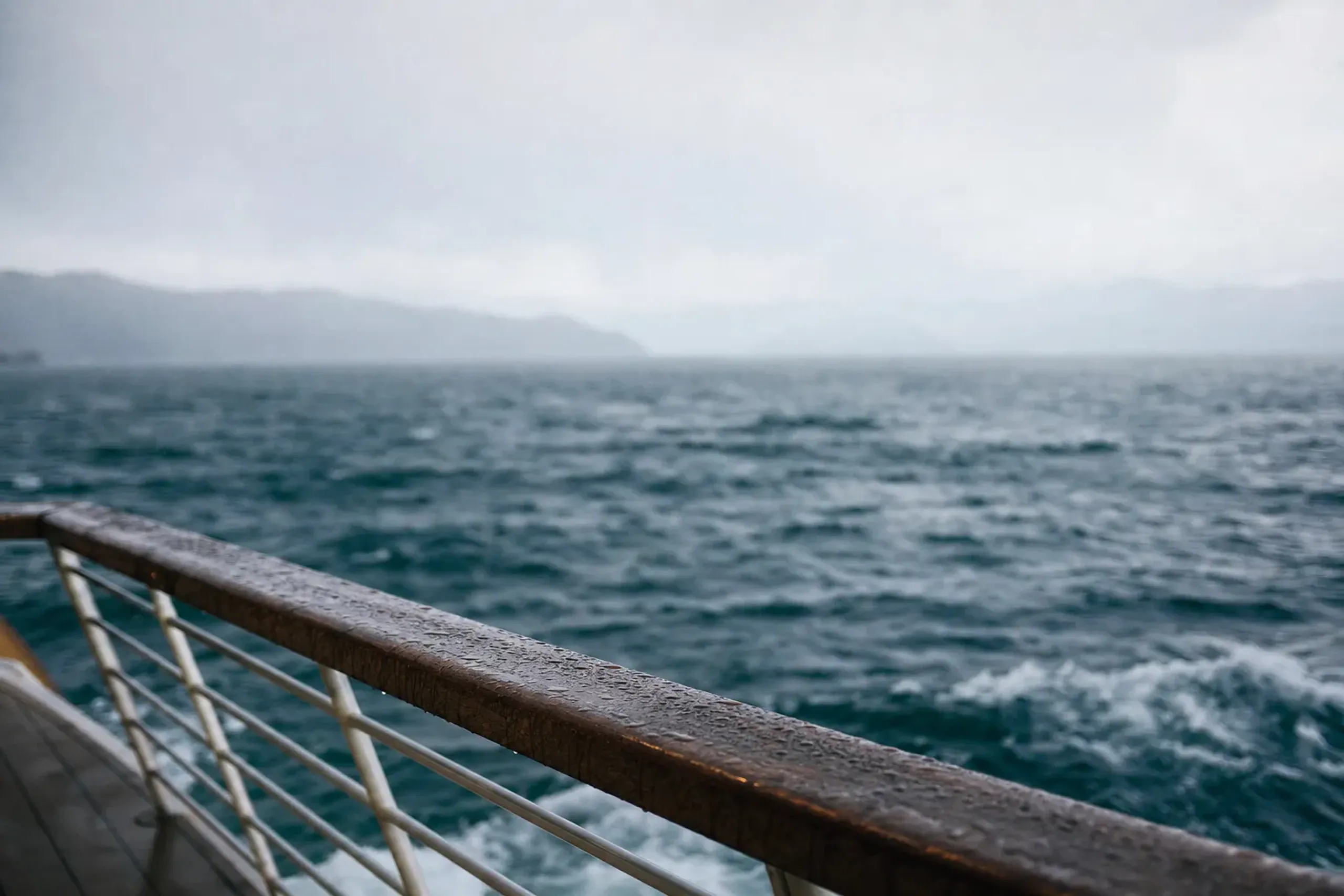
You need the distance and the time to feel it.
The lake splits into two moods. The southern basin around Otsu is the busy, Kyoto-adjacent end. The northern shore is where the historic castle towns are scattered — Hikone, Nagahama, Omi-Hachiman — quieter, older, and worth the extra reach.
Hikone Castle: One Of Japan's Few Originals
Hikone Castle is one of only five castles in Japan whose main keep survives in its original form and holds National Treasure status. Its keep was designated a National Treasure on March 29, 1952, and the surrounding castle town was completed back in 1622.
Most castles you visit in Japan are postwar concrete reconstructions. Hikone is not. The wooden staircases are steep, worn, and original — pitched at angles built for defense, not for tourists. You feel the age in the timber underfoot. This is why the place rewards slowness. Rush the climb and it becomes another keep with another view; give it a morning and you start reading the defensive logic, the sightlines, the way the whole hill was shaped to be hard to take.
Beside the castle sits Genkyuen, a strolling garden laid out around a central pond. A circular path links four small islands, each opening a new composition as you walk — borrowed views of the keep above, water, and carefully placed stone.
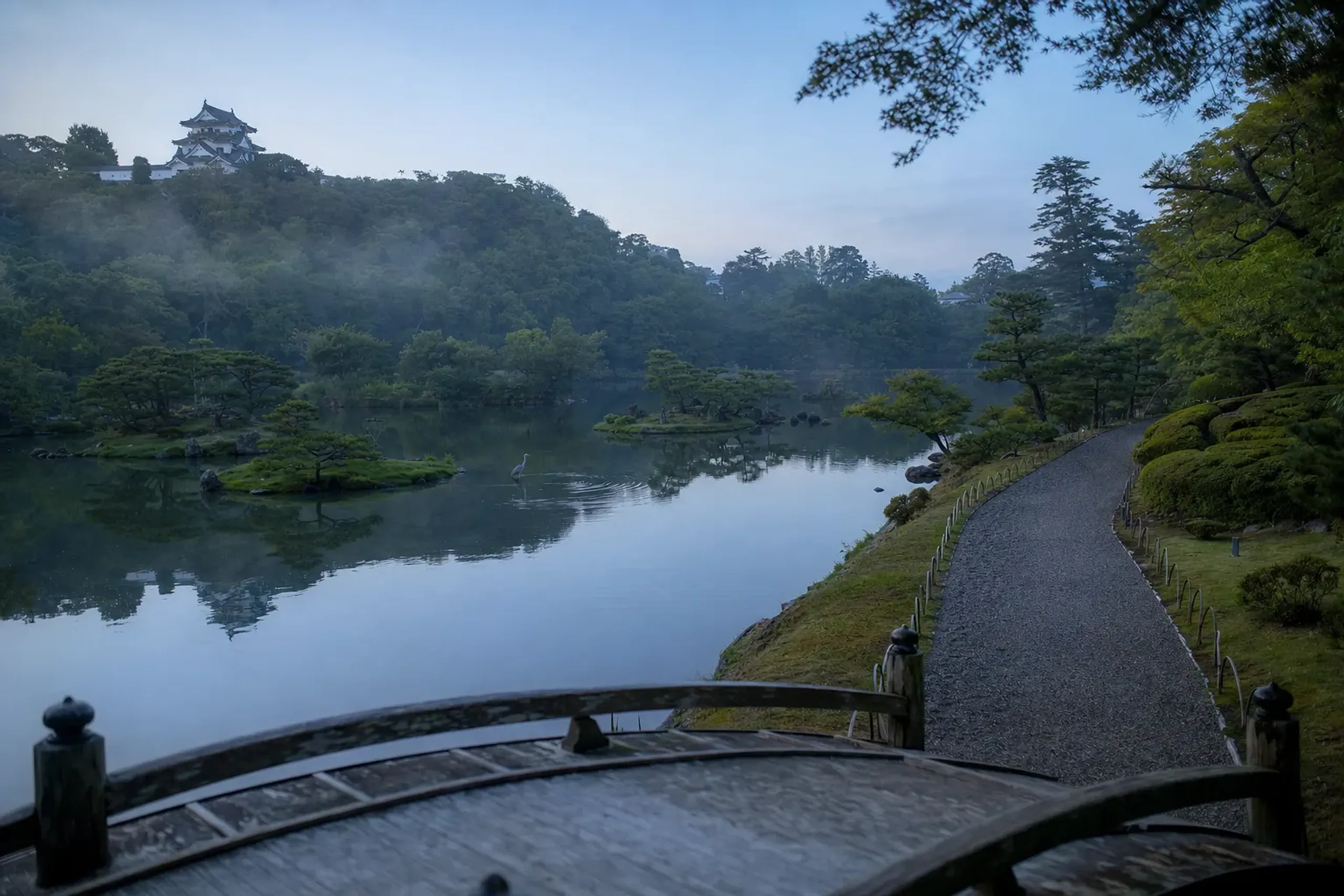
It is a garden meant to be moved through, not photographed from one spot. The town below deserves the same unhurried attention: streets that still hold their old shape, well within an afternoon's slow walk.
Omi-Hachiman: A Merchant Town Built On Water
Omi-Hachiman is a preserved merchant town arranged around Hachiman-bori, a canal dug in the 16th century for both castle defense and trade access to the lake. White-walled storehouses line the still water. Boat cruises drift through the old canal district.
This is a place that punishes the quick photo stop. The pleasure here is walking — along the canal, past merchant houses that made their money moving goods across the lake, into lanes that have not been reshaped for cars. The water sits calm between stone banks. The white kura walls catch the light. From a small boat, gliding under low bridges, the town shows you the exact logic it was built on: everything faced the water because the water was the road.
Key point: Hikone and Omi-Hachiman are the two towns that make an overnight worth it. Try to compress both into a single day from Kyoto and you will do neither properly.
Nagahama: The Quieter North
Nagahama sits further up the northern shore and carries a calmer character than either Hikone or Otsu. Its best-known draw is a glass art district — studios and shops built around glassblowing and craft.
If Hikone is the castle day and Omi-Hachiman the canal walk, Nagahama is the town for people who want fewer crowds and time to browse.
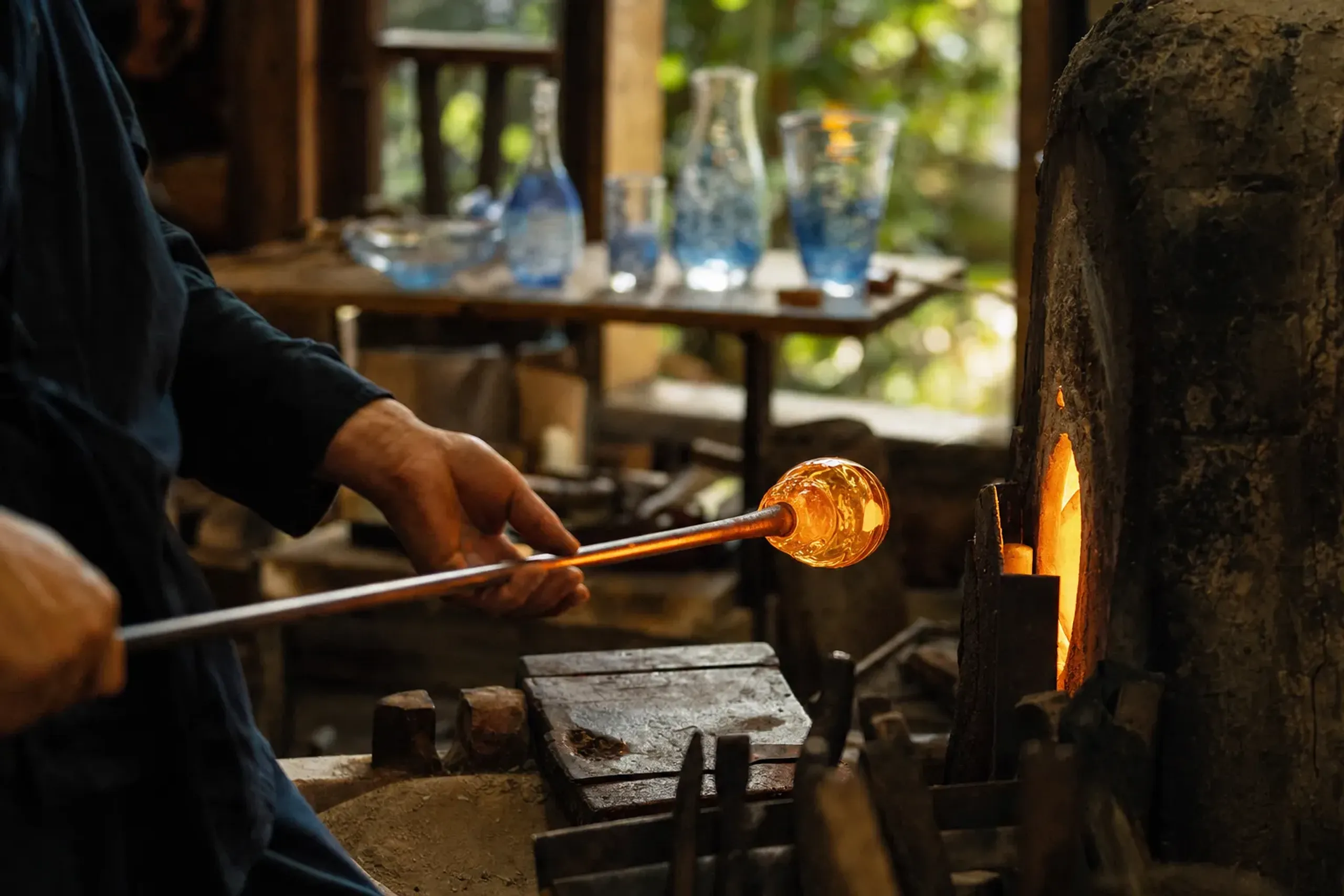
The glass district gives it a distinct texture you will not find elsewhere on the lake. It pairs naturally with a boat, too: Chikubu Island, home to a temple long associated with Benzaiten worship, is reachable by boat from Hikone Port for those who want an island stop with real cultural weight.
The Lake As An Activity, Not Just A View
The mistake is treating the water as backdrop. It is the main event, and there are three good ways to be on it or beside it.
Cruising
The Michigan, a paddle steamer out of Otsu Port, runs sightseeing cruises with meals and open decks. It is the easiest way to feel the lake's true scale from the water. Evening sailings run only in summer, so the season shapes what is possible — something our concierge team confirms directly with you when planning dates.
Cycling A Stretch Of The Biwaichi
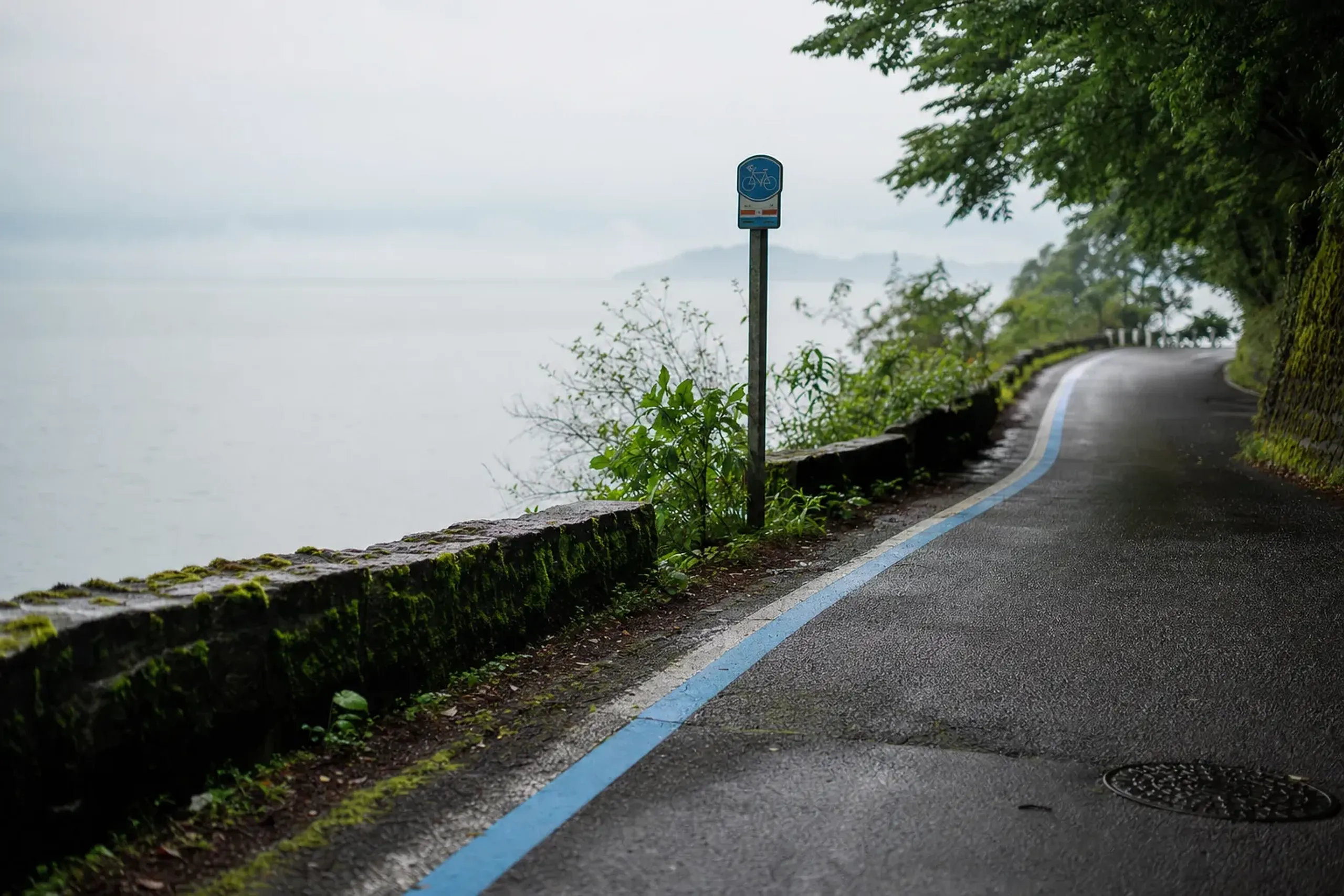
The Biwaichi is a national cycling route that circles the entire lake, roughly 193 kilometers and marked with signposts and blue route lines. Very few travelers ride the whole loop. You do not need to. A single well-chosen stretch of lakeshore — flat, open, water on one side — gives you the sensation without the endurance project. E-bikes make it gentle. A supported ride, with a vehicle following and luggage moved ahead, turns it into a pleasure rather than a feat.
Shirahige Shrine's Floating Torii
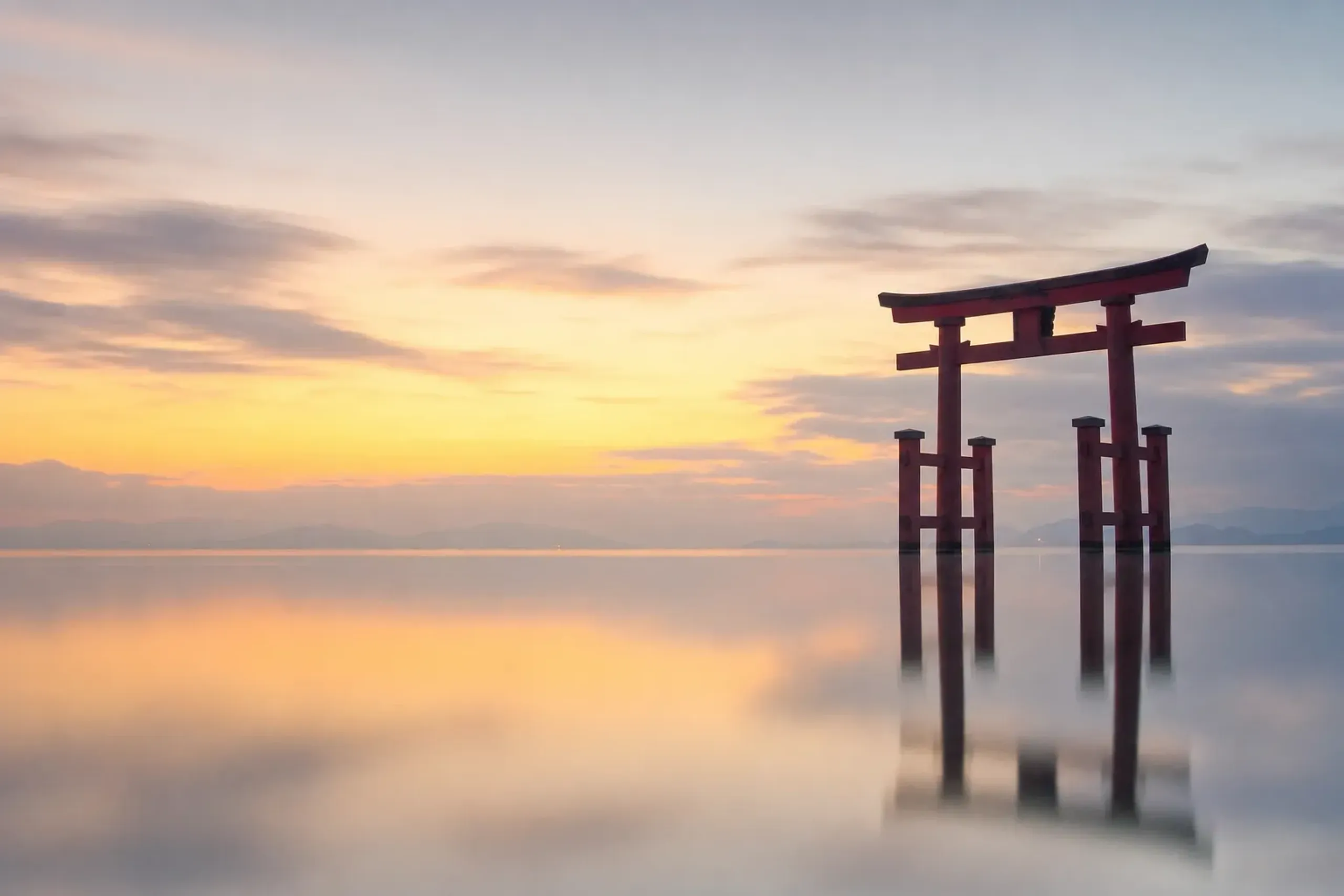
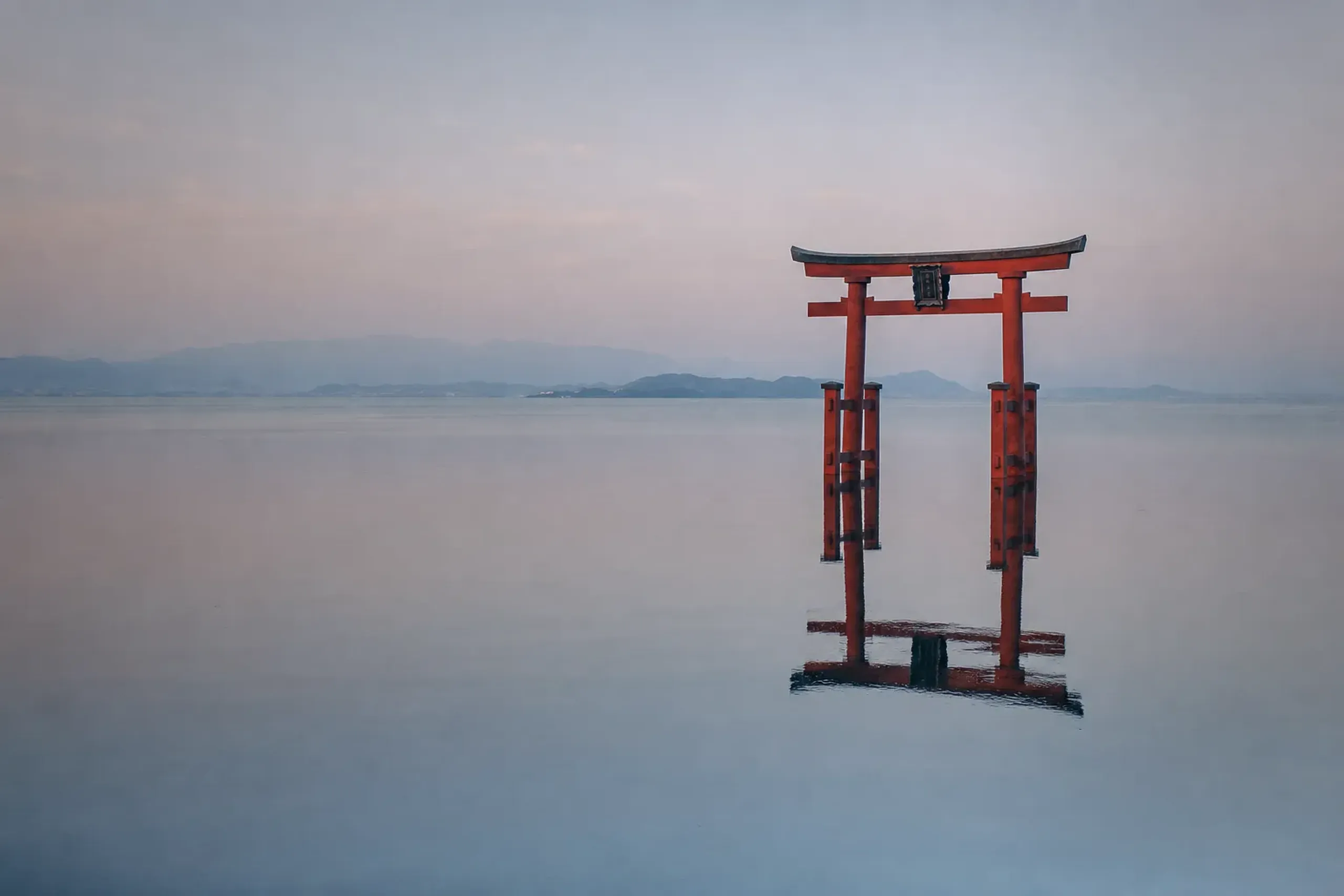
Shirahige Shrine stands on the western shore with a torii gate rising directly out of the lake. It is a well-known spot for both sunrise and sunset. At dusk, with the gate silhouetted against still water and the far shore gone to haze, it is the kind of quiet, unadorned scene the lake does best — nothing gilded, nothing loud, just proportion and light.
A Realistic Two-Day Shape
Two nights is plenty. Here is a shape that works without forcing anything.
Day One: The Castle And Canal Towns
Morning at Hikone Castle and Genkyuen, given proper time — the climb, the garden path, the town below. Afternoon in Omi-Hachiman, walking the canal district and taking a boat through Hachiman-bori. Evening at a lakeshore ryokan, with no return train to catch.
Day Two: The Quiet North Or The Water
Choose your temperament. Head north to Nagahama and its glass district for a slower, craft-focused day. Or give the second day to the lake itself: a Michigan cruise, a supported cycle along a shore stretch, or the boat to Chikubu Island. Either way, fewer things, each given room.
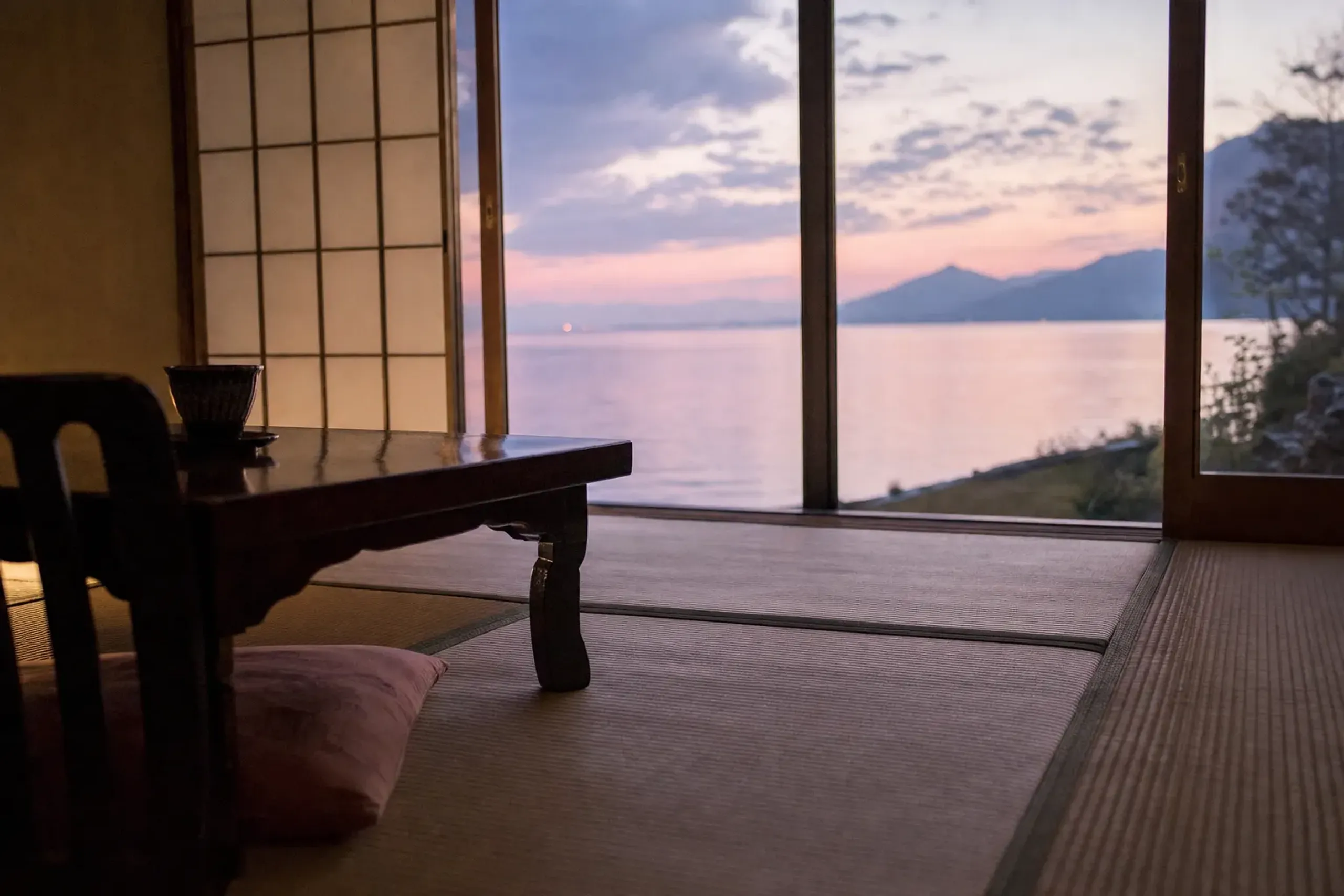
What the overnight actually buys is simple. A ryokan on the water — Shiga has genuine onsen ryokan lodging directly on the lakeshore, distinct from Kyoto's hotel stock. An evening you do not have to end early. And two towns experienced properly instead of one experienced in a hurry.
Who Should Just Do The Day Trip Instead
Not everyone needs a night here, and we will say so plainly. If your Kyoto time is tight, or you have no particular pull toward original castles and old canal quarters, the half-day version is the right call.
In that case, the lake as a fast, satisfying add-on is exactly what our post on efficient regional routing is built for. Otsu is ten minutes out, you get the water and a landmark, and you are back in Kyoto for dinner. There is no shame in the short version — it is the honest answer for a certain kind of trip.
Frequently Asked Questions
How far is Lake Biwa from Kyoto by train?
Otsu, Lake Biwa's southern city, is only about ten minutes from Kyoto by JR, which is exactly why so many visitors treat the lake as a quick day trip rather than an overnight destination.
Is Hikone Castle worth visiting compared to other Japanese castles?
Yes. Hikone is one of only five castles in Japan whose main keep is original and holds National Treasure status, with authentic 17th-century wooden staircases and defensive features — not a postwar concrete reconstruction like most castle keeps.
Can you stay overnight at Lake Biwa instead of in Kyoto?
Yes. Shiga has genuine overnight lodging distinct from Kyoto's hotel stock, including onsen ryokan properties directly on the lakeshore, which lets you experience the northern castle towns without a return train to catch.
What is the best way to experience the scale of Lake Biwa?
Get out on the water. From a cruise deck or the northern shore the far side vanishes entirely, and the lake reads more like an inland sea than a pond — a sense of scale a rushed castle visit cannot convey.
Is a one-day or two-day Lake Biwa trip better?
Two days suit anyone drawn to castles and canal towns: one day for Hikone and Omi-Hachiman, a second for quiet Nagahama or the lake itself. A single day is fine if your time is limited or your interest is casual.
Why Choose Japan Royal Service
Lake Biwa rewards restraint — fewer stops, each given real time — and that is precisely the kind of trip that benefits from quiet, capable handling. Our team at Japan Royal Service arranges the property, the transport, and the guiding around the lake, so an overnight slots cleanly into a Kyoto stay without you managing timetables, boat seasons, or ryokan logistics yourself.
We work with tailor-made itineraries shaped to how you actually want to travel, and our private chauffeured transport means the reach to Hikone, Omi-Hachiman, and the northern shore is effortless. Discretion is the constant: your plans and your identity stay confidential, always.
To place an overnight on Lake Biwa within a Kyoto trip, reach our team privately via WhatsApp or LINE, or contact us here.