In this guide
- 01A Lake Inside A Crater: What Makes Lake Tōya Different
- 02Is Lake Tōya Worth Visiting If You’ve Done The Golden Route?
- 03Mt. Usu And Shōwa-shinzan: A Volcano In Living Memory
- 04How Do You Visit Mt. Usu By Ropeway From Toyako Onsen?
- 05The Toya Caldera And Usu Volcano Geopark: The Story Behind The Scenery
- 06A One-Day Loop In Summer: Cruise Morning, Volcano Midday, Quiet Afternoon
- 07Are The Lake Toyako Long Run Fireworks Really Every Night?
- 08Where To Watch The Fireworks Without Turning It Into A Crowd Problem
- 09How To Get To Lake Tōya: Private Car, Train, And Realistic Times
- 10How Japan Royal Service Plans Lake Tōya At An Ultra-Luxury Pace
- 11Practical Tips That Keep Lake Tōya Feeling Calm
- 12Begin Your Lake Tōya Journey
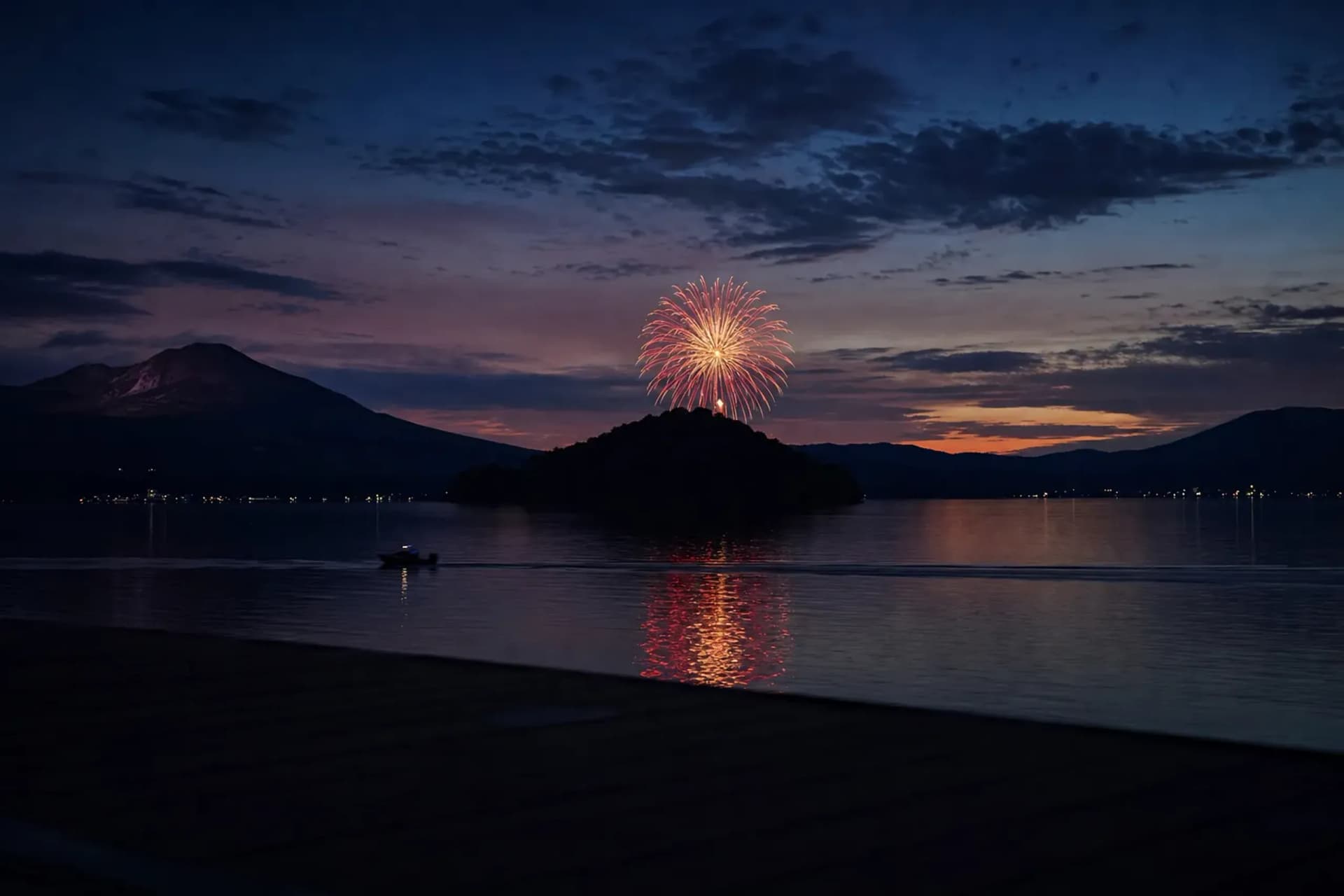
Dusk comes slowly at Lake Tōya. The water turns to dark glass. A few walkers pause on the lakeside path in Toyako Onsen, listening for that first hollow thump to roll across the water.
Then it happens. One shell climbs, hesitates, and breaks into clean light above a crater-lake formed roughly 110,000 years ago. Twenty minutes is not long. It is long enough.
If you have ever wanted the Japan that lies beyond the obvious, this is a strong place to begin. Our team at Japan Royal Service plans Lake Tōya at a deliberately quieter pace—built around what is genuinely real here: a living volcano, a caldera lake, and a nightly fireworks ritual that honors the landscape rather than drowning it out.
A Lake Inside A Crater: What Makes Lake Tōya Different
Lake Tōya (Tōyako / 洞爺湖) is a volcanic caldera lake within Shikotsu-Toya National Park in Hokkaido. That single fact quietly changes how the place feels underfoot. The shoreline is not merely “scenic” in the generic sense; it is a rim—the lip of something immense.
Numbers help you grasp the scale. Lake Tōya’s surface area is about 70.7 km², its circumference roughly 43 km, and its maximum depth around 180 m. Big water. And yet it reads as intimate the moment the wind drops.
Look toward the center and you’ll see Nakajima, a cluster of four islands formed by lava domes some 50,000 years ago. They sit low and dark, like punctuation on a page. On most summer mornings, the lake lies so calm you can watch the islands’ edges sharpen as the light climbs.
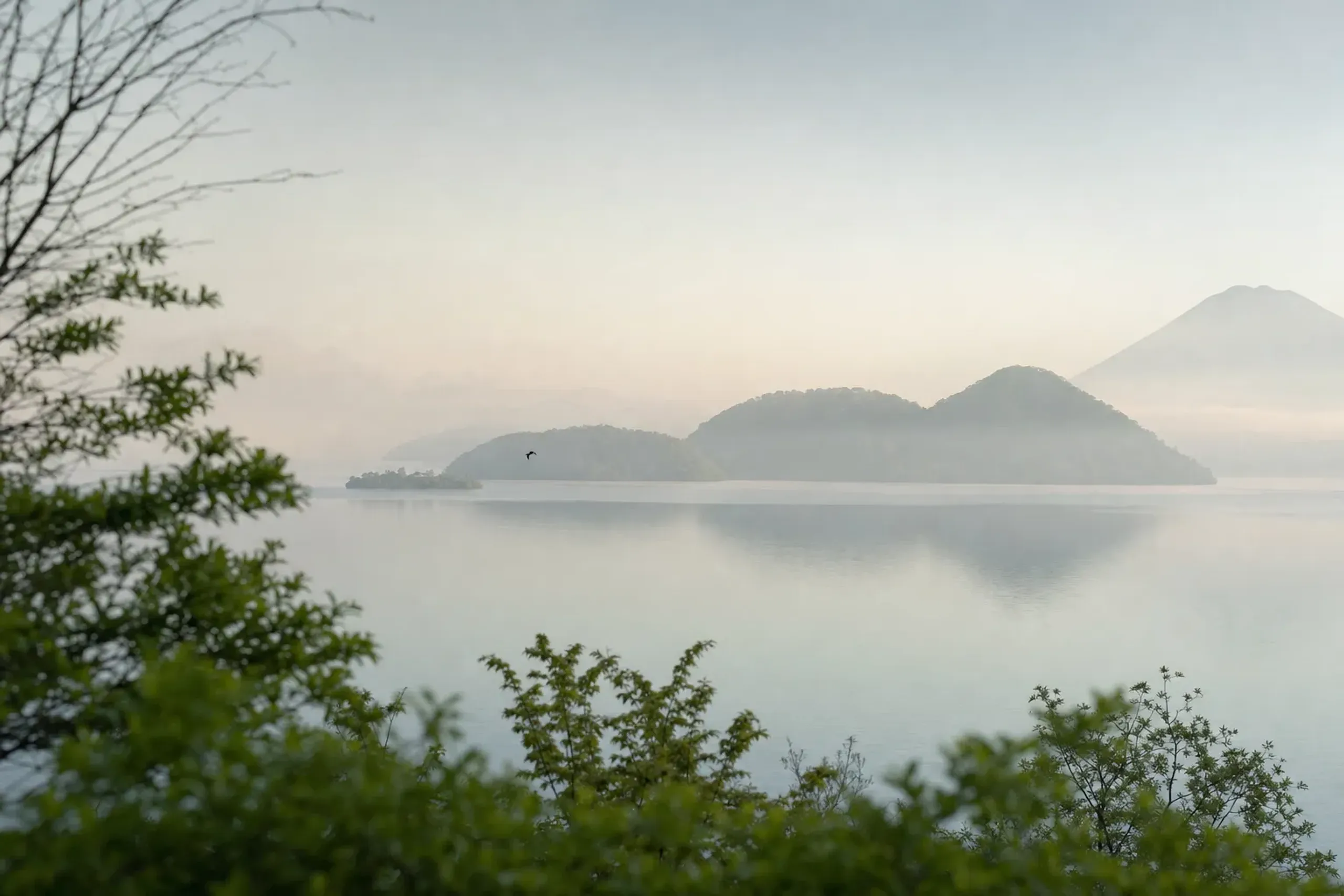
One small detail matters for planning: Lake Tōya rarely freezes and is usually ice-free year-round, though partial ice can appear in the harshest winters. In the green season, that means boat schedules are reliable and lakefront walks feel open and generous, never brittle.
Is Lake Tōya Worth Visiting If You’ve Done The Golden Route?
Yes—Lake Tōya is worth visiting because it brings together a genuine volcanic landscape, a calm onsen town, and nightly summer fireworks in a setting that feels spacious and uncrowded compared with the well-trodden Tokyo–Kyoto highlights.
For many HNW travelers, the Golden Route problem is not quality. It is exposure. Too many people share the same photographs, the same dinners, the same tightly wound timelines. Lake Tōya resets that rhythm without ever asking you to “rough it.”
This is also where "hidden Japan" turns practical rather than merely poetic. In our experience, Lake Tōya works best treated as a two-night pause—enough time to cruise the lake, ride the ropeway up Mt. Usu, and still keep an unhurried afternoon in reserve before the fireworks.
And it pairs cleanly with other Hokkaido summer nature arcs. If you are building a longer route, you may also enjoy our guide to Akan, Kussharo and Mashū—another story told entirely by water and geology, just farther east.
Mt. Usu And Shōwa-shinzan: A Volcano In Living Memory
Mt. Usu (Usu-zan / 有珠山) rises to about 737 m and has erupted repeatedly over the last century—most notably in 1910, 1943–1945, 1977–1978, and on 31 March 2000.
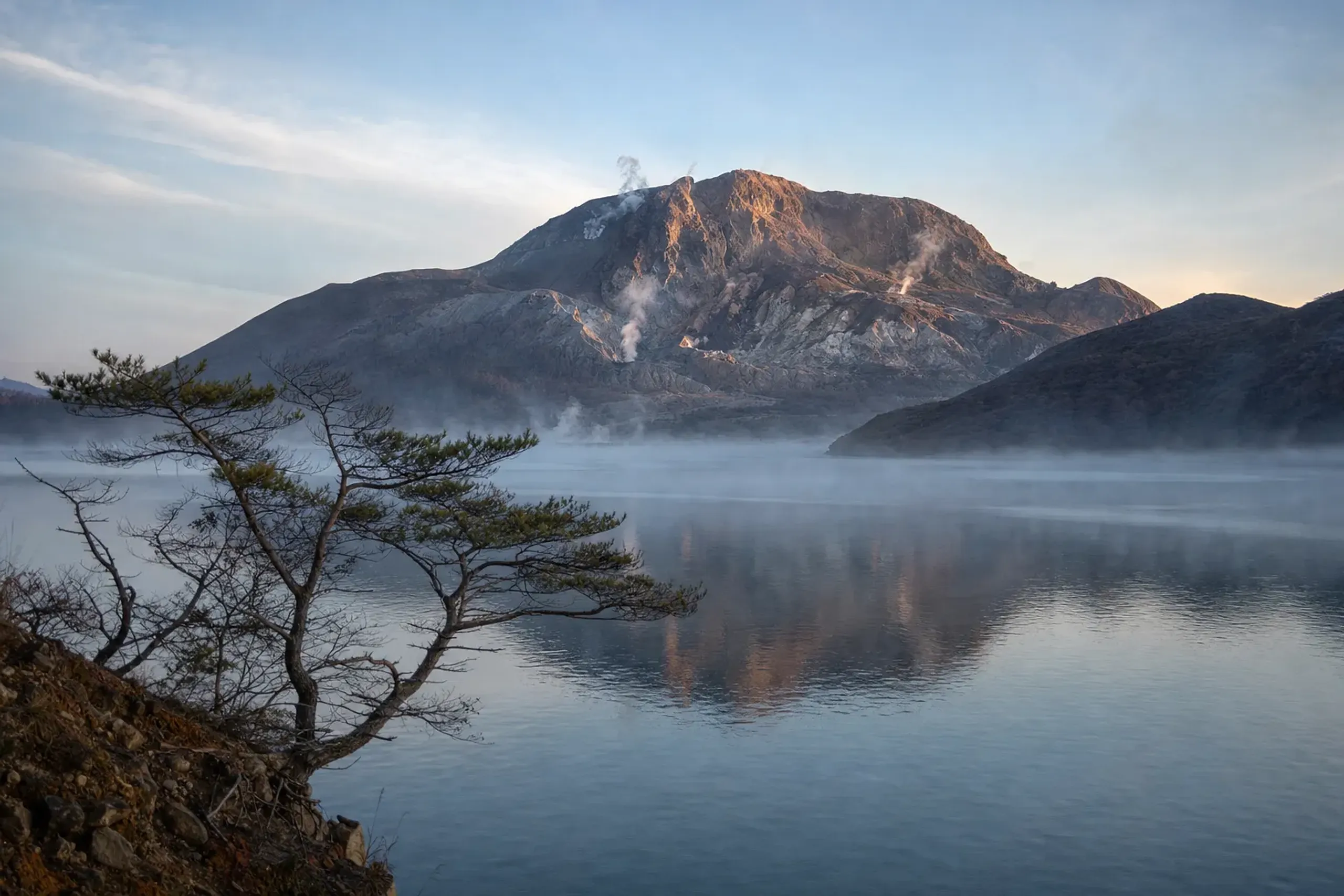
This is no museum piece. It is active ground with a long, carefully documented relationship to how the surrounding community plans its life.
Shōwa-shinzan (昭和新山) is the vivid counterpoint. It rose up out of wheat fields during the 1943–1945 eruption and stands around 398 m today. You can see it plainly from the road and still feel a flicker of disbelief that something so solid is that young.
A local postmaster, Masao Mimatsu, patiently charted the mountain’s growth in what is now known as the Mimatsu diagram. It is one of those Japan details that reads as shokunin in spirit: sustained observation, recorded with devotion, offered without a trace of drama.
We avoid casual "safe volcano" language. Conditions change. In our experience, the right approach is simple and unglamorous: watchful planning, official updates checked close to the visit, and enough buffer built into the day so that weather never turns your schedule into a negotiation.
How Do You Visit Mt. Usu By Ropeway From Toyako Onsen?
You reach Mt. Usu from Toyako Onsen by traveling to the Usuzan Ropeway area, then taking a ropeway ride of about 6 minutes each way to summit viewing areas reached by a further 40–60 minutes of walking.
The Usuzan Ropeway typically runs at frequent intervals—often every 15 minutes—though weather can pause operations without warning. Fog can be stubborn here. The wind can turn sharper than it looks from lake level.
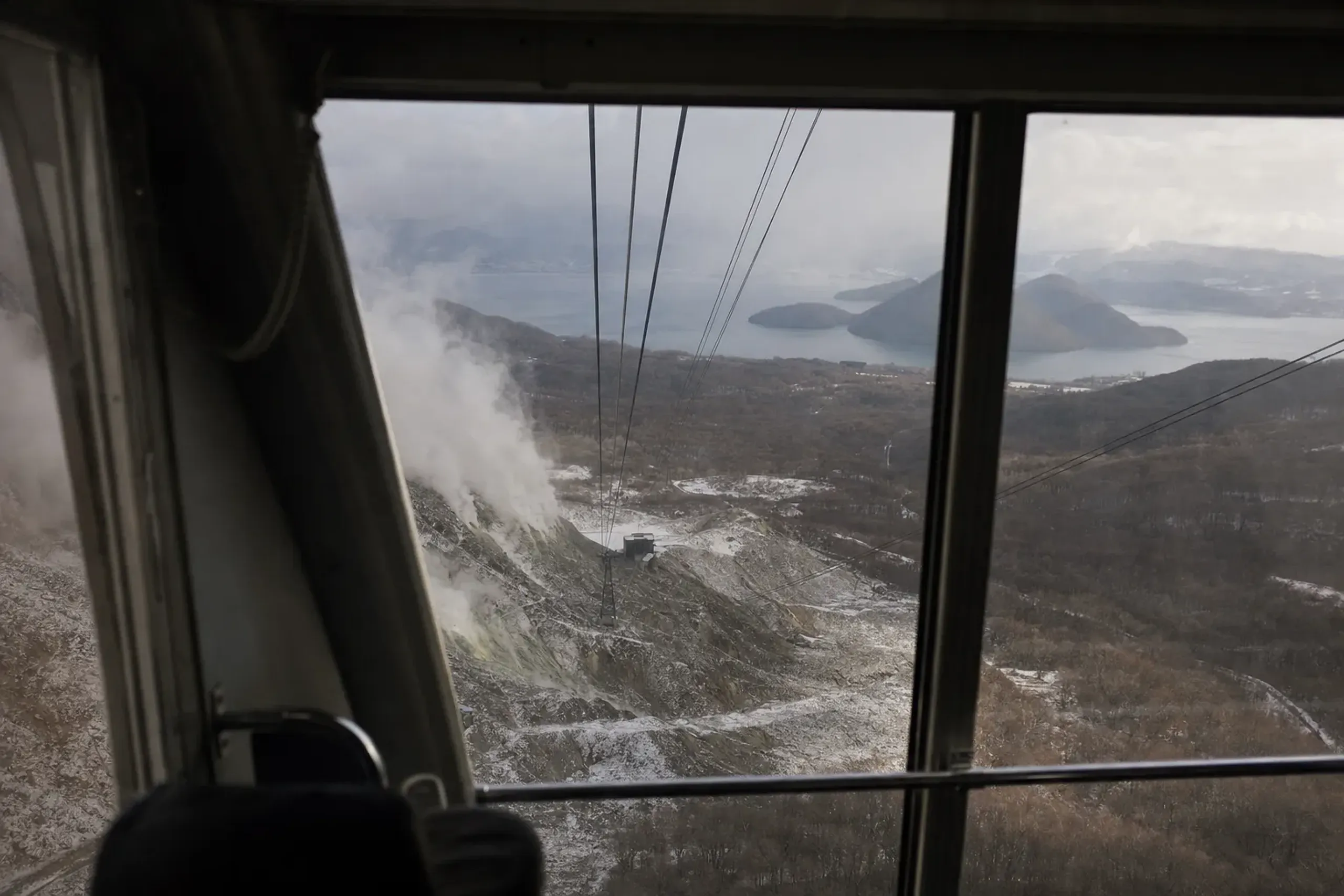
Plan your clothing like a grown-up.
At the top, the reward is the geometry. Lake Tōya spreads wide, Nakajima sits centered like a held breath, and the full caldera rim becomes legible. When visibility is strong, you can feel how Japan’s instinct for order—paths, rails, decks—rests gently atop something that refuses to be controlled.
If you have reduced mobility or are traveling with older parents, we plan the walking time conservatively and thread rest points through the day. For wider Japan pacing and accessibility thinking, our guide on planning with reduced mobility is a worthwhile read before you commit to a route.
The Toya Caldera And Usu Volcano Geopark: The Story Behind The Scenery
The Toya Caldera and Usu Volcano Geopark became one of Japan’s first Global Geoparks in 2009, and it is now a UNESCO Global Geopark, re-certified in 2023. The titles matter less than what they quietly protect: an insistence on explanation.
Lake Tōya is all too easy to "do" without ever understanding it. That is the mistake. The geopark framing hands you a narrative that connects the lake, the islands, the ropeway, and the town’s onsen history into one readable, satisfying loop.
The 2000 eruption sits at the heart of that loop. There were no direct deaths, because residents had been evacuated beforehand. That is not luck dressed up as legend; it is a community decision—live here, yes, but pay attention.
For travelers who value imperial-class formality in the quieter sense—proper context, correct sequencing, no sloppy shortcuts—this kind of place lands beautifully.
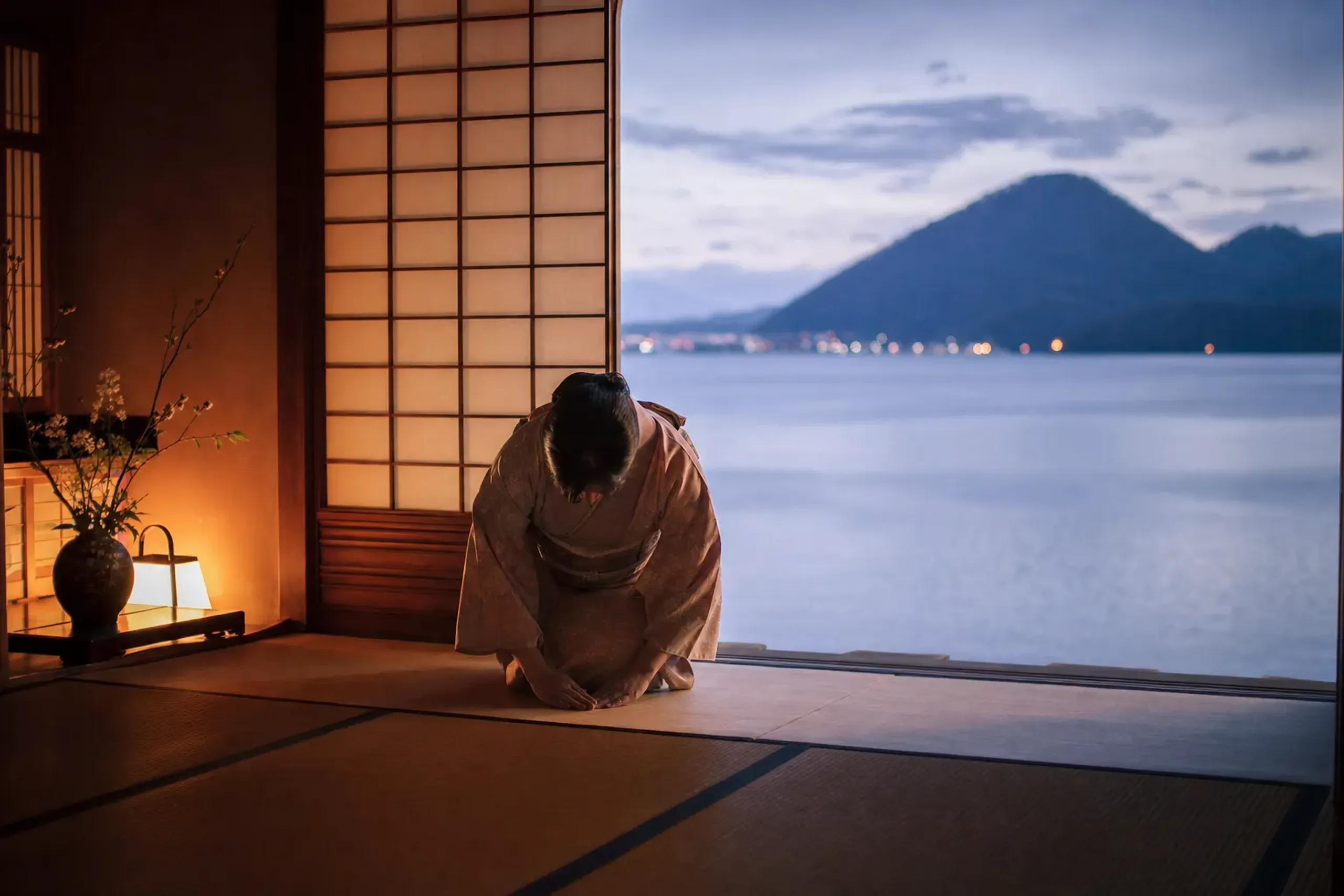
The landscape sets the register. You simply follow it.
A One-Day Loop In Summer: Cruise Morning, Volcano Midday, Quiet Afternoon
Lake Tōya rewards structure—not a packed schedule, but a clean order.
Morning: Start with the lake itself. A warm-season cruise with Toyako Kisen is a simple, elegant way to understand the distances without driving the full rim. Boats run regularly through the daytime, and the air off the water can feel crisp even on a bright day.
Midday: Shift to altitude. Drive to the ropeway area and ride up toward Mt. Usu’s viewpoints. Eat afterward, not before. You will walk better, and you won’t feel rushed on the decks.
Afternoon: Come back down into town and let it go quiet. This is the moment restraint earns its keep. A slow coffee, a short lakeside walk, a bath timed to the softening light. Nothing heroic.
For HNW travelers, that final stretch is usually the difference between "we saw it" and "we felt it." Our concierge team designs day plans with deliberate blanks—room for weather, for appetite, and for that one unexpected view you’ll want to sit with a little longer.
Are The Lake Toyako Long Run Fireworks Really Every Night?
Yes—the Lake Toyako Long Run Fireworks are scheduled every night from 28 April to 31 October (2026 season) at 20:45, running for about 20 minutes, subject to weather and wind conditions.
The name sounds promotional until you witness the discipline behind it.
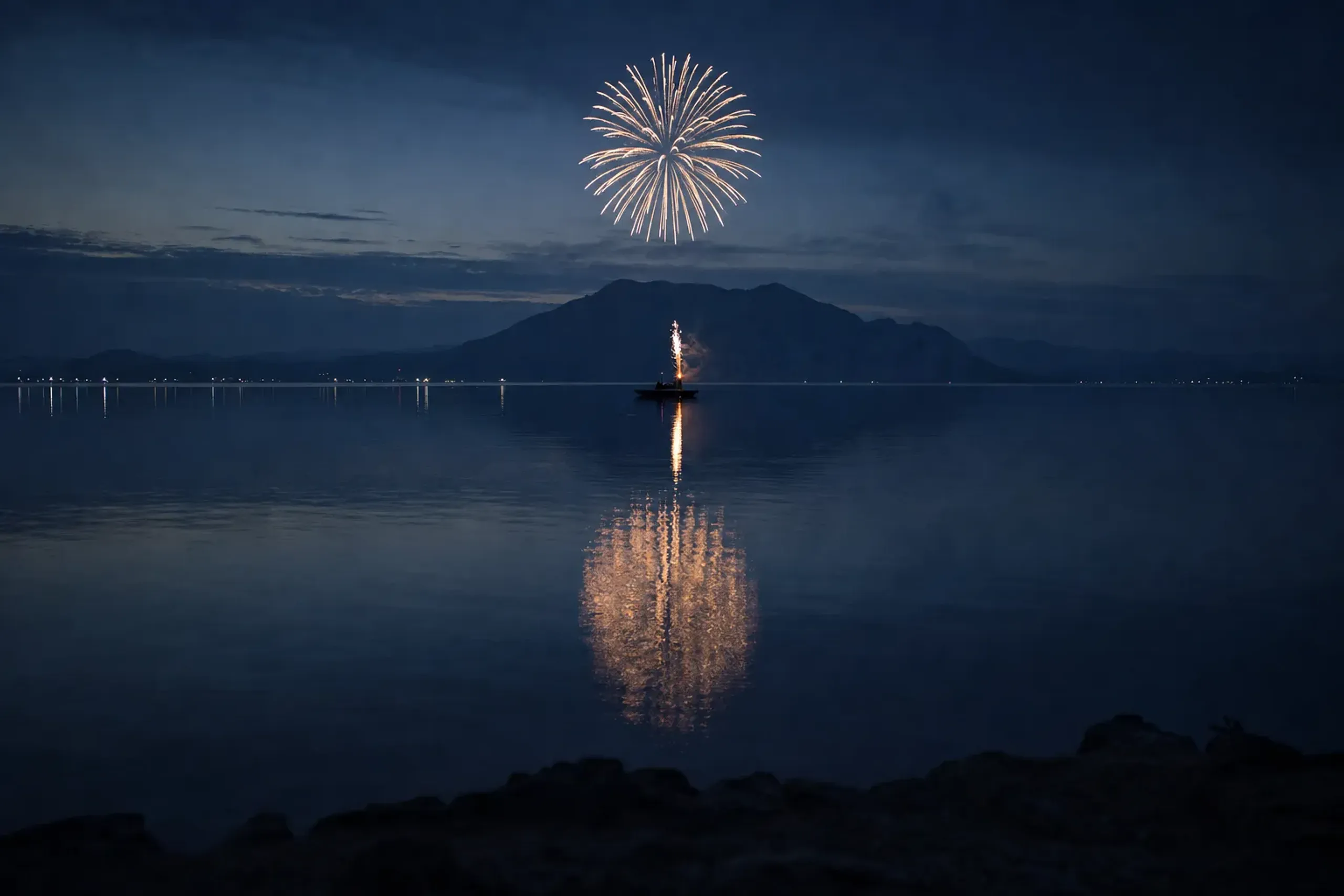
A nightly show is not "special" in the once-a-year sense. It becomes a local ritual instead. You plan dinner around it. You time your bath. You walk down afterward and listen to the lake settle back into itself.
The launch point moves along the shore, which is precisely why the fireworks can be seen from many spots in and around Toyako Onsen. It is a forgiving display. You do not need to fight for a single "best" corner the way you might at a crowded big-city event.
Official operation wording notes the event is held even in rain, but may be cancelled when wind direction or speed turns unstable. That is exactly why we treat the fireworks as a featured moment, never as the only reason you came.
Where To Watch The Fireworks Without Turning It Into A Crowd Problem
You have three sensible viewing styles at Lake Tōya. Each suits a different kind of traveler, and none demands performative effort.
Option A: Lakeshore Promenade In Toyako Onsen
This is the simplest. Walk out a little early, choose a spot with a clean sightline, and let the show arrive. If you are traveling as a couple or a family of four, it is often perfect.
- Best for: first-timers, photographers who want flexibility
- Watch for: wind; bring a light layer even in summer
Option B: From Your Hotel Room Or Bath (When Available)
Some accommodations in Toyako Onsen offer lake-facing rooms and baths from which the fireworks are visible.
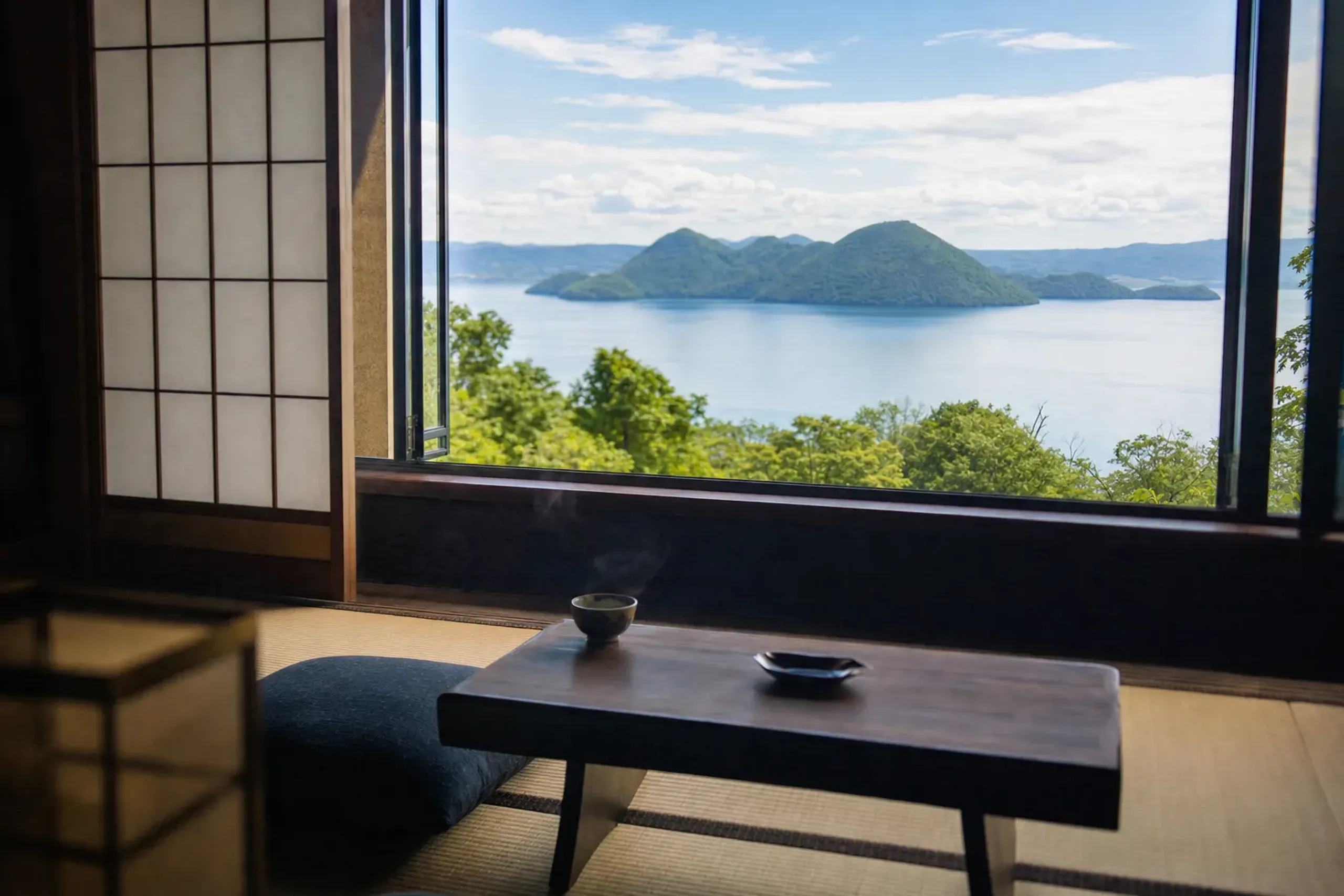
The feeling stays private even when the town is lively outside—quiet luxury in its truest form.
- Best for: milestone trips, travelers who want minimal logistics
- Watch for: room orientation; "lake view" is not always "fireworks view"
Option C: A Public Fireworks-Viewing Cruise
Toyako Kisen operates a fireworks-viewing cruise, often around 40 minutes. It offers a wholly different perspective: lower, closer to the water, with the sound carrying cleanly across the surface. Reservations may be required depending on the night.
- Best for: repeat visitors, travelers who like the lake as a stage
- Watch for: wind and cancellations; arrive early
Key fact: The fireworks launch point moves along the shore, so "perfect" viewpoints are less about scarcity and more about avoiding streetlights, trees, and last-minute stress.
How To Get To Lake Tōya: Private Car, Train, And Realistic Times
Access is clean, but only if you respect the distances. Hokkaido maps look forgiving. They are not.
Typical reference times many travelers rely on:
- New Chitose Airport (CTS) to Toyako Onsen by car: about 90 minutes
- Sapporo to Tōya Station by limited express: about 1 hour 55 minutes, then a bus of about 20 minutes to Toyako Onsen (roughly 2 hours 15–20 minutes total)
- Direct bus from Sapporo (Donan Bus) to Toyako Onsen: about 2 hours 40 minutes
For many HNW travelers, a private car day is the difference between "nice" and "restful." The route itself becomes part of the experience rather than a sequence of transfers weighed down by luggage and timing anxiety.
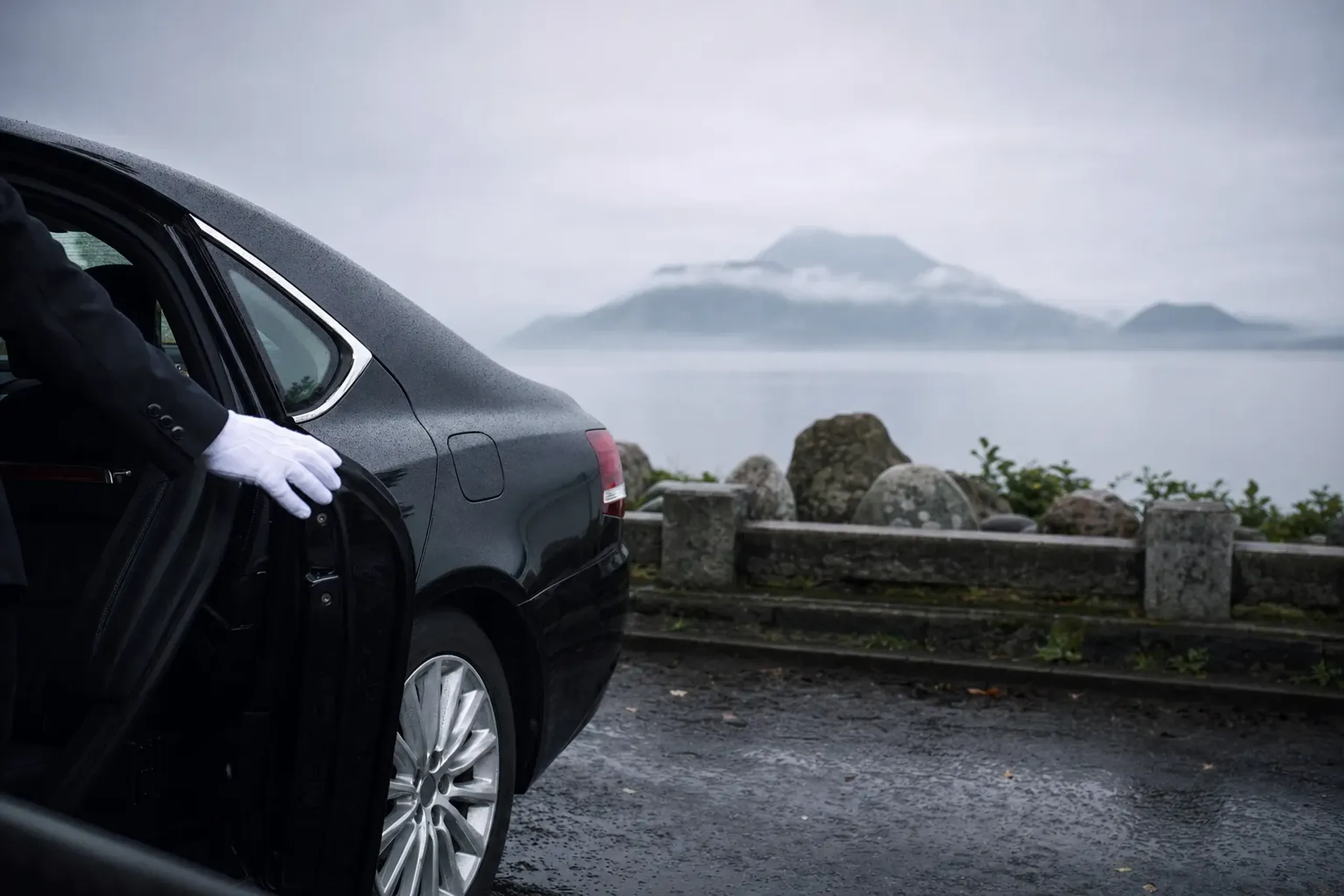
The first mention matters: if you are considering private transportation, we can advise on the right vehicle class for your party size, your suitcases, and whether you would rather work, talk, or simply stay quiet between stops.
How Japan Royal Service Plans Lake Tōya At An Ultra-Luxury Pace
Lake Tōya is not about doing more. It is about doing fewer things with better timing. A profound difference.
When our team at Japan Royal Service builds a Hokkaido route, we begin with one deceptively practical question: what do you want the day to feel like at 21:10, when the fireworks end and the lake goes dark once more? The rest of the plan flows backward from that single moment.
Here is how we usually shape it for HNW travelers who want luxury that stays quiet:
- Discretion-first routing: we sidestep needless lobby time, crowded rest stops, and overexposed photo points whenever a better alternative exists—because confidentiality begins with where you are not seen.
- Hidden-Japan texture: small pauses that resist a search engine—an unhurried lakeside walk, a short museum stop for context, a meal timed for the moment the dining room falls calm.
- Shokunin moments (when appropriate): experiences built around craft and mastery rather than spectacle, matched carefully to your interests and your attention.
We also quietly handle the unglamorous part that protects the day—the omotenashi you never see. Ahead of your visit, our concierge team confirms the current operating status of the fireworks, the ropeway conditions, and the geopark’s guided options, then adjusts your pacing so you are never left negotiating in real time.
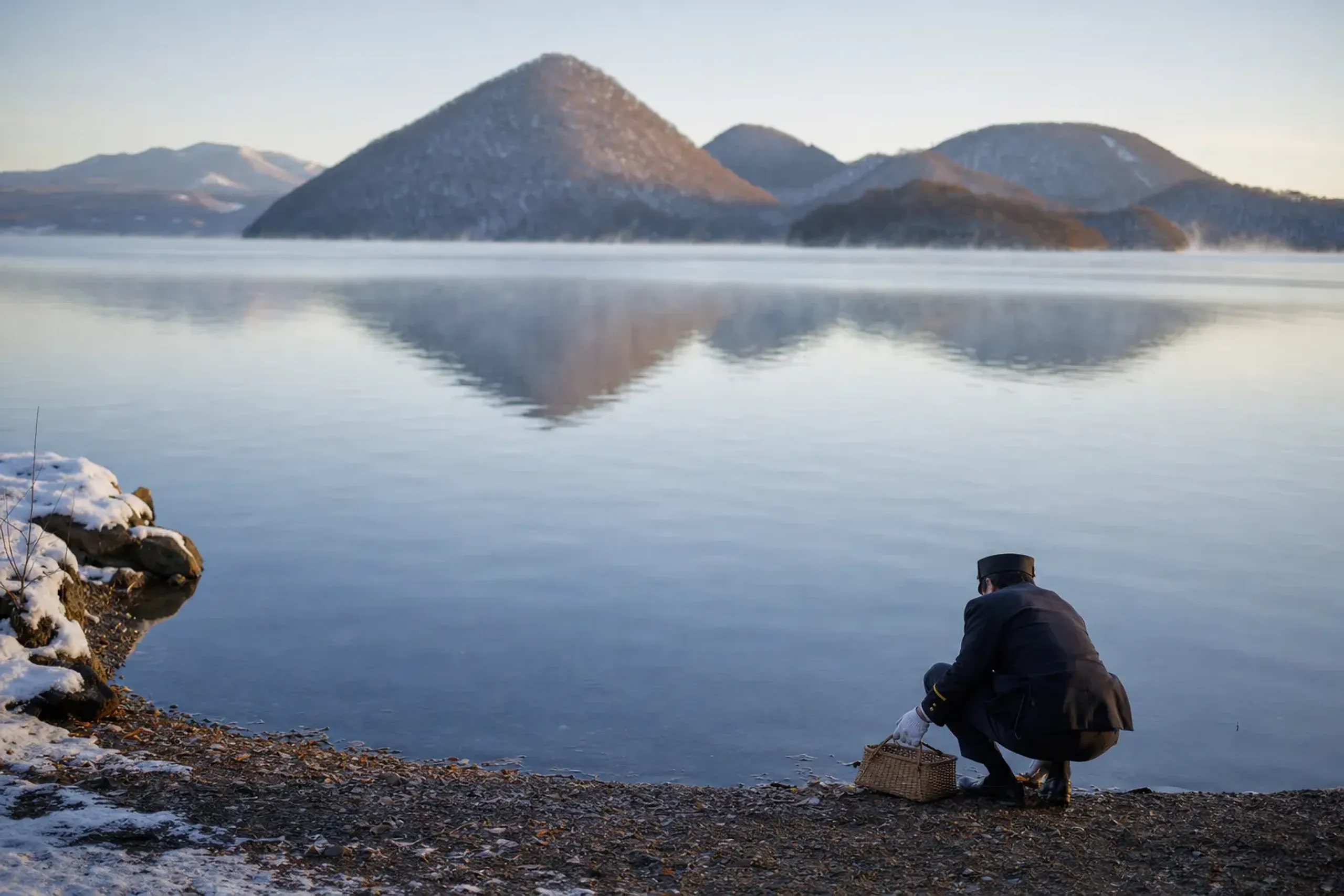
If your journey spans several regions, we often suggest a tailor-made itinerary that uses Lake Tōya as a true pause point—rather than a one-night box to check between airports.
Practical Tips That Keep Lake Tōya Feeling Calm
A few small choices change the entire mood here. Sharp travelers notice them.
- Stay two nights if you can. One night forces you to "perform" the destination. Two nights let you waste an hour on purpose.
- Do the ropeway earlier in the day. Weather often grows trickier later, and you will want the afternoon back for the onsen and a slow dinner.
- For fireworks, arrive five to ten minutes early. Not an hour. You are not camping out for a parade.
- Keep your footwear honest. The viewing decks involve real walking, and Hokkaido sidewalks can be uneven near the lake.
Begin Your Lake Tōya Journey
A caldera lake, a living volcano, and twenty minutes of light above the water each night—Lake Tōya rewards the traveler who arrives unhurried and leaves with something quieter than a photograph. When the timing, the routing, and the small unseen details are handled for you, what remains is simply the experience itself.
To begin shaping an unhurried Hokkaido journey around Lake Tōya—planned with discretion and attuned to the season—contact us here, and we will prepare a tailored proposal built entirely around how you want the days to feel.