In this guide
- 01Why Is Matsumoto Called The Crow Castle?
- 02What Makes Matsumoto Castle Architecturally Rare?
- 03The Blossom: Three Hundred Trees, Eight Varieties
- 04When Is Matsumoto Castle's Cherry Blossom Illumination?
- 05A Plain Warning: Matsumoto's April Nights Are Cold
- 06How Do You Get To Matsumoto Castle?
- 07What Japan Royal Service Arranges
- 08Frequently Asked Questions
- 09Why Choose Japan Royal Service
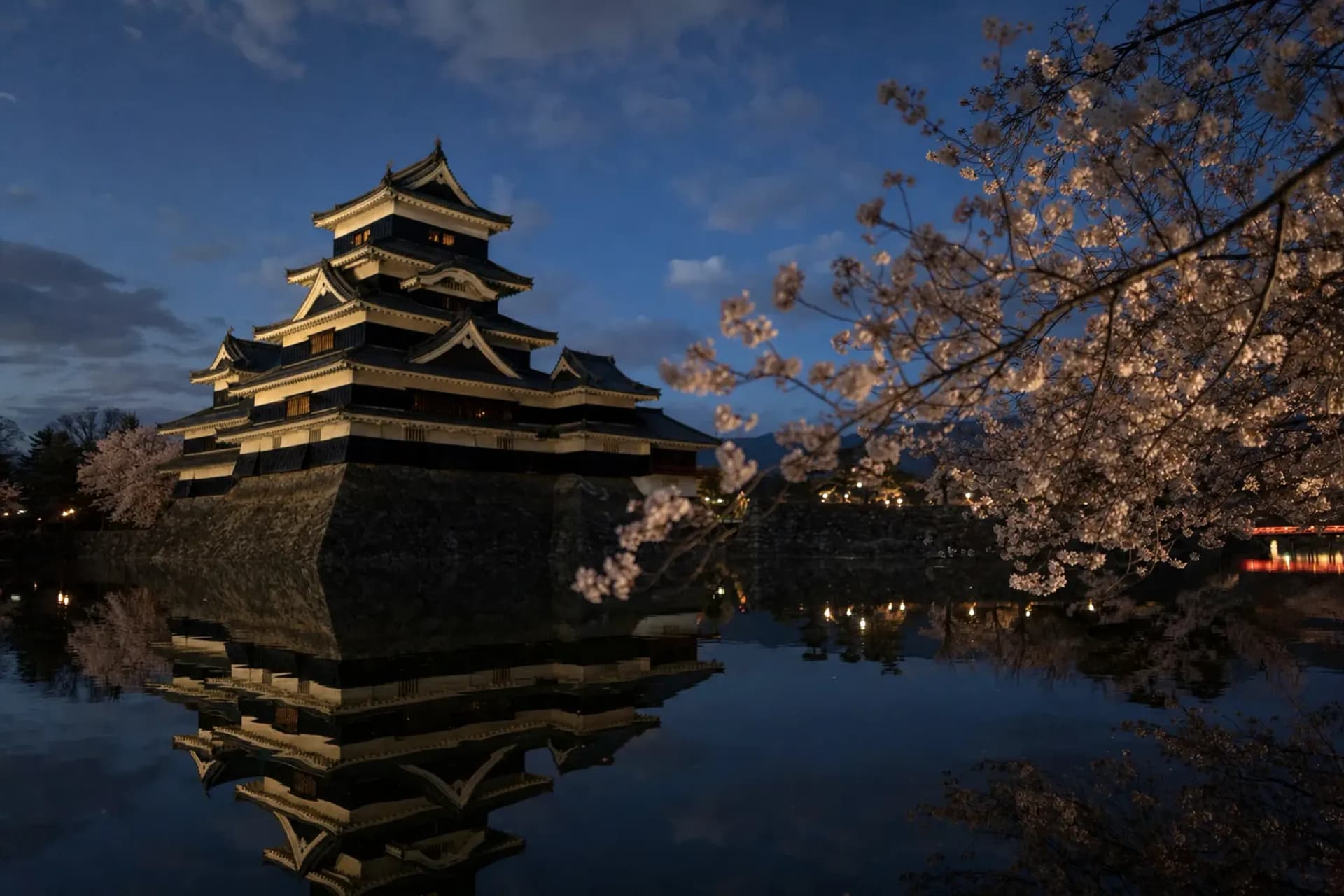
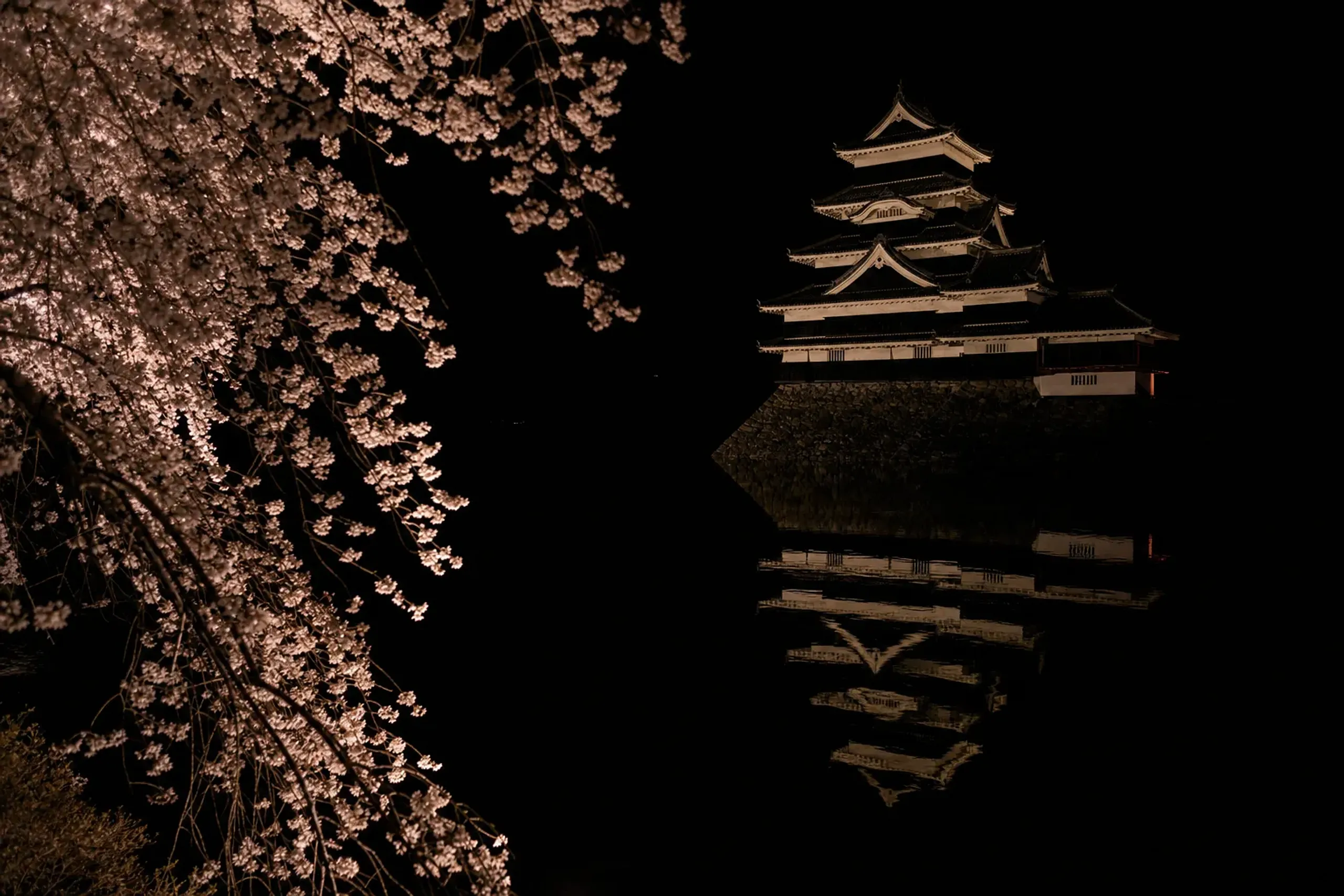
The moat holds it twice. Above the water, a black keep — lacquered boards dark as wet ink — rises against a sky the colour of old pewter. Below the water, the same keep hangs upside down, doubled in the still surface, framed by cherry branches lit from beneath. Between them, blossom. Pale, weightless, impossibly bright against all that black.
This is Matsumoto Castle at night in April. And it looks like almost nothing else in Japan.
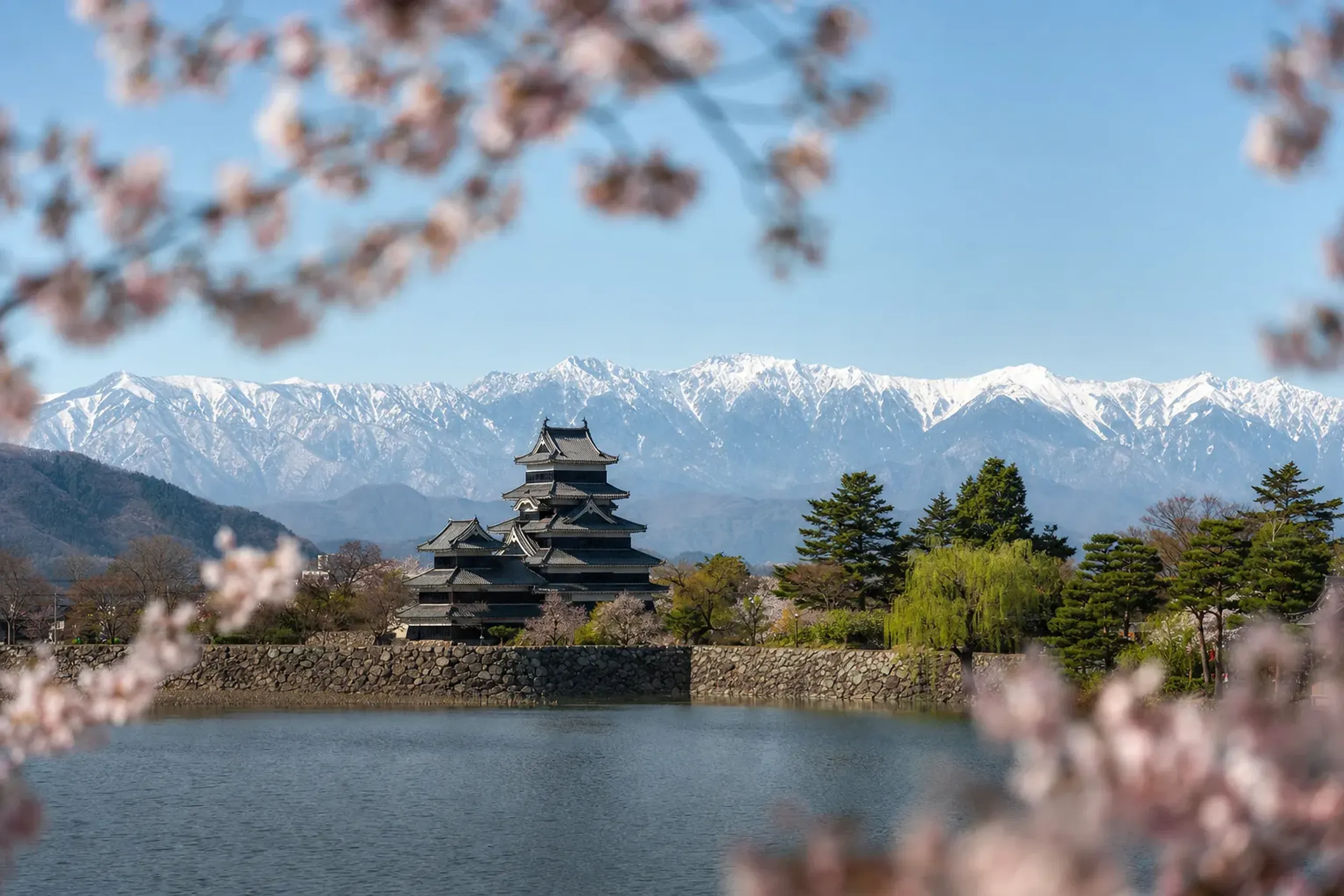
Most of the country's famous castle-and-blossom photographs share a single palette: white stone, white plaster, pink flowers. Himeji. Osaka. Hirosaki. Matsumoto inverts every one of them. Here the wall is black, the flowers are pink, and behind both stand the snow-capped peaks of the Northern Alps. Three layers, no two the same tone. Our team at Japan Royal Service considers it one of the few genuinely unrepeatable images in the Japanese spring — and one of the hardest to time correctly.
Why Is Matsumoto Called The Crow Castle?
Matsumoto Castle is nicknamed Karasu-jō — Crow Castle — for the black lacquered wall boards set against its white plaster, the plumage of a crow rendered in wood and stone.
The name is deliberate, and it exists in conversation with another. Himeji, far to the west, is Shirasagi-jō — White Heron Castle — for its brilliant white walls. Japanese castle literature has long paired the two as opposites: the white bird and the black one, heron and crow, light and shadow.
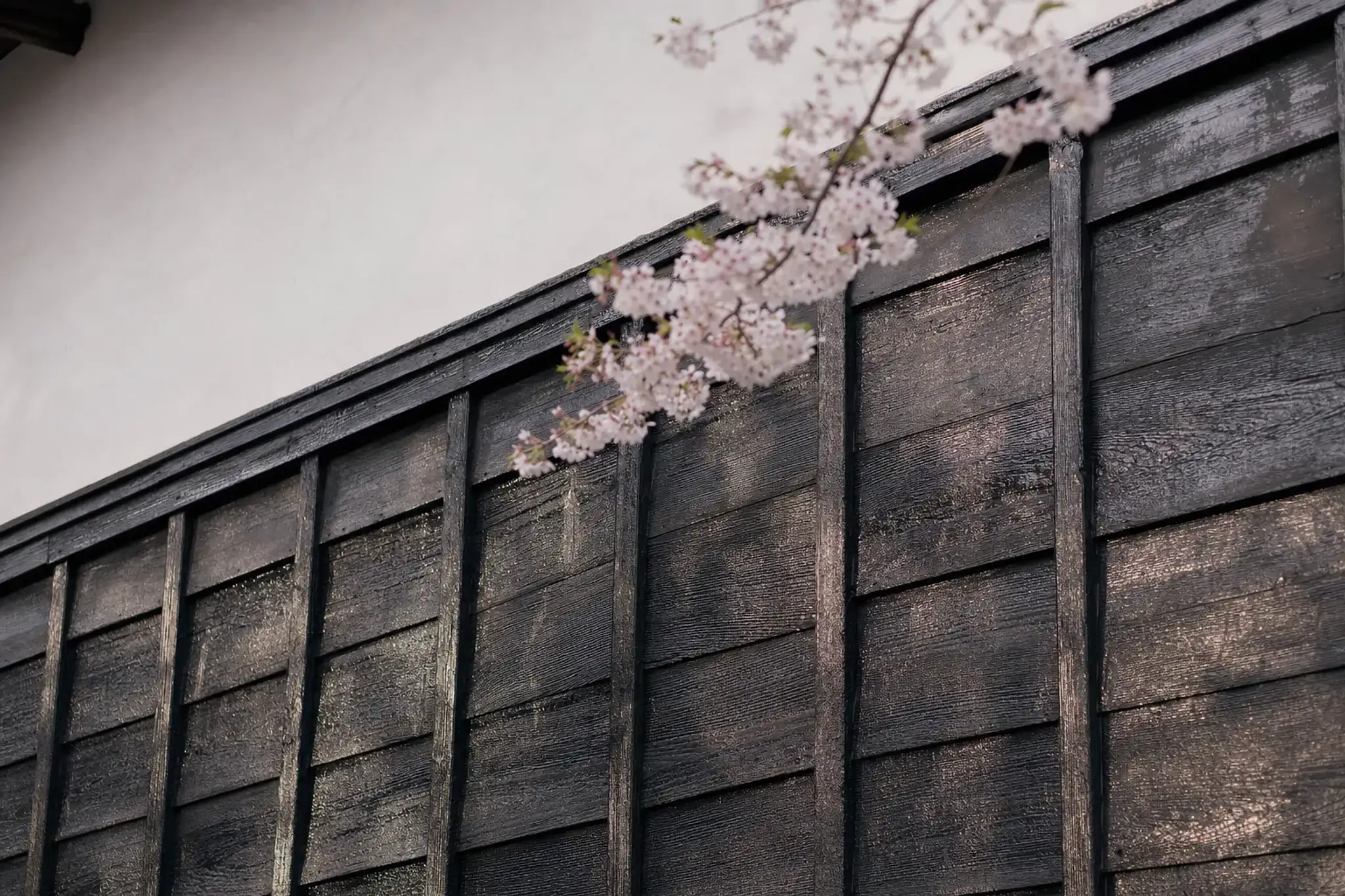
Stand at Matsumoto's moat and you understand the naming instantly. There is nothing pale about this building. It broods.
Against a spring sky that shifts from grey to washed blue, the darkness reads as weight rather than gloom. And when the blossom opens around it — soft, transient, gone in a fortnight — the contrast does the work no filter could. Black permanence beneath pink impermanence. You do not have to know a word of aesthetics to feel it.
What Makes Matsumoto Castle Architecturally Rare?
Matsumoto Castle is one of only twelve surviving original castle keeps in Japan and a designated National Treasure, alongside four other National Treasure structures on the same grounds. Its current form dates from 1594.
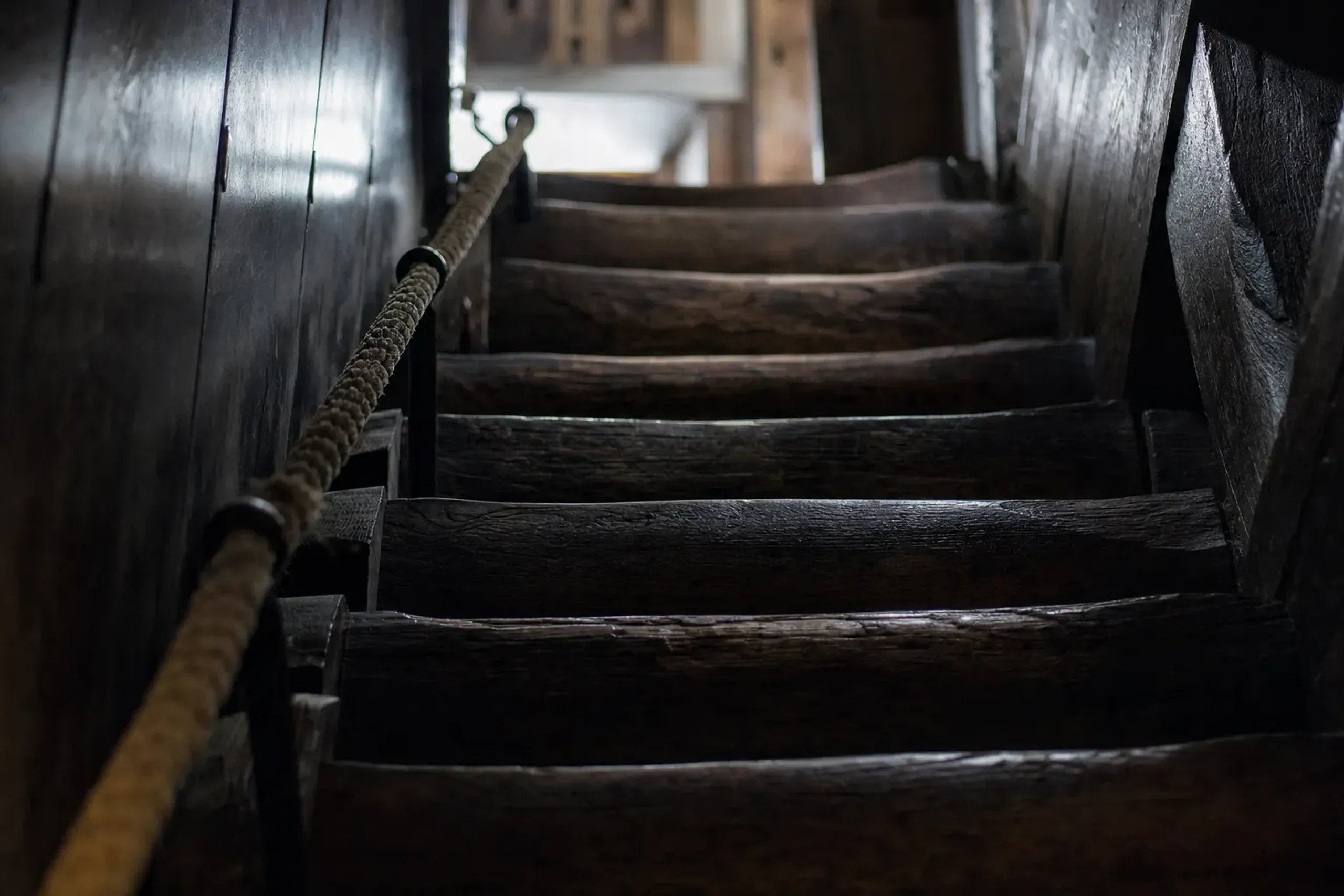
Twelve. That is the entire count of original keeps left in the country — buildings that have stood through war, fire, earthquake, and the demolition campaigns of the Meiji era without being rebuilt in concrete. Matsumoto is one of them. When you walk the steep wooden stairs inside, you are climbing timber that was fitted in the sixteenth century, not a postwar reconstruction dressed to look old.
There is a second distinction, quieter but real. Matsumoto is a hirajiro — a flatland castle. Most of Japan's surviving originals command hills or mountains, using elevation as their first line of defence. Matsumoto sits on the plain. It defends itself with water instead: a moat system engineered to hold attackers at arm's length across open ground. That choice is why the reflection exists at all.
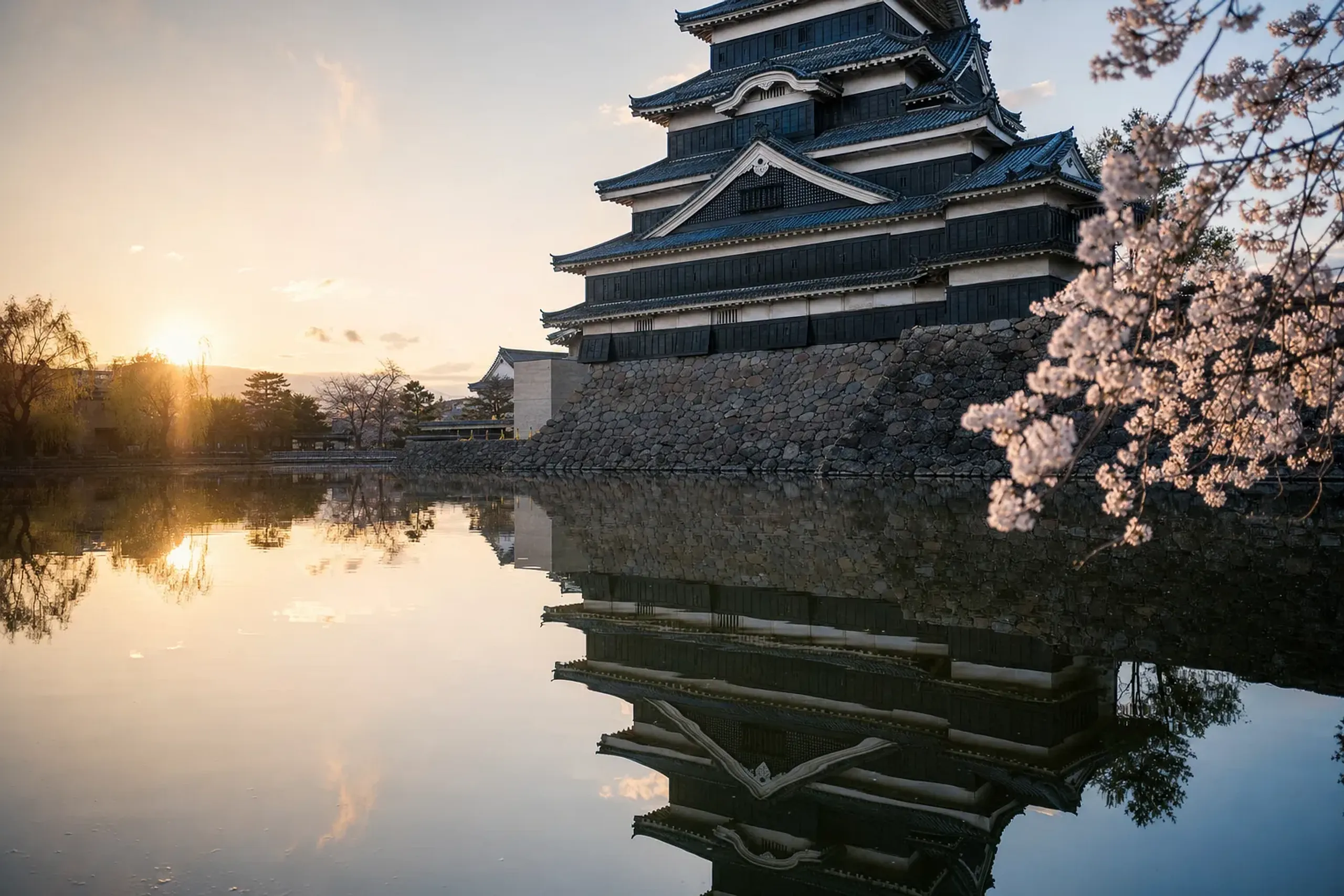
The building was designed, four centuries ago, to be mirrored.
Through the Edo period it served as the seat of the Matsumoto Domain under the Tokugawa shogunate. The keep you photograph in April is not a stage set. It is the surviving centre of a working feudal capital.
The Blossom: Three Hundred Trees, Eight Varieties
Roughly 300 cherry trees ring Matsumoto Castle Park and the outer moat. The planting is not uniform. Eight distinct varieties grow here, and they do not all peak on the same day — which stretches the season and layers the colour.
The list rewards a slow walk:
- Somei-Yoshino — the pale, near-white standard, the tree most people picture when they picture cherry blossom.
- Shidarezakura — weeping cherry, formally itozakura, its branches falling like water.
- Ōyamazakura — a mountain cherry with deeper pink flowers.
- Kanzan — dense, ruffled, double-petalled, a heavier bloom that opens later.
- Jūgatsuzakura — the odd one, capable of flowering out of season, in autumn as well as spring.
- Yaebeni-shidare — a double-petalled weeping variety, rich rose-pink.
- Kohigan — an early bloomer, small-flowered.
- Kasumizakura — the hazy cherry, late and soft-edged.
One weeping cherry on the grounds carries a historical thread worth pausing on: an association with Katō Kiyomasa, the lord who built Kumamoto Castle far to the south. A single tree, quietly linking two of Japan's great fortresses across the length of the country.
The typical bloom period is early April.
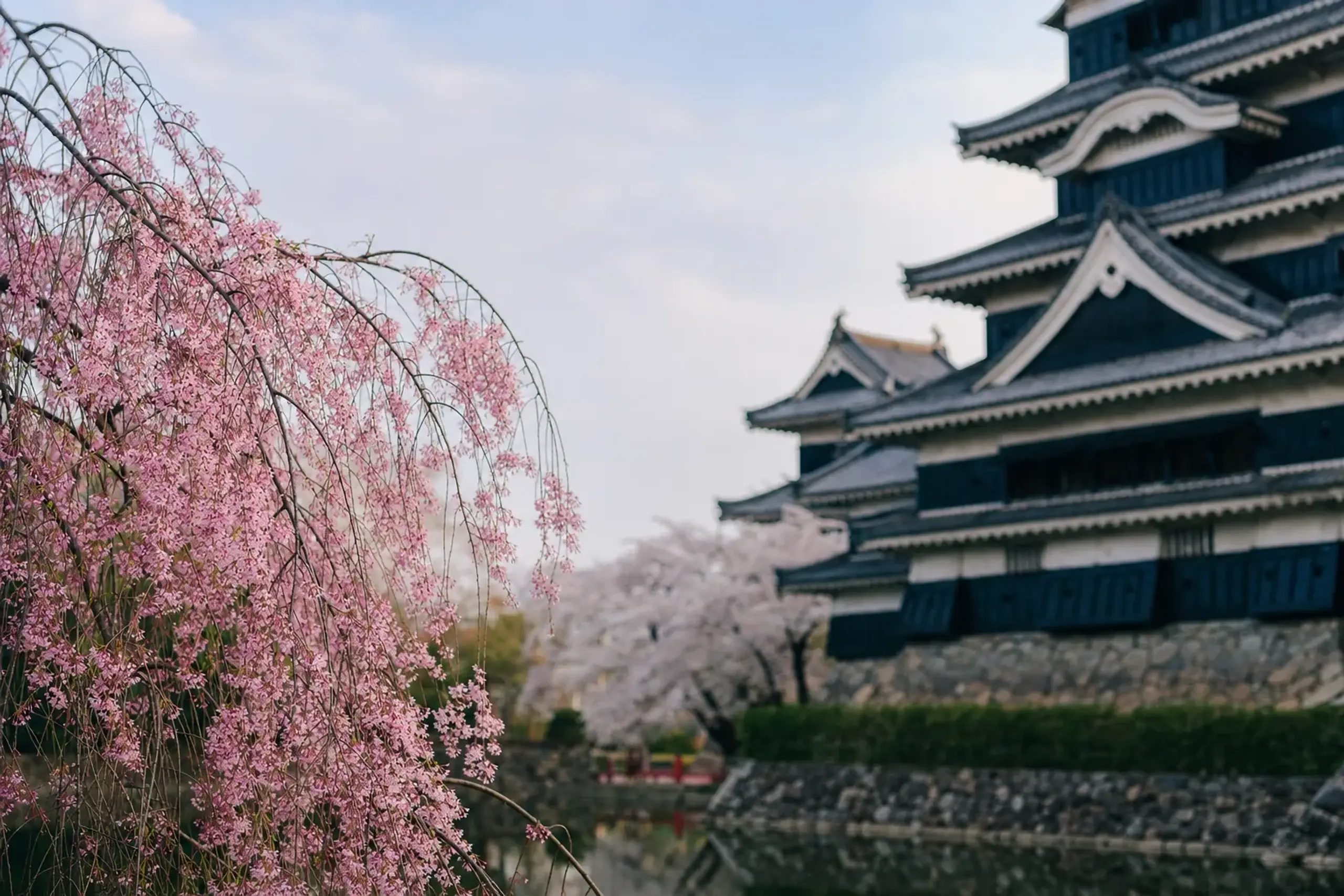
We state it as a range on purpose. Cherry blossom does not keep a calendar, and Matsumoto's timing shifts year to year with the winter that preceded it. Our concierge confirms the current forecast against the season's declaration rather than promising a date months out — because, as the next section explains, the most important date here genuinely cannot be fixed in advance.
When Is Matsumoto Castle's Cherry Blossom Illumination?
Matsumoto Castle's night illumination is not scheduled in advance. It begins three days after the official bloom declaration and runs for eight days — so the exact dates are only known once the flowers actually open, usually in early April.
This is the detail that separates Matsumoto from almost every other seasonal event in Japan. You cannot book it against a calendar the way you would a fireworks festival or a fixed-date matsuri. The city waits for the blossom to declare itself, then announces the light-up. Three days later, it begins. Eight nights. Then it ends, and the flowers begin to fall.
Key mechanism: The illumination dates are announced only after the season's official bloom declaration. A visit cannot be pinned to a fixed date in advance — it has to be timed to the declaration and moved on quickly once it comes. This is precisely where a concierge watching the forecast daily earns its place.
Two separate, coordinated programmes run at the same time. They are often blurred together in casual write-ups.
They should not be.
Yozakura-kai — The Night Cherry Blossom Gathering
The Yozakura-kai (夜桜会) opens the inner Honmaru garden at night, illuminated, free to enter. It runs for eight evenings beginning three days after the bloom declaration, from 17:30 to 21:00, with last entry at 20:50. No alcohol is permitted on the grounds. This is the closer view — blossom and the black keep at intimate range, inside the innermost defensive ring.
Hikari No Kairō — The Corridor Of Light
The Hikari no Kairō (光の回廊), or Corridor of Light, is a separate illumination of the cherry-lined outer moat walkway. It runs concurrently with the Yozakura-kai. This is the wider frame — the trees along the water lit in sequence, the moat itself becoming a mirror.
Together, the two produce the signature image: the black keep and the illuminated blossom reflected as one in the moat's motionless water. Neither event alone gives you the full picture. Both, on the same night, do.
A Plain Warning: Matsumoto's April Nights Are Cold
Matsumoto's April evenings are genuinely cold. Overnight lows regularly drop below 5°C. Visitors underestimate this constantly, because "spring" suggests mild air — and then they stand at a moat for an hour after dark in a light jacket.
This is the courtesy few write-ups extend, so we will. Matsumoto sits on an inland plateau, ringed by the Alps. The days can be pleasant. The nights, especially at a waterside where you will linger to watch the reflection, bite.
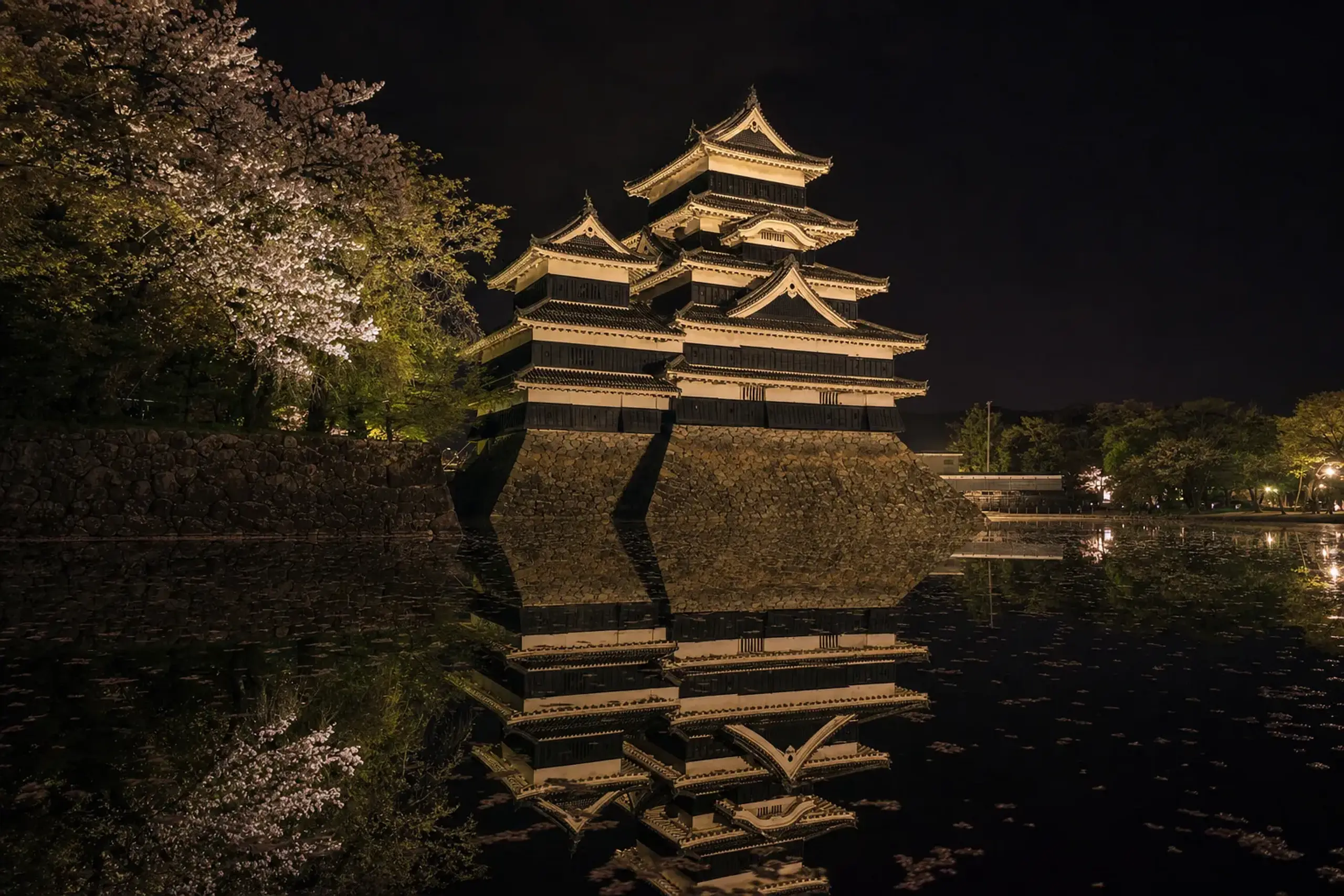
Breath fogs. Fingers stiffen. A guest who dressed for the forecast high rather than the actual low will spend the illumination wanting it to end, no matter how beautiful the view.
Dress for winter after dark. A proper coat, warm layers, gloves. The view is worth staying for — but only if you can stay.
How Do You Get To Matsumoto Castle?
From JR Matsumoto Station, the castle is roughly 8 minutes away on the Town Sneaker north-course loop bus, alighting at the Matsumoto Castle/City Hall stop. By car, it is around 20 minutes from the Nagano Expressway's Matsumoto interchange.
Both routes are short and simple. For guests attending the night illumination in cold air, the value of arriving and departing on a private schedule — rather than a public loop bus timetable — becomes obvious the moment the temperature falls. Our private chauffeured transport means the warm car is waiting when you decide the evening is complete, not twenty minutes later.
What Japan Royal Service Arranges
For Matsumoto Castle in blossom, we arrange three things, plainly: accommodation, private guiding, and transfers. That is the scope, and we keep it honest.
Because the illumination timing is unfixed, the real work is watchfulness — following the season's bloom forecast, then the declaration itself, and holding a flexible frame so a visit can be moved onto the eight-night window once it is announced. A rigid calendar booking cannot capture this event. A watchful one can.
Guests interested in a Matsumoto blossom visit may reach our concierge for tailored guidance on timing, stays, and the cold-night logistics the view demands.
Matsumoto also sits well within the wider spring cluster. Those planning a broader route through the season may find our companion pieces useful: the Nagoya-and-Kansai March base guide for pacing an early-season trip, and, in the same prefecture, the historic post-town walk along the old highways for a quieter counterpoint to the castle.
Frequently Asked Questions
When do Matsumoto Castle's cherry blossoms usually bloom?
Matsumoto Castle's roughly 300 cherry trees typically bloom in early April, though the exact peak shifts each year with the preceding winter. Because Matsumoto sits on an inland plateau, its blossom often opens slightly later than Tokyo's.
Why can't I book the Matsumoto Castle night illumination in advance?
The illumination dates are not set until the season's official bloom declaration. The Yozakura-kai and Hikari no Kairō light-ups begin three days after that declaration and run for eight nights — so the dates only become known once the flowers actually open.
What is the difference between Yozakura-kai and Hikari no Kairō?
Yozakura-kai illuminates the inner Honmaru garden beside the keep, open free from 17:30 to 21:00 with last entry at 20:50 and no alcohol permitted. Hikari no Kairō is a separate illumination of the cherry-lined outer moat walkway, running at the same time.
How cold does Matsumoto get at night in April?
Matsumoto's April overnight lows regularly fall below 5°C.
Visitors consistently underestimate this. For the evening illumination beside the moat, dress for winter — a proper coat, warm layers, and gloves — not for a mild spring evening.
How far is Matsumoto Castle from the train station?
Matsumoto Castle is about 8 minutes from JR Matsumoto Station on the Town Sneaker north-course loop bus, alighting at the Matsumoto Castle/City Hall stop. By car it is roughly 20 minutes from the Nagano Expressway's Matsumoto interchange.
Why Choose Japan Royal Service
Matsumoto's blossom is a moving target, and that is exactly the kind of trip that rewards a private concierge over a fixed itinerary. The illumination cannot be pinned to a date. The nights are colder than guests expect. The best of the image — black keep and lit blossom mirrored in still water — depends on being in the right place on the right one of eight nights.
Our team at Japan Royal Service works in discretion and precision. We watch the forecast so you do not have to, we hold the arrangements flexibly against a declaration that arrives on the blossom's schedule rather than yours, and we handle the accommodation, guiding, and transfers that turn a cold spring evening into a composed one. No noise, no leakage of your plans, no scramble when the announcement finally lands.
To plan a Matsumoto Castle blossom visit, reach our team privately via WhatsApp or LINE, or contact us here. We will begin quietly, and time it right.