In this guide
- 01Nakahechi, Kohechi, Or Iseji: Which Kumano Kodo Route Should You Choose?
- 02Is It Legitimate To Walk Only Selected Sections Of The Kumano Kodo?
- 03What Is The Walking Actually Like On The Kumano Kodo?
- 04Accommodation Along The Kumano Kodo, Honestly
- 05The Comfortable-Base Alternative: Walk Out-And-Back Sections By Vehicle
- 06Where Your Bags Are Matters More Here Than Almost Anywhere In Japan
- 07Onsen At The End Of The Day
- 08Conduct At The Shrines: How To Be There Without Being The Problem
- 09Season And Access: Heat, Rain, Winter, And A 2026 Transport Window
- 10How Many Days Do You Need: Two, Three, Or Four Days Of Walking?
- 11Dual Pilgrim And Stamps: What It Is, And Why People Care
- 12How To Book The Official Kumano Kodo Pilgrim Pack And Local Support Services
- 13Who Should Not Do The Kumano Kodo (At Least Not As A Multi-Day Walk)
- 14Frequently Asked Questions
- 15Why Choose Japan Royal Service
You do not need to disappear for a week with a heavy pack to walk the Kumano Kodo. The most workable version is selected sections, walked well, with support. You still get forest, stone, and shrine precincts that ask for quiet conduct. You just do not turn it into an endurance test.
Nakahechi, Kohechi, Or Iseji: Which Kumano Kodo Route Should You Choose?
Choose Nakahechi for most first-time walkers because it has the clearest visitor infrastructure; treat Kohechi and Iseji as specialist routes unless you already know why you want them.
The Kumano Kodo is not one trail. It is a network of six pilgrimage routes: Iseji, Kiiji, Nakahechi, Kohechi, Omine Okugakemichi, and Ohechi. That matters, because your experience depends less on “Kumano Kodo” and more on which line you step onto.
Nakahechi is the route most visitors mean when they say they want to “walk the Kumano Kodo.” It has established walking culture, the most common modern access patterns, and the broadest base of accommodation along the way. It is also the easiest to structure as a series of selected walks.
Kohechi, by contrast, is typically framed as a tougher mountain crossing between Koyasan and the Kumano area. That is not the right answer for almost everyone reading this. Harder terrain plus thinner support options equals a trip that turns logistical, fast.
Iseji includes striking stone-paved passes in the Yoshino-Kumano National Park area, including the Magose (Umakoshi) Pass, which Japan’s National Parks site describes as cobblestone through forest on a guided eco-tour.
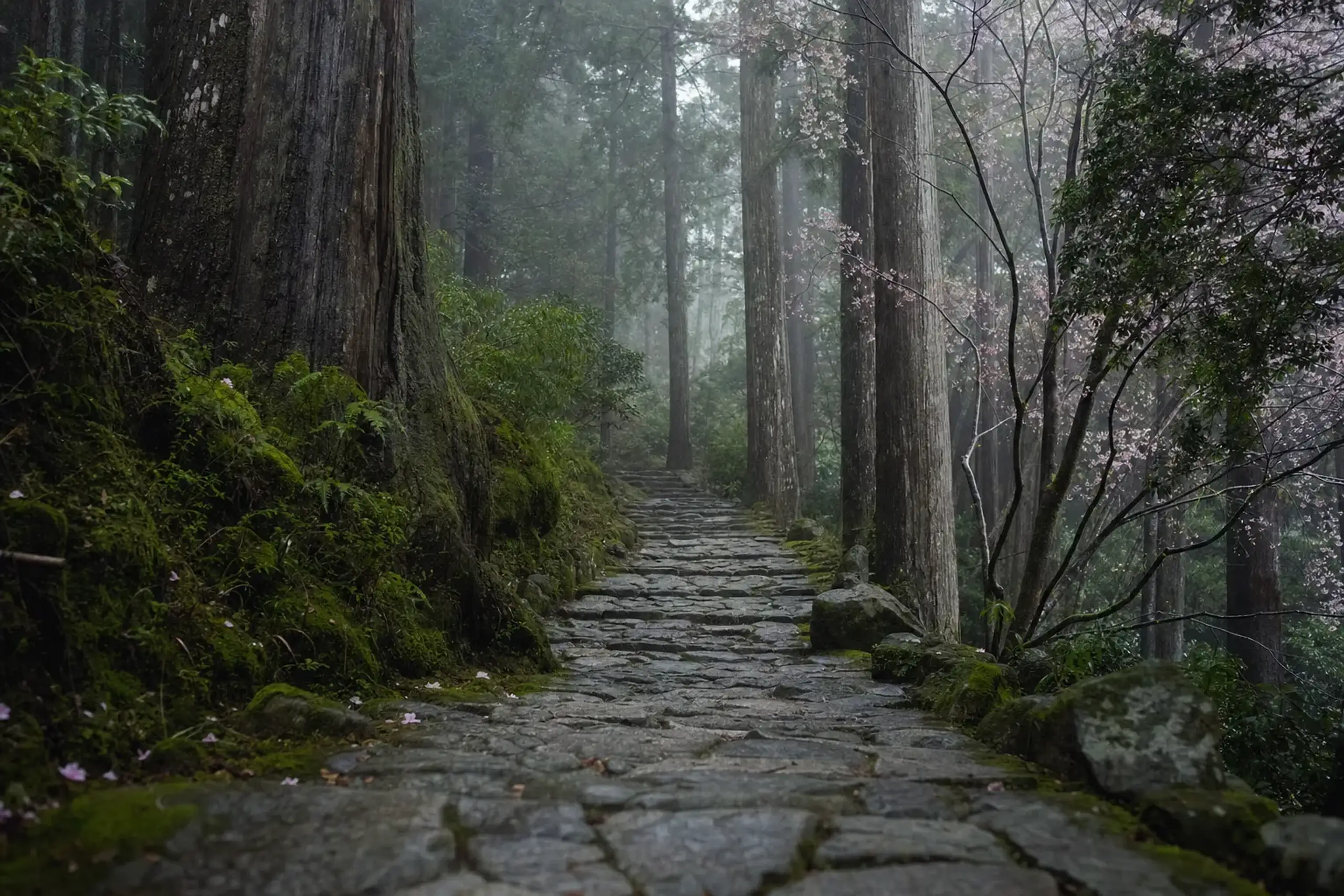
It can be excellent. It is also less forgiving if you expect Nakahechi-style consistency.
Key fact: A municipal notice from Kushimoto Town states the Kumano Kodo Ohechi route is closed due to expressway construction, with an estimated closure period from June 8, 2026 to April 30, 2027.
Ohechi is the coastal route that tempts people who prefer sea air to mountain climbs. In 2026–2027, you must plan around the closure window above. If you are set on coastal scenery, we shape alternatives without trying to force a closed segment.
Is It Legitimate To Walk Only Selected Sections Of The Kumano Kodo?
Yes—walking selected sections is a normal, respectful way to experience the Kumano Kodo, especially when you pace it around weather, fitness, and the realities of accommodation.
Pilgrimage routes attract purism. Ignore it. The Kumano Kodo is an active route with shrines in use and visitors expected; what matters is how you behave, not whether you walked every connecting mile.
Selected-section walking also lets you spend your energy on the parts that feel like the route—forest corridors, stone steps, old surfaces—rather than on transit-like stretches that mainly exist to connect villages. The difference is not subtle. You feel it in your legs, and in your attention.
Vehicle support changes the shape of the day. You can walk a demanding section, meet your car, recover, and arrive before dusk without rushing your footing. That alone removes a lot of avoidable risk and fatigue.
What Is The Walking Actually Like On The Kumano Kodo?
Expect sustained uphill work on uneven surfaces—stone steps, packed earth, and forest trail—with long stretches where you are climbing or descending rather than strolling.
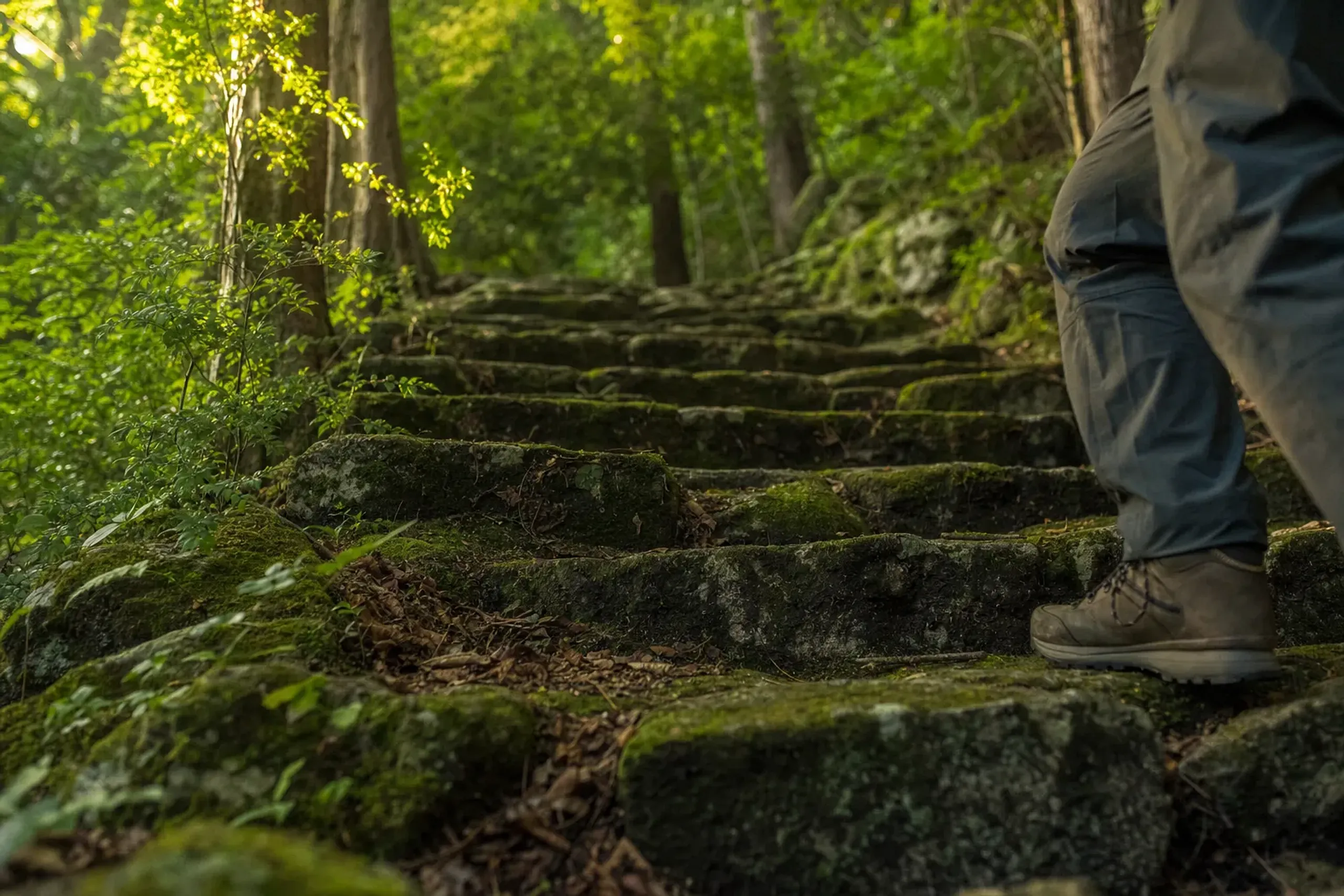
This is not a riverside promenade. Big mistake. Many first-time walkers assume “pilgrimage route” means gentle grades and tidy paths.
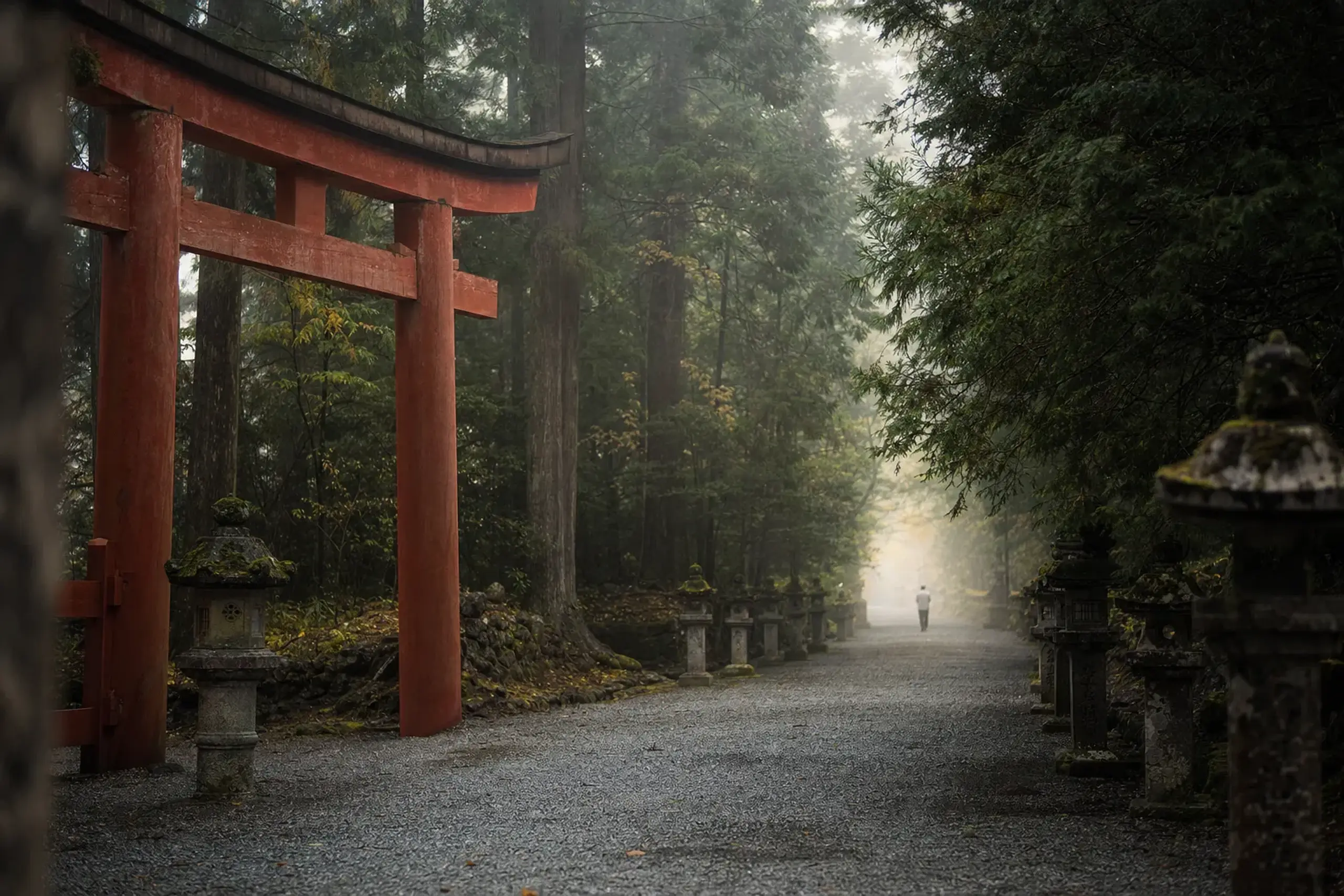
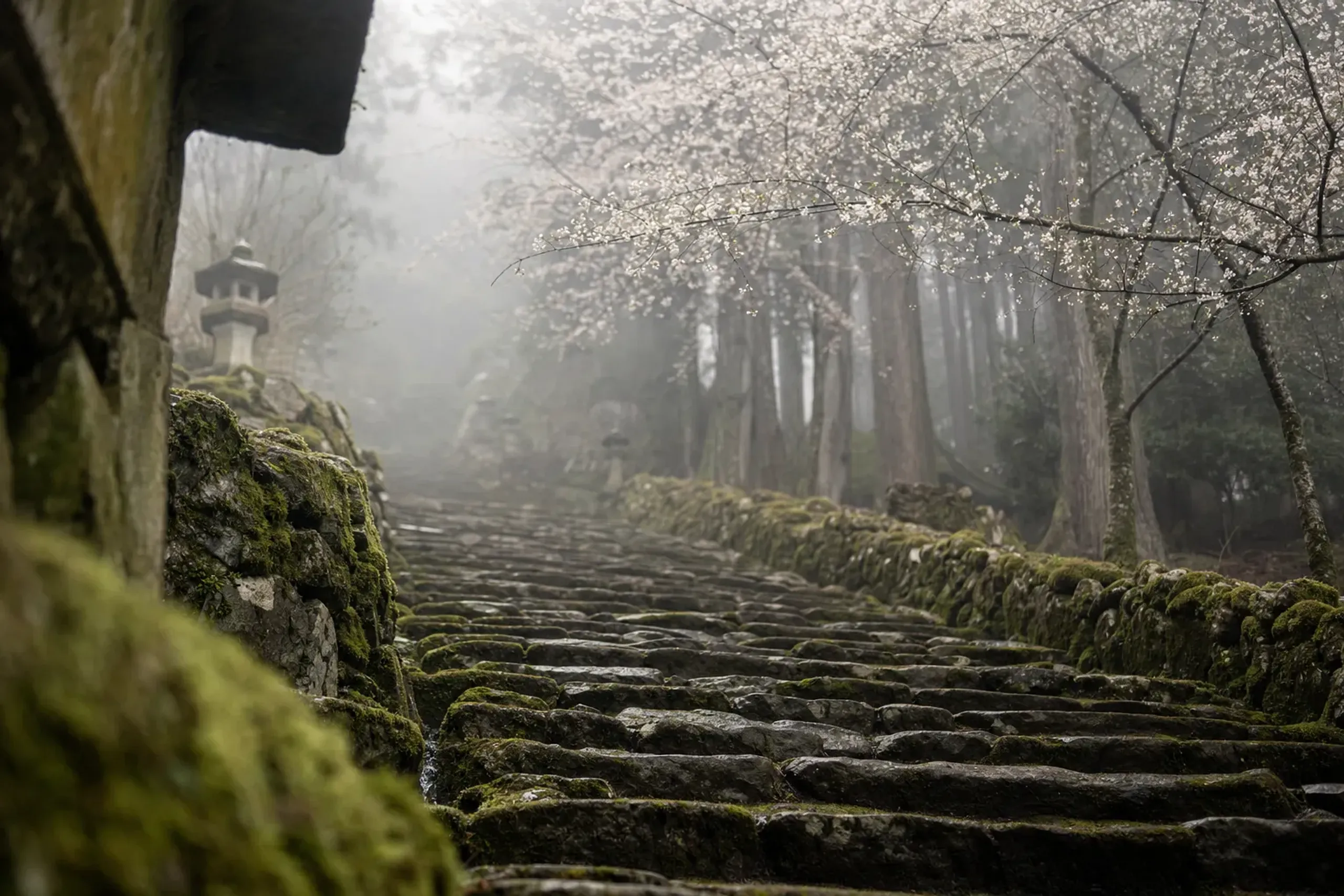
In practice, the Kumano Kodo can be quietly demanding. Some sections are defined by repeated stone steps, slippery leaf litter after rain, and narrow tread where you place each foot with watchful care. Your pace slows because it has to.
The setting is restrained in a way that suits wabi-sabi. Moss on stone. Damp cedar scent after a shower. A hush that feels earned rather than performed.
If you want the craft of the landscape, not just the photo, give yourself margin. Shorter walks, earlier starts, and a plan that assumes you will stop, look, and drink water without counting minutes.
Accommodation Along The Kumano Kodo, Honestly
The route runs on small, local accommodation. That is the point. It is also the friction for luxury travelers who expect hotel-standard space, soundproofing, and choice at breakfast.
Most nights on the walking route are simple. Rooms can be compact. Bathrooms may be shared, depending on where you are, and meals tend to be set rather than à la carte.
Comfort here is not marble and square footage. It is a warm meal put down without fuss, a well-run bath, clean bedding, and the sense that you are being looked after by people who do this every day.
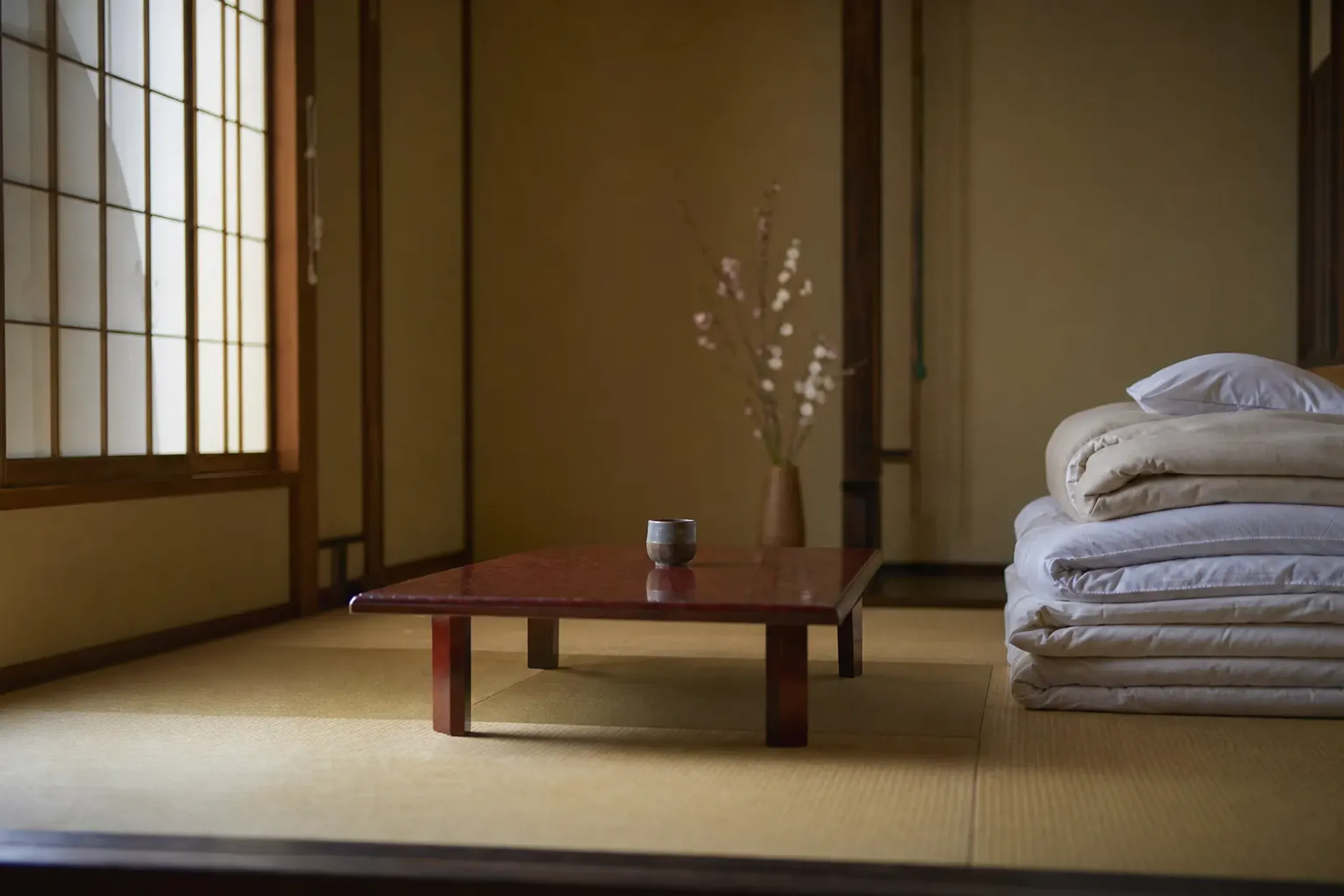
That is not a compromise if you came for the walk. It is a mismatch if you did not.
Our advice is blunt. If you need luxury-property standards every night, do not try to force the full route format. Walk day sections from a better base instead, and keep your evenings in a level of comfort that makes the next day possible.
What To Expect At Dinner And Breakfast
Meals are usually set, timed, and local in style, with less flexibility than city dining. You eat what is served, when it is served. There may be a communal-adjacent rhythm to it, even if you have your own table.
If you have serious dietary constraints, do not assume they can be met everywhere along the route. Tell us early. Some nights will be straightforward; others will be tight.
Bathrooms, Privacy, And The Reality Of Small Properties
Privacy is more about quiet behavior than hard separation, because many properties are family-run and compact. That does not mean you will feel exposed. It means you will hear life around you and you should keep your own volume low.
This is where discretion becomes practical, not just a brand word. You do not announce who you are. You do not spread your itinerary in public spaces. You move without leaving a wake.
If You Are Traveling As A Family Or Small Group
Small properties can work well for families if expectations are set, but they do not behave like resorts.
Early bedtimes are normal. So is waking early. Children who can manage quiet corridors and shared rhythms do better than children who need open run-around space.
The Comfortable-Base Alternative: Walk Out-And-Back Sections By Vehicle
This is the structure we recommend for many High-Net-Worth travelers. It keeps the walking honest while keeping the nights restorative. You still earn the trail, and you do not spend the week negotiating lodging standards that are not built for luxury tourism.
You choose a comfortable base in the wider region. Then you walk carefully selected sections each day, with your driver meeting you at the far end. The day ends with a proper bath and a room that lets you sleep.
It also gives you options. If rain is heavy, you do not have to grind through a slippery descent just because a reservation forces your hand. You can switch to a shorter, safer section, or focus on shrine visits with respectful timing.
Where Your Bags Are Matters More Here Than Almost Anywhere In Japan
Luggage forwarding is what turns “walking trip” into “walking trip you can actually enjoy.” One bag. One day pack. That is the difference between steady footing and a sore back that changes your gait.
There are official-area support services for pilgrims, including luggage shuttle options listed through the KUMANO TRAVEL ecosystem. If you want the mechanics and decision points laid out, we recommend reading our piece on Where Your Bags Are and applying the same thinking to Kumano.
With Japan Royal Service, we structure the walk so your main luggage moves ahead while you carry only what you need on the trail.
Quiet logistics. No drama.
Onsen At The End Of The Day
Hot springs are the reward your legs understand. For an onsen framing that helps you choose the right kind of town, see Gero, Dōgo, Or Kinosaki: Three Kinds Of Onsen Town, then we will map that preference onto this region’s realities.
Conduct At The Shrines: How To Be There Without Being The Problem
The Kumano Kodo is not a theme trail. It is connected to living sacred sites, and visitors are expected to behave like guests, not content producers.
Keep your voice low in precincts. Do not block paths for photos. Watch your timing around people who are clearly there to worship.
Photography is not forbidden in many outdoor areas, but restraint reads well. If you are unsure, do less. The quiet is part of the place.
If you want a wider reference point for respectful behavior around active religious observance, our team has a practical guide to Nara’s Omizutori: Omizutori: How To Be There Without Being A Problem. Different setting. Same principle.
Season And Access: Heat, Rain, Winter, And A 2026 Transport Window
Weather changes the Kumano Kodo more than it changes city travel. Rain makes stone and roots slick. Heat makes long climbs feel longer. Winter can narrow your margin, especially if you are undertrained or carrying too much.
Access also changes by calendar.
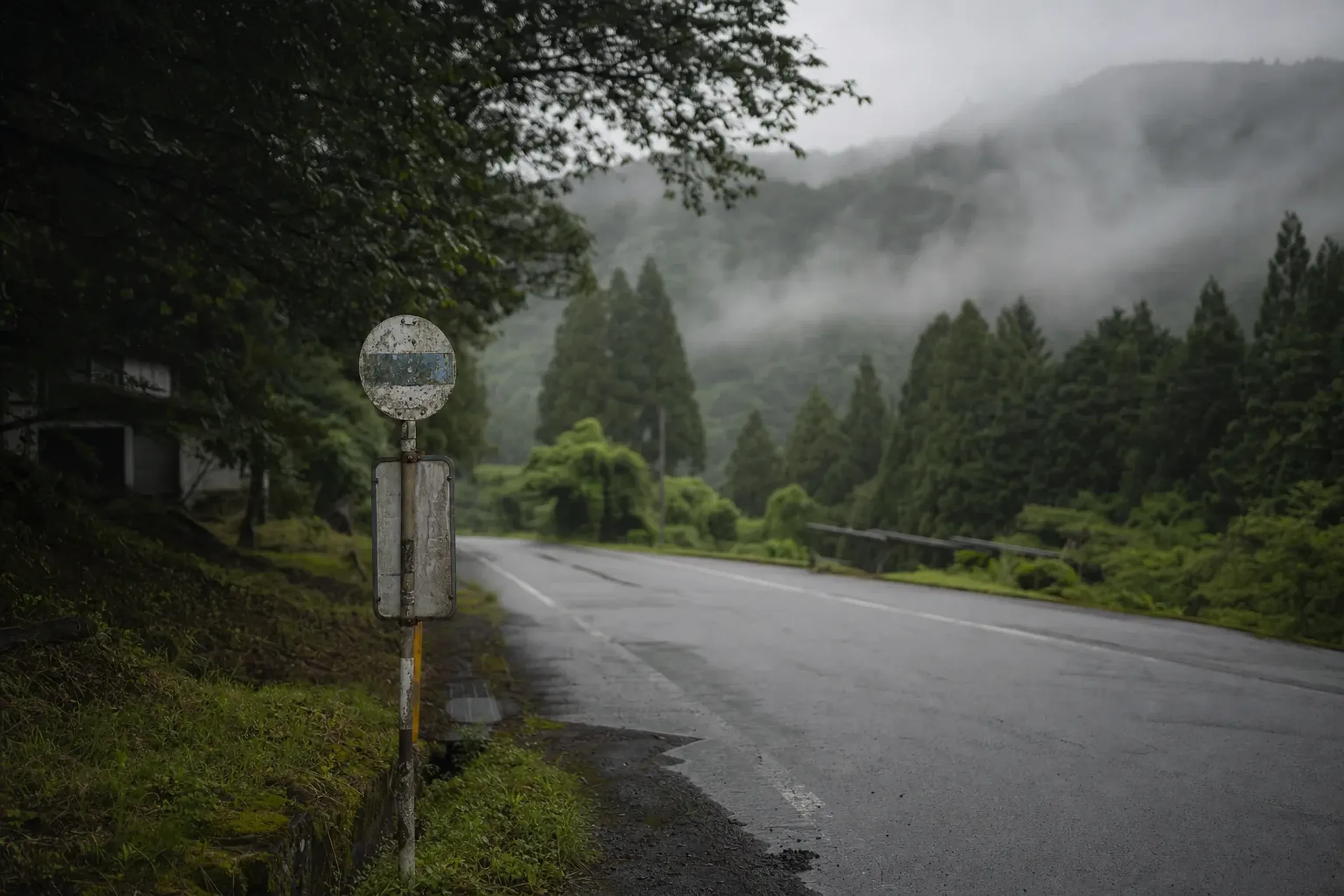
Tanabe City Kumano Tourism Bureau has posted a notice for “Kumano Kodo Additional Public Transport for autumn 2026,” with service dates September 19 to December 10, 2026, improving access for Kumano Kodo and the Traditional Boat Tour.
That matters even if you will not rely on public transport. It signals demand, busier trailheads, and the need to plan starts and finishes with care. It can also make certain combinations more practical for travelers who want a mix of walking and non-walking days.
How Many Days Do You Need: Two, Three, Or Four Days Of Walking?
Two days is enough to understand what the Kumano Kodo feels like. You can walk a meaningful section, visit key shrine precincts without rushing, and still keep the rest of your Japan itinerary intact.
Three days gives you rhythm. Your body adjusts, your packing choices settle, and you stop treating each climb as a surprise. This is often the sweet spot for HNW travelers who want a real walk without letting it dominate the trip.
Four days is where accommodation and logistics start to dictate choices. That can be rewarding if you accept the simplicity of nights on the route. If you do not, this is the point where we usually shift to the comfortable-base model and keep the walking targeted.
Dual Pilgrim And Stamps: What It Is, And Why People Care
The Dual Pilgrim program is an official recognition for completing both the Kumano Kodo and the Way of St. James (Camino de Santiago). It is administered through the Tanabe City Kumano Tourism Bureau guidance, and the certificate is issued from the Head Priest of Kumano Hongu Taisha Grand Shrine.
This is not something we romanticize. It is simply a clean, concrete goal that some travelers like. If you have already walked the Camino, the Kumano Kodo can feel like a precise counterpart rather than “another hike.”
Stamp programs exist across the network. Tanabe City Kumano Tourism Bureau has published guidance on collecting stamps, including notes that certain stamp categories (such as Koyasan/Kohechi/Totsukawa/Ohechi) use black stamps, and that Wakayama Prefecture oversees stamp programs for several routes including Nakahechi, Koya Nana Guchi, Kiiji, and Ohechi.
If you want to pursue Dual Pilgrim documentation, we plan the walking days so you can do the process cleanly, without turning each stop into a scavenger hunt.
How To Book The Official Kumano Kodo Pilgrim Pack And Local Support Services
KUMANO TRAVEL is the official community reservation system used in the Tanabe City Kumano Tourism Bureau ecosystem, and it sells items like the Kumano Kodo Pilgrim Pack and lists local support services such as luggage shuttle options.
For independent travelers, the simplest public starting point is to use the official channels connected to Tanabe City Kumano Tourism Bureau and KUMANO TRAVEL for pilgrim-facing resources. Read the conditions carefully, because services like luggage shuttles can have specific booking rules and limitations.
If you want to keep your trip calm, do not treat these steps as a last-minute task. The Kumano area rewards planning that is early and quiet.

Who Should Not Do The Kumano Kodo (At Least Not As A Multi-Day Walk)
If you are unwilling to walk uphill for hours, do not force it. Choose shrine visits and short, flat nature walks instead. You will have a better trip.
If you need hotel-standard accommodation every night, be honest about it. The walking route is not built around that expectation. You can still experience the Kumano Kodo by day, from a higher-comfort base.
If your only goal is a single photograph at a shrine gate, do not pretend you want the trail. Go directly, behave well, and leave space for people who came to walk.
Frequently Asked Questions
Is The Kumano Kodo Suitable For Luxury Travelers If The Inns Are Simple?
Yes, if you treat the walk as a focused module and keep comfort where it matters—luggage handled, pacing realistic, and a restorative base when needed. The “luxury” here is control and quiet, not room size.
In our experience, the best-fit HNW travelers accept one or two simple nights as part of the route, then pivot back to higher-comfort properties for recovery and privacy.
What Is The Best Route For A First-Time Kumano Kodo Walker With Limited Days?
Nakahechi is the best starting point for most first-time walkers because it is the most established route for visitors and the easiest to structure as selected walking sections. It keeps the focus on walking quality rather than constant logistical problem-solving.
Is The Kumano Kodo Ohechi Route Open In 2026?
A Kushimoto Town municipal notice states the Ohechi route is closed from June 8, 2026 to April 30, 2027 (estimated) due to expressway construction. We plan around that window rather than trying to force a closed segment.
Can I Do The Kumano Kodo Without Carrying A Large Pack?
Yes—luggage forwarding and vehicle support can reduce what you carry to a small day pack, which makes footing safer and the walking more enjoyable. This is one of the most important choices you will make for the trip’s comfort.
When Is A Smart Time To Go If I Want Easier Access?
Autumn 2026 has an official additional public transport window from September 19 to December 10, 2026, per Tanabe City Kumano Tourism Bureau notices. Even with private support, that window can influence crowd patterns and access planning.
Why Choose Japan Royal Service
Walking the Kumano Kodo is a study in restraint. Wabi-sabi is not a slogan here; it is what you see when moss softens stone steps and the forest closes behind you. The quality of the trip comes from decisions that look small on paper and feel large on day two.
Our team at Japan Royal Service builds Kumano Kodo itineraries around three things: discretion, realistic walking structure, and craft-level local context. When you want it, we can also fold in shokunin encounters elsewhere in your Japan journey so the trip holds together as one coherent arc, not a set of unrelated “highlights.”
We also handle the unglamorous parts that make this route workable: we book accommodation along the route, arrange luggage forwarding, vehicle support, and guides. You walk. We keep the edges tidy.
Ready to plan your Kumano Kodo sections around your fitness, dates, and comfort preferences? Reach our team privately via WhatsApp or LINE, or contact us here.