In this guide
- 01The Famous Scene Isn't The Original Garden
- 02Who Was Nabeshima Shigeyoshi?
- 03What Blooms At Mifuneyama Rakuen In Spring, And Exactly When?
- 04Why Is It Called Mount Mifune?
- 05Scale, Designation, And The Shinkansen
- 06The Summer TeamLab Installation Is A Separate Thing
- 07How To See Mifuneyama Rakuen Without The Crowds
- 08Frequently Asked Questions
- 09Why Choose Japan Royal Service
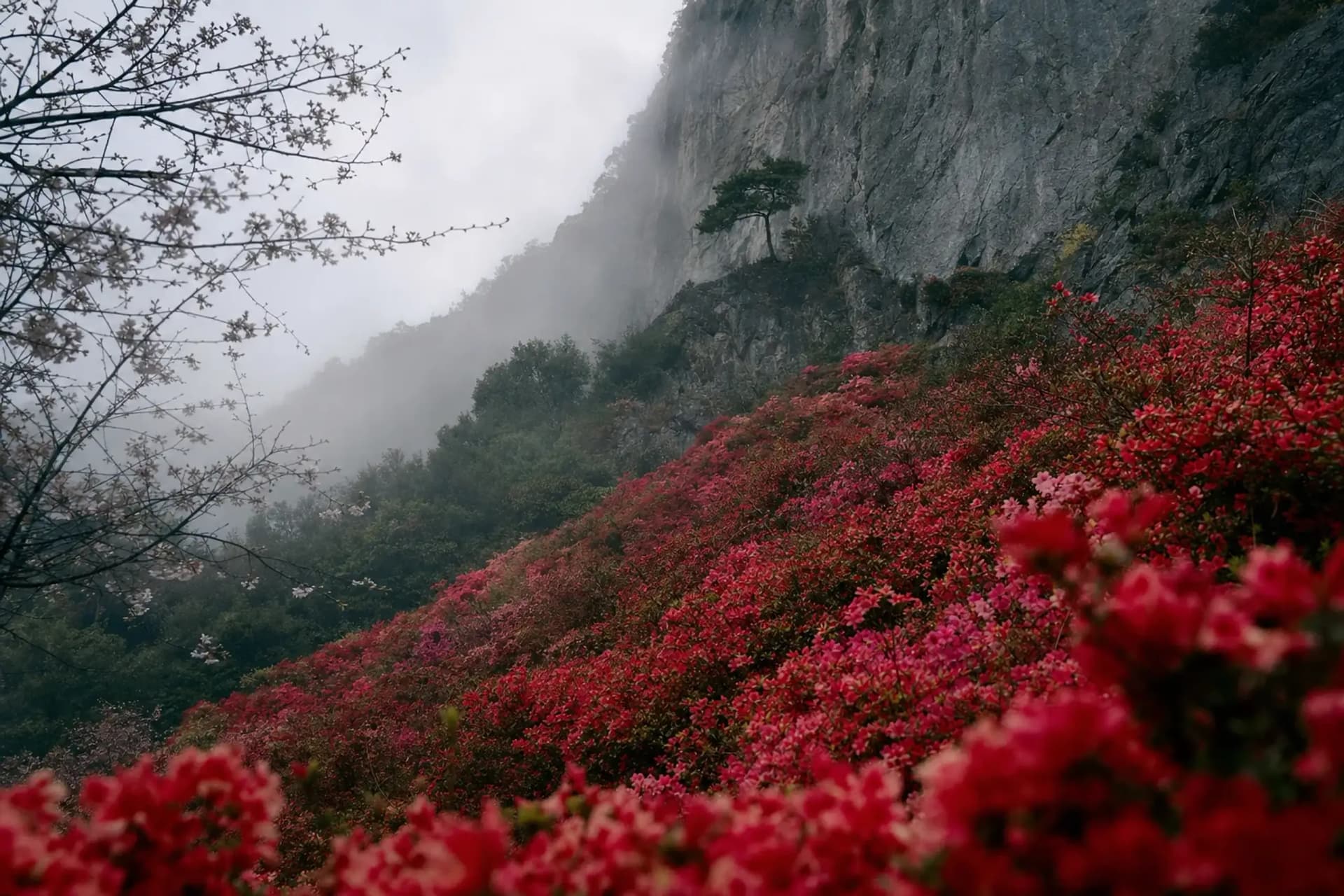
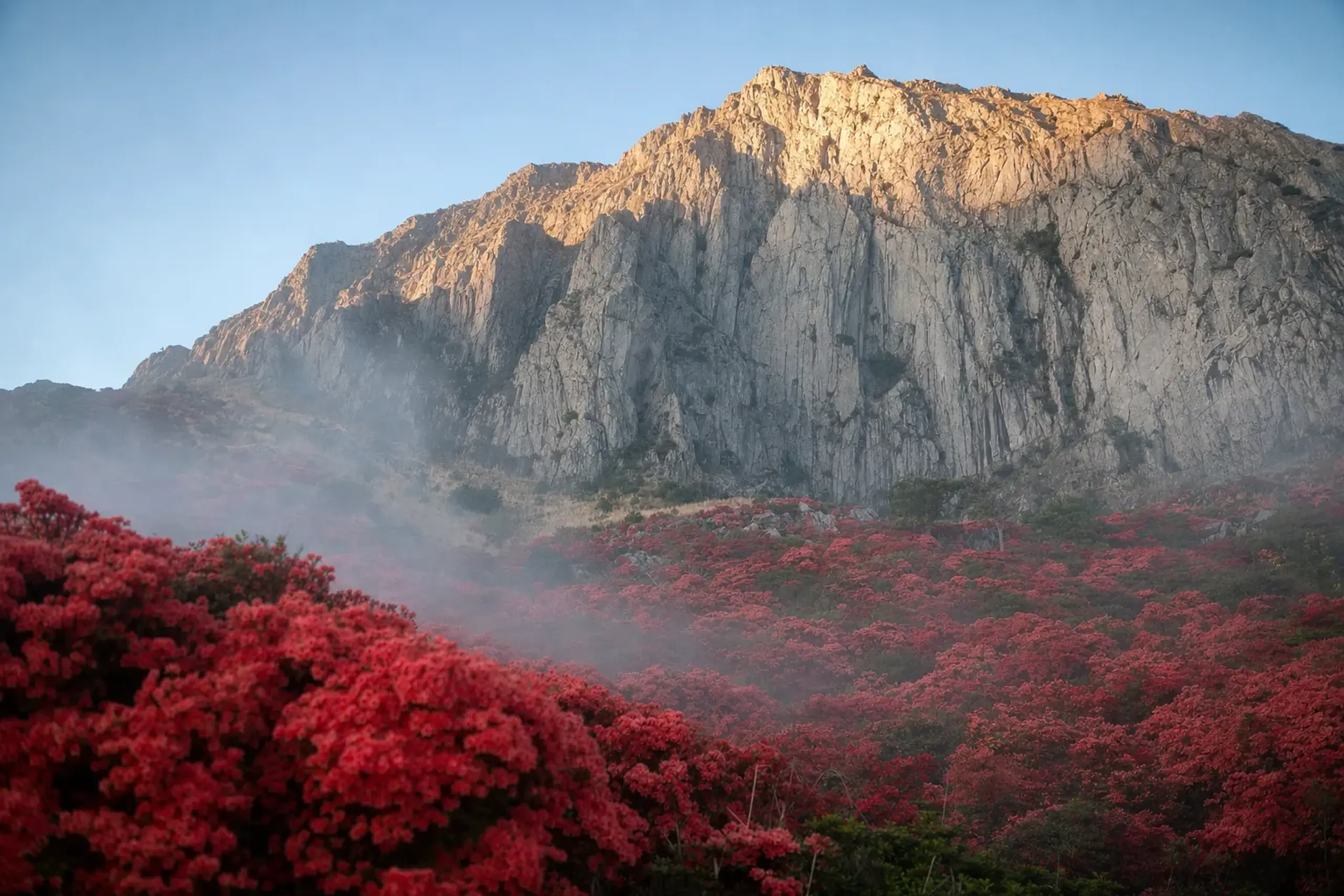
Stand at the mouth of Tsutsuji-dani in late April and the arithmetic stops mattering. Two hundred thousand azalea bushes bank upward against the bare rock of Mount Mifune, Kurume and Hirado varieties bleeding into one another, crimson against grey stone. The cliff does not soften the colour. It frames it. People reach for the same comparison again and again — a Chinese landscape painting, scrolled vertically, the mountain reading like the sail of a ship.
It is the image on every poster. Most visitors assume it has always been the point of this garden.
It hasn't.
The Famous Scene Isn't The Original Garden
The garden Nabeshima Shigeyoshi built in 1845 was a modest pond garden near the entrance, called Hagi-no-o-en. The vast azalea valley came decades later.
This matters more than it first sounds. When Shigeyoshi, the 28th lord of Takeo, finished his garden after roughly three years of work, Tsutsuji-dani as we know it did not exist. The signature spectacle — those two hundred thousand bushes against the rock — was planted from the late Meiji era onward. A later chapter. An expansion by hands that came after his.
So the thing that draws the crowds today is not the founder's design at all. It is a nineteenth-century aesthete's quiet pond garden, inherited and then amplified by a later generation who saw what the cliff could hold. Knowing this changes how you walk the grounds. You are reading two authors, not one.
Who Was Nabeshima Shigeyoshi?
Nabeshima Shigeyoshi was the 28th lord of Takeo, a retainer domain under the main Saga Nabeshima clan, and he built Mifuneyama Rakuen's original garden in 1845.
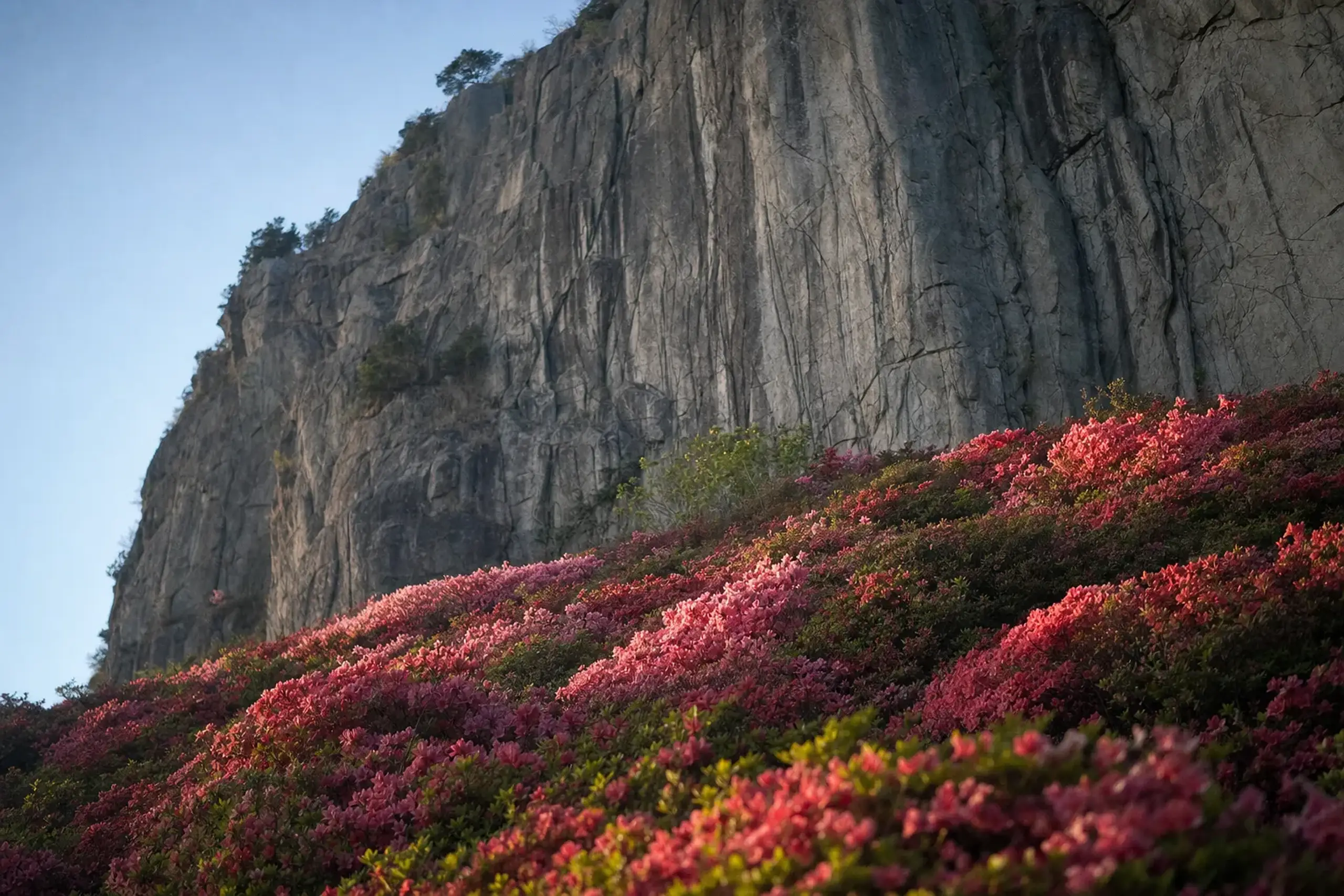
Roughly 200,000 azaleas fill Tsutsuji-dani against the cliff — a scene added decades after the founder's time.
He was also a trained painter.
That detail is not decoration. Shigeyoshi had studied under the Kano school, the dominant painting lineage of the age, and he carried the artistic pen-name Kaishunsai. When he laid out his garden, he invited Kano-school painters from Kyoto to help shape it. He was, in effect, commissioning a landscape from the same tradition that had taught his own hand.
He was skilled in waka poetry too. A genuine aesthete — he kept plant specimen records, studied botany, raised birds. Yet none of this made him a dilettante. He had been appointed chief retainer of the main Saga domain at twenty-three, a serious administrative post, and he held it with evident competence.
Picture that man standing where you now stand. A capable lord of twenty-eight, trained by Kyoto's painters, laying out a garden meant to be walked the way a scroll is unrolled — one scene surrendering to the next. He did not plant the azalea valley. But he set the sensibility that made someone, later, look at a bare cliff and imagine two hundred thousand flowers against it.
What Blooms At Mifuneyama Rakuen In Spring, And Exactly When?
Cherry blossoms bloom in late March, azaleas and wisteria from early April into early May.
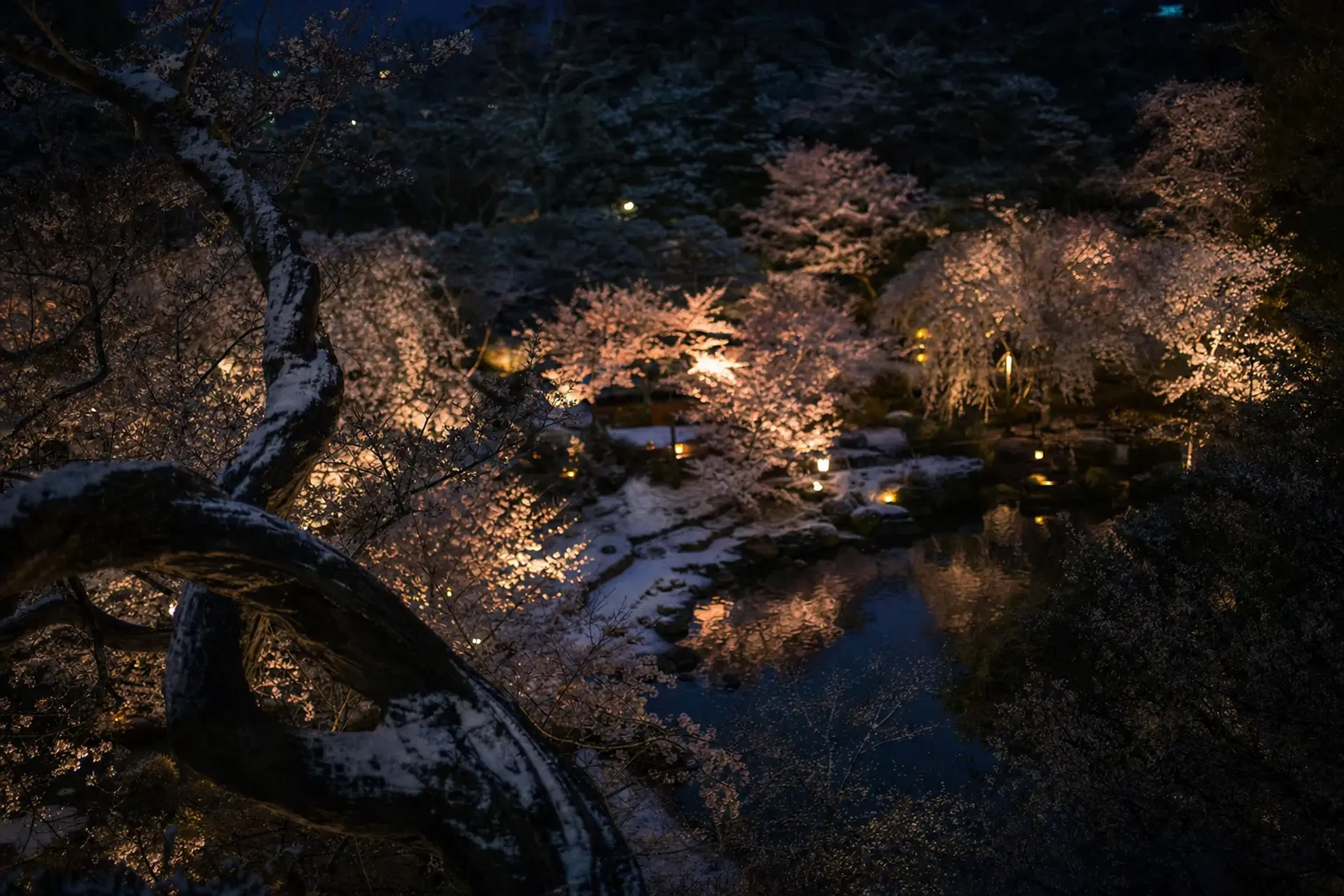
Mifuneyama Rakuen's 2026 festival windows run March 13–April 5 for sakura and April 6–May 6 for azaleas.
The spring here is really two springs, and they do not overlap tidily. Treat them as separate trips with separate rewards.
Late March Into Early April: The Cherry Trees
Roughly 2,000 to 5,000 cherry trees — Someiyoshino and later yaezakura — open first, filling the lower grounds. The garden markets one of Kyushu's largest night cherry-blossom illuminations during this window, with the trees lit after dusk. For 2026 the posted cherry period is March 13 through April 5, with daytime hours and a separate evening viewing session running later into the night.
This is the quieter of the two draws at a national level, which is precisely its appeal. You can see sakura illuminated at scale here without the pressure of Japan's headline blossom cities.
Early April Into Early May: The Azalea Valley
Then Tsutsuji-dani takes over. Roughly 200,000 azaleas fill the valley against Mount Mifune's cliff from early April, the published 2026 azalea and wisteria festival running April 6 through May 6. This is the scene the garden is known for — and, as above, the scene its founder never saw.
Key fact: Bloom timing shifts every year with the weather. The 2026 dates above are the published festival windows, not a guarantee of peak colour on any given day. Our concierge team confirms current-year bloom progress before we fix a date.
The One Tree Worth Finding
Within the azalea season stands a single named wisteria, 170 years old — one specimen, not the garden's headline.
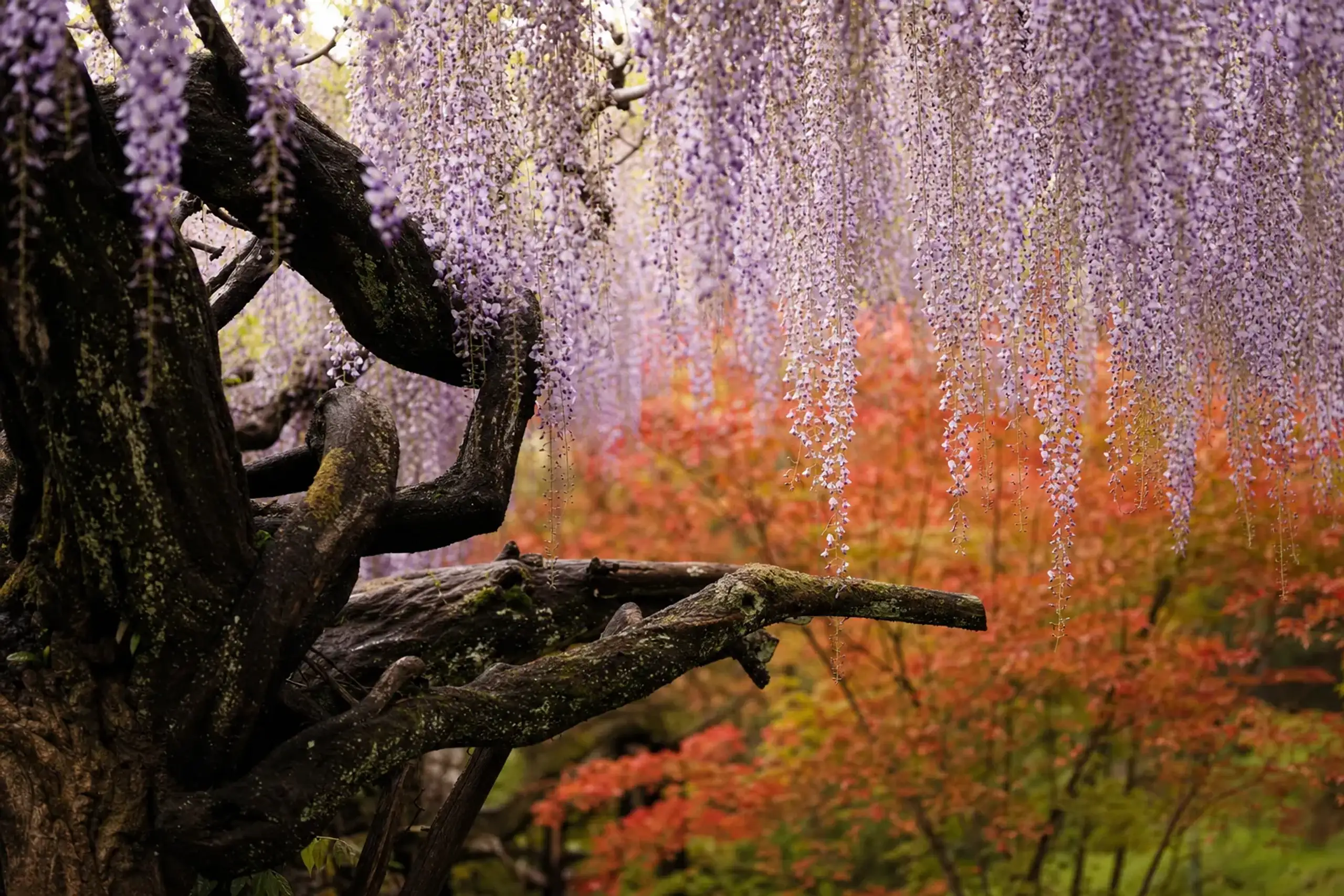
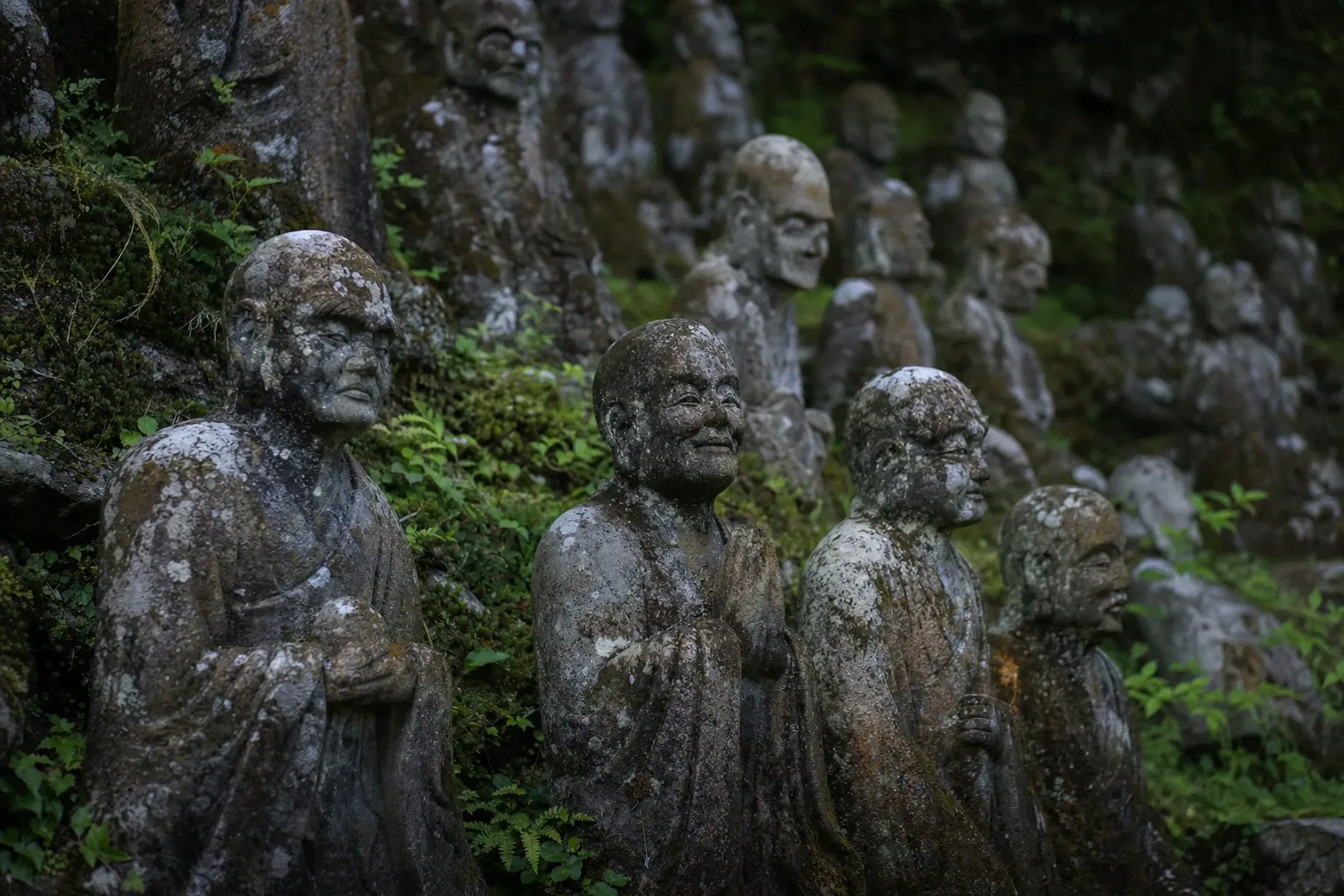
It is worth seeking out precisely because it is easy to walk past while hunting the valley views. Nearby, the grounds also hold a 170-year-old giant maple, a 300-year-old giant camphor tree, and a set of 500 stone arhat statues, the Gohyaku Rakan, weathering quietly among the greenery.
Why Is It Called Mount Mifune?
Mount Mifune is also called Tōsen-zan, or "ship mountain," because its shape resembles a Chinese sailing vessel. Legend holds that Empress Jingū moored her ship here on returning from an ancient campaign against Silla.
Once you know this, the cliff reads differently. The rock face that holds the azaleas is the hull of a stone ship run aground in the Saga hills. The founder's scroll-like garden, the later valley of flowers, the old legend — layers again, stacked one over the other.
Scale, Designation, And The Shinkansen
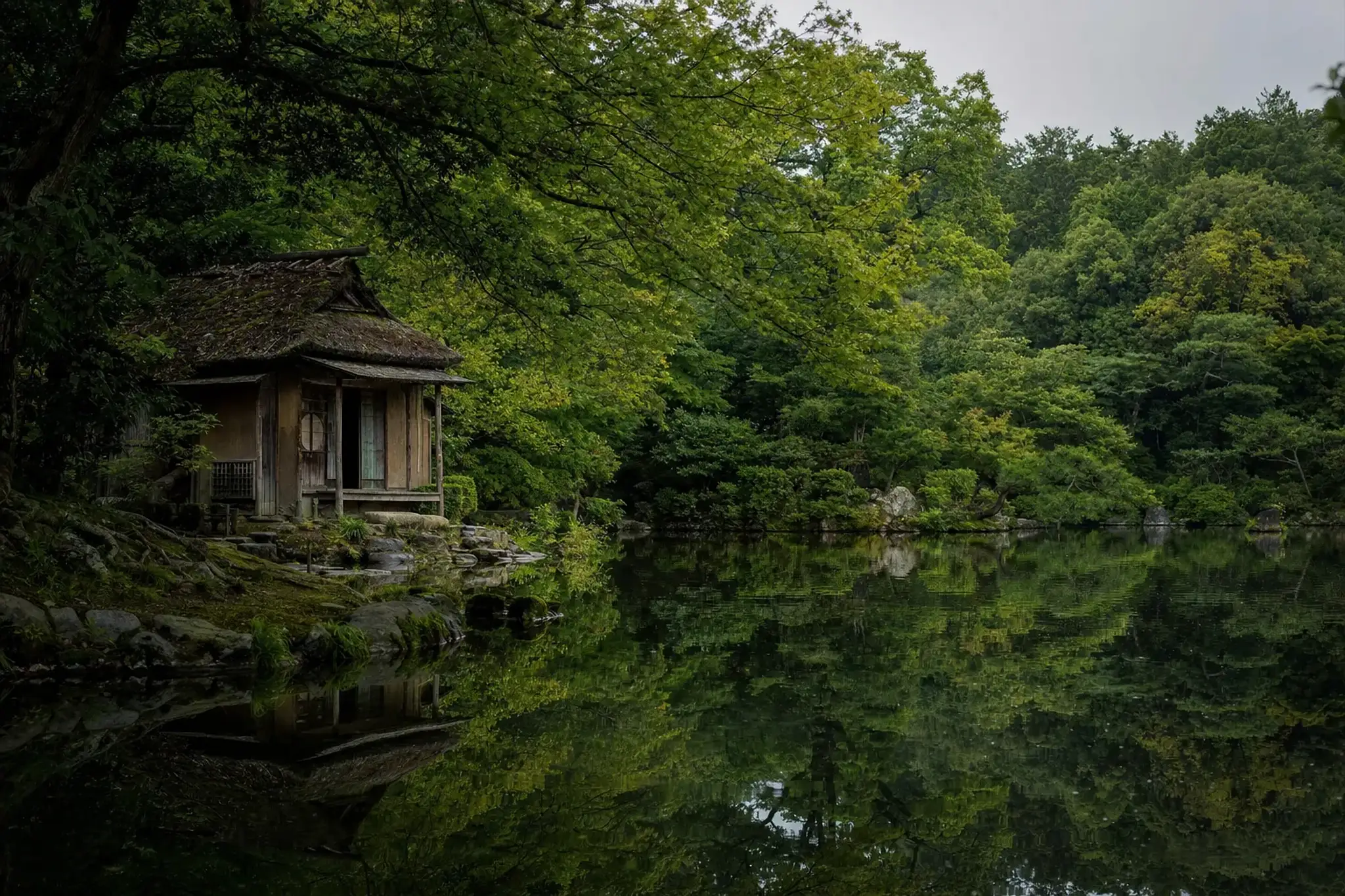
A few plain facts anchor the rest. The grounds cover roughly 150,000 tsubo — about 500,000 square metres — spreading across the base of the mountain. In 2010 the site was registered as a National Monument in the scenic-site category, formally the Former Takeo Yushu Nabeshima Villa Garden. The small Hagi-no-o tea house, part of that original 1845 scheme, opens to the public in the spring and autumn seasons.
Access has quietly improved. The Nishi-Kyushu Shinkansen began serving Takeo in 2022, which makes Takeo-Onsen Station a smooth connection point on a Fukuoka–Nagasaki circuit. From the station, the garden is a five-minute car ride or roughly a 25-minute walk. For our clients this usually means a short private transfer that avoids the taxi rank entirely.
The Summer TeamLab Installation Is A Separate Thing
Each summer, a digital art installation by teamLab, titled A Forest Where Gods Live, runs across the garden's pond and surrounding woodland with a roster of works. It is a distinct, complementary attraction — and it is not part of the spring bloom season.
We mention it only so you don't conflate the two. If you come for the azaleas in April, you come for flowers against rock, not for projected light. The teamLab roster also changes year to year, which is one more reason we verify current-year scheduling before finalising any plan.
How To See Mifuneyama Rakuen Without The Crowds
Arrive in the late afternoon during the cherry period, walk the garden in daylight, stay through the illumination, then withdraw to a Takeo onsen for a late kaiseki. The transition from dusk light to lit blossoms is the quiet luxury here.
For the azalea valley, early morning on a weekday rewards you most — soft directional light on the cliff, the colour still cool before the midday crowds thicken.
Takeo pairs naturally with the rest of the prefecture, too. Our Saga spring guests often fold in Ureshino's tea country and the porcelain towns; see our pieces on Karatsu Kunchi and the kilns of Arita for how the region fits together.
Frequently Asked Questions
Is Mifuneyama Rakuen's azalea valley part of the original 1845 garden?
No. The 1845 garden Nabeshima Shigeyoshi built was a modest pond garden called Hagi-no-o-en near the entrance. The famous valley of 200,000 azaleas was planted later, from the late Meiji era onward.
When is the best time to see cherry blossoms versus azaleas at Mifuneyama Rakuen?
Cherry blossoms peak in late March — the posted 2026 window is March 13–April 5. Azaleas and wisteria follow in April, with the 2026 festival running April 6–May 6. They are two distinct spring visits.
How do I get to Mifuneyama Rakuen from Takeo-Onsen Station?
Mifuneyama Rakuen is roughly a five-minute car ride or a 25-minute walk from Takeo-Onsen Station, which the Nishi-Kyushu Shinkansen has served since 2022. We arrange a private transfer directly to the garden entrance.
Can I stay overnight at Mifuneyama Rakuen?
Yes. There are lodging options on or near the grounds, including Onyado Chikurintei and the Mifuneyama Rakuen Hotel, which allow early or late access to the garden around the crowds. Our concierge advises on the best fit for your dates.
Is the teamLab installation part of the spring flower season?
No. The teamLab digital art installation runs in summer and is a separate attraction from the spring cherry and azalea bloom.
Its works change year to year.
Why Choose Japan Royal Service
For Mifuneyama Rakuen our role is straightforward, and we state it plainly: we provide private guiding and chauffeured transfers, and we confirm current-year bloom timing and any seasonal event scheduling before your visit. That is where a garden like this quietly rewards experience. Bloom dates move. The azalea peak and the sakura peak rarely line up. The difference between a crowded midday walk and a near-empty cliff at first light is a matter of hours, and of local knowledge.
Our team is Tokyo-based with its own vehicle fleet and native coordination across Kyushu, which is why Takeo slots cleanly into a wider Saga circuit rather than sitting as an isolated day trip. We handle your private transportation and, where you wish to stay close to the garden, your accommodation, and we build the whole thing as a tailor-made itinerary rather than a fixed package. Discretion is assumed throughout; your plans stay yours.
If the azalea valley against that stone cliff is calling you for spring 2026, reach our team privately via WhatsApp or LINE, or contact us here. We will tell you honestly which week looks best for the bloom you want to see.