In this guide
- 01The Four Groves, From The Foot Upward
- 02Why The Cherries Are Here At All
- 03When Is The Best Time To See Mount Yoshino's Cherry Blossoms?
- 04Getting There And Up The Mountain
- 05How Do I Avoid The Crowds On Mount Yoshino?
- 06What Japan Royal Service Arranges On Mount Yoshino
- 07Frequently Asked Questions
- 08Why Choose Japan Royal Service
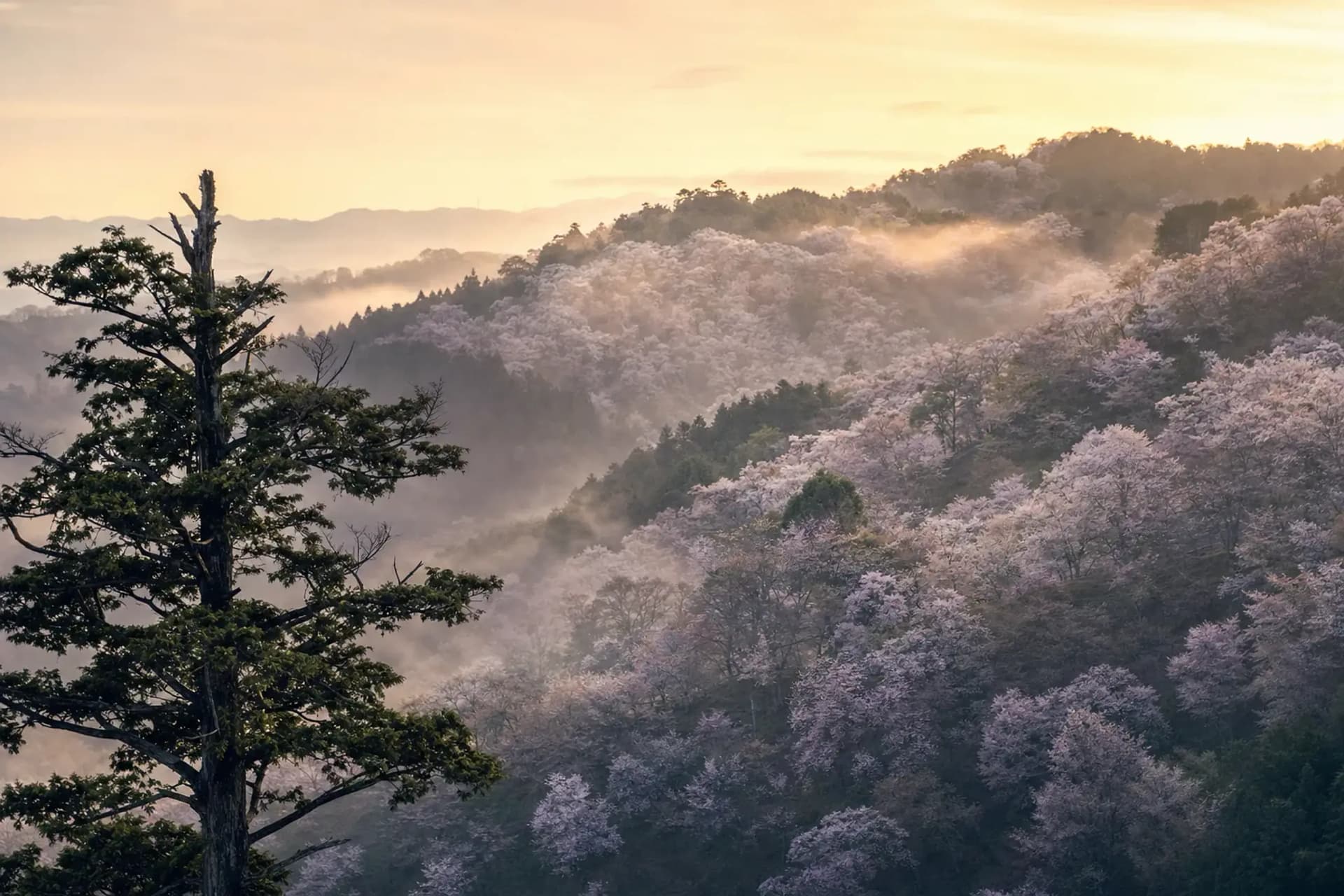
On Mount Yoshino, the cherry blossom does not arrive all at once. It climbs. The trees at the foot open first, and over the following weeks the colour works its way up the slope, grove by grove, until it reaches the quiet woods near the top. So the question is never simply when to see Yoshino. It is which grove, on which day.
This single idea shapes every good plan for Yoshinoyama. A visit in the first days of the season belongs to the lower trees. A visit two or three weeks later belongs to the upper ones. Pick the wrong week for the grove you most want, and you will stand under bare branches while the crowds gather somewhere else on the mountain. Our team at Japan Royal Service builds the day around the bloom's position, not the calendar square.
The Four Groves, From The Foot Upward
Mount Yoshino's cherries are grouped into four named zones, each called a senbon — "a thousand trees." They stack up the slope in order, and the bloom passes through them in sequence.
Across the whole mountain there are commonly cited to be roughly 30,000 cherry trees of around 200 varieties. Most are shiroyamazakura, a wild mountain cherry rather than the uniform clones planted in city parks. That matters for how the slope looks: not one flat wave of pink, but a mottled, living patchwork of white and soft rose broken by new leaf.
- Shimo-senbon — the lower grove, nearest Yoshino Station and the ropeway. First to open.
- Naka-senbon — the middle grove, around the heart of the village and its temples.
- Kami-senbon — the upper grove, higher and cooler, blooming later.
- Oku-senbon — the inner grove, deepest and quietest, last to colour. Replanting here has been under way since around 2010, so it is an area in slow recovery.
From certain vantage points the groves line up into a single sweep that locals call hitome-senbon — "a thousand trees in one glance."
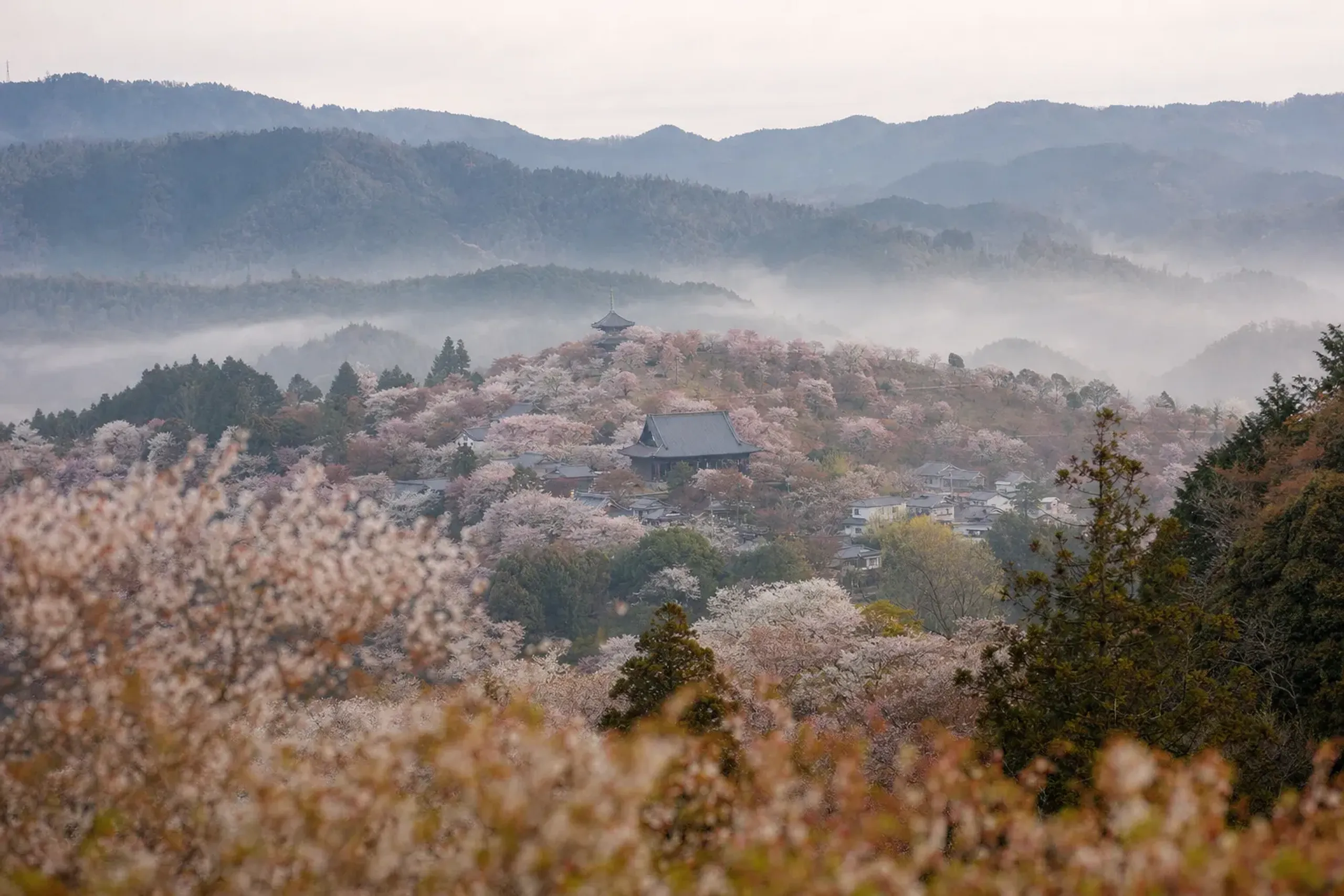
This panoramic view is often tied to the area around Yoshimizu Shrine, though we'd attribute the exact spot cautiously and let a guide point it out on the day.
Why The Cherries Are Here At All
The trees on Yoshino are an act of worship, not landscaping. For centuries the cherry has been counted among this mountain's sacred plants.
Tradition holds that En no Gyōja, the founder of Shugendō — Japan's syncretic mountain-worship path — carved the fierce deity Zaō Gongen from the wood of a mountain cherry. Offering cherry saplings to Zaō Gongen is said to have become a devotional custom, and from that custom the planting grew, generation after generation. Said to, traditionally — the record is one of faith as much as fact.
The centre of all this is Kimpusen-ji, the head temple of Shugendō, traditionally founded by En no Gyōja himself. Its main hall, the Zaō-dō, is a National Treasure and is described as the second-largest traditional wooden building in Japan after Tōdai-ji's Great Buddha Hall in Nara.
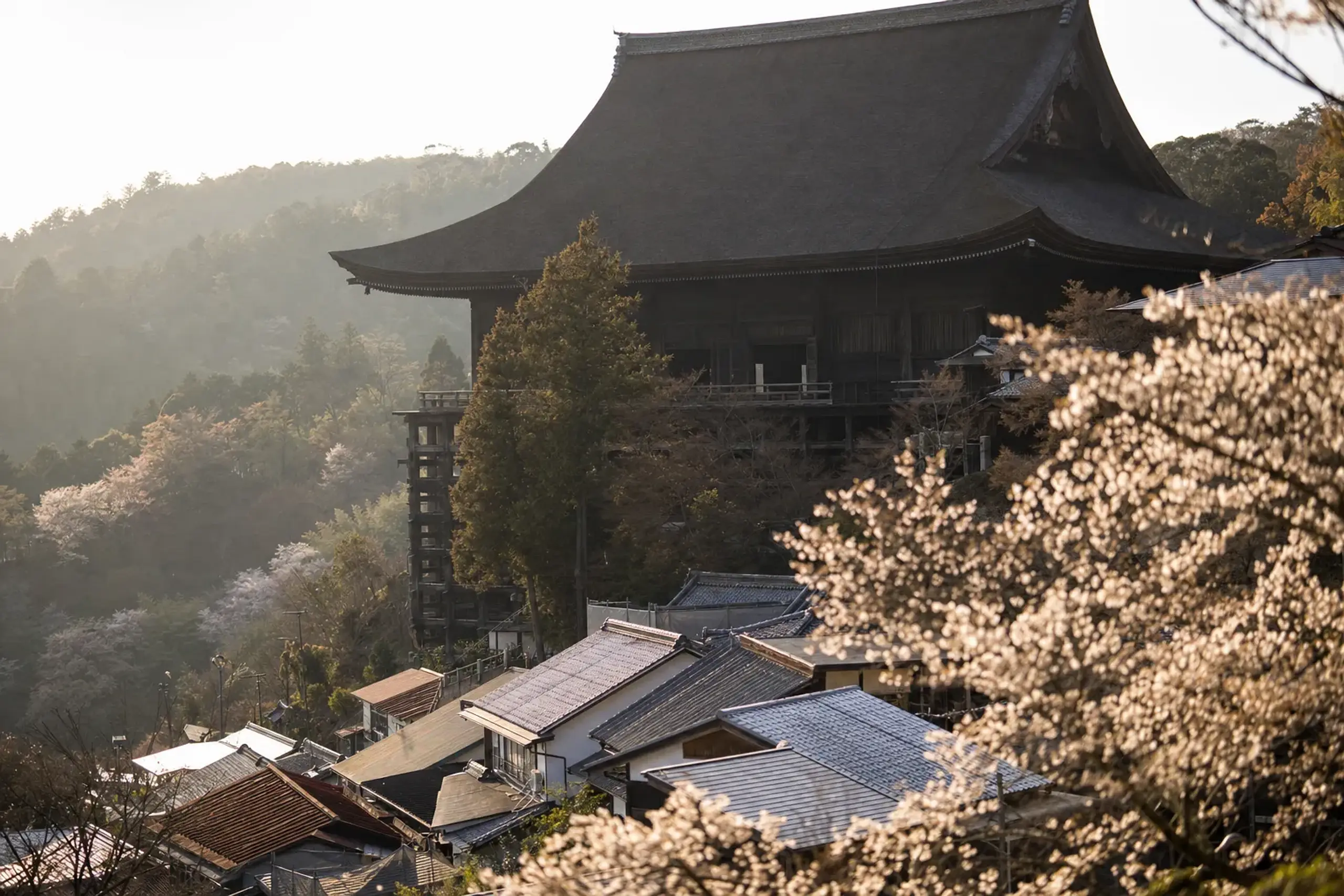
Inside stand three towering images of Zaō Gongen; the principal one is a hidden image, a hibutsu of roughly seven metres, shown only on announced special-opening dates. We never promise a spring viewing of it. The Niō-mon gate is also a National Treasure and has undergone restoration, so access can vary.
In 2004 Yoshino was inscribed by UNESCO as part of "Sacred Sites and Pilgrimage Routes in the Kii Mountain Range" — the same listing that carries Kōyasan and the Kumano Kodō pilgrimage routes. Pilgrims have walked the Omine-Okugake Trail from here toward the Kumano area for over a thousand years. The mountain is a living place of prayer first, and a flower spectacle second.
When Is The Best Time To See Mount Yoshino's Cherry Blossoms?
Usually from late March into April, moving uphill over several weeks — the lower grove first, the inner grove last. There is no single "best date," only a best grove for a given week.
Because the bloom climbs, each visitor is really choosing a window within the window. Early in the season, Shimo-senbon and parts of Naka-senbon carry the colour while the upper slopes stay bare. Toward mid-April the line of flower has risen into Kami-senbon and, finally, Oku-senbon. Sources differ on the exact pace — some describe succession across roughly three weeks — which is precisely why we plan by watching the mountain rather than by trusting a fixed grid.
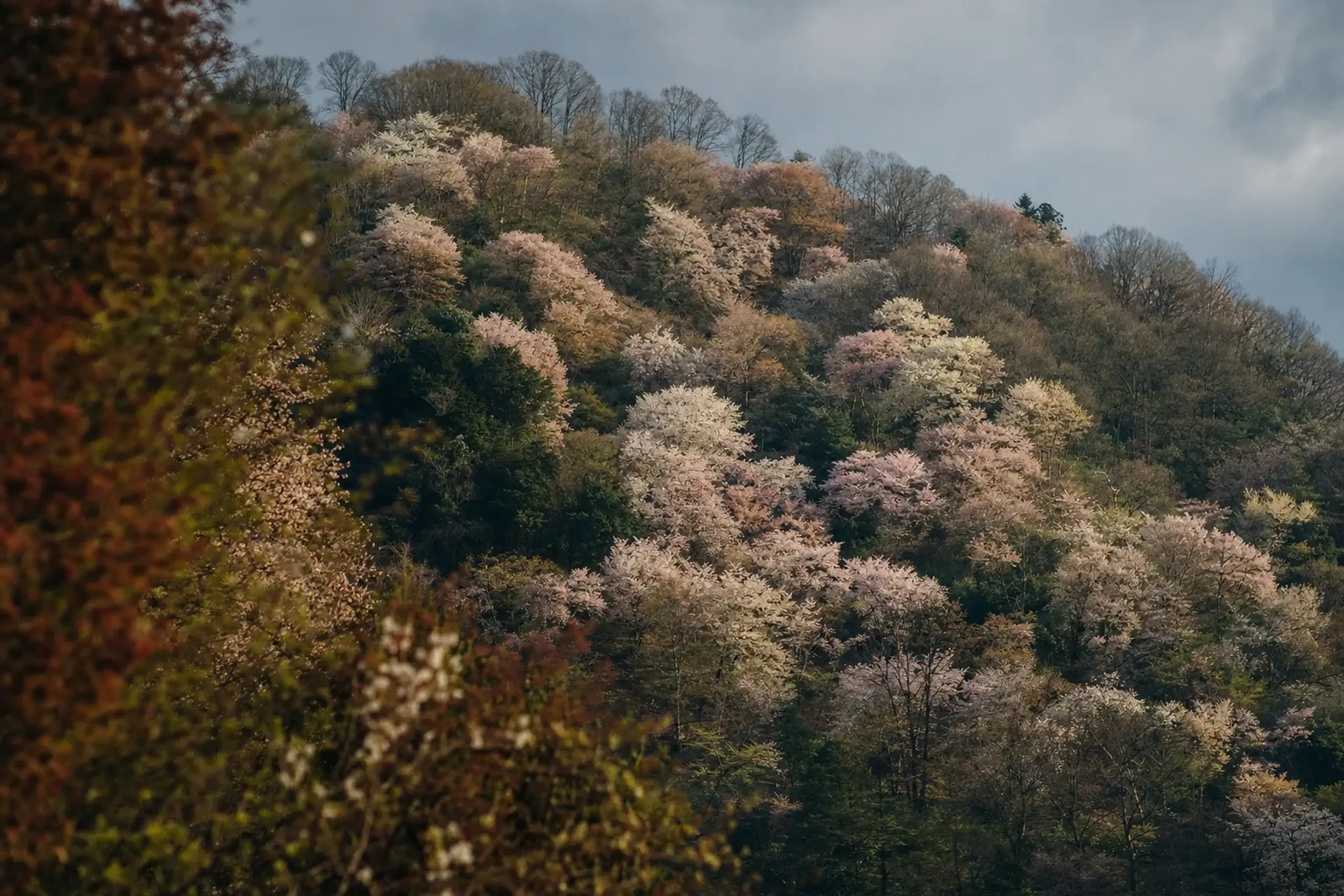
Here is the practical logic, with no promised dates:
| If you visit… | Aim for this grove | Why |
|---|---|---|
| Early in the season | Shimo-senbon, lower Naka-senbon | These open first; the upper slopes are still bare. |
| Mid-season | Naka-senbon, Kami-senbon | The colour has risen into the village's heart and above. |
| Later in the season | Kami-senbon, Oku-senbon | The inner grove is last; the quietest place to end the climb. |
Our concierge watches in-season field reports as the colour moves and sets the day accordingly. That is the whole trick. Plan by grove, not by date.
Getting There And Up The Mountain
Reach Yoshino by the Kintetsu Yoshino Line to Yoshino Station — roughly 75–90 minutes from Osaka Abenobashi, or about one hour 40 minutes from Kyoto with a change. Check current timetables; limited-express seats sell out in cherry season.
From the station, the Yoshino Ropeway runs from Senbonguchi Station — a short walk away — up to Yoshinoyama Station in about three minutes. You can also walk up in roughly 20 minutes. Note the ropeway's schedule changes: outside the cherry and autumn seasons it commonly runs Friday to Monday only, and the operator publishes a separate cherry-season timetable each year.
Above the ropeway, movement depends on the season. In the 2026 season, temporary minibuses ran from around the Naka-senbon area up toward Oku-senbon during the cherry period, with Japan Guide publishing an operating window of 21 March to 6 May 2026, subject to local operations.
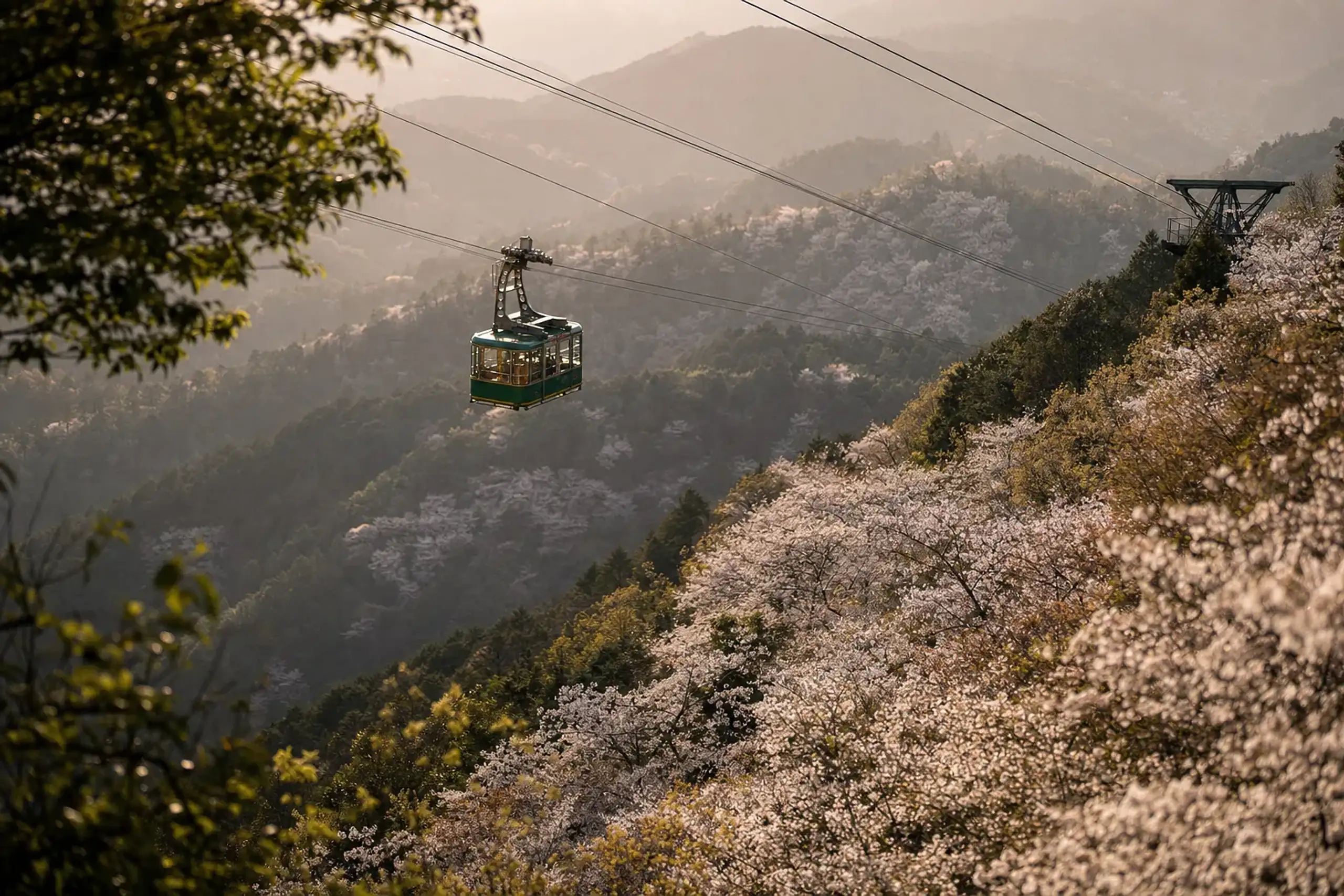
Treat that as one season's pattern, not a rule for every year.
Key fact on cars: Private-car restrictions can apply on peak-season weekends and holidays, with designated parking and shuttle buses. A private vehicle generally reaches the foot of the mountain or a designated drop-off point — it does not drive through the groves on restricted days. The main lower car park became paid year-round on 1 October 2025.
There is meaningful elevation gain from the station up toward Oku-senbon, so comfortable shoes matter. Yoshino is also rural: fewer convenience stores and ATMs than Nara City, so it pays to arrive prepared. This is where a private chauffeured transfer earns its place — timing your arrival to the grove in bloom and meeting you again at the right drop-off point when you come down, rather than queuing twice for a limited-express seat.
How Do I Avoid The Crowds On Mount Yoshino?
Come on a weekday morning, arrive before the day-trippers, and favour early April when the lower groves hold the colour. Weekends fill soon after opening; weekday dawns are the quietest the mountain gets.
The mountain is open 24 hours and free to enter, which is exactly why timing beats everything. Early-morning light on the groves, before the ropeway queues build, is a different experience from the midday press. Early April, with the lower groves at their peak, tends to be calmer than the headline mid-April days when every grove is being chased at once.
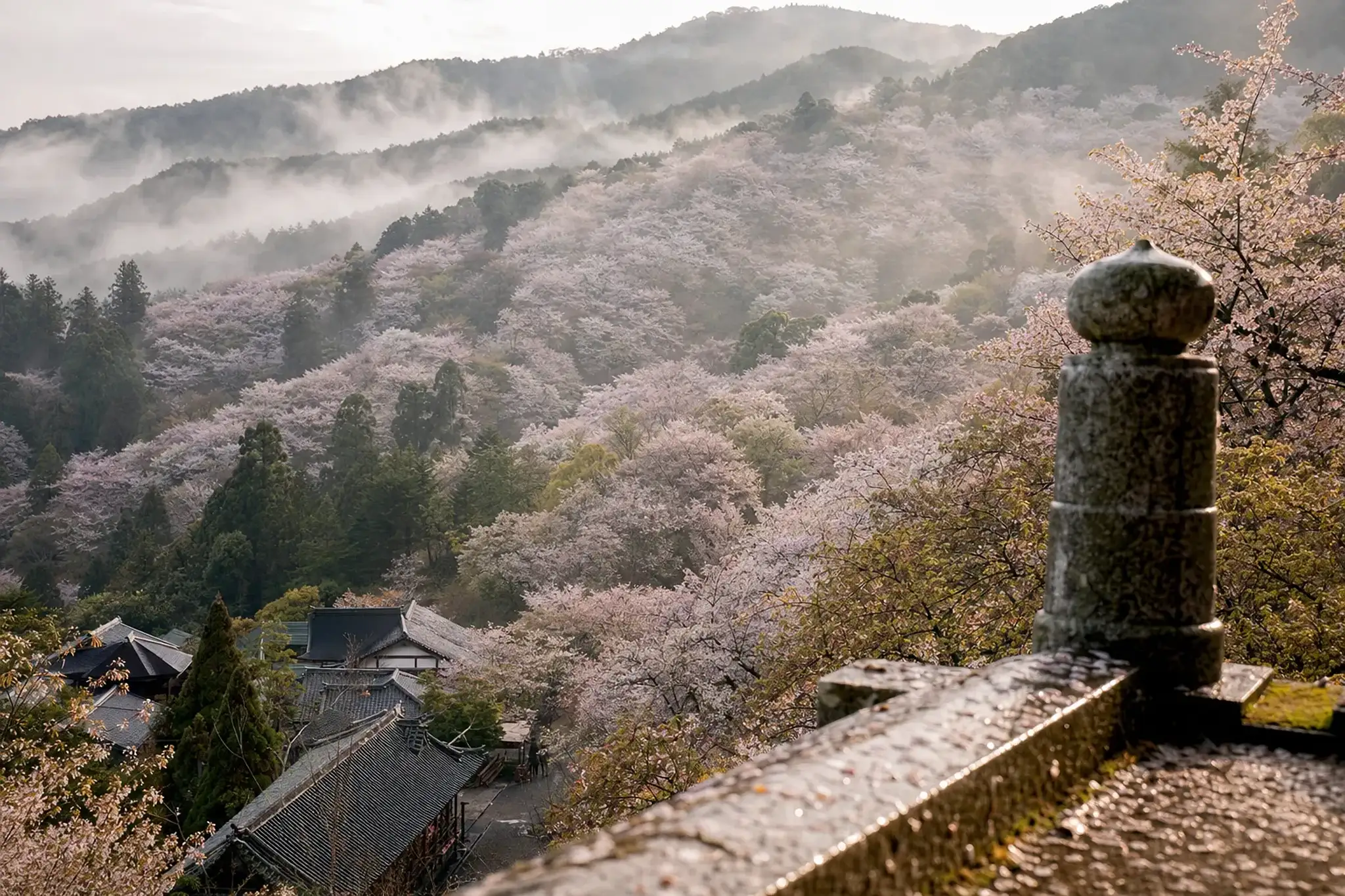
Evenings help too. In the 2026 season, light-up ran from 20 March to 19 April, roughly 18:00–22:00, in the Shimo-senbon Nanamagari area and the Kami-senbon sakura exhibition garden. Dates are set each year by the bloom, never fixed in advance. A late-afternoon climb that carries you into the illuminated lower slopes after the crowds thin is one of the mountain's gentler pleasures.
What Japan Royal Service Arranges On Mount Yoshino
We handle the parts that make a Yoshino day calm instead of crowded: a cultural interpreter guide, a private transfer timed to the right grove, a suitable base, and the route itself.
Concretely, our scope covers:
- Guiding. A cultural interpreter guide on the mountain and at Kimpusen-ji, to read the Shugendō history and the Zaō Gongen tradition into what you are seeing.
- Private transfer. A partner-fleet vehicle from Kyoto, Osaka or Nara, timed to the grove being visited, reaching the foot of the mountain or a designated drop-off point. It does not drive through the groves, because private-car restrictions can apply on peak weekends and holidays.
- Accommodation coordination. A stay on or near the mountain, or a base in Nara, Kyoto or Osaka.
- Meals and planning. Restaurant booking, route design, and — the heart of it — choosing which grove on which day.
Everything here is public site, public bloom. We never imply private, exclusive or after-hours access to the groves, to Kimpusen-ji, or to any rite. What we add is judgement: reading the colour's position, pacing the climb, and keeping your day free of the queues and parking headaches that define Yoshino at its busiest.
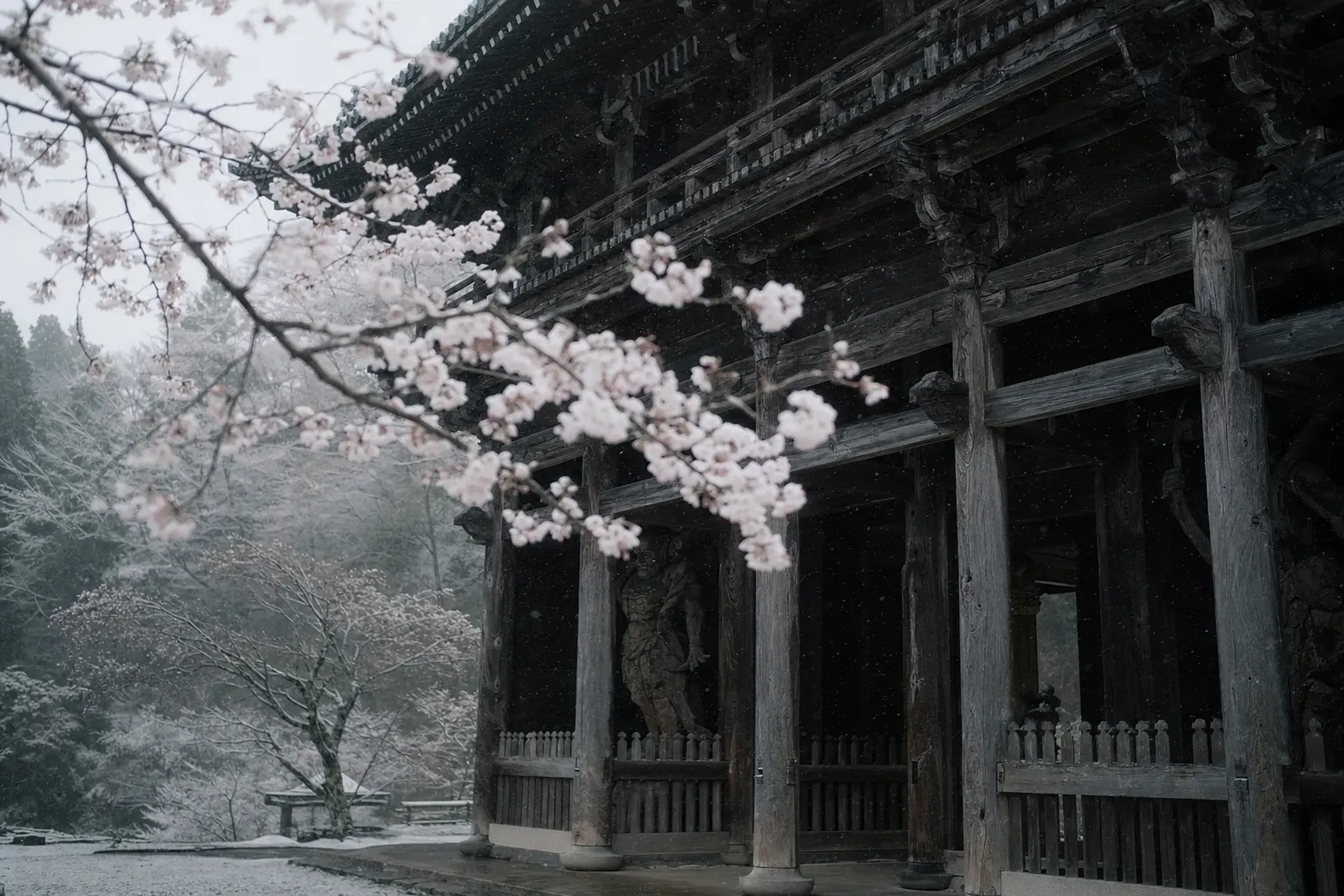
The current-year ropeway timetable, shuttle routes and dates, car restrictions, light-up dates, and any Kimpusen-ji hall or gate closures are details our concierge team verifies on the client's behalf ahead of the visit.
Yoshino pairs well with the wider region. It sits on the same UNESCO listing as Kōyasan, and makes a natural companion to Nara's World Heritage temples or a Kyoto base in March. A tailor-made itinerary can thread these together around the bloom.
Frequently Asked Questions
When is the best time to visit Mount Yoshino for cherry blossoms?
Usually from late March into April, with the bloom climbing uphill over several weeks. Choose your dates by which grove you want to see — lower early, upper later — rather than by a fixed calendar date.
Which grove on Mount Yoshino blooms first?
Shimo-senbon, the lower grove nearest Yoshino Station, blooms first. The colour then rises through Naka-senbon and Kami-senbon to Oku-senbon, the inner grove, which is last and quietest.
Can a private car drive up through the cherry groves on Mount Yoshino?
Not on restricted days. Private-car restrictions can apply on peak-season weekends and holidays, with designated parking and shuttle buses. A private vehicle reaches the foot or a drop-off point, not the groves themselves.
Is there night viewing of the cherry blossoms on Mount Yoshino?
Yes, in season.
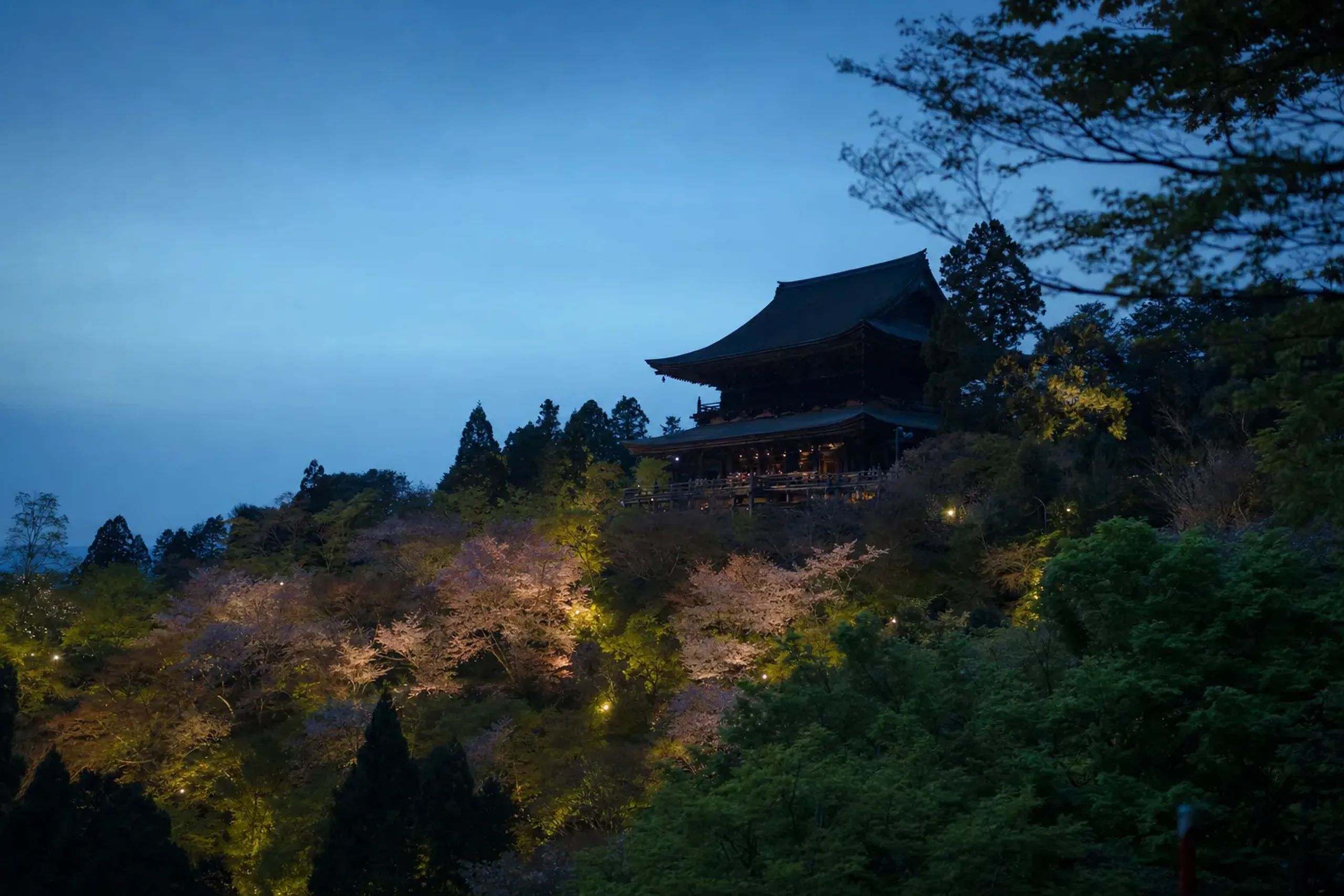
In 2026, evening light-up ran 20 March to 19 April, roughly 18:00–22:00, in the Shimo-senbon Nanamagari area and the Kami-senbon sakura exhibition garden. Dates are set each year by the bloom.
How do I get to Mount Yoshino from Kyoto or Osaka?
Take the Kintetsu Yoshino Line to Yoshino Station — roughly 75–90 minutes from Osaka Abenobashi, or about 1 hour 40 minutes from Kyoto with a change. Reserve limited-express seats early in cherry season; check current timetables.
Why Choose Japan Royal Service
Yoshino rewards precision. The difference between a grove in full bloom and a grove of bare branches is a matter of days, and the difference between a serene morning and a crushing queue is a matter of hours. Getting both right is the entire job.
Our team at Japan Royal Service plans the mountain the way it actually behaves — by watching the colour climb and setting your day to meet it, by timing a private transfer to the right drop-off point, and by placing a cultural interpreter beside you at Kimpusen-ji so the sacred history reads as more than scenery. We work with discretion, and we verify the live details — ropeway schedule, shuttle windows, car rules, light-up dates — before you ever set foot on the slope.
To plan a Yoshino visit timed to the grove, not the guesswork, reach our team privately via WhatsApp or LINE, or contact us here.