In this guide
- 01One Evening Saved A Thousand Years
- 02Who Are The Six Ushō On The Nagara River In Gifu?
- 03Is The Ceremonial Ukai For The Imperial Household Open To The Public?
- 04How Does Cormorant Fishing Work, And Are The Birds Harmed?
- 05The Night On The River: What You Actually Experience
- 06Season And Schedule: Dates, Cancellations, And Double Performances
- 07Viewing Boats, Capacity, And The Two Ways To Watch
- 08What A Private Viewing Boat Changes (And What It Does Not)
- 09Where The Craft Is Protected: Tools, Technique, And Sound
- 10How This Fits Into A High-End Japan Itinerary (Without Turning It Into A Detour)
- 11Getting There Comfortably: Timing Matters More Than Distance
- 12How To Plan Ukai On The Nagara River (Official Basics Only)
- 13Frequently Asked Questions
- 14Why Choose Japan Royal Service
The river has to be black.
Not “dark.” Not “dusky.” Black enough that a single flame becomes a boundary you can feel in your chest, and the rest of the world slips away. That is why Nagara River ukai begins late, why you wait, why even in August you will want a light layer on the water.
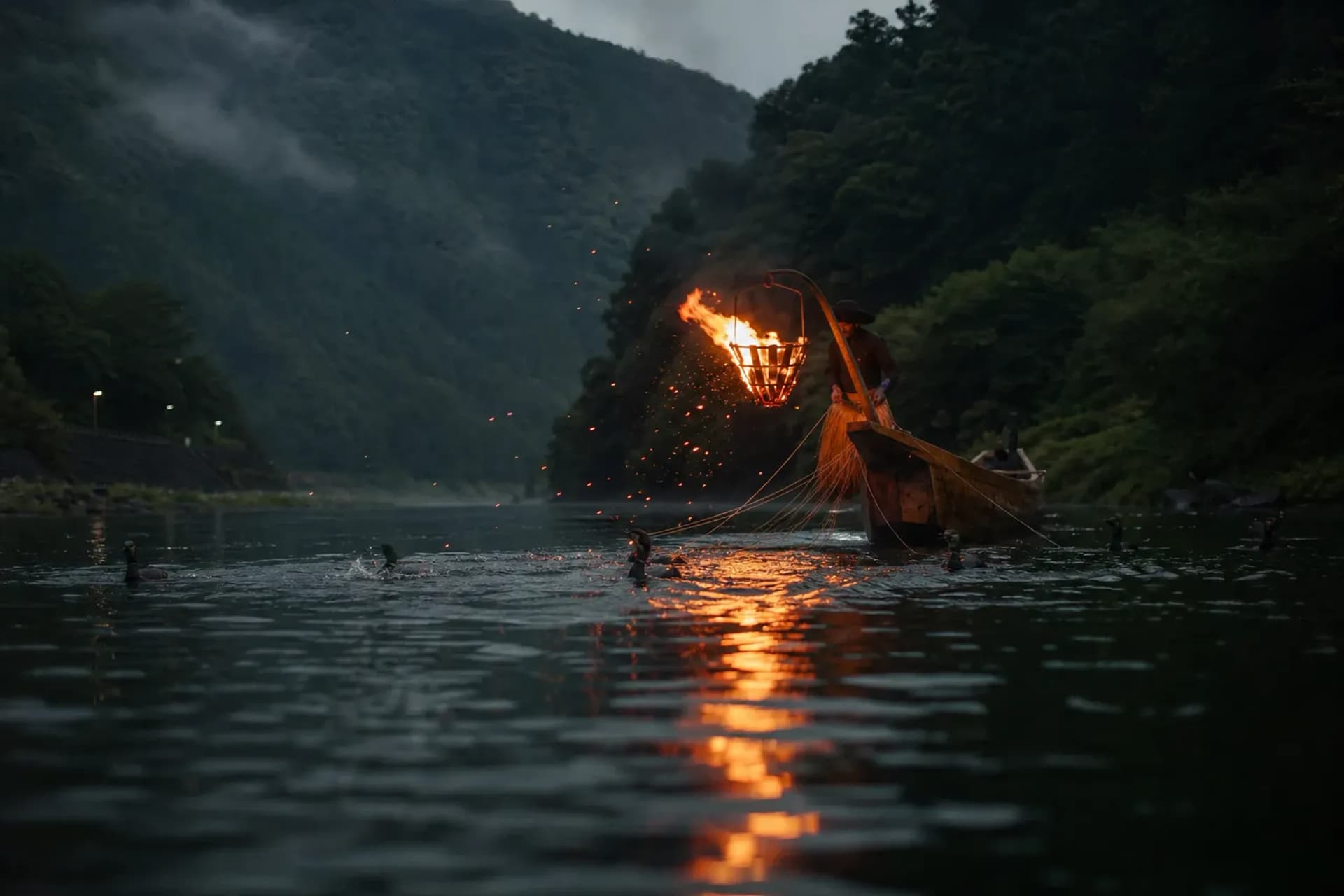
Then the boats arrive. Quiet. Working boats. Pine torches flare, and sparks jump into the night air as if the river itself has started to breathe.
One Evening Saved A Thousand Years
Ukai on the Nagara River carries roughly 1,300 years of continuity—and it almost disappeared in a single generation.
In Japan’s ritsuryō era, cormorant fishers were officials tied to the court. Later, powerful patrons protected the practice. Oda Nobunaga granted the title ushō and safeguarded the fishery, and Tokugawa Ieyasu is recorded as coming repeatedly, with ayu-zushi made in Gifu and sent onward to Edo.
Then came the Meiji Restoration. Protections fell away. The ushō were left paying a tax simply to keep fishing. Extinction stopped being a metaphor. It became a calendar problem.
It survived by accident, and by one evening’s witness. Iwakura Tomomi, travelling with Emperor Meiji, saw ukai on the river. Ayu were presented. Gifu Prefecture petitioned for protection. In 1890, the Household Ministry granted the ushō official status and established designated fishing grounds on the Nagara.
That pivot matters when you watch today. You are not attending a recreated scene. You are seeing a living line that once hung by a thread.
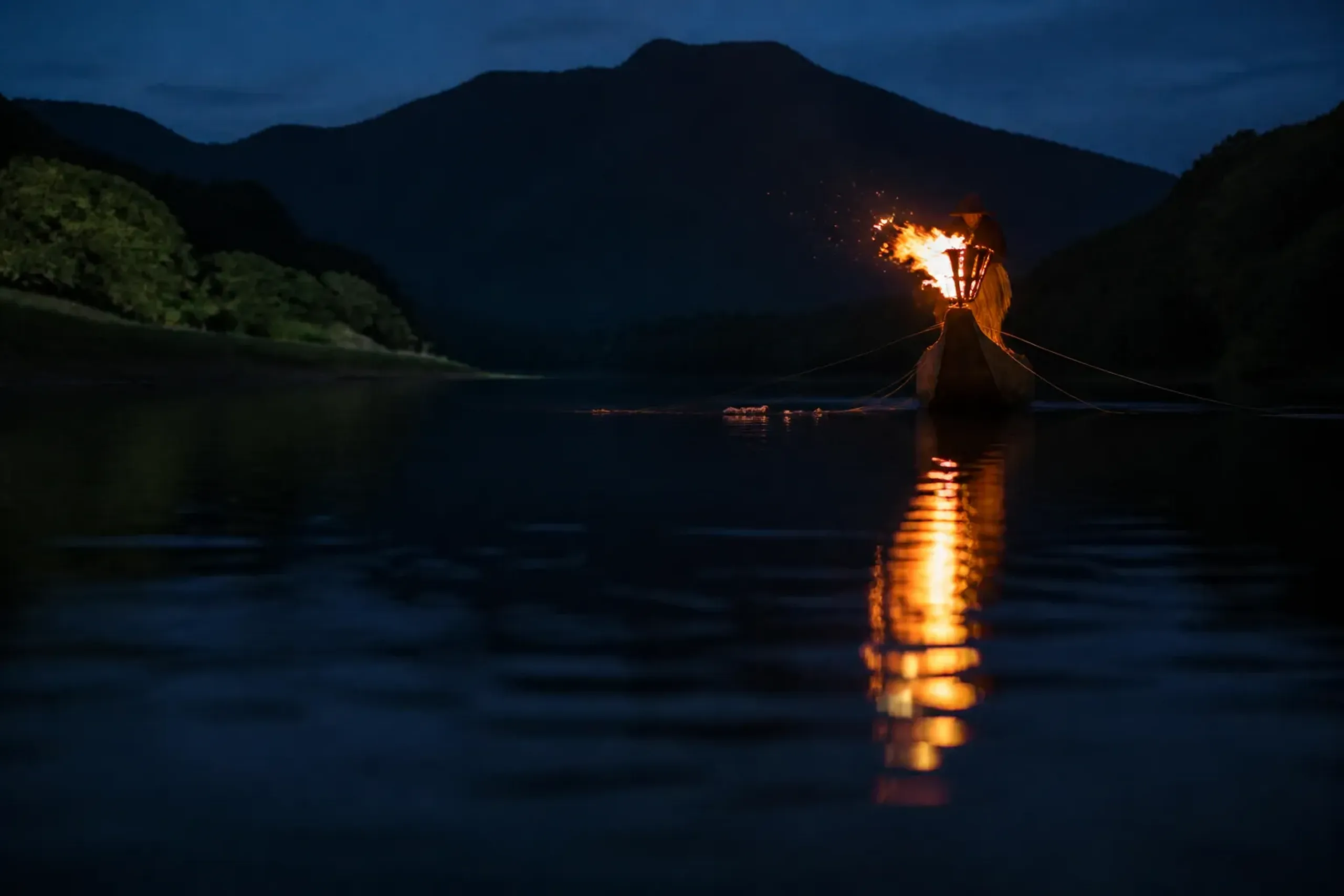
Ukai begins when the river turns truly black—so the flame can draw the whole scene.
Who Are The Six Ushō On The Nagara River In Gifu?
Six men hold the title Cormorant Fishing Master of the Board of Ceremonies, Imperial Household Agency, on the Nagara River.
That sentence is the whole difference between “a cultural show” and an office with weight. Only here are the practitioners called ushō; elsewhere in Japan, the term is typically u-tsukai. Here, the position is hereditary. Nobody from outside a fishing family can hold it.
Our team at Japan Royal Service treats this as the heart of the evening. The boats are memorable. The flames are unforgettable. But meeting an ushō—one of six living holders of a hereditary office—changes the scale of what you think you are watching.
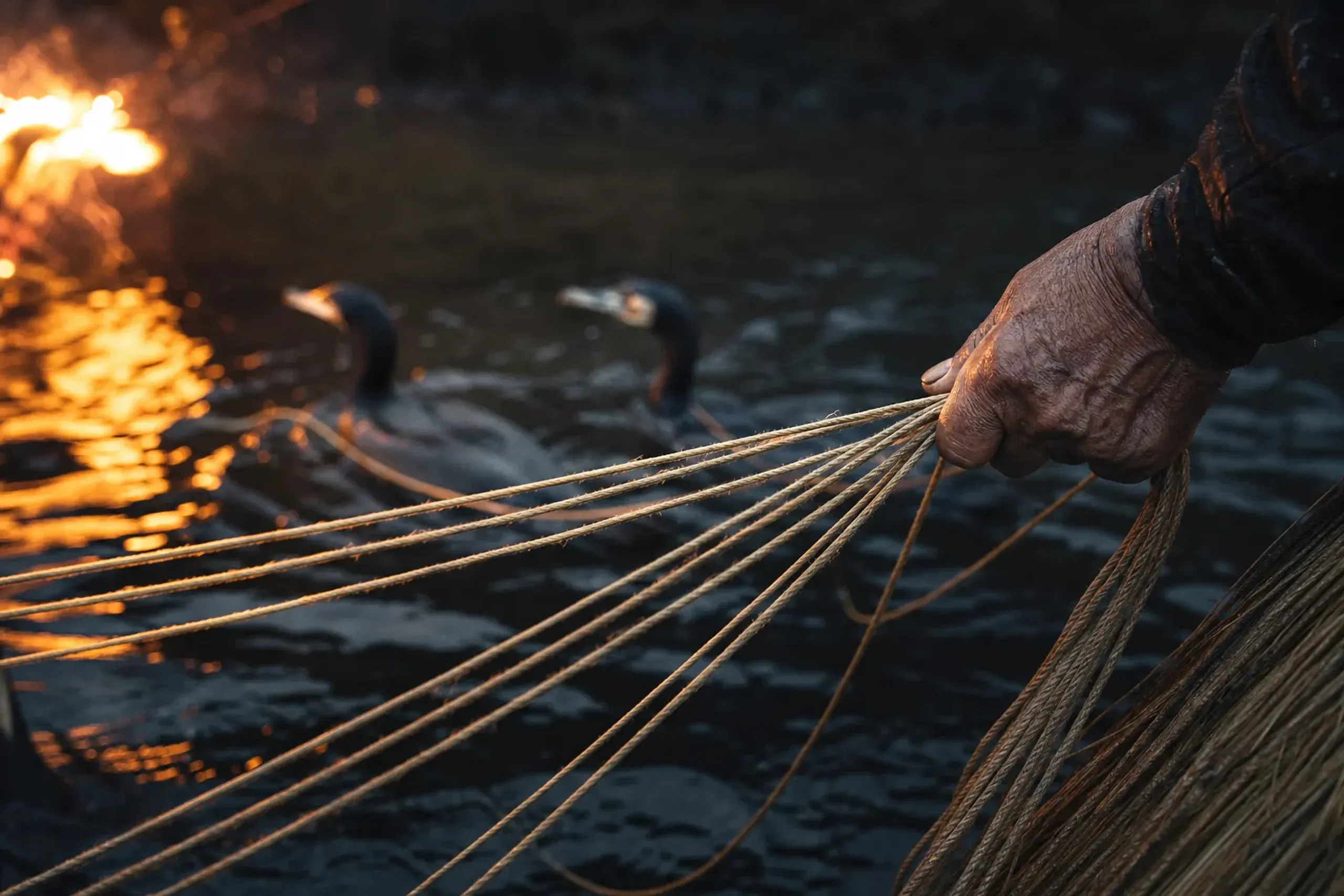
In practice, the craft is intensely exact. Each ushō keeps around twenty cormorants and works up to twelve at once. The hand ropes are held in the left hand. The right hand manages the torch, the rhythm, the boat, the moment when the bird is brought in close.
And the checks are daily. Throat, body, the color of the face. An ushō will tell you, plainly, that a bird’s condition differs between yesterday and today, and between noon and night. It is not romantic. It is watchful work.
Is The Ceremonial Ukai For The Imperial Household Open To The Public?
No—goryō ukai is held on designated grounds and is not open to the public.
This is important to say clearly, because it is also what makes the ushō remarkable.
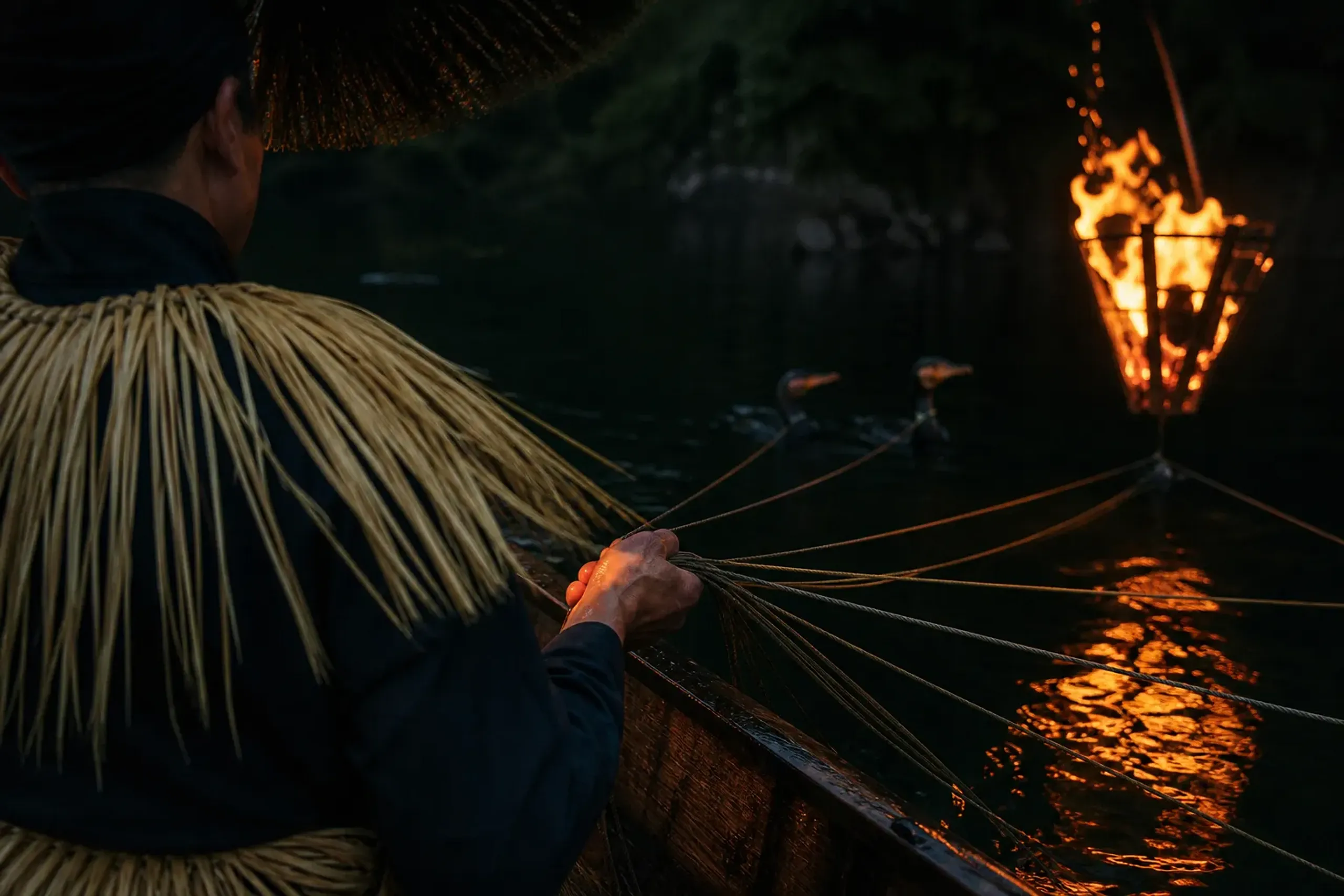
Six hereditary masters hold this office on the Nagara—technique carried in the hands.
Their title is connected to the Imperial Household Agency, and the ceremonial fishing exists as a formal duty. But the ceremonial nights are closed.
Two sessions each year at one of the grounds invite foreign ambassadors to Japan and their spouses. That is an invitation extended by the Household, not something a travel company—or any operator—can promise, arrange, or obtain.
We prefer that honesty. It keeps the rest of the evening credible, and it places attention back where it belongs: on the craft you can actually experience on the Nagara, on a real working river, in real darkness.
How Does Cormorant Fishing Work, And Are The Birds Harmed?
The neck cord is adjusted so small fish pass, while larger fish are held; bringing a fish up without straining the bird is a learned skill.
Guests ask this. They should. The cord is not a fixed clamp. It is adjusted. Small fish pass and are swallowed, while larger fish are retained. The moment of retrieval is not brute force. Done properly, it is controlled and practiced—part of what the ushō themselves describe as skill.
The birds are checked every day, and they live with the family and are worked for many years. That closeness is not a marketing line. It is simply how the tradition has functioned here for generations.
You can still feel conflicted. Many thoughtful travelers do. Our role at Japan Royal Service is not to talk you out of your reaction, but to give you clean facts and a clear picture of what you will see.
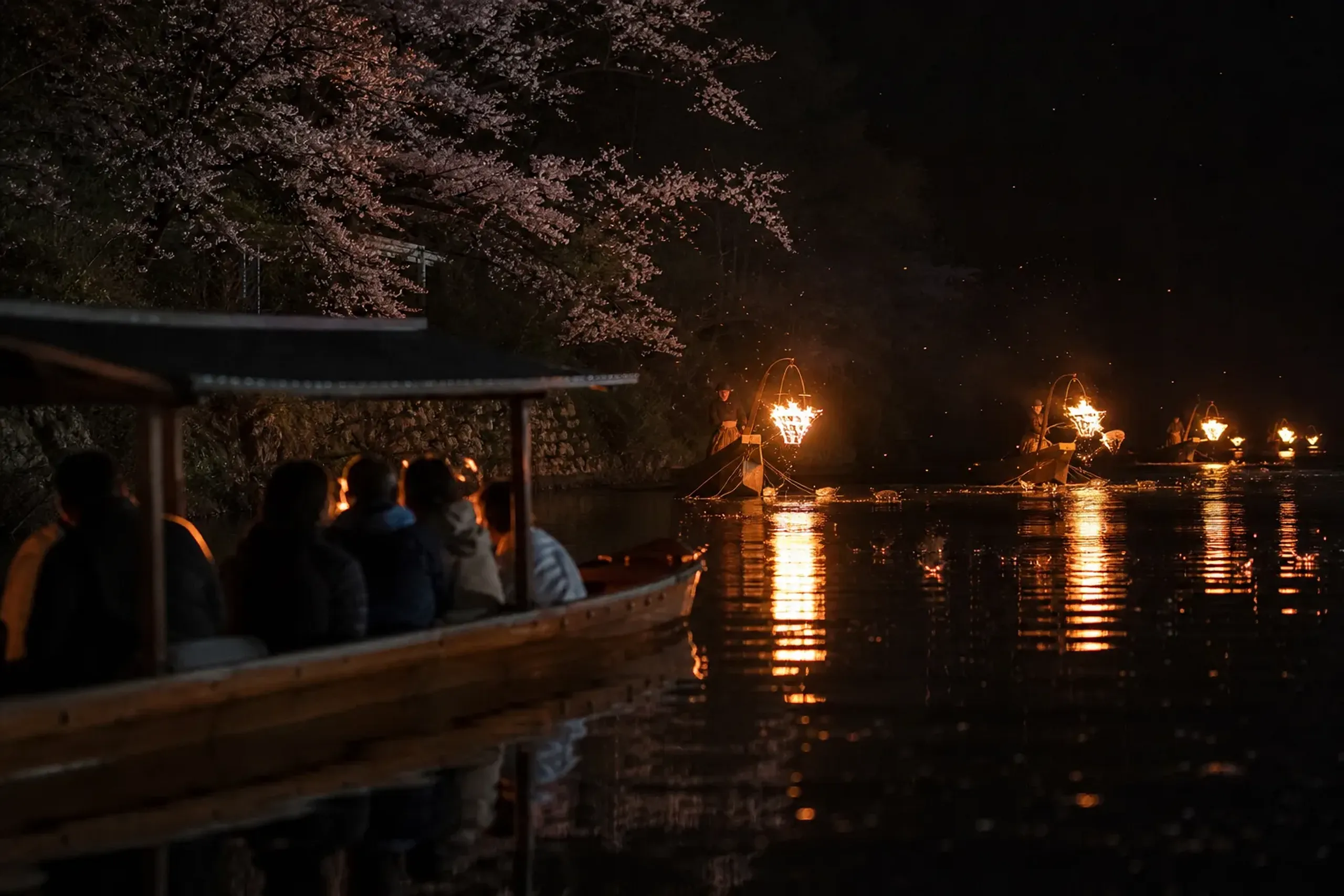
Sound arrives before light: calls, wood strikes, then a flame sliding across the river.
The Night On The River: What You Actually Experience
The first surprise is how much waiting is built into the beauty.
Ukai depends on darkness as a medium. The fires are the only light, and the river must be black for the technique and the atmosphere to make sense. That means a late start, and it can mean a long pause before the boats take their positions.
When the fishing boats approach, the sound arrives before the flame. Calls from the boat. The strike of wood against the boat’s side. This soundscape is not incidental; the calls and the percussion are recognized among Japan’s “hundred soundscapes,” a reminder that what is protected here is not only an object or a method, but a way a place sounds at night.
Then the technique becomes visible. The cormorants, low to the water, are directed in quick arcs. Twelve birds can work at once. The rope-hand never looks relaxed, but it never looks frantic either.
Mount Kinka sits as a dark mass beyond the boats. Gifu Castle crowns the summit. You do not need a speech to understand why poets noticed this river. Bashō, traveling through, left a line that catches the feeling: boats with fire moving across night water, leaving your eyes changed for a moment.
Season And Schedule: Dates, Cancellations, And Double Performances
The Nagara River ukai season runs from May 11 to October 15, with cancellations when the river is too high and a rest night on the mid-autumn full moon.
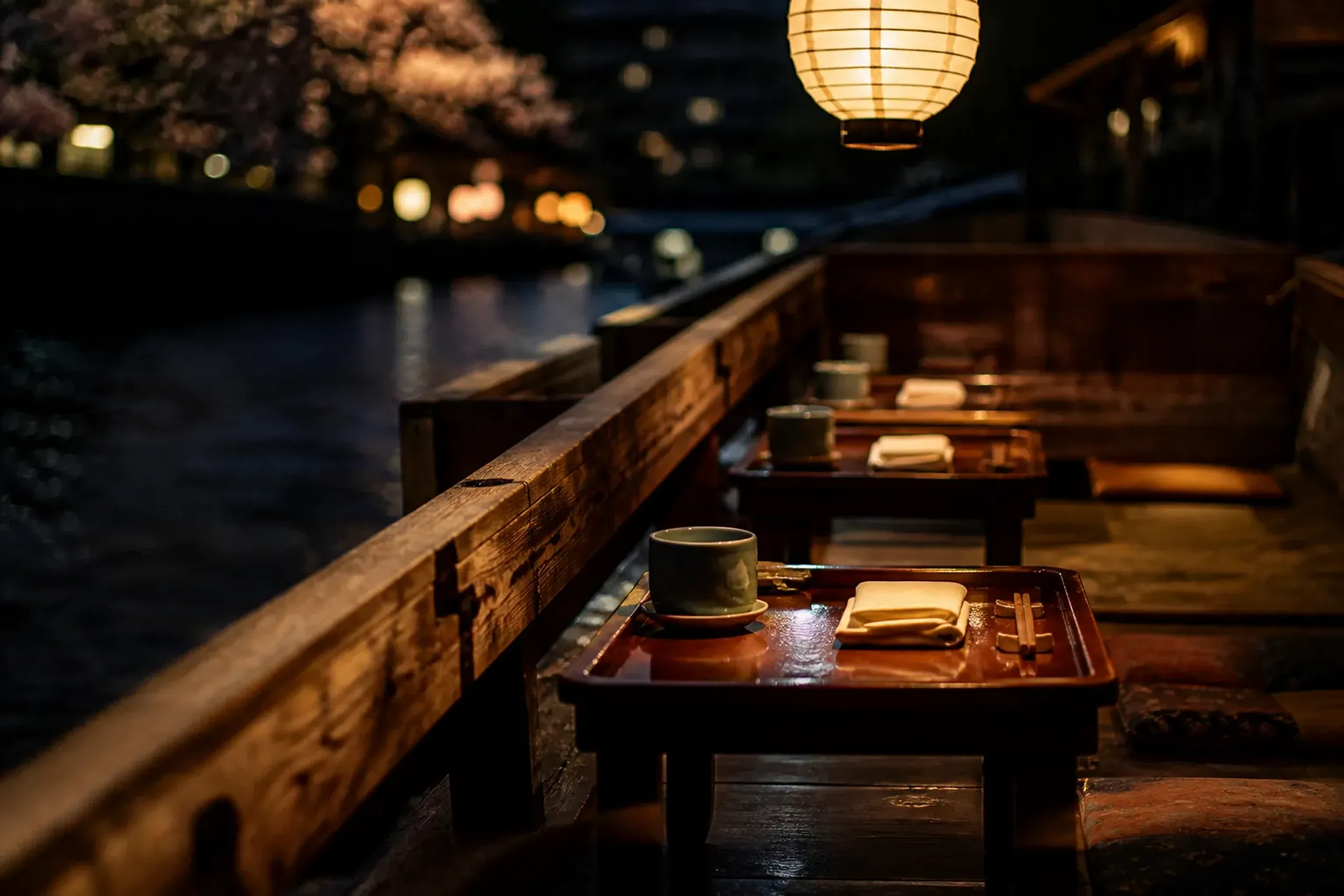
On many nights, food is brought aboard and the table layout is planned in advance.
The opening night on May 11 carries a rite praying for the season’s safety, and a naming ceremony for newly built viewing boats. It is not just pageantry. It is how the community marks that work on the water is beginning again.
On designated summer evenings, the fishing is performed twice. That affects pacing and your dinner timing. It also affects your tolerance for cool air on the river, because you will be out longer than you expect.
Conditions matter. Wind, rain, water height. A calm plan needs room for nature to say “not tonight.” Before travel, confirm the current season calendar and operating details for that year, because boat operations and packages can shift.
Viewing Boats, Capacity, And The Two Ways To Watch
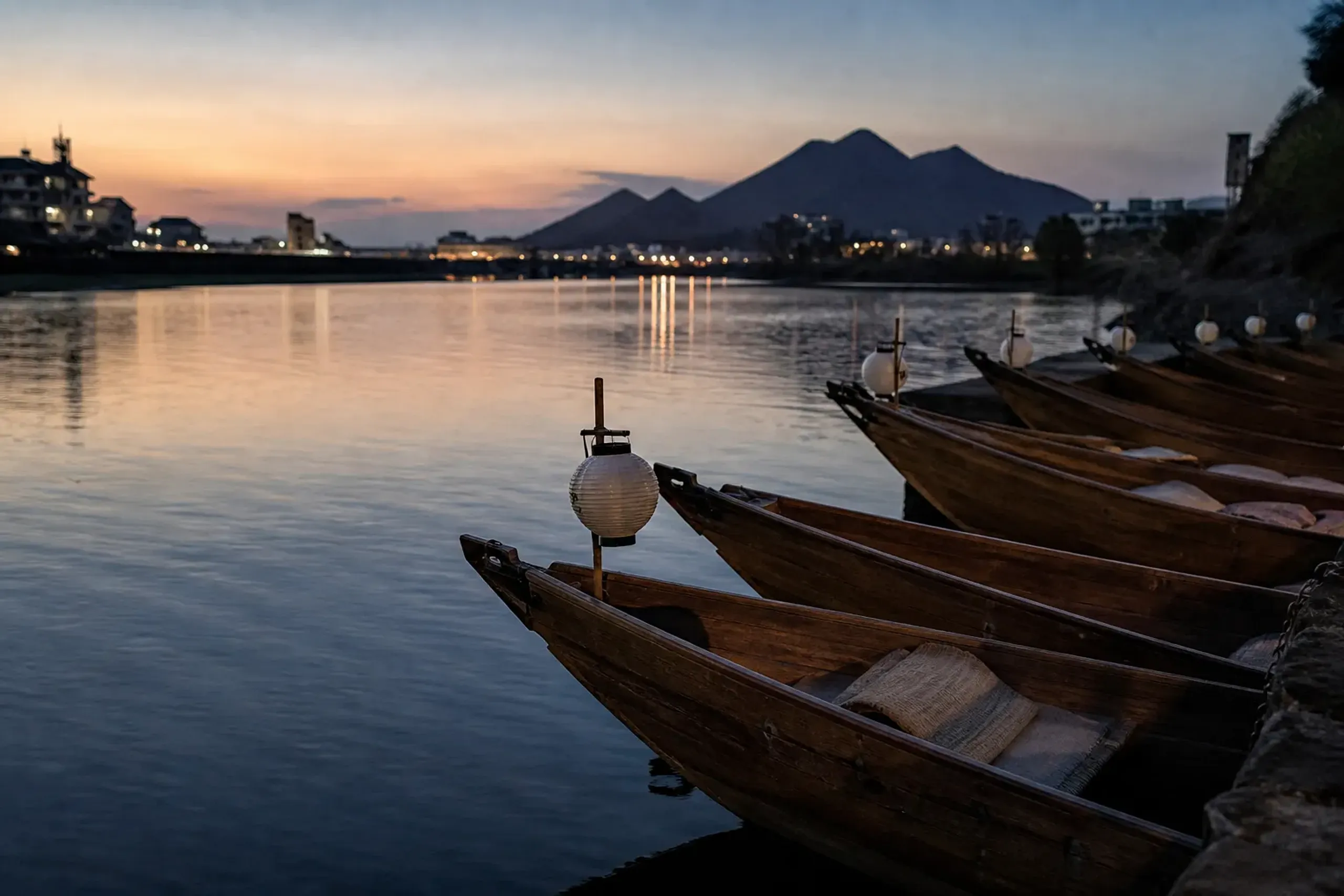
Around fifty viewing boats operate, typically carrying 15 to 50 people over roughly two hours, either moving alongside the fishing boats or watching from a moored position.
Two viewing styles are commonly described. One is karikudari, where the viewing boat runs alongside the fishing boat. The other is tsukemise, where you watch from a moored position.
Boat building is its own long craft. Each viewing boat takes about half a year to build, and two are built each year. You can see it in the joinery and the way the boat holds steady as wakes pass through.
Food is brought aboard. Often this is part of a ryokan or hotel package, or provided by a caterer, and the table layout can be arranged in advance.
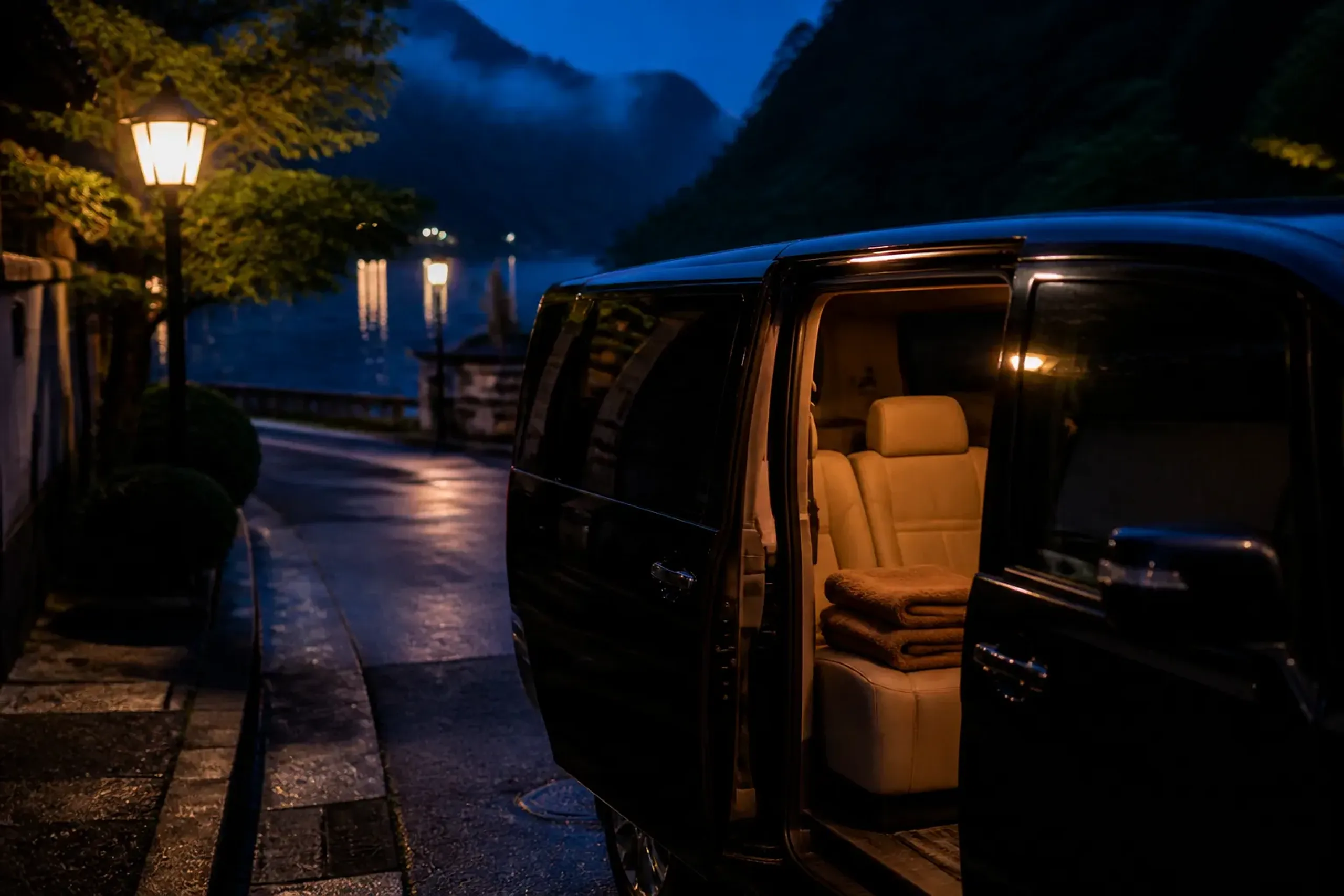
After two hours on cool water, a warm cabin and a silent ride back matter.
The point is simple: the boat is not a bench seat with a snack. It can be a proper dinner setting, if that is the style you want.
What A Private Viewing Boat Changes (And What It Does Not)
A private boat changes your position, timing, and comfort—but the river stays in charge, and ukai remains a working fishery, not a staged show.
Function first. A private boat can reduce the feeling of being one face among many, and it can allow a steadier view when the fishing boats approach. It can also make it easier to keep your party together, especially for families or small corporate groups who want quiet conversation between passes.
It does not change the fundamentals. You still dress for a cool river night. You still start late. You still accept that the best moments are brief, bright, and gone.
For many HNW travelers, that is exactly the appeal. The luxury is not glitter. It is control where control is appropriate—and surrender where surrender is the price of seeing something real.
Where The Craft Is Protected: Tools, Technique, And Sound
On the Nagara, protection is formal. 122 pieces of Nagara ukai equipment are designated an Important Tangible Folk Cultural Property. The fishing technique itself is designated an Important Intangible Folk Cultural Property.
Those designations can sound abstract until you watch an ushō handle rope and fire with the same calm precision you would expect from a shokunin in a workshop.
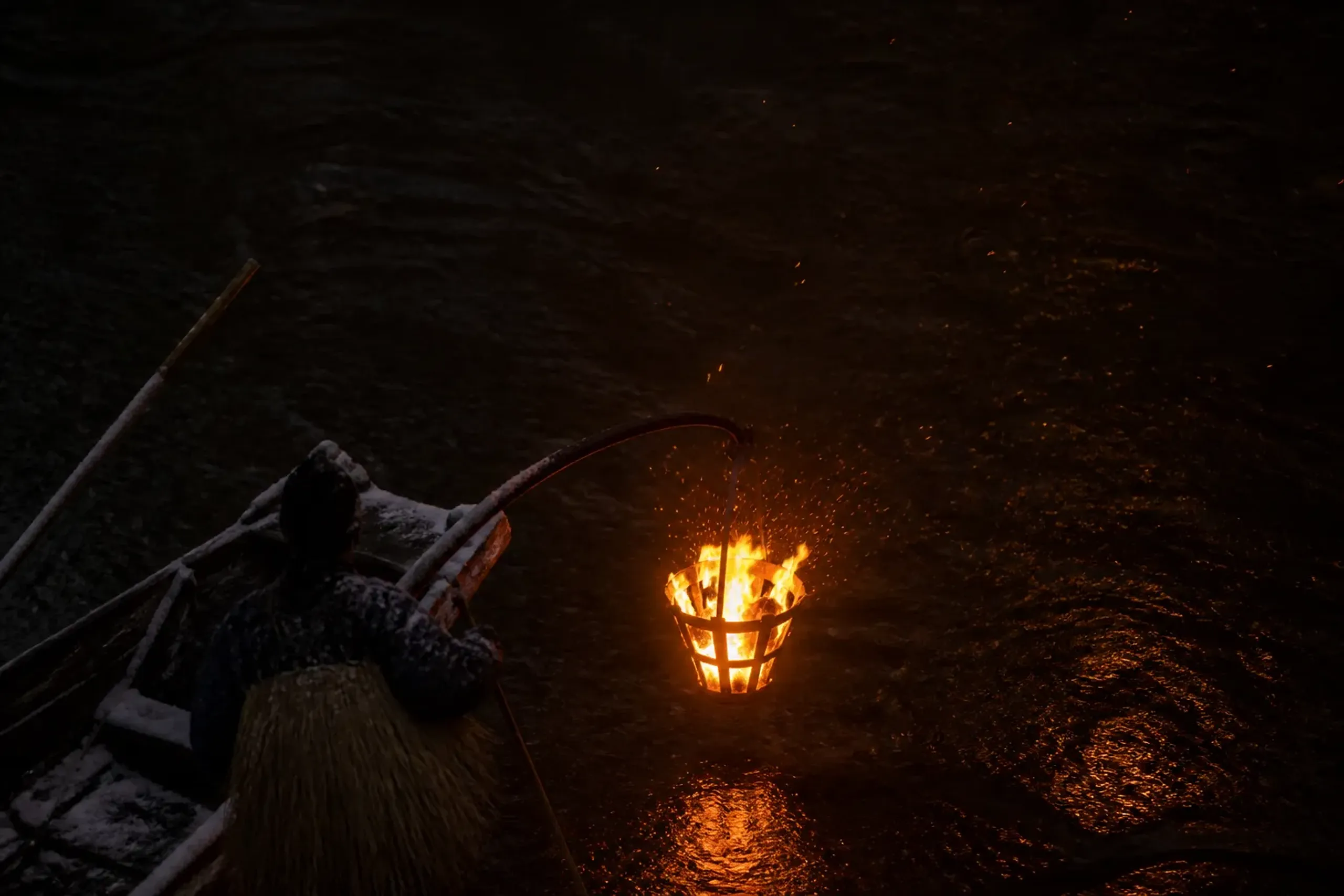
Not showy. Exact.
And then there is the sound. Calls across the water. The strike on the boat’s side. This is a tradition preserved as an audible landscape, because without that sound, the night is missing its spine.
How This Fits Into A High-End Japan Itinerary (Without Turning It Into A Detour)
Gifu City is close to Nagoya, making Nagara River ukai one of the most rewarding “single-evening” cultural experiences to add without rewriting your whole route.
Many luxury travelers keep Tokyo and Kyoto as anchors. Sensible. But if you want Hidden Japan in a form that still feels practical, Gifu is a quiet pivot point. You step away from the usual circuit for one night, and you come back with the scent of pine smoke in your hair.
In our experience, the simplest approach is to base in Nagoya and treat Gifu City as an evening chapter. That structure is especially clean for travelers who prefer not to change hotels constantly, and who value a controlled rhythm over a checklist.
If you are already considering deeper regional craft travel, you may also enjoy the sensibility behind our Takamatsu-area stories—precise, handmade Japan, approached slowly. Two good entry points are Real Lacquer Takes a Week to Dry and A Private Morning at Ritsurin Garden.
Getting There Comfortably: Timing Matters More Than Distance
The main logistical skill for ukai is not speed. It is timing.
You want to arrive early enough to avoid a rushed boarding, and late enough that you are not waiting for hours in formalwear.
This is where private transportation earns its keep. Quiet. Predictable. Yours.
The first time we discuss chauffeur service for an ukai evening, we talk about the return as much as the arrival. After two hours on cool water, you will be glad you can step into a warm cabin and let the city lights drift past without negotiation.
If private chauffeured travel is part of your plan, see our approach to private transportation. No fuss. Just calm movement.
How To Plan Ukai On The Nagara River (Official Basics Only)
Ukai viewing is offered seasonally from May 11 to October 15, and you should confirm operating nights and river conditions close to your date.
Most guests watch from an official viewing boat, often as part of a package through local accommodation or a catered plan. Boat capacity commonly ranges from about 15 to 50 people, and the experience lasts roughly two hours.
Because cancellations can happen due to water levels or weather, plan with a buffer night if ukai is the emotional centerpiece of your time in the region. Calm travelers do not bet the whole trip on a single river night.
For questions, contact our concierge.
Frequently Asked Questions
What Is The Best Month For Ukai On The Nagara River If I Dislike Humidity?
For a cooler feel on the water, late September to early October is often more comfortable than mid-summer, while still within the May 11–October 15 season.
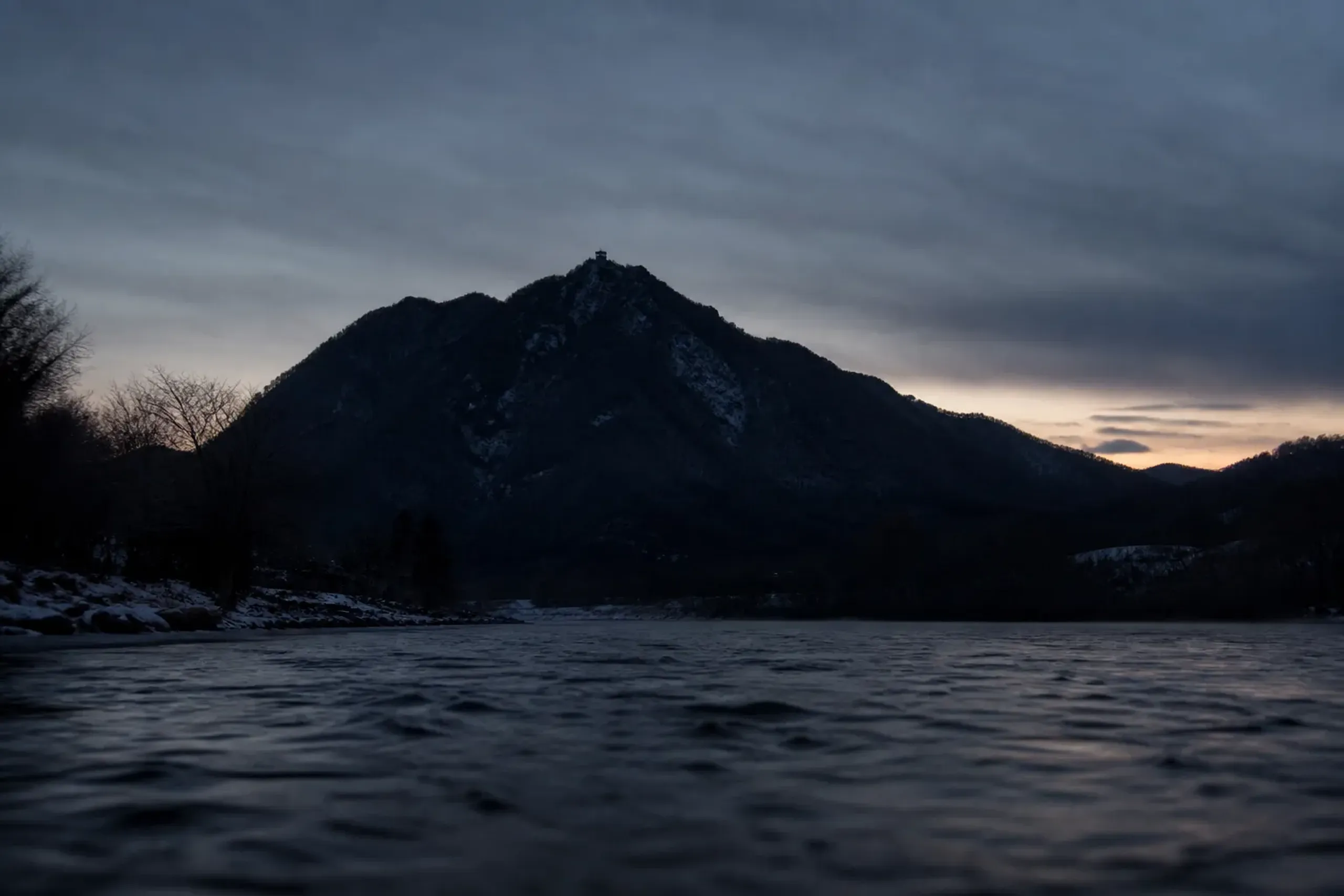
Even then, bring a light layer. The river air can turn sharp after dark, and the waiting time before the boats align can feel colder than you expect.
Can I Watch Ukai From A Private Boat With Just Two People?
Private boat use depends on the operator’s rules and the specific night’s availability, but small parties can explore private-boat options through tailored guidance.
Our team at Japan Royal Service can discuss what styles of viewing are realistic for your party size and priorities, privately, once you inquire.
Is Goryō Ukai Something A Luxury Concierge Can Arrange?
No—goryō ukai is closed to the public, and the ambassador-attended sessions are invitations extended by the Imperial Household, not arranged by travel companies.
If a website suggests otherwise, treat it as a red flag. The credible approach is to focus on the public ukai season, where the tradition is still profound when experienced well.
What Should I Wear On The Nagara River Boat In August?
Wear breathable evening clothes and bring a light jacket or shawl, because the river can feel cool after dark even during hot August days.
Avoid anything that makes you fidget. You will be sitting, standing, and turning your shoulders often as the fishing boats pass.
Why Choose Japan Royal Service
Discretion comes first. Our team at Japan Royal Service plans around privacy, quiet arrivals, and a low profile that feels natural in Japan, not performative.
We also understand the difference between access and accuracy.
With ukai on the Nagara, we tell the truth about what is closed, what is possible, and what makes the public experience worth your time when it is done properly.
And we care about the human point of the night: an introduction that frames the ushō not as an attraction, but as one of six hereditary holders of a living office, working with the same sharp discipline you would recognize in any great shokunin.
When you are ready, we can discuss a tailor-made itinerary that places ukai exactly where it belongs: as one dark, unforgettable evening that changes the texture of your Japan.
For private coordination, reach our team privately via WhatsApp or LINE, or contact us here.