In this guide
- 01Two Hundred And Eighteen Years Through One Island
- 02How An Island Disappears
- 03Why Is Everything At Dejima A Reconstruction?
- 04Walking Dejima In Either Direction
- 05What Are Dejima's Opening Hours And How Do You Get There?
- 06The Nagasaki Peace Park And Atomic Bomb Museum
- 07Sequencing A Day In Nagasaki
- 08Frequently Asked Questions
- 09Why Choose Japan Royal Service
Cross the little arched bridge after dinner and the noise of the city falls behind you. To your left, timber facades in the muted register of two hundred years ago. Rivets set into the road mark a seawall line. And here is the strange part: you are standing on an island that no longer exists as an island, one that Japan spent decades trying to bring back.
Dejima disappeared. Say it plainly, because it is the whole point. The fan-shaped scrap of reclaimed land that was, for two centuries, this country's only authorised door to Europe, was swallowed by the growing city and gone by 1904. Everything you walk through today is reconstruction — documented, deliberate, and unfinished. Our team at Japan Royal Service keeps returning to Dejima for exactly that reason. It is a place still being built.
Two Hundred And Eighteen Years Through One Island
Dejima measured roughly fifteen thousand square metres. About seventy metres across, with a gently curved southern face of a little over two hundred. Smaller than many city blocks. And for 218 years, the entire authorised contact between Japan and Europe ran through it.
Everything came through this gate. Goods and coin, yes. But also medicine, astronomy, botany, cartography, the Dutch language itself, and a slow drip of ideas that Japanese scholars studied as rangaku — Dutch learning. One island. The only window.
The island was built in 1636 on shogunal order, financed and constructed by wealthy Nagasaki merchants. Its first purpose was containment: to confine the Portuguese living in the city and place their trade under close watch, at the height of the suppression of Christianity.
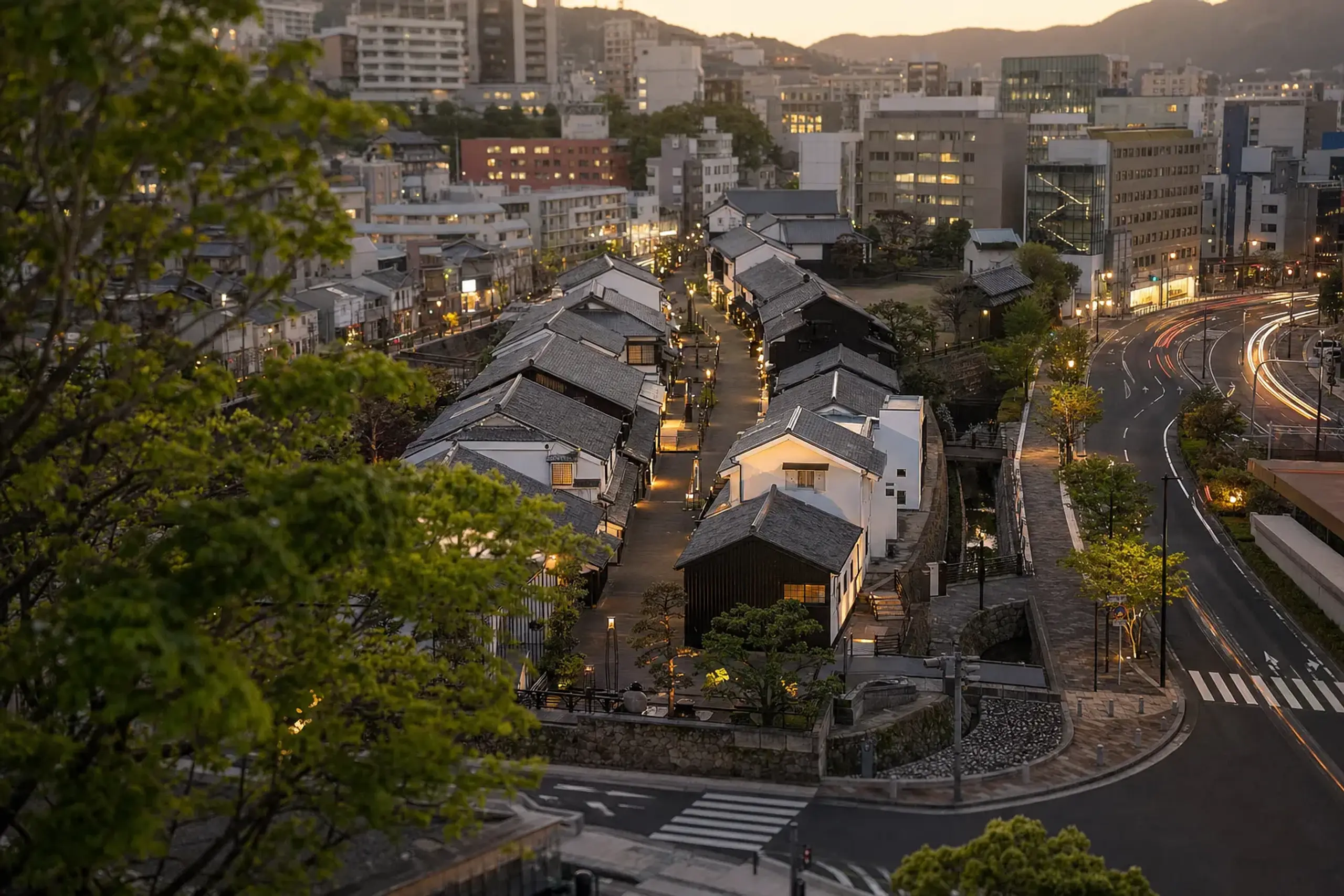
Once fifteen thousand square metres of the only door between Japan and Europe.
When the Portuguese were expelled, the island sat empty.
Then, in 1641, the Dutch trading post moved down from Hirado and settled in. It stayed until the factory was abolished in 1859. The men posted there were not diplomats. They were employees of the Dutch East India Company — often called the world's first joint-stock company — living in a gilded confinement, permitted almost no movement beyond the bridge.
How An Island Disappears
The window closed in 1859, and the land began to vanish soon after. As Nagasaki modernised, reclamation crept outward around the island. Bay became shore. Shore became street. By 1904, Dejima's fan shape had disappeared entirely — absorbed into the ordinary grid of a working port city.
For a while it survived only as a name and a memory. The site was designated a National Historic Site in 1922, a formal acknowledgement that something important had once stood here, even though almost nothing of it remained above ground.
This is what makes Dejima unusual. Most historic sites you visit are things that endured. Dejima is a thing that was lost and is being summoned back, plank by documented plank.
Why Is Everything At Dejima A Reconstruction?
Because the original island vanished by 1904, and every building you see today has been rebuilt from documents, excavation, and old records — a careful archaeological reconstruction, not a theme-park replica.
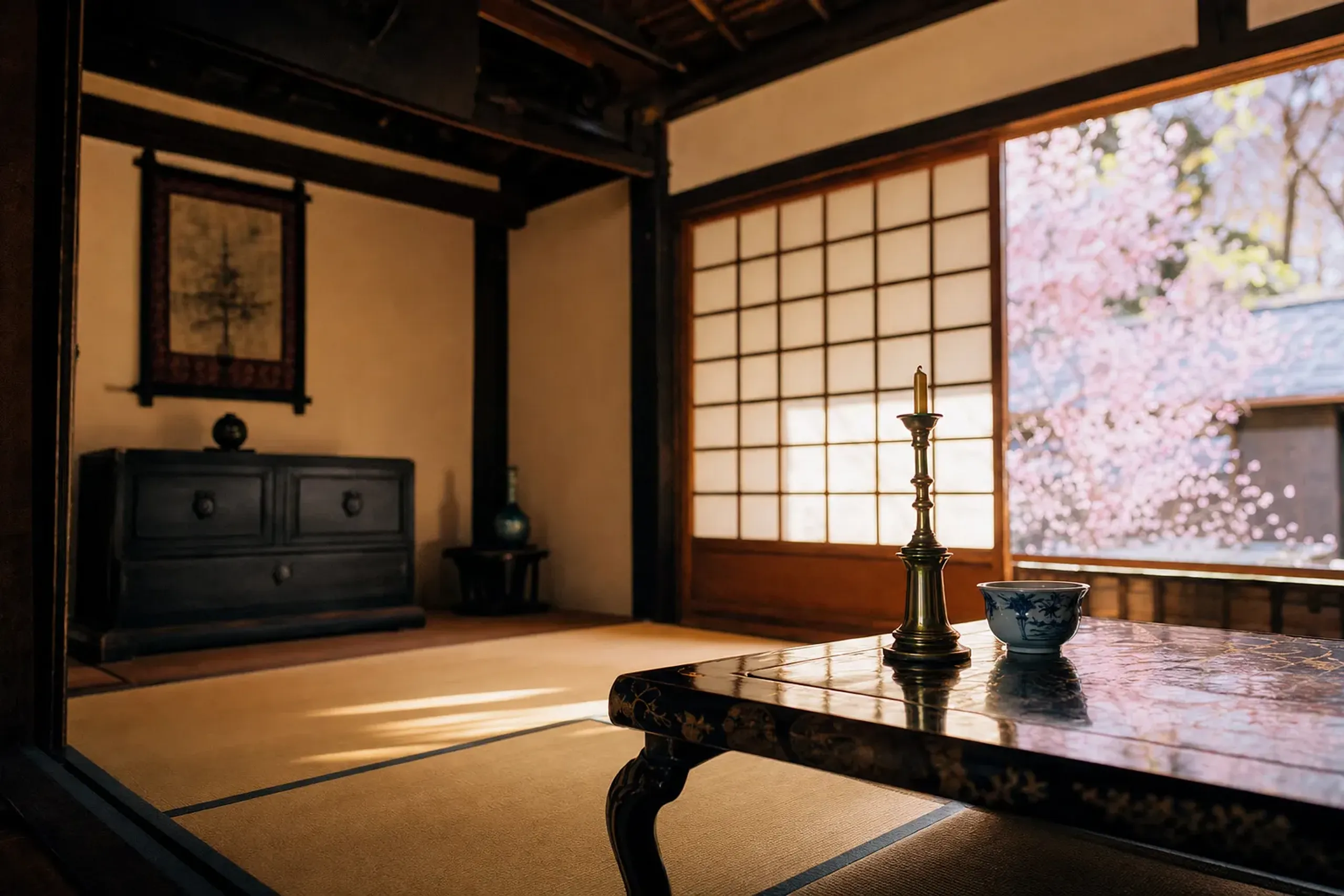
The Kapitan's Quarters, rebuilt to Dejima as it stood around 1820.
Nagasaki began planning the restoration in the late 1940s and started acquiring private land inside the old site in the early 1950s. Full-scale reconstruction began in 1996. By 2001, the entire footprint was back in public ownership.
Sixteen buildings have been rebuilt so far, among them the Kapitan's Quarters — the residence of the Dutch factory chief, the grandest structure on the island. Forty-nine buildings stood here in the Edo period. The current plan targets twenty-five. So the work is roughly two-thirds done, and openly so; there is no pretence that the island is finished.
The chosen reference point is Dejima at the very start of the nineteenth century — the years of the factory chief Jan Cock Blomhoff and the physician Philipp Franz von Siebold, whose collecting and teaching left a deep mark on Japanese science. When you stand in a reconstructed room, you are standing in about 1820, rebuilt from the record.
Key fact: The long-term plan is to restore water on all four sides and recreate the fan shape in full — which requires diverting the Nakashima River and shifting a national highway westward. A city that will move a road and a river to put an island back is making a serious argument about what history is worth.
This is heritage as continuing labour, not heritage as glass case. It has the same spirit as the thatchers who re-roof the farmhouses of the Shirakawa-go valley by hand — read our account in Shirakawa-go in Spring — where the point is not to freeze the past but to keep doing the work that keeps it alive.
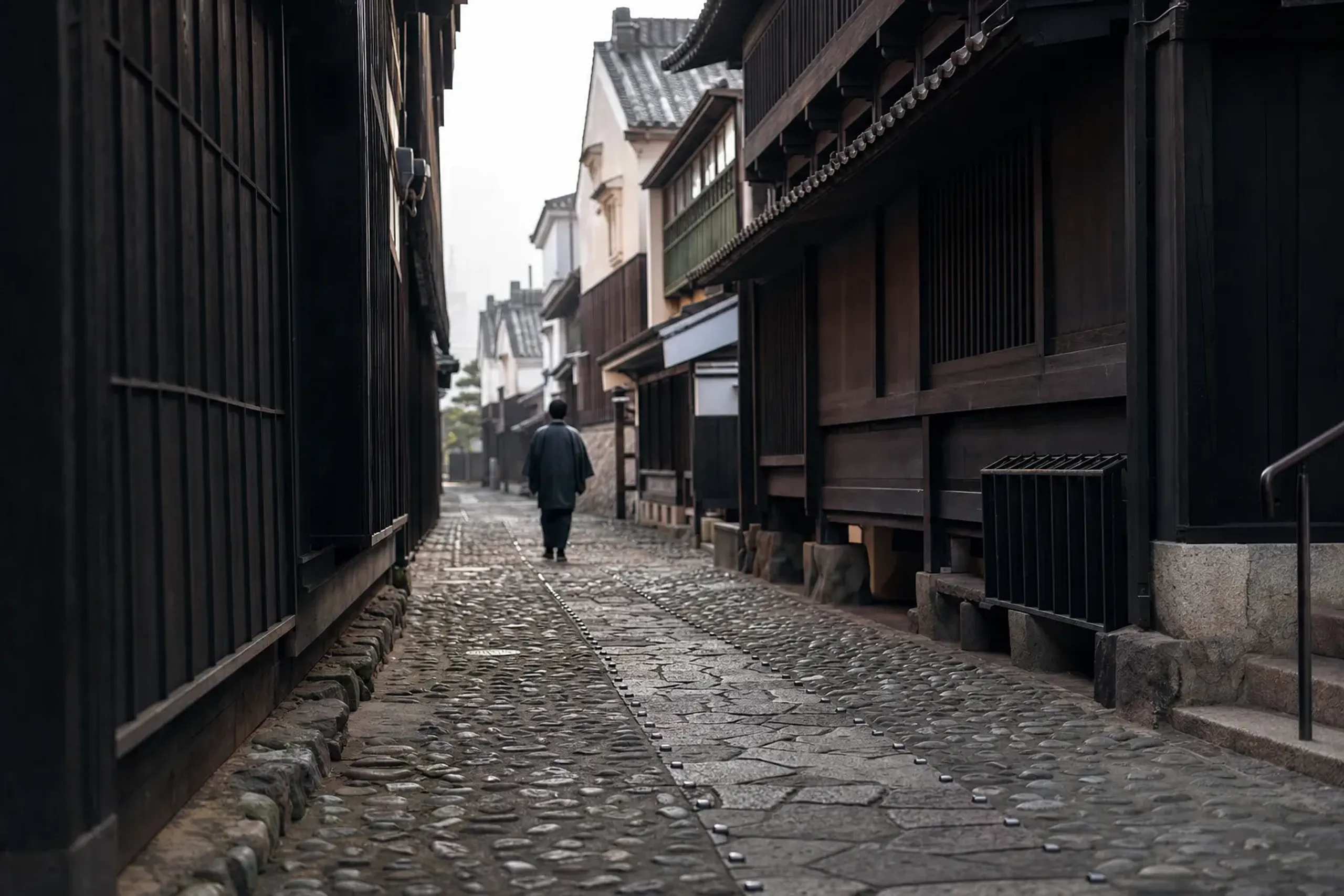
Enter from the west and you move forward in time; from the east, backward.
Walking Dejima In Either Direction
Three eras are legible on the site. The sakoku-period island of the early nineteenth century. The bakumatsu island, after the country opened. And a handful of Meiji-era Western-style timber buildings, from after Dejima's function had ended. They sit together, and a good guide reads them for you like sediment.
Here is the detail a guidebook rarely gives you. The site has two entrances, and the direction you choose is the direction of time. Enter from the west Water Gate and you walk forward through the decades. Enter from the east, across the Omotemon Bridge, and you walk backward into the older island. Neither is right. A concierge worth the name simply tells you the choice exists and lets you decide which way the story should run.
Small Things Worth Noticing
On the south side, rivets set into the road mark the line of the seawall as it was extended in 1867. Most visitors stride over them without a glance. Once you know, you cannot unsee the old waterline running under your feet — the ghost of the edge where island met bay.
What Are Dejima's Opening Hours And How Do You Get There?
Dejima has two entrances with different hours, sits about five minutes by tram from Nagasaki Station, and stays open every day of the year, though individual buildings may close for maintenance.
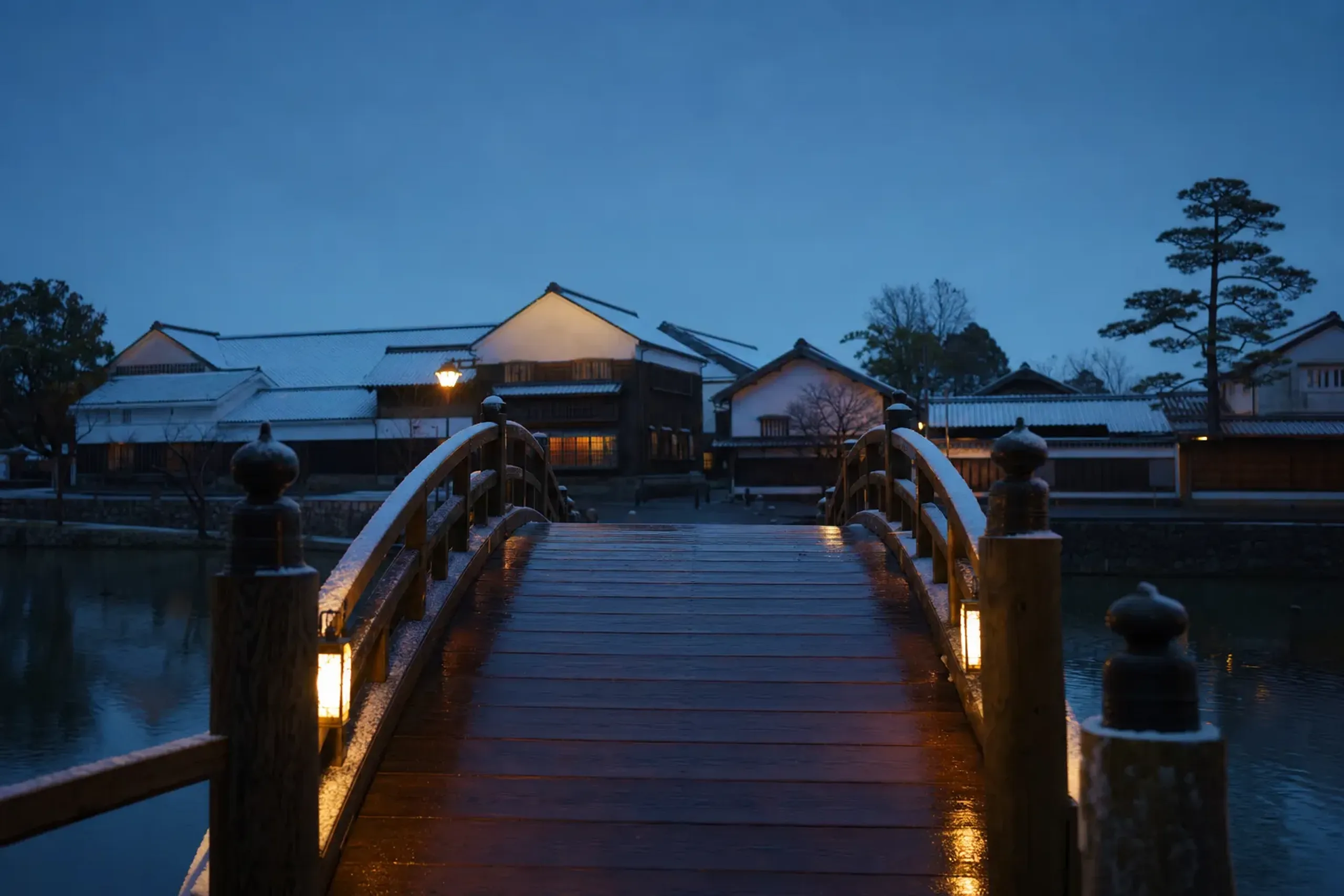
The Omotemon Bridge entrance runs to 21:00 — a rare after-dinner historic site.
The Omotemon Bridge entrance runs from 8:00 to 21:00, with last entry at 20:40. The Water Gate runs from 8:00 to 18:00. Guided tours are led by the site's own history staff, who know the excavation record intimately. A restaurant operates within the grounds — the former Dejima Naigai Club now serves local wakaran cuisine, a nod to the island's cross-cultural kitchen.
Please note that admission and hours are governed by the Dejima Ordinance Enforcement Regulations, with an update effective 1 April 2026. We confirm the current figures and tour arrangements for every guest at the time of travel; the official Dejima site remains the canonical source for the latest rules.
Rarely mentioned: Because the Omotemon Bridge entrance runs to 21:00, Dejima is one of the very few historic sites in Japan you can visit after dinner. The reconstructed lanes at night, half-lit and empty of day crowds, are quietly extraordinary. We build many evenings around exactly this.
2026: Two Hundred Years Since Siebold's Journey
The year 2026 marks two centuries since Siebold accompanied the Dutch factory's court journey to Edo — the ceremonial procession the factory chief made to pay respects at the shogunal capital. It is a fitting frame for a visit, and any associated programming is worth checking on the official site before you travel. Nagasaki's calendar that year is unusually full: DEJIMA博, the Dejima Expo, runs across the Golden Week window in early May, and Nagasaki Kunchi falls on 7–9 October, its Dutch-ship float a direct descendant of the trade that once moved through this island.
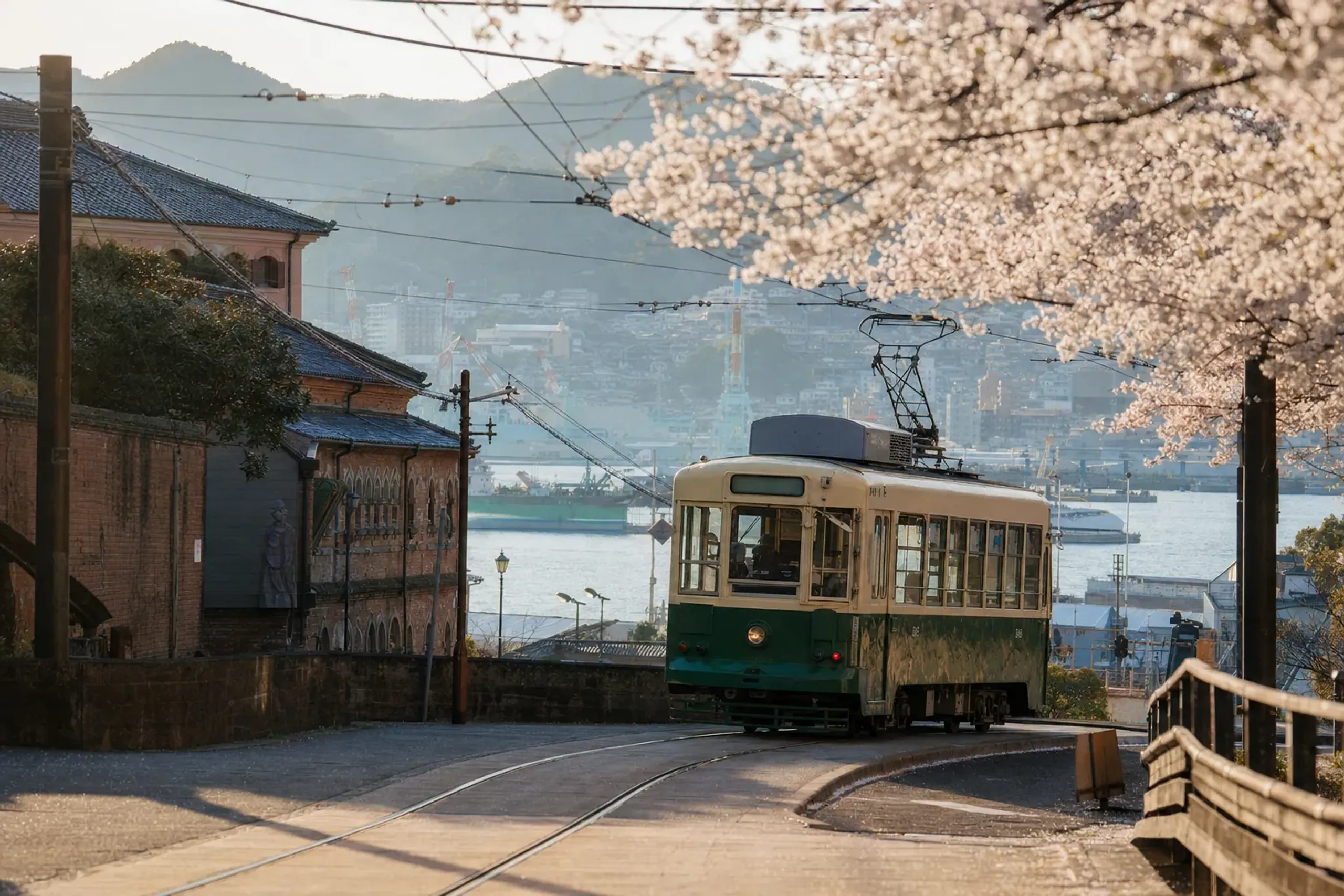
Five minutes by tram from Nagasaki Station links the island, the city and the harbour.
A Word On The Three Dejimas
One point of confusion worth clearing. The historic site of Dejima is not the same as Dejima Messe, the modern convention centre, nor Dejima Wharf, the waterfront dining strip. Three similar names, three very different places. When we say Dejima in this journal, we mean the reconstructed island. Our concierge routes you cleanly between them so no time is lost.
The Nagasaki Peace Park And Atomic Bomb Museum
Nagasaki carries the atomic bombing of 9 August 1945, and this guide will not pretend otherwise. What follows is plain and factual.
The Nagasaki Peace Park and the Nagasaki Atomic Bomb Museum stand in the north of the city, in the Urakami district. The Peace Park is an open memorial ground centred on a large bronze statue. The museum documents the bombing and its aftermath. The exhibits are graphic. Most visitors allow roughly two hours between the park and the museum, sometimes more.
We do not retell the events of that day here. That account belongs to the museum and the city, and we direct you there. Please verify current hours, admission and any reservation requirement before your visit. This is not a highlight or an attraction; it is a place of mourning, and we treat it that way — as we do in our writing on Nara and elsewhere when a site asks for restraint rather than description.
Sequencing A Day In Nagasaki
Dejima in the morning. The island is quietest early, the light is kind for photographs, and you have the reconstructed lanes largely to yourself before the tram crowds arrive. Give it two hours with a guide, more if the history holds you.
Leave the memorial for the afternoon, or better, for a separate day. Something this heavy should not be crossed off between lunch and a coffee. If your schedule allows two nights in Nagasaki — and we usually argue that it should — the emotional weight of the Peace Park sits far better on its own morning, unhurried, with nothing rushed in after it.
A Port City Shaped From Outside
Nagasaki wears its foreign contact more openly than almost any Japanese city. Chinese, Portuguese and Dutch influence sits in the streets and, especially, in the food — the layered shippoku banquet, the sweet castella sponge cake carried in centuries ago, the Chinatown a short walk from the water. It reads as a place that was never quite sealed, even during the years of sakoku, precisely because Dejima kept one narrow door ajar.
Frequently Asked Questions
Is Dejima Worth Visiting If Everything There Is A Reconstruction?
Yes. The reconstruction is the subject, not a shortcoming. Dejima is a documented archaeological rebuild of Japan's only European trade post, and watching a city restore a vanished island is itself the reason to go.
How Long Should I Spend At Dejima In Nagasaki?
Allow about two hours with a guide, longer if the history absorbs you.
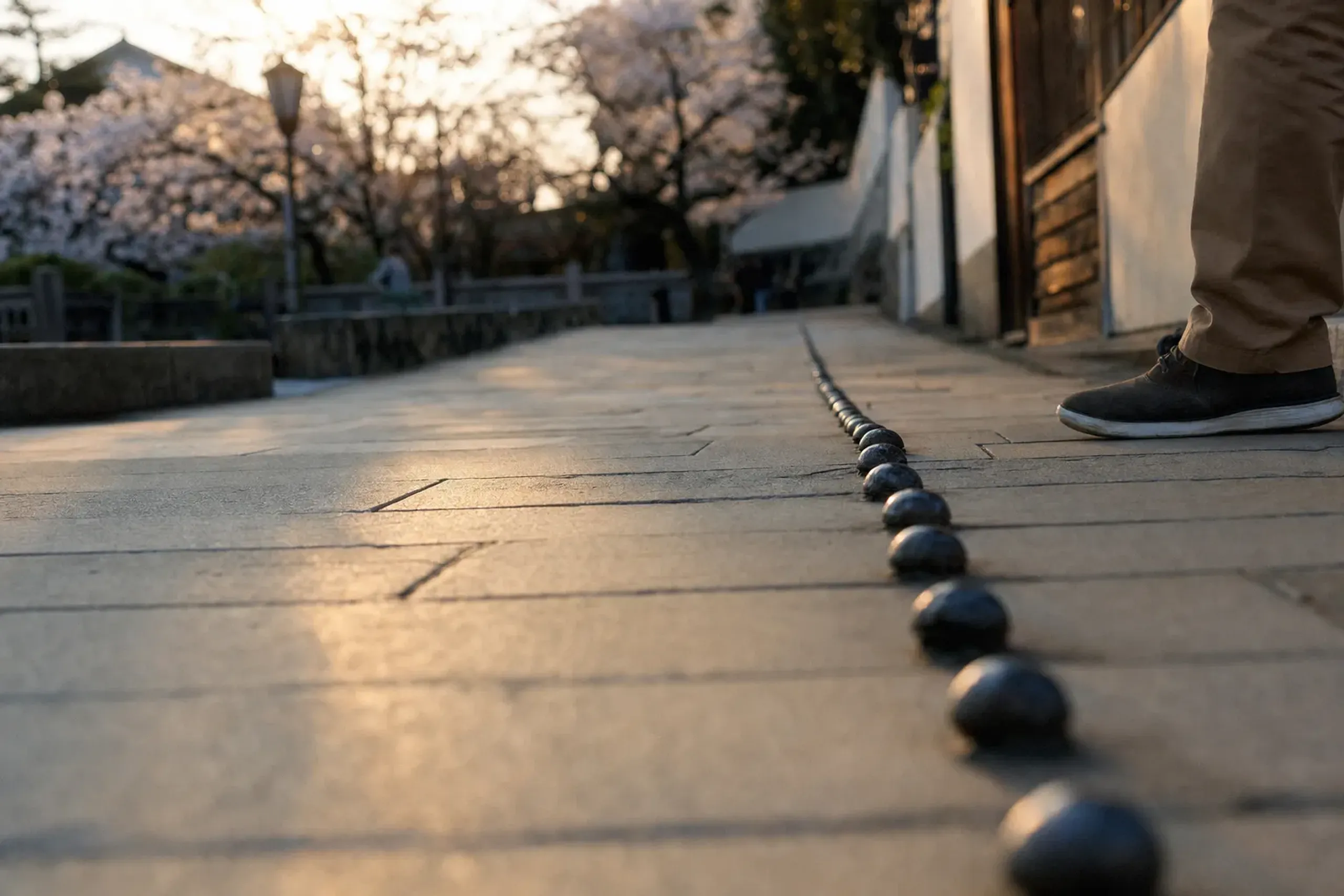
Guided tours are led by the site's own history staff, and a slower pace with private interpretation reveals far more than a quick self-guided loop.
Can You Visit Dejima In The Evening?
Yes. The Omotemon Bridge entrance stays open until 21:00, last entry 20:40, making Dejima one of the rare historic sites in Japan you can visit after dinner. The Water Gate closes earlier, at 18:00.
What Is The Difference Between Dejima, Dejima Messe And Dejima Wharf?
Dejima is the reconstructed historic trading island. Dejima Messe Nagasaki is a modern convention centre, and Dejima Wharf is a waterfront dining and shopping area. Three different places that share the name.
Should I Combine Dejima And The Nagasaki Peace Park In One Day?
We suggest Dejima in the morning and the Peace Park on a separate day, or at least a separate afternoon. The memorial deserves an unhurried, standalone visit rather than a place on a checklist.
Why Choose Japan Royal Service
Nagasaki rewards those who slow down and read it closely, and that is where a private guide earns its place. For Dejima, our concierge arranges guiding with knowledgeable interpretation of the reconstruction, private chauffeured transfers between the island, the Peace Park and your hotel, and refined accommodation in the city. Nothing more, nothing overstated. We are the quiet company that reads a place correctly and moves you through it without friction.
Discretion runs through everything we do. Your identity and your itinerary stay confidential, whether you are pairing Dejima with the layered globalisation story of Glover Garden or building a tailor-made itinerary across Kyushu.
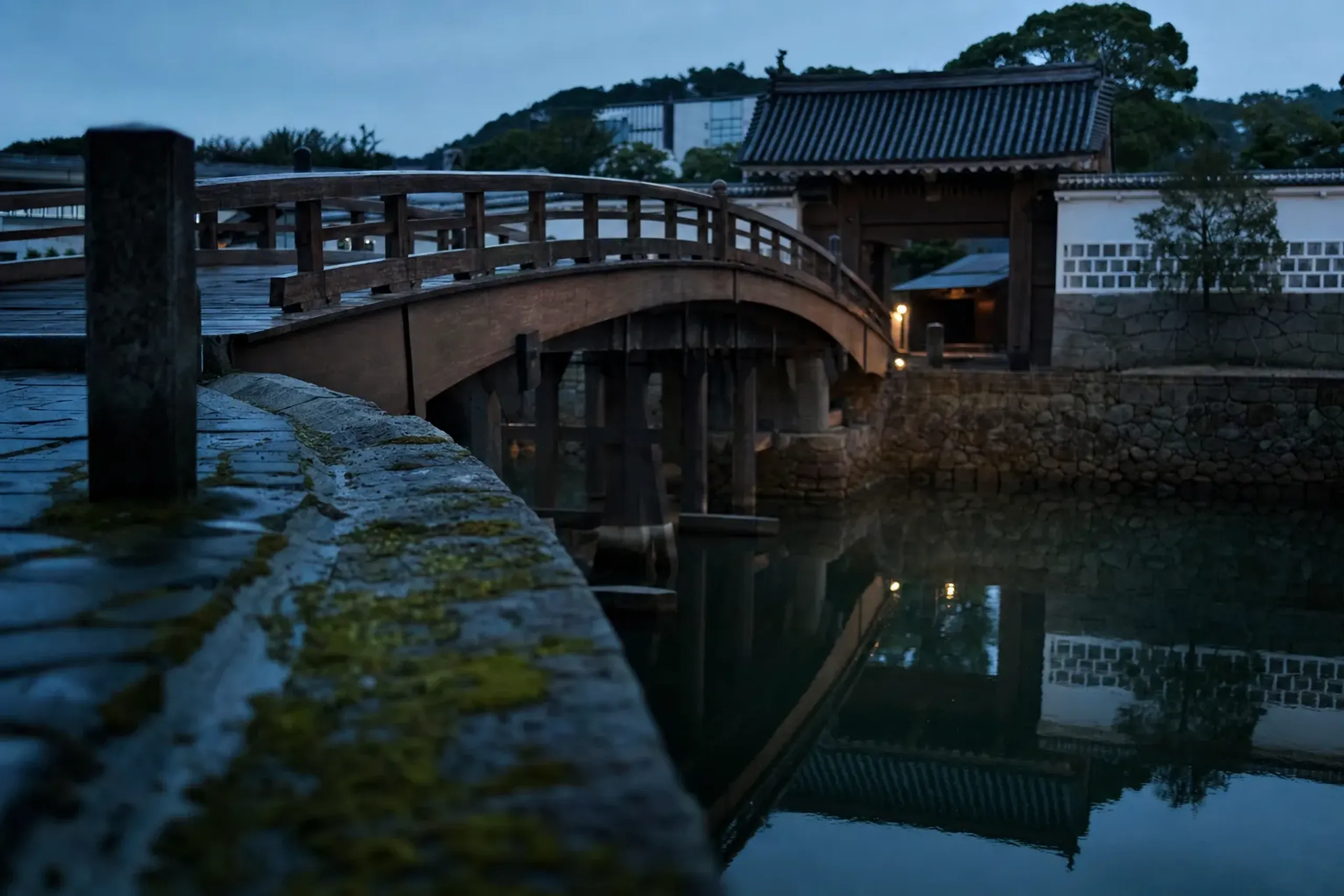
In our experience, the difference is felt in the pacing — the empty morning lanes, the evening crossing of the bridge, the memorial given the room it deserves.
To plan a considered visit to Dejima and Nagasaki, reach our team privately via WhatsApp or LINE, or contact us here.