In this guide
- 01Nikkō Tōshō-gū Is Ornate Because It Had Something To Prove
- 02Why Does Nikkō Tōshō-gū Look Nothing Like A Typical Shinto Shrine?
- 03What Are The Three Wise Monkeys At Nikkō Tōshō-gū Actually Teaching?
- 04How Do You “Read” The Nemuri-neko And The Crying Dragon?
- 05Okusha: The Plain Tomb After All That Gold
- 06Gongen-Zukuri, Explained Without A Lecture
- 07How Do You Visit Nikkō Tōshō-gū From Tokyo Without Rushing The Site?
- 08What Is The Best Order To See Nikkō Tōshō-gū On Foot?
- 09The Grand Festivals: A Living Continuation, Not A Tourist Show
- 10How To Book Official Information And Plan Reliably
- 11Frequently Asked Questions
- 12Why Choose Japan Royal Service
You can walk through Nikkō Tōshō-gū, photograph the gold and the famous monkeys, and still miss the point. That happens every day. The carvings are not “decoration.” They are language.
This shrine was built to make a claim about power. Quietly, then loudly. Once you see that, the gates, corridors, and ceilings stop being pretty objects and start reading like a political statement in wood, lacquer, and leaf.
Nikkō Tōshō-gū Is Ornate Because It Had Something To Prove
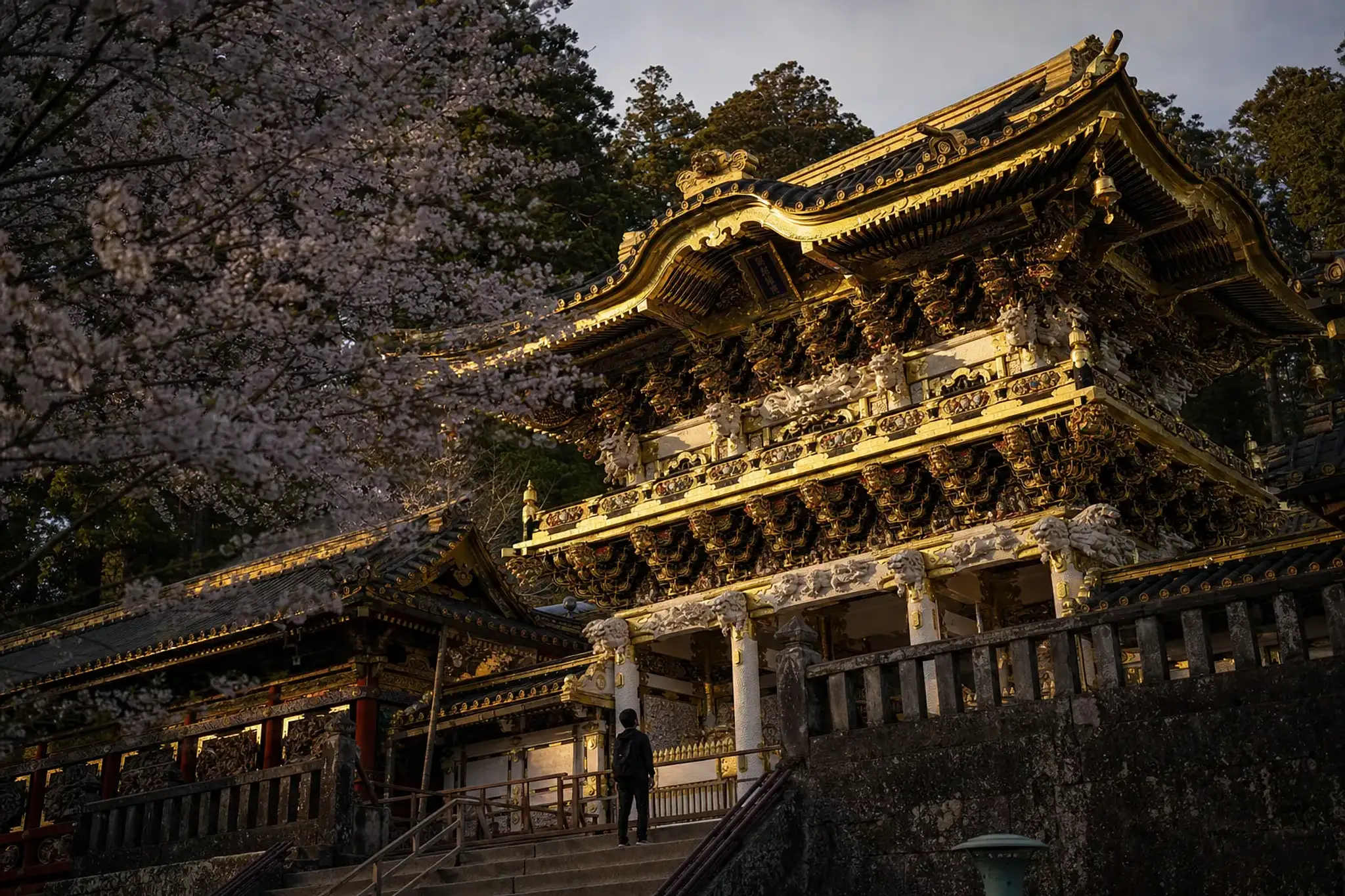
Nikkō Tōshō-gū enshrines Tokugawa Ieyasu, the founder of the Tokugawa shogunate, and it was designed to declare him more than a victorious warlord. That is the core. Everything else hangs off it.
Ieyasu is credited with ending a century of civil war and establishing roughly 250 years of peace and stability. After his death, he was posthumously deified as Tōshō Daigongen. A shrine to a deified shogun is already unusual; making it this lavish is the real message.
The first construction dates to 1617, a year after Ieyasu died. Then it was dramatically expanded in 1636 under his grandson, the third shogun Tokugawa Iemitsu, in what is known as the Kan’ei Grand Renovation. A regime does not spend that kind of effort on a building unless it expects the building to work for it.
Look at the shrine as public persuasion. The craft is genuine, but it is also strategy. No soft focus required.
Why Does Nikkō Tōshō-gū Look Nothing Like A Typical Shinto Shrine?
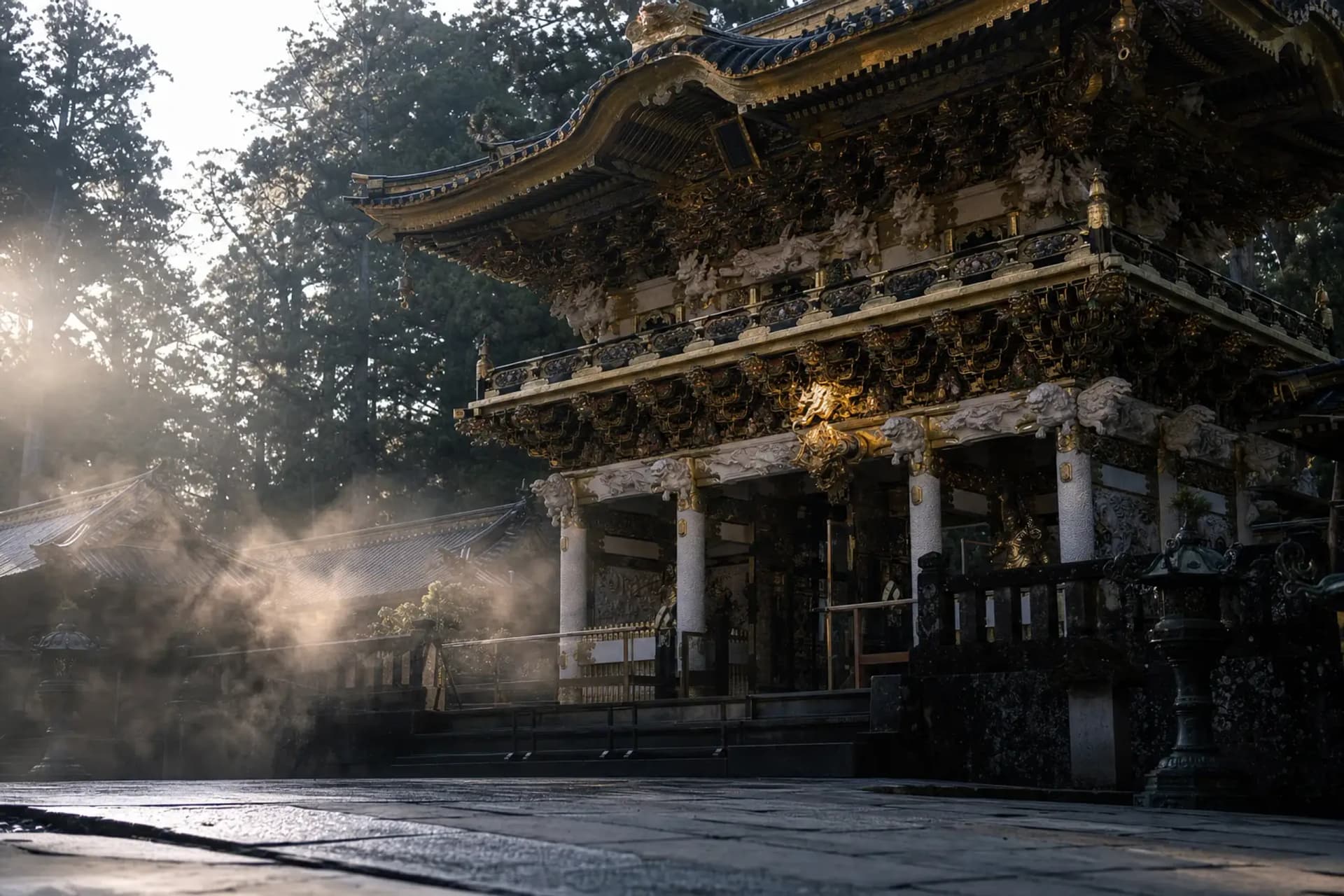
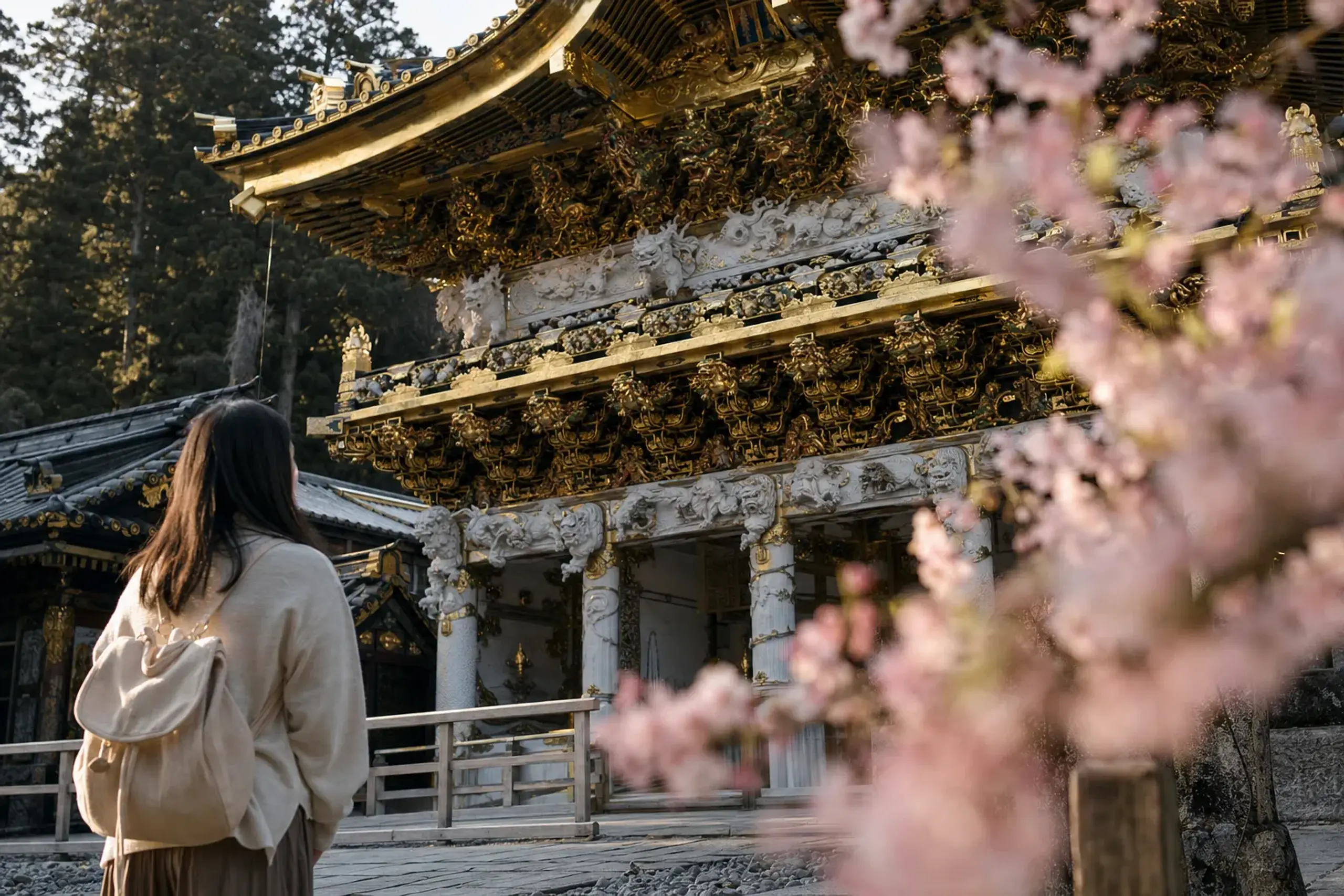
Nikkō Tōshō-gū is an elaborate expression of gongen-zukuri, a Shinto shrine style shaped by Buddhist influence, and its visual density was deliberate. It is meant to overwhelm you before you have time to debate.
Many Shinto shrines lean on restraint. Toshogu does the opposite, by design. The buildings are saturated with color, carving, and metalwork, and the complex uses the visitor’s movement through space to build a story: approach, display, authority, then the turn toward the inner precinct.
It also sits inside a larger sacred landscape. Tōshō-gū forms part of the UNESCO World Heritage property “Shrines and Temples of Nikkō,” together with Futarasan Shrine (Shinto) and Rinno-ji Temple (Buddhist), registered in 1999. UNESCO describes the property as 103 religious buildings in an outstanding natural setting.
If you only treat Toshogu as a single “sight,” you miss the bigger frame. The whole area is a carefully staged statement about legitimacy—religious, cultural, and political—set into the mountains above Nikkō.
What Are The Three Wise Monkeys At Nikkō Tōshō-gū Actually Teaching?
The Three Wise Monkeys at Nikkō Tōshō-gū present a moral lesson—see no evil, hear no evil, speak no evil—placed in a shrine complex built to discipline how people think about authority.
It is easy to stop at recognition. Big mistake. At Toshogu, recognizability is part of the mechanism: a clear image, a portable lesson, and a memory that travels home with the visitor.
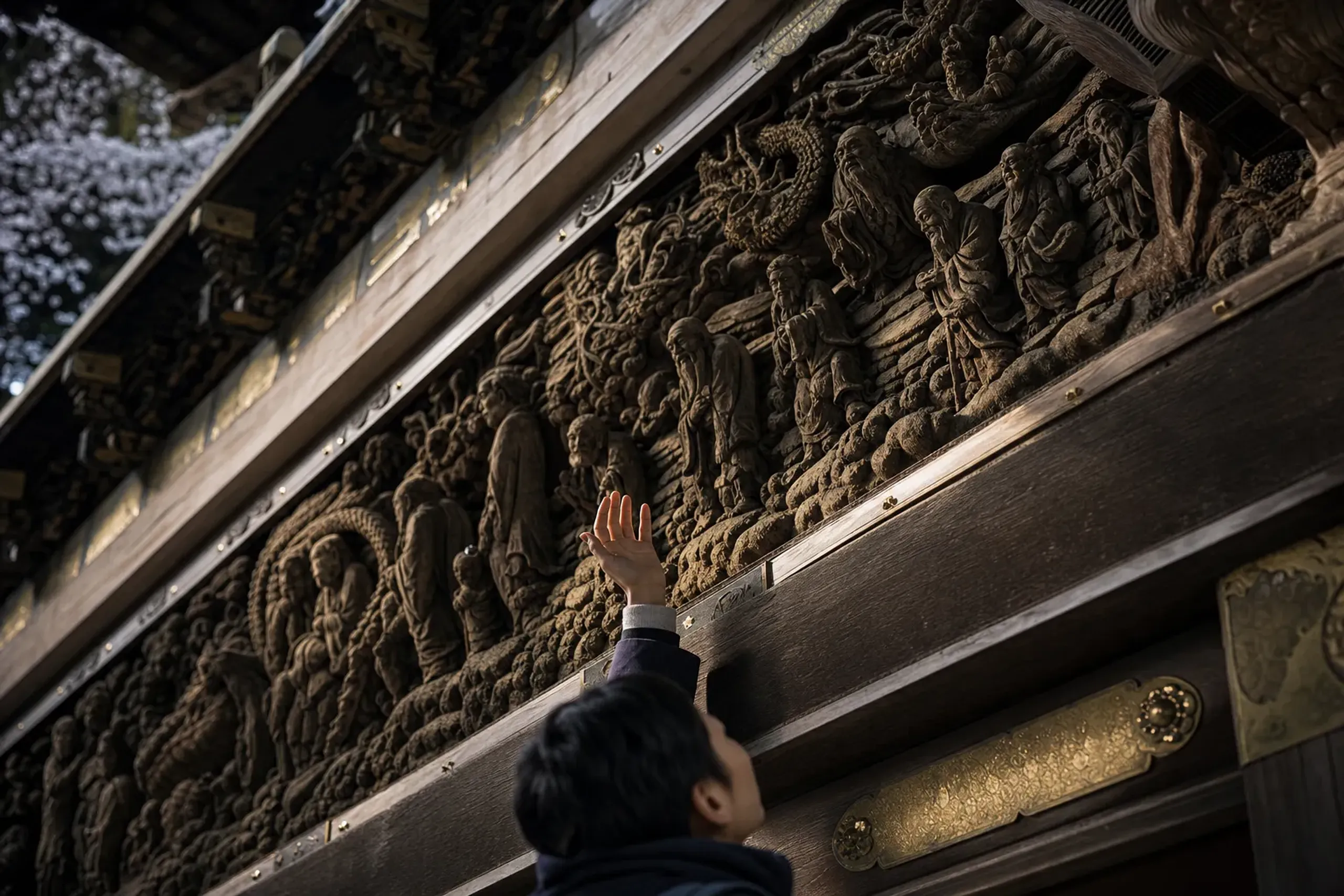
The monkeys are carved on a stable, which matters. A stable sounds practical, even humble, yet it becomes another surface for doctrine. The shrine is telling you that order is not just military; it is behavioral.
Our team at Japan Royal Service often suggests slowing down here on purpose, even if the rest of the precinct feels crowded. If you rush past the stable, you keep the photo and lose the meaning.
How Do You “Read” The Nemuri-neko And The Crying Dragon?
At Nikkō Tōshō-gū, the Nemuri-neko (Sleeping Cat) signals peace, and the Nakiryu (Crying Dragon) ceiling painting is famous for a specific acoustic effect. One is an image of calm; the other turns sound into proof that the room is special.
The Sleeping Cat is small compared with the gates and corridors around it. That scale is the point. A tiny, controlled symbol can imply a whole worldview: stability achieved, threats subdued, an era quiet enough for a cat to sleep.
The Crying Dragon is different. It is experiential. You stand under a ceiling painting and the space itself performs—an acoustic response that makes people look at each other and ask, “Did you hear that?” It is a built-in demonstration of mastery.
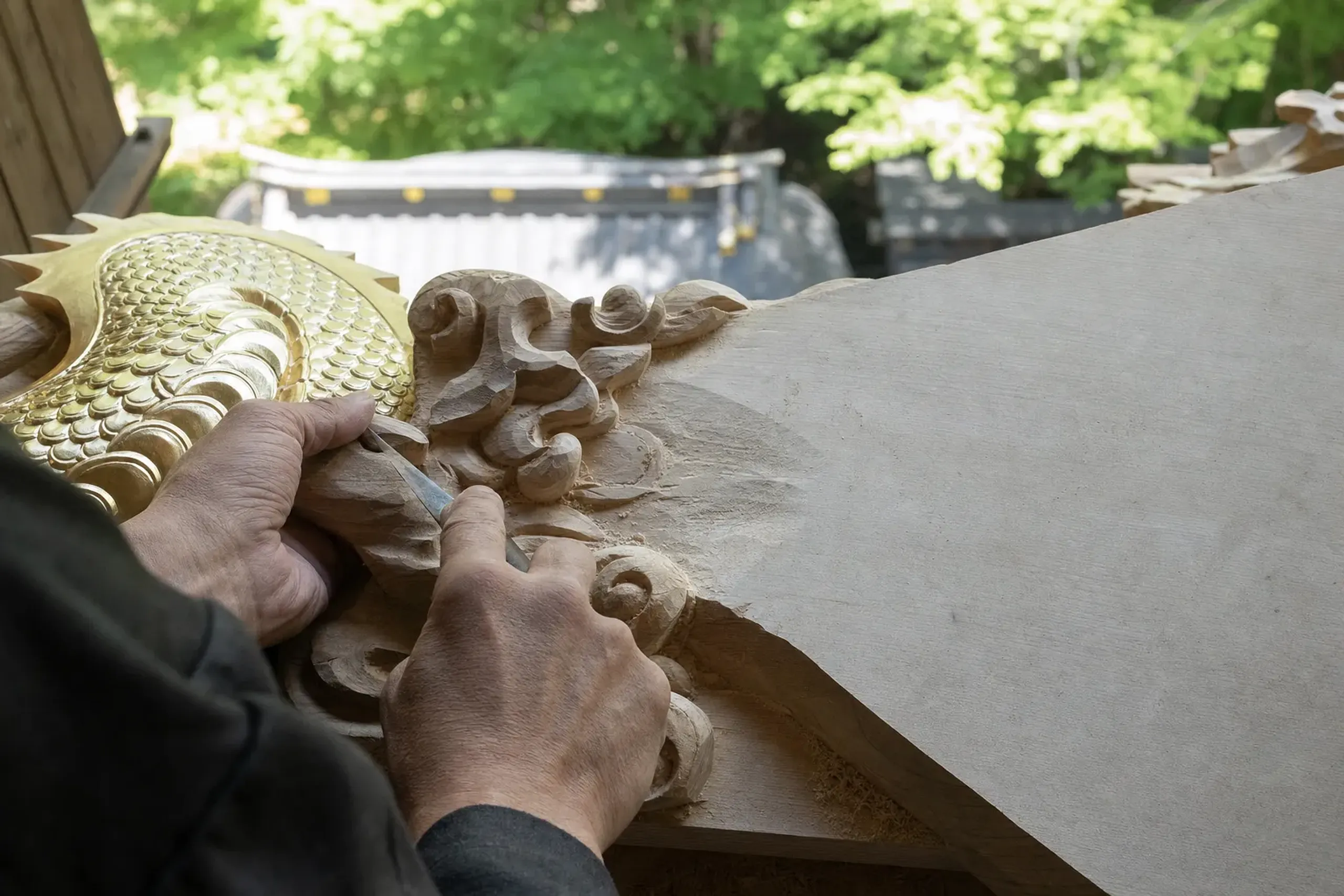
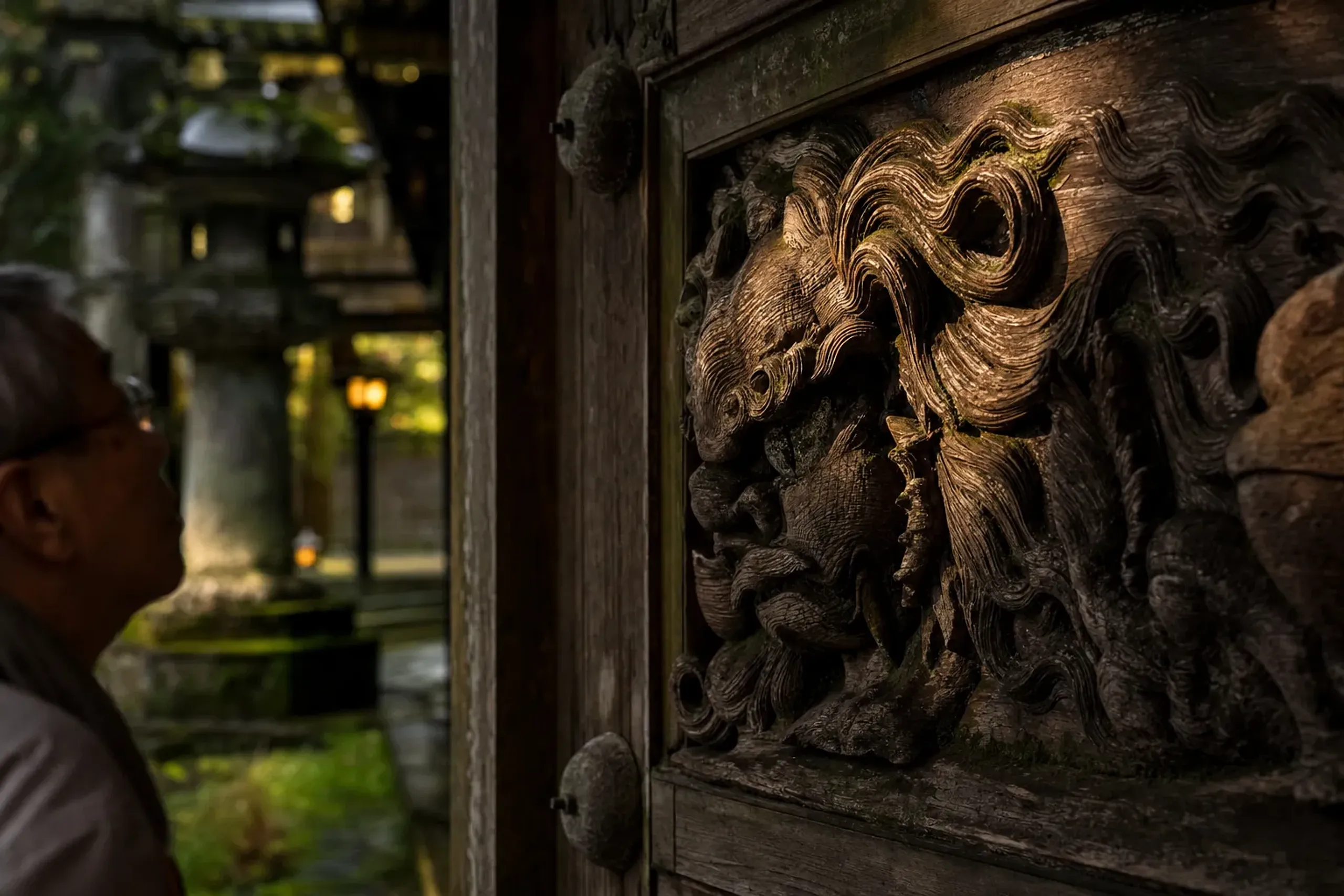
This is where shokunin becomes more than a buzzword. The shrine’s surfaces are persuasion, but persuasion still needs execution, and Toshogu is essentially an anthology of specialist hands—carvers, lacquer workers, metal artisans—marshaled to make authority feel inevitable.
Okusha: The Plain Tomb After All That Gold
Ieyasu’s actual tomb, at Okusha, reached by a stone staircase behind the main complex, is comparatively plain and austere. The contrast is not accidental.
The approach is dense with spectacle. Then the site tightens. Stone steps, trees, breath. The plainness resets your attention and changes the register from public display to something closer to finality.
Read the sequence as a statement about two kinds of memory. The ornate buildings tell the world how to see Ieyasu. The tomb suggests how he wished to be anchored—controlled, durable, and stripped of ornament once the argument has already been made.
For many visitors, this is the moment the site clicks. You realize the shrine is not “one style.” It is choreography.
Gongen-Zukuri, Explained Without A Lecture
Gongen-zukuri is a shrine architectural style that shows Buddhist influence, and at Nikkō Tōshō-gū it becomes a full system of connected buildings, corridors, and controlled viewpoints. Think of it as architecture that directs you, not just shelters you.
You do not need technical vocabulary to see the effect. You feel it in how one gate frames the next space, how density rises as you move inward, and how ornament is used as a kind of volume knob—turned up where the shrine wants to impress, turned down where it wants you to submit.
This is also why the Kan’ei Grand Renovation matters. The 1636 expansion under Iemitsu is not only a construction story; it is a governance story, using building as policy.
In our experience, travelers who enjoy architecture in Tokyo or Kyoto often assume Nikkō will follow the same visual logic. It does not. That difference is the reason to go.
How Do You Visit Nikkō Tōshō-gū From Tokyo Without Rushing The Site?
Nikkō is roughly two to two-and-a-half hours from Tokyo, so the key is choosing a short list of priorities and protecting unhurried time at the inner precinct.
The wider UNESCO area is dense. UNESCO’s World Heritage property includes 103 buildings across Tōshō-gū, Futarasan Shrine, and Rinno-ji Temple. The City of Nikkō notes that within this World Heritage site there are nine National Treasures and 94 Important Cultural Properties. You will not “do it all” in one clean sweep.
Start with the traditional threshold. Shinkyō Bridge is the sacred entry point to the wider World Heritage area, and it sets the tone for an approach on foot rather than a jump-cut into the middle of the complex.
Then choose your non-negotiables. For most first visits, that means the famous carvings (monkeys, Sleeping Cat), the Crying Dragon ceiling, and the climb to Okusha to feel the contrast.
Everything else becomes optional, not compulsory.
A Pacing Blueprint That Works For HNW Travelers
Our concierge team often recommends a “few deep stops” strategy. It protects your attention. It also keeps the visit from turning into a checklist.
- Threshold first: walk in from Shinkyō Bridge to let the site build its own rhythm.
- Carvings with context: treat the monkeys as doctrine, not a souvenir photo.
- One sensory moment: the Crying Dragon for sound and space.
- End with austerity: climb to Okusha and let the tone change.
If you want a single add-on that stays on-theme, the Nikkō Tōshō-gū Museum (Homotsukan) opened in 2015 to commemorate the 400th anniversary of Ieyasu’s death and holds artifacts such as armor, swords, and letters. It can clarify the human scale behind the shrine’s myth-making.
Transport Choices: Private Car Vs Limited Express Rail
There is no “right” answer, only trade-offs. Some guests prefer rail to read or rest; others want a car to keep control over timing and personal space.
Tobu Railway’s SPACIA X is an official limited express/sightseeing train product marketed for travel to the Nikkō/Kinugawa area. Tobu also published a limited express timetable revision dated March 14, 2026, covering services including Tobu-Nikkō-bound trains. Exact departures shift, so we confirm your preferred trains at the time of planning.
When guests choose a car, we stage the day around your energy.
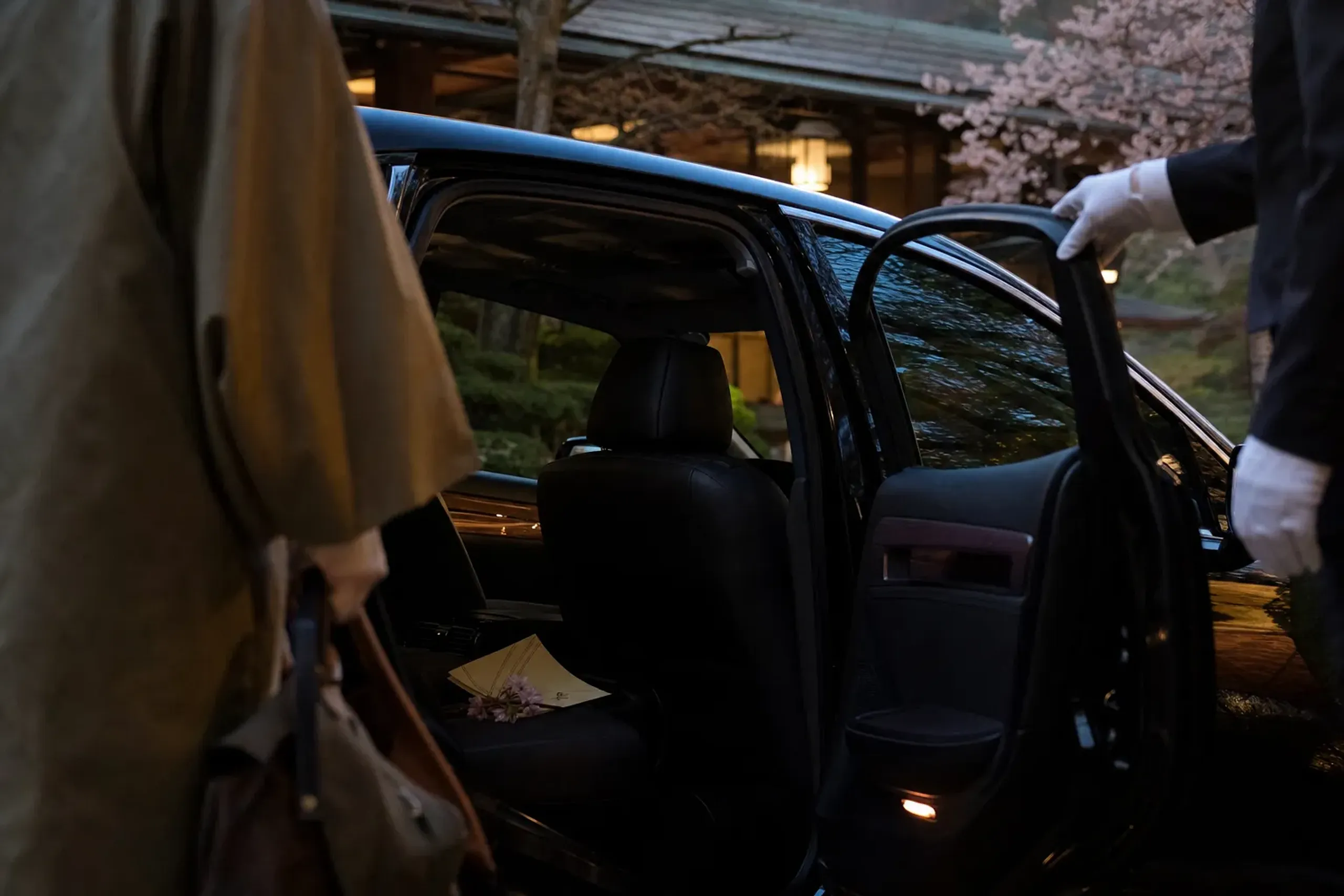
If you plan to visit Nikkō with a private chauffeured vehicle, you can also build in pauses that rail timetables do not forgive: a longer linger at Okusha, or a quiet late lunch before the return.
Key fact: Do not plan Nikkō Tōshō-gū like a “single monument.” The UNESCO property is a clustered landscape of 103 buildings, and pacing beats coverage every time.
What Is The Best Order To See Nikkō Tōshō-gū On Foot?
The best order is to enter from Shinkyō Bridge, build toward the ornate core, and finish at Okusha so the visit ends in plainness rather than spectacle.
This order matches how the site communicates. The bridge gives you threshold and gravity. The carved and gilded precinct gives you the argument. The stone staircase to Okusha gives you the aftertaste: restraint, permanence, and a quieter kind of authority.
Trying to reverse it often feels flat. The tomb first, then the ornament, turns the site into “nice buildings” instead of a designed narrative. Let the shrine speak in the sequence it was built to deliver.
If you are pairing Toshogu with Futarasan Shrine or Rinno-ji, treat them as different registers within the same UNESCO property, not as “nearby extras.” Even a short visit feels more coherent when you keep that frame.
The Grand Festivals: A Living Continuation, Not A Tourist Show
The Spring and Autumn Grand Festivals at Nikkō Tōshō-gū feature a roughly thousand-person procession in samurai dress that re-enacts the arrival of Ieyasu’s remains at Nikkō.
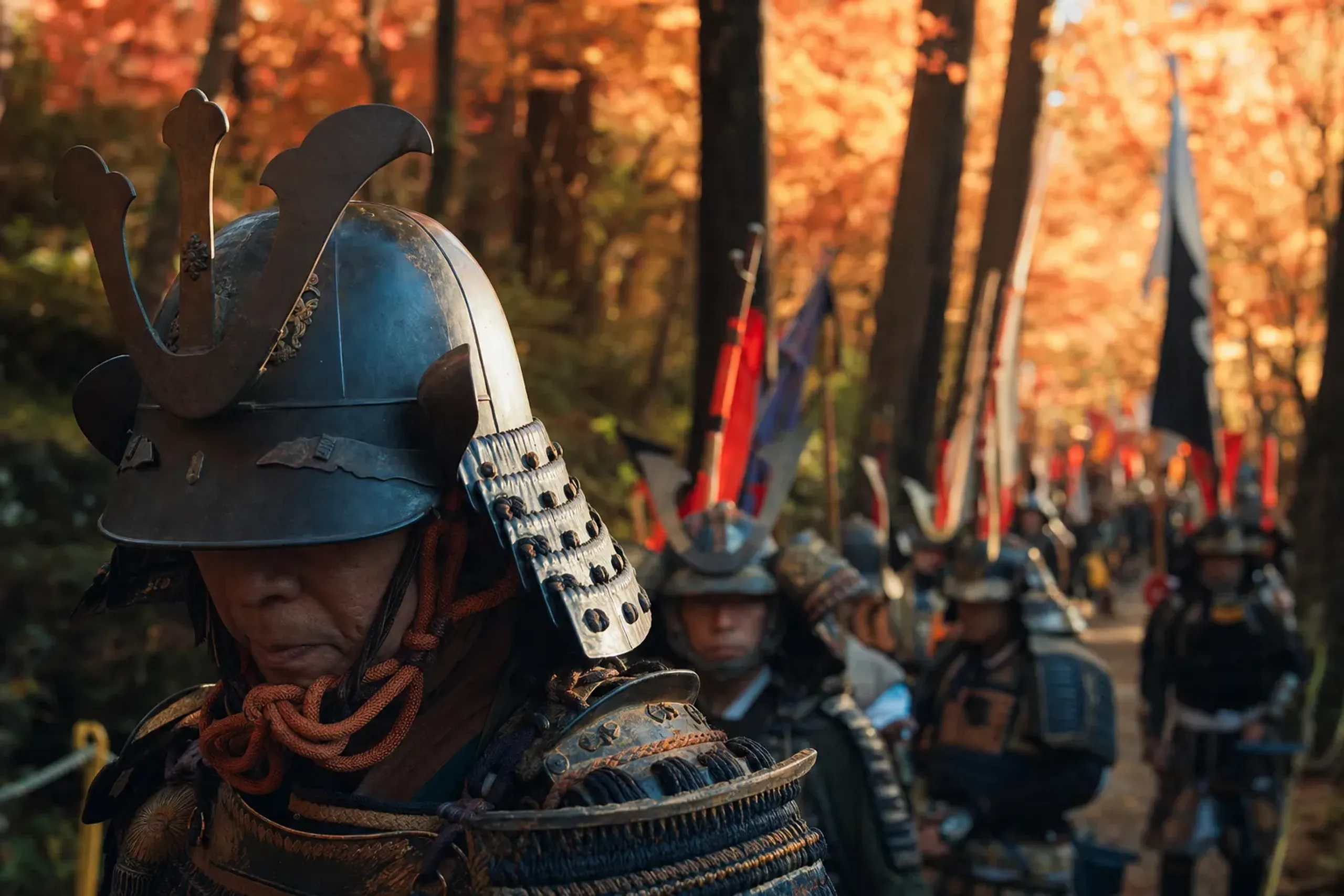
It is not a modern invention; it continues the shrine’s original commemorative purpose.
The Spring Grand Festival dates are published by the Nikkō Official Guide as May 17–18 for 2026. The Autumn Grand Festival (Shuki Taisai) is also presented by JNTO as a major cultural event, with the samurai parade described as the most significant event during the festival.
Festival days change the feel of the area. You will see more cameras. You will also see continuity—costume, movement, and public memory playing out in the same landscape the Tokugawa built to hold it.
We avoid over-promising about exact parade viewing or year-specific program details in public writing, because official schedules can shift. If festivals matter to your trip, our concierge team verifies the current details directly during planning.
How To Book Official Information And Plan Reliably
Use official sources for the non-negotiables: UNESCO for the World Heritage listing, JNTO for national-level event framing, Tobu for rail products and timetables, and the Nikkō official guide for festival-date listings.
This matters more in 2026 than most people expect. Timetables get revised. Event pages get updated. A clean plan comes from checking primary sources, not copying last year’s blog post.
- World Heritage context: “Shrines and Temples of Nikkō” (UNESCO, 1999 registration).
- Festival listings: Nikkō Official Guide and JNTO’s event pages.
- Rail: Tobu Railway’s SPACIA X pages and official timetables.
If you want a deeper Nikkō reading list inside our own site, we keep one dedicated guide to the site’s details here: One Reversed Pillar Is Famous. A Guide To Nikkō Tōshō-gū. For a broader Tōhoku-and-north cultural rhythm, this festival post can also help you think in sequences rather than isolated stops: Tōhoku’s Three Great Festivals in One Week.
Frequently Asked Questions
Is Nikkō Tōshō-gū A UNESCO World Heritage Site?
Yes—Nikkō Tōshō-gū is part of the UNESCO World Heritage property “Shrines and Temples of Nikkō,” registered in 1999 together with Futarasan Shrine and Rinno-ji Temple.
UNESCO describes the property as 103 religious buildings in an outstanding natural setting. Treat your visit as a clustered landscape, not a single building.
How Long Should I Spend At Nikkō Tōshō-gū If I Only Have One Day?
Plan enough time to see the core precinct slowly and still climb to Okusha, because the plain tomb is where the site’s message becomes clear.
If you try to cover every structure, you will move fast and remember little. Pick a handful of key moments and protect them.
What Do The Three Wise Monkeys Mean At Nikkō?
The Three Wise Monkeys represent “see no evil, hear no evil, speak no evil,” and at Toshogu they function as a moral lesson embedded in a political monument.
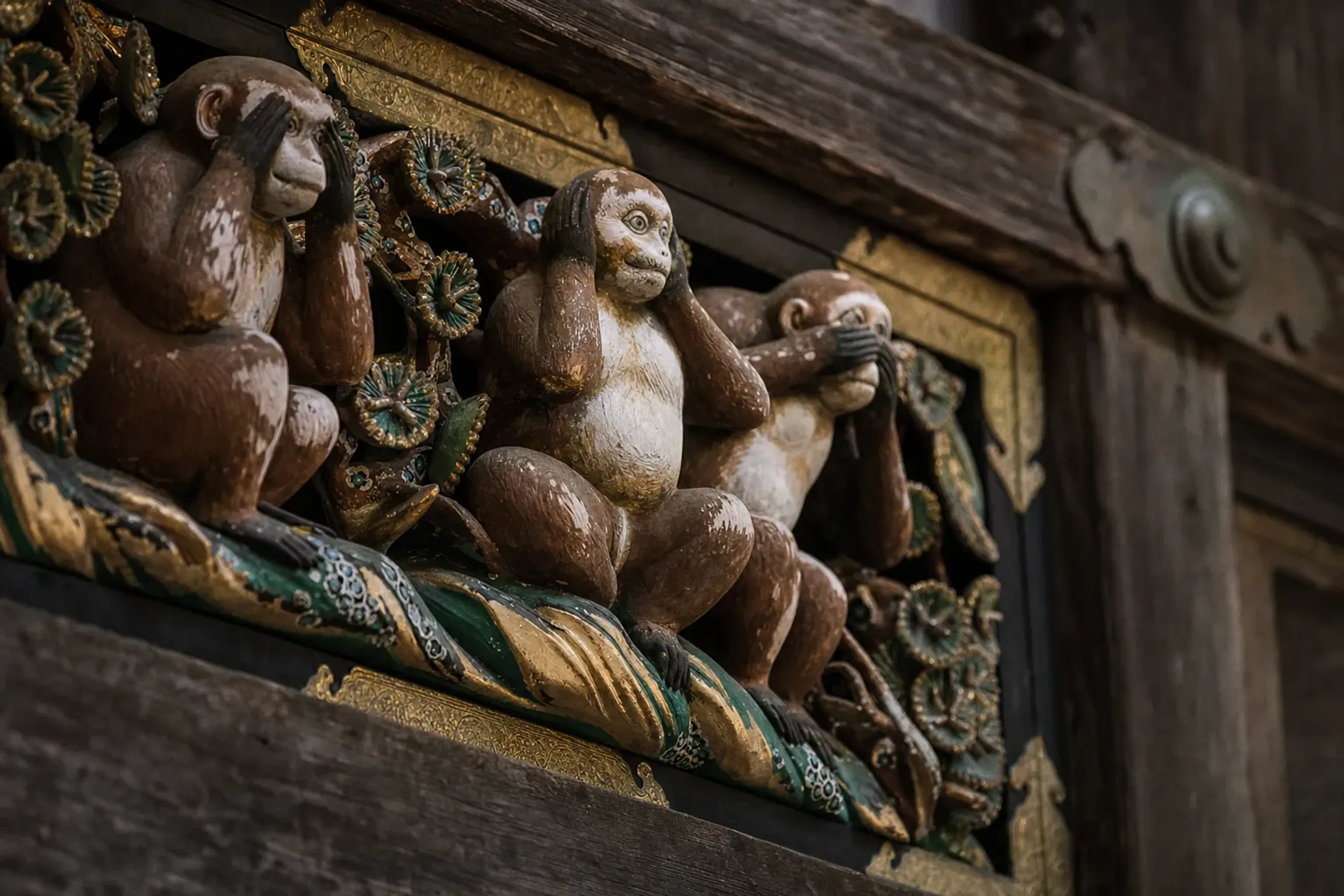
They are famous because they are easy to recognize. The harder part is noticing how the shrine uses simple symbols to train public behavior.
Are The Nikkō Tōshō-gū Festivals Worth Planning A Trip Around?
Yes, the Grand Festivals are a direct continuation of Toshogu’s commemorative purpose, featuring a large samurai-dress procession re-enacting Ieyasu’s arrival.
The Nikkō Official Guide lists the Spring Grand Festival dates as May 17–18 for 2026, and JNTO highlights the Autumn Grand Festival’s samurai parade as its most significant event.
Why Choose Japan Royal Service
Seeing Nikkō Tōshō-gū well is mostly about sequencing: when you arrive, where you start, what you skip, and how you keep your attention intact inside a very dense UNESCO landscape. Our team at Japan Royal Service designs that pacing with you, based on how you like to move through historic sites.
We also build the day around discretion. Quiet entrances, measured transitions, and a plan that does not broadcast itself. If you want to place Nikkō inside a tailor-made itinerary that keeps Tokyo calm and coherent, we will guide you on the timing and the on-the-ground flow.
Ready to read Nikkō Tōshō-gū like it was meant to be read? Reach our team privately via WhatsApp or LINE, or contact us here to discuss transport, guiding, and timing for your Nikkō visit.