In this guide
- 01The Dancers Who Hide Their Faces
- 02Where Did Nishimonai Bon Odori Come From?
- 03When Was The Dance We See Today Actually Shaped?
- 04The Costumes And The Two Dances
- 05Recognition
- 06How Do You Visit Nishimonai Bon Odori?
- 07What Japan Royal Service Arranges For Nishimonai
- 08Frequently Asked Questions
- 09Why Choose Japan Royal Service
Dusk settles over a narrow street in Ugo, in southern Akita. Bonfires are lit along Nishimonai Honcho Street, and the smoke drifts low over the asphalt. Somewhere on a wooden scaffold at the centre, a flute begins. Then a drum. Then the dancers come, moving in a long, slow loop.
Look closely. You cannot see their faces.
This is Nishimonai Bon Odori, held each year on the 16th, 17th, and 18th of August. It is one of the three great Bon dances of Japan, alongside Gujō Odori in Gifu and Awa Odori in Tokushima. But where those festivals pull you in with joy and motion, this one asks something quieter of you. It asks you to watch the dead.
The Dancers Who Hide Their Faces
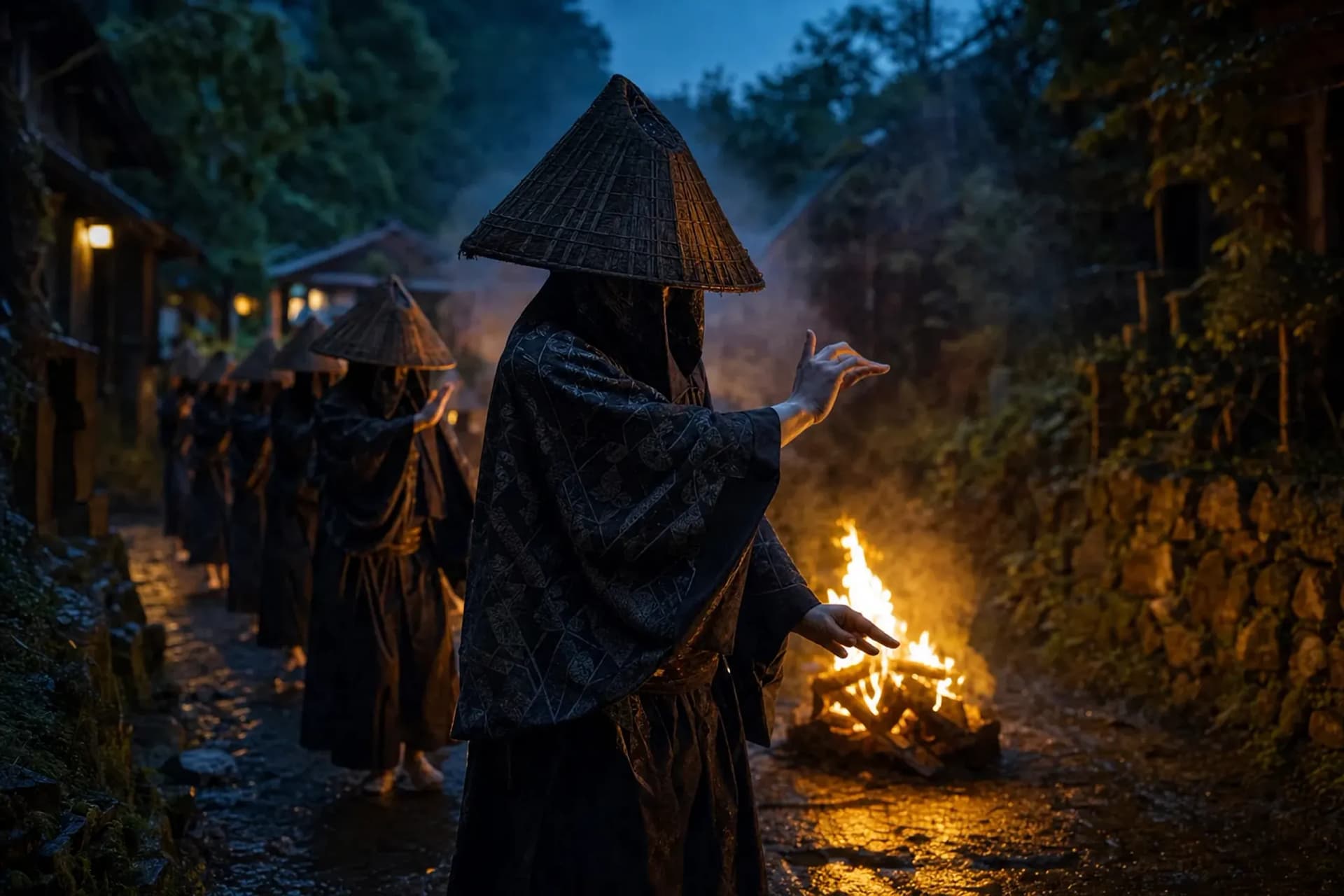
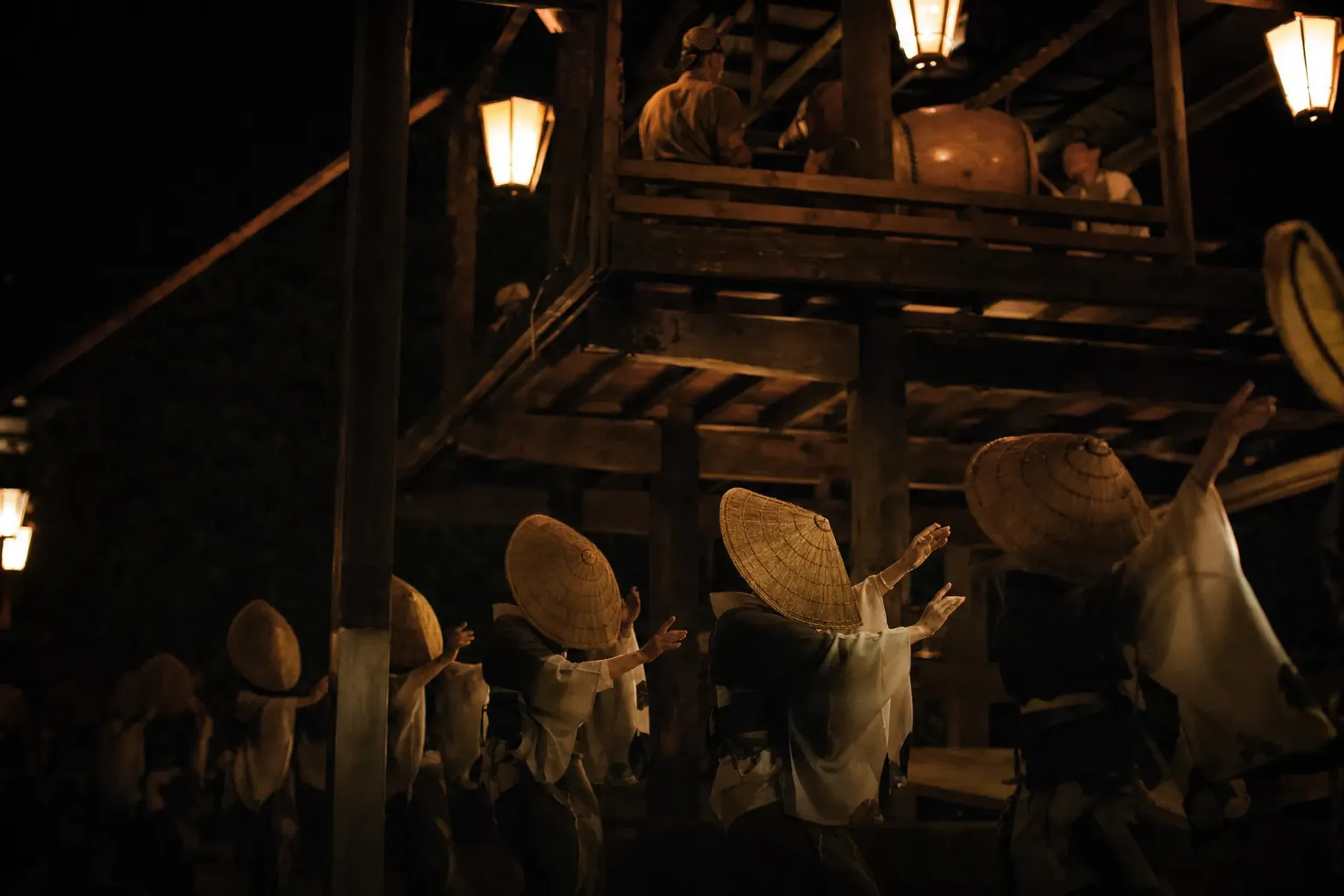
At Nishimonai, the dancers conceal their faces, and tradition says the covered faces represent the dead. Adult women wear deep woven hats, tilted so low the brim shadows everything. Younger women and men wear black hoods, with only a narrow slit left for the eyes.
The dance is called mōja odori — a dance of the dead. The phrase is startling the first time you hear it. Yet watch the loop circle the fires, and the name stops feeling like metaphor.
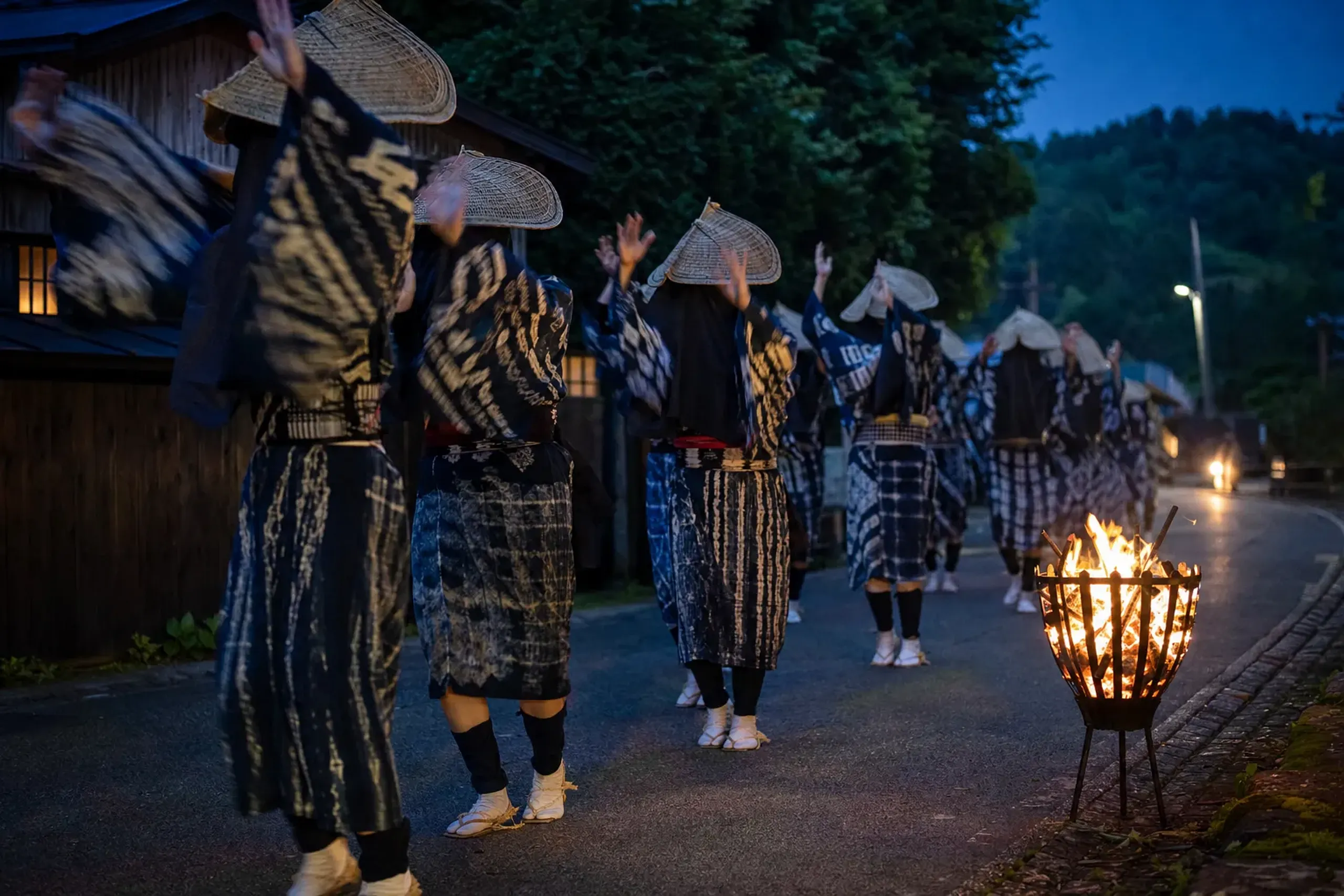
No single person leads. The dancers glide in file around the flames, arms rising and falling in a motion that is almost liquid. The musicians call out from the scaffold overhead. The effect is hard to name. Elegant, certainly. Also haunting, in a way few festivals ever manage.
We should be honest about one thing from the start. The idea that the faces represent the dead is tradition, not documented fact. The town itself is careful about this. So are we.
Where Did Nishimonai Bon Odori Come From?
No one knows for certain. The town of Ugo states plainly that no written records of the dance's origin survive — everything rests on oral tradition.
Two accounts circulate, and both deserve to be heard.
The Monk And The Harvest Prayer
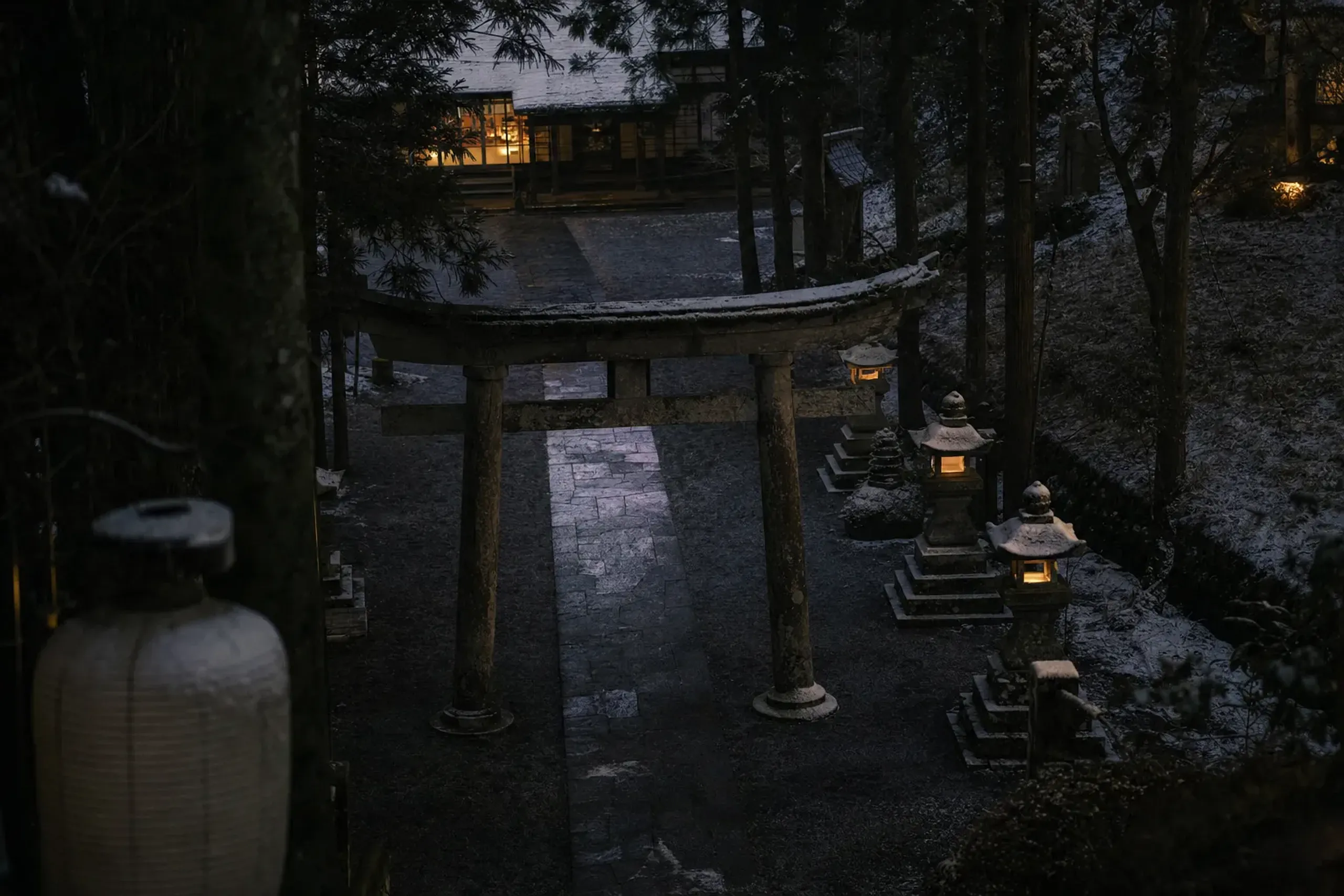
One account places the dance's root in the late thirteenth century, roughly the 1288 to 1293 era. A training monk is said to have invoked the deity Zaō Gongen — now enshrined at Nishimonai Ontake Shrine — and had the people dance within the precinct to pray for a good harvest. A dance offered to the gods, in other words. A prayer with the body.
The Fallen Lord And His Retainers
The second account is darker, and it belongs to the covered faces. The lord of Nishimonai castle, of the Onodera family, was destroyed in 1601 after the battle of Sekigahara. His surviving retainers, the story goes, held a memorial dance for him at a temple. A dance of mourning.
Over time the two are said to have merged, and the dancing moved to the present main street sometime in the 1780s. You will see the dance's age given loosely — "700 years" here, "750 years" there. We will not choose a figure, and neither should you.
The uncertainty is part of the truth.
When Was The Dance We See Today Actually Shaped?
Much more recently than the hoods suggest. The town's own pages say the dance's present form was set after a first performance in Tokyo in 1935, when costumes were unified and new instruments added.
This matters, and it does not undercut the dance one bit. A poet who saw Nishimonai in 1907 reportedly remarked that it was the first Bon dance he had seen that made a picture. That instinct — a dance to be seen — is what later shaped it.
For the Tokyo performance, the costumes were standardised: the patchwork hanui kimono paired with woven hats, or indigo yukata worn with black hoods. Shamisen, hand drum, and gong joined the older taiko and flute. The result was a village remembrance refined into something an outside audience could read at a glance.
Key fact: The haunting, unified look of Nishimonai Bon Odori is genuinely old in spirit but was organised into its current form around a 1935 Tokyo performance. The dance's deep past and its modern staging are both true.
The Costumes And The Two Dances
The hanui is the heart of it. These are patchwork kimono, pieced together from scraps of old silk — some of the fabric more than a century old. Each household combines its own inherited pieces, so no two are alike. Wearing a fine hanui was once a quiet mark that you danced well.
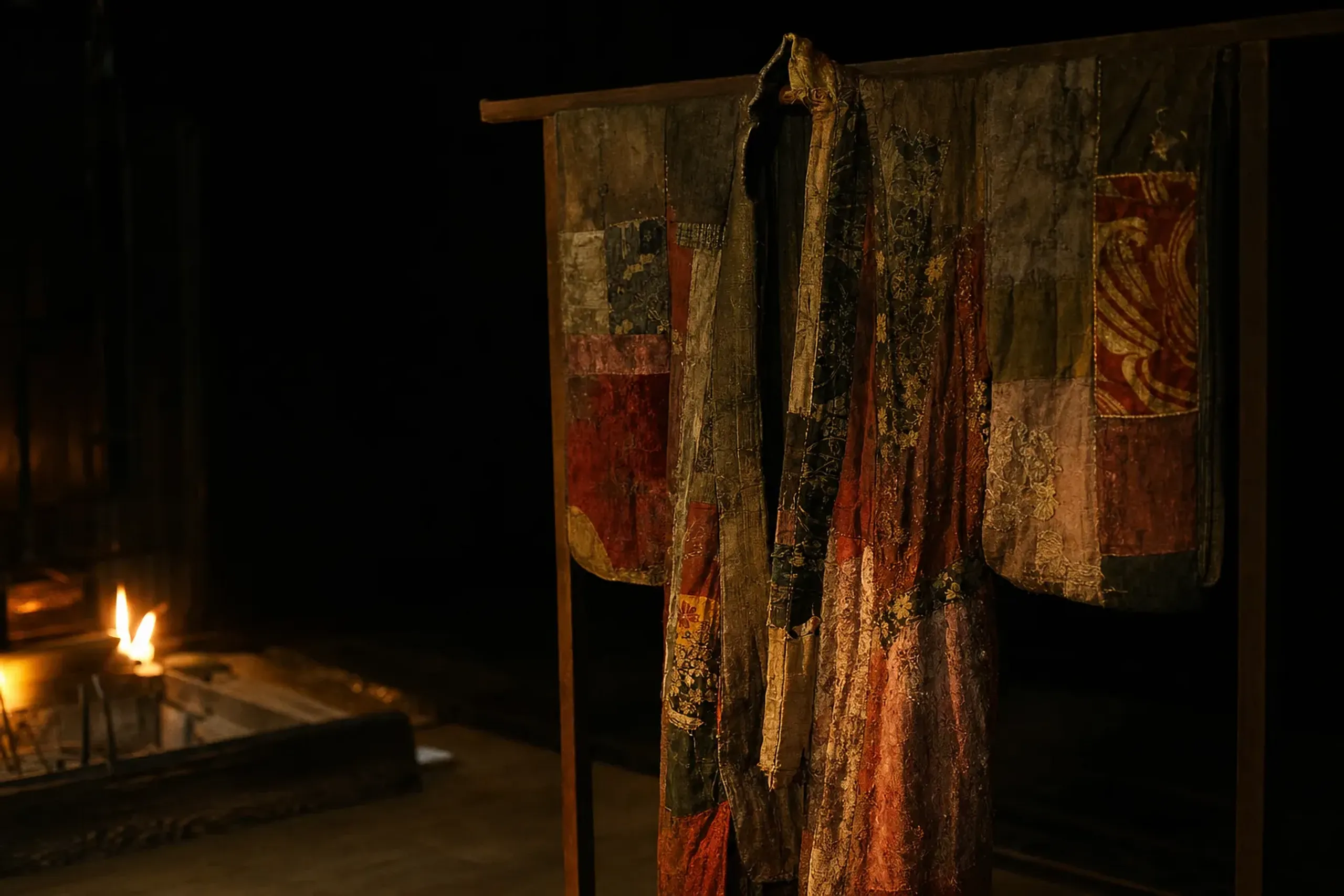
The exhibition hall in town displays them, and anyone may view the collection up close.
Adult women dance beneath the deep woven hats. Younger dancers and men wear the black hoods with indigo shibori-dyed yukata. Under firelight the indigo turns almost black, and the patchwork catches the flame in sudden flashes of red and gold.
On the scaffold, musicians play flute, shamisen, large drum, hand drum, and gong. There are two dance types. Ondo is the first. Ganke is the second — said to recall wild geese flying beneath the moon, which tells you most of what you need to know about its mood.
Children dance first on the opening evening. Local guides suggest the adult dancers' more haunting presence builds later in the night, after the crowds have thinned and the fires have burned down. We offer that only as a suggestion, as they do.
Recognition
A preservation society was founded in 1947 to carry the dance forward. In 1971 it was named an Akita prefectural intangible cultural property. Then, in 1981, it became the first Bon dance in Japan designated a national Important Intangible Folk Cultural Property — a real distinction among hundreds of regional dances.
In 2022 it was inscribed on UNESCO's furyū-odori listing, the Intangible Cultural Heritage grouping of ritual folk dances. If you have read our pieces on Gujō Odori and Awa Odori, you now have the full set of Japan's three great Bon dances — each worth a journey in its own right.
How Do You Visit Nishimonai Bon Odori?
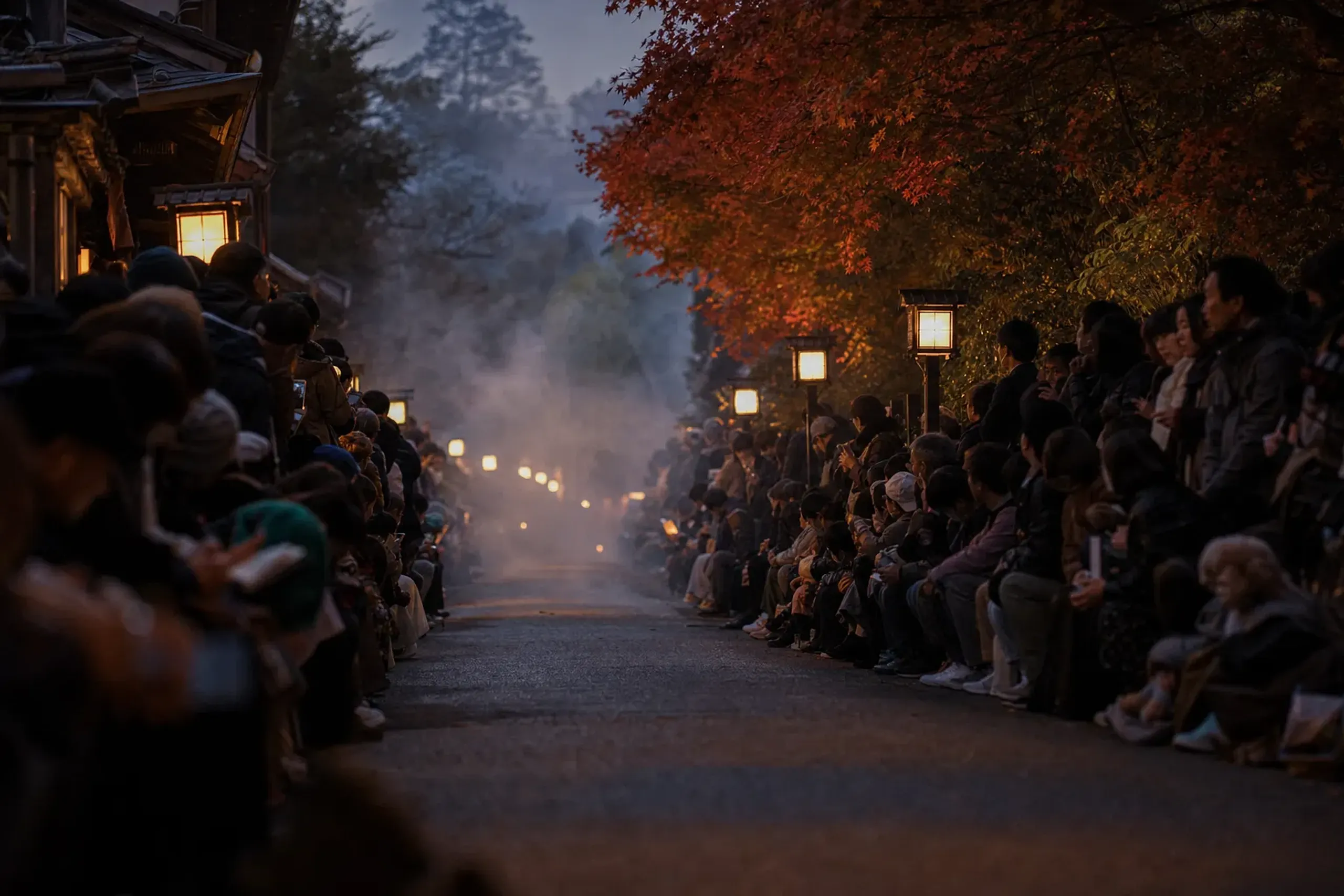
Nishimonai Bon Odori runs on the main street of Nishimonai in Ugo, southern Akita, on the 16th, 17th, and 18th of August each year. Evening hours run roughly 19:30 to 22:30, extending later on the final night. Standing viewing along the street is free.
Now the practical detail, stated once and plainly.
- Dates and hours. The dance is held annually on 16, 17, and 18 August — a fixed calendar date since 1958. Evening performances begin around 19:30. Hours run to roughly 22:30 and later on the 18th, but they shift slightly year to year, so the current programme must be checked.
- Seating. Viewing along the street is free. Some seats are paid. Front and side seats near the musicians are allocated by lottery months in advance; a number of same-day seats go on sale from late afternoon, cash only, until they sell out.
- Traffic. The main street closes to vehicles from late afternoon through the night, so arrival and departure need planning.
- Rain. The dance is not cancelled in rain. It moves indoors to the Ugo Town General Gymnasium, with the decision announced in the early afternoon. The indoor venue is all paid seating — no entry without a ticket — with slightly shorter hours.
Crowds are large. One tourism listing gives roughly 100,000 visitors across the three nights, in a town this small. Treat that as a single listing's figure, not gospel — but plan as though it is true.
Lodging inside Ugo is very limited; official guidance notes capacity in the low hundreds. Most visitors base in nearby Yuzawa or Yokote instead. The nearest station is Yuzawa, a short drive from the street. Our summer festival calendar can help you weigh Nishimonai against overlapping August dates, and for another Akita night worth the trip, see our Awa Odori guide for how the great Bon dances differ in temperament.
One more note. The town's own page lists a free exchange event for visitors, with music, a short history introduction, and a dance-experience component. Our concierge team confirms its current terms before your visit. It is a public community gathering — nothing here, including that event, lets a visitor join the main street dance itself.
What Japan Royal Service Arranges For Nishimonai
Let us be clear about what this is. Nishimonai Bon Odori is a public community festival. We do not offer private, reserved, or exclusive viewing, and no one can be placed within the dance.
What our team does is remove the friction. We handle guiding, private chauffeured transfers around the traffic closures, accommodation coordination in Yuzawa or Yokote given Ugo's tight capacity, and seating through official channels where seats are available to the public. Our concierge team verifies the current year's programme, seating options, the rain arrangements, and your lodging on your behalf well ahead of time.
This is where quiet planning earns its keep.
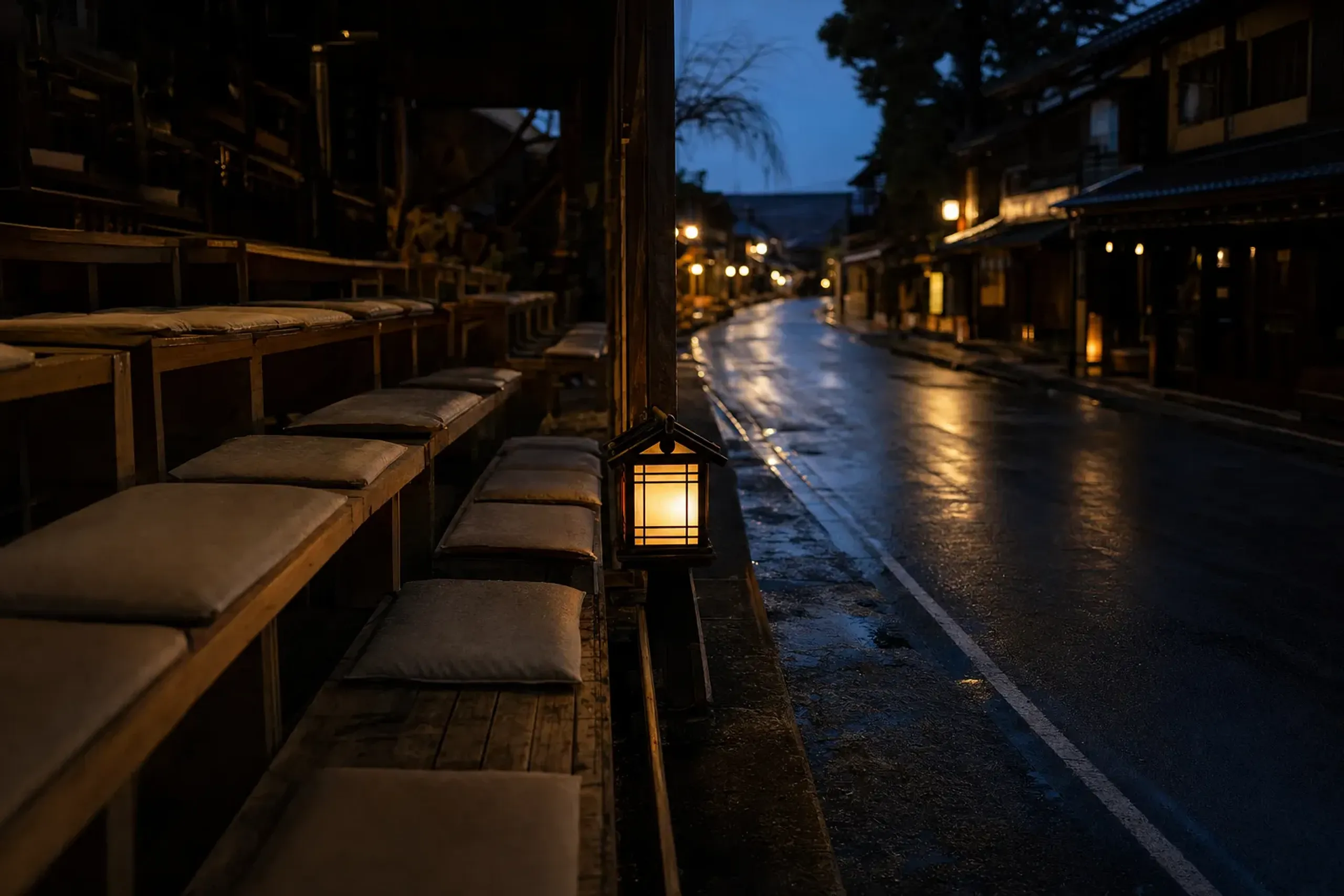
The seats near the scaffold are decided months out; the same-day seats sell cash-only until gone; the rain switch is called at midday. For a guest arriving from abroad, each of those is a small risk. Handled together, as part of a bespoke Tohoku itinerary, they simply disappear. Discretion, in our experience, is not only about privacy. It is about the client never having to think about logistics at all.
Frequently Asked Questions
When Is Nishimonai Bon Odori Held Each Year?
Nishimonai Bon Odori is held annually on 16, 17, and 18 August on Nishimonai Honcho Street in Ugo, Akita. Evening performances begin around 19:30 and run later on the final night; exact hours shift slightly each year.
Do You Need A Paid Seat To Watch Nishimonai Bon Odori?
No — standing viewing along the street is free. Paid reserved seats near the musicians are limited: some are allocated by lottery months ahead, and a number of same-day seats are sold cash-only from late afternoon until they sell out.
What Happens To Nishimonai Bon Odori If It Rains?
The dance is not cancelled. It moves indoors to the Ugo Town General Gymnasium, with the decision announced in the early afternoon. The indoor venue is all paid seating, so no one enters without a ticket, and hours are slightly shorter.
Where Should I Stay When Visiting Nishimonai Bon Odori?
Most visitors stay in nearby Yuzawa or Yokote, because lodging inside Ugo is very limited — official guidance notes capacity in the low hundreds.
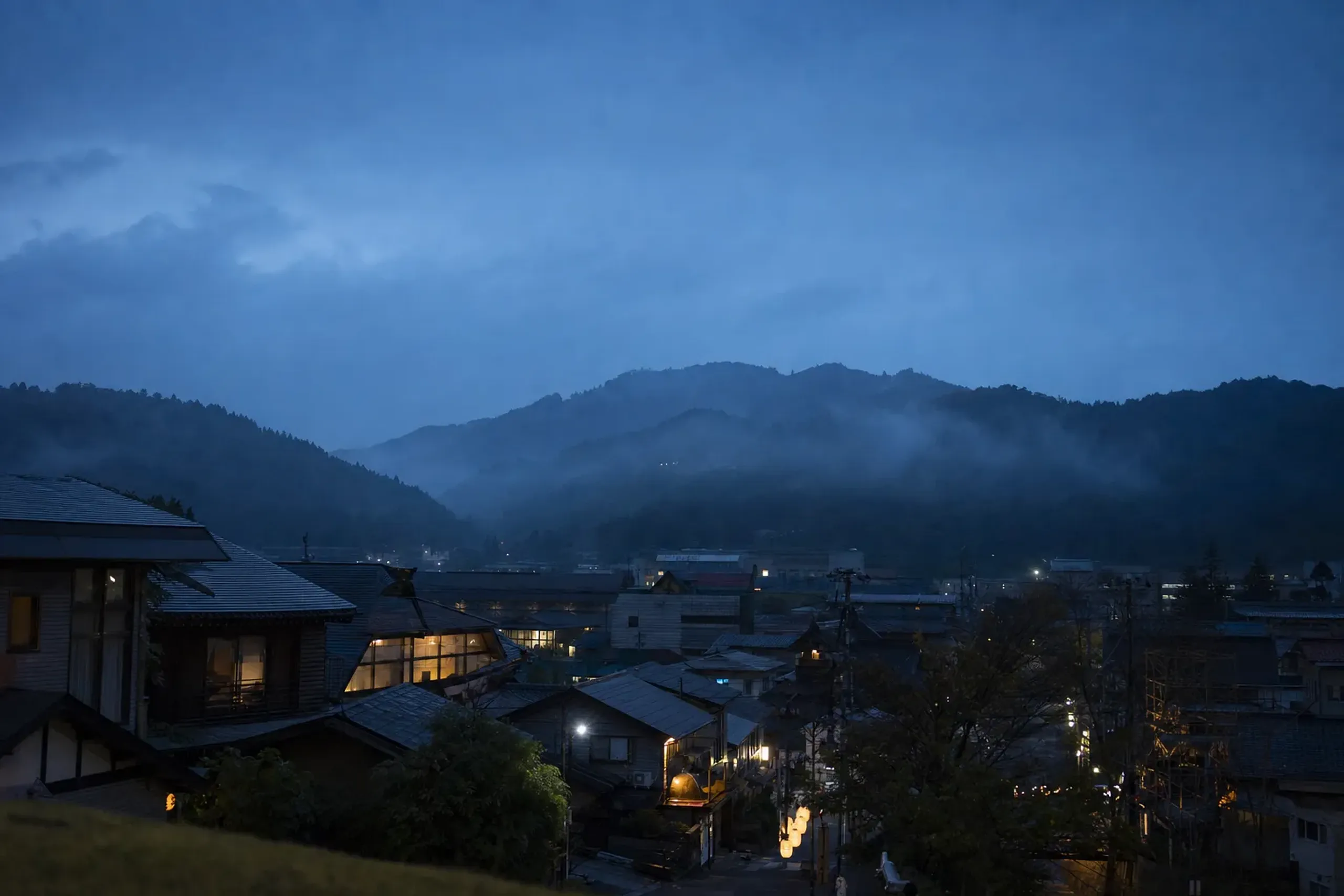
The nearest station is Yuzawa, a short drive from the festival street.
Can Visitors Join The Nishimonai Bon Odori Dance?
No. The main street dance is performed by local dancers only. The town does list a separate free visitor exchange event with a short dance-experience component; our concierge team confirms its current terms before your trip.
Why Choose Japan Royal Service
A festival like this rewards the traveller who arrives unburdened. The dates are fixed, the seats are scarce, the roads close, and the weather can turn the whole evening indoors by two in the afternoon. None of that should touch your night.
Our team at Japan Royal Service is based in Japan, with our own fleet and native coordinators who read the official notices as they change. We verify the programme, arrange chauffeured transfers around the closures, coordinate your stay in Yuzawa or Yokote, and secure public seating where it exists. We state honestly what is a lottery and what is first-come — and we plan for both. Where global operators publish nothing on Nishimonai in English, we treat it as a destination worth knowing properly.
When the fires are lit and the hooded dancers begin their slow circle, all you should feel is the drum and the smoke and the strange beauty of faces you cannot see.
To plan a private visit to Nishimonai Bon Odori, reach our team privately via WhatsApp or LINE, or contact us here.