In this guide
- 01What Is A Kiriko, And Who Carries It?
- 02The Summer Season: Main Festivals At A Glance
- 03A Night At A Kiriko Festival: What It Feels Like On The Street
- 04How Do You Watch A Noto Kiriko Festival Respectfully As A Visitor?
- 05After The Earthquake: What A Visitor Needs To Know Before Planning
- 06Getting There: Access From Tokyo And Why Transport Plans Must Stay Flexible
- 07Weather On Festival Nights: What July And August Feel Like In Wajima
- 08How Our Concierge Team Plans A Kiriko Festival Evening
- 09Frequently Asked Questions
- 10Plan Your Noto Kiriko Evening With Us
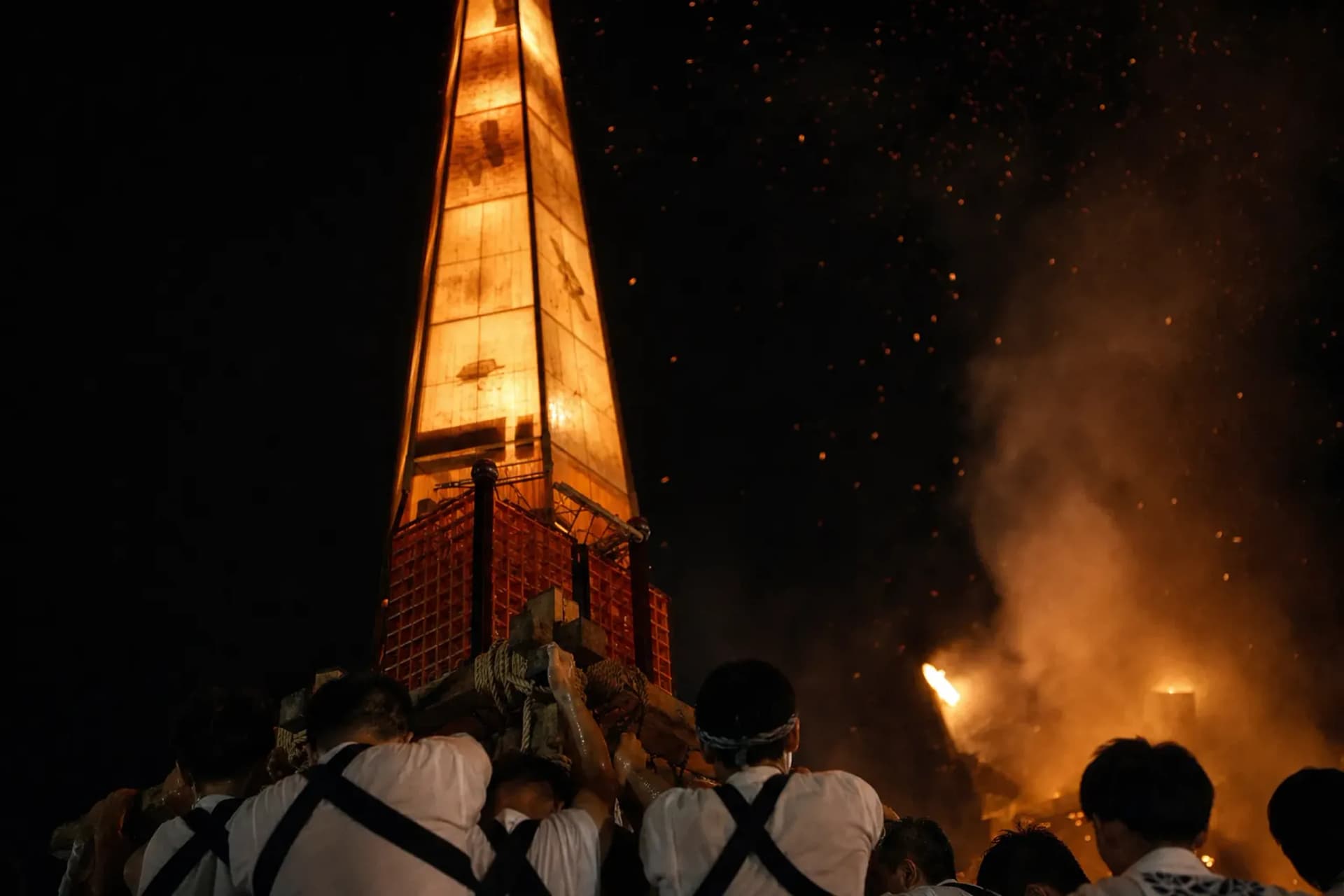
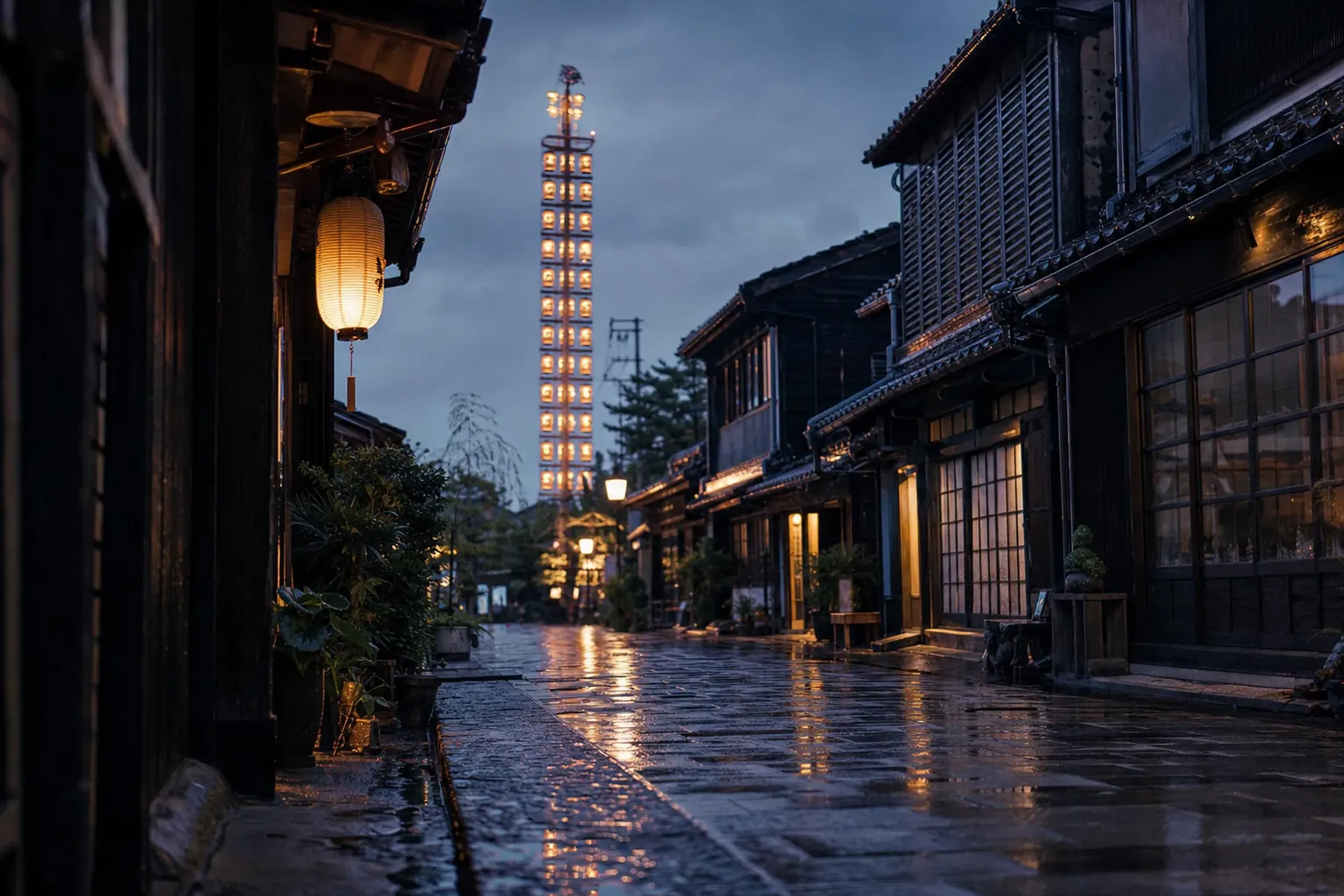
Dusk settles over a coastal town on the Noto Peninsula. The air still holds the day's heat, thick and unmoving. Then a shape lifts above the rooftops.
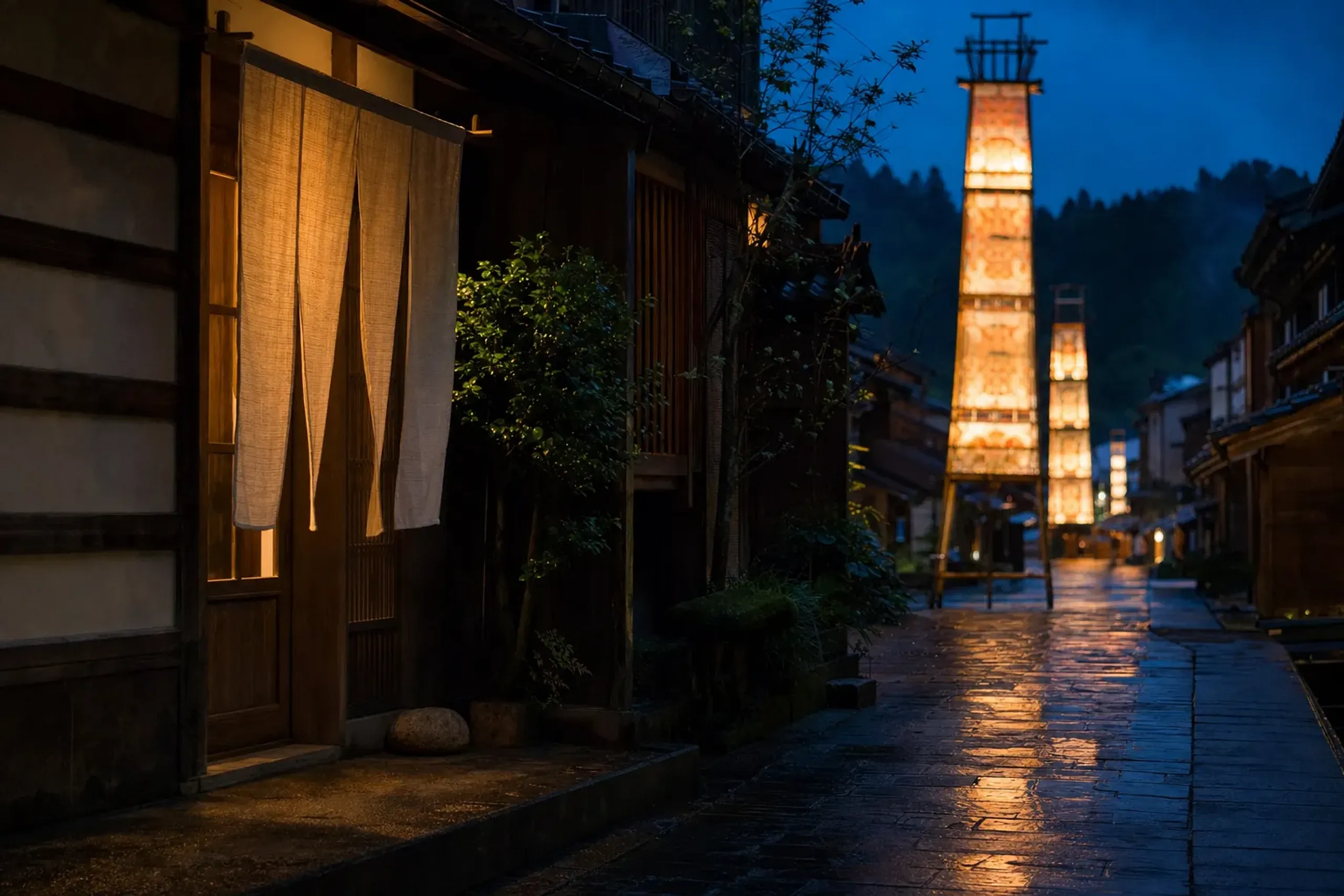
A kiriko. Tall. Bright. Heavy enough to make the street feel suddenly smaller.
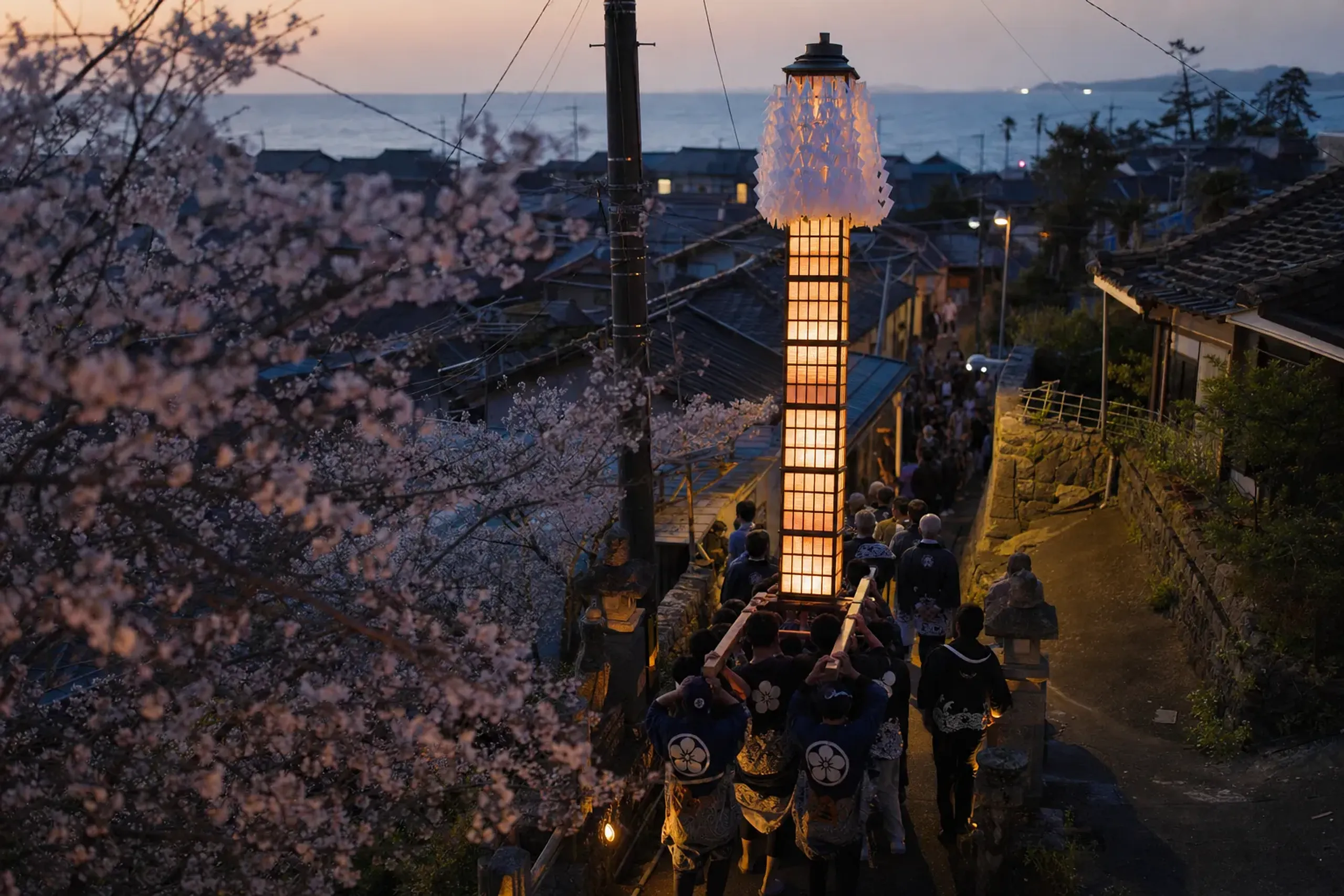
It does not glide like a parade float. It is carried — shoulder by shoulder, step by step — by a district that has known this exact route for generations, through a summer night that belongs entirely to them.
What Is A Kiriko, And Who Carries It?
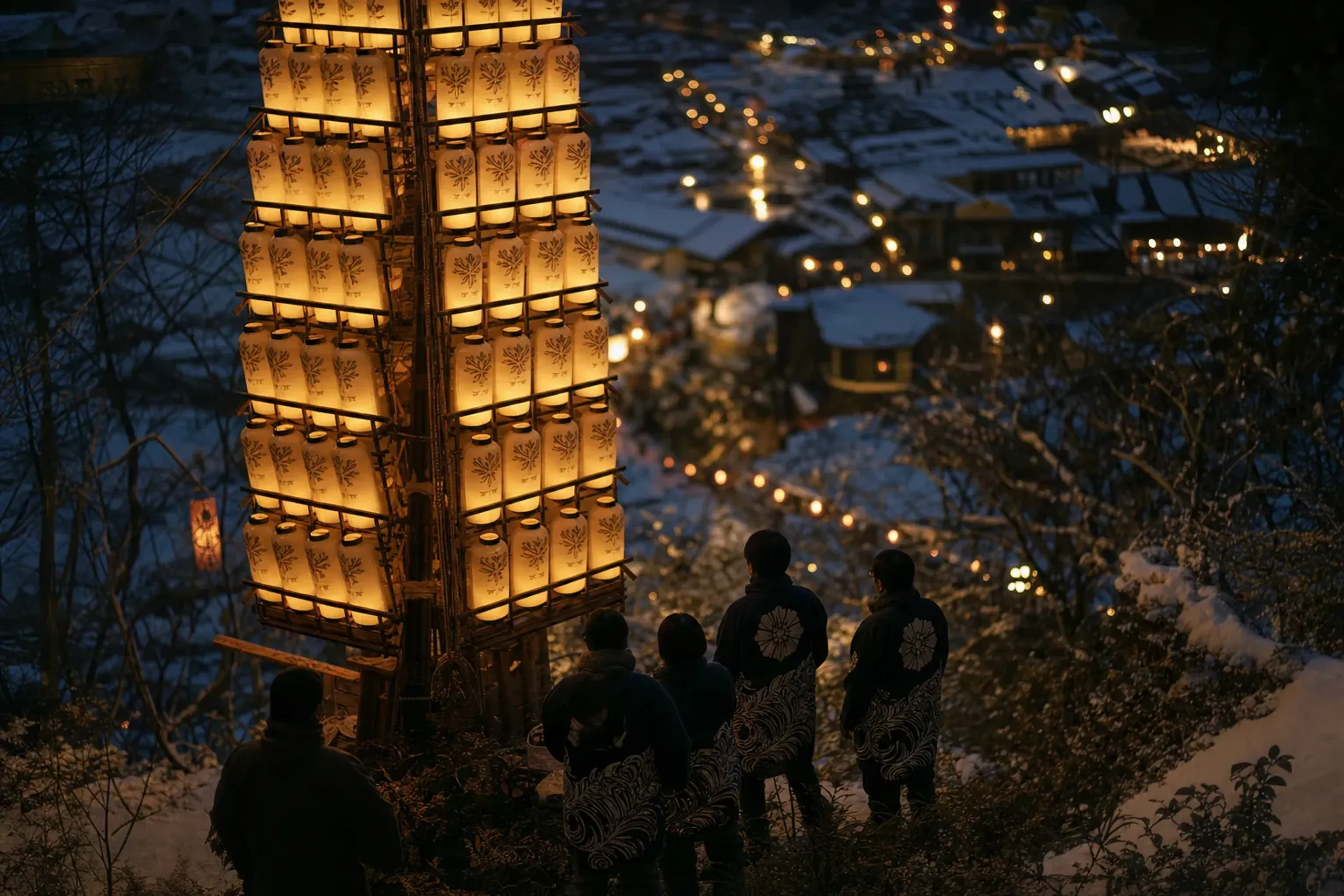
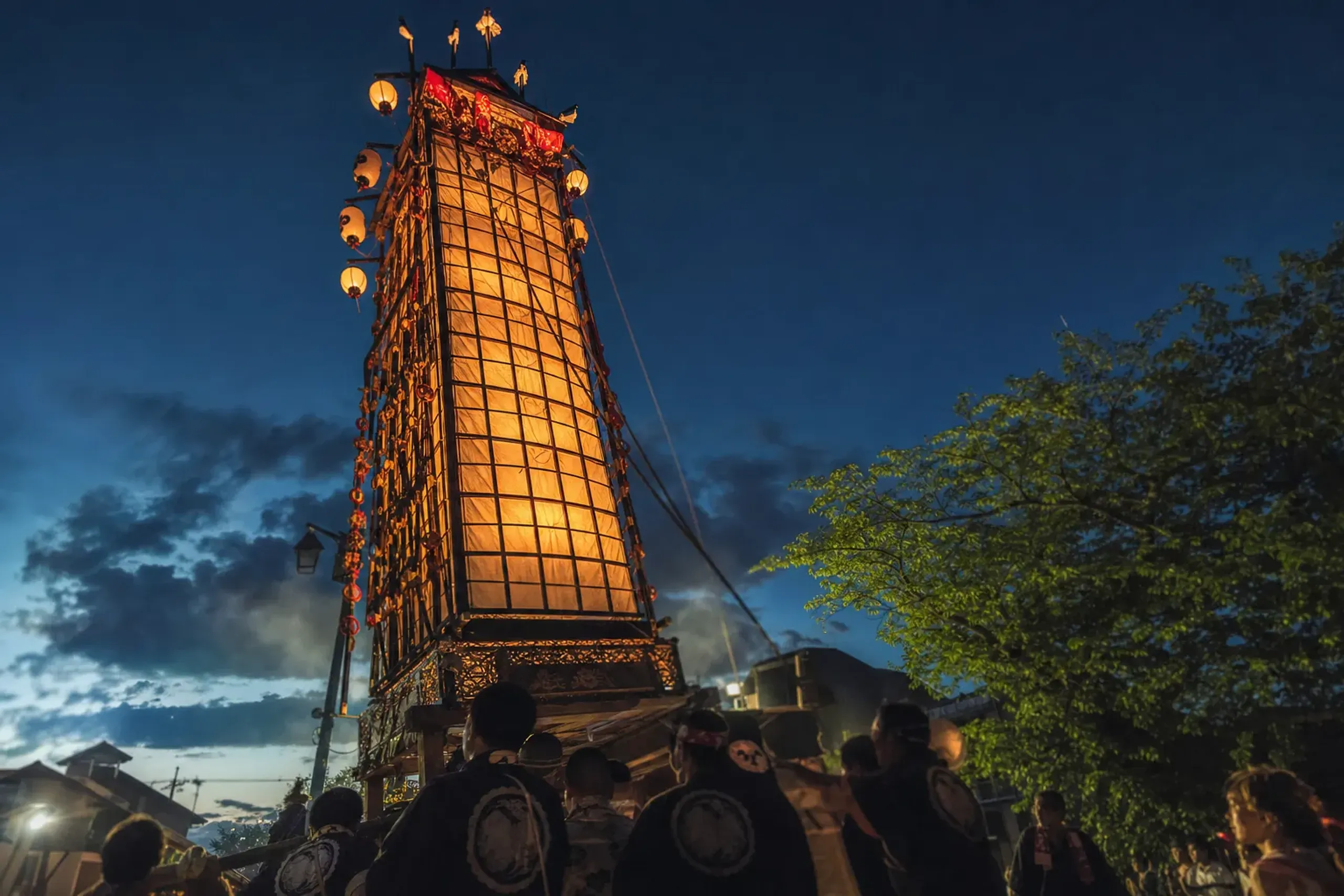
A kiriko is a towering lantern float carried on poles by the local district and lit from within at night, reaching about 15 meters tall and roughly 2 tonnes in weight.
That scale matters. A kiriko is not decoration. It is a moving structure of wood, paper, and human muscle, and it travels precisely where its carriers decide it should go.
The Noto Kiriko festivals are recognized as Japan Heritage under the theme "Akari mau hanto Noto: Netsukyo no Kiriko Matsuri." The story spans six municipalities: Nanao, Wajima, Suzu, Shika, Anamizu, and Noto Town.
In official descriptions, these festivals are held across roughly 200 districts within those six municipalities. That word "district" is the whole point. You are witnessing a living community rite unfolding on public streets — not a staged performance built for the benefit of visitors.
The roots run deep. Ishikawa Prefecture's own education materials connect the kiriko festivals to Gion beliefs and summer purification rites.
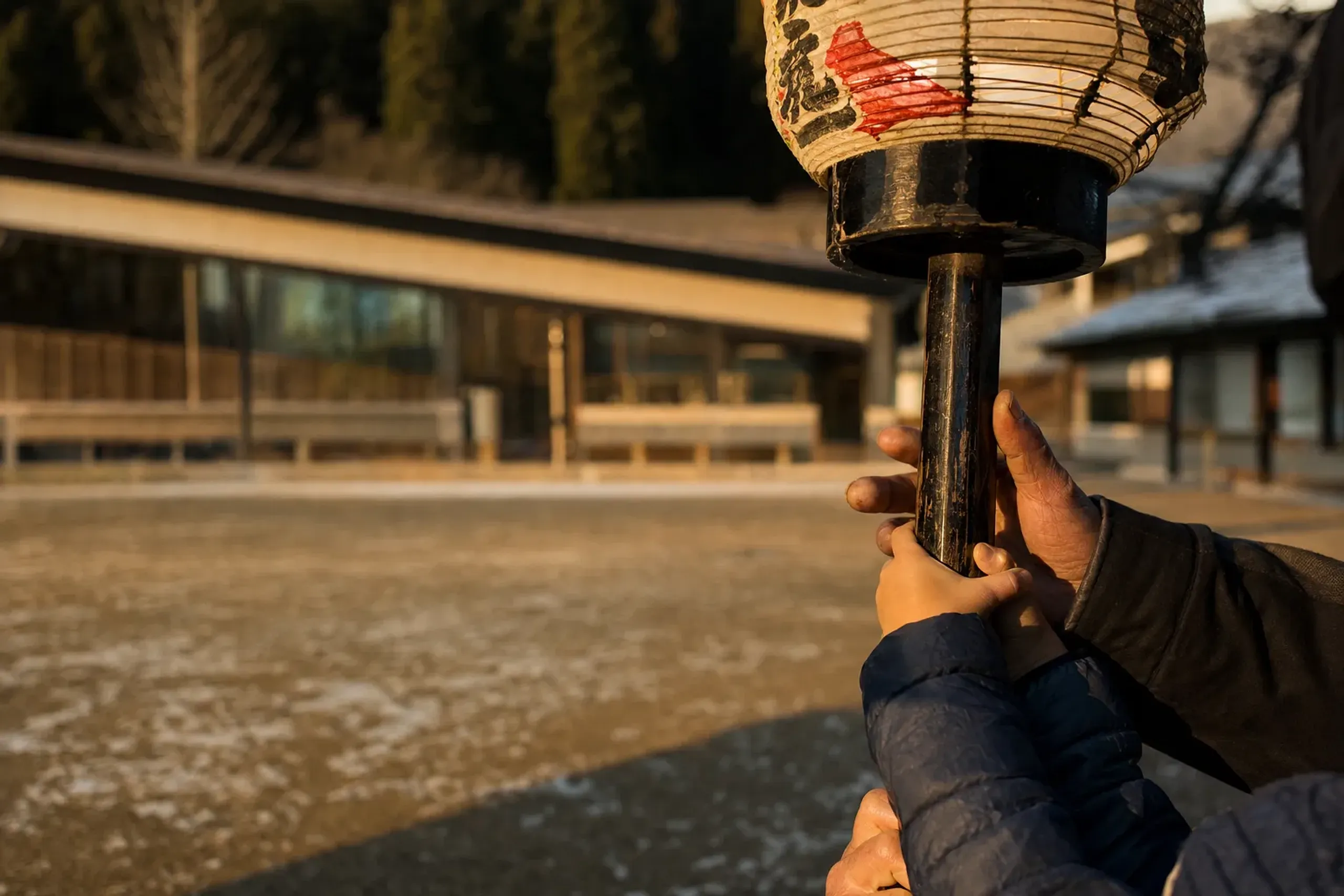
You feel that undercurrent in the night air. Serious. Joyful. Watchful.
The Summer Season: Main Festivals At A Glance
The core Noto Kiriko season runs for roughly three months across summer, with dates that shift each year and must be confirmed directly with each municipality and festival committee.
Across the peninsula, the official calendar is explicit that schedules can change. Since the January 1, 2024 Noto Peninsula earthquake and the heavy rain that followed later in 2024, this year-to-year variation has become even more pronounced. Some districts return at full strength. Others scale back quietly.
The table below shows each festival’s usual timing. The exact dates are set each year, and the JRS concierge team confirms them directly with the guest at time of arrangement.
| Festival (Town/City) | Timing Rule | Status Notes |
|---|---|---|
| Abare Matsuri (Ushitsu, Noto Town) | First Friday & Saturday of July | Prefecture-designated Intangible Folk Cultural Property (official). Town notes traffic control from early afternoon (secondary) and temporary parking conditions (official town notices). |
| Ishizaki Hoto Festival (Ishizaki, Nanao City) | First Saturday of August | Scheduled (city materials). Visitor guidance includes traffic regulations and a request to refrain from drone flights nearby. |
| Horyu Tanabata Kiriko Matsuri (Suzu City) | Set each year (secondary listings) | Listed (secondary). Check the municipality and the official Noto Kiriko calendar for the latest. |
| Wajima Taisai (Wajima City) | Late August (secondary listings) | Scale can vary from year to year (secondary). |
One separate event is often confused with the kiriko processions: the Notojima Kouda Fire Festival (Nanao City) is a torch festival, not a kiriko festival.
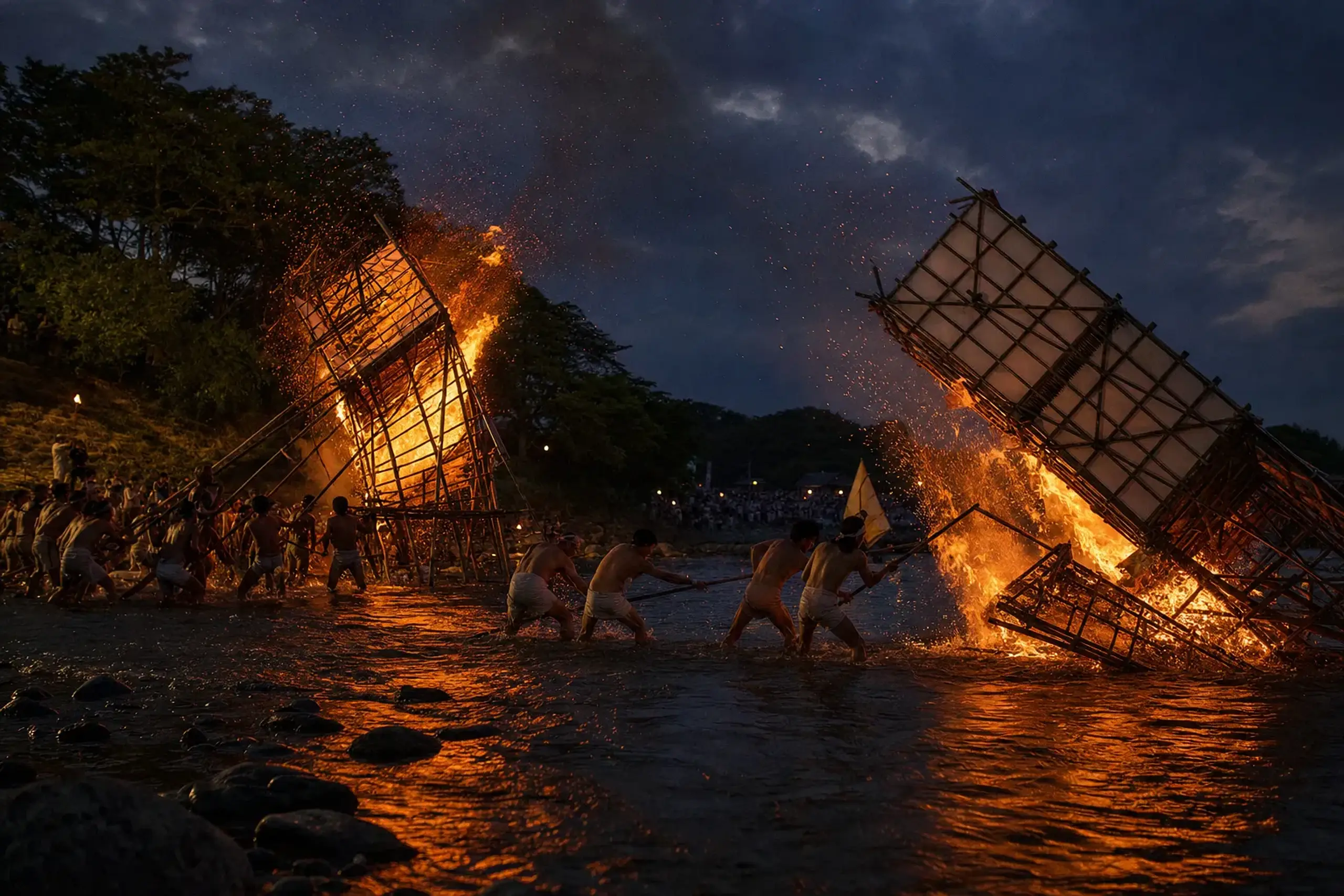
Its date is listed by the city each year.
Key fact: Do not treat last year's dates as usable. The official Noto Kiriko calendar states that dates are subject to change, and each city and town confirms the details only closer to the festival.
A Night At A Kiriko Festival: What It Feels Like On The Street
The first thing you notice is height. A kiriko rises above the streetlights, above the shop signs, above the heads of people who have lived here all their lives.
The second thing is sound. The rhythmic calls from the carriers. Footsteps that land together, then split apart, then tighten again at a corner where the route narrows to almost nothing.
When a kiriko turns, it does not simply "turn." It pivots — slowly, deliberately — as if the air itself has gained weight.
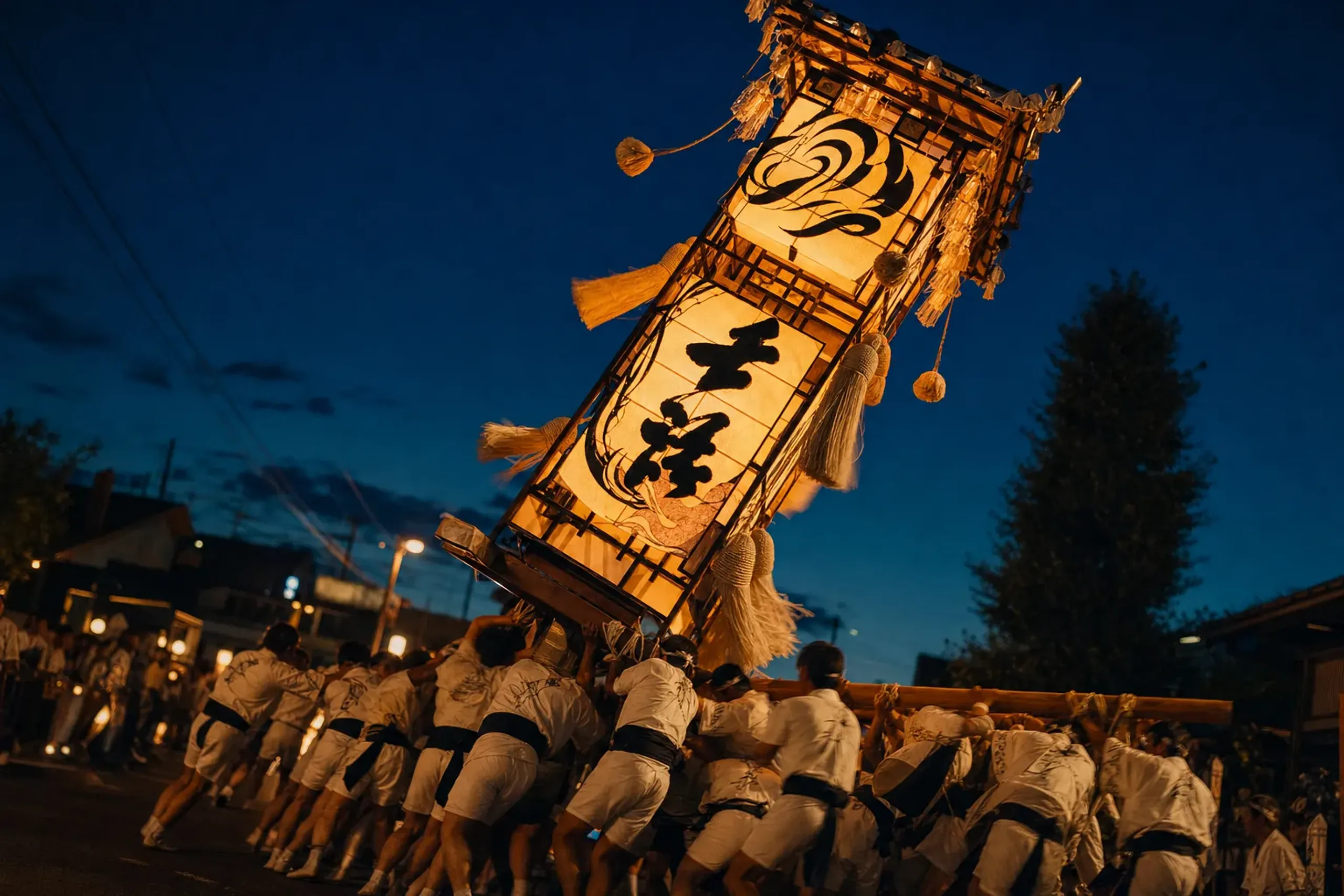
The carriers' shoulders shift beneath the poles. A single voice cuts through the crowd. You step back without being asked.
This is why we speak so carefully about visiting. You are standing near a moving structure that can weigh close to 2 tonnes. Space is safety. Silence is often the truest courtesy.
In places like Ushitsu's Abare Matsuri, the festival is known for its sheer intensity, and official notes emphasize practical constraints such as traffic control and temporary parking lots. It is a night that asks you to stay alert — and rewards you for it.
How Do You Watch A Noto Kiriko Festival Respectfully As A Visitor?
You watch respectfully by keeping clear distance from the carried kiriko, following staff instructions, using designated parking or transport, and staying out of the carriers' working space at all times.
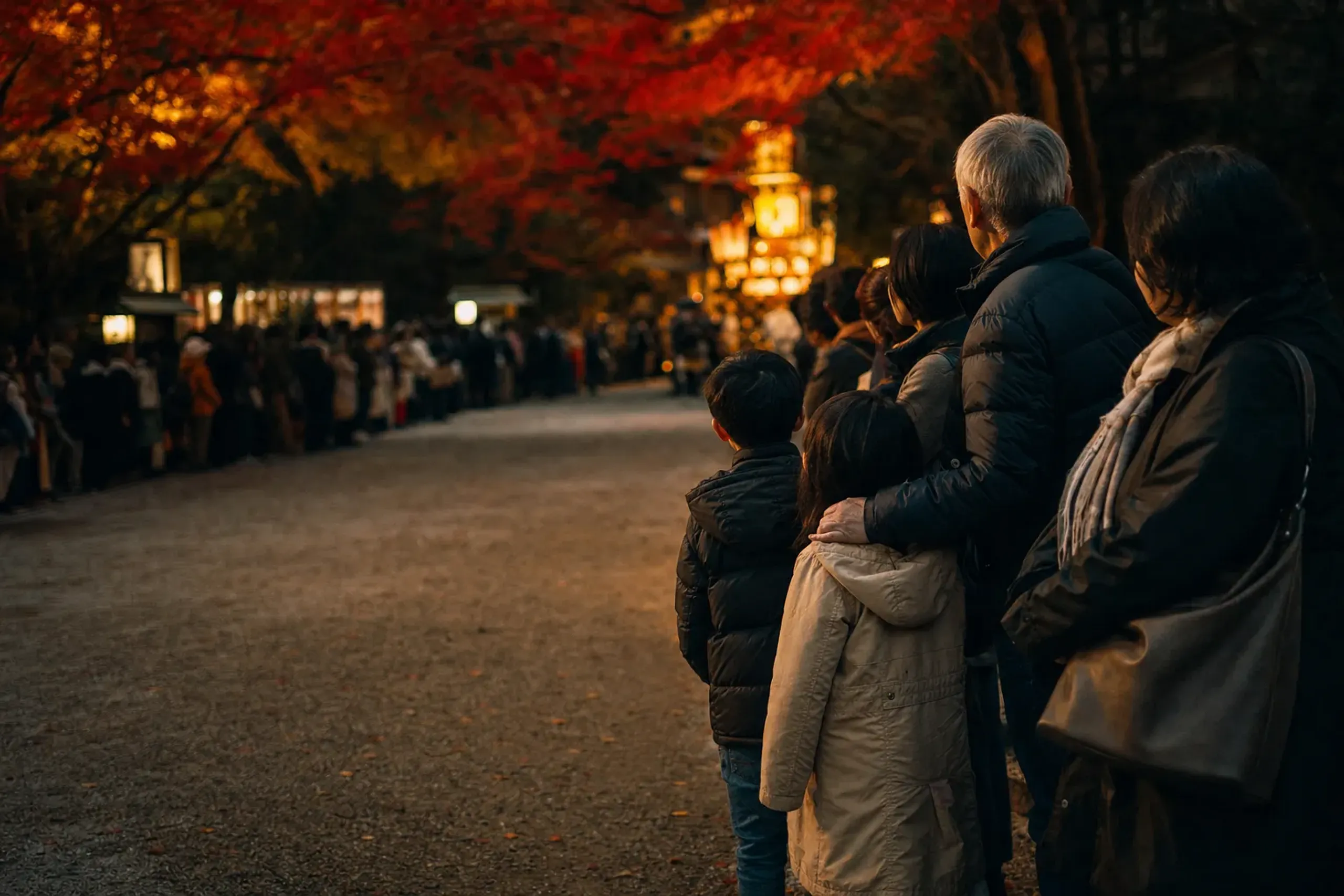
That last line sounds obvious on paper. In a crowd, it stops being obvious instantly. People step forward for a photograph, then freeze when the kiriko surges unexpectedly closer.
Our team at Japan Royal Service plans your viewing as a small, quiet piece of risk management. Nothing dramatic. Simply realistic. We time arrivals so you are never sprinting into the densest streets, and we keep your group small enough to move freely without ever blocking locals — the kind of unspoken anticipation of your needs that good hospitality should never need to announce.
Where To Stand (And Where Not To)
Stand where the street widens and you can retreat without pushing through others. Corners can be tempting. They are a bad choice.
Carriers need turning room. Committee staff may hold ropes or direct the flow of the crowd. If a staff member gestures, you move. No debate, no hesitation.
Parking, Roadblocks, And The Unromantic Details
Festival days often arrive with traffic regulations and restricted access near the route. In Ushitsu (Abare Matsuri), official town notices describe temporary parking as unpaved, with no shuttle, and organizers disclaim responsibility for accidents or damage.
That is not a footnote. It changes how you should arrive entirely.
Never park at a closed business, a private driveway, or simply "where there's space." Use designated parking only. If you are unsure, do not guess — this is precisely the kind of detail we remove from your evening before it becomes a problem.
Photography: Use Restraint
We plan photography around restraint.
Keep your camera close to your body. Avoid flash. Do not press into someone's shoulder for a better angle. And do not fly drones: Nanao City materials for the Ishizaki Hoto Festival specifically ask visitors to refrain from drone flights nearby.
Yobare: An Invitation, Not A Product
The Noto Peninsula Wide-Area Tourism Association describes an Oku-Noto custom called yobare, in which families invite relatives or acquaintances into their homes and offer special festival food (matsuri gochiso).
If you are not invited, you do not assume it is for you. It is that simple.
If you are invited, accept with humility and know when to step away gracefully. The district sets the tone, always.
After The Earthquake: What A Visitor Needs To Know Before Planning
Since the 2024 Noto Peninsula earthquake and the heavy rain later that year, some kiriko festivals have restarted while others have been reduced, and both schedules and access can change from one year to the next.
Ishikawa Prefecture has reported visitor numbers in Noto below pre-quake levels and "recovering," and has promoted travel to the peninsula through a "Travel to Support Noto" campaign.
That recovery is far from uniform. You will hear it from locals in how they describe this year's route, in what will not happen after midnight, in why one district chooses to carry fewer kiriko than before.
So we keep the framing clean. These are community rites first and foremost. Your part is to arrive well prepared, spend responsibly within the community, and avoid becoming an additional burden on a night that is already complex enough.
For broader Noto recovery guidance beyond the scope of this festival guide, we recommend reading the existing Noto-focused updates on our site before you travel.
Getting There: Access From Tokyo And Why Transport Plans Must Stay Flexible
From Tokyo, the Hokuriku Shinkansen Kagayaki reaches Kanazawa in about 2.5 hours, and Kanazawa remains the practical base for reaching the festival towns on the Noto Peninsula.
From there, you are contending with local road conditions, festival-day restrictions, and a peninsula where a single detour can reshape the entire evening.
Older travel times you find online may well be pre-quake. Treat them as rough estimates. Treat them, in fact, as optimistic.
Public Transport Notes (Use For Context, Not Assumptions)
Kanazawa to Wajima is often described as roughly 2 to 3 hours by highway bus; confirm current times when planning. Ishikawa travel guidance also suggests a car is genuinely useful on the peninsula.
Noto Railway restored the Nanao–Anamizu section to a normal timetable on 20 July 2024. Check the operator's current status when planning.
Key fact: MLIT's Hokuriku Regional Bureau stated in January 2026 that permanent restoration of National Route 249 is planned by spring 2029, with some sections already open to general traffic and some prefectural road closures remaining.
Weather On Festival Nights: What July And August Feel Like In Wajima
In Wajima, July averages 24.4°C with about 199.6 mm of rainfall, and August averages 25.9°C with about 176.8 mm of rainfall (JMA normals, 1991–2020).
Those are only averages. The street still feels genuinely hot when you are shoulder-to-shoulder with hundreds of other watchers.
Bring water. Wear shoes that can handle wet pavement. And pack a thin layer for the wind off the sea, even when the day felt soft and still. Knowing which festival falls in which month — and precisely how that month feels on the ground — is a large part of what turns a good evening into the right one.
How Our Concierge Team Plans A Kiriko Festival Evening
We plan a kiriko festival evening by verifying the year's dates and traffic notices, mapping realistic arrival and exit routes, and setting a simple watching plan that keeps you safe and well out of the district's way.
Small choices decide whether the night feels calm or chaotic. Where you wait. When you eat. How you leave.
Our role stays deliberately respectful. We simply remove the avoidable friction — for you, and equally for the people who call these streets home.
Step-By-Step: A Practical Evening Flow
- Before the trip: our concierge team checks the official Noto Kiriko calendar and confirms the year's details with municipalities and published notices wherever available.
- Transport plan: we map festival-day road controls and choose pickup and drop-off points that do not choke the narrow streets. Your private transportation should mean comfort, yes — but also complete control over timing on nights when buses and taxis grow strained.
- Guide plan: we can include an English-speaking cultural interpreter guide who explains what a kiriko is, why the district carries it, and how to conduct yourself as a watcher. No performance. No shortcuts.
- On the ground: we set one or two viewing points only, with clear regroup instructions. Wandering through a crowd looks romantic in the imagination. In practice, it is how people get stuck.
- Exit: we leave a little earlier than most casual visitors. You trade a sliver of intensity for a cleaner, calmer, and safer departure.
Accommodation Reality
Festival nights compress availability dramatically.
Rooms in Kanazawa and across the peninsula can disappear early even in a normal year, and recovery conditions can tighten supply further still.
We can coordinate accommodation planning as part of a tailor-made itinerary, always with the year's operational constraints in mind. Quiet is a genuine feature here — the restraint of a well-chosen room, far from the crowd. Sleep matters.
Two Useful Planning Reads On Matsuri Etiquette
If you want a broader primer on festival-watching etiquette across Japan, read our guide on how to watch a matsuri with respect.
It will make you a better guest anywhere in the country.
If your summer trip also touches the Obon season, our planning notes on Obon in Japan will help you avoid the most common transport and calendar mistakes.
Frequently Asked Questions
When Is The Noto Kiriko Festival Season In Ishikawa?
The Noto Kiriko festivals run for roughly three months in summer, and JNTO describes the core season as July through September.
The official Noto Kiriko calendar emphasizes that dates are subject to change, so always confirm the year you travel with each city or town.
Can Tourists Watch Kiriko Processions Up Close?
Yes, tourists can watch from public streets, but you must keep your distance and stay out of the carriers' working space at all times for safety.
Kiriko can be extremely large and heavy, and festival committees may restrict movement through staff directions and traffic controls.
Plan Your Noto Kiriko Evening With Us
A kiriko night is not something you buy a ticket to — it is a community rite you witness from public streets, arriving prepared and conducting yourself with care. That preparation is where we excel: confirming the year's shifting dates, reading the road notices, and shaping an evening that keeps you comfortable and entirely out of the district's way.
To begin planning, contact our team here.