In this guide
- 01When Is The Whale Watching Season In The Kerama Islands?
- 02The Weather Problem You Should Plan Around
- 03Why Trust The Kerama Whales? A Catalogue Since 1991
- 04How Is Whale Watching Done In Zamami?
- 05Where Do Whale-Watching Boats Depart From Naha?
- 06Private Charter Versus Shared Boat
- 07Can You See Whales From Land In The Keramas?
- 08What Japan Royal Service Arranges
- 09Frequently Asked Questions
- 10Why Choose Japan Royal Service
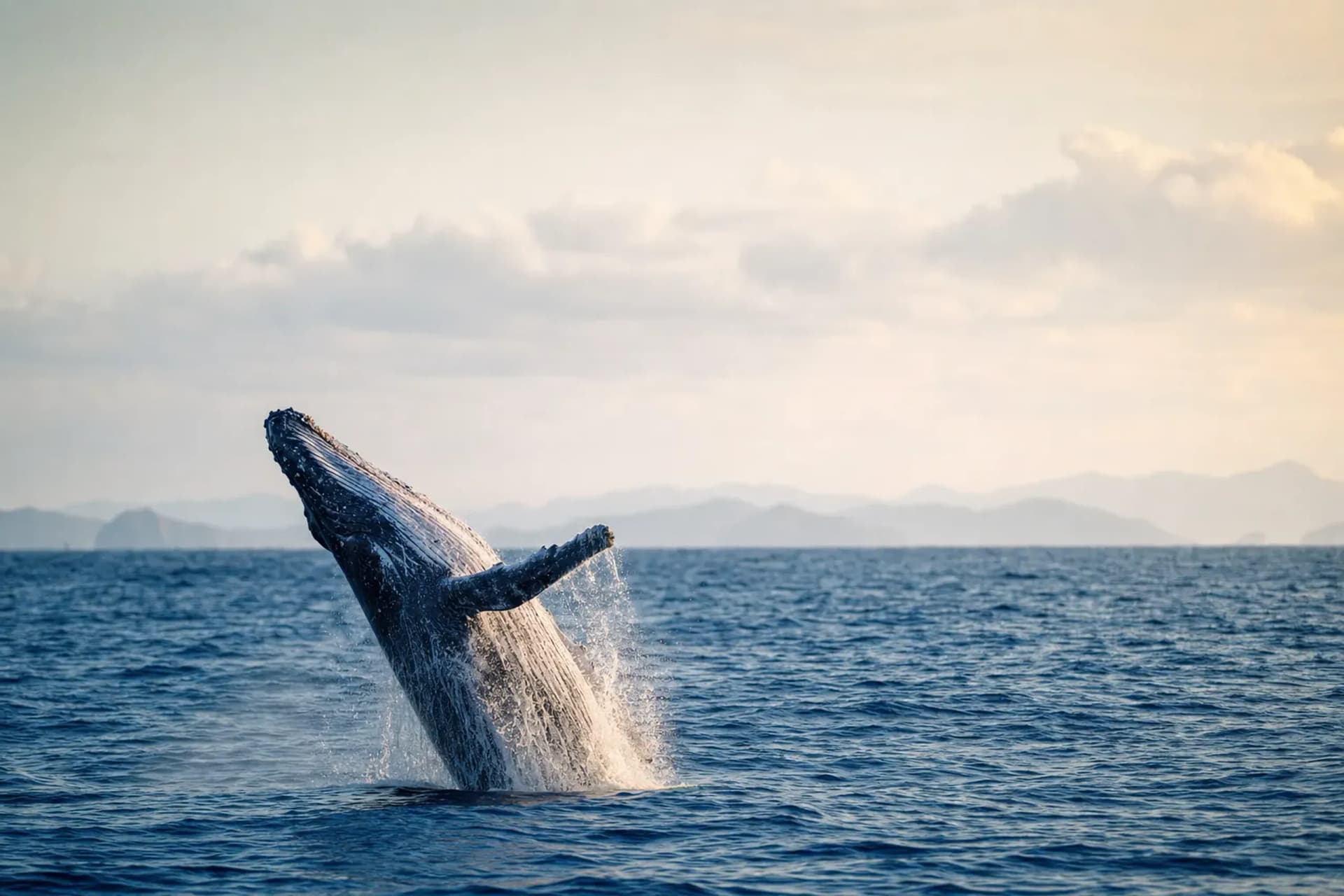
The engine drops to a low idle, and the water goes quiet. Somewhere off the bow, a breath. You hear it before you see it — a wet, cavernous exhale that carries across a hundred metres of cold Kerama sea. Then the back of an animal larger than the boat rolls up through the surface, unhurried, and slides under again. February in the Kerama Islands. The air is warmer than Tokyo, the sea a deep winter blue, and the humpbacks have come south to breed.
This is the one wildlife spectacle that draws travellers to Okinawa in winter, and it rewards patience over ambition. Our team at Japan Royal Service plans whale-watching around the animals and the weather — not the other way around. Below is the season, precisely, and the honest planning facts that decide whether your day goes well.
When Is The Whale Watching Season In The Kerama Islands?
Humpback whales are watched in the Kerama Islands from January through March, with some tours running from late December. Zamami Village's whale-watching association published an official 2026 season of 8 January to 25 March.
The village government frames the window as January through the end of March. The first whales sometimes arrive in late December, numbers build through January, and the season generally peaks in February. Mothers with young calves are most often seen from February into March — the calving whales arrive a season after the breeding ones.
That is the officially stated range, and it is worth trusting over the vaguer marketing you'll find elsewhere.
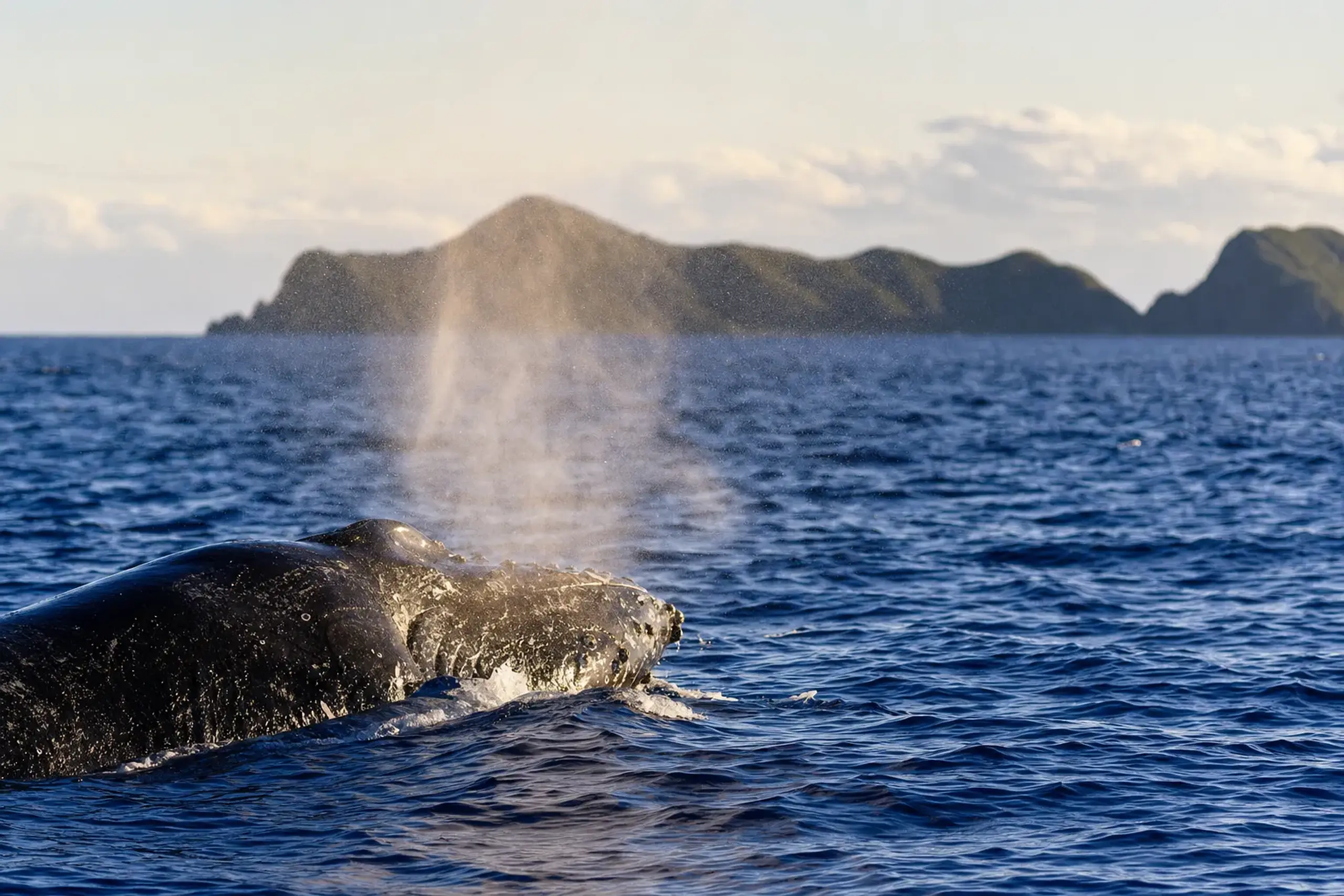
Humpbacks return to the Kerama Islands each winter to breed and, a season later, to calve.
You may also see commercial listings advertising "97–99% encounter rates." We do not repeat those. No clear source underpins them, and the honest planning fact sits somewhere less tidy — which brings us to the part most brochures skip.
The Weather Problem You Should Plan Around
February brings the most whales and often the roughest seas. Rough water can stop boats from reaching known sighting areas even during the peak month. This is the single most important thing to understand before you choose a date.
Here is the tension at the centre of a Kerama winter. The month with the most whales is also the month most likely to hand you a cancelled sailing. A single fixed excursion, booked months in advance for one specific morning, is a gamble against the wind.
Key fact: A multi-night Kerama stay with flexible days gives a far better chance of catching one calm-sea window than a single date chosen from afar. Build the whales into a longer visit, not the reverse.
We say this to every client who asks. Give the sea a few days to cooperate. Three or four mornings on the islands means the ocean only has to settle once. One fixed date means it has to settle on exactly that date — and it owes you nothing.
Why Trust The Kerama Whales? A Catalogue Since 1991
Since 1991, researchers here have photo-identified individual whales returning to Kerama waters. By the end of 2017, the catalogue held 1,604 individually identified humpbacks — some recognised across many seasons.
That number tells you more than any single winter's headline could. It means these are not random passers-by. They are returning animals, coming back to the same warm sea year after year, recognised by the shape and markings of their tails.
The return itself has a story. Humpbacks came back to the waters near Zamami in 1985, after a 23-year absence attributed to earlier whaling in the region. Six years later, in 1991, the Zamami Village Whale Watching Association formed — explicitly to protect the returning whales, with self-imposed operating rules from the start. It became a registered incorporated association in 2016. Every whale-watching boat operating from Zamami belongs to it. Locally, 10 March is marked as "Zatō no Hi" — Humpback Day.
How Is Whale Watching Done In Zamami?
Spotters watch daily from lookout points on Zamami and radio sightings to individual boat captains by radio. This keeps encounter rates high without every boat searching the open water blind.
It is a quietly clever system. Rather than a fleet of vessels burning fuel and criss-crossing empty sea, the eyes on land do the finding. A spotter high on the island catches a blow, calls it in, and the captains alter course toward a confirmed animal. Method, not luck.
The association's stated rules matter just as much. Boats do not chase whales and do not approach too closely — limits the whole village observes, aimed at keeping the whales coming back every year.
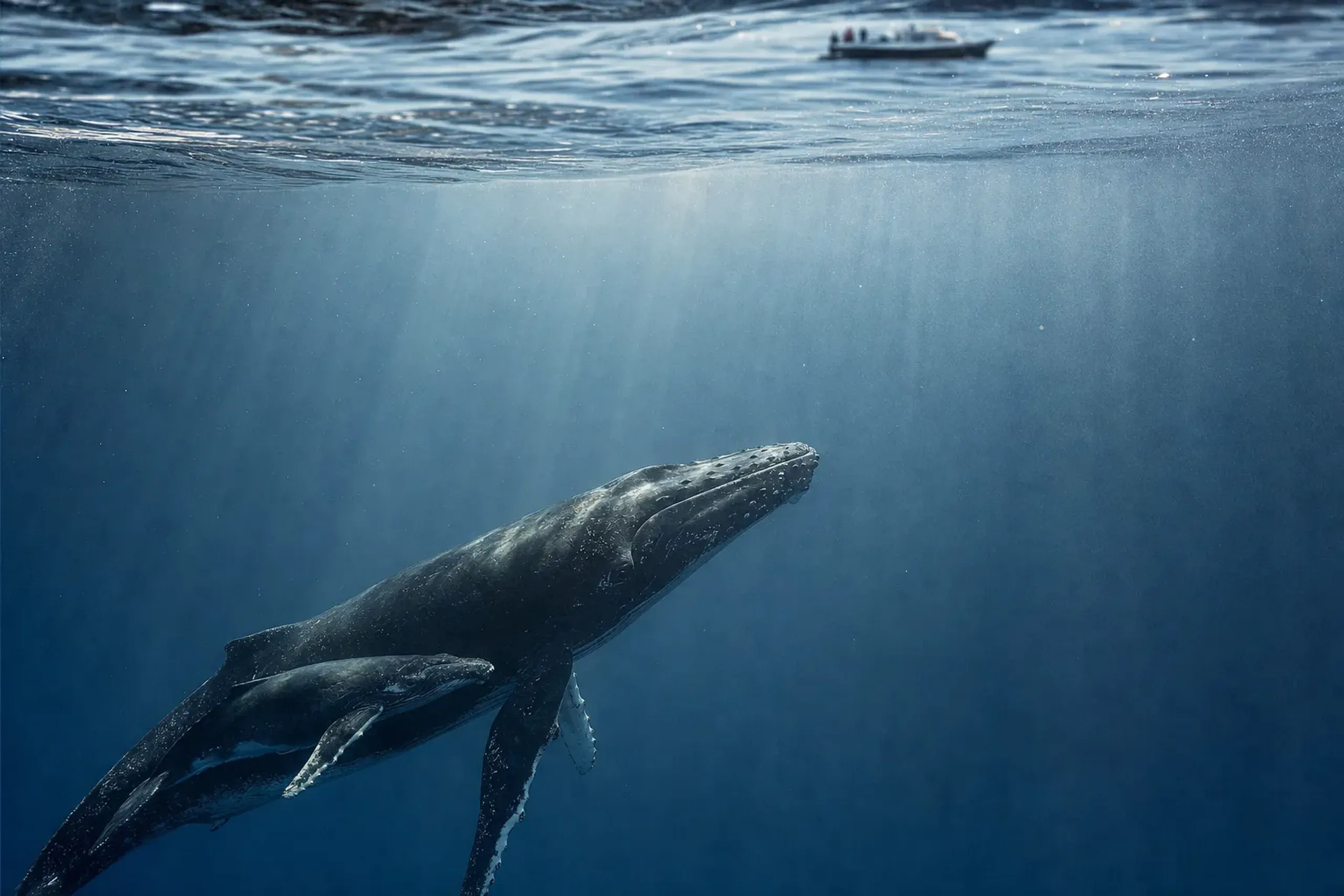
Zamami's own materials are explicit that mothers and calves in particular are watched from a distance rather than approached. That restraint is the real luxury here. You are a guest in a nursery, and the whales set the terms.
Where Do Whale-Watching Boats Depart From Naha?
The main Naha departure is Mie-gusuku Port, roughly ten minutes by car from Naha Airport. Boats also run from Zamami and Tokashiki islands, plus Ginowan Marina, Toya Port in Chatan, and Motobu Port up north.
Zamami and Tokashiki are the two principal whale-watching islands within the Kerama group, reached from Naha by ferry or high-speed boat. But you don't have to cross first. Operators sail directly from Mie-gusuku Port on the main island, and that is often the smoothest option for a day trip.
Mie-gusuku has a port waiting room, paid parking, and hotel pickup available within central Naha — though not from the Shintoshin, Shuri, or Oroku areas. Operators there typically run two sailings a day, roughly 9:00 to 12:00 and 13:30 to 16:30, on stabilized catamaran vessels. That stabilisation is no small thing on a rough February morning. It is a genuine comfort advantage on a day when everything hinges on sea state.
Further north, a Motobu Port departure pairs neatly with a visit to the Churaumi Aquarium. As a concrete example of how the window is set in practice, the 2025–26 Naha season for these operators ran 10 January to 31 March — consistent with the village's own January–March framing.
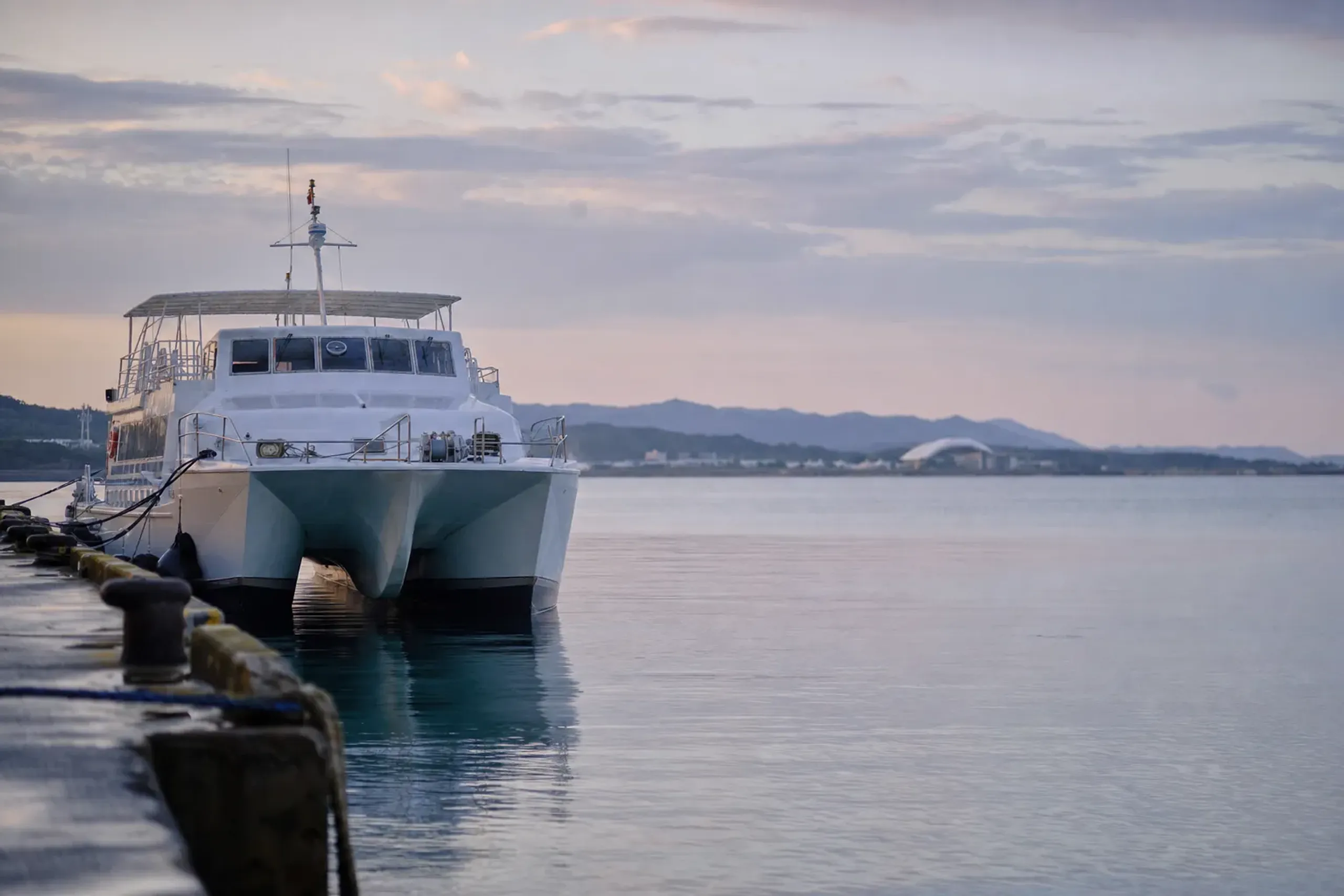
We confirm current-season departure points, timings, and operators each autumn before the season opens, since these are commercial listings that change year to year.
Private Charter Versus Shared Boat
The choice comes down to control. A shared boat is simple, sociable, and works well. A private charter puts the day's timing and route in the hands of one party — which matters enormously when conditions shift hour to hour.
The Shared Sailing
A stabilized catamaran with a spotter network behind it does the job for most travellers. You board, the radio crackles, the captain sets a course toward a confirmed blow. Straightforward, and quietly effective.
The Private Charter
On a day when the wind decides everything, control has real value. A private charter means your party alone chooses when to leave, how long to wait on a promising blow, and when to turn for a sheltered stretch of water. When the sea is fickle, the ability to read it and adjust — without a dozen strangers and a fixed schedule — can be the difference between a good morning and a wasted one. It is the premium option, but the point is the whales, not the exclusivity.
Can You See Whales From Land In The Keramas?
Yes. A lookout point on Zamami offers land-based views across the Kerama Islands — a free, low-commitment alternative for anyone not committing to a boat day. Sightings from shore are less certain than from a spotter-guided boat.
It is a fine complement rather than a replacement. On a calm afternoon, standing at the lookout with the whole Kerama archipelago spread below, you may catch a distant blow or the pale flash of a breach far out. For a client who wants the islands without a full excursion — or a settled hour after a morning at sea — it earns its place.
What Japan Royal Service Arranges
Plainly: our concierge arranges accommodation, guiding, transfers, and both private-charter and shared whale-watching bookings, departing from Naha or from within the Kerama Islands. That is the full scope, stated once.
The value is in the sequencing. We build the whales into a multi-night Kerama or Okinawa stay so the sea has room to cooperate. We handle the private chauffeured transfers between airport, port, and hotel so a rough-sea reschedule costs you nothing but a change of plan. We shape the surrounding days — quiet bespoke itinerary planning that reads the forecast and moves accordingly. For the wider region, our Okinawa and the Ryukyu Islands guide sets the scene, and our note on Okinawa's shoulder seasons helps with timing beyond the whale window.
Frequently Asked Questions
What Is The Best Month For Whale Watching In The Kerama Islands?
February usually offers the most whales, and mothers with calves are most often seen from February into March. February also brings the roughest seas, so a multi-night stay with flexible days improves your odds of a calm-water sailing.
Will I Definitely See A Humpback Whale In Kerama?
No date guarantees a sighting — the weather and the animals decide.
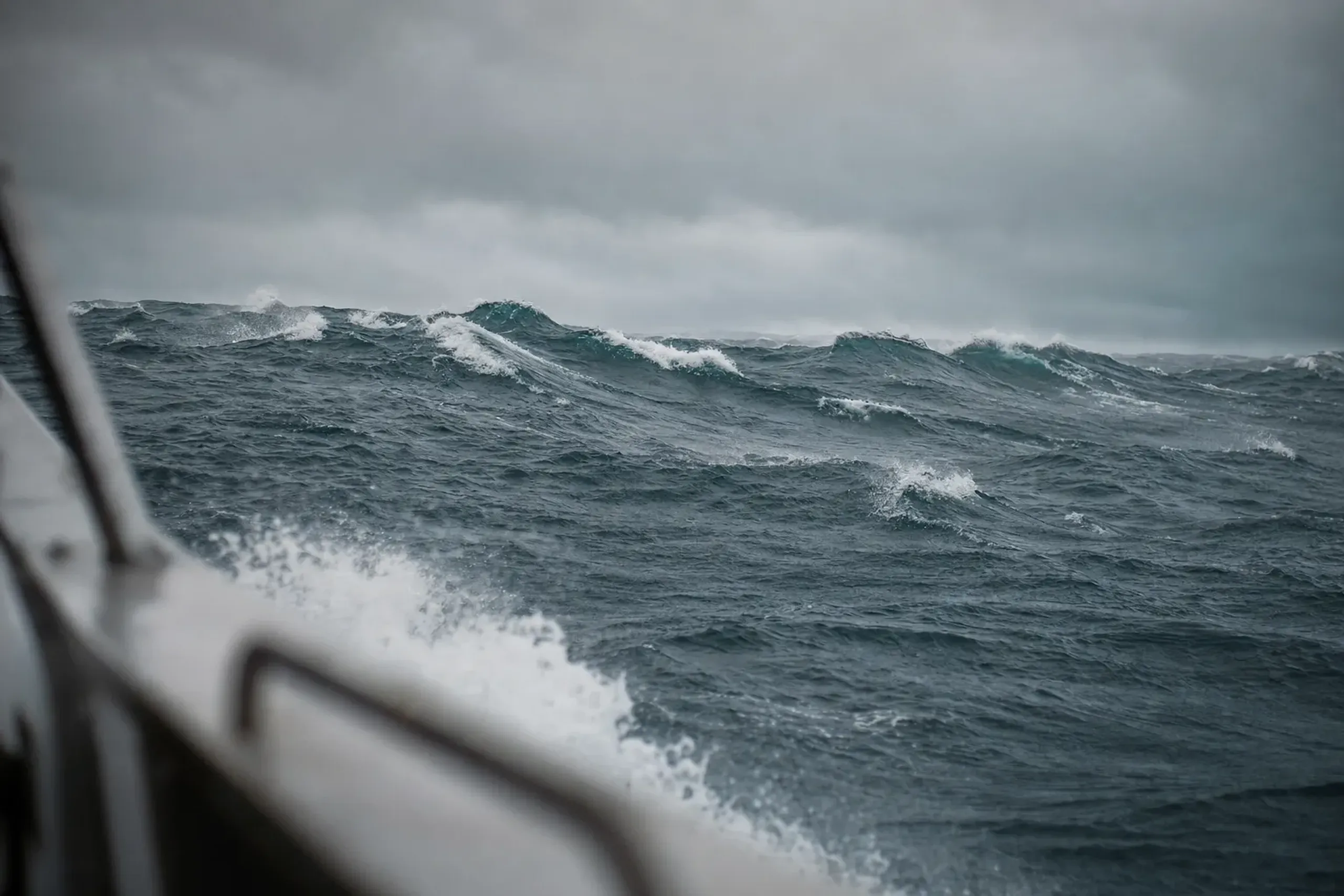
Spotters on land radio confirmed whales to boat captains, which keeps encounter rates high, but rough seas can cancel departures even at peak season. Plan several days, not one.
How Do I Get From Naha To The Kerama Whale-Watching Boats?
The main Naha departure is Mie-gusuku Port, about ten minutes by car from Naha Airport, with hotel pickup available in central Naha. Alternatively, ferries and high-speed boats reach Zamami and Tokashiki, where island-based tours also operate.
Do Whale-Watching Boats Get Close To Mothers And Calves?
No. The Zamami association's self-imposed rules prohibit chasing whales or approaching too closely, and Zamami's own materials state mothers and calves are watched from a distance. This restraint is meant to keep the whales returning each winter.
When Should I Book A Kerama Winter Whale-Watching Trip?
Departure points, timings, and operators are confirmed each autumn before the season opens, and the peak February window fills early. We recommend planning several months ahead and holding flexible dates to work around sea conditions.
Why Choose Japan Royal Service
Whale watching in winter is a lesson in humility. The best planning cannot command the sea, but it can arrange your days so that the sea only has to cooperate once. That is the work.
At Japan Royal Service, our concierge builds the Keramas into a stay that flexes with the weather, coordinates the transfers and lodging so a rescheduled sailing costs you nothing, and handles both shared and private-charter arrangements with quiet discretion. In our experience, the travellers who see the most whales are the ones who gave the ocean room — and let us hold the moving parts together while they watched for a blow on the horizon.
To plan a Kerama winter privately, reach our team via WhatsApp or LINE, or contact us here. We will confirm the current season's dates and shape the days around the whales.