In this guide
- 01Okinawa Runs On Its Own Calendar
- 02The Shape Of The Year In Okinawa (In Plain Terms)
- 03When Are Okinawa’s Best Shoulder-Season Weeks For A Luxury Trip?
- 04The Spring Window: Before The Rains, Before The Peak Heat
- 05The Autumn Window: After Typhoon Peak, Before The Sea Cools
- 06How Do You Plan Around Typhoons Without Losing Your Trip?
- 07A Different Japan: What Changes When You Land In Okinawa
- 08The Main Island As A Base: What It Gives You (And What It Doesn’t)
- 09Kerama Islands As A Day Proposition: The Clearest Reason To Leave The Main Island
- 10Ishigaki And Miyako: When A Separate Flight Is Worth It (And When It Isn’t)
- 11Accommodation, Honestly: Resort-Led, Not Ryokan-Led
- 12Combining Okinawa With A Mainland Trip: Is The Flight Worth It?
- 13Who Should Not Go To Okinawa In Shoulder Season
- 14Frequently Asked Questions
- 15Why Choose Japan Royal Service
You booked Okinawa in August for the beach. Three days vanished indoors. The sky stayed shut, ferries stopped, and the “quick island hop” became a string of cancellations. That trip was not unlucky. It was mis-timed.
Okinawa Runs On Its Own Calendar
Okinawa does not follow the mainland’s rhythm, and treating it like Tokyo or Kyoto is the usual mistake. You can have a perfect week in Kyoto while Okinawa is pinned under rain bands or watching the forecast like a hawk. Different latitude, different sea, different risk profile. Different pay-off, too.
Our team at Japan Royal Service plans Okinawa by subtraction first: what you are trying to avoid. Rainy season pressure. Peak typhoon exposure. Mid-summer humidity that turns “beach holiday” into an air-conditioned shuffle. Only then do we talk about the two narrow windows that feel like what you pictured.
This approach matters for HNW travellers because your real cost is not the flight. It is the lost days. A shoulder-season Okinawa trip works when the itinerary has margin, the base is chosen with intention, and day plans have intelligent alternates.
The Shape Of The Year In Okinawa (In Plain Terms)
Okinawa’s year has four practical moods, and only two of them consistently suit a calm, sea-first itinerary. Early summer brings tsuyu, the rainy season, which official Okinawa guidance places roughly from early May through late June. Late summer into early autumn is hot and carries the core storm risk. Winter is mild on land, but the sea cools and some water-led activities narrow or pause.
Then there are the two windows that matter. One sits on the spring side, after winter but before the rainy season pressure fully takes over. The other sits on the autumn side, after the peak of typhoon season eases, before winter cool-water logic arrives.
If you only remember one sentence, make it this: Okinawa is not “best in summer” by default. That is the mainland assumption speaking. And it is how people lose days.
When Are Okinawa’s Best Shoulder-Season Weeks For A Luxury Trip?
Okinawa’s best shoulder-season weeks are typically late March to early May and October to November, because they sit either side of tsuyu and peak typhoon disruption while keeping the sea and outdoor plans more workable.
This is not our private theory. Okinawa’s tourism authority highlights late March to early May and October to November among the best overall periods to visit. They also flag that autumn, especially October to November, can be strong for diving visibility. Those signals align with what matters to a luxury traveller: fewer forced indoor days, better pacing, and less “weather hostage” planning.
We keep the language deliberately simple. You are buying usable days. You are buying the chance to plan a Kerama crossing without it feeling reckless. And you are buying the ability to enjoy Okinawa’s culture and food without sweating through every transfer.
The Spring Window: Before The Rains, Before The Peak Heat
Spring shoulder season in Okinawa is about getting there before tsuyu settles in and before the long, heavy summer stretch begins.
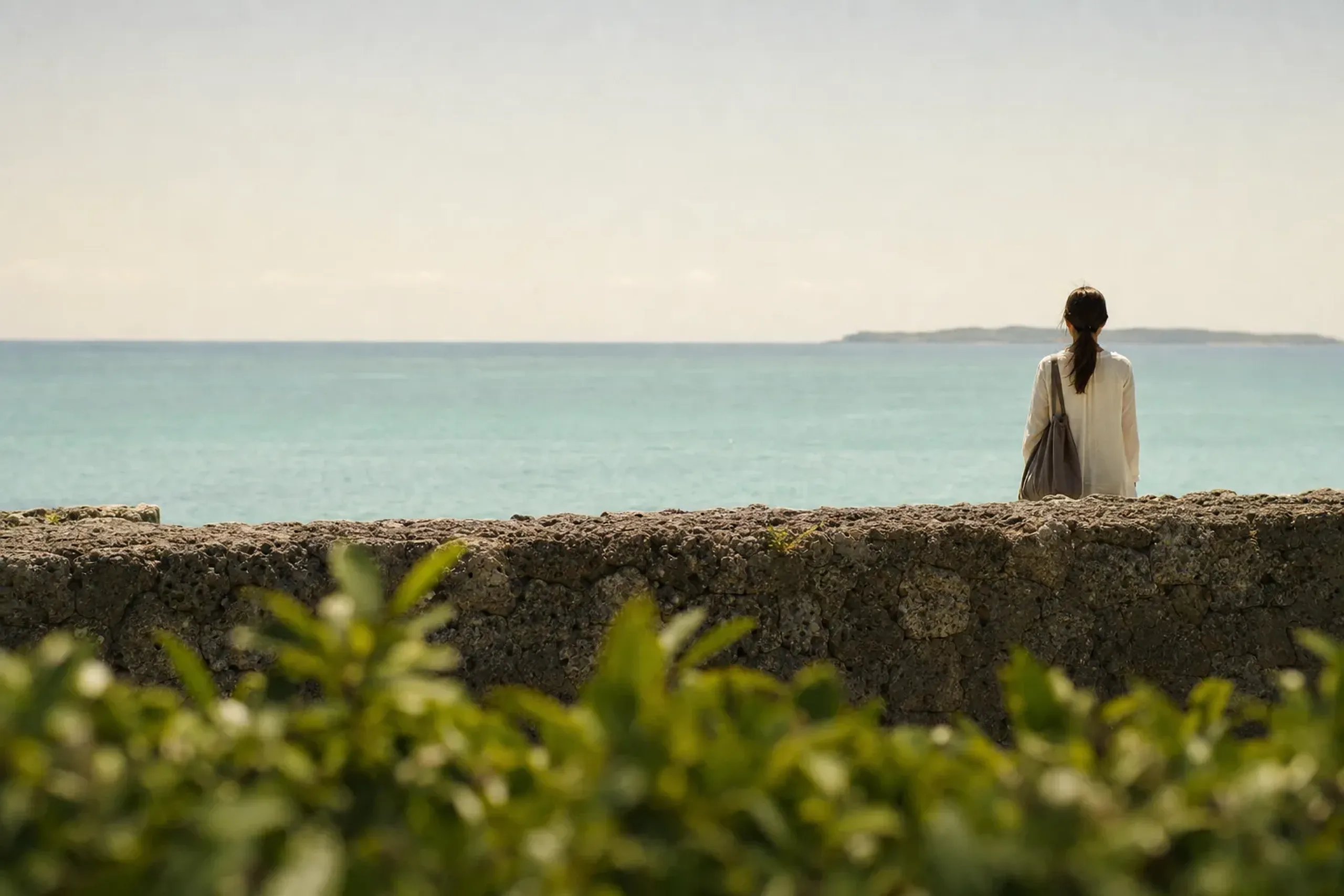
It can feel fresh on land. The light is often kinder. The island reads as spacious again.
From a planning point of view, spring is also the moment to keep your expectations clean. You are not choosing Okinawa because it behaves like a controlled resort pool. It is sea and weather first. Some days will be perfect, and some will ask you to pivot.
For HNW travellers, the spring window tends to work best when you treat the main island as a base and keep the most weather-sensitive elements as optional day propositions. That means you can wake up, check conditions, and choose water or culture without feeling like the trip collapses if the sea says “not today.” Quick. Calm. No drama.
How We Suggest You Structure A Spring Week (Main Island Base)
Start by choosing a base that reduces daily friction. Not romantic. Practical. On Okinawa’s main island, driving time is the tax you pay for space, and you should decide early whether you want to be closer to the city conveniences or closer to quieter coast.
Then build days with two tracks: an outdoor plan and an indoor-grade substitute. A museum visit. A slow lunch. A craft visit where you can hear the tools and the pauses. It keeps the trip intact.
- Day planning rule: keep one “must-do” per day, not three.
- Sea days: place them earlier, so you have later days to reattempt if conditions shift.
- Evenings: treat them as recovery time, not as another checklist.
The Autumn Window: After Typhoon Peak, Before The Sea Cools
Autumn shoulder season in Okinawa is often the stronger bet for sea-led travel, with October to November widely cited as a prime period and a strong time for diving visibility.
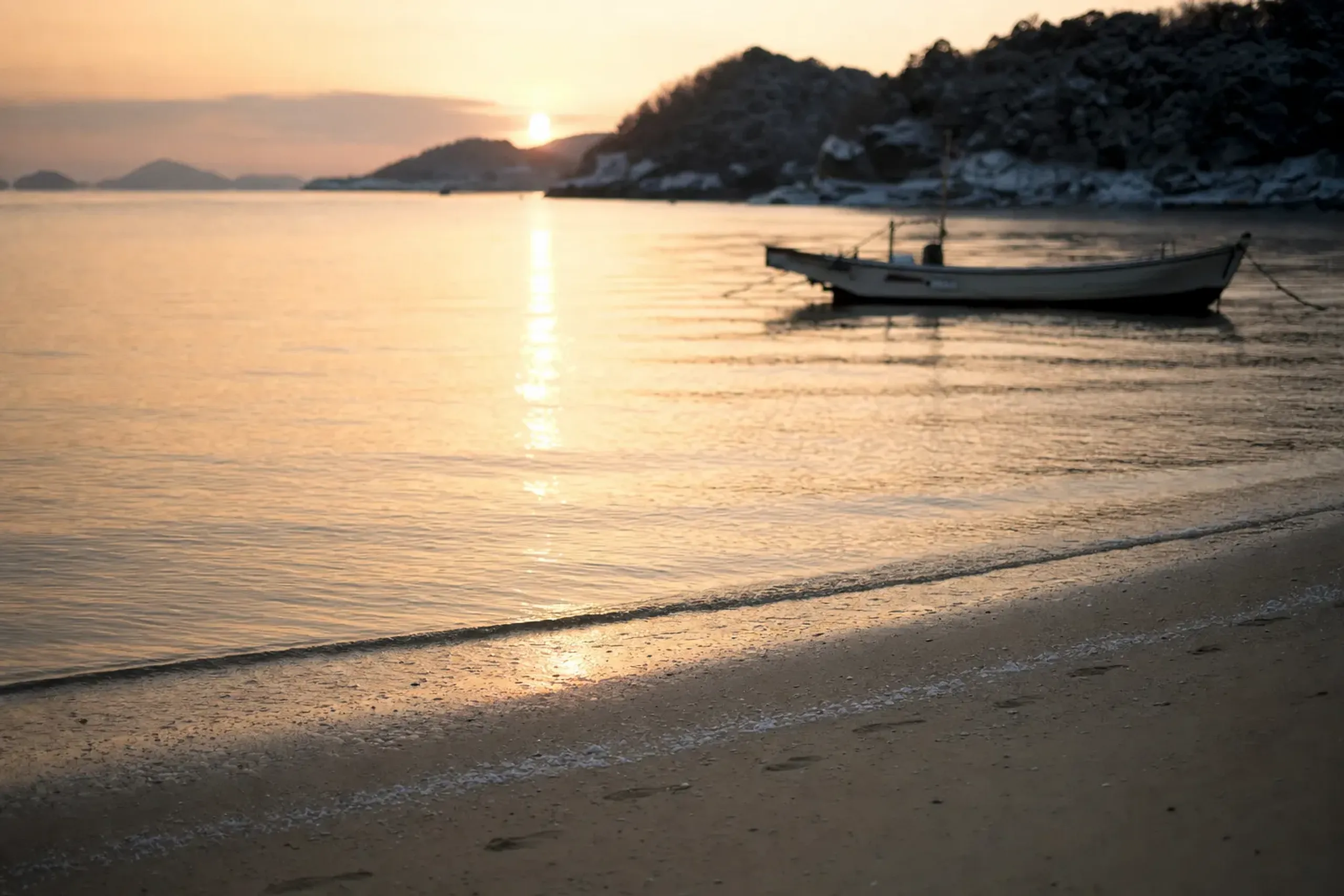
Autumn works because it is a “release valve” season. The pressure of peak summer travel eases. The rhythm on the roads changes. You can build a trip that is less defensive. That is the point.
There is still weather. Always. But the odds of having multiple consecutive days written off by storm systems tend to be lower than in late summer. You feel that difference immediately when you start penciling in a Kerama day, or when you realize you can keep a coastline day simple rather than over-engineered.
September Vs. October In Okinawa: The Honest Trade-Off
September can be appealing for sea and atmosphere, but it remains more weather-sensitive because Okinawa’s official guidance places the main typhoon season approximately July through October, with August and September carrying the highest risk.
So you plan September with a different mindset. You do not schedule it like a fixed, fragile itinerary. You build buffers. You avoid stacking inter-island flights and boat crossings back-to-back. You give yourself an “indoor day” that is not a consolation prize.
October is usually easier to live with. Not perfect. Easier. It is the month where luxury travel starts to feel less like negotiating with the forecast and more like enjoying a place.

Autumn Cultural Hooks (Real 2026 Dates)
Okinawa is not only sea. In shoulder season, the cultural calendar can give your itinerary shape even when you choose not to chase the water every day.
- Okinawa Zento Eisa Matsuri: September 4–6, 2026
- Tomigusuku Festival: October 17–18, 2026
- Shurijo Castle Revival Festival: November 1–3, 2026
- Karate Day Commemorative Performance Festival: November 8, 2026
Dates are published on official Okinawa event calendars, but real-world attendance still depends on how you want to experience them: close-up, at the edges, or from a quieter vantage. Crowd tolerance matters. So does discretion.
How Do You Plan Around Typhoons Without Losing Your Trip?
You plan around typhoons by building itinerary margin, avoiding fragile connection chains, and keeping a mainland fallback option so a weather system does not erase half your holiday.
Typhoons are not a footnote in Okinawa planning. Flights can cancel. Ferries can stop. Resorts can close outdoor facilities. Local advisories govern everything, and you should assume that a “maybe” day can become a “no” day quickly.
The luxury move is not pretending the risk is small. It is designing so the risk does not own you. In our experience, the travellers who suffer most are the ones with tightly stacked commitments: boat day, then inter-island flight, then a non-refundable plan the next morning. It is brittle.
Key fact: Okinawa’s tourism authority describes the main typhoon season as approximately July through October, with August and September carrying the highest risk.
Step-By-Step: A Typhoon-Resilient Shoulder-Season Itinerary
Step 1: Pick a base with options.
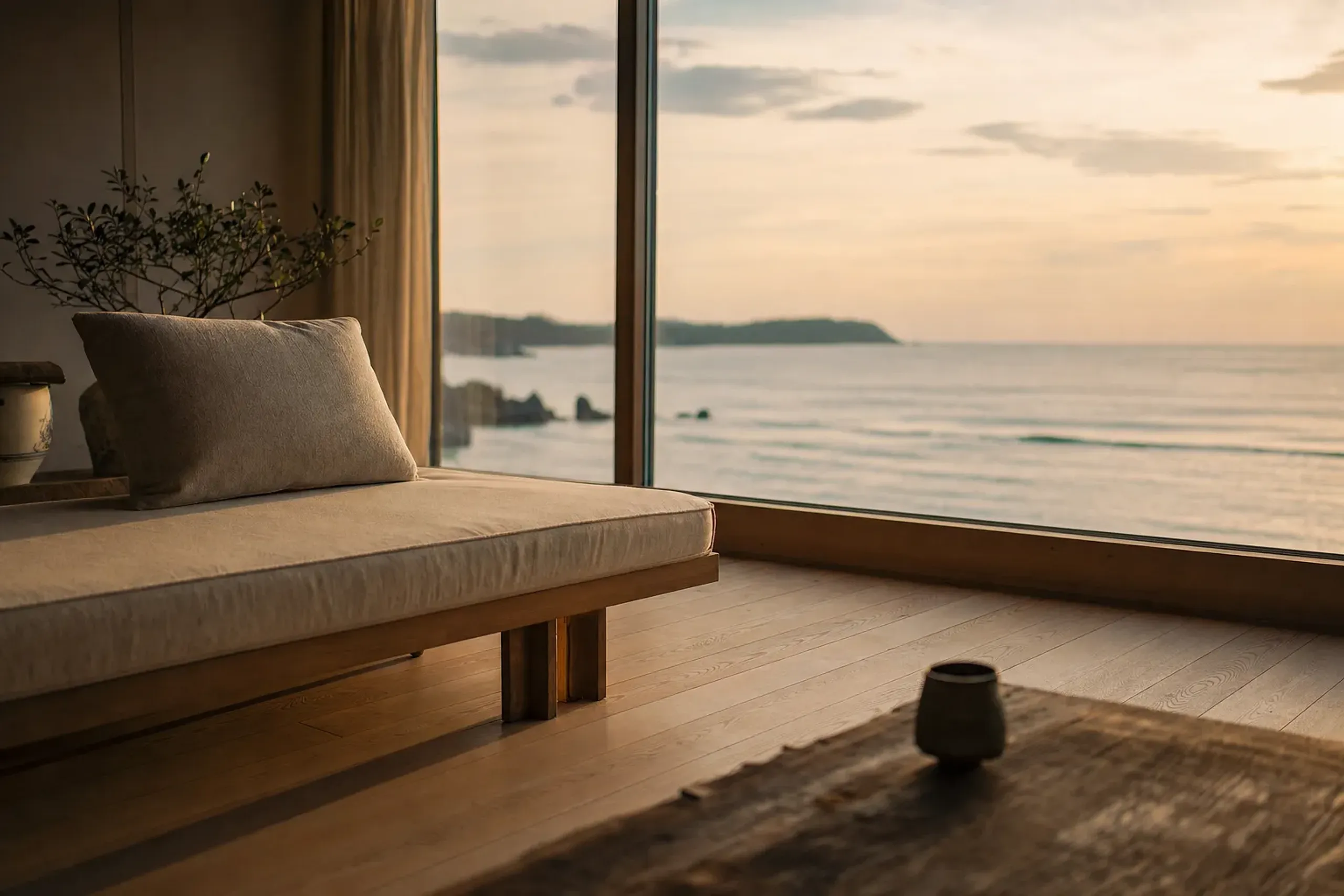
Simple. You want dining, indoor culture, and comfortable downtime within reach.
Step 2: Put your most sea-dependent day early in the trip. You are buying yourself the option to re-try later.
Step 3: Keep one “floating day” with no fixed commitment. This is where you reclaim value if the weather turns.
Step 4: If you are combining Okinawa with the mainland, decide your pivot plan in advance. Not during the storm week. The point is psychological calm as much as logistics.
If you want a parallel example of why fixed dates fail elsewhere in Japan, our team wrote it out for foliage; the principle is the same even though the weather mechanics differ. See Tohoku in Autumn: Where the Colour Arrives First.
A Different Japan: What Changes When You Land In Okinawa
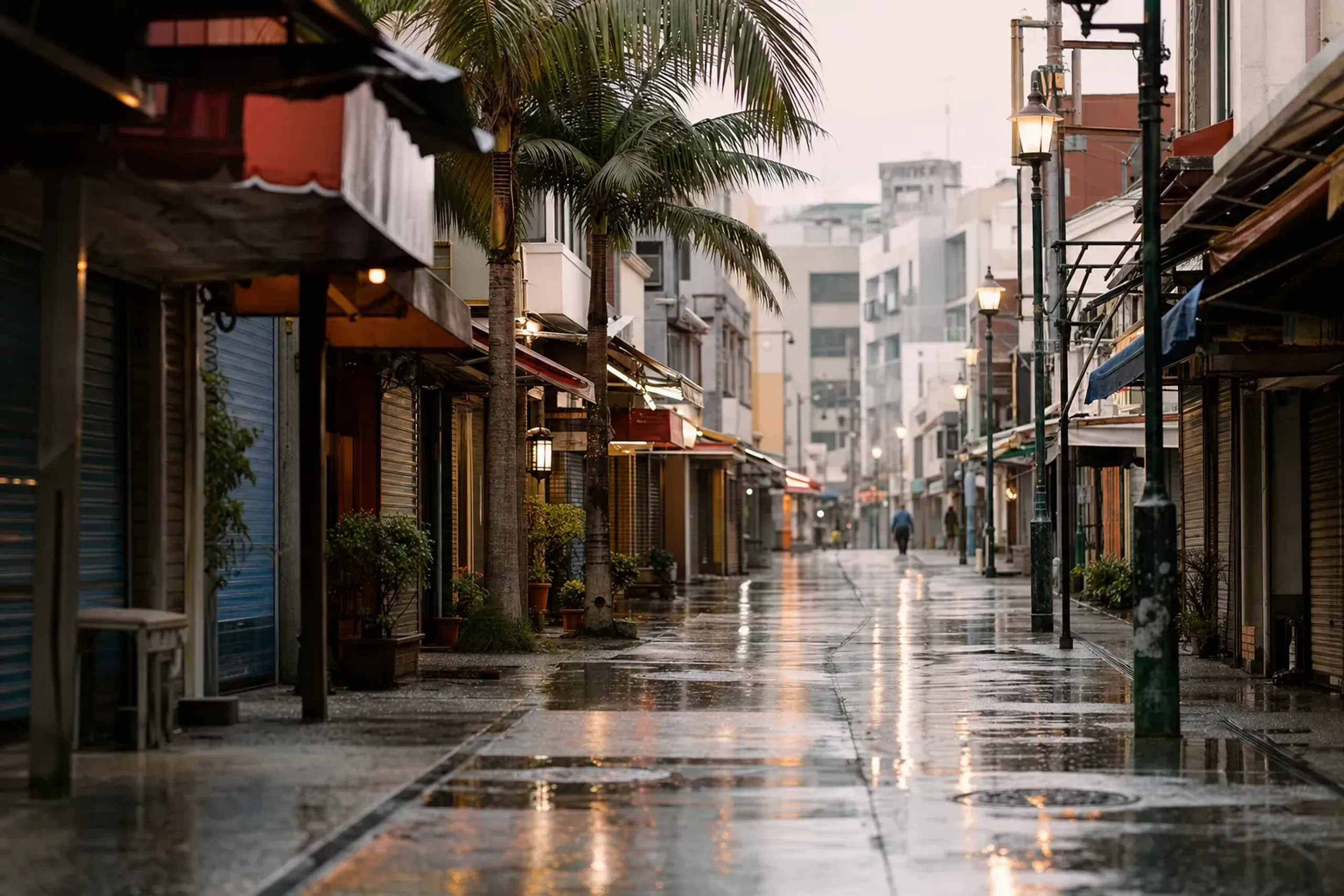
Okinawa’s culture and history reflect a distinct Ryukyu inheritance that is not the same as mainland Japan. You notice it in architecture, in food, and in the cadence of the streets. It can feel both Japanese and not-Japanese, in the same hour.
This difference is why Okinawa works so well for repeat Japan travellers. If you have “done” Tokyo and Kyoto, Okinawa does not compete with them. It sidesteps them. Quietly.
Do not come expecting temple density or craft districts on the Kyoto scale. Come for sea, for a slower pulse, and for a regional identity that stands apart.
The Main Island As A Base: What It Gives You (And What It Doesn’t)
Main-island Okinawa is developed, and driving is usually part of the deal. That is not a complaint. It is a planning fact. The upside is choice: you can balance coastline time with city convenience, and you can keep your days flexible.
From a luxury perspective, the main island also gives you resilience. When crossings are suspended, you still have a trip. When the sea is choppy, you can still build satisfying days without forcing an excursion that will be remembered for the wrong reasons.
Think of it as a hub. Then treat each day as a carefully chosen spoke. Our team prefers this approach for HNW travellers because it respects your time and reduces friction.
Private Transportation On Okinawa: Why It Changes The Feel Of The Week
Okinawa days tend to be drive-shaped, and that is where having a clear plan and reliable wheels matters. A private chauffeur service keeps the day quiet, especially when the weather forces last-minute reroutes and you would rather not negotiate it yourself.
If you want to understand how our private transportation approach works across Japan, the same standards apply in Okinawa: discretion, punctuality, and a vehicle that suits your party size. No fuss. Just flow.
Kerama Islands As A Day Proposition: The Clearest Reason To Leave The Main Island
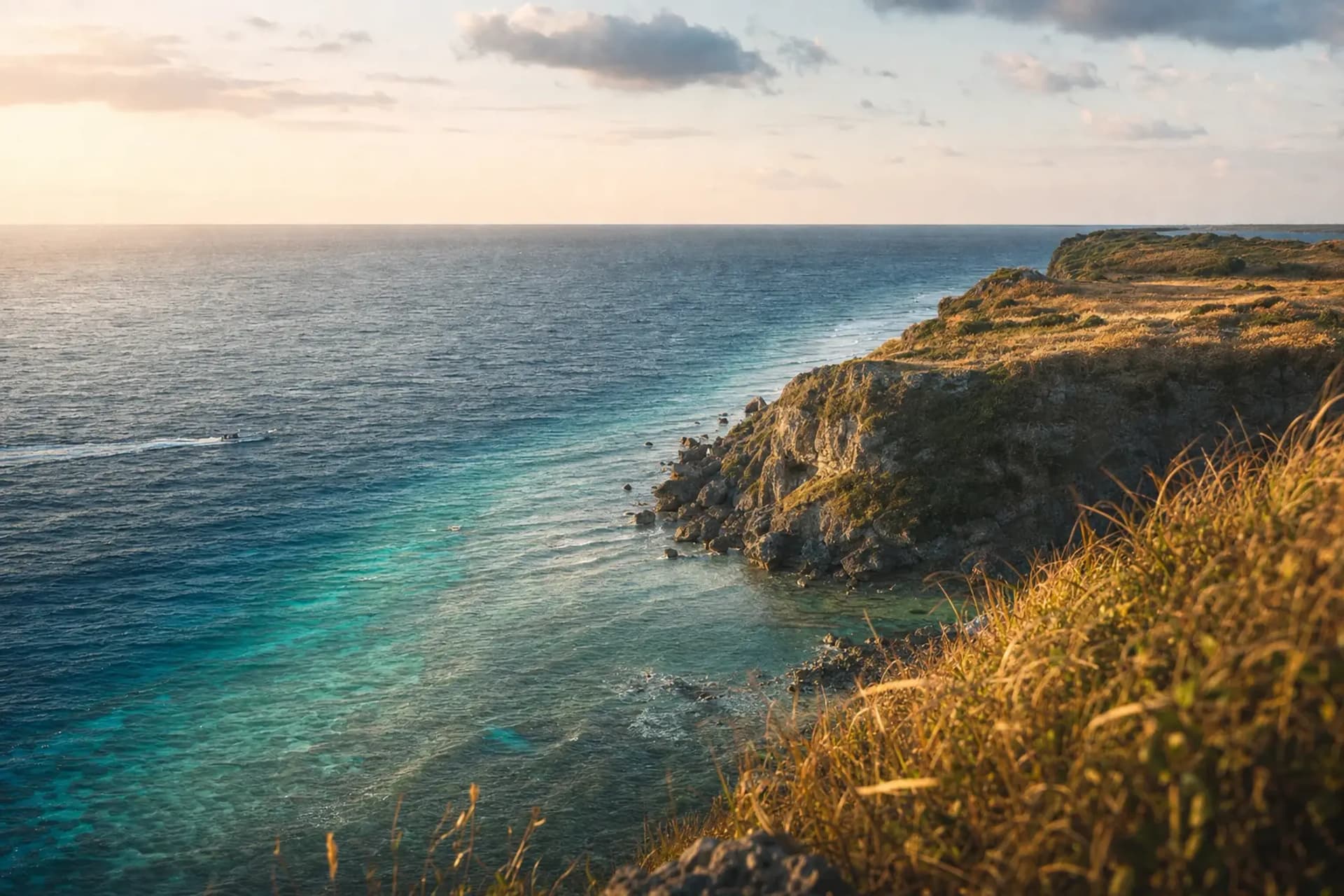
The Kerama Islands are the main island’s best day proposition because they offer a quick jump into clearer water and a different palette of blue, provided conditions allow crossings that day.
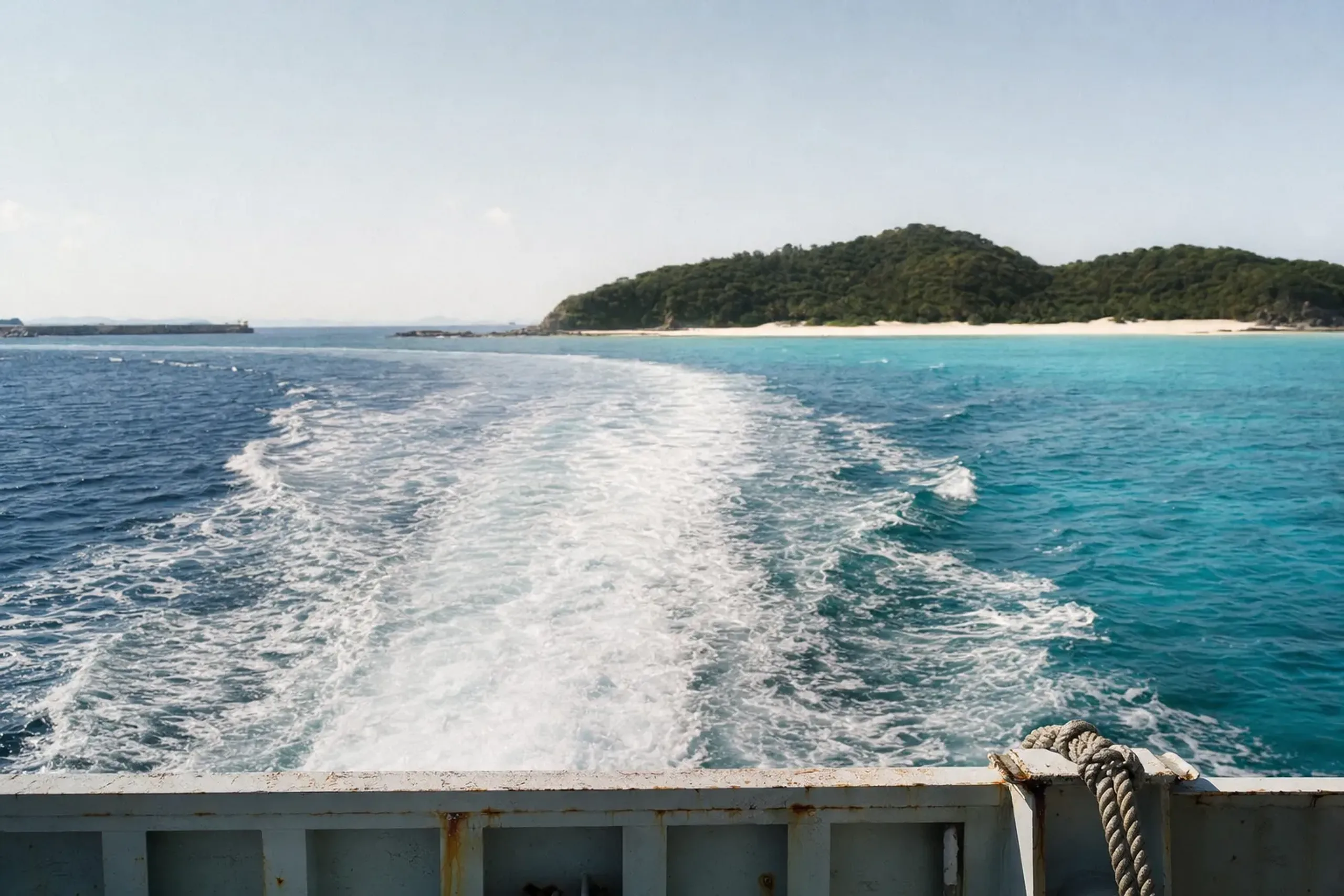
This is where shoulder season earns its reputation. When the sea cooperates, you get an “island” feeling without committing to an entirely separate trip. When the sea does not cooperate, you want to be grateful you did not build your whole week around it.
Keep it light. Start early. Bring patience for weather decisions you do not control. Local advisories govern whether boats run, and that is non-negotiable.
Winter Bridge: Whale Watching Context (Kerama)
If you are considering Okinawa outside the shoulder windows, there is one winter-led reason it still works: humpback whale watching around the Kerama Islands peaks from January through March, according to official Okinawa guidance.
This is not “beach season.” Different aim. Different wardrobe. But for travellers who want a quieter Japan and are willing to trade swimming time for wildlife, it can be a strong, focused trip.
Ishigaki And Miyako: When A Separate Flight Is Worth It (And When It Isn’t)
Ishigaki and Miyako are for travellers who want their trip to be about outer-island sea time first, and who accept that it becomes a separate journey with a separate flight rather than a simple extension of the main island.
This is where many itineraries wobble. People try to do “a little of everything” and end up spending the week in transit. If your schedule is tight, the main island plus a Kerama day usually delivers more usable hours and less exposure to connection failures.
Choose Ishigaki Or Miyako If You Fit This Profile
- You want a sea-led week and are comfortable making the outer island the whole point.
- You have enough nights to absorb travel time without it biting into daily quality.
- You prefer fewer bases, not more.
If you want an analogy for island logistics and why crossings dominate planning, our team has written about those constraints elsewhere in Japan’s islands.
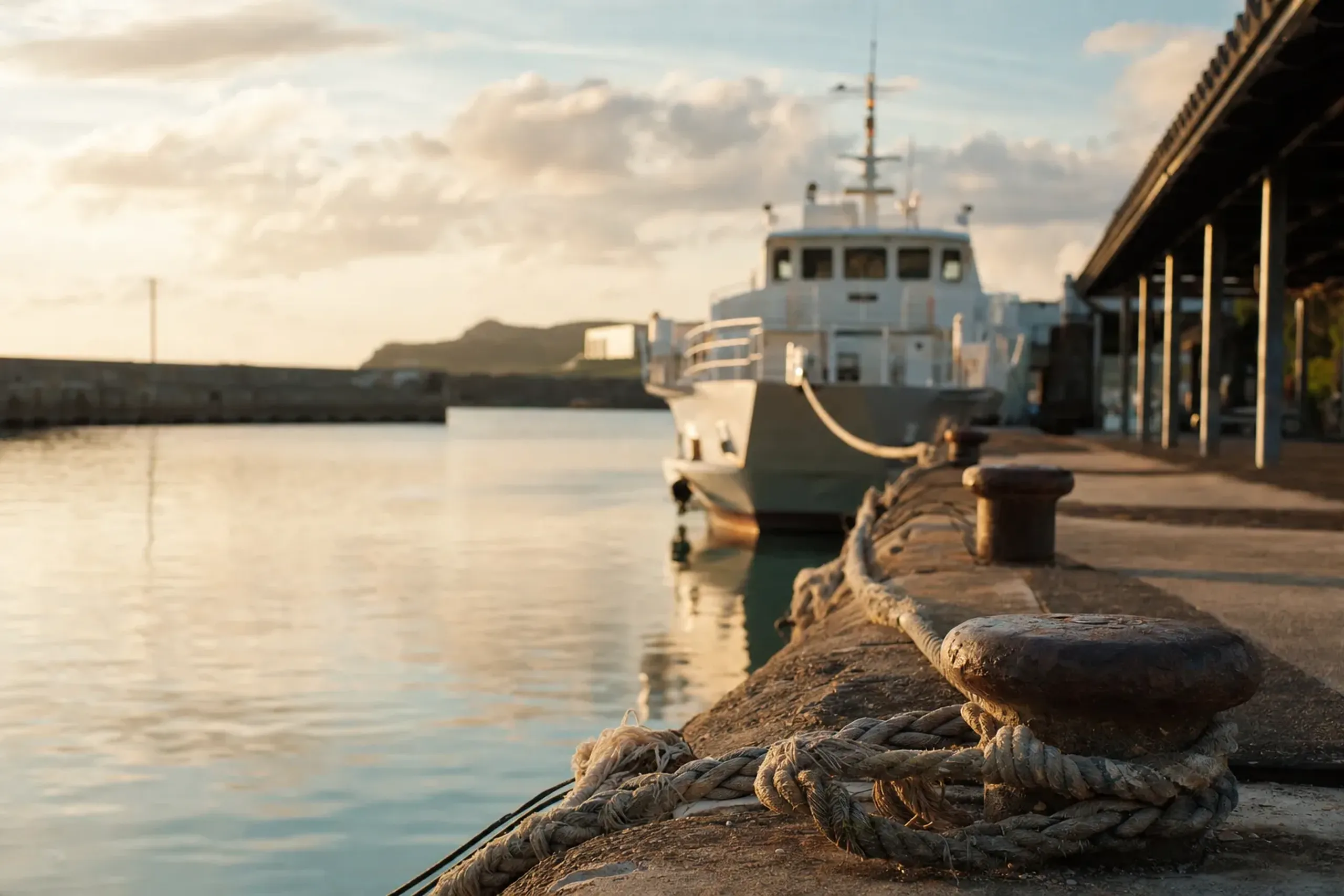
Different geography, same lesson: Yakushima for Private Travellers: Access, Forest, Timing.
Accommodation, Honestly: Resort-Led, Not Ryokan-Led
Okinawa is a resort-led destination, and you should not shop for it like you shop for a ryokan stay in Hakone or Kyushu. The experience is different. The architecture is different. The daily rhythm is different.
That can be a relief. Especially for travellers who love Japan but do not want tatami-and-kaiseki every night. In Okinawa, privacy and comfort often come through space, view lines, and easy access to water-facing downtime.
Shoulder season also changes the availability picture. The “good weeks” compress demand, so some properties can fill quickly. When your first choice is full, the right substitute is not “the nearest alternative.” It is the one that preserves your pace and location logic. If you want the framework we use for this decision-making in Kyoto, the method translates well even though the lodging style differs: Where to Stay in Kyoto: A Neighbourhood Comparison.
Combining Okinawa With A Mainland Trip: Is The Flight Worth It?
Okinawa is worth combining with the mainland when you treat it as a reset, not as an extra checkbox.
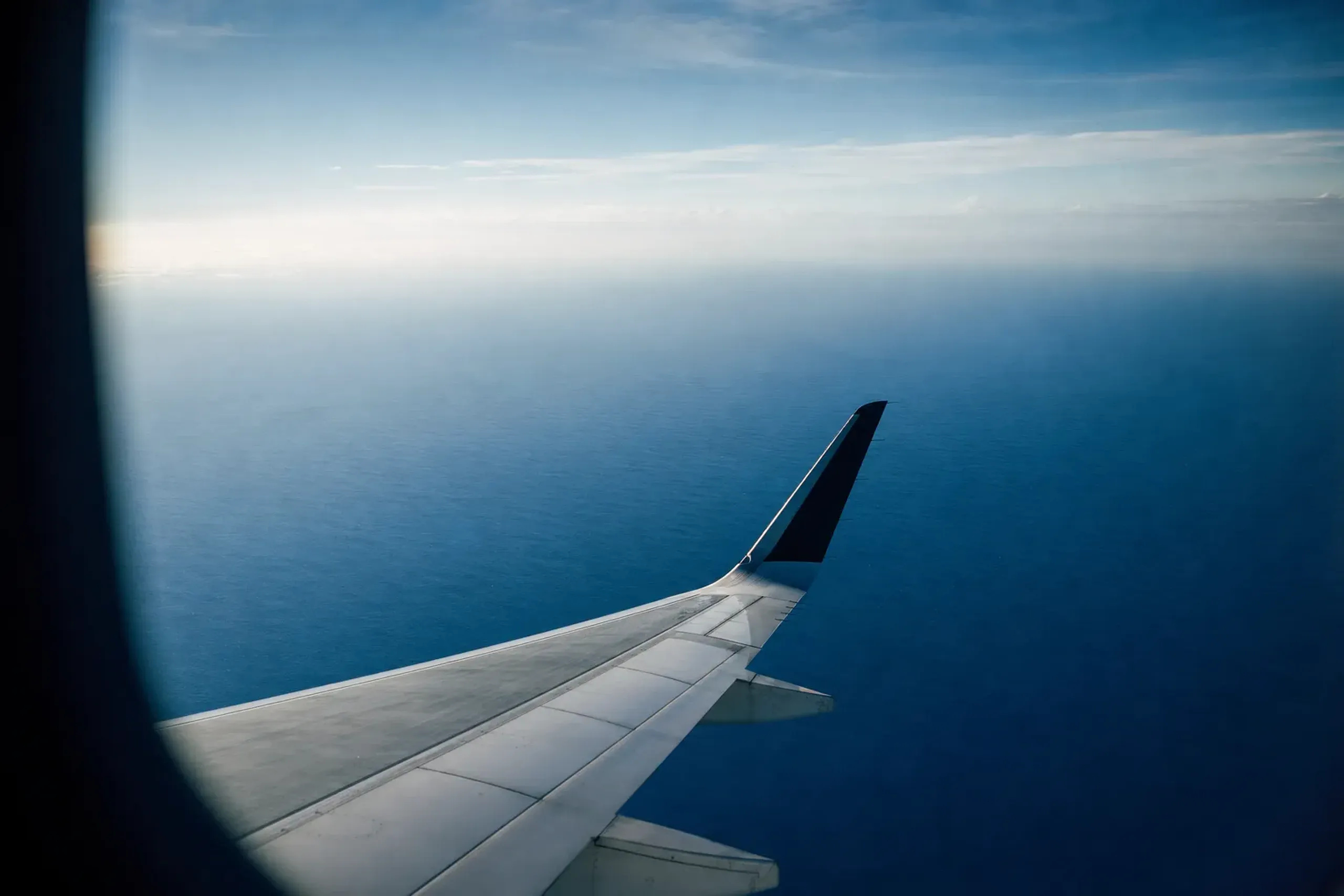
Tokyo and Kyoto can be dense. Okinawa can be wide. That contrast is the point.
We usually suggest placing Okinawa either at the start, to decelerate before the cities, or at the end, to decompress after them. Middle placements can work, but they often feel like you are constantly repacking. Annoying.
If your mainland plan is already tight, do not force Okinawa in. Give it its own space later. Okinawa rewards commitment more than it rewards squeezing.
Who Should Not Go To Okinawa In Shoulder Season
Okinawa shoulder season is not a safe default for every luxury traveller. It fits certain tastes. It punishes others.
- If you want mainland Japan: choose Kyoto, Kanazawa, or Nara instead.
- If your dates are fixed in the storm-prone months: you may spend a meaningful portion of the trip pivoting.
- If your priority is temples and traditional arts rather than sea time: Okinawa can feel like the wrong stage.
There is no shame in that. Good planning starts with admitting what you actually want.
Frequently Asked Questions
Is October–November Really Better Than August For A Beach-Focused Okinawa Trip?
October–November is often a better balance for sea time and comfort because it sits after peak summer pressure and is highlighted by Okinawa’s tourism authority as a top period overall.
August can still be enjoyable, but official guidance places August within the core typhoon-risk window, which can cost you days through cancellations and closed facilities.
If I Travel In September, How Do I Reduce The Chance Of Losing Days To Weather?
You reduce risk in September by building schedule margin, avoiding fragile chains of ferries and flights, and keeping high-value indoor alternates so a storm system doesn’t erase your itinerary.
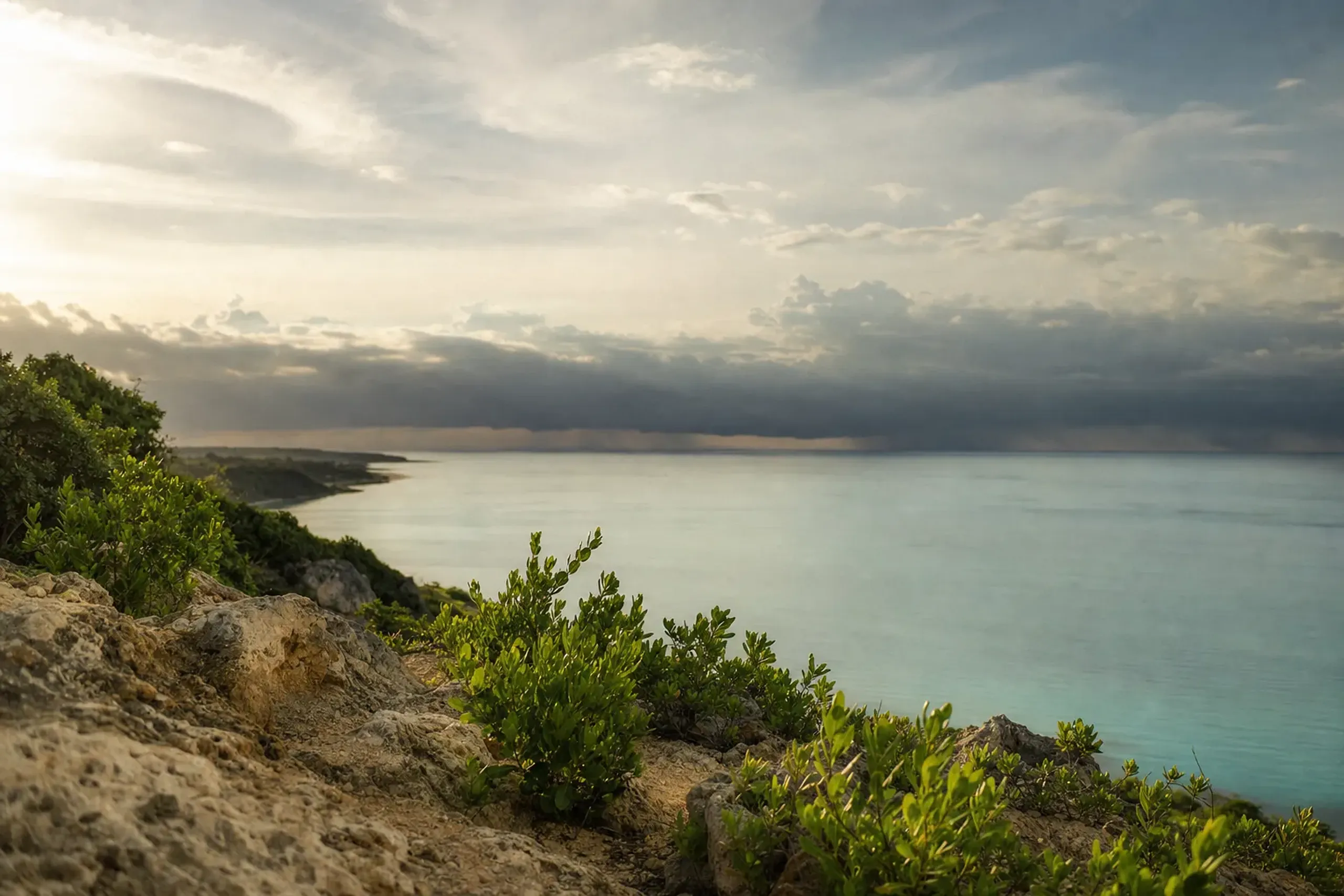
September is attractive, but it is also explicitly flagged by official Okinawa guidance as higher-risk within typhoon season, so the itinerary has to be designed for pivots.
Can I Day-Trip To The Kerama Islands From The Main Island?
Yes, the Kerama Islands are commonly visited as a day trip from Okinawa’s main island, but crossings are weather-dependent and local advisories determine operations.
If the sea is unsettled, a well-built itinerary treats Kerama as an optional “best day” plan rather than a fixed, non-movable commitment.
Should I Choose Ishigaki Or Miyako Instead Of The Main Island?
Choose Ishigaki or Miyako if you want outer-island sea time to be the whole point and you have enough nights to justify a separate flight and simpler, slower pacing.
If your trip is short or you dislike transit, the main island plus one Kerama day is often a cleaner use of time.
Why Choose Japan Royal Service
Luxury in Okinawa is not about stacking activities. It is about protecting your days. Our team at Japan Royal Service plans around two narrow windows, builds real margin for weather, and keeps your identity and itinerary discreet from the first message to the final transfer.
We also design Okinawa with a Hidden Japan mindset: the quieter routes, the calmer bases, the places you do not find through a quick search.
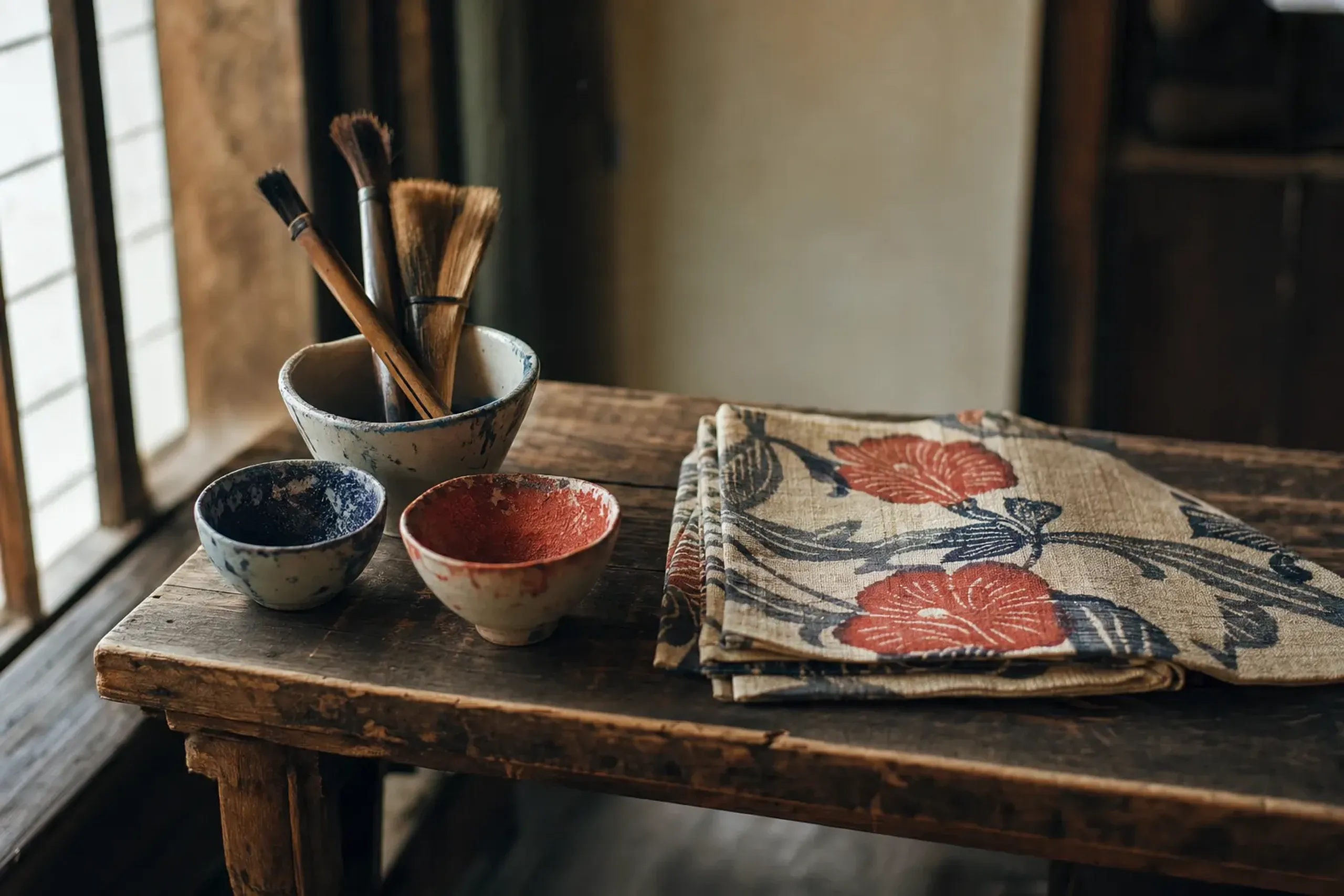
And when you want depth, we can add shokunin encounters that suit Okinawa’s pace rather than importing a mainland checklist.
Most importantly, we are honest about trade-offs. Shoulder season works when you respect the calendar, accept the sea’s authority, and travel with a plan that can bend without breaking.
For private coordination, reach our team at Japan Royal Service directly via WhatsApp or LINE, or contact us here.
If you share your preferred dates and party size, we will place them against Okinawa’s calendar, recommend the better of the two windows, and build the buffers that keep the trip intact.