In this guide
- 01Waking Up In Motion
- 02What The Seven Stars Actually Is
- 03How Many Guests Are Allowed On The Seven Stars In Kyushu?
- 04The Craft And Design Of A Moving Ryokan
- 05The Routes: Mountain Gorge And Volcanic Coast
- 06When Is The Best Time To Ride The Seven Stars In Kyushu?
- 07The Rhythm Of The Journey And The Days Either Side
- 08How Do Travelers Secure A Suite On The Seven Stars?
- 09Frequently Asked Questions
- 10Why Choose Japan Royal Service
Waking Up In Motion
Dawn breaks slowly through the wide glass of the suite window. Outside, a misty, moss-draped gorge slips past in absolute silence, interrupted only by the rhythmic hum of the tracks. You are lying in a wide, comfortable bed. Your clothes hang neatly in a wooden wardrobe. A hot shower awaits in a bathroom lined with centuries-old porcelain craft. This is the morning reality aboard the Seven Stars in Kyushu.
Our team at Japan Royal Service frequently speaks with travelers who assume luxury train travel merely replicates a five-star hotel. It does not. The Seven Stars is something entirely different. It is a method of reaching parts of Kyushu that road and rail serve slowly—mountain gorge, volcanic coast, highland plateau—while sleeping in the same bed throughout. The journey prioritizes a deliberate, unhurried pace. A singular focus on region over speed.
What The Seven Stars Actually Is
To understand Japan's first luxury sleeper, you must look past the polished woodwork and grand piano. The train is a tool for accessing the hidden, quiet interior of Japan's southernmost main island. Kyushu remains deeply volcanic, immensely rich in hot springs, and largely uncrowded compared to the familiar Tokyo-Kyoto circuit.
The train’s stated purpose is bringing visitors to lesser-known towns and onsen regions. It forces a deceleration. You cannot rush the itinerary. You surrender your schedule to the rails. The appeal lies in this exact wabi-sabi restraint—the appreciation of a slower, more mindful passage through landscapes that Google cannot easily map.
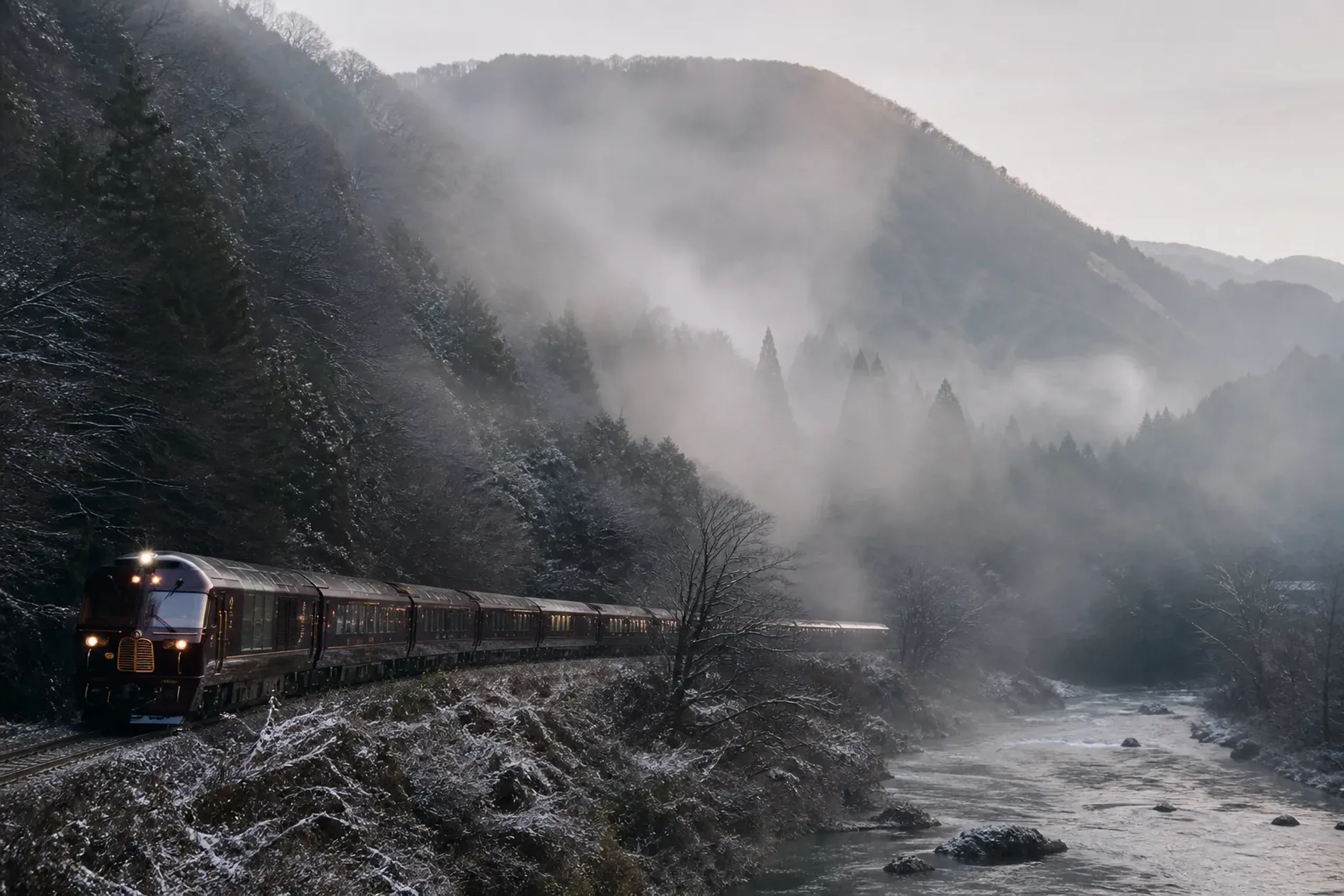
The Seven Stars offers a deliberate, unhurried pace through Kyushu’s remote interior.
How Many Guests Are Allowed On The Seven Stars In Kyushu?
Exactly twenty guests share the seven-car train across ten private suites, ensuring an atmosphere of intense privacy and quiet restraint.
This figure is the defining fact of the journey. Twenty guests. Fewer people than a small, exclusive restaurant serves in a single evening, moving together across several days. That structural scarcity changes the entire character of the thing. There are no crowds in the viewing car. There is no waiting for a table in the dining room.
The privacy granted by such a low capacity is precisely what makes the experience resonate with those who value discretion above all else. When you operate on this scale, the service becomes anticipatory rather than reactive. The staff learn your coffee preferences on the first morning. They note your reading habits in the lounge. True rarity is not found in gold leaf, but in the luxury of undisturbed space.
The Craft And Design Of A Moving Ryokan
Designer Eiji Mitooka did not look to European luxury sleepers for inspiration. He looked to the regional artisans of Kyushu. Mitooka’s design acts as substance, not just a decorative adjective. The interior of the Seven Stars functions as a rolling exhibition of the shokunin—the master craftsmen who dedicate their lives to a single medium.
All ten suites feature private toilet and shower facilities. Look closely at the basins. They are porcelain, designed by the late Sakaida Kakiemon XIV. This specific detail ties the train directly to Kyushu's legendary ceramic tradition.
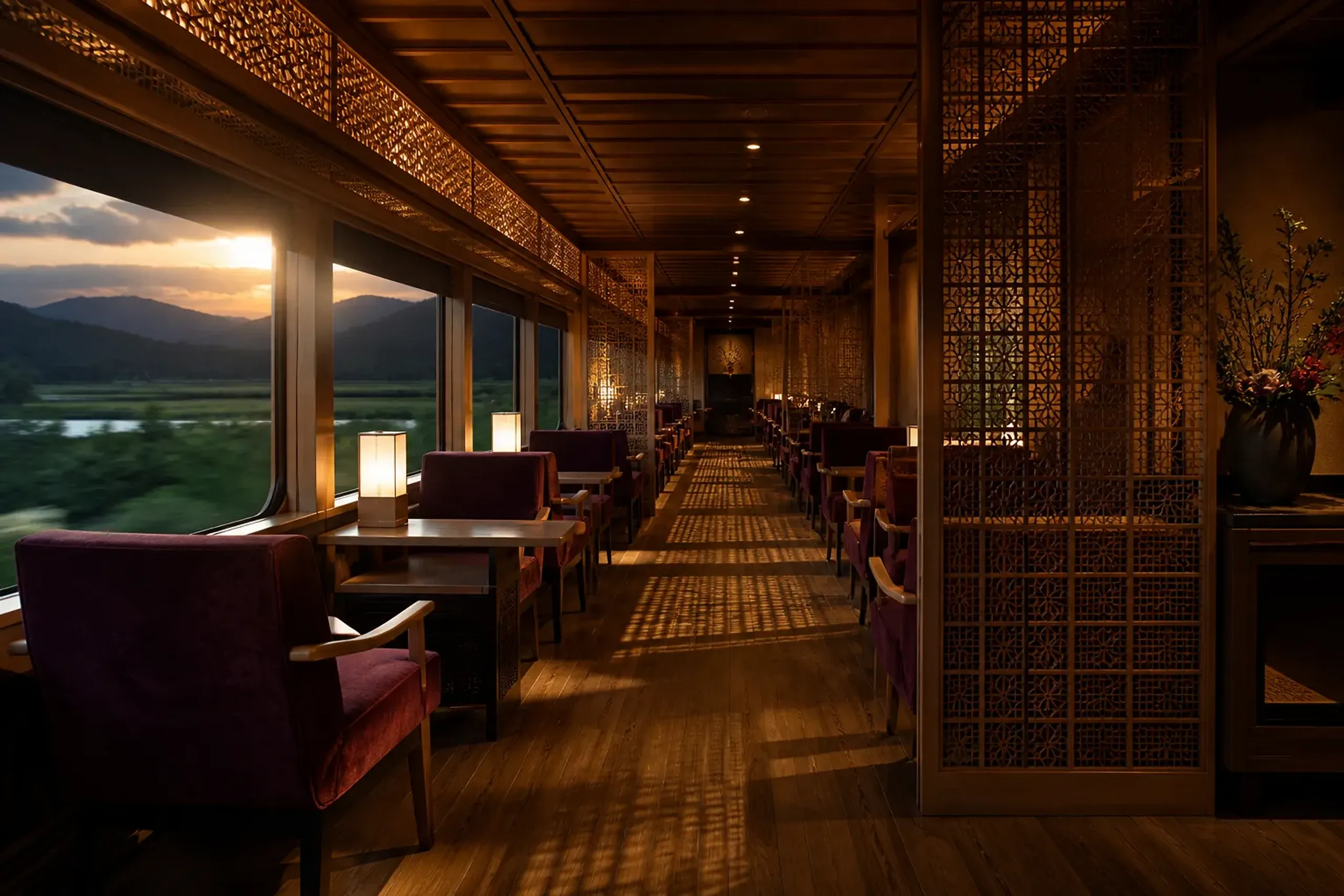
With only twenty guests on board, the shared spaces maintain an atmosphere of intense privacy.
It is a quiet, profound inclusion. Travelers curious about having something made in Japan often find their initial inspiration in these exact private quarters, studying the delicate brushwork while preparing for the day.
Beyond the suites, the shared spaces maintain this dedication to craft. The Blue Moon Lounge offers a piano, a bar counter, and expansive observation windows at the end of the train. The Jupiter Dining Car feels intimate and grounded. A dedicated ryurei-style tea space features tatami mats, providing a calm environment to watch the shifting scenery with a bowl of matcha in hand.
The Routes: Mountain Gorge And Volcanic Coast
Kyushu is the reason for this journey, not merely the setting. The island's geography dictates a winding, dramatic path. Itineraries launching in 2026 focus heavily on three of Kyushu's most scenic and culturally dense regions.
Takachiho, Miyazaki
This mountain gorge town sits at the very center of Japan's founding mythology. The landscape is defined by steep, basalt cliffs and emerald waters. Accessing it by road requires a long, winding drive. Arriving via the broader railway network makes the deep geography feel accessible.
Unzen, Nagasaki
A volcanic onsen resort located on the rugged Shimabara peninsula. The area is famous for the sulphurous, steaming ground of the jigoku, or "hells." The air smells of earth and minerals. It is a stark, fascinating contrast to the polite, polished streets of larger cities.
Kujū, Ōita
The highland plateau at Kyushu's center. Here, you find wide open grasslands, dark skies perfect for stargazing, and imposing volcanic peaks.
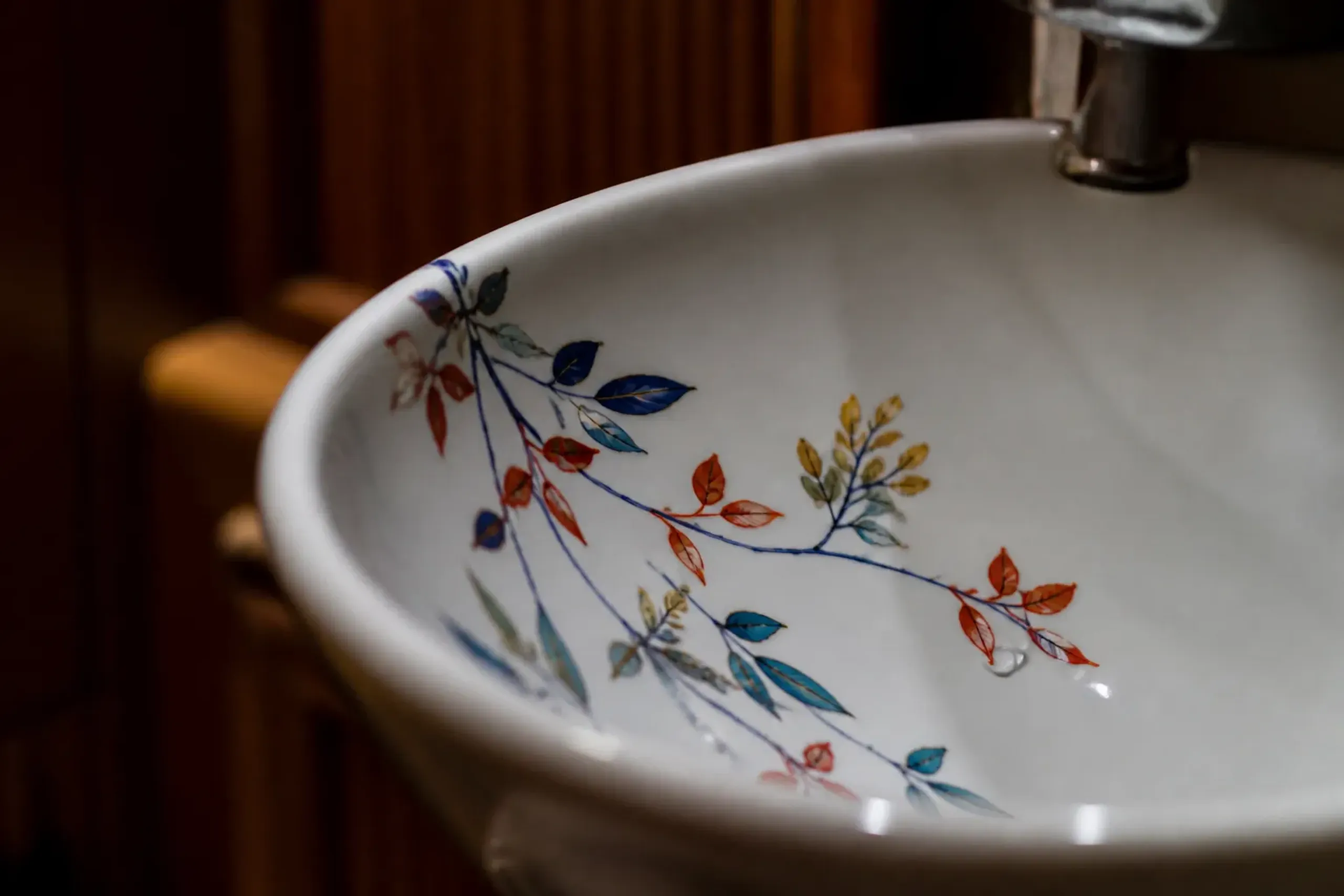
Centuries of Kyushu's ceramic tradition are quietly integrated into the private quarters.
The scale of the landscape here surprises travelers who expect all of Japan to feel tightly manicured.
Routes, stops, and onboard programming are set by JR Kyushu, vary by departure and season, and are confirmed for a specific date at enquiry.
When Is The Best Time To Ride The Seven Stars In Kyushu?
Autumn brings sharp skies and brilliant foliage to the Kujū plateau, while spring departures offer a mild climate for exploring the volcanic coast.
The Japanese concept of shun dictates that every experience has an absolute peak moment. Riding the Seven Stars is no different. Knowing when to travel transforms the view from the window. Much like the dramatic color shifts detailed in our Tōhoku in autumn foliage guide, the southern mountains of Kyushu ignite in reds and golds during late November.
Winter carries its own stark beauty. The steam from the Unzen hot springs billows thickly into the cold air. The lounge car feels impossibly warm and protective. The choice of season depends entirely on what kind of light you wish to see filtering through your suite window.
The Rhythm Of The Journey And The Days Either Side
A typical four-day, three-night journey establishes a highly specific rhythm. You sleep aboard the train. You disembark during the day to explore a coastal town or an artisan's kiln. You return to the train for dinner as the landscape darkens. It is fundamentally different from a hotel-to-hotel itinerary.
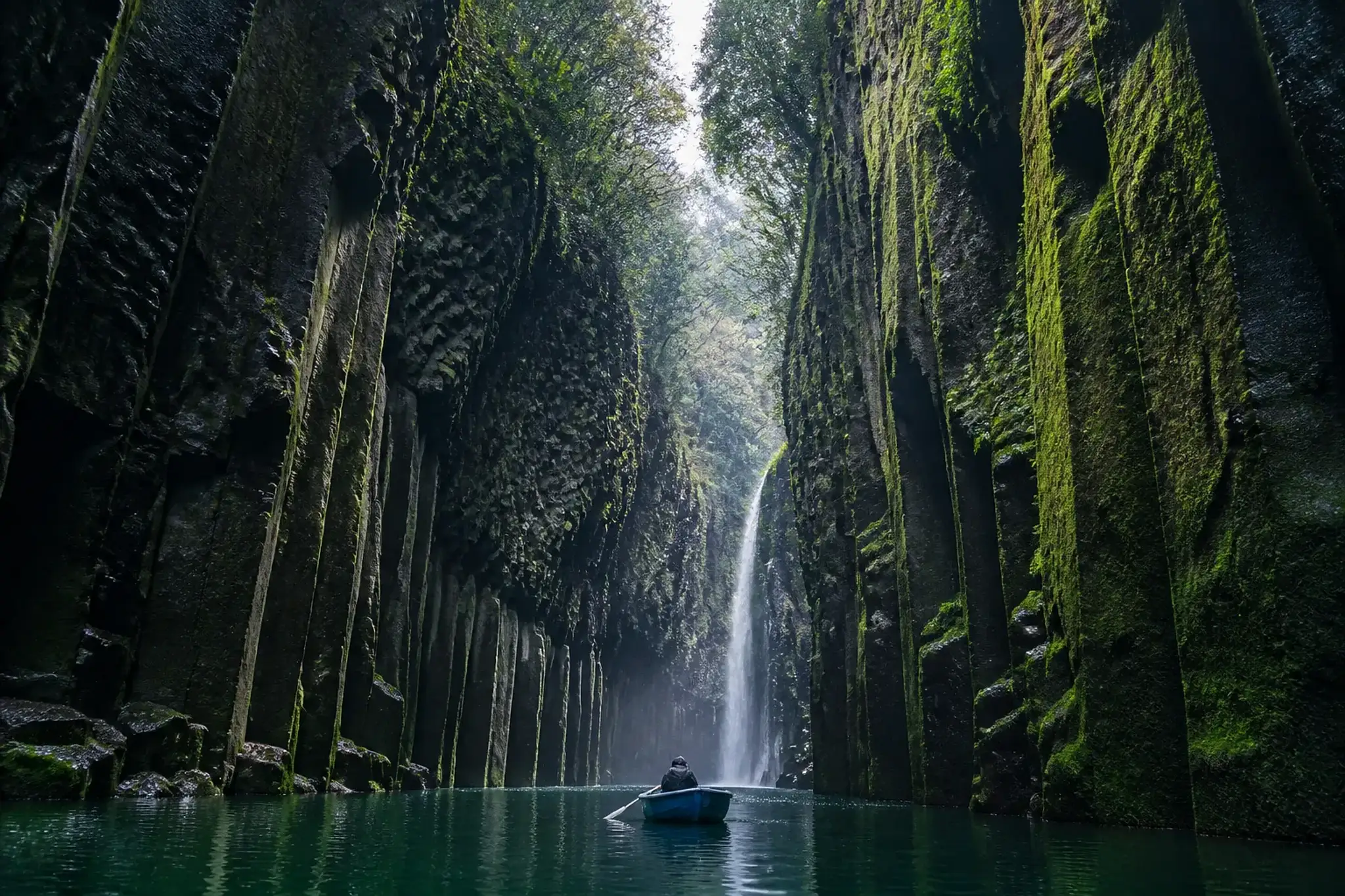
The journey accesses deep geographical features, such as the basalt cliffs of Takachiho.
You unpack exactly once.
Because the route is a continuous loop, all departures begin and end at Hakata Station in Fukuoka. The nights immediately before and after your rail journey are technically part of the trip. Our concierge frequently arranges quiet, exceptional ryokan stays in the Fukuoka area to bracket the train schedule. Relying on private transportation ensures your transfer from the airport to your pre-departure accommodation is entirely secure and unhurried.
How Do Travelers Secure A Suite On The Seven Stars?
Most cabins are allocated through JR Kyushu’s public application ballot, but select dates can be confirmed directly without a ballot via private charter allocations.
The public ballot remains heavily oversubscribed. However, travelers seeking certainty do not need to rely on chance. You can learn more about how our team bypasses the public lottery system by reviewing our luxury rail service details.
Frequently Asked Questions
Does the Seven Stars in Kyushu have a dress code for dinner?
Yes. The Jupiter Dining Car requires a formal dress code during the evening meal. Guests typically wear jackets, ties, or elegant evening wear to match the refined atmosphere of the space.
Are the suites on the Seven Stars equipped with private bathrooms?
Every suite on the train features a private toilet and shower facility. The spaces are finished with custom Kakiemon porcelain, bringing regional craftsmanship directly into your private quarters.
Do the itineraries on the train change during the year?
Yes. JR Kyushu rotates the specific routes, stops, and onboard programming based on the departure date and the shifting seasons.
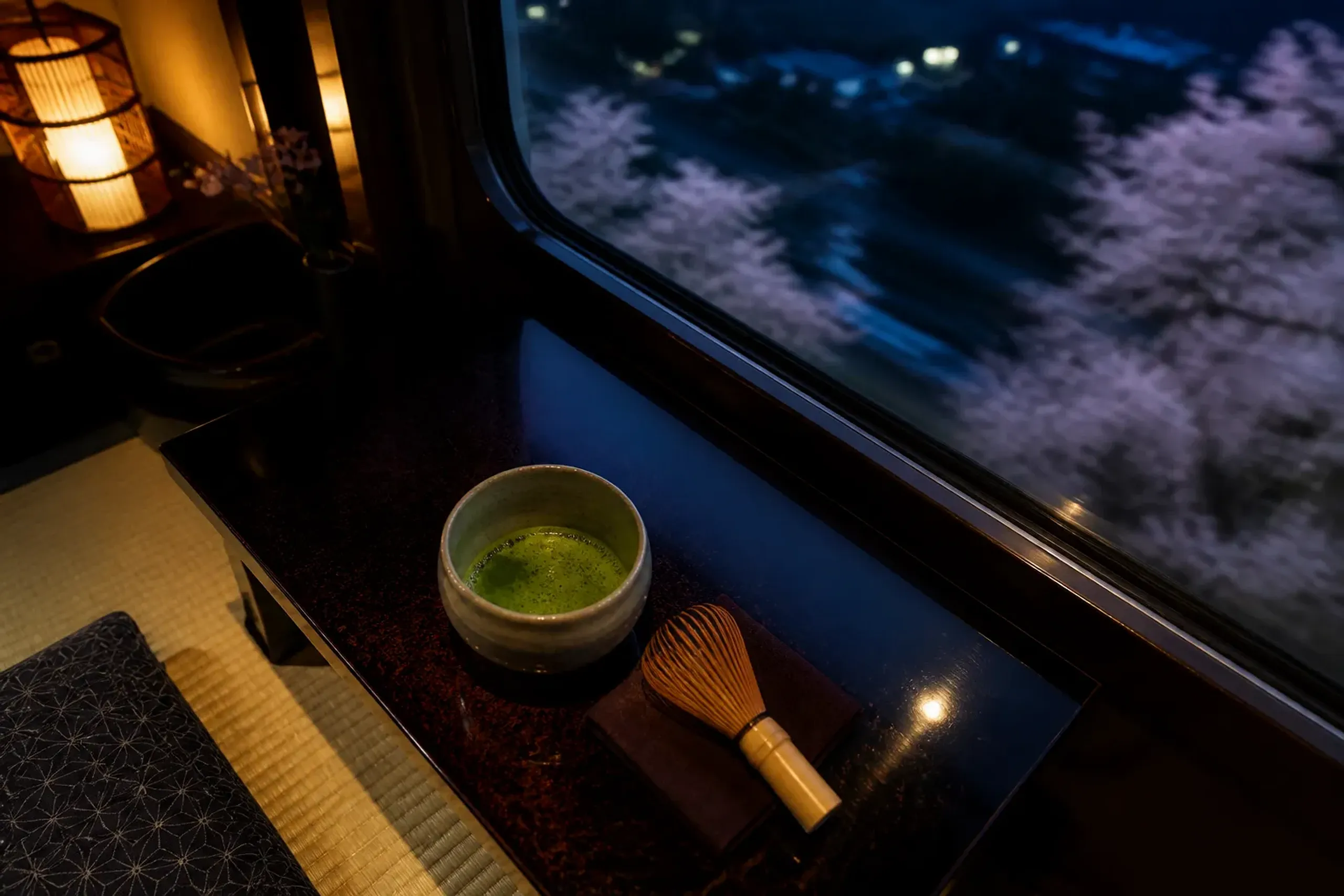
The rhythm of the days aboard allows time for quiet observation and a bowl of freshly whisked matcha.
The exact itinerary is confirmed when you secure your travel dates.
Why Choose Japan Royal Service
Coordinating a high-end rail journey requires extreme precision. Our team at Japan Royal Service understands that HNW travelers prize rarity and absolute discretion. We do not simply book a cabin. We design the entire envelope around the journey—managing the private airport transfers, securing the elusive pre-departure ryokan, and ensuring your identity remains entirely confidential from the moment you land.
A truly tailor-made itinerary anticipates the friction points of travel and quietly removes them. You focus on the passing mountains. We handle the logistics.
To begin discussing your private travel plans, reach our team privately via WhatsApp or LINE, or contact us here.