In this guide
- 01A God Named For An Unfinished Roof
- 02The Cave And The Descent
- 03The Breast Rock, As Tradition
- 04The Luck Balls Thrown To A Turtle Rock
- 05Is Udō Jingū Open Right Now In 2026?
- 06The Routes In
- 07What Japan Royal Service Arranges On The Nichinan Coast
- 08Frequently Asked Questions
- 09Why Choose Japan Royal Service
You expect to climb to a shrine. At Udō Jingū, you go down.
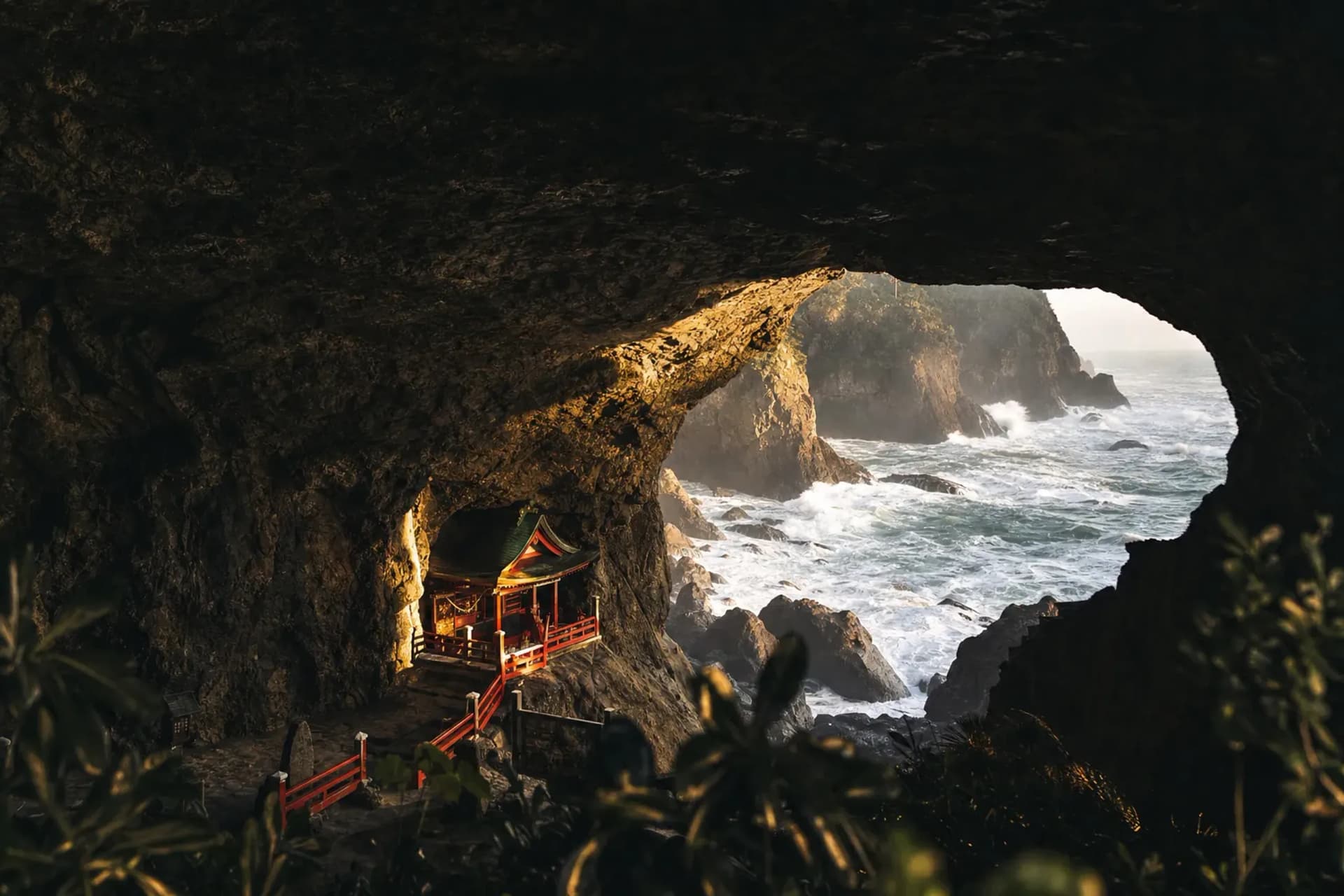
The stair drops toward the Hyūga Sea. Surf first, then the sight of it: a hall of deep vermillion lacquer set inside a dark mouth of rock, the sea breathing a few metres below. Most sacred buildings in Japan sit above you, reached by effort upward. This one waits beneath, in a cave, where the wave-cut stone meets the water. You descend toward the sound of it.
Our team at Japan Royal Service has walked many of Miyazaki's coastal shrines. Few hold you the way this one does — a red hall against black cave, salt in the air, and a name that explains everything if you let it.
A God Named For An Unfinished Roof
The principal deity here is Hiko-nagisa-take-ugayafukiaezu. In the Japanese chronicles he is the father of Emperor Jimmu. His name, long as it reads, carries one plain meaning: roughly, the child whose cormorant-feather roof was not yet finished.
The myth explains it. His mother, Toyotama-hime, daughter of the sea god, went into labour before the roof of her birth hut was complete. The hut was thatched with cormorant feathers. The thatching was not done when the child came. So the newborn carried the unfinished roof in his own name, forever.
The shrine's tradition says the sea cave here is where that hut stood. The story, as the chronicles tell it, ends in separation — mother and father part.
The shrine's own tradition adds a tender detail: that Toyotama-hime left her breasts behind on the cave rock, so her child would be nourished. Both are myth and tradition, not history. But the image is what stays with you. A god named for something left undone.
The Cave And The Descent
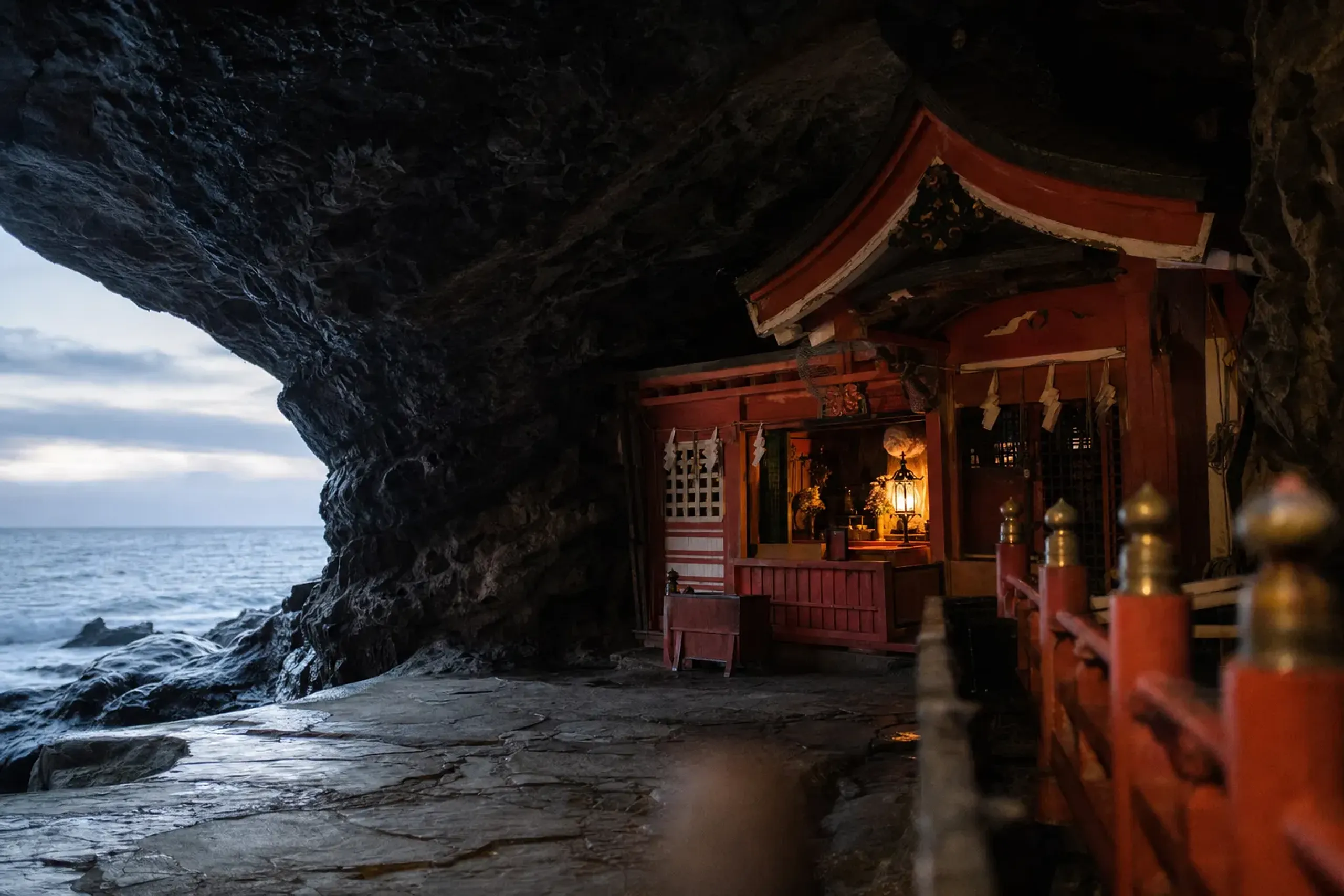
The main hall stands inside a natural cave facing the Hyūga Sea. The structure is prefecture-designated, its vermillion startling against the wet dark stone. You reach it by going down, not up — a reversal that unsettles the body in a quiet way. The stair hands you to the sea.
The shrine's founding date is unknown. According to its own tradition, it was first established in the reign of Emperor Sujin, and a hall was raised inside the cave in the reign of Empress Suiko. Both reigns belong to legend more than record, and the shrine tells them as its own tradition. We do the same.
Inside, the light shifts. Sun off the water throws movement onto the ceiling of the cave. The lacquer glows where the daylight catches it and goes near-black in the recesses. It is a small space to hold something so old.
The Breast Rock, As Tradition
Behind the hall, two rounded protrusions in the cave wall drip water. The shrine's tradition names them the breasts Toyotama-hime left for her child.
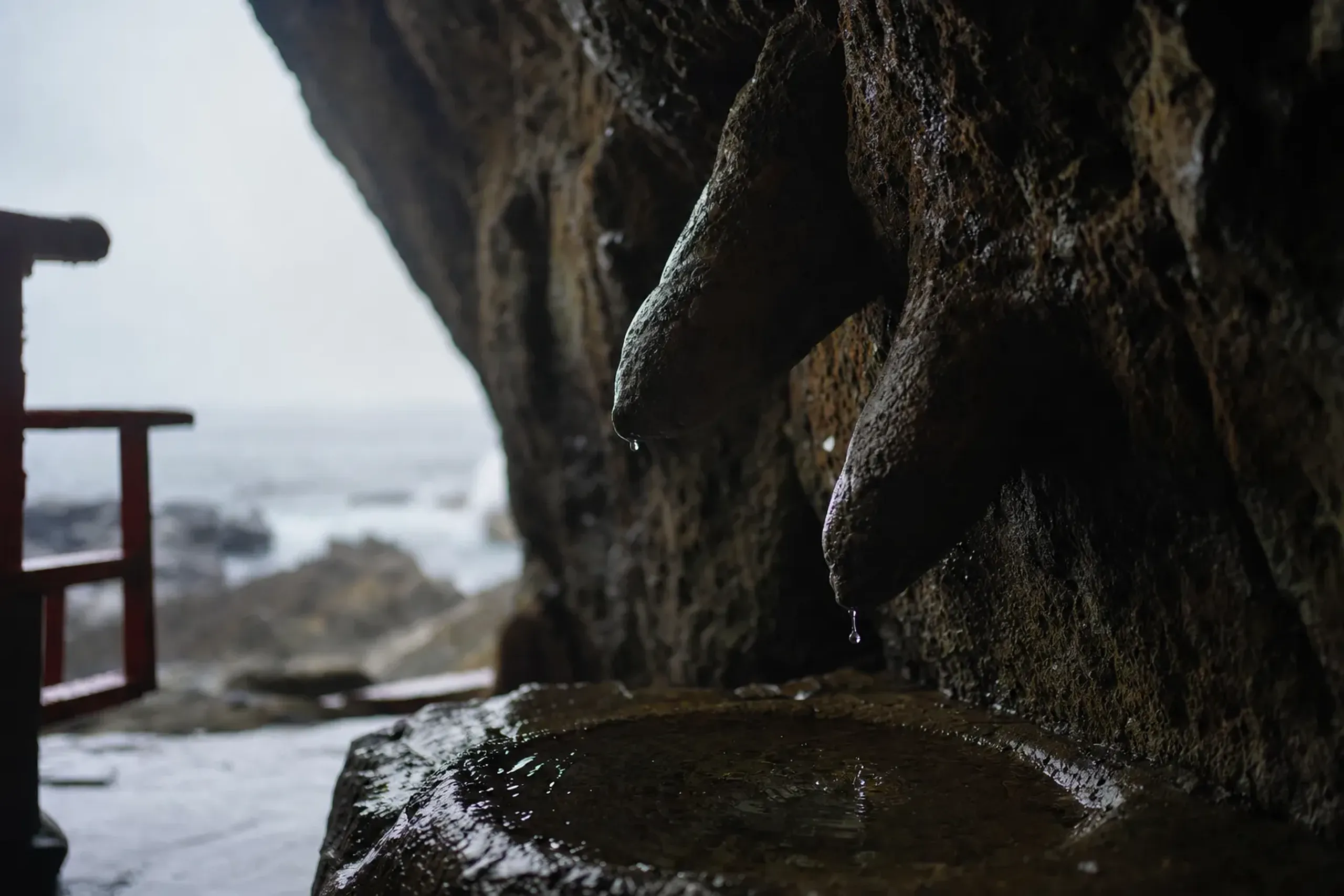
The folk story says the infant was nourished by a sweet made from that dripping water, and a candy made from it is still sold here today.
We offer this only as the shrine's tradition and belief. The site has long been associated, in local and devotional storytelling, with safe childbirth and the raising of children — a belief carried by families who come to pray, nothing more claimed than that. People leave offerings, murmur wishes, and move on. The register is gentle. We keep it so.
The same Hikohohodemi and Toyotama-hime myth opens at Aoshima, where their marriage is remembered — we traced that chapter in our companion Miyazaki writing. Udō Jingū is where the story closes, in the cave, by the sea.
The Luck Balls Thrown To A Turtle Rock
From the plaza in front of the hall, visitors throw small clay balls. The target sits about 12 metres below: a rock shaped like a turtle, with a shallow hollow in its back, roughly 60 centimetres square.
There is a custom to it. Men throw with the left hand, women with the right. A ball that lands inside the hollow is said to grant the thrower's wish. You watch clay arc out over the edge, catch the light, and drop. Most miss. A few don't. The small cheer when one lands carries over the surf.
It is a playful thing in a solemn place, and that is part of why people love it.
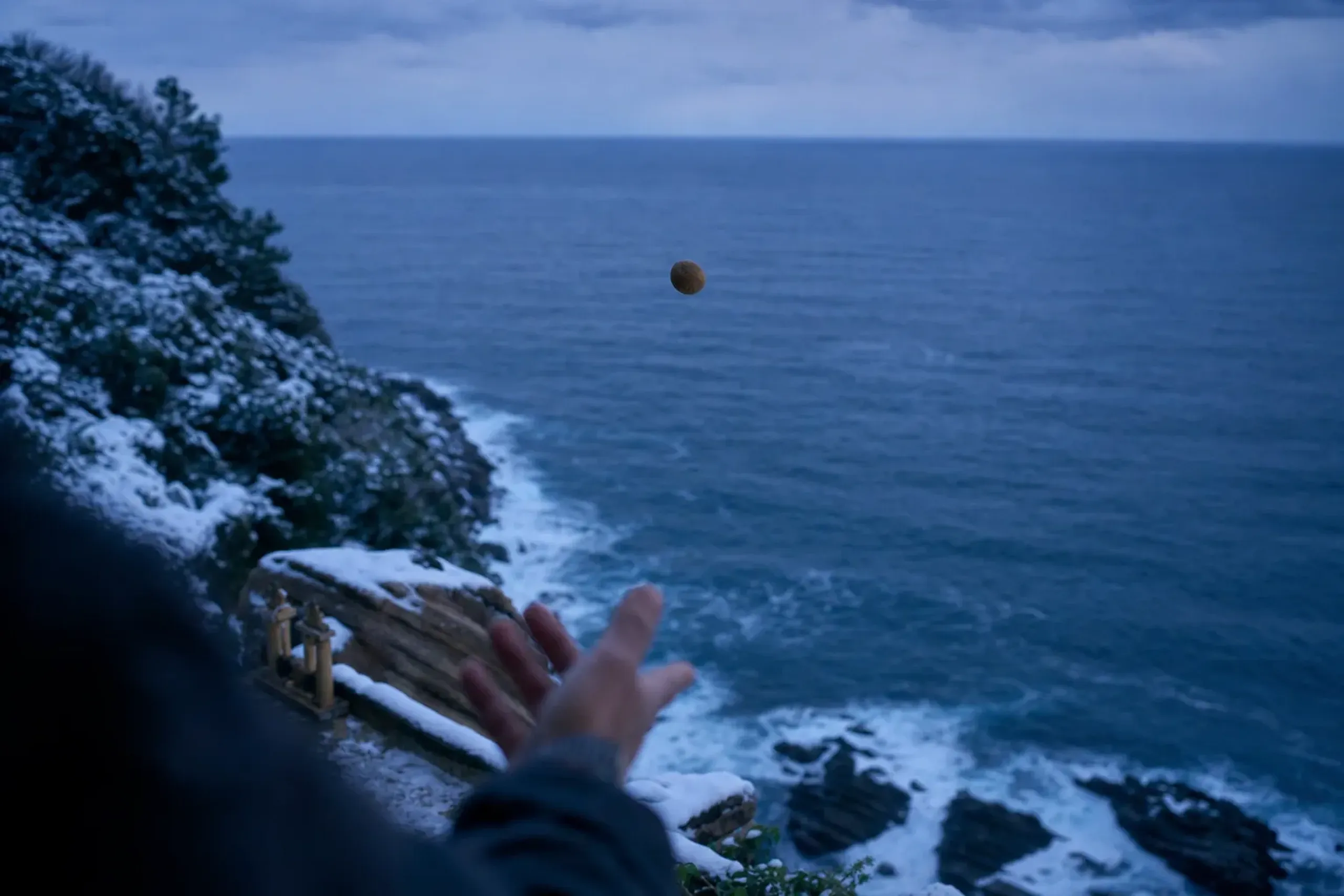
The balls are called unda-nage. No one keeps score but the sea.
Is Udō Jingū Open Right Now In 2026?
Access is uncertain. The coastal approach road to the main car parks has closed repeatedly in 2026, and the shrine's reopening date is undecided. Confirm current status before you travel.
The situation plainly: a landslide on 19 June closed the coastal road. One-lane alternating traffic reopened on 4 August. Then typhoon rain in early September collapsed a different stretch, and the road was fully closed again — the shrine's own notices include a coastal-approach closure dated 7 September. Worship remained possible on foot from the tourist car park, about a 15-minute walk from the main hall by one June report. Further closures are possible. Confirmed status after mid-September 2026 is not available to us at the time of writing.
Key fact: Summer is the typhoon and heavy-rain season on the Nichinan Coast, and the approach road has closed more than once in 2026. We do not present summer as the season to visit. Calmer, drier conditions make for a surer trip.
The Routes In
Three approaches lead to the shrine, and knowing them matters.
Hacchō-zaka, The Old Approach
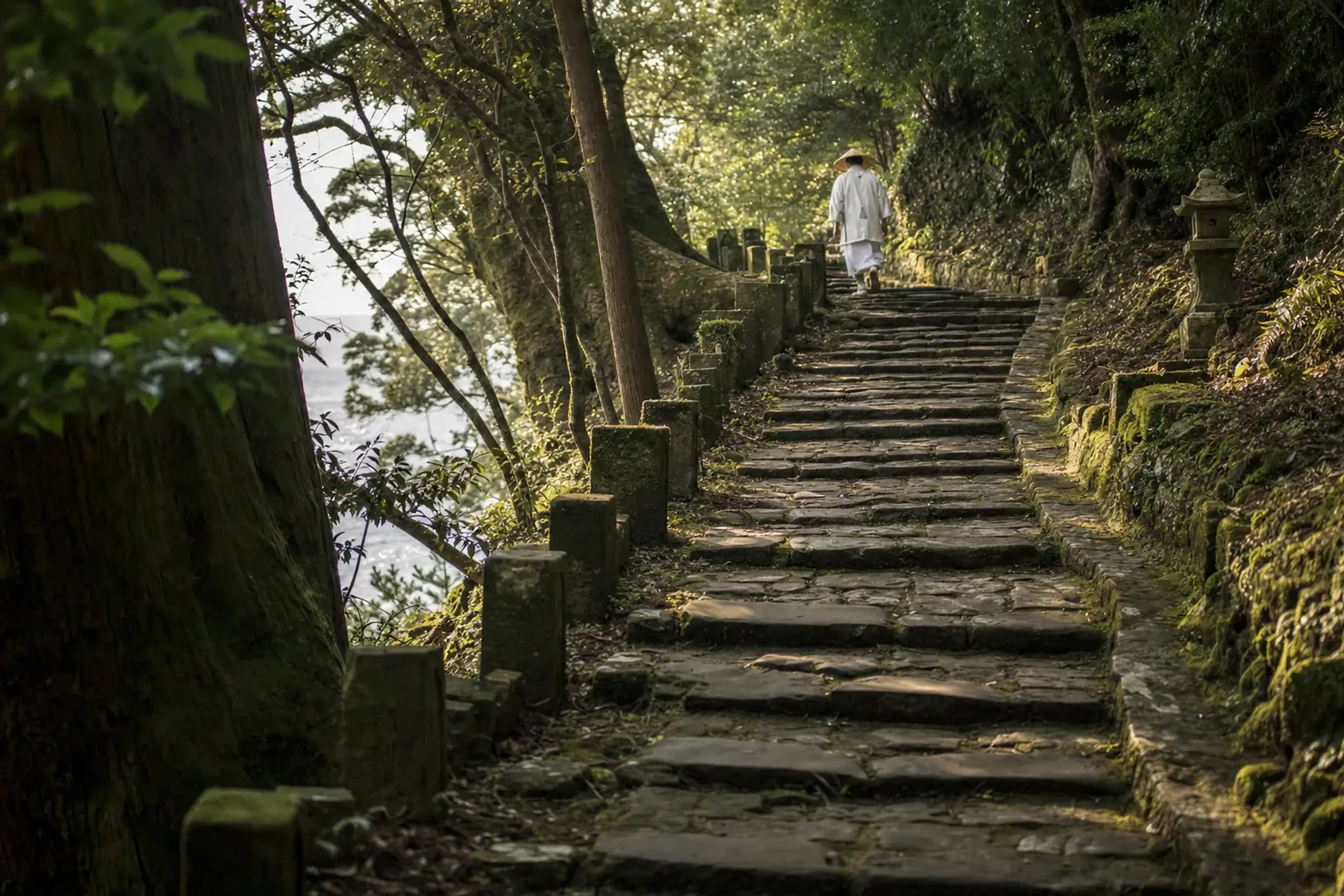
The original main approach is the steep Hacchō-zaka, a city-designated path. It is a climb, and a historic one, favoured by those who want the full pilgrim's arrival on foot.
The Udosaki Tunnel
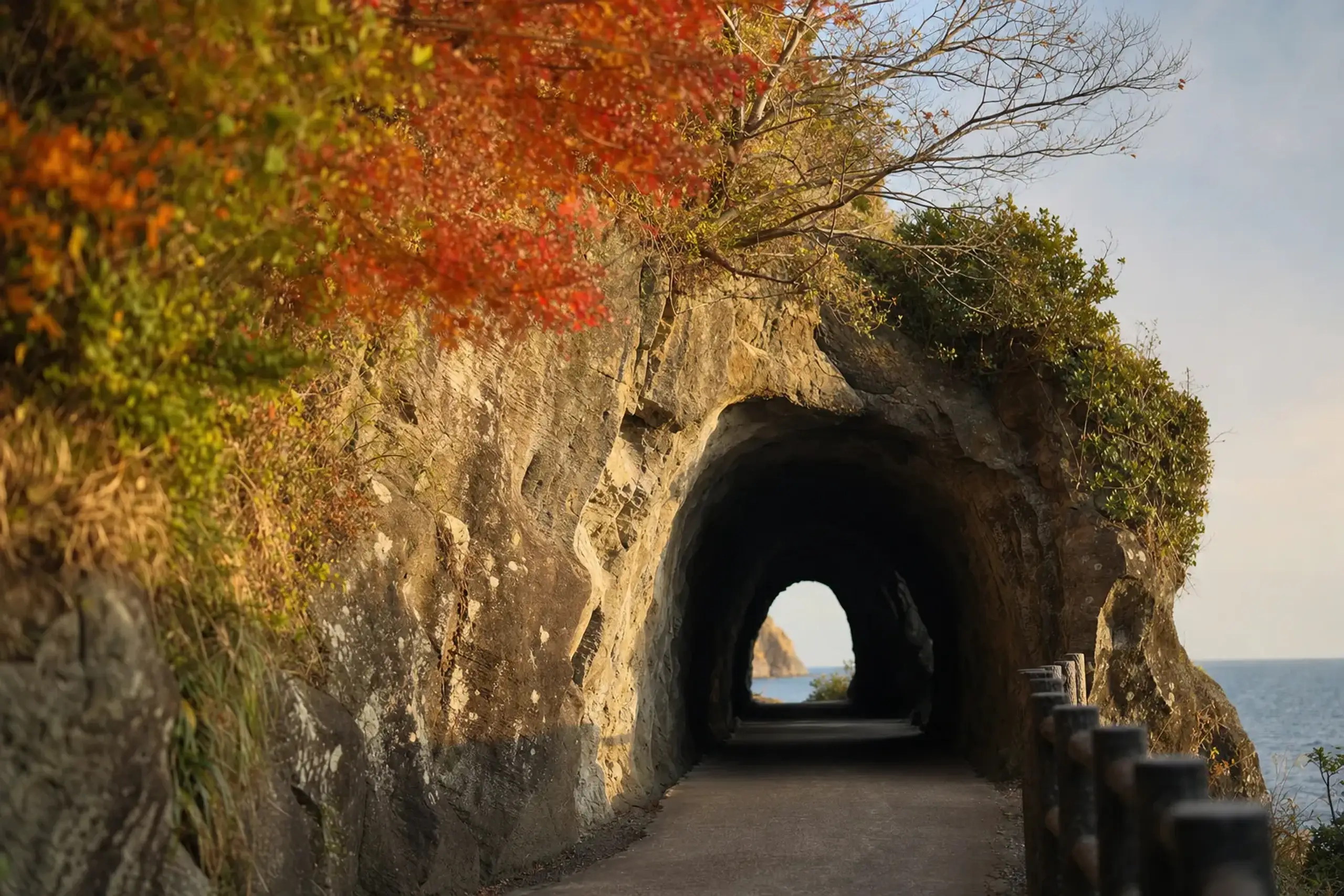
A newer approach runs through the 116-metre Udosaki tunnel, built in 1965. It skips most of the climb and is the route most tour buses use.
The Coastal Car Approach
A third road, built by one account for an imperial visit in 1973, carries cars to the parks near the hall. This is the road that has closed repeatedly in 2026. Treat its status as uncertain until checked.
The grounds are free, and hours run 6am to 6pm. The surrounding area carries several honours: a national Place of Scenic Beauty, a prefectural natural monument for the wave-cut rock platform nearby, and the city-designated Hacchō-zaka approach. Udō Jingū's address is 3232 Miyaura, Nichinan-shi, Miyazaki.
The Nichinan Coast itself — palms, blue water, the road the prefecture promotes as its scenic signature — rewards a slow drive between stops. Takachiho, inland and north, carries another thread of Miyazaki's mythology; we've written of it separately in our Miyazaki mythology pieces.
What Japan Royal Service Arranges On The Nichinan Coast
Udō Jingū is a public shrine, open to all, free to enter. We do not claim private or early access to the hall or the cave, and we would be wary of anyone who does.
What we do is make the day run clean. Our concierge team arranges expert guiding, private chauffeured transfers, and route planning along the Nichinan Coast — and, given the current road situation, that last point carries real weight.
Before any visit, we verify current road status, car park access, and the actual walking time to the hall on the client's behalf. A closed coastal road is not a problem if you know of it a week out. It is a ruined morning if you learn of it at the gate.
For families combining the shrine with time in the region, our team also shapes the rest of the journey — unhurried driving, quiet stays, a reserved table in old Obi town — through a fully tailor-made itinerary and curated chauffeured transport that removes the guesswork from a coast where logistics shift with the weather.
Frequently Asked Questions
Why Is Udō Jingū's Main God Named After An Unfinished Roof?
The deity Hiko-nagisa-take-ugayafukiaezu is named for his birth: his mother went into labour before the cormorant-feather roof of her birth hut was finished. His name means, roughly, the child of the unfinished roof.
Do You Really Climb Down To Reach The Shrine?
Yes. Unlike most Japanese shrines reached by climbing upward, Udō Jingū's approach descends by stairs to the vermillion main hall, which sits inside a natural sea cave facing the Hyūga Sea.
What Are The Clay Balls Thrown At Udō Jingū?
Visitors throw small clay balls, called unda-nage, from the plaza down to a turtle-shaped rock about 12 metres below.
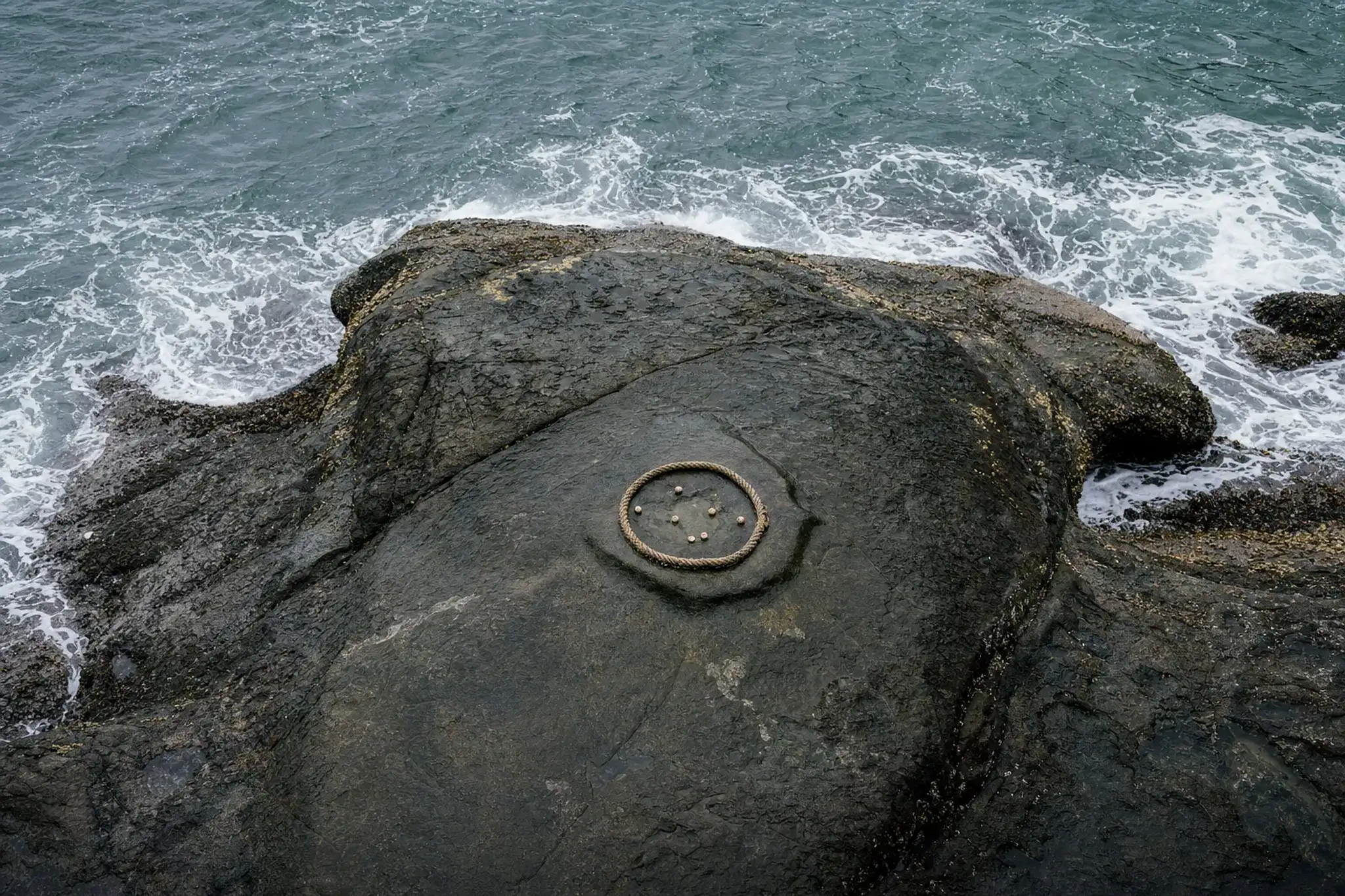
Men throw left-handed, women right-handed. A ball landing in the rock's shallow hollow is said to grant a wish.
Is Summer A Good Time To Visit Udō Jingū?
We do not recommend summer as the ideal season. It is the typhoon and heavy-rain period on the Nichinan Coast, and the coastal approach road has closed repeatedly in 2026. Drier months offer surer access.
What Is The Breast Rock At Udō Jingū?
Behind the main hall, two rounded protrusions drip water. Shrine tradition says Toyotama-hime left them as breasts to nourish her child. This is folk belief and tradition, long associated with prayers for childbirth and child-rearing.
Why Choose Japan Royal Service
A shrine in a sea cave on a coast where the roads shift with the storms is exactly the kind of place that rewards quiet preparation. Our team at Japan Royal Service plans Nichinan Coast journeys with our own fleet, native Tokyo coordination, and total discretion over who you are and where you go. We verify what others assume. We tell you plainly when a road is closed. And we build the day so the only thing you feel is the descent toward the water.
To plan a private visit to Udō Jingū and the Nichinan Coast, reach our team privately via WhatsApp or LINE, or contact us here. We will confirm current access and shape the journey around you.