In this guide
- 01Why Yonezawa Still Honors The Uesugi Lords
- 02The Five Festival Days At A Glance (Apr 29–May 3)
- 03Which Day Should You Visit The Yonezawa Uesugi Festival?
- 04May 3 Step-By-Step: Procession Morning To Riverbed Battle Afternoon
- 05How Do Paid Seats Work For The Kawanakajima Battle Reenactment?
- 06Can Visitors Join The Parade Or Battle As Armored Warriors?
- 07The Places That Give The Festival Meaning (And A Breather)
- 08Getting To Yonezawa And Moving Around On Festival Days
- 09A Two-Night, One-Anchor Plan That Actually Works
- 10Let Us Plan Your Golden Week In Yonezawa
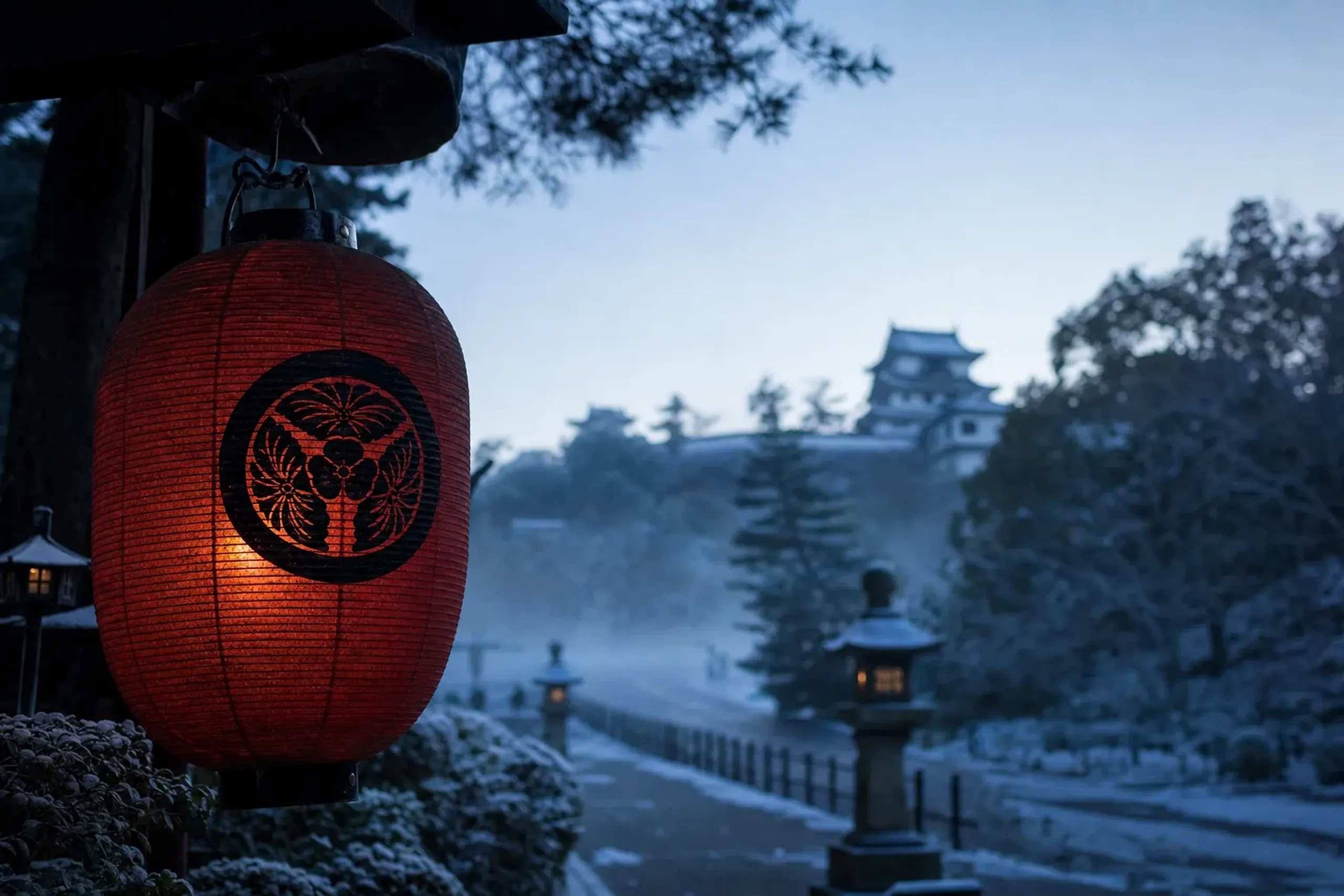
You arrive early, before the streets tighten and the drums begin. Uesugi-jinja feels calm at this hour. Lantern light fades. Shoes on gravel. For a few minutes, the town is yours alone.
In Yonezawa, the Yonezawa Uesugi Festival (Uesugi Matsuri) is not a mere “festival weekend.” It is five days in which a castle town rehearses its memory in public. The rites are real, not staged for spectators. The processions pass close enough that you can hear armour plates knock against one another.
If you have ever tried to navigate Golden Week on instinct, you already know the problem. Trains sell out. Roads choke. Simple distances turn sticky and slow. This guide gives you a plan that holds—one calibrated for travelers who value a day that unfolds without friction.
Why Yonezawa Still Honors The Uesugi Lords
Yonezawa is a town organized around a family story, and the festival is how it repeats that story without reducing it to a museum label. You feel it most keenly at the shrine, where the crowd is ordinary and the tone is formal.
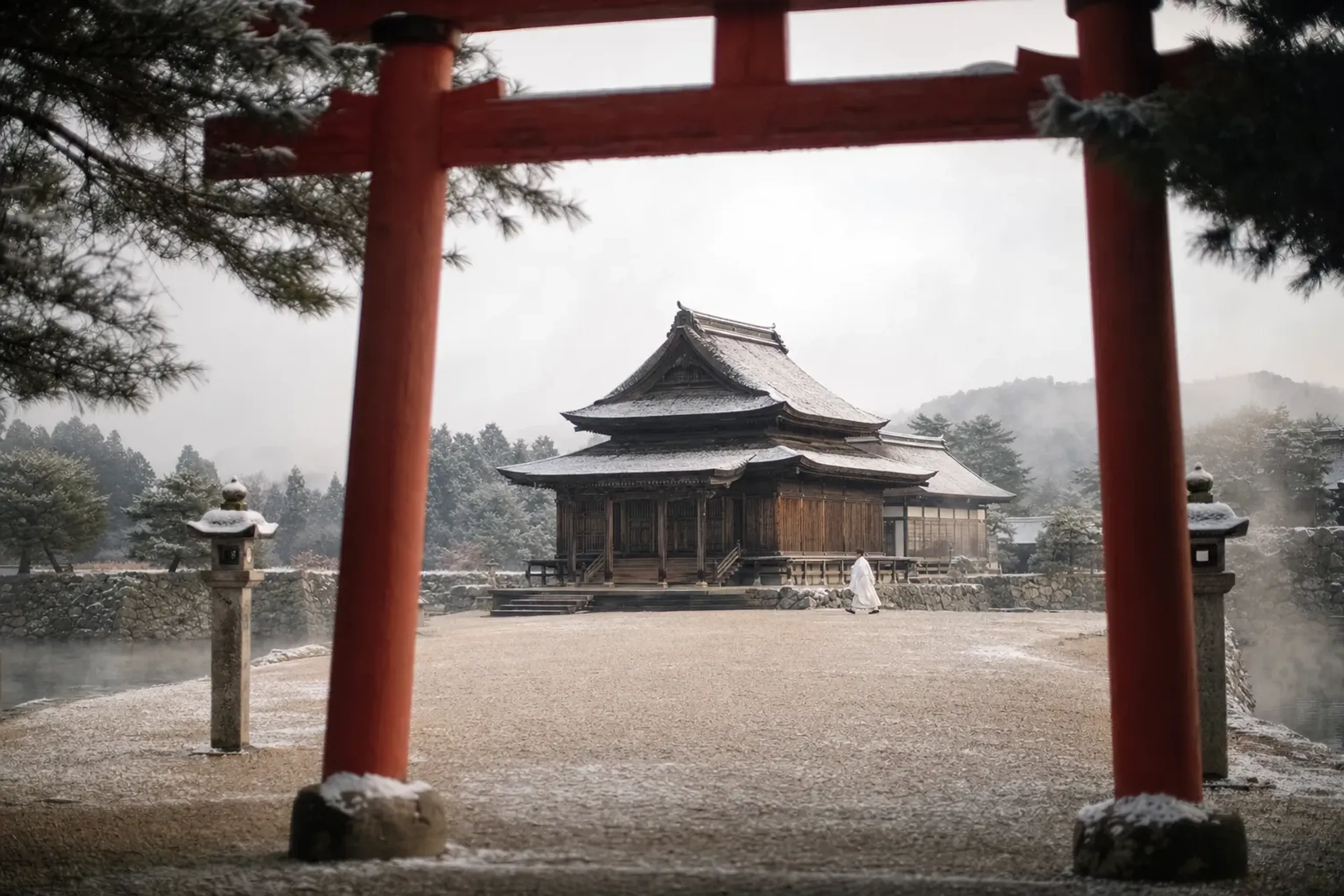
Uesugi-jinja (Uesugi Shrine) stands on the former main enclosure of Yonezawa Castle, today known as Matsugasaki Park. It is not a grand stone keep. It is an outline: trees, moats, paths, and an unmistakable sense of “here.” The restraint is the point—a wabi quietness where the imagination does more work than any gilded hall could.
The name most visitors recognize is Uesugi Kenshin. He died on 13 March 1578. The festival’s arc moves from quiet shrine ritual to a staged battle that recalls the 1561 clash between Kenshin and Takeda Shingen at Kawanakajima.
That mix matters. A parade alone can feel like theatre. Here, the opening days are devotional, and only then does the town turn outward. It stays grounded in something older than performance.
The Five Festival Days At A Glance (Apr 29–May 3)
The Yonezawa Uesugi Festival runs from 29 April to 3 May every year, during Japan’s Golden Week. Expect the order of events to stay similar from year to year, while exact times and routes change and are announced closer to the date.
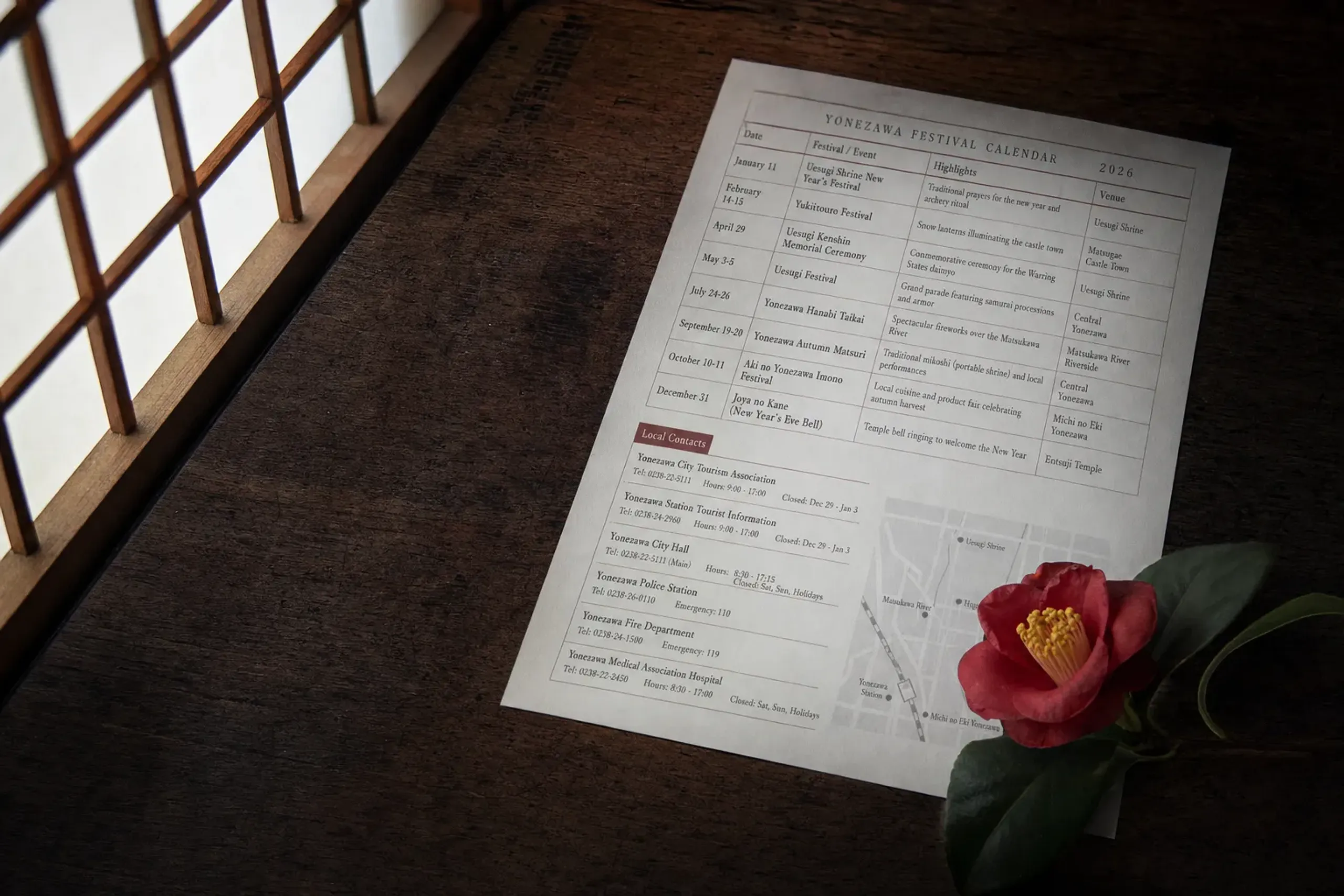
Below is a worked example based on the provisional 2026 schedule published through local official channels. Use it as a planning skeleton, not a promise. Times vary by year.
| Day | What Typically Happens | 2026 Worked Example (Provisional) |
|---|---|---|
| Apr 29 | Opening rites at the shrine; town parade energy starts. | Grand festival at Uesugi Shrine (10:00) and a folk-dance parade (time published locally as part of the day’s programme). |
| Apr 30 | A quieter religious day tied to local worship sites. | Rite at Matsugasaki Shrine (time announced closer to the date). |
| May 1 | Shrine calendar events; a slower day for museum context. | Uesugi Shrine holds a carp memorial rite (shrine calendar event; exact time varies). |
| May 2 | Night ritual with armour and torchlight atmosphere. | Armoured-warrior rite in the evening, with a procession from the Uesugi family mausoleum to Uesugi Shrine. |
| May 3 | Climax day: major processions, then the riverbed battle reenactment. | Mikoshi procession and Uesugi army procession (published locally as 9:30 and 10:40, tentative), then Battle of Kawanakajima reenactment (14:00–15:30). |
For most travelers, one day matters more than the rest.
May 3. Everything else supports it.
Which Day Should You Visit The Yonezawa Uesugi Festival?
Visit on May 3 to see both the Uesugi army procession in the morning and the Battle of Kawanakajima reenactment on the Matsukawa riverbed in the afternoon.
If you can add time, arrive the day before. May 2 brings the armoured-warrior rite in the evening, and it quietly changes how you watch May 3; you begin to recognize banners, ranks, and the local cadence of the story. It also gives you a buffer. Golden Week rarely rewards tight connections.
If you only have one overnight, our team at Japan Royal Service usually suggests this: arrive midday May 2, sleep in Yonezawa, then keep May 3 simple and local. No long side trips. Not today.
May 3 Step-By-Step: Procession Morning To Riverbed Battle Afternoon
May 3 is the day Yonezawa feels like a town wearing armour.
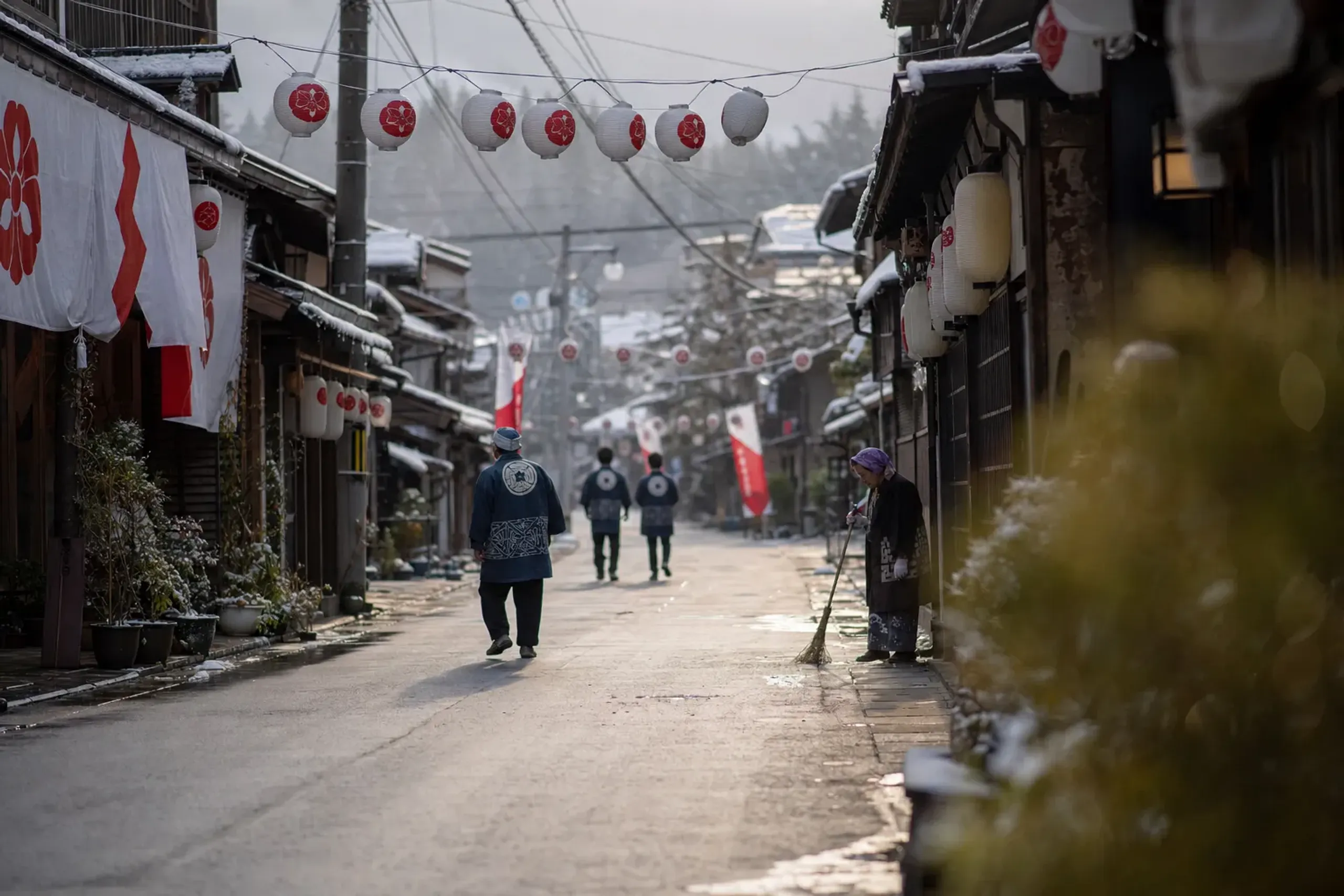
Early on, people claim curb space, then the sound of feet and drums begins to layer upon itself. A child on a parent’s shoulders. A sudden hush near the shrine gate.
Start At Uesugi-jinja: Shrine Grounds Before The Streets Close
Begin near Uesugi Shrine and Matsugasaki Park while you still have freedom of movement. After that, road closures and crowd density can box you in. The shrine is also where the “why” of the whole festival is most legible.
In 2026, the city published traffic regulation windows for May 3, including a citywide closure during the procession period (noted locally as 9:30 to 13:00). Treat this as a model. Always recheck the year you travel.
Key fact: There is no visitor parking at Uesugi Shrine, and Golden Week congestion is expected—plan to arrive on foot, by taxi, or with a timed drop-off.
Watch The Uesugi Army Procession Without Chasing It
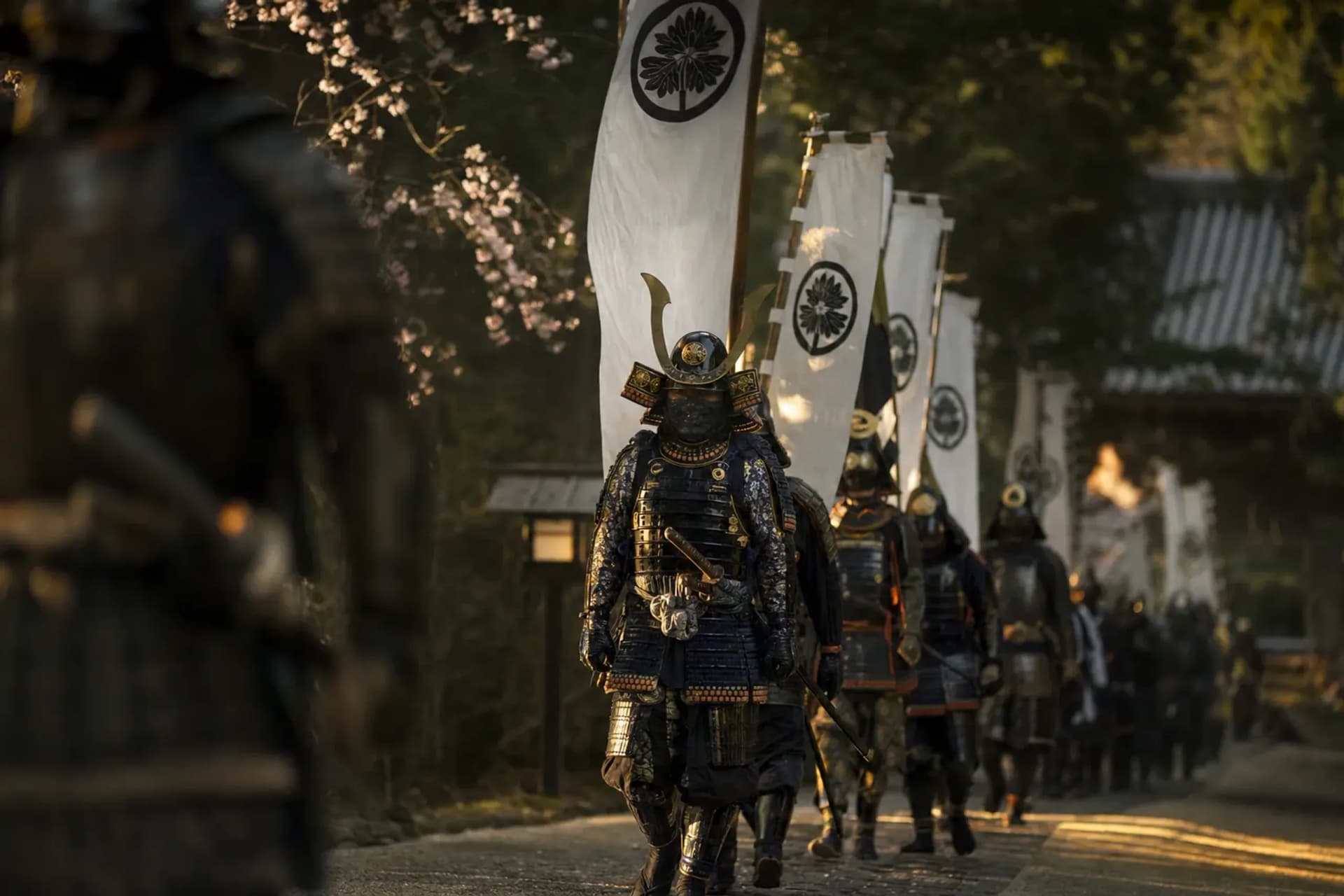
In the morning, the Uesugi army procession and related parades move through the shrine area. You do not “cover” this like a marathon. That is the beginner’s mistake. Pick one or two viewing points and hold them.
The festival’s own materials describe large participation, with figures published for the procession and the wider parade depending on the year’s page. You will feel the scale either way: ranks, banners, and long pauses as the line compresses, then releases.
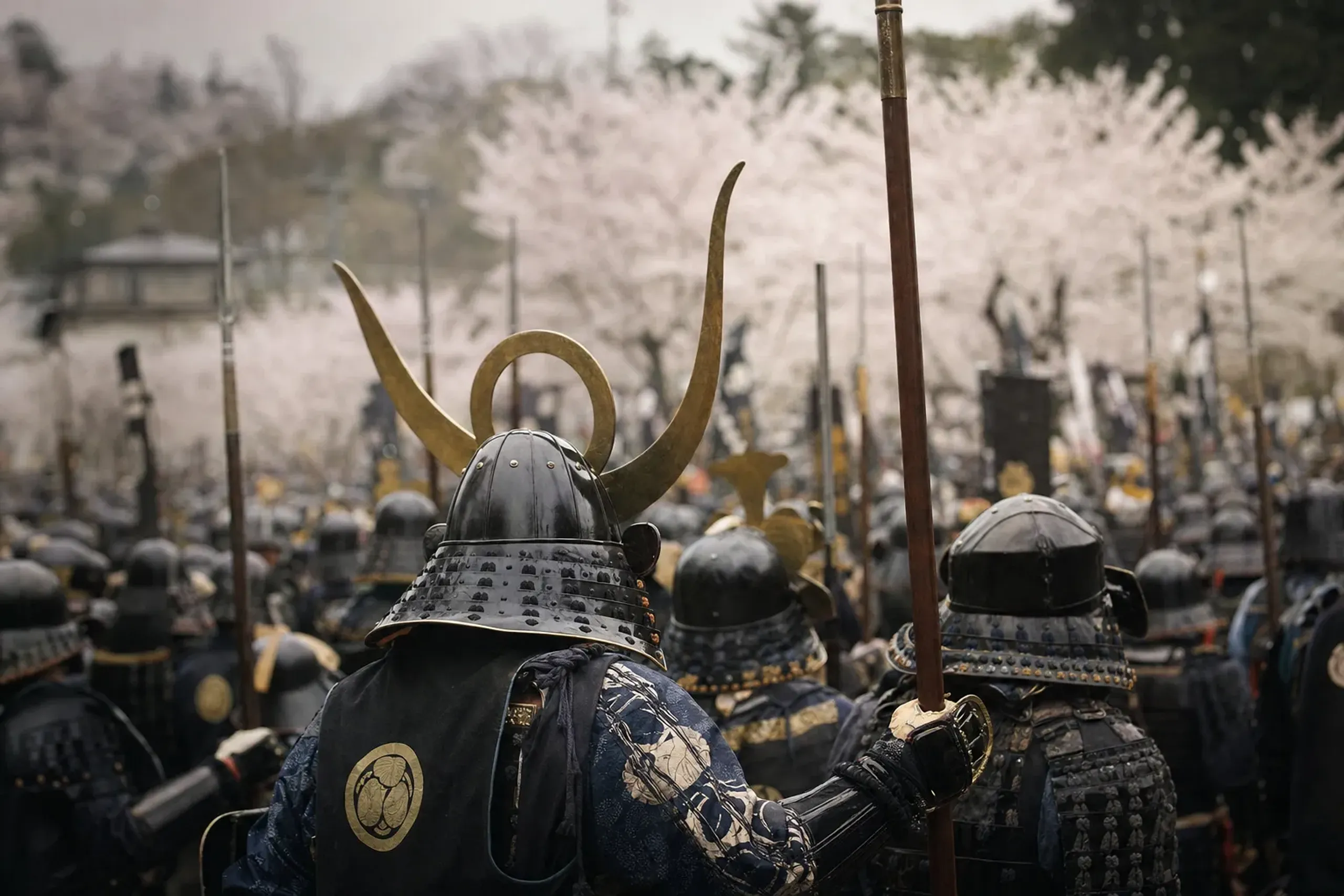
This is where a cultural interpreter guide transforms the day—not by narrating every second, but by handing you the small keys: who Naoe Kanetsugu was in the Uesugi retainer hierarchy, why certain crests carry weight, what you are permitted to photograph near shrine moments, and when to step quietly back. This is omotenashi in its truest form—the anticipation of a need you had not yet voiced.
Reset Over Lunch: One Short Move, Not Three
Between the morning and the afternoon, build in a reset. Sit down. Drink water. Golden Week weather in Yonezawa can swing; as a rough guide, April averages hover around 9°C and May around 16°C, and the basin air can feel sharper than the number suggests.
We keep lunch planning deliberately practical, with one main objective: you should be back in position for the afternoon with time to spare. No heroics.
Afternoon: Battle Of Kawanakajima On The Matsukawa Riverbed
The reenactment is held on the Matsukawa riverbed, between Aioi Bridge and Banri Bridge, with Mount Azuma rising behind the field. It is wide, open, and loud in the opening moments.
For the 2026 worked example, official local information listed the battle from 14:00 to 15:30. It opens with a volley of cannon fire, and the festival site’s round figure describes about 700 warriors taking part. You are not peering at a tiny stage.
You are watching lines move across gravel.
The best-known scene is the dramatic charge in which Kenshin rides in alone toward Shingen. Even if you already know the story, it lands differently when the crowd around you reacts in unison, then settles back into attentive quiet.
How Do Paid Seats Work For The Kawanakajima Battle Reenactment?
Paid grandstand seating is offered for the May 3 Battle of Kawanakajima reenactment, with sales and rules published by local official channels and subject to change each year.
We keep this simple: there is general viewing, and there are paid seats, and the details live on the official notices for that year. Seat locations, purchase methods, and cutoffs can shift, and availability can disappear quickly during Golden Week.
What matters for planning is what paid seating actually changes. Your sightlines become more predictable. Your waiting posture changes. Your afternoon becomes less about guarding a spot and more about watching the field unfold.
If you want tailored guidance based on the published rules for your travel year—what time to arrive, what to bring, and how to pair seats with an unhurried morning—our concierge team can advise privately, in complete confidence, once you inquire.
Can Visitors Join The Parade Or Battle As Armored Warriors?
Yes—official recruitment is published for members of the public to apply to participate as armored warriors in the May 3 procession and reenactment, subject to organizer rules and approval.
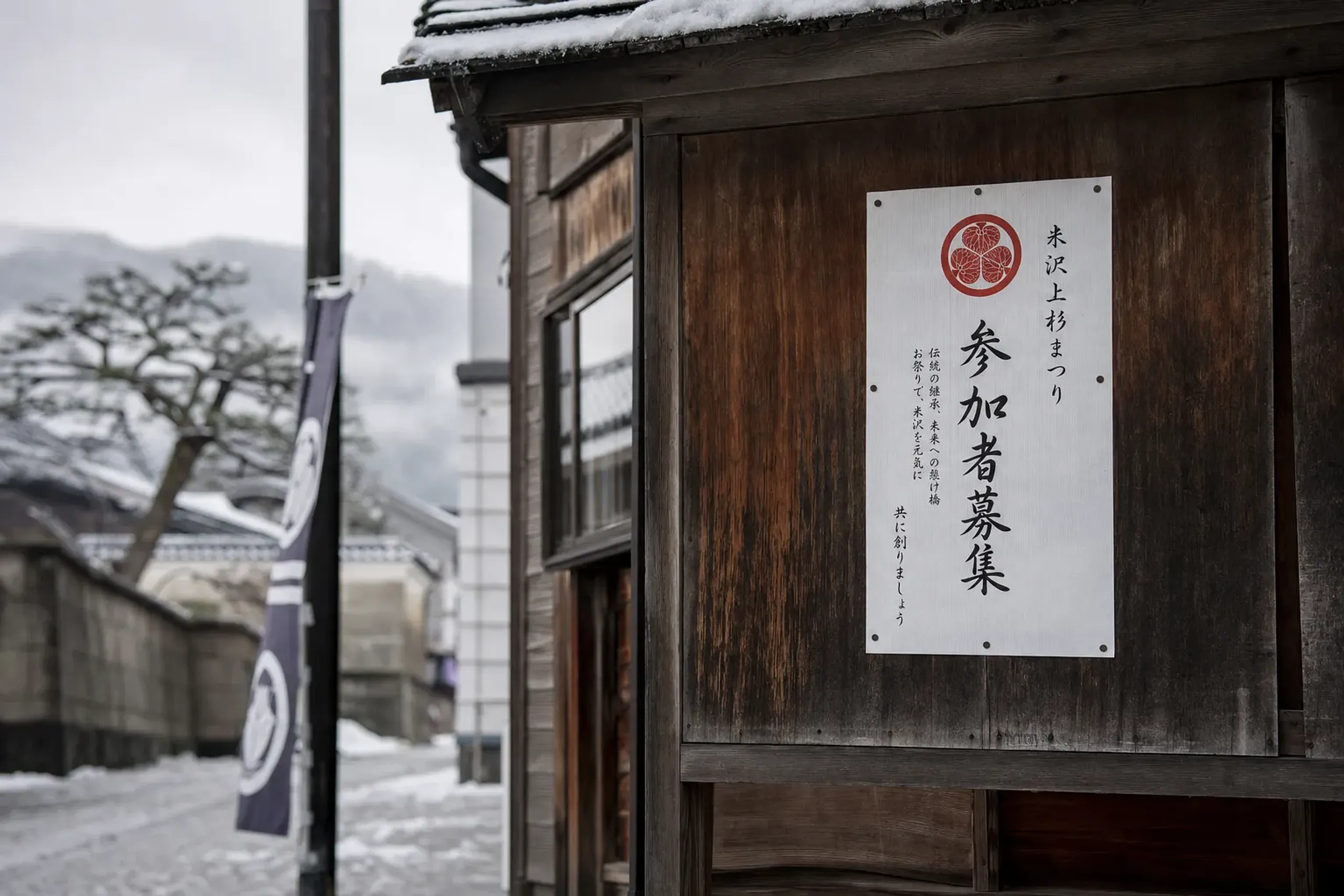
This is not a casual add-on. It is a commitment: applications, instructions, meeting times, and etiquette. You need to be the kind of traveler who genuinely enjoys being told exactly what to do for a few hours—and who finds meaning in surrendering to a tradition rather than observing it.
If this appeals, plan an extra night in Yonezawa so participation does not collide with arrival fatigue. Our team at Japan Royal Service can help you understand what the official recruitment notices require, then build the rest of your schedule around those fixed points. Quiet support. No fuss. And absolute discretion about who you are and how you choose to take part.
The Places That Give The Festival Meaning (And A Breather)
Yonezawa rewards travelers who alternate crowd moments with still ones. The festival is public, but your day does not need to feel noisy the whole way through.
Matsugasaki Park: The Castle Ruins Under The Festival
Matsugasaki Park is the former castle site, now a daily walking place that becomes a festival stage edge. It holds around 200 cherry trees, and blossoms often peak mid to late April. Sometimes they have already fallen by the time the festival window opens.
Plan for green leaves, not pink certainty. If you catch a late-year bloom, consider it a gift.
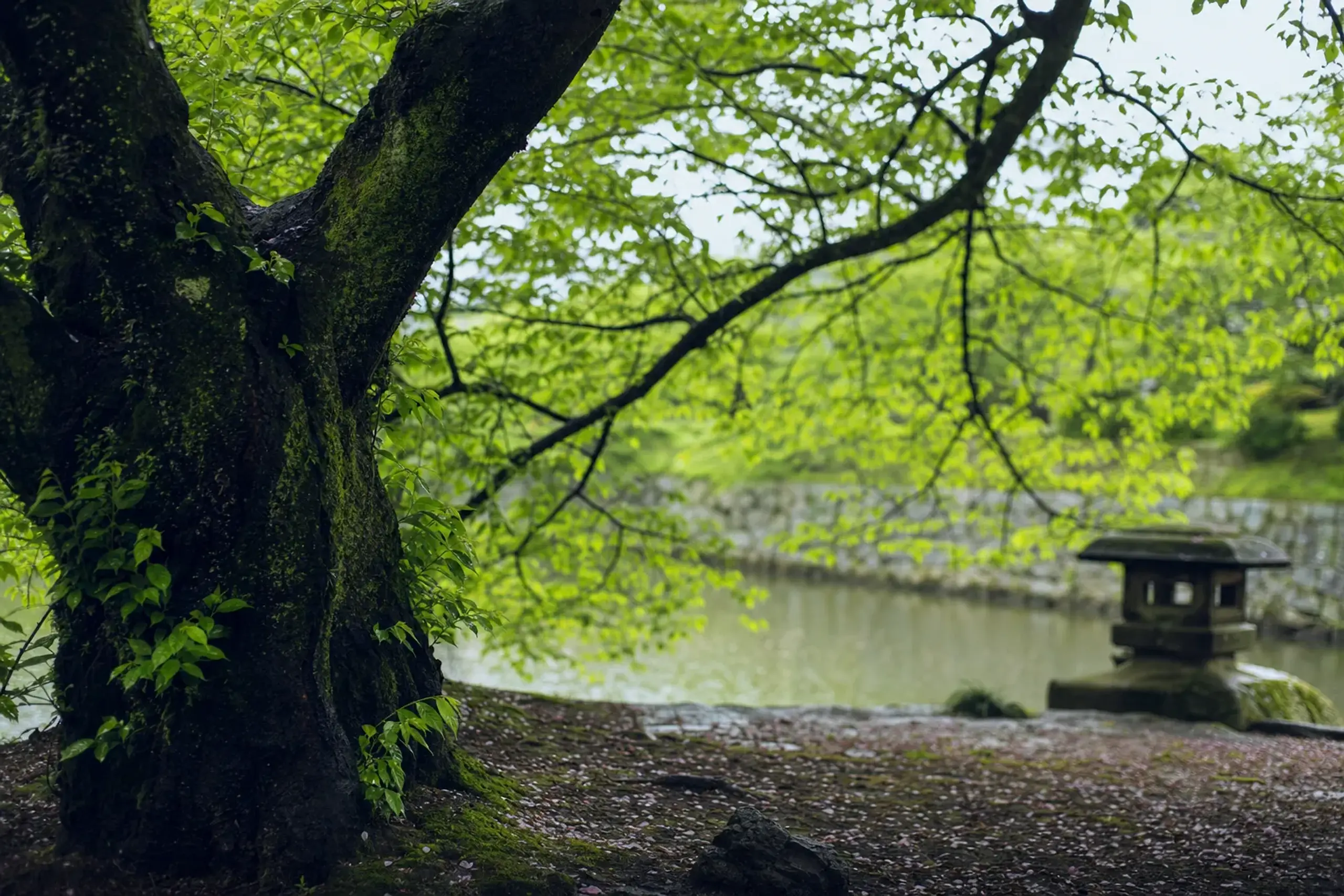
That restraint—the willingness to accept what the season actually offers—keeps the trip honest, and it is the heart of shun: knowing precisely what to expect, where, in which week.
Yonezawa City Uesugi Museum And Denkoku No Mori
When you want context that is crisp and quiet, go to the museum. JNTO notes the Uesugi Museum within the grounds, and Denkoku no Mori is the wider facility area that includes the Yonezawa City Uesugi Museum and the Okitama Culture Hall.
This is where the hand of the shokunin appears in an unexpected way: in how objects were made to endure. Lacquer. Textile work. Documentation. The craft here is not decorative; it is the vehicle for memory itself, each piece carrying the discipline of a master who worked for permanence rather than display.
We often place the museum either on May 1, when the festival pace slows, or on the morning of May 2 before the evening rite. It steadies your eye before the days grow louder.
Getting To Yonezawa And Moving Around On Festival Days
Yonezawa is reachable from Tokyo on the Yamagata Shinkansen in about two hours, using typical JR East timetable samples. Once you arrive, the shrine area is close—JNTO describes about 10 minutes by taxi from JR Yonezawa Station.
During Golden Week, even short distances can take time.
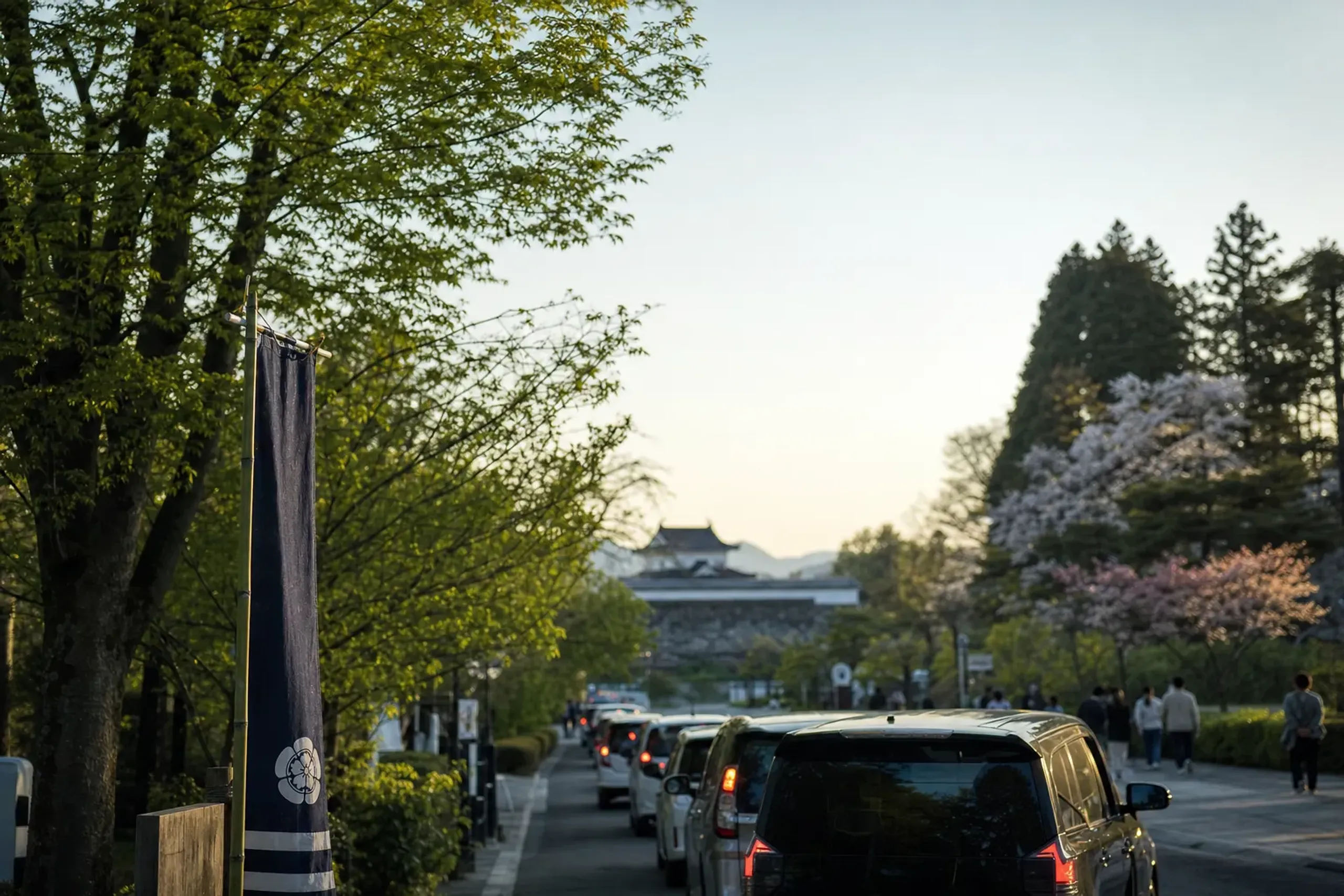
Traffic regulation notices are published by the festival and city channels for each year, including closures on May 3 around the procession and the battlefield area. Treat the closures as real constraints, not fine print.
For clients who prefer not to gamble on timing, we can provide private transportation with a partner fleet for station transfers and short, timed hops between the shrine area and the riverbed. Driver and guide remain separate roles. That separation keeps the day sharp and your attention free.
If you are building a longer Tohoku spring route, it can help to pair this visit with one other anchor that is already planned and timed, such as Hitome Senbonzakura (timing dependent) or a summer return for Hirosaki Neputa. Keep it light. Two anchors are plenty. A bespoke itinerary can thread these together so each one arrives at its proper moment.
A Two-Night, One-Anchor Plan That Actually Works
This is the pacing that suits many High-Net-Worth travelers: enough structure to avoid chaos, enough air to enjoy what is in front of you. Nothing showy. Just right.
Day 1 (May 2 Example): Arrive, Settle, Then The Evening Rite
Arrive in Yonezawa with daylight left. Check in, then take a short walk near the shrine to learn the geography. Simple.
In the evening, attend the armoured-warrior rite (the 2026 worked example described an evening procession from the Uesugi family mausoleum to Uesugi Shrine).
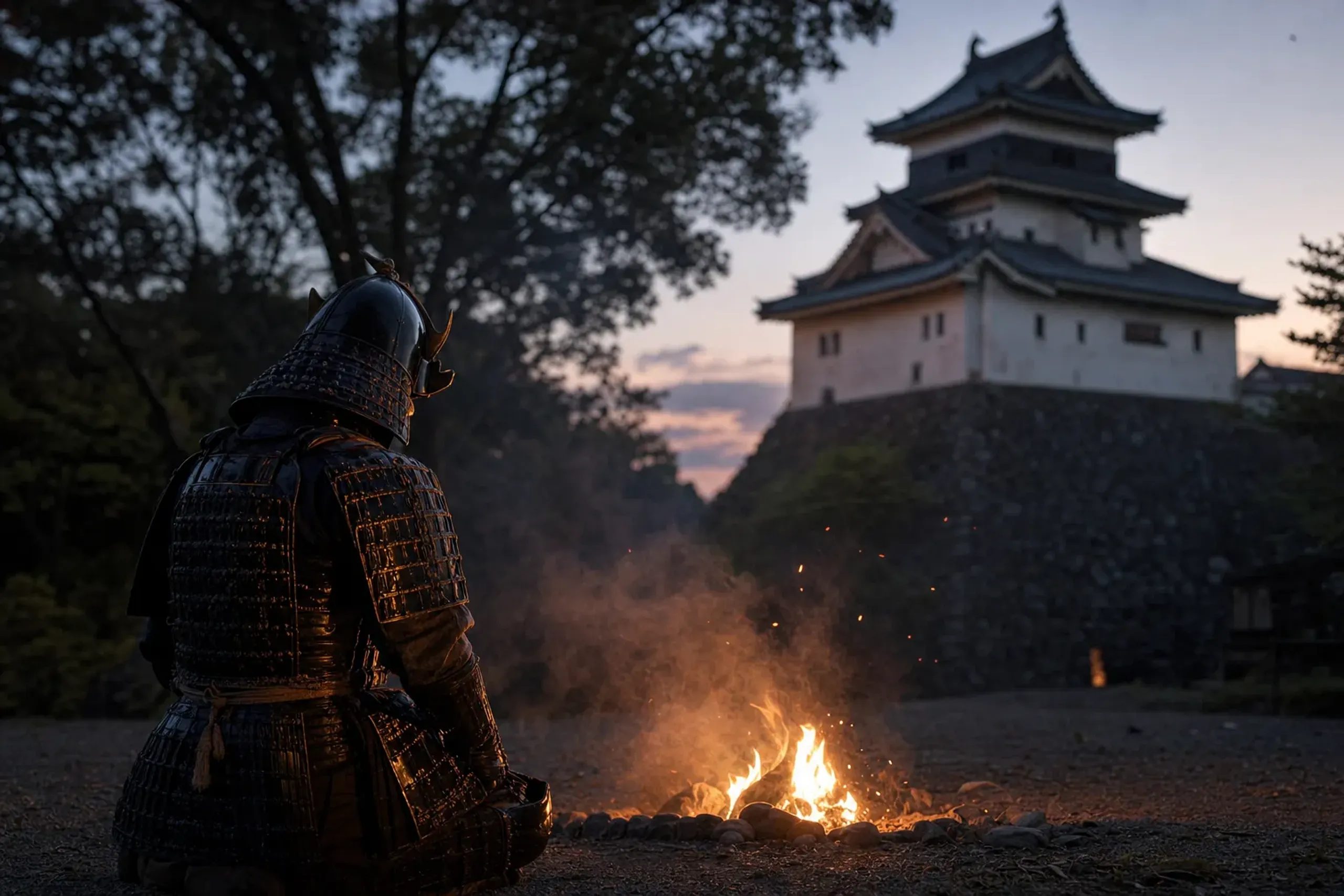
Stand back. Let the silence do its work.
Day 2 (May 3 Example): Morning Procession, Lunch Reset, Afternoon Battle
Start early near Uesugi Shrine. Watch the procession without chasing it across town. Keep your camera close and your shoulders loose.
After midday, reset over lunch, then transfer toward the Matsukawa riverbed between Aioi Bridge and Banri Bridge for the reenactment window (14:00–15:30 in the 2026 worked example). Stay put. Let the battle come to you.
Day 3 (May 4 Example): Depart Without Regret
Leave the morning open. Sleep. Have a calm breakfast. Then depart.
This is where many itineraries quietly fail: people try to “add one more stop” on the way out. Resist. You will remember Yonezawa more clearly if you leave it intact.
Let Us Plan Your Golden Week In Yonezawa
The difference between enduring Golden Week and truly inhabiting it comes down to quiet, exacting preparation—secured viewing, timed transfers, an interpreter who knows when to speak and when to let the moment stand. We arrange all of it discreetly, around the fixed points the organizers publish each year, and we never disclose who our guests are or where they go.
When you are ready to shape your days in Yonezawa with the care this festival deserves, contact us here for a tailored proposal.