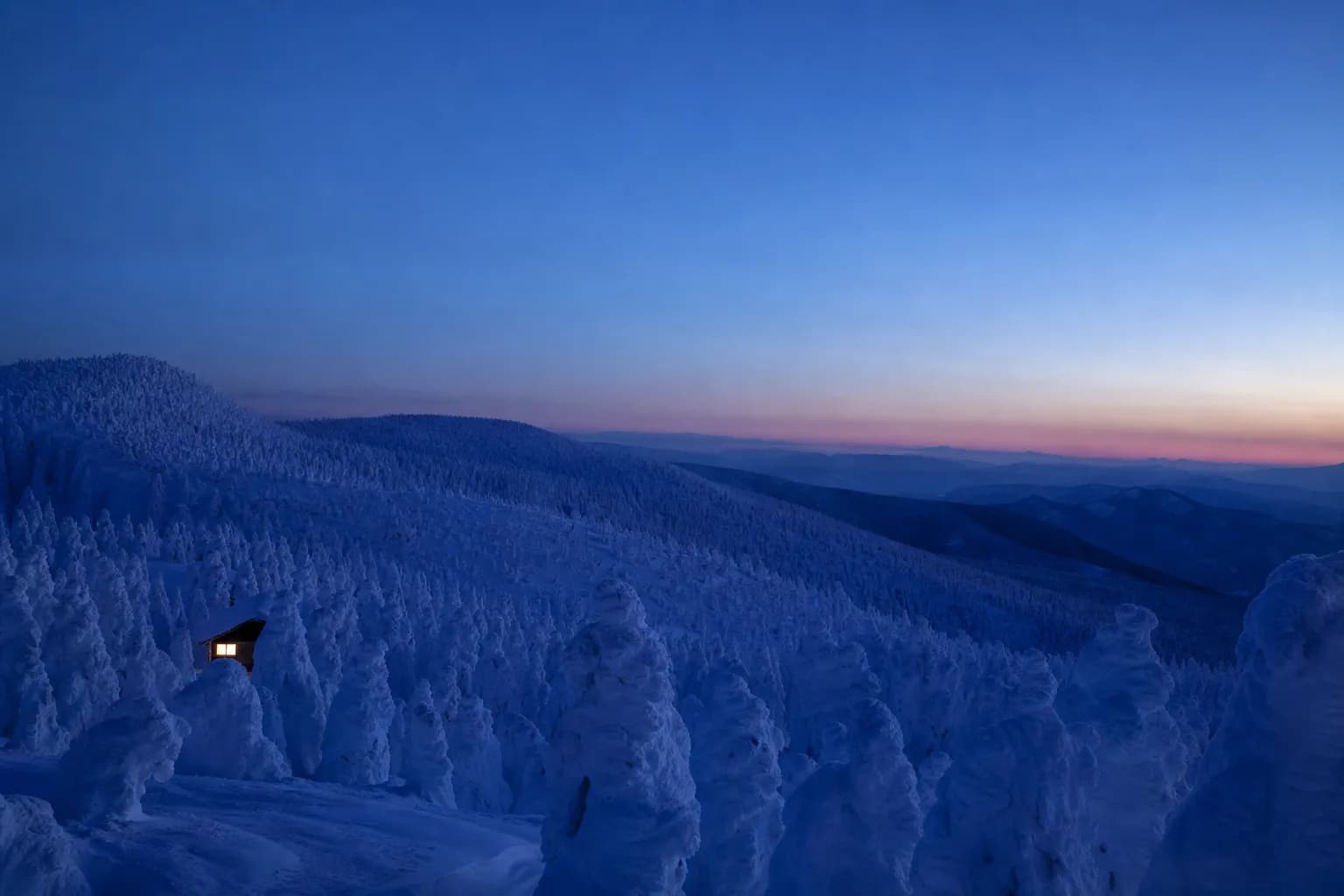
In winter, Zao Onsen is two places at once. Above the town, on the upper slopes of Mount Zao, wind and ice turn a forest of fir trees into the shapes known as snow monsters. Below, steam rises from acidic sulphur springs into the streets of the onsen town.
This guide covers both: how the snow monsters form and when to see them, the two-stage ropeway that reaches them, the evening light-ups, the onsen town itself, and how you get there from Tokyo or Sendai. It also sets out what the JRS concierge team arranges so that the cold, the snow and the timetables stay in the background of your trip.
The Snow Monsters (Juhyo)
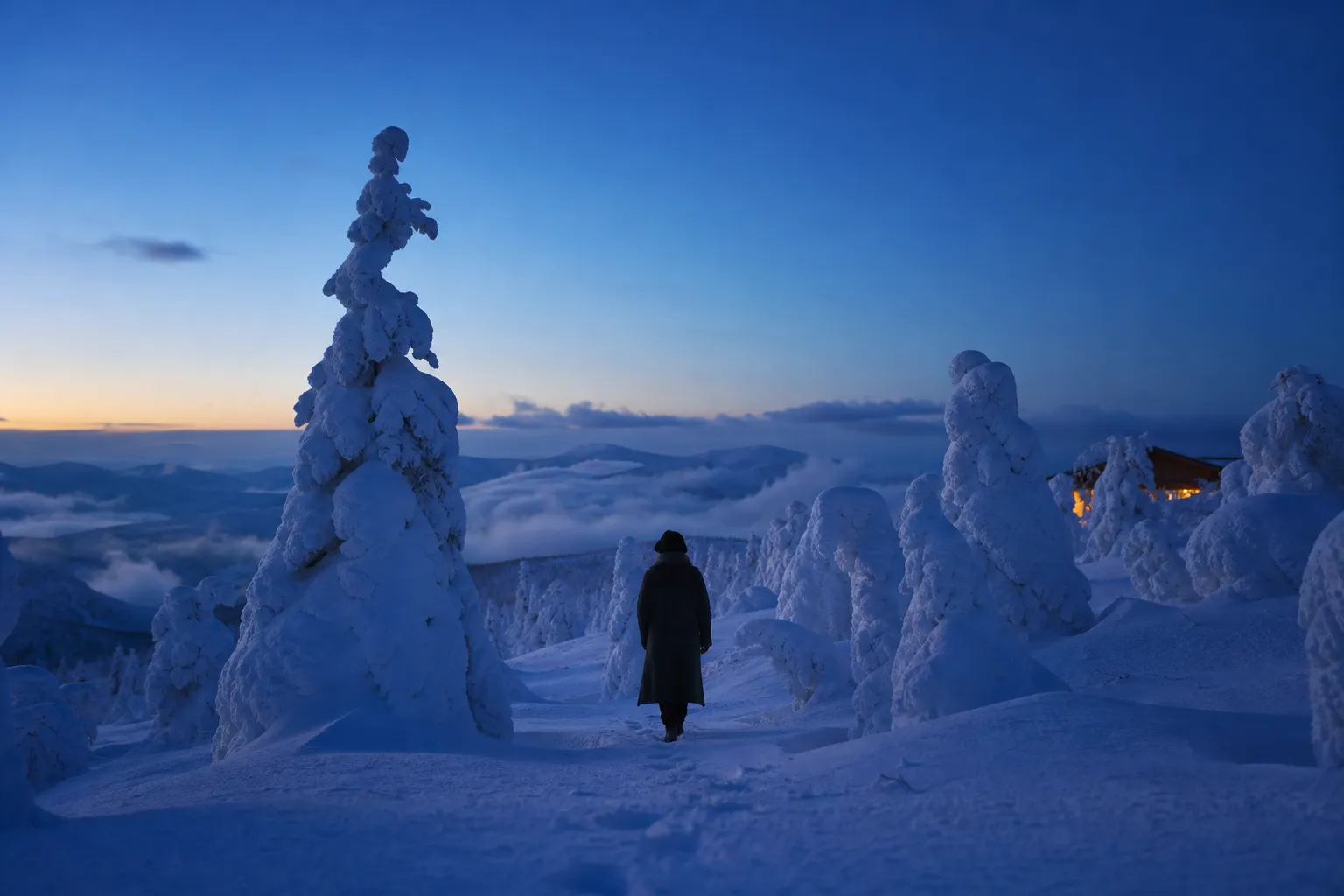
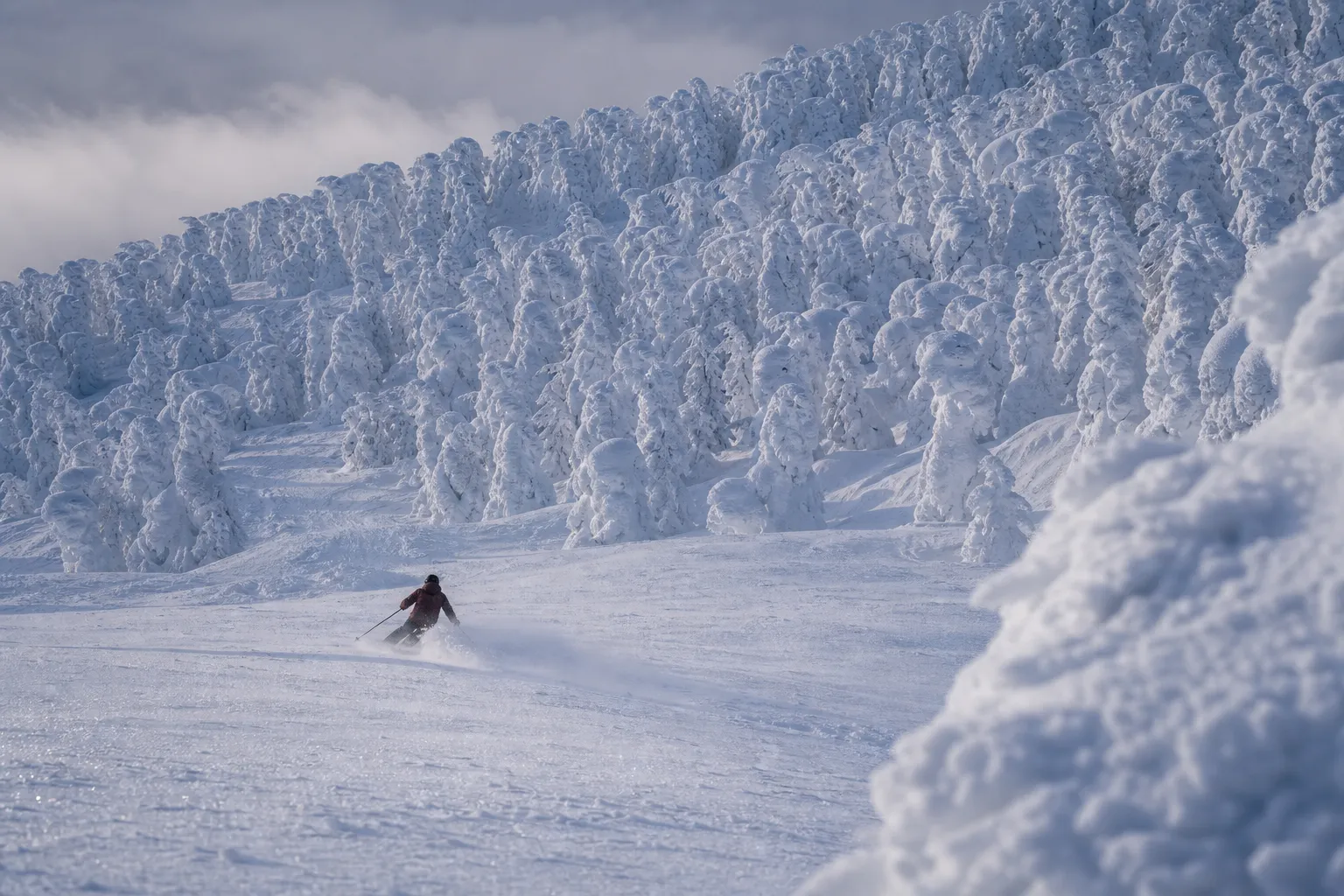
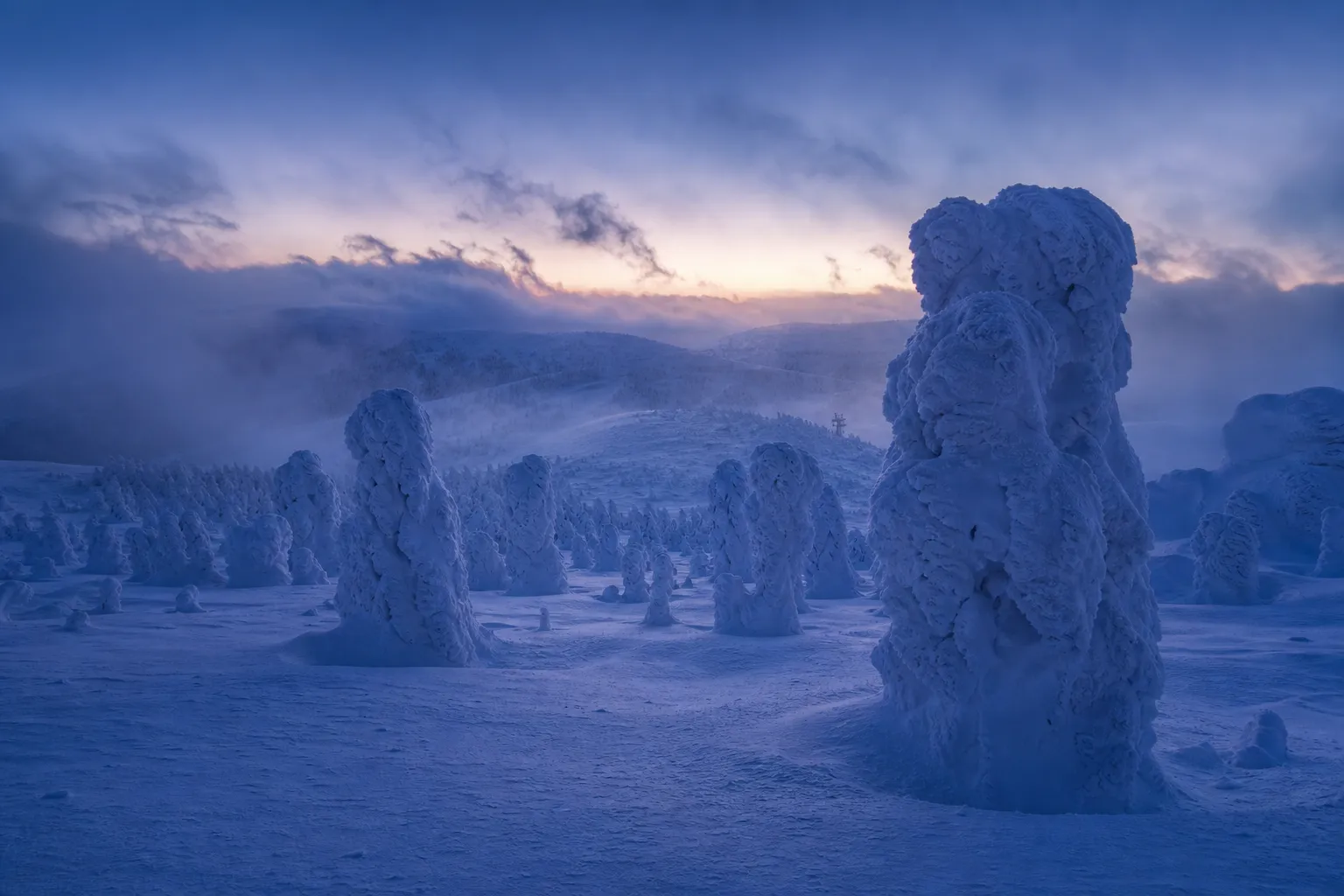
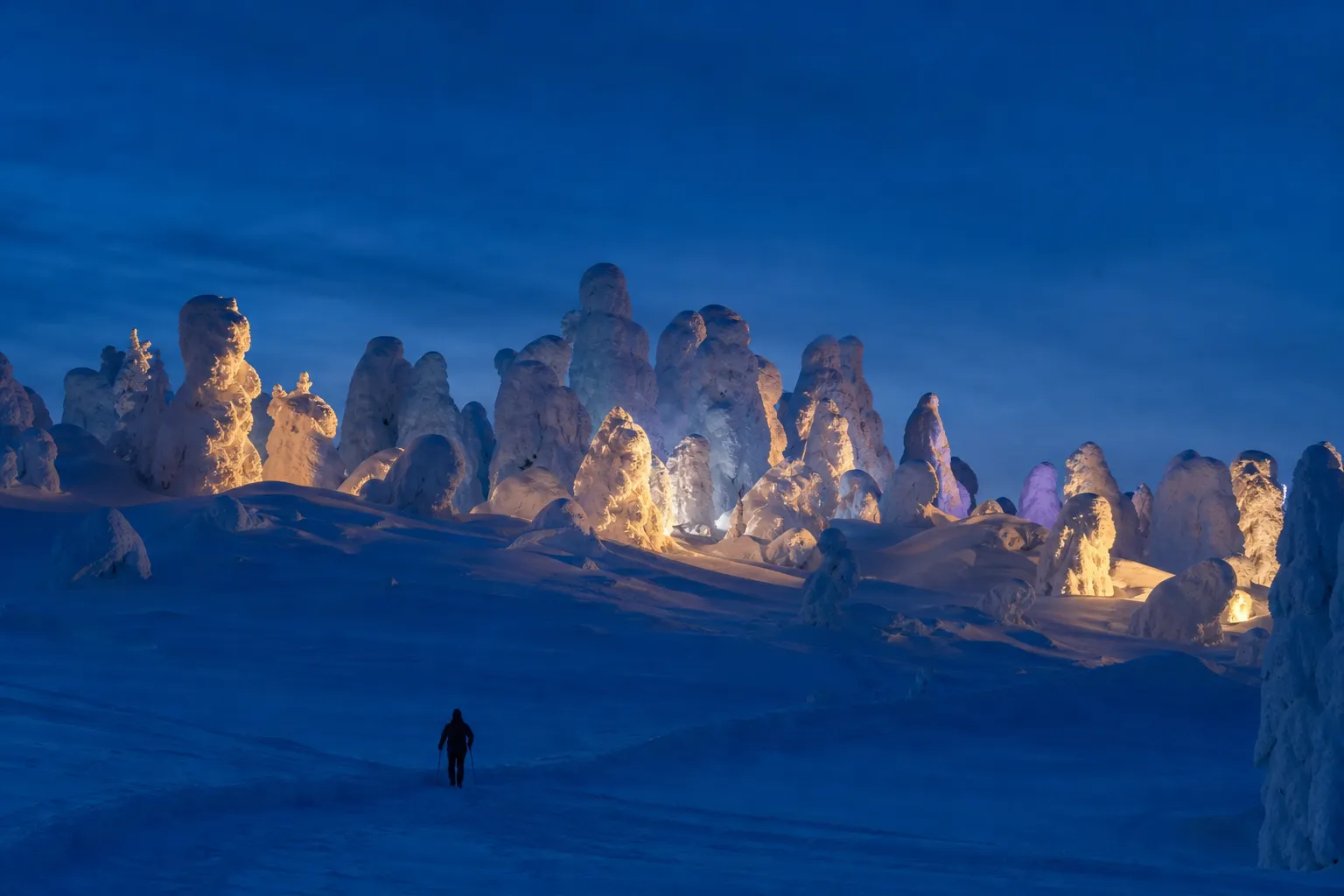
The snow monsters, called juhyo in Japanese, are trees. Specifically, they are Maries fir, known locally as Aomori todomatsu, that grow on the upper slopes of Mount Zao.
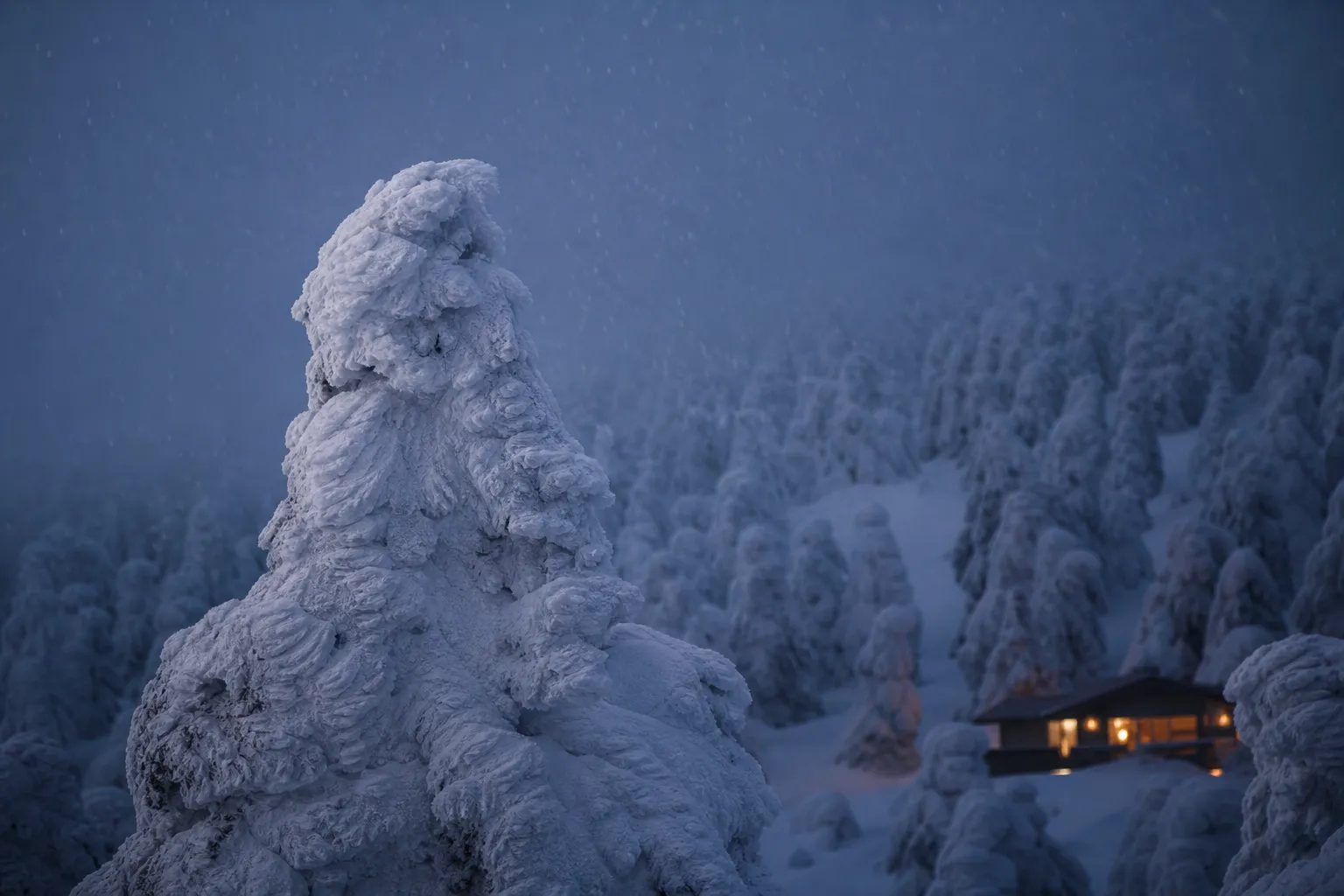
Through the winter, ice and snow build up on these firs layer on layer. Each layer adds to the last until the branches disappear and the tree becomes a white, sculpted figure. Seen in rows across the slope, they look less like a forest and more like a crowd standing still in the snow.
Juhyo form only when three conditions coincide: the right temperature, the right wind direction and the right snowfall. That combination occurs only in parts of the Ōu Mountains, and Mount Zao is one of them. It is the reason the figures cannot be found on just any snowy mountain in Japan, and the reason the season has firm edges.
The season runs from late December to early March. The trees are at their fullest from late January to mid-February, after weeks of ice and snow building on the branches.
Visibility depends entirely on the weather. On a clear day, the slopes below the summit are covered in figures as far as you can see. On other days, cloud and blowing snow close in, and the trees cannot be seen from the summit at all. Plan for that possibility rather than against it.
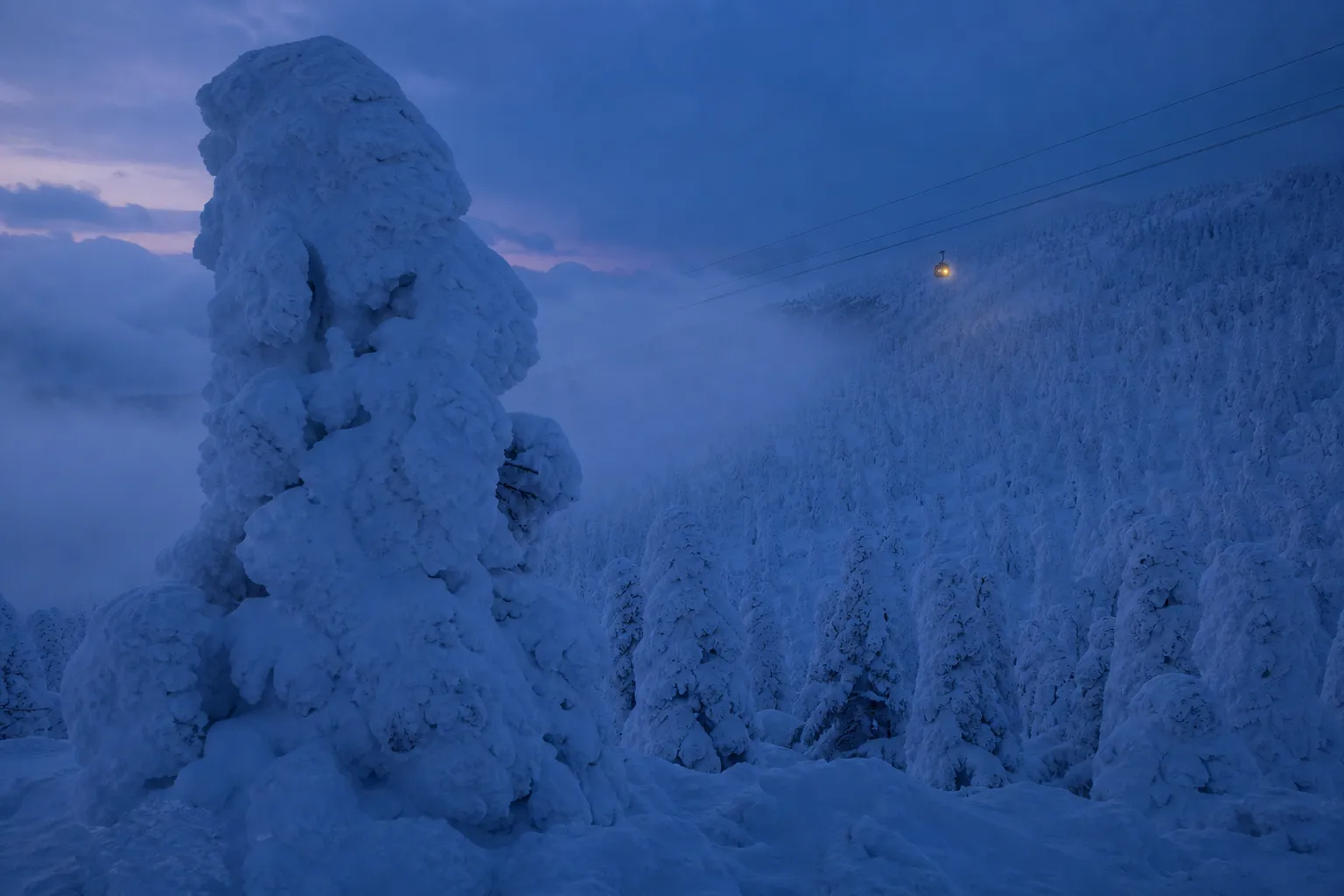
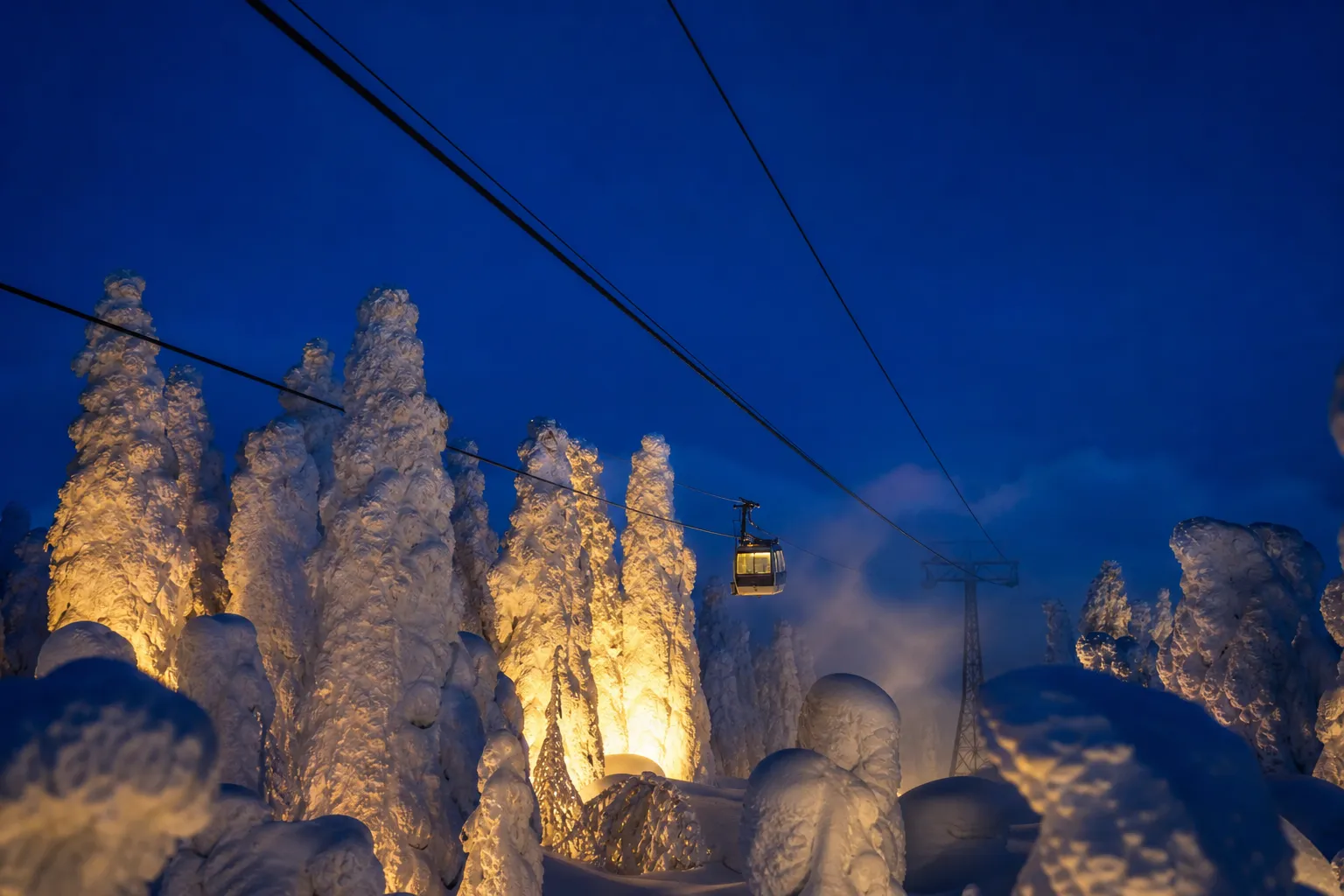
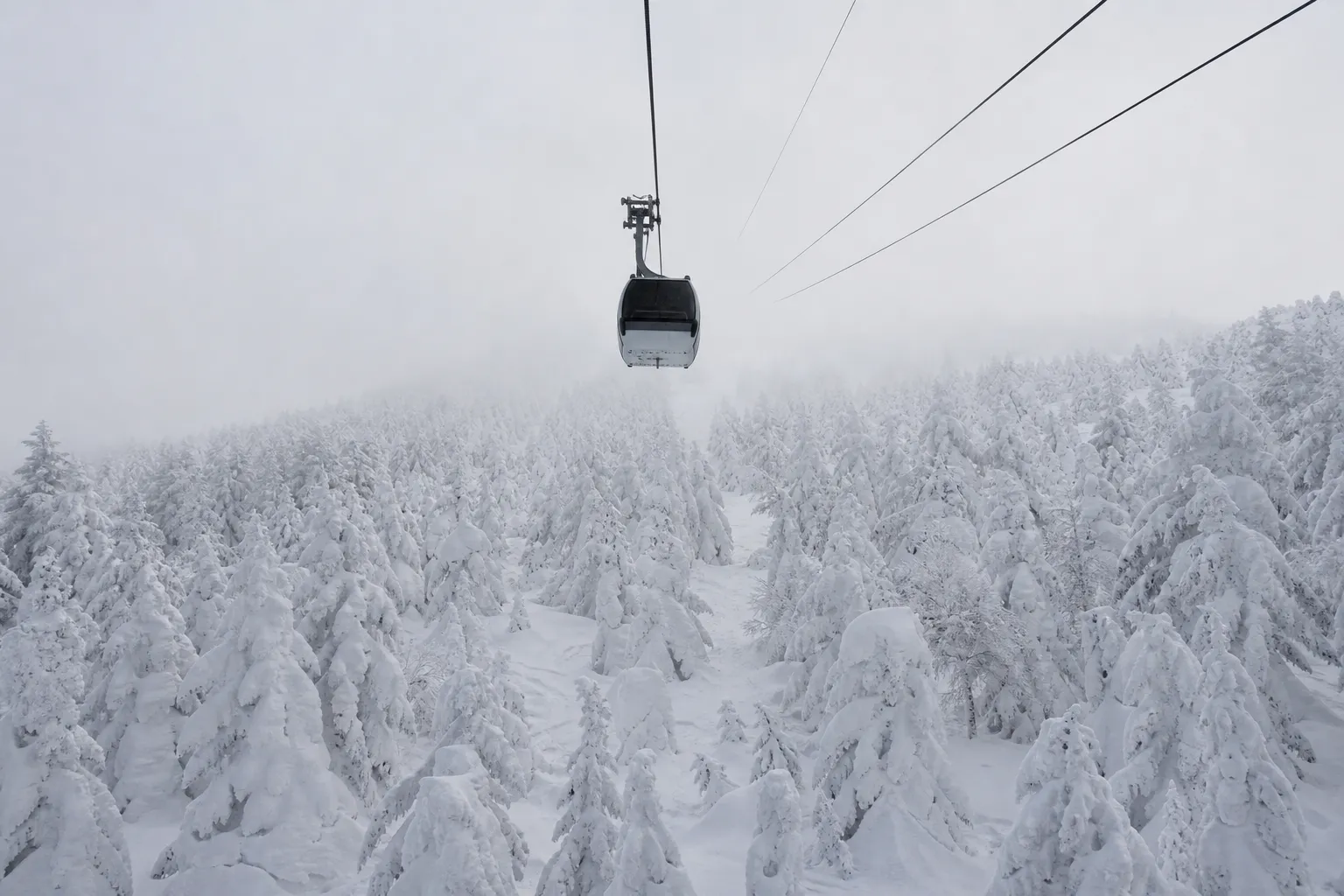
The clearest views are from the middle of the ropeway up to Jizo Sancho Station. Sit or stand where you can look down the slope as the cabin climbs, and keep a little time at the top for the light to change.
The Zao Ropeway
The Zao Ropeway is how you reach the snow monsters from the onsen town. It runs in two stages, and each stage takes you into a different part of the mountain.
The lower stage is the Sanroku Line. It runs from Zao Sanroku Station to Juhyo Kogen Station at 1,331 metres. The ride takes about seven minutes, and the roofs of the town fall away behind you as the cabin rises.
The upper stage is the Sancho Line. It continues from Juhyo Kogen to Jizo Sancho Station at 1,661 metres. This is the stretch that carries you up through the snow monster viewing area to the summit.
At the top, there is an observation area and a restaurant. Conditions at the summit are severe. Wind, low temperatures and blowing snow are part of the experience, and they arrive quickly. Dress for deep cold: insulated layers, a hat that covers your ears, gloves, and boots with good grip on packed snow. The restaurant gives you somewhere to warm up before the ride down.
Zao Sanroku Station is about a 10-minute walk from the Zao Onsen bus terminal. In snow and ice, allow time for that walk and wear footwear that grips.
Operating days and hours vary by season. The JRS concierge team confirms directly with the guest at time of arrangement.
Evenings on the Mountain
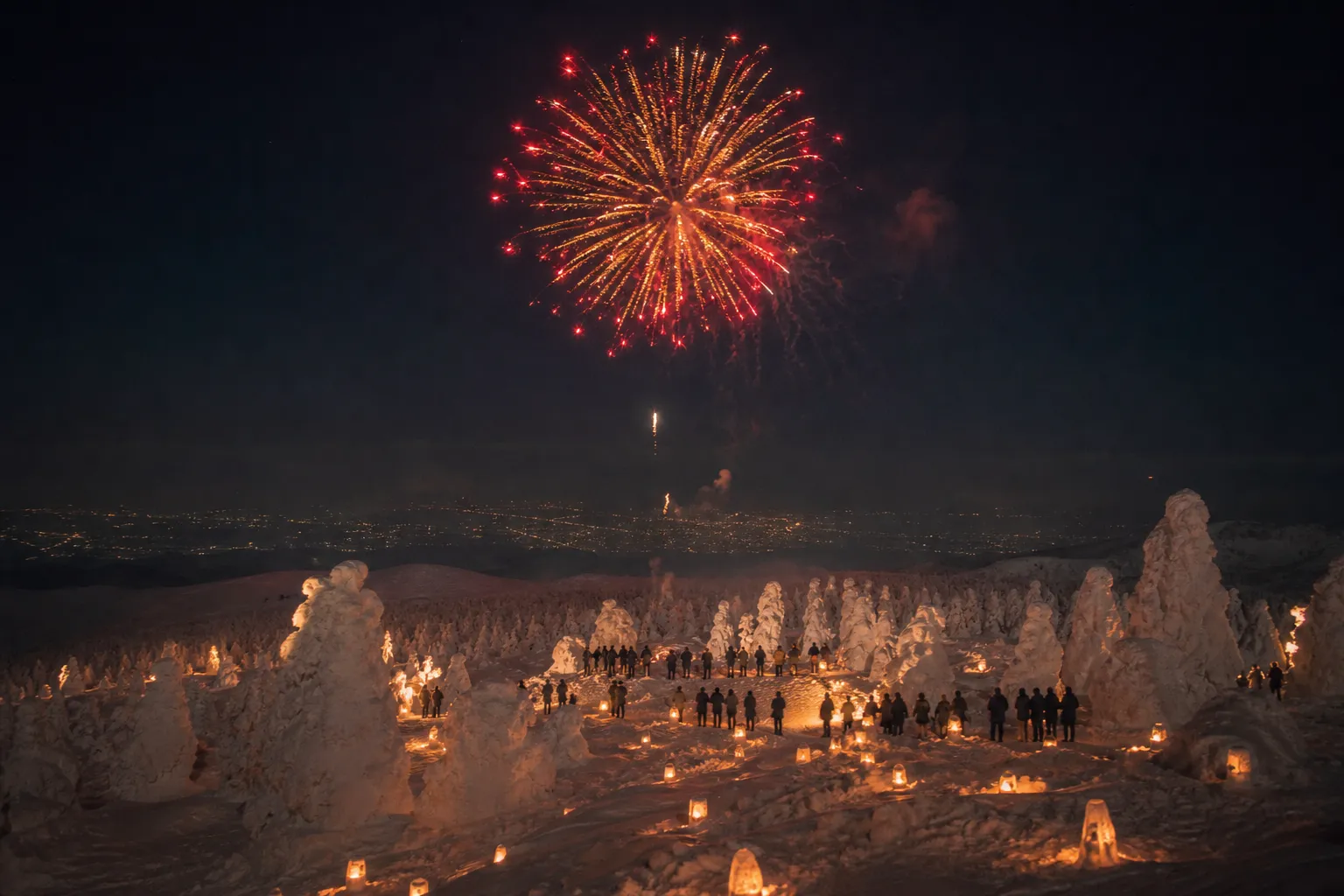
On set evenings during the season, the snow monsters are lit for night viewing. The ropeway continues to run into the evening on those nights, so you can ride up after dark and see the figures picked out against the black sky.
On light-up evenings, a guided night tour by snow vehicle also runs. Reservations are required, and the tour leaves from the ropeway's mountain station.
Both the light-ups and the night tour depend on the weather and can be cancelled. Dates, times and availability vary each season. The JRS concierge team confirms directly with the guest at time of arrangement.
The Zao Juhyo Festival runs from late December to early March, across the same weeks as the snow monster season.
The Onsen Town
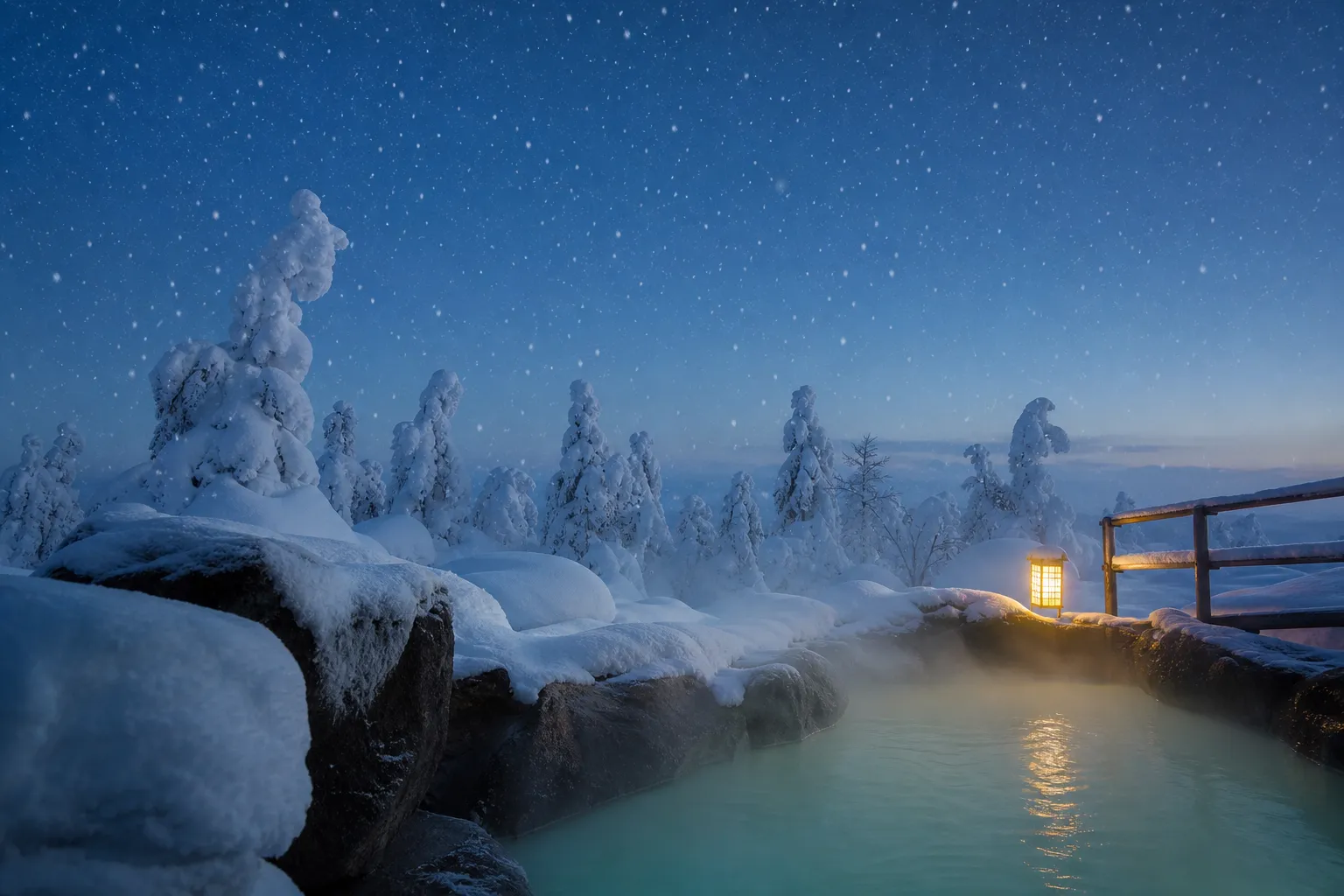
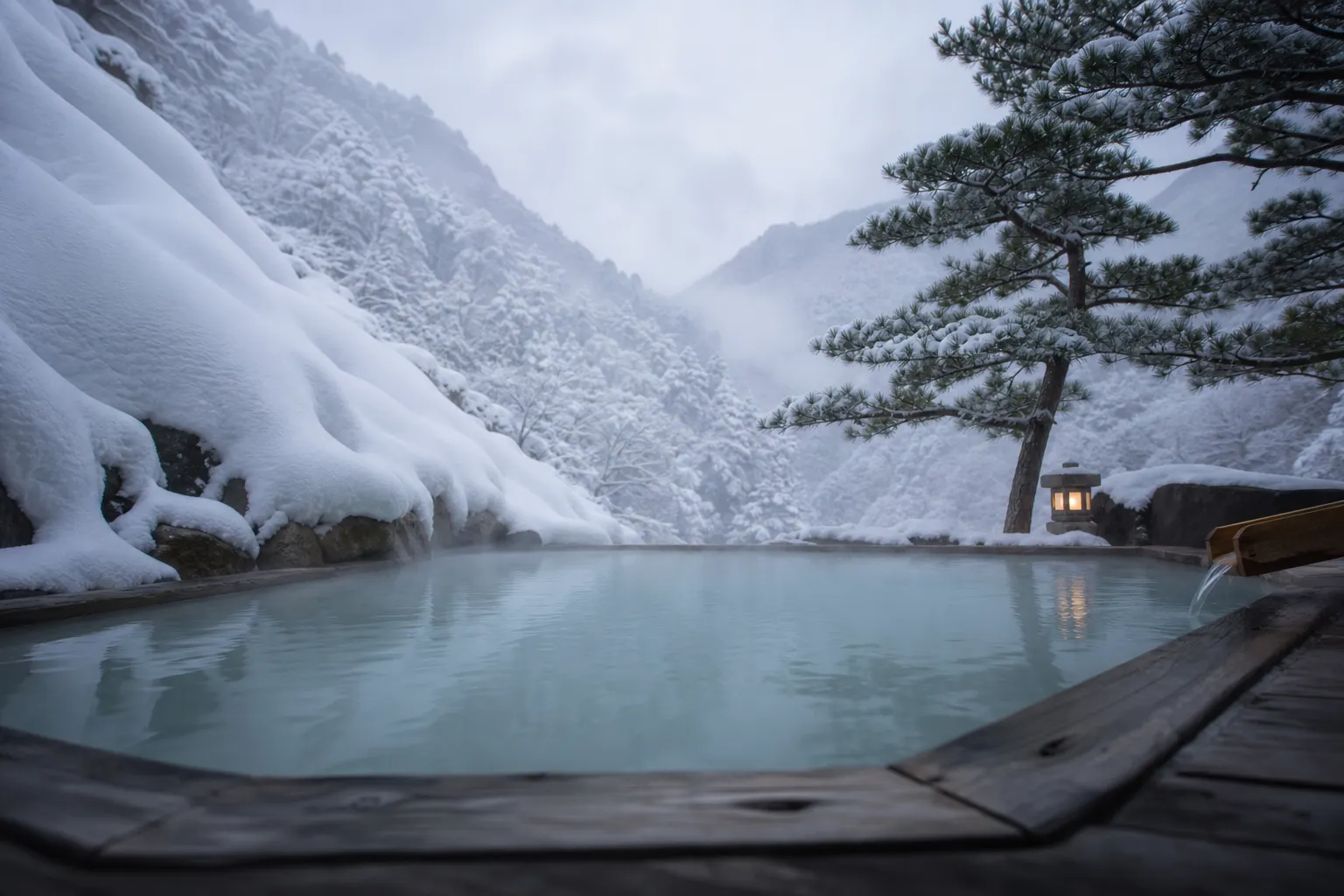
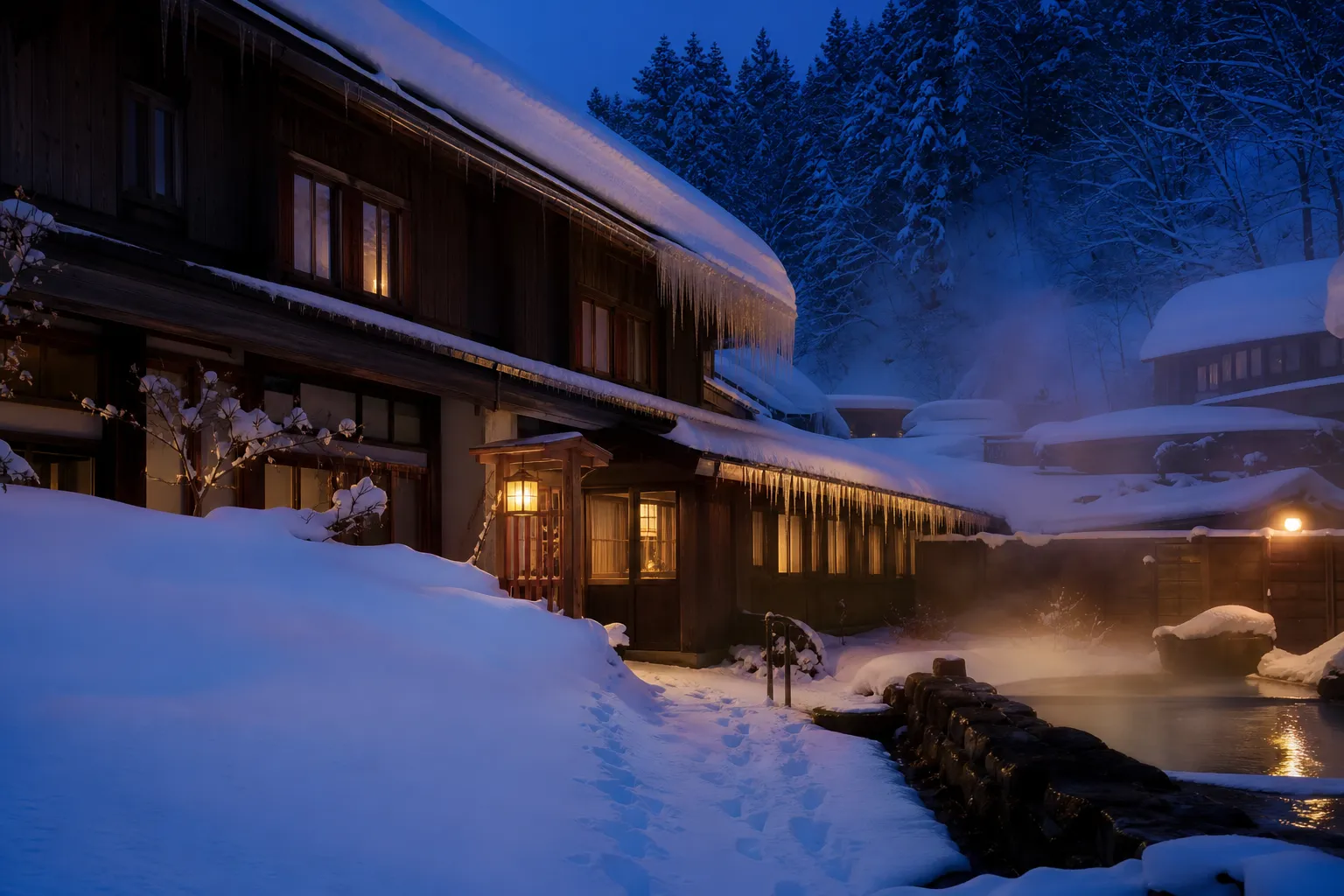
Zao Onsen sits within Yamagata City, and it is one of the long-established onsen towns of Tohoku. Its spring water is strongly acidic and sulphurous, and you notice it before you see it.
The smell of sulphur reaches you as you step off the bus. Steam rises between the buildings, and on cold mornings it hangs over the rooftops. Snow lines the streets through the season, and you move between the baths on foot.
The town has three public baths: Kami-yu, Shimo-yu and Kawara-yu. They sit close together, so you can walk from one to the next. You can make a slow circuit of all three, wrapped in a warm coat, pausing between baths to watch the steam.
The walk between baths is part of the experience. Cold air on your face, the crunch of snow underfoot, then warm water again. In the evening, the lights of the town reflect off the snow, and the steam turns gold under the street lamps.
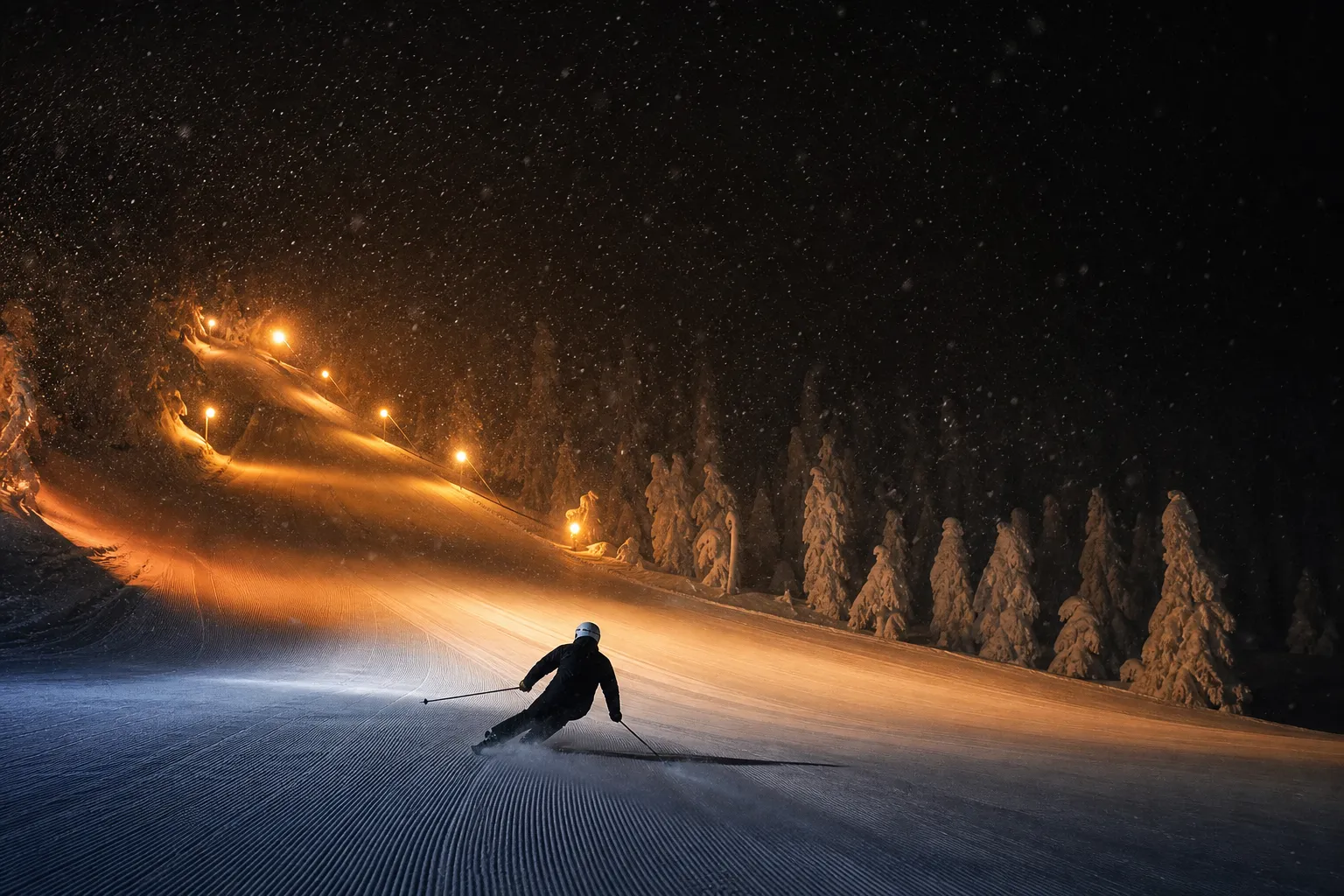
Zao Onsen Ski Resort shares the mountain with the snow monsters.
Planning Your Days
Because the snow monsters depend on the weather, a stay of more than one night gives you room to choose your moment. If cloud covers the summit on your first day, you can spend it in the town and ride up the next morning when the sky clears.
Think of the mountain and the town as two halves of each day. The ropeway suits the hours when the light and the weather are with you. The baths suit the rest: arrival, late afternoon, and the evening after a light-up.
Start the ropeway early in your stay rather than on your last morning. If the summit is closed or hidden on the day you planned, you still have another chance, and the JRS concierge team can move the rest of the day around it.
Keep the evenings flexible as well. If you hope to see the light-up or join the night tour, leave those nights open rather than booking a fixed dinner elsewhere.
Layering matters more than any single garment. You will move between the warmth of the ryokan, the cold of the street and the severe conditions at the summit, sometimes within an hour. Pack for all three.
If the summit closes for the day, the trip still has shape. The Rainy Day Japan Travel Planning guide covers how to plan around weather that does not cooperate.
Getting There and How JRS Arranges It
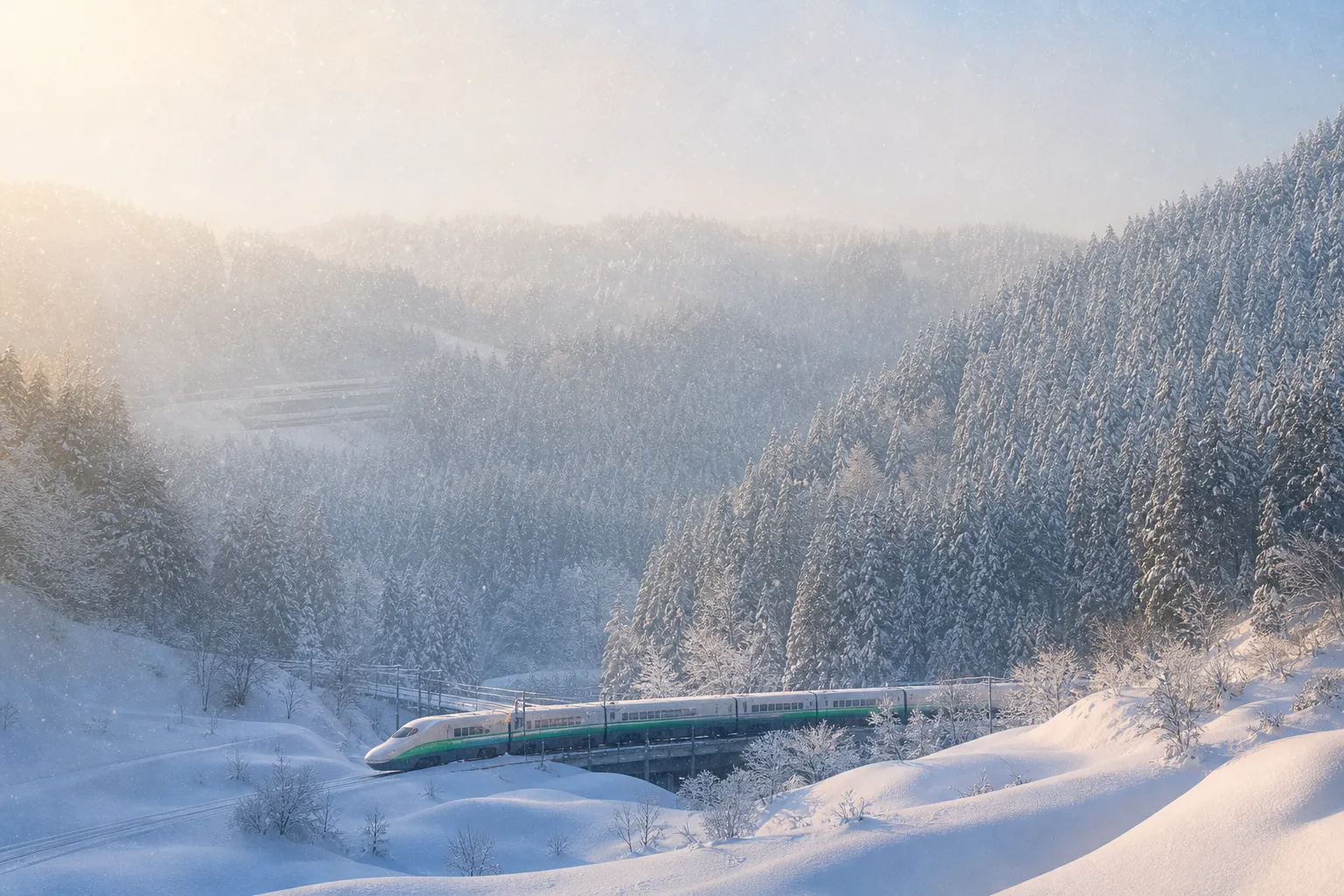
From Tokyo by rail. Take the Yamagata Shinkansen from Tokyo to Yamagata Station. From there, a bus of about 40 minutes runs to Zao Onsen, which is the final stop.
From Sendai. A highway bus runs from Sendai to Zao Onsen in about 100 minutes. It must be booked ahead.
By air. Yamagata Airport has flights from Tokyo Haneda.
Whichever route you take, the JRS concierge team arranges the pieces so that you are not handling tickets, luggage and connections in the snow. JRS arranges:
- Rail tickets, including Green Car seats on the Yamagata Shinkansen
- A private transfer from Yamagata Station, Yamagata Airport or Sendai, in a partner vehicle with an English-speaking driver
- Luggage forwarding, so your bags travel separately from you
- Ryokan booking, with your dietary needs passed ahead to the kitchen
- Ropeway and night-tour tickets
- Same-day re-planning when the weather closes the summit
JRS does not own a fleet. Vehicles are supplied by partners. Drive times vary with snow on the roads, so the JRS concierge team confirms directly with the guest at time of arrangement.
For a wider view of moving through snow country, see Winter Onsen Logistics: Snow Country Japan. To weigh a private transfer against the train, see Private Driver vs Rail in Japan.
Continuing Through Tohoku
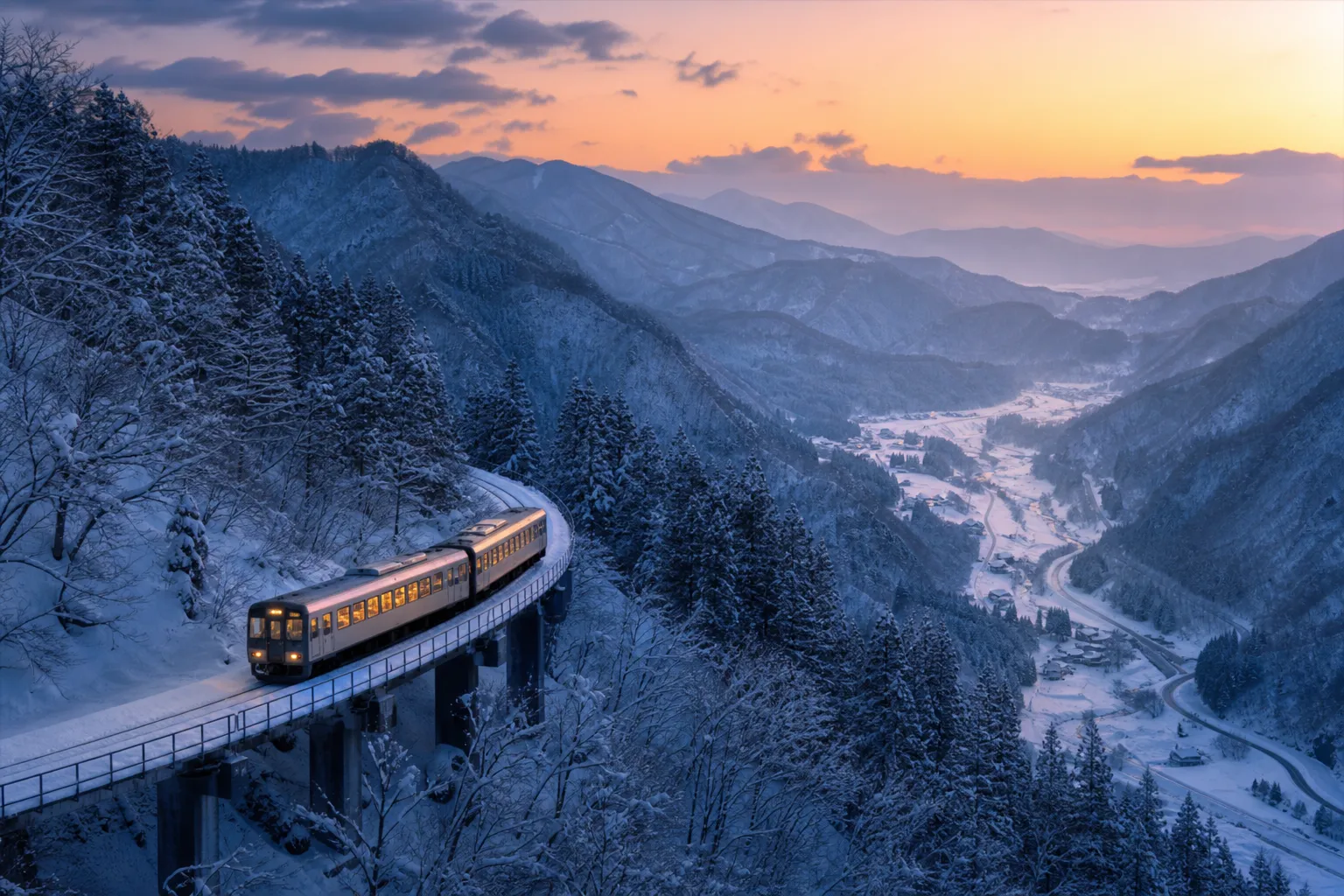
Zao can be one stop in a longer journey through Tohoku. If you are building a wider trip, or thinking of returning in another season, these guides cover the region and the practical side of travelling through it.
- Aizu, Ouchi-juku and Urabandai
- 7 Days in Tohoku in Summer
- Winter Onsen Logistics: Snow Country Japan
- Private Driver vs Rail in Japan
- Rainy Day Japan Travel Planning
To plan Zao Onsen in winter, contact the JRS concierge team. Tell us your dates, how many nights you have, and whether you are travelling from Tokyo or Sendai, and we will shape the ropeway, the evenings and the baths around the weather.