In this guide
- 01Getting To Ishigaki And Using Ferries Without Losing Time
- 02How Many Nights Do You Need For Ishigaki, Taketomi, And Iriomote?
- 03Ishigaki: Kabira Bay And The Island’s Unforced Pace
- 04Taketomi: A Ten-Minute Ferry To A Smaller, Slower Japan
- 05Iriomote: Mangroves, Jungle, And A World Heritage Context
- 06Weather, Typhoons, And A Plan A/B/C For Yaeyama
- 07How A 3–4 Night Yaeyama Itinerary Fits Together (Step By Step)
- 08How To Book Ferries And Nature Experiences In Yaeyama Without Making A Mess
- 09Let Us Plan Your Yaeyama Days
Japan’s far southwest feels like a different country. Salt in the air. Slower clocks. The pace is not performed for visitors — it simply is.
The Yaeyama Islands sit in Okinawa Prefecture, the southernmost and westernmost edge of the Japanese archipelago. Ishigaki is the hub, with two very different day trips a short ferry away: Taketomi for village stillness, and Iriomote for jungle and mangrove.
This guide is built for 3–4 nights. One base. Two ferries. A weather hedge.
Our team at Japan Royal Service plans Yaeyama the way discerning travelers tend to prefer it: quiet logistics, discreet pacing, and a strong Plan B for when the sea says no. The luxury here is not loud — it is the confidence of knowing your days will hold together, whatever the weather decides.
Getting To Ishigaki And Using Ferries Without Losing Time
Ishigaki is the Yaeyama transport hub, with direct flights to Tokyo Haneda and to Naha, and fast ferries from Ishigaki Port that connect you to Taketomi and Iriomote.
The rhythm is simple. Land on Ishigaki. Sleep. Then use Ishigaki Port as your spoke point for day trips.
Ferries are run by several competing companies, and the details matter. Your sailing can change with sea conditions, so our concierge team confirms the practical timing directly with you at the time of coordination — quietly, in advance, so you never find yourself standing at the port wondering.
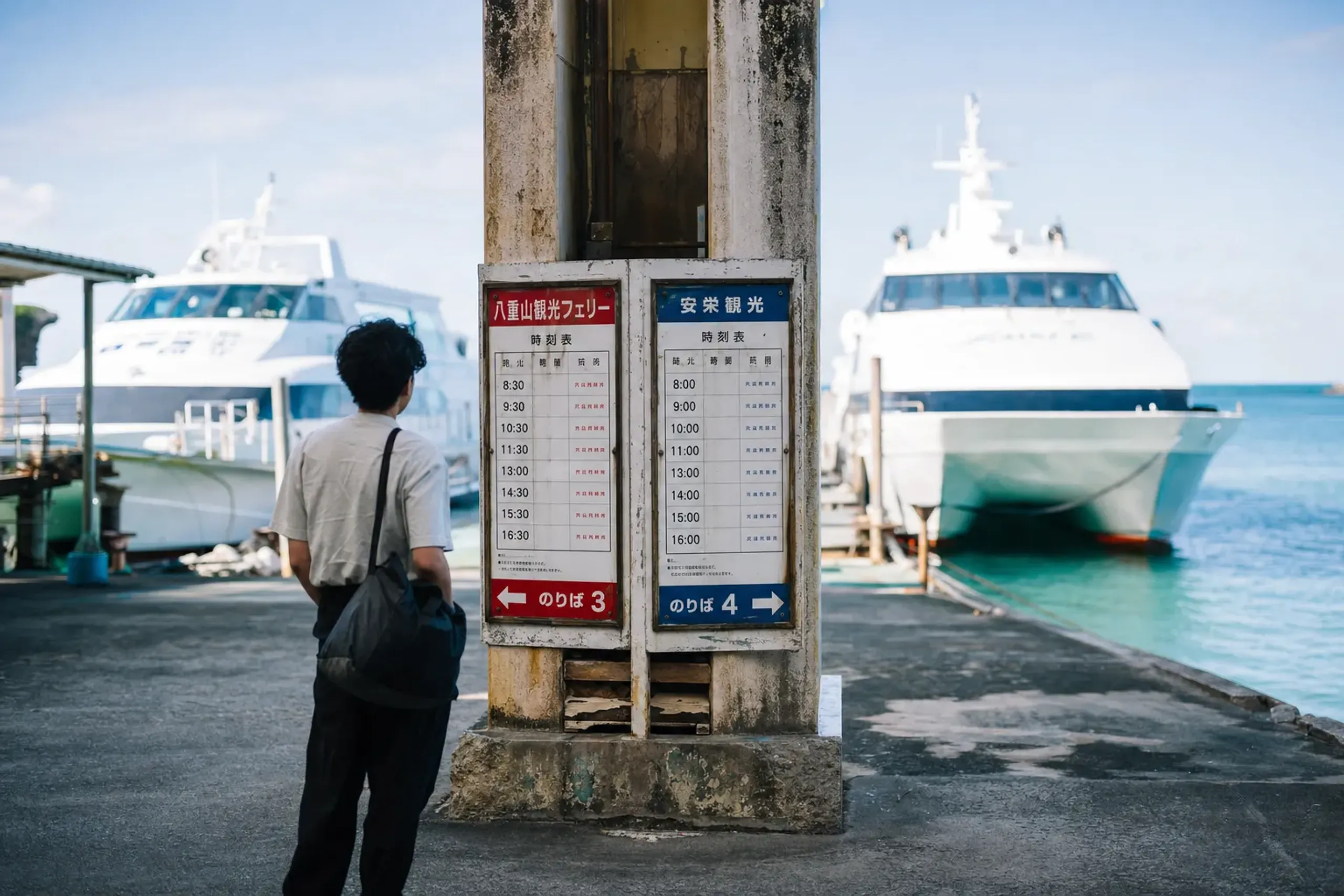
Two distances define the trip. Taketomi is about 10 minutes by ferry. Iriomote is about 40 minutes.
Key fact: Ferry operations depend on sea conditions. For Yaeyama, a spare half-day (or a full spare day) is not “extra” time; it’s how you keep the trip calm.
When you plan your days, treat ferries like flights. Arrive early. Keep your essentials in a small bag. Don’t stack a run of fixed-time commitments back-to-back on a single day.
If you value control, you’ll appreciate the hub-and-spoke approach. Ishigaki gives you options, even when the weather shifts underfoot.
How Many Nights Do You Need For Ishigaki, Taketomi, And Iriomote?
For most luxury travelers, 3–4 nights is enough to base on Ishigaki, visit Kabira Bay, take a half-day on Taketomi, and spend a full day on Iriomote — with one buffer block held back for ferry or weather changes.
A three-night plan is brisk. It suits travelers who want contrast more than depth, and who are comfortable keeping mornings sharp and dinners unhurried.
Four nights is the sweet spot. You gain a spare window for sea conditions, and you can choose whether Iriomote stays a day trip or becomes an overnight.
We often sketch Yaeyama in layers: must-do, strong alternatives, and “only if the sea cooperates.” That is the quiet difference between a trip that feels managed and one that feels chased.
This kind of layered bespoke itinerary is where seasonality — the Japanese sense of shun, of knowing exactly what to experience where and when — does its most invisible work.
Ishigaki: Kabira Bay And The Island’s Unforced Pace
Ishigaki is where you stay grounded. One base. One unpack.
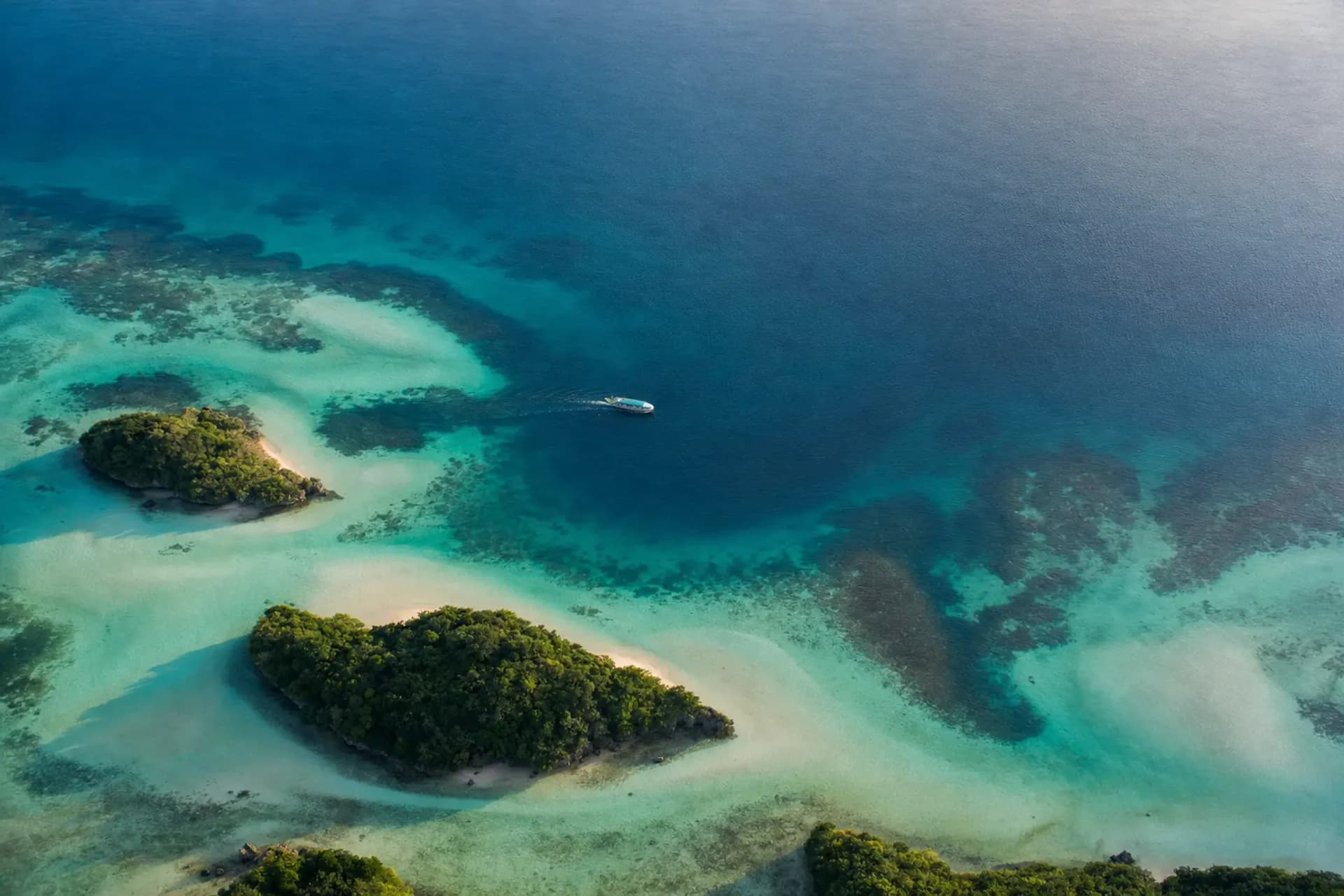
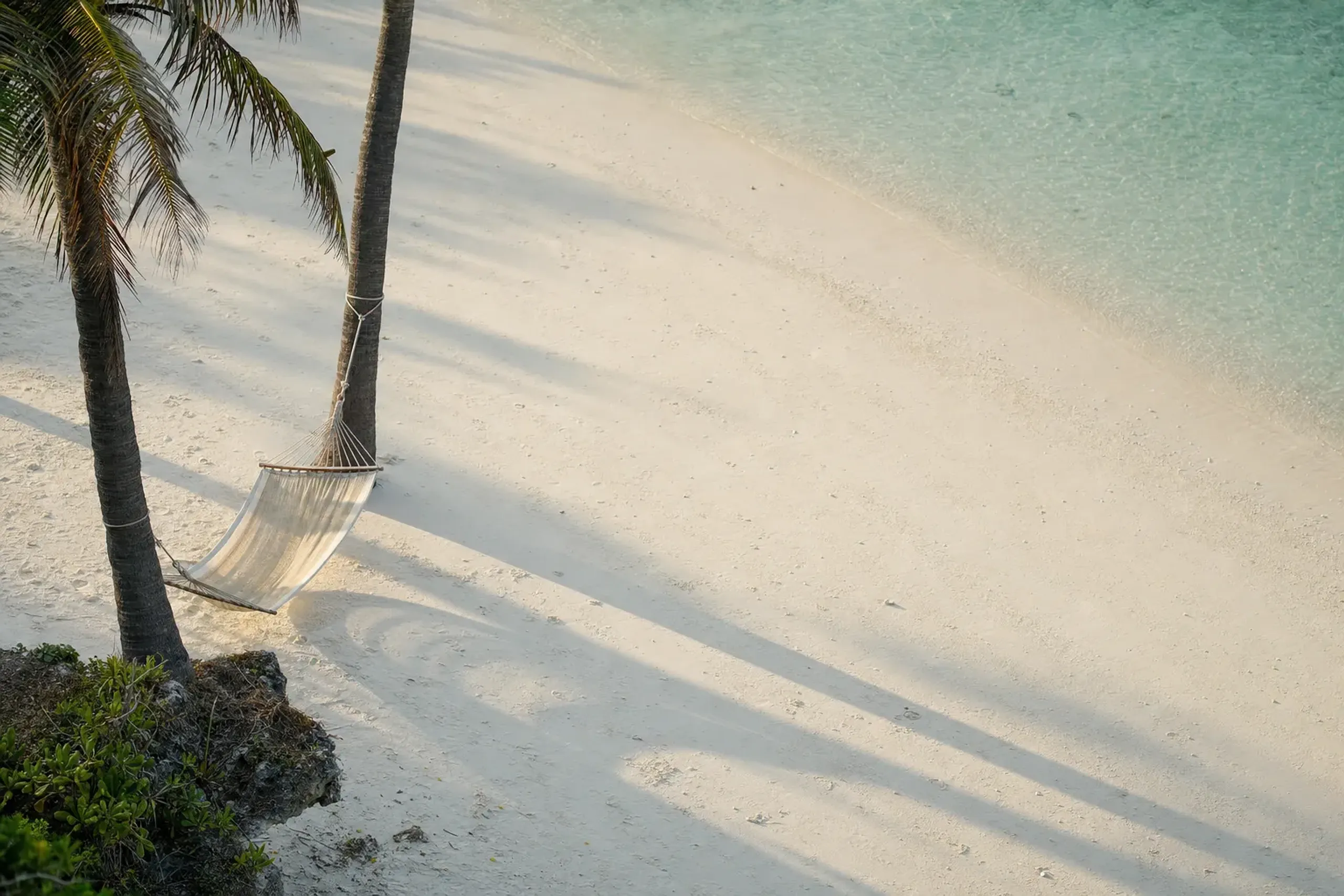
Start with Kabira Bay. It is known for emerald water, cultured black pearls, and fine white sand. The important rule is simple: swimming is prohibited there.
What you do instead suits the setting far better. Glass-bottomed boats run on the bay, so you can take in the color and clarity without turning it into a “beach day” that it was never meant to be.
In our experience, Kabira works best as a calm morning or late-afternoon anchor. Keep it light. One focus. Then return to Ishigaki for lunch, a slow coffee, and a flexible afternoon.
A Practical Day Flow On Ishigaki
Plan your Ishigaki days around a single fixed appointment. Everything else stays loose.
Here is a pattern that holds up well for travelers who dislike friction:
- Morning: Kabira Bay by glass-bottomed boat, then a short pause to take in the shoreline.
- Midday: Return to town for a relaxed lunch window.
- Afternoon: Drive at your pace, with time for viewpoints and small stops that don’t need tickets.
- Evening: Keep dinner timing generous, in case weather shifts the day’s cadence.
Notice what’s missing.
No hour-by-hour marching.
Private Transportation On Ishigaki: What “Easy” Actually Means
On Ishigaki, the difference between a pleasant day and a long one is your ground transport.
When we plan Yaeyama for guests, we typically structure Ishigaki touring around a partner-supplied private vehicle with driver, so you can move quietly between points without studying maps or watching the clock. It is the same logic our guests appreciate on the mainland with private transportation.
Discretion matters on small islands, where faces are remembered and word travels. So does rhythm. Your driver becomes the hinge that keeps the whole day from squeaking — a quiet presence who anticipates the next move before you ask.
Taketomi: A Ten-Minute Ferry To A Smaller, Slower Japan
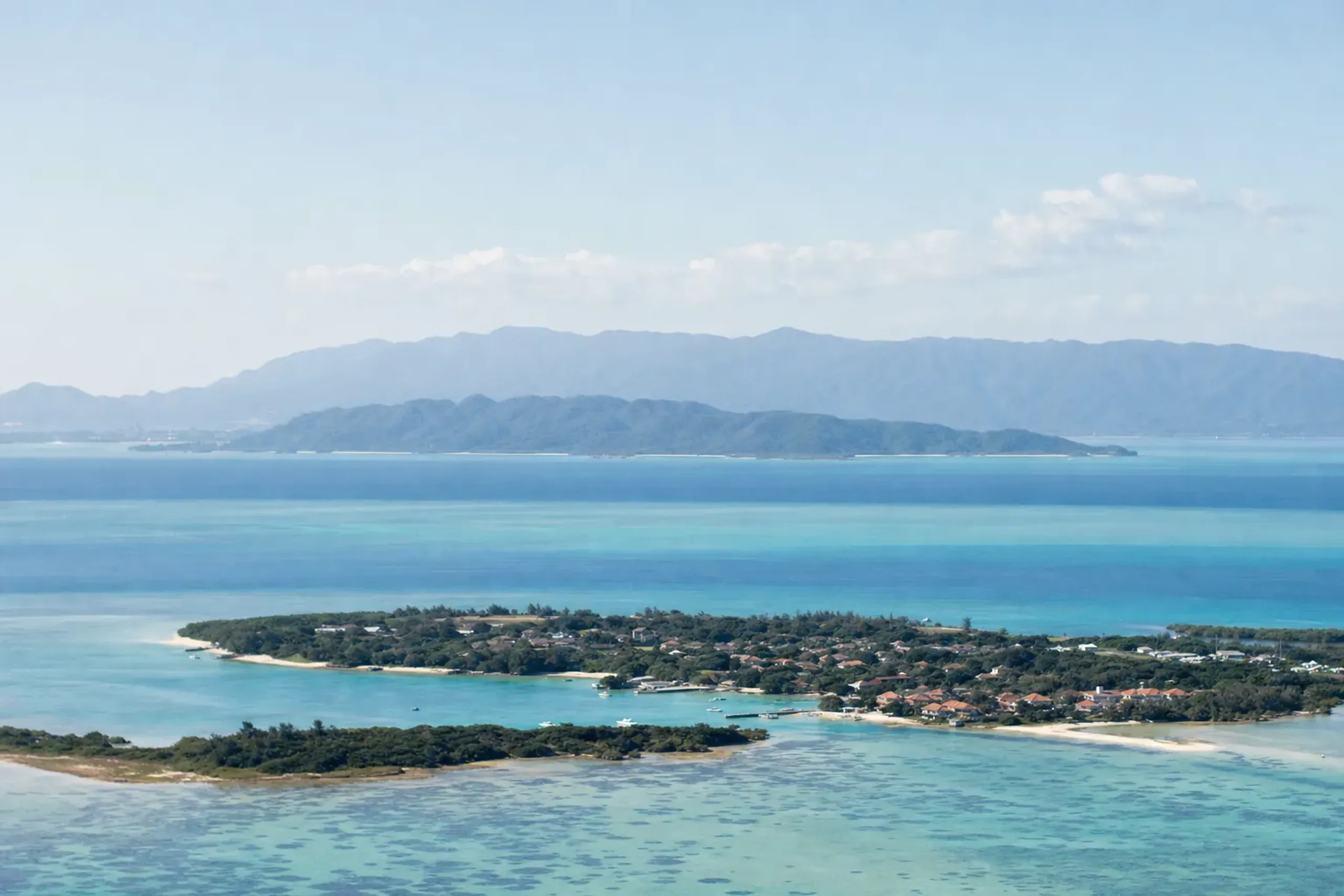
Taketomi is close. Ten minutes by ferry from Ishigaki Port.
The island is small, with around 350 residents. That number changes how you feel the place. It is not built to absorb crowds, and it does not pretend otherwise.
Most visitors see Taketomi by bicycle or by water-buffalo cart. Both are gentle. Both fit the island’s scale.
What To Do On Taketomi In Half A Day
Keep Taketomi simple. Big ambitions look clumsy here.
- Ride a water-buffalo cart to take in the village pace without rushing your legs or your mood.
- Cycle quietly on your own small loop, stopping when a coral-walled lane or a garden corner catches your eye.
- Look for star sand on the beaches — an easy, oddly absorbing detail to notice together.
This is where wabi-sabi begins to feel practical rather than poetic.
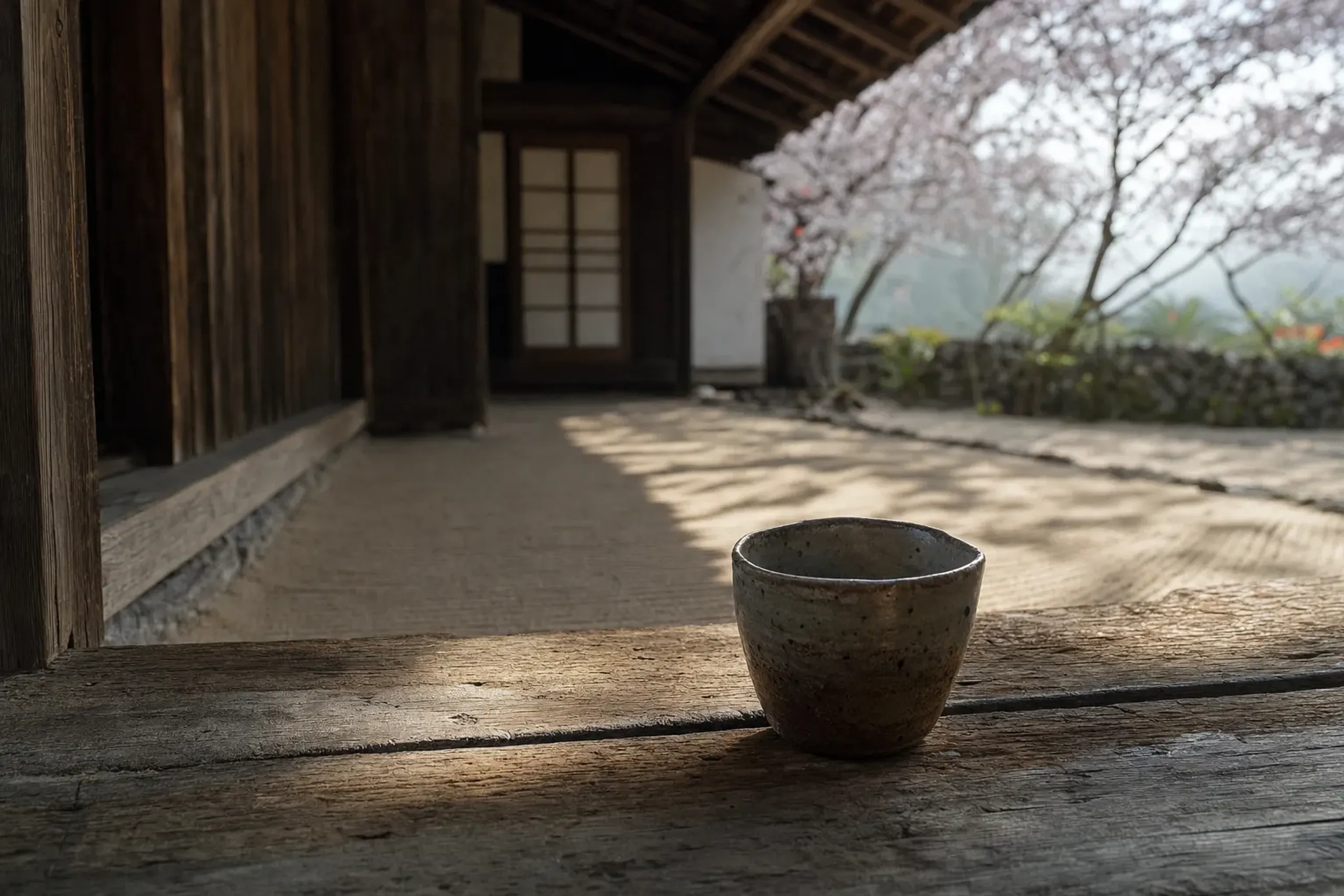
Less agenda. More noticing. The restraint of a low red-tiled village, half-buried in bougainvillea, asks nothing of you but attention.
How To Combine Taketomi With Another Island Day
You can pair Taketomi with an Ishigaki afternoon, because the ferry ride is short and the experience is light on fixed-time constraints.
What we avoid is stacking Taketomi on the same day as a time-sensitive nature activity on Iriomote. Too brittle. One sea hiccup and the day snaps.
If you want Taketomi at its best, give it a clean half-day. Unhurried, even if you are only there briefly.
Iriomote: Mangroves, Jungle, And A World Heritage Context
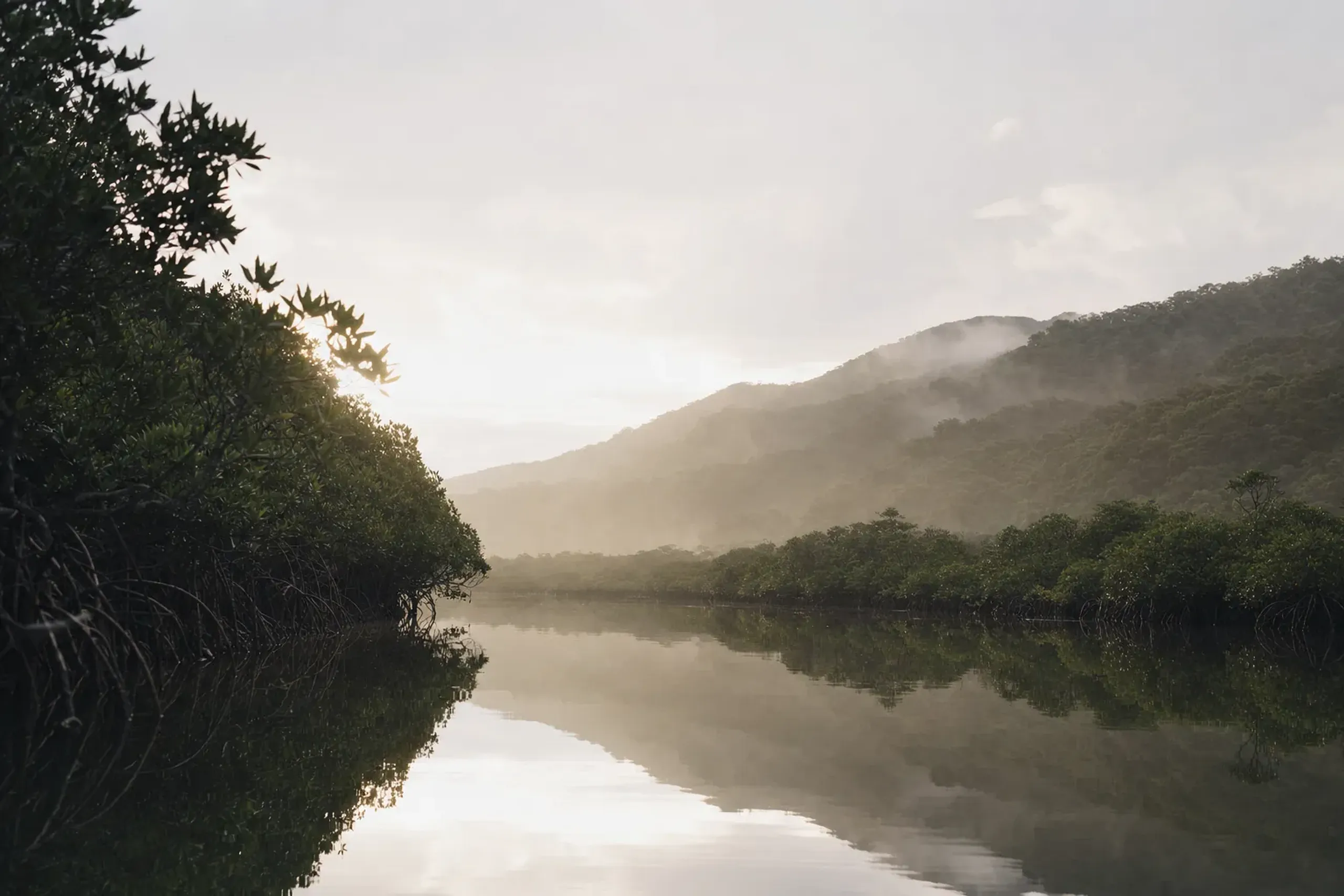
Iriomote is about 40 minutes by ferry from Ishigaki Port, and around 90% of the island is covered by jungle and mangrove forest.
The first impression is density. Green that doesn’t open. A shoreline that feels more like an edge than an invitation.
Iriomote holds about 70% of Japan’s mangrove forests. The largest mangrove area is along the Nakama River.
In July 2021, Iriomote Island was added to UNESCO’s World Heritage List as part of the property “Amami-Oshima Island, Tokunoshima Island, Northern part of Okinawa Island, and Iriomote Island” (Ref.
1574). That designation is not a trophy for photographs. It is a reminder to travel with restraint.
River Trips: The Most Direct Way To Understand Iriomote
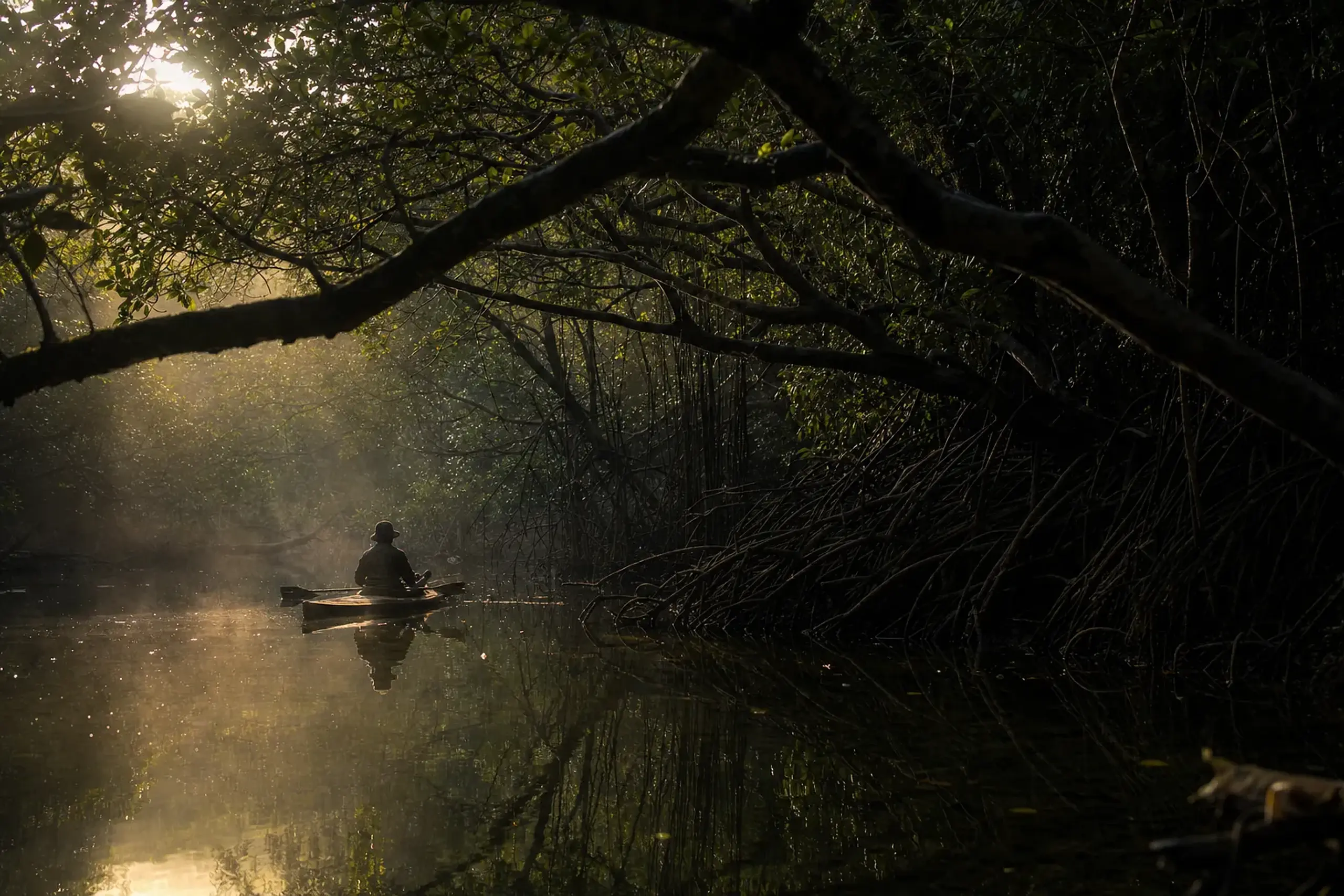
Most visitors meet Iriomote by water. A river trip by boat or kayak is the clearest introduction to the island’s mangrove landscape.
These experiences are weather-dependent. The sea decides the day first, and the river responds second. Our concierge team confirms the practical options directly with you at the time of coordination, then builds a day that does not collapse if timing shifts.
If you prefer a quieter style of travel, ask for a plan that limits “swaps.” One driver handoff. One main activity. Then time to decompress before the ferry back.
Visitor Rules And Capacity Limits: What Luxury Travelers Should Know
Iriomote has ecotourism rules, and some nature experience fields have maximum visitor numbers per day under Japan’s Ecotourism Promotion Law.
This is the part many guides glide past. It matters if you dislike last-minute disappointment, and if you travel with a firm schedule.
In practice, it means two things. First, you should plan early if a specific nature field is important to you. Second, your itinerary should hold an alternative that still feels meaningful if a daily limit is reached or conditions change.
There is also an interpretive layer worth using. Iriomote-Ishigaki National Park was established on May 15, 1972, and covers 122,150 hectares in Okinawa Prefecture.
The National Parks of Japan (JNTO) resources list visitor and information centers, including the Taketomijima Visitor Center (Taketomi Yugafukan) and the Iriomote Wildlife Conservation Center. For travelers who like to understand before they “do,” these centers add context without adding strain.
The Iriomote Cat, In One Line
Iriomote is home to the critically endangered Iriomote cat, with an estimated population of about 100.
That is all you need to know to adjust your posture. Lower impact. Quieter choices.
Hiking On Iriomote: A Note Without Route Details
Iriomote has hiking routes that include Okinawa Prefecture’s highest waterfall.
If hiking is on your mind, treat it as a separate “pillar day,” not something you tack onto a ferry day already crowded with transfers. Better legs. Better mood. Better margin.
Should You Sleep On Iriomote Or Return To Ishigaki?
An overnight on Iriomote is optional, but it changes the texture of the trip.
As a day trip, Iriomote can feel like a bold chapter in the middle of a calmer book. You arrive, do your river experience, then ferry back to Ishigaki to reset.
With one night on Iriomote, you gain time. Not just for activities, but for the spaces between them — early starts without rushing for a ferry, and a more forgiving approach to daily visitor limits and weather.
This is where the Japan that Google cannot find begins to feel real.
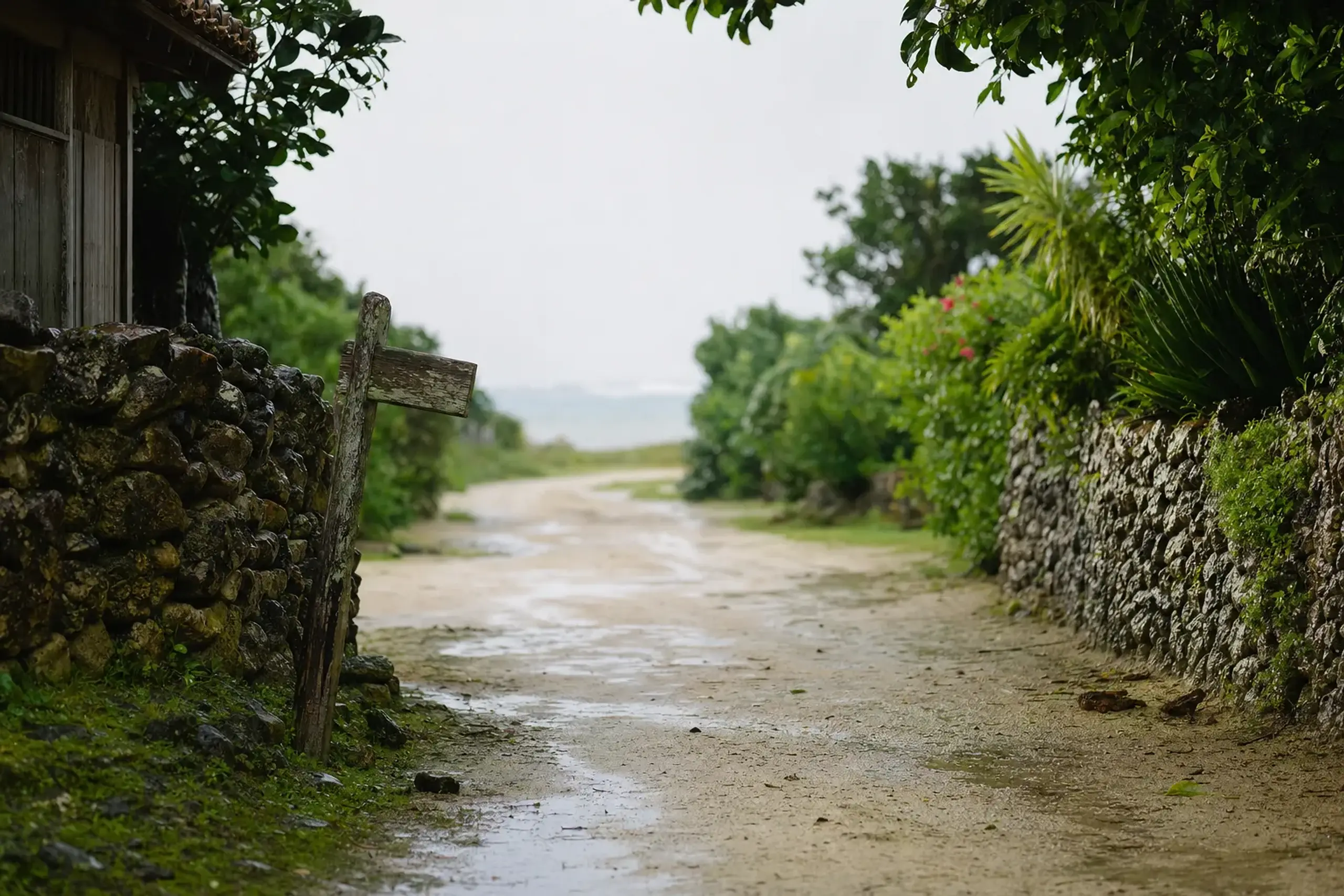
Not because it is secret, but because most itineraries simply do not allow enough slack to experience it properly. The quietest places reward only those who arrive without a crowded schedule behind them.
Weather, Typhoons, And A Plan A/B/C For Yaeyama
For Yaeyama, the most useful luxury upgrade is not an add-on. It is a contingency plan.
Ishigaki City has published typhoon-related visitor advisories in the past, including an advisory updated on October 22, 2026. That kind of official update is a reminder that disruptions are not hypothetical.
Our approach is to keep your itinerary elastic. A spare day helps, but sequencing helps more.
Think in three plans:
- Plan A: Your preferred island days, set in an order that matches your priorities.
- Plan B: Swap Taketomi and Iriomote based on sea conditions, keeping Ishigaki as the stable base.
- Plan C: Make Ishigaki the whole day, and move island ferries to the next clear window.
If you want a deeper playbook for weather days across Japan — what we change first, what we protect, and how to keep a trip from feeling “ruined” — read Rainy Days in Japan: How to Plan When the Weather Turns.
How A 3–4 Night Yaeyama Itinerary Fits Together (Step By Step)
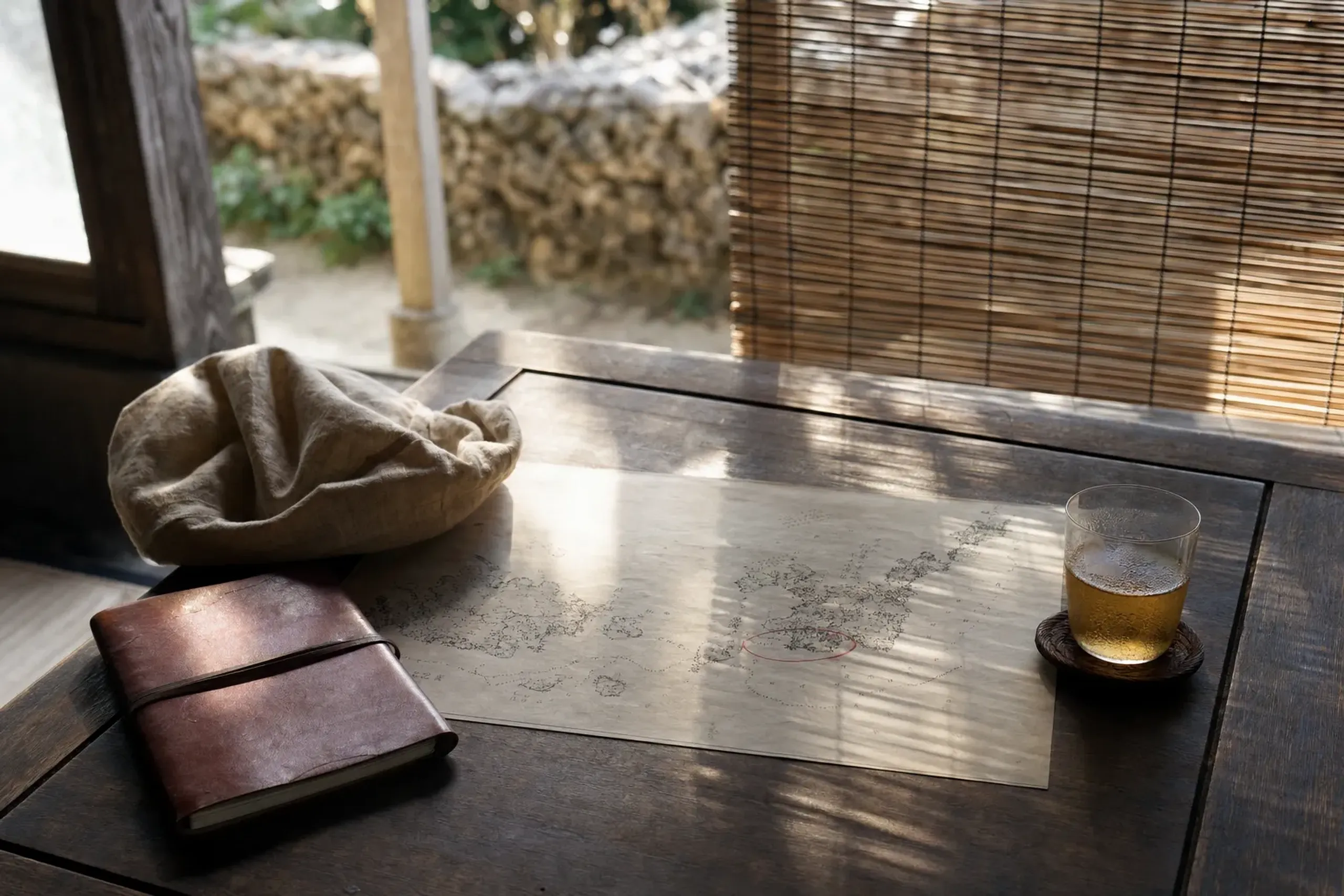
This is one workable skeleton. Not a script.
We keep it practical, then tailor it to your pace, party size, and appetite for nature days.
3 Nights (Fast, Clean Contrast)
- Day 1: Arrive Ishigaki. Reset day. Light dinner.
- Day 2: Ishigaki touring with driver. Kabira Bay by glass-bottomed boat.
- Day 3: Iriomote day trip with a river experience. Return to Ishigaki.
- Day 4: Taketomi half-day, then depart (or reverse based on flight timing).
It is tight. If ferries are disrupted, Taketomi is usually easier to move than Iriomote.
4 Nights (The Calmer Version)
- Day 1: Arrive Ishigaki. No commitments.
- Day 2: Ishigaki + Kabira Bay. Keep the afternoon loose.
- Day 3: Taketomi by cart and bicycle pace. Return early if you wish.
- Day 4: Iriomote day trip, or shift to an Iriomote overnight.
- Day 5: Buffer morning, then depart.
This version absorbs weather without drama. That is the point.
How To Book Ferries And Nature Experiences In Yaeyama Without Making A Mess
Use Ishigaki as your booking “center,” confirm rules early for Iriomote nature fields, and keep at least one buffer block so you can reorder days if ferries are affected by sea conditions.
Official rules and local governance matter most on Iriomote. The island has established rules for nature experience fields, and five fields (including Pinaisara Waterfall) are designated “Specified Natural Tourism Resources” with maximum visitor numbers per day. That reality shapes what is feasible on a given date.
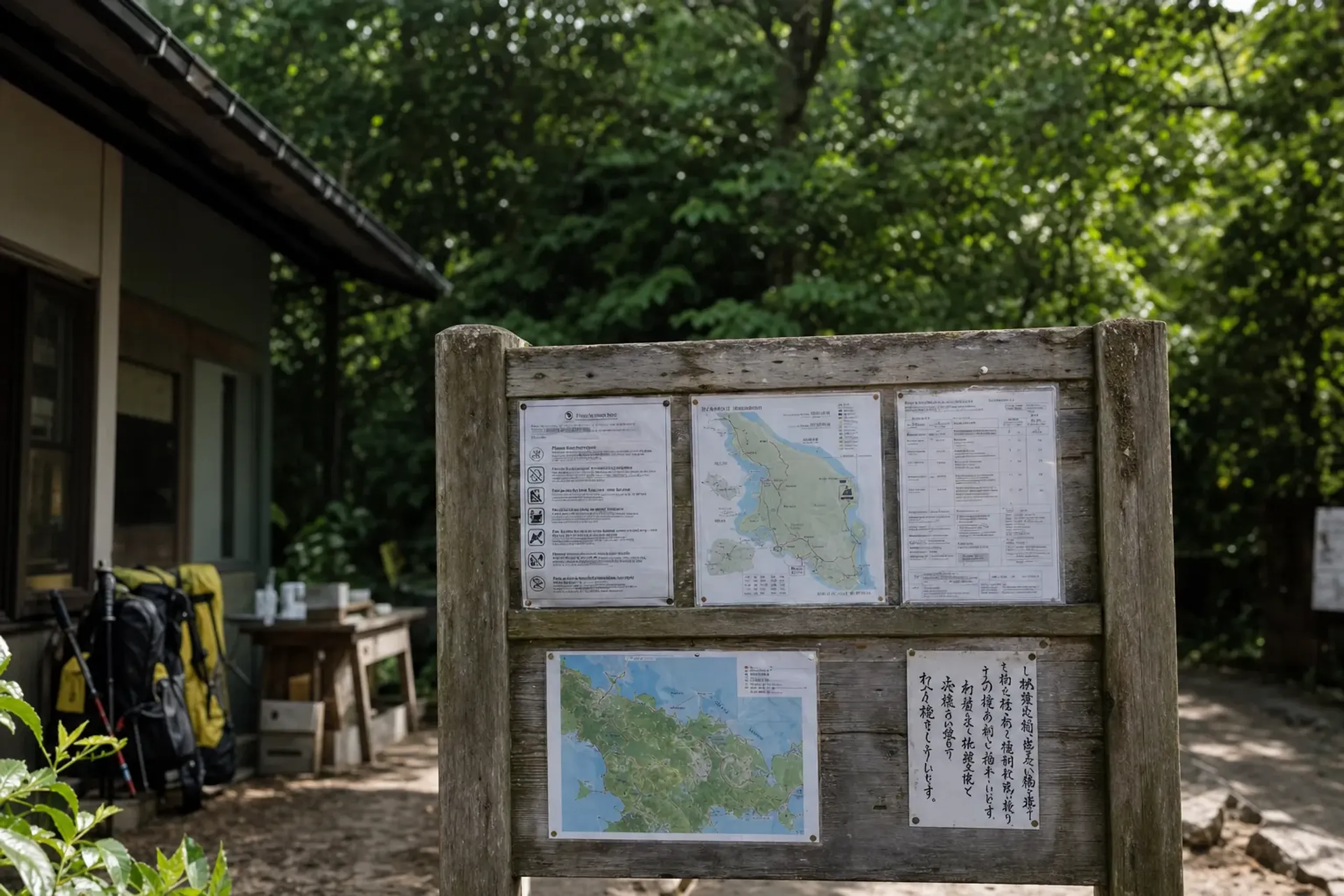
If you are the kind of traveler who dislikes uncertainty, treat this as a scheduling issue, not a mindset issue. You plan earlier. You keep one flexible daypart. You choose a “must-have” and a “happy alternative.”
For travelers who want context, Iriomote-Ishigaki National Park resources and UNESCO’s listing provide a useful frame. They also make it easier to explain your interests to a guide without over-talking. This is, quietly, where personal relationships matter: access to the right local guide at the right field on the right day is rarely a matter of booking a slot — it is a matter of knowing whom to ask.
Let Us Plan Your Yaeyama Days
The Yaeyama Islands reward travelers who arrive with slack in their schedule and discretion in their logistics — and that is precisely the kind of journey we build quietly, behind the scenes, so you never feel the machinery. From private island touring to the right introductions on Iriomote, and a contingency plan the sea cannot break, every detail is held with complete confidentiality.
When you are ready to shape your own 3–4 night Yaeyama itinerary, contact us here for a tailored proposal built entirely around your pace and your privacy.