In this guide
- 01Why Fukuoka works for a single day ashore
- 02Morning: Dazaifu Tenmangū and the Kyushu National Museum
- 03Late morning: Hakata's Zen and festival quarter
- 04Midday: a table chosen for you
- 05Afternoon: the castle and the moat that became a park
- 06An alternative afternoon: the canals of Yanagawa
- 07How the day comes together
- 08Questions residents often ask
- 09Arranging your day ashore
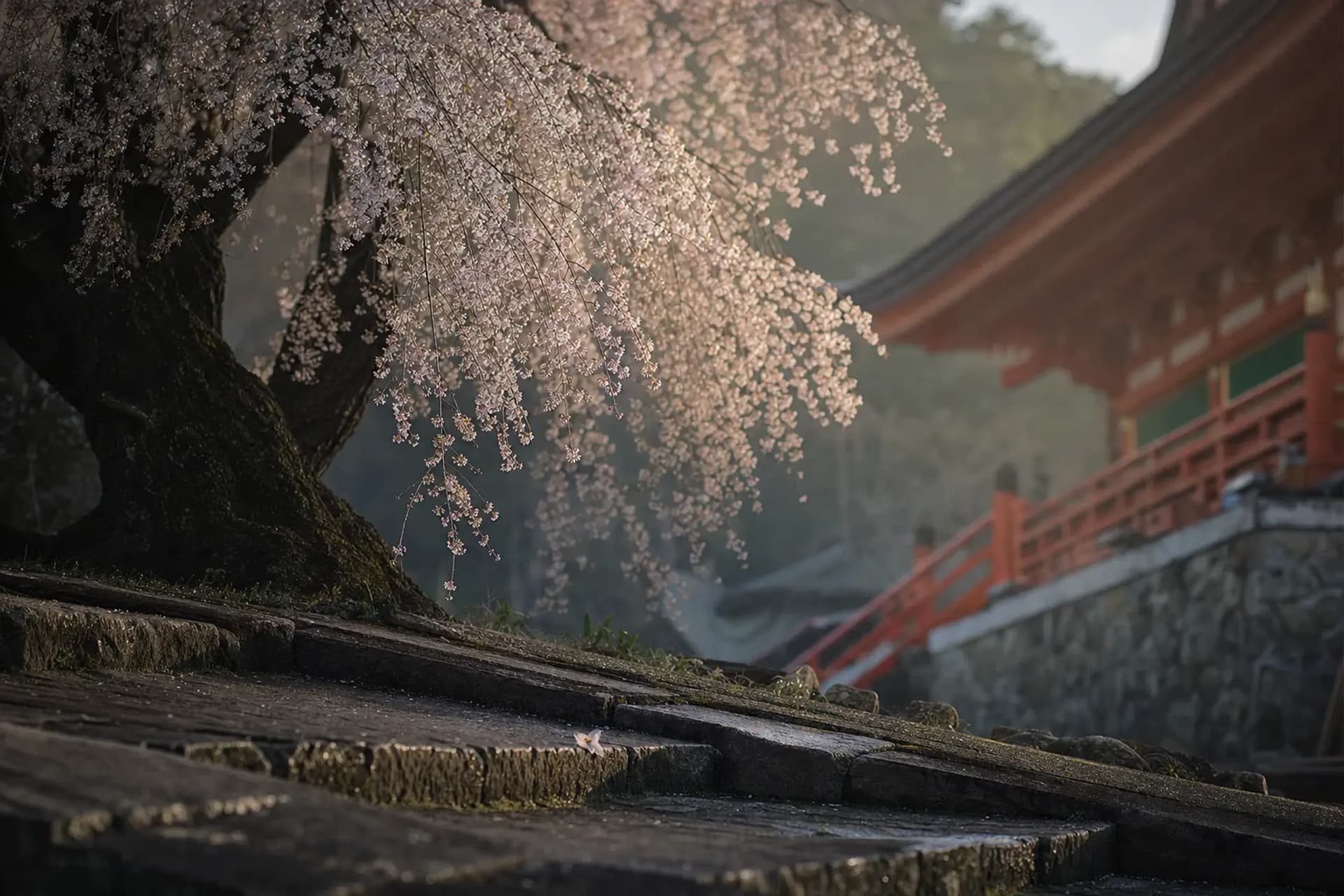
On the main hall of Dazaifu Tenmangū, a plum tree stands to the right of the steps. The shrine calls it Tobiume, the flying plum: the story holds that it crossed from the old capital in a single night to be near Sugawara no Michizane, the scholar-statesman buried beneath the hall. It is the first plum on the grounds to flower each year. It is also a fair summary of Fukuoka itself, a city whose best stories sit a short drive from where your ship ties up, and reward the visitor who goes to see one of them properly rather than all of them at once.
This page describes one way to spend the day: one or two places, a private car waiting at the wharf, an English-speaking guide, and a pace set by you. It is one honest itinerary, built from places we have verified, with a frank note on what changes with the season and the calendar.
Why Fukuoka works for a single day ashore
Ships calling at Fukuoka berth at Hakata Port's Chūō Wharf, beside the port's international terminal. The city's own port authority gives the drive from the wharf to Tenjin, the commercial centre, and to Hakata Station as about ten minutes each. That short distance is the quiet advantage of this port. Very little of your day is spent getting into town.
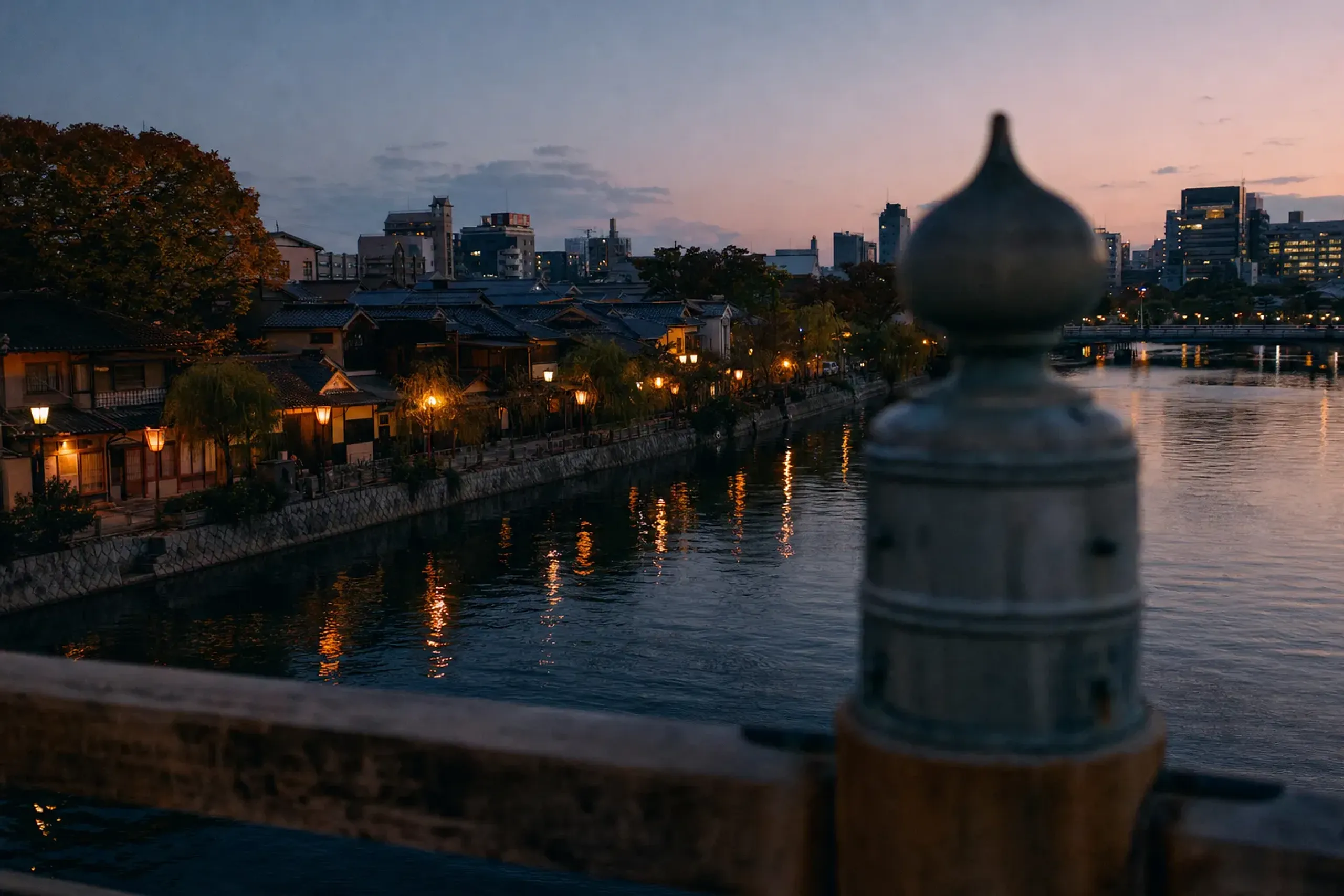
Fukuoka is also two cities in one name. Hakata, on the eastern side of the Naka River, is the old merchant town of temples, festival floats and craft. Fukuoka proper, to the west, grew up around the castle of the Kuroda lords.
Between them, and a little further inland at Dazaifu, sits more than a thousand years of history, and both a founding Zen temple and the city's best-known textile trace their origins to journeys to Song-dynasty China.
Everything below is a menu rather than a march. We build the day backwards from your ship's all-aboard time, with margin, and choose two or three anchors that suit your interests. Covering everything turns a city like this into a series of glances. We would rather you saw one shrine well.
Morning: Dazaifu Tenmangū and the Kyushu National Museum
For many residents, Dazaifu is the reason to go ashore. It lies inland, southeast of the city. Official guidance puts it at about 45 minutes from Hakata Station by train or bus; by private car the time depends on traffic, and we plan the departure on the day so you arrive ahead of the busiest hours.
Dazaifu Tenmangū enshrines Sugawara no Michizane, a ninth-century scholar and court official who died in exile here in 903 and was later revered as a deity of learning. According to the shrine, a small sanctuary was raised over his grave in 905, and the present main hall was rebuilt in 1591 by Kobayakawa Takakage, lord of the province. That hall is a designated Important Cultural Property.
The main hall has been through its first major restoration in 124 years, begun in 2023 ahead of the shrine's 1,125th-anniversary festival in 2027. During the works, worship moved to a temporary hall designed by the architect Sou Fujimoto, its roof planted with living trees in a nod to the flying plum.
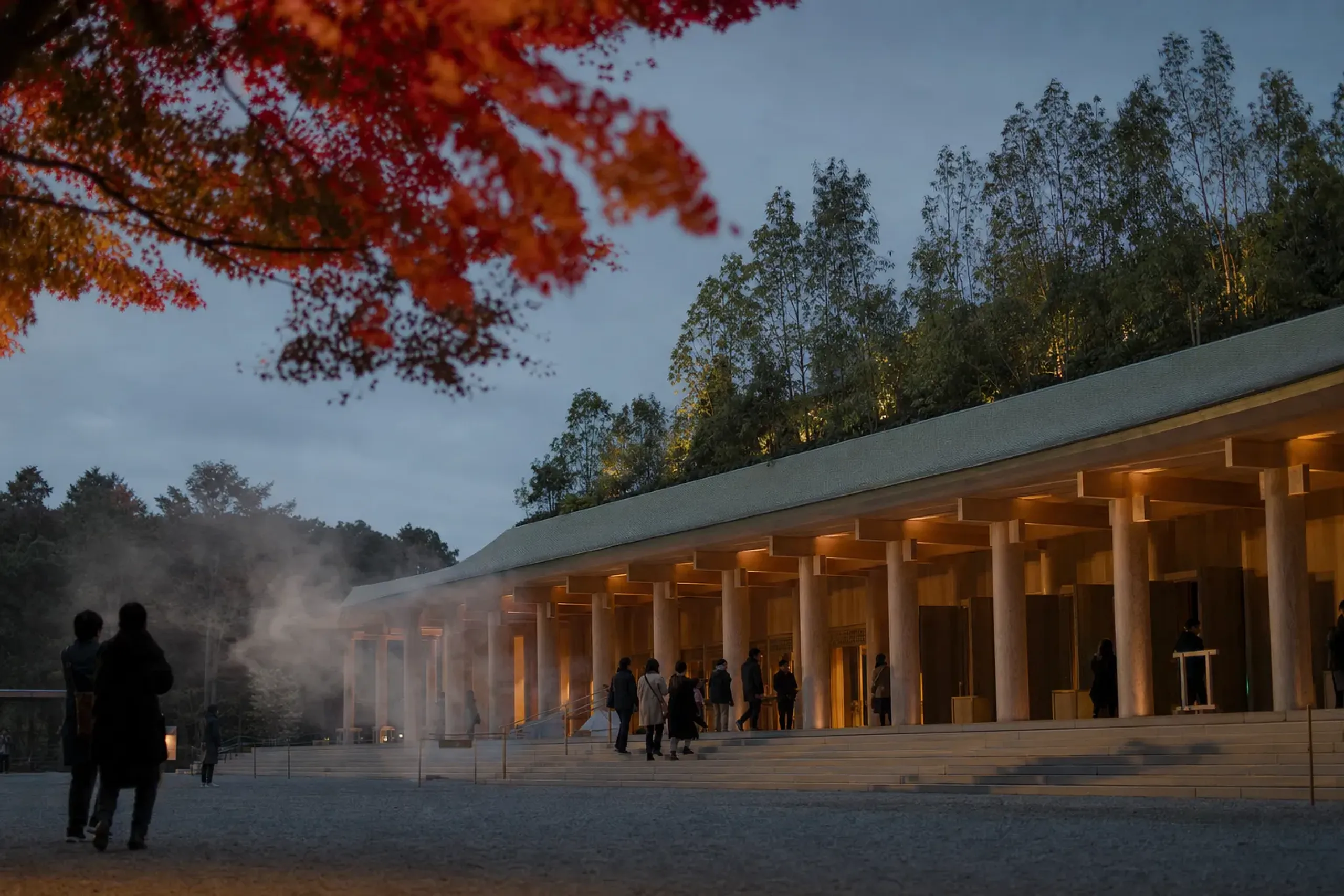
In September 2026 the shrine announced that worship in front of the main hall had resumed for the first time in about three and a half years. The temporary hall is due to be taken down once the restoration is formally completed, so whether you see it depends on when you call. We check the shrine's notices before your day and tell you what will be standing.
From the shrine grounds, a long escalator tunnel leads up the hill to the Kyushu National Museum. Opened in 2005, it is the fourth of Japan's national museums, after Tokyo, Nara and Kyoto, built on the hillside above the shrine. Note that it closes on Mondays, and on the following day when a Monday is a public holiday, so a call that falls on a Monday shifts the morning toward the shrine and the town.
A guide makes a real difference here. Without one, Dazaifu can feel like a busy approach lined with shops. With one, it becomes the story of a man, his exile, and the long relationship between this coast and the continent.
Late morning: Hakata's Zen and festival quarter
Back in Hakata, two sites sit within a few minutes of each other and give a different texture to the day.
Shōfuku-ji was founded in 1195 by the monk Eisai after his return from two journeys to Song China. Fukuoka City describes it as Japan's first full-scale Zen temple, and when the complex was completed in 1204, Emperor Go-Toba granted it a plaque reading, in effect, "the first Zen hall in Japan."
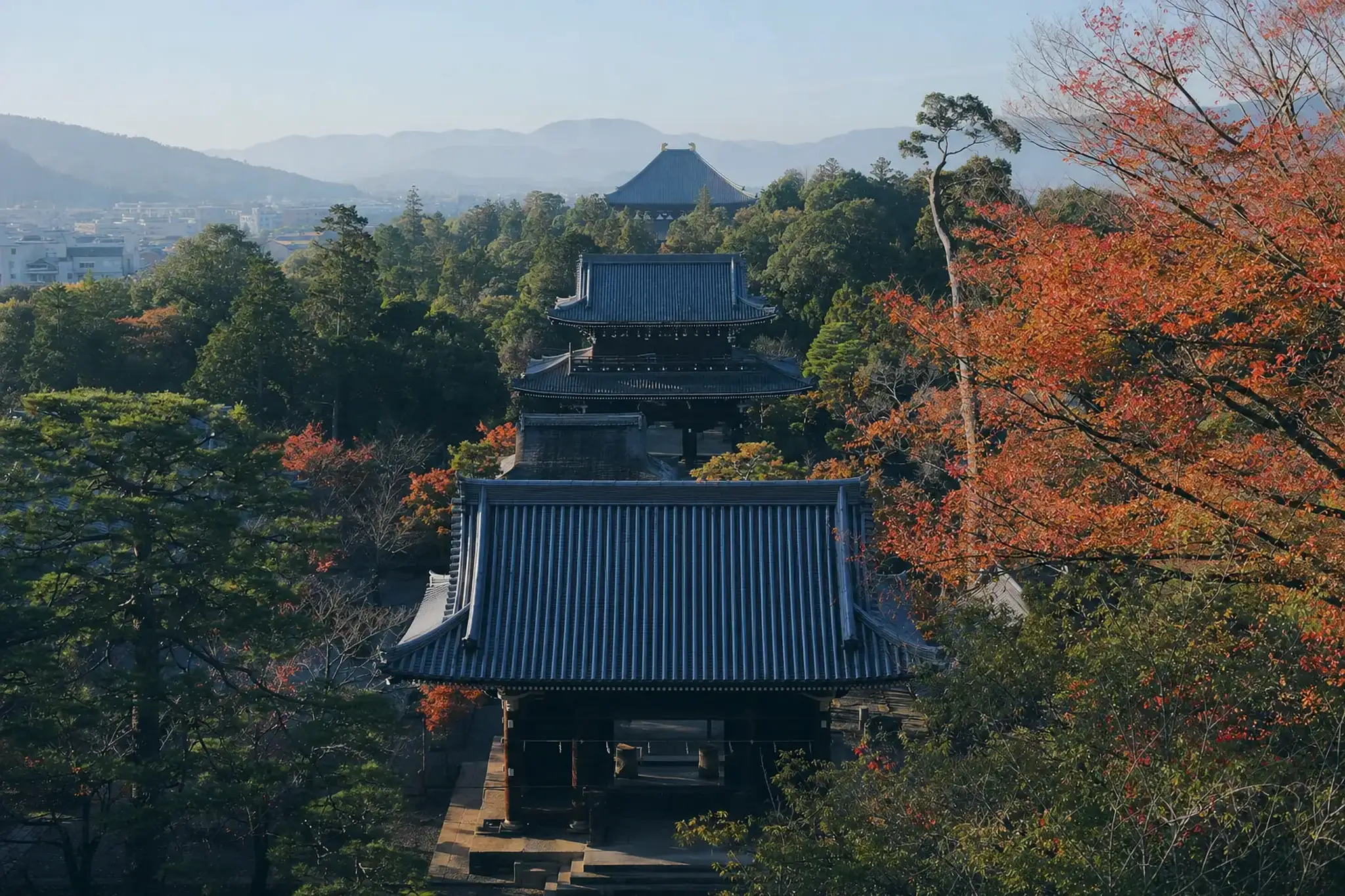
Its precinct is a National Historic Site, and the gate, Buddha hall and main hall still stand in a straight line, in the classic Zen arrangement. The temple's most important statues and its bell are not shown to the public, and it remains a working temple, so we confirm access ahead and keep the visit quiet.
Kushida Shrine is the guardian shrine of old Hakata and the home of the Hakata Gion Yamakasa, the festival held each year from the first to the fifteenth of July, which ends in the early hours of the fifteenth with teams racing heavy floats through the streets from this shrine. Outside the festival, the shrine keeps one of the towering decorated floats, the kazari-yamakasa, on display for visitors for most of the year. Seeing one up close explains why the festival matters so much to this city.
If craft interests you, the Hakata Traditional Craft Center, currently in a temporary home a short walk from Hakata Station, shows Hakata-ori textile and Hakata dolls. According to the Hakata-ori weavers' association, the cloth traces back to a Hakata merchant, Mitsuda Yasaemon, who travelled to Song China and is said to have brought weaving techniques home in 1241. Hakata-ori has been a nationally designated traditional craft since 1976. The centre is closed on Wednesdays.
Midday: a table chosen for you
Fukuoka eats well and without ceremony: chicken simmered in a clear broth, the city's famous spiced cod roe, and the open-air food stalls along the river that open in the evening, usually after a ship has sailed.
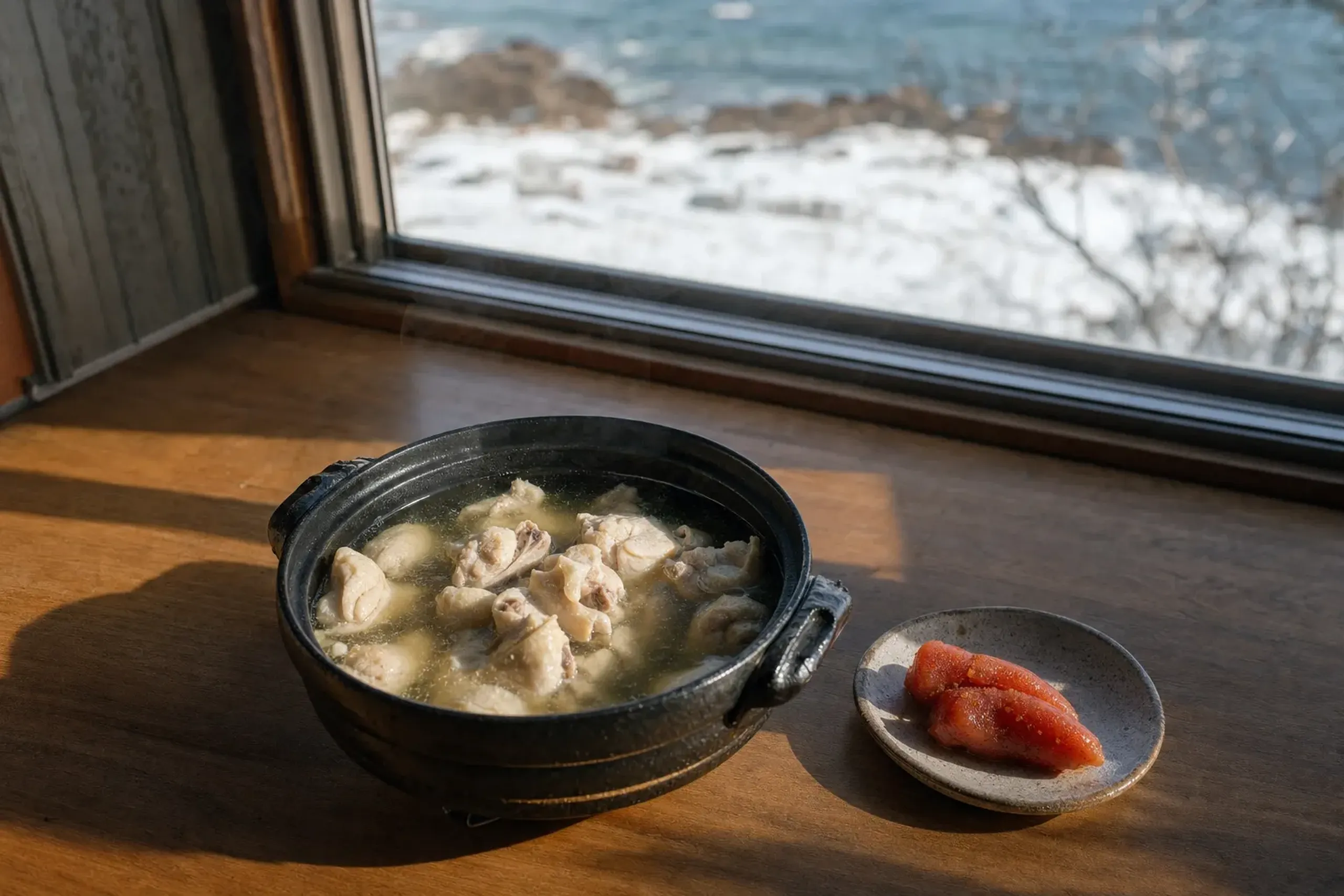
A day ashore needs something calmer.
Our concierge reserves a table suited to your appetite and your privacy, whether a private room for a full course or a counter for something lighter. We confirm dietary needs in Japanese in advance and time the meal so it never takes from the hours you most want to spend elsewhere. If you would rather keep moving, a short lunch is fine. The day bends to you.
Afternoon: the castle and the moat that became a park
On the Fukuoka side of the river, the ruins of Fukuoka Castle rise above the city. Fukuoka City records that Kuroda Kanbei and his son Nagamasa began building it in 1601 and took seven years to finish. Most of the buildings are gone, but the stone walls and the climb to the old keep base remain, and the grounds, now Maizuru Park, are a National Historic Site. Our longer piece on Fukuoka Castle explains how a centuries-old letter changed what historians thought they knew about it.
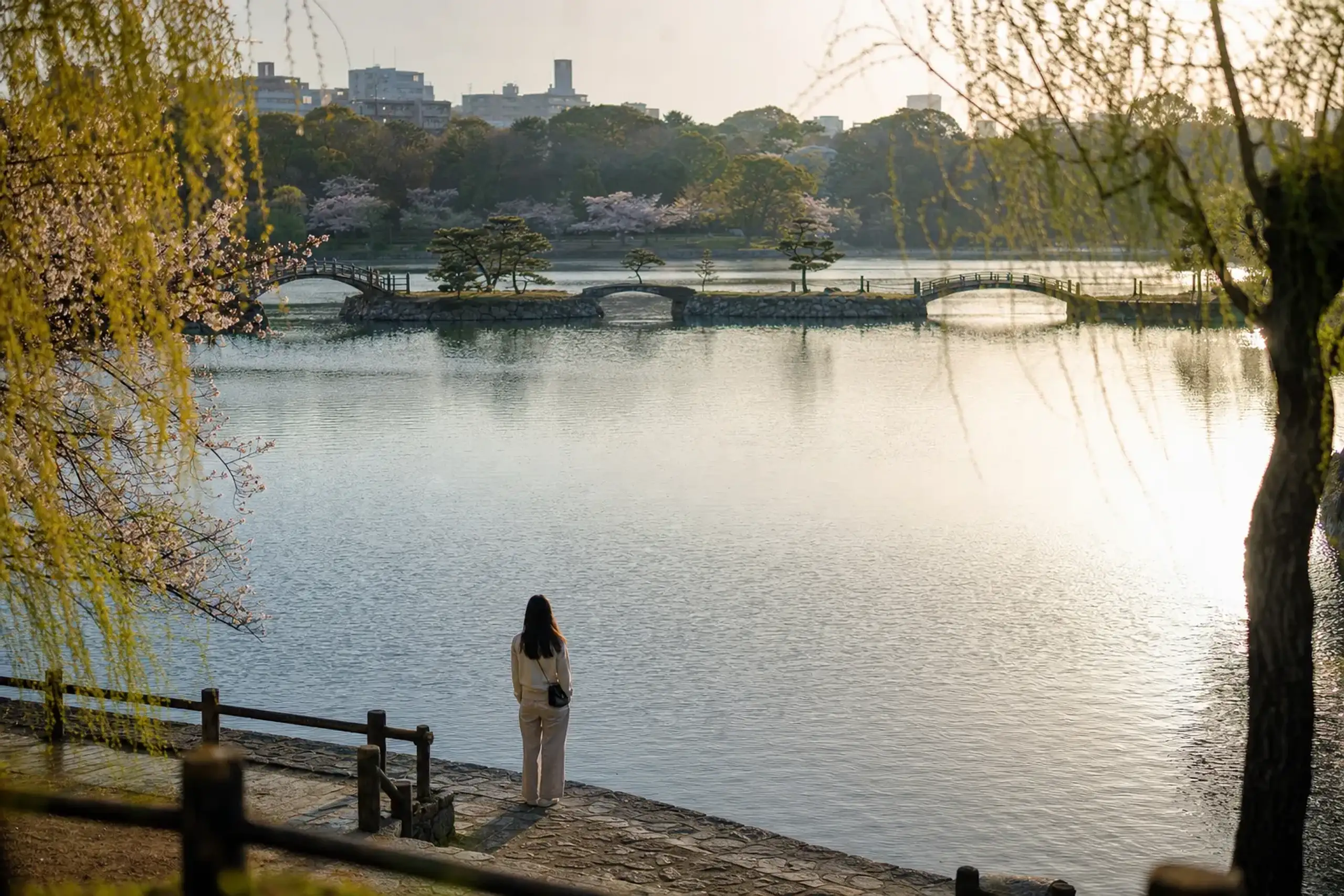
Next to the castle lies Ōhori Park, built around a former inlet that the castle once used as its outer moat. It opened as a park in 1929. The pond covers about 22 hectares, with a walking path of roughly two kilometres around it, and a formal Japanese garden beside it that opened in 1984. On a fine afternoon, a slow walk along the water, or simply a seat in the garden, is the most restful hour of the day.
An alternative afternoon: the canals of Yanagawa
Some residents prefer water to walls. Yanagawa, south of Fukuoka, is an old castle town laced with canals, and the classic way to see it is from a flat-bottomed boat poled slowly along the waterways by a boatman. The boat operators give the standard ride as roughly an hour.
Yanagawa is a commitment on a call day. Nishitetsu puts the limited express from Tenjin at about 50 minutes, the boats do not return to the station they start near, and the drive back must fit your all-aboard time with margin. We suggest it only when the call window is long and the weather settled, and we say so plainly if it is not. Our article on how Yanagawa's canals were saved tells the story behind them.
How the day comes together
The arrangements are meant to be invisible. A private car meets you at the wharf and stays with you all day. An English-speaking guide who knows Dazaifu and Hakata reads the pace of the day: when to linger, when to move on, when the crowds at the shrine have thinned. Restaurant tables and any site arrangements are confirmed in advance, in Japanese. Your name, your party and your plans stay with us.
The day is built to return you to the wharf comfortably before all-aboard. If you would rather choose the theme than follow these stops, whether temples, craft, gardens or food, we design the day around that instead.

You can read more about how we work with residents on our page for residents of The World.
Questions residents often ask
How much of Fukuoka can we see in one call? Comfortably, two or three anchors seen well, for example Dazaifu with the museum in the morning and Hakata's temples or the castle and Ōhori Park in the afternoon. Adding Yanagawa usually means dropping one of the others.
Is Dazaifu worth the drive? For most guests it is the highlight. If your call is short, or falls on a busy festival day, we may suggest staying in the city and keeping the shrine for a future visit. You can read more about the story behind Dazaifu Tenmangū before you decide.
Can the day work with limited walking? Yes. The car stays close, the museum is reached by escalator from the shrine, and we plan the order of stops around what you would like to do on foot. Tell us in advance and we will shape it accordingly.
What if it rains? Fukuoka has good indoor options, the museum above all, and the temples are as atmospheric in rain as in sun. We adjust the order on the morning of your call.
Arranging your day ashore
A day like this needs a little preparation: a car and guide booked for your call, tables reserved, and the day timed backwards from the ship. Japan Royal Service arranges these days privately, never as a shared tour. When you know your call window, contact our team and we will shape the rest around it.