In this guide
- 01Why Japan Exposes AI Planning Mistakes More Than Most Destinations
- 02What Usually Goes Wrong When You Ask AI To Plan A Japan Trip?
- 03Fixed Dates For Things That Move: Sakura And Autumn Foliage
- 04Named Properties And Features That Don’t Exist (Or Have Changed)
- 05Access Assumed Bookable That Isn’t: The Introduction Economy
- 06Distances And Logistics That Don’t Match Reality
- 07Etiquette Stated With False Confidence (And Why It Can Get You In Trouble)
- 08How Do I Book The Official Tokyo Disney VIP Tour As A Foreigner?
- 09Why “Confident” Is Not The Same As “Correct”
- 10What An “AI Itinerary Audit” Looks Like In Practice
- 11What This Doesn’t Mean: AI Still Has Real Uses
- 12Let Us Audit Your Itinerary Before You Fly
- 13Frequently Asked Questions
An AI itinerary can read beautifully and still be wrong. It will name a cherry blossom “best week” with assurance, promise a direct train that does not exist, and recommend a restaurant that quietly stopped taking reservations years ago. It delivers all of it in the same calm, authoritative tone it uses for verified fact. That tone is the trap—and in Japan, the trap is expensive.
Why Japan Exposes AI Planning Mistakes More Than Most Destinations
Japan rewards precision, and it punishes approximation. Small errors compound quickly here, because timing, access, and geography are far less forgiving than the fluent language on your screen suggests. One wrong assumption can ripple into a missed check-in window, an afternoon of lost daylight, or a crowded lane in the one neighborhood where you had hoped to move quietly.
Three Japan-specific realities sharpen the risk. First, the seasons move—the difference between “almost” and “perfect” can be a single week. Second, many of the most rewarding places operate on rules that simply are not public-facing in English. Third, the transit map is dense but it is not magic; a route that looks clean in text can turn out to be a forty-minute station transfer with luggage in hand.
AI tools are genuinely useful. They can sketch structure and spark ideas worth pursuing. But Japan is precisely where you feel the cost of skipping verification—especially when you travel with limited vacation days, a strong preference for privacy, and no appetite for improvising on the ground.
What Usually Goes Wrong When You Ask AI To Plan A Japan Trip?
AI travel plans for Japan tend to fail in five predictable categories: moving seasons treated as fixed dates, invented or outdated property details, access assumed to be bookable, unrealistic logistics, and etiquette “rules” stated with false confidence.
These are not rare edge cases. They are structural weaknesses of general-purpose systems trained to sound fluent above all else. At Japan Royal Service, we use these five categories as a simple audit checklist before any itinerary is allowed to become “real.”
Fixed Dates For Things That Move: Sakura And Autumn Foliage
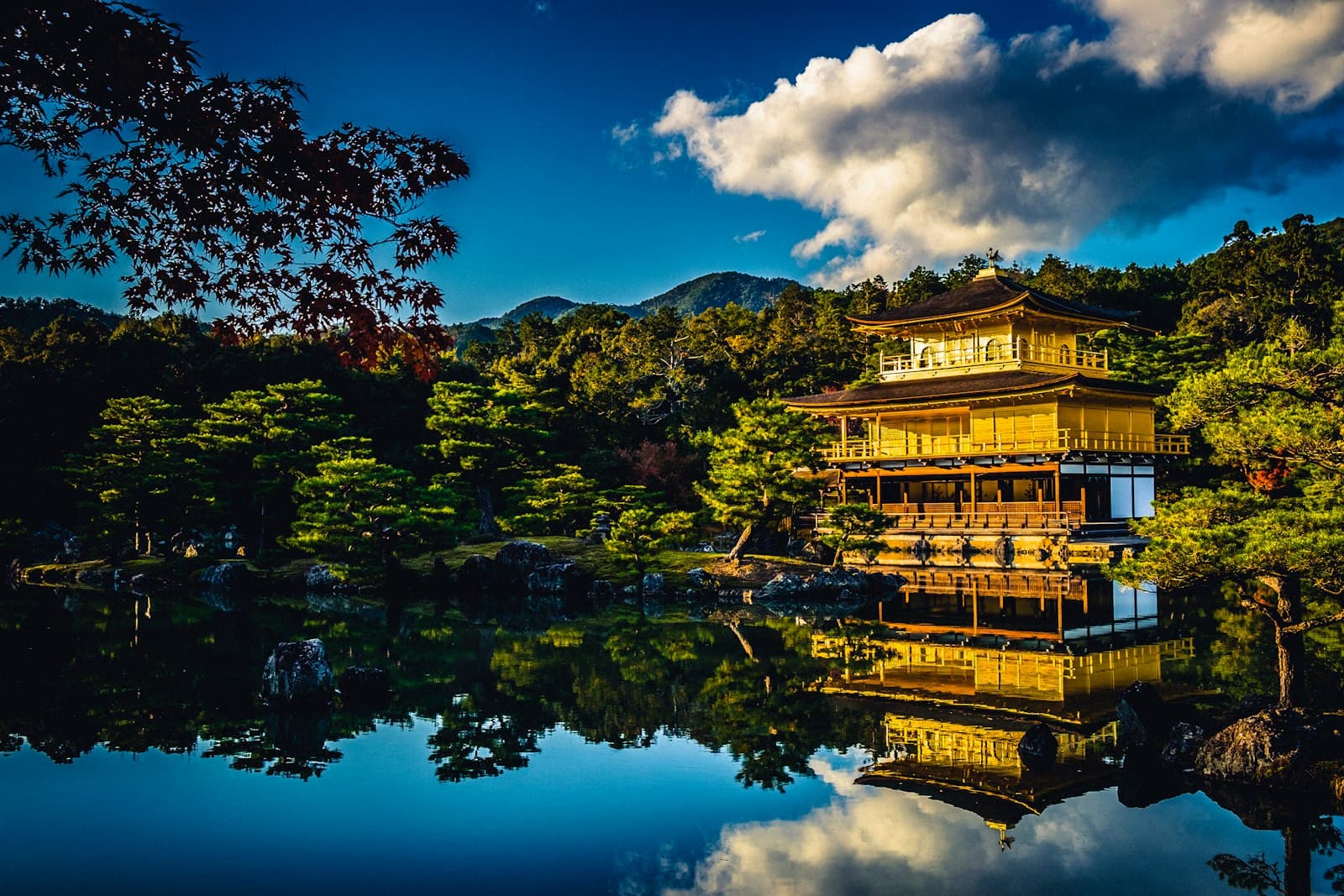
Sakura and autumn foliage are forecast-dependent, not calendar-certain, and in recent years they have run one to two weeks later than historical averages.
AI tends to answer a date question with a date. Clean. Confident. It often overlooks that peak bloom is a range, that it varies by microclimate, and that it can slide late when winter temperatures hold longer than expected. The same volatility applies to autumn color, where a celebrated “best week” can shift as weather patterns change from one year to the next.
This is where Japan punishes false certainty most sharply. If your Kyoto stay is fixed and the forecast moves, you cannot simply “catch blossoms somewhere else” without rethinking pace, transport, and crowd strategy.
Quiet viewing—the kind worth crossing an ocean for—depends on timing, not merely on location.
We will not repeat the full seasonal argument here, because it is already covered in depth elsewhere. If you want the clearest explanation of the fixed-date trap—and how to read a forecast without getting burned—see our date-stamped seasonal example from Chiba’s Bōsō Peninsula nanohana, which shows why “early spring” can be a safer target than a single famous blossom week.
How To Use AI Safely For Seasonal Planning
Use AI to generate candidates, never commitments. Ask it for a list of regions that tend to bloom earlier or later, or for non-obvious alternatives when the headline spots turn crowded. Then verify every suggestion against current forecast sources before you lock hotels, long-distance trains, or special dinners.
At Japan Royal Service, our concierge team treats any date claim as provisional until it is checked against real, current forecasting. It is unglamorous work. It is also essential work—and it is what separates a trip that merely happens from one that lands perfectly.
Named Properties And Features That Don’t Exist (Or Have Changed)
Hotels, room categories, and amenities are frequently misstated by AI, because properties close, rebrand, renovate, or change policies far faster than training data refreshes.
This is one of the most costly failure modes, precisely because it hides inside familiar-looking names. A tool might confidently describe an “updated” lounge benefit, an onsen schedule, or a room type that is no longer sold.
Or it will blend two properties with similar branding into a single imaginary hybrid. The itinerary still reads smoothly. Reality does not cooperate.
Japan is also in an active opening cycle. Confirmed, date-specific openings in 2026 include Imperial Hotel, Kyoto (opening March 5, 2026), KAI Kusatsu (opening June 7, 2026), and HOTEL THE MITSUI HAKONE (opening December 15, 2026), announced in partnership with Marriott’s Luxury Collection. AI can mention them, but it may blur the opening windows, misstate what is actually available at launch, or assume inventory behaves like that of an established hotel.
What matters for you is not hype—it is fit. A new opening can be a calm, uncrowded reset, or it can be a visibility magnet for its first several months. That distinction is a planning detail AI rarely gets right, and it is exactly the kind of nuance our team weighs before recommending it.
The Quiet Risk: Substitution Logic When Your First Choice Is Full
Even when a property genuinely exists, availability is never a given. If your first-choice ryokan or suite category is full, the next-best answer is rarely “pick something nearby.” A thoughtful replacement should preserve what you were really buying in the first place: silence, bath privacy, design restraint, or proximity to one specific temple at first light.
We treat this substitution logic as a discipline, not a panic move.

Read our onsen-focused article on Dōgo Onsen as an example of why place identity matters so deeply, and why a swap should protect the experience itself—not just the pin on the map.
Access Assumed Bookable That Isn’t: The Introduction Economy
Many of Japan’s most prized experiences are not publicly bookable at all—even when a planning tool confidently implies they are.
This is where Japan is simply different. Certain exclusive counters, private dining rooms, craft ateliers, and special viewings operate through relationships, referrals, and house rules that are never expressed as an “availability calendar.” An AI system may tell you to “reserve online,” because that is how travel usually works everywhere else. In Japan, it very often does not.
This matters profoundly to the discerning traveler, because the finest moments tend to sit behind quiet friction. A shokunin kiln master may not take outside guests as a standard offering—a private session with such a grand master exists, but only through the right introduction. A small kaiseki restaurant may prioritize known patrons and trusted referrals over strangers. A shrine or temple may permit viewings that are real, but only within clearly defined boundaries. This is the Japan that Google cannot find, and it is reached through introduction rather than a search bar.
We keep this section deliberately short, because the detailed explanation already lives in our library. If you want the plain-language “why this isn’t bookable” breakdown, see our Kyoto crowd strategy piece for how access and timing interact, and our Asakusa Hōzuki-ichi guide for how event mechanics differ from what a generic itinerary assumes.

Where Japan Royal Service Adds Value Without Public “Booking Claims”
On the public side, we focus on information and verification. In private—after you inquire—our concierge team can discuss what is realistically possible, what is not, and which alternatives preserve the spirit of your plan. Discretion is the point: your identity and your itinerary remain confidential, and nothing is promised in public copy that belongs in a private conversation.
Distances And Logistics That Don’t Match Reality
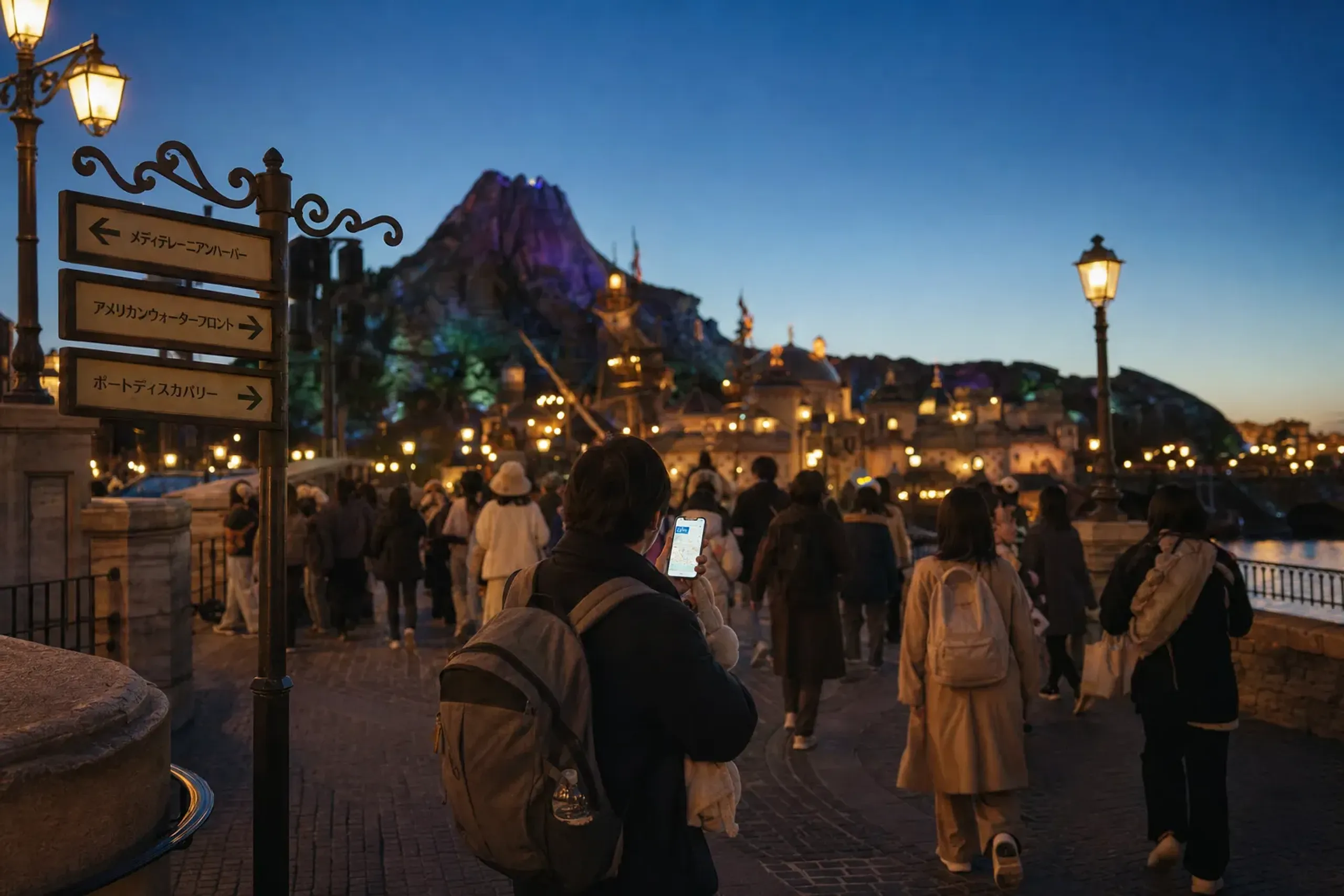
AI itineraries routinely underestimate transfer burden, station scale, and the true time cost of “one more stop”—especially with luggage in tow and peak-hour crowds pressing in.
Japan’s rail system is superb, but the details are everything. A single route can conceal long walks inside cavernous stations, multiple levels, and platform changes that look effortless on paper yet prove tiring in practice. Regional travel is just as easily misread. Some towns are connected, but not directly. Others sit “close” on a map and remain genuinely slow by public transport.
Itineraries break the moment they assume a day can hold five districts, a museum, a garden, and a two-hour dinner—while also accommodating check-in, check-out, and a pace that remains unhurried and dignified. The result is a trip that feels like compliance rather than pleasure. That is the opposite of why you came.
This is where private transportation can transform the character of a day. Not as a status symbol, but as a precision tool that protects your time, your privacy, and your energy when the route is genuinely complex. The right car and the right driver can turn a logistical ordeal into an unnoticed convenience—quiet care anticipated before you have to ask for it.
Two Simple Logistics Checks AI Rarely Performs
- Transit feasibility: Is the connection genuinely direct, or is it a chain of transfers with limited frequency?
- Pacing realism: Does the plan allow for check-in windows, meals that deserve time, and the very real human cost of navigating crowds?
We run these checks early. Then we run them again whenever a season, an event, or a rail rule changes beneath the plan.
Etiquette Stated With False Confidence (And Why It Can Get You In Trouble)
Generic etiquette advice is frequently overstated by AI as universal “rules,” when the reality is regional, context-specific, and often updated by local authorities.
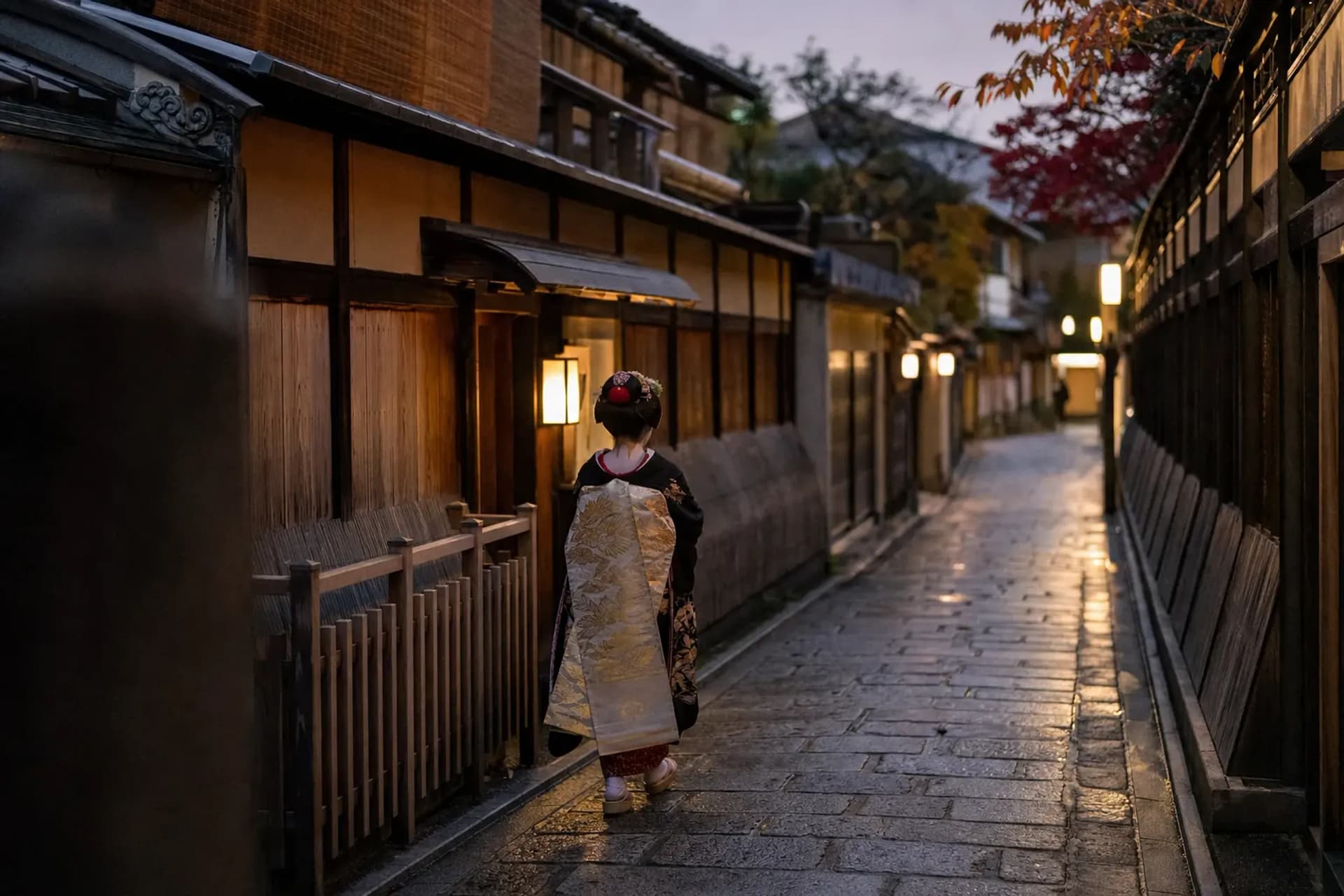
Kyoto is the clearest example, because the city now publishes explicit visitor guidance. Kyoto City’s official messaging (2026) flags problematic behaviors in areas such as Southern Gion—including following geiko and maiko, taking photos without permission, trespassing, and photographing private property. It also emphasizes that Gion is a living neighborhood, and recommends measures such as “Hands-Free Travel” to ease congestion.
An AI itinerary might casually suggest “geisha spotting in Gion at dusk.”
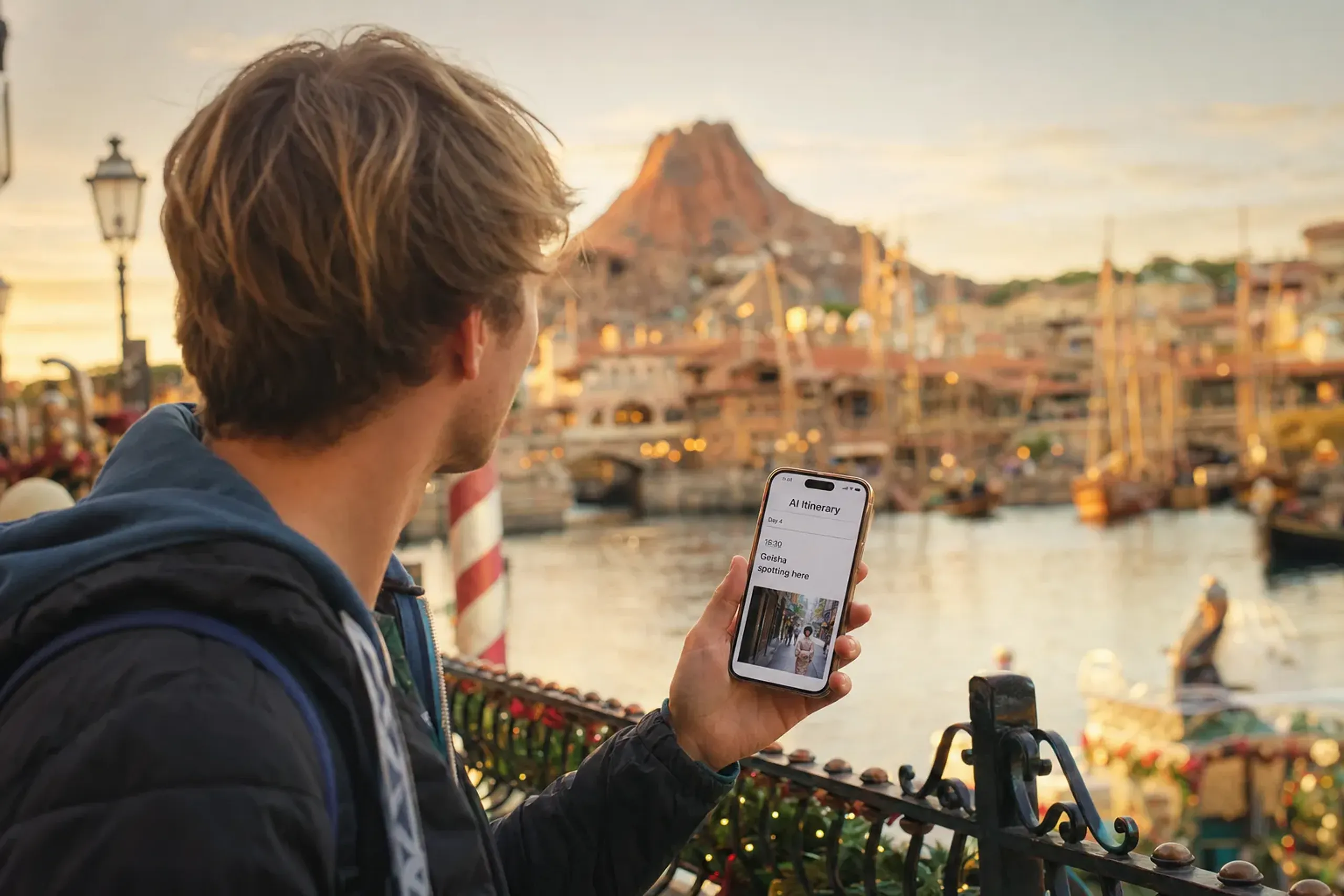
That single, breezy line can nudge you straight toward the behaviors Kyoto is actively trying to stop—and it can plant you in a crowded lane at the worst possible hour. A poor trade for anyone, and an especially jarring one for a traveler who values restraint and discretion.
Key fact: Kyoto’s visitor guidance treats parts of Gion as a living residential area, not a theme park; photographing private property or people without permission is specifically discouraged.
Respect is not complicated. But it is specific. And specificity is exactly what generic AI outputs tend to smooth away.
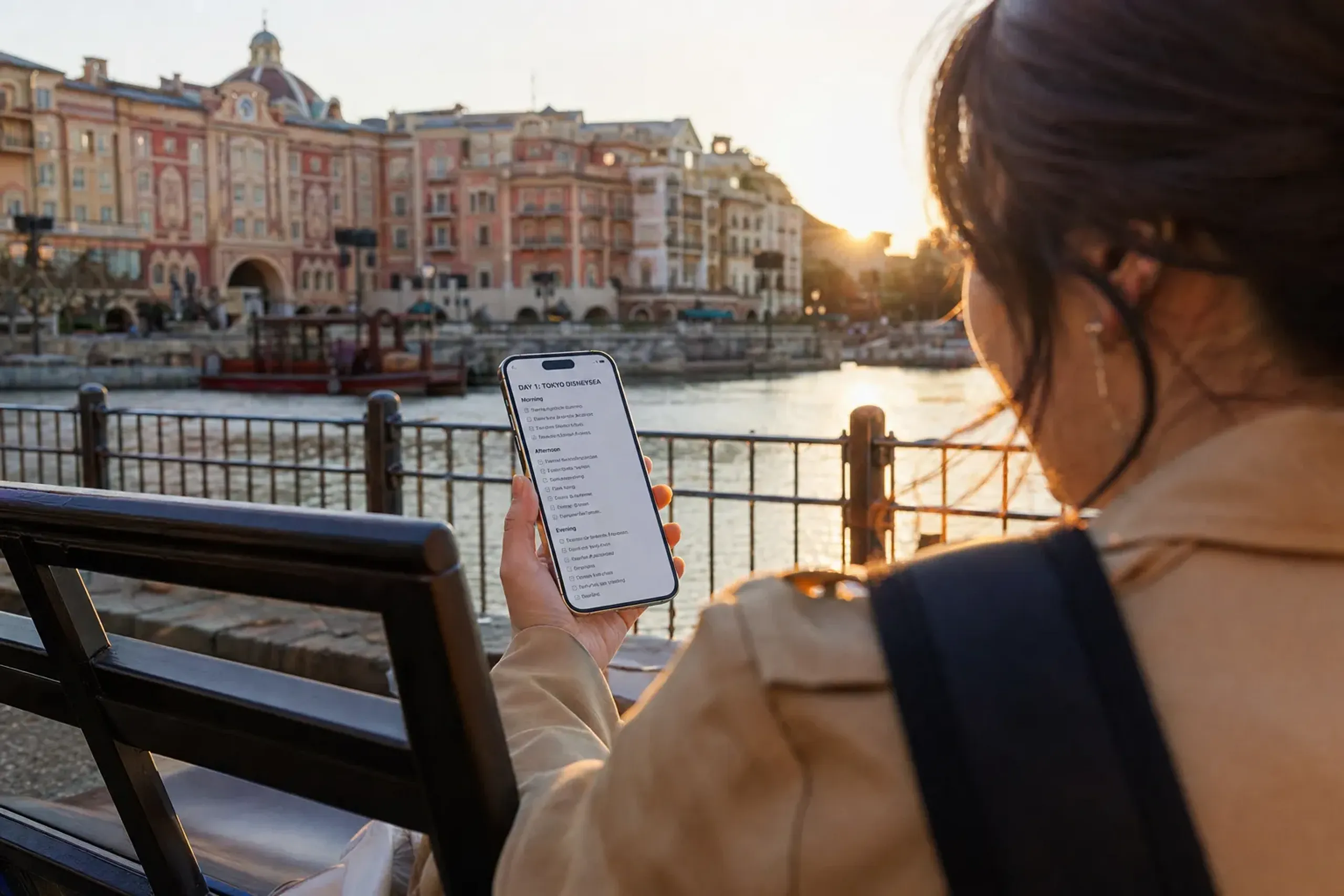
How Do I Book The Official Tokyo Disney VIP Tour As A Foreigner?
Tokyo Disney Resort offers an official private VIP Tour that runs for six hours and is designed for a small party, with reduced wait times on select attractions and designated viewing areas for certain entertainment.
Because Tokyo Disney Resort frequently updates its policies, availability, and purchase rules, the safest approach is to treat any AI “how-to” as a draft and confirm the details against official Tokyo Disney Resort information close to your travel dates. Screenshots age fast. So do “tips” copied from old posts.
What we can do publicly is keep your planning grounded. Confirm three points before you build a day around it: the current official tour duration (six hours), your party size, and whether the specific benefits you care about are explicitly included in the current official description (for example, the reduced-wait-time language and any designated-viewing-area conditions).
If you want tailored guidance on how this might fit into a larger Tokyo plan—without turning your trip into a theme-park sprint—our concierge team at Japan Royal Service can discuss it privately after you inquire.
Why “Confident” Is Not The Same As “Correct”
AI systems are optimized to produce plausible, well-formed answers. That is not the same thing as verified truth. Crucially, the tone never changes when the answer is wrong.
This matters because travel planning is high-stakes. Flights, deposits, limited vacation days, and social commitments do not rewind cleanly. A peer-reviewed study published in September 2026 reports that higher frequencies of AI hallucinations in travel-planning contexts can reduce continued usage intention—driven by psychological contract violation and perceived threat, with expectations and failure severity shaping the effect. That is academic language for a simple truth: once a tool burns you, you stop trusting it.
Japan makes this easier to feel, because the errors are so often subtle. A slightly wrong rail-pass rule. An “easy day trip” that is actually three transfers. A cultural claim stated far too broadly. You only discover the mismatch once you are already on the ground, when correction is costly and dignity is hard to recover.
What An “AI Itinerary Audit” Looks Like In Practice
Verification is a method, not a vibe. Our team at Japan Royal Service treats an AI-generated itinerary the way you would treat a draft contract: useful structure, but nothing accepted without checks.

Here is the audit we use as a baseline. Simple. Sharp. Repeatable.
- Seasonal claims: Any blossom or foliage “best week” is checked against current forecast reporting and updated as the trip approaches.
- Property reality: We confirm the hotel is operating as described, that the relevant room category still exists, and that key features (onsen access, dining formats) match current policy.
- Access mechanics: We identify which experiences are publicly bookable versus relationship-based, and we design ethically sound alternatives when access is closed-by-default.
- Logistics truth: We test transit assumptions against real-world transfer burden, opening hours, and geographic spread—especially in Kyoto, Tokyo, and day-trip regions such as Hakone and Nikko.
- Etiquette and local rules: We validate behavior guidance against official city messaging where available, and we adjust routes to reduce friction with residents.
Two Japan-specific pillars sit beneath all of this work. Discretion, because a luxury trip should never leak through unnecessary touchpoints—your plans remain yours alone. And shokunin, because the finest cultural experiences depend on craft, context, and the right setting arranged through the right introduction—never a mass-market checklist.
What This Doesn’t Mean: AI Still Has Real Uses
AI is excellent for brainstorming. It can help you name regions you had not considered, propose a rough day-by-day structure, or surface questions you did not know to ask. It can also help you compare broad themes—gardens versus museums, countryside versus city—before you decide where to spend a limited number of precious nights.

What it should never be is the final check. Not for Japan. Not when your trip depends on timing, access reality, and logistics that need to be correct rather than merely well-written.
There is also a larger consequence worth naming. Research in 2026 has examined “digital overtourism” dynamics in AI travel recommendations—how repeated AI suggestions can funnel ever more people into the same handful of hotspots. Quiet luxury is frequently the opposite instinct: better timing, different neighborhoods, a lighter footprint, and the moss-covered stone silence that the crowds never reach.
Let Us Audit Your Itinerary Before You Fly
If you already have a draft itinerary—whether built by an AI tool, a travel agent, or your own research—we invite you to let our concierge team put it through the audit above before anything is locked in. We will verify the seasonal timing, confirm the properties, map the real logistics, and quietly open the doors that are not visible from the outside, all with complete confidentiality. To begin a private, tailored conversation, contact us here, and we will shape a bespoke itinerary that is as correct as it is beautiful.
Frequently Asked Questions
Is AI Travel Planning Reliable For A Two-Week Luxury Trip To Japan?
AI travel planning can be useful for structure, but it is not reliable as a final authority for a two-week Japan trip where timing, access rules, and logistical precision materially shape your experience.
Use it to draft options, then verify the details that carry real risk: seasonal timing, transit feasibility, and whether a place is actually operating and bookable as described.
Why Does AI Get The Japan Rail Pass Details Wrong So Often In 2026?
AI often repeats outdated Japan Rail Pass advice because pricing and exchange rules changed again around October 1, 2026, and the correct answer depends on both purchase timing and channel.
JR Central published a notice stating that revised pricing applies for purchases made on or after October 1, 2026 (local time at the location of purchase). The official JAPAN RAIL PASS site also shows time-bounded pricing tables labeled for purchases made by September 30, 2026. Those date-stamped distinctions are easy for AI to blur.
JR East also announced that from April 1, 2026, passes reserved via JAPAN RAIL PASS Reservation can be exchanged at some JR East reserved-seat ticket vending machines equipped with passport readers—another operational detail easily missed in generic summaries.
How Can I Avoid AI-Created Overtourism Hotspots In Kyoto?
You can avoid AI-amplified hotspots in Kyoto by traveling at off-peak hours, choosing alternative districts, and following Kyoto City’s visitor guidance—especially in areas such as Southern Gion.
Kyoto’s guidance explicitly discourages following geiko and maiko, taking photos without permission, trespassing, and photographing private property. A responsible plan prioritizes neighborhoods as living places, not content backdrops.