In this guide
- 01Two Clans: The Akizuki From 1203 And The Kuroda From 1623
- 02The Castle Site And Its Gates
- 03The Samurai Town And The Preservation District
- 04Meganebashi, The 1810 Stone Bridge
- 05Sugi-No-Baba, Akizuki Hachimangu And Dairyoji
- 06How Do You Reach Akizuki From Hakata?
- 07Akizuki In A Fukuoka Stay
- 08How Japan Royal Service Arranges Akizuki
- 09Frequently Asked Questions
- 10Why Choose Japan Royal Service
Akizuki is a small castle town in the hills of Asakura, in Fukuoka Prefecture. It sits a little over an hour from Hakata. The castle site keeps its gates.
Two Clans: The Akizuki From 1203 And The Kuroda From 1623
Akizuki was home to the Akizuki clan from 1203. The Fukuoka prefecture tourism site records that Akizuki Taneo was assigned there in that year, and JNTO notes that Akizuki Castle was first built in 1203 for the Akizuki clan. Toyotomi Hideyoshi later moved the clan away.
The Edo-period chapter belongs to the Kuroda. In 1623, under the will of Kuroda Nagamasa, lord of the Fukuoka domain, 50,000 koku went to his third son Nagaoki, and the Akizuki domain was established. The following year Nagaoki built and settled in Akizuki Castle, according to Crossroad Fukuoka.
JNTO records that the castle served as the residence of the Kuroda lords until the end of the Edo period in 1868.
The Castle Site And Its Gates
The castle was small and built in the form of a camp.
Crossroad Fukuoka records that it was divided into the Omote-goden, the government office, and the Okugoden, the lord's living quarters. JNTO describes it as a small, military camp-like castle.
The castle ruins are a prefectural historic site.
The Kuromon And The Nagayamon
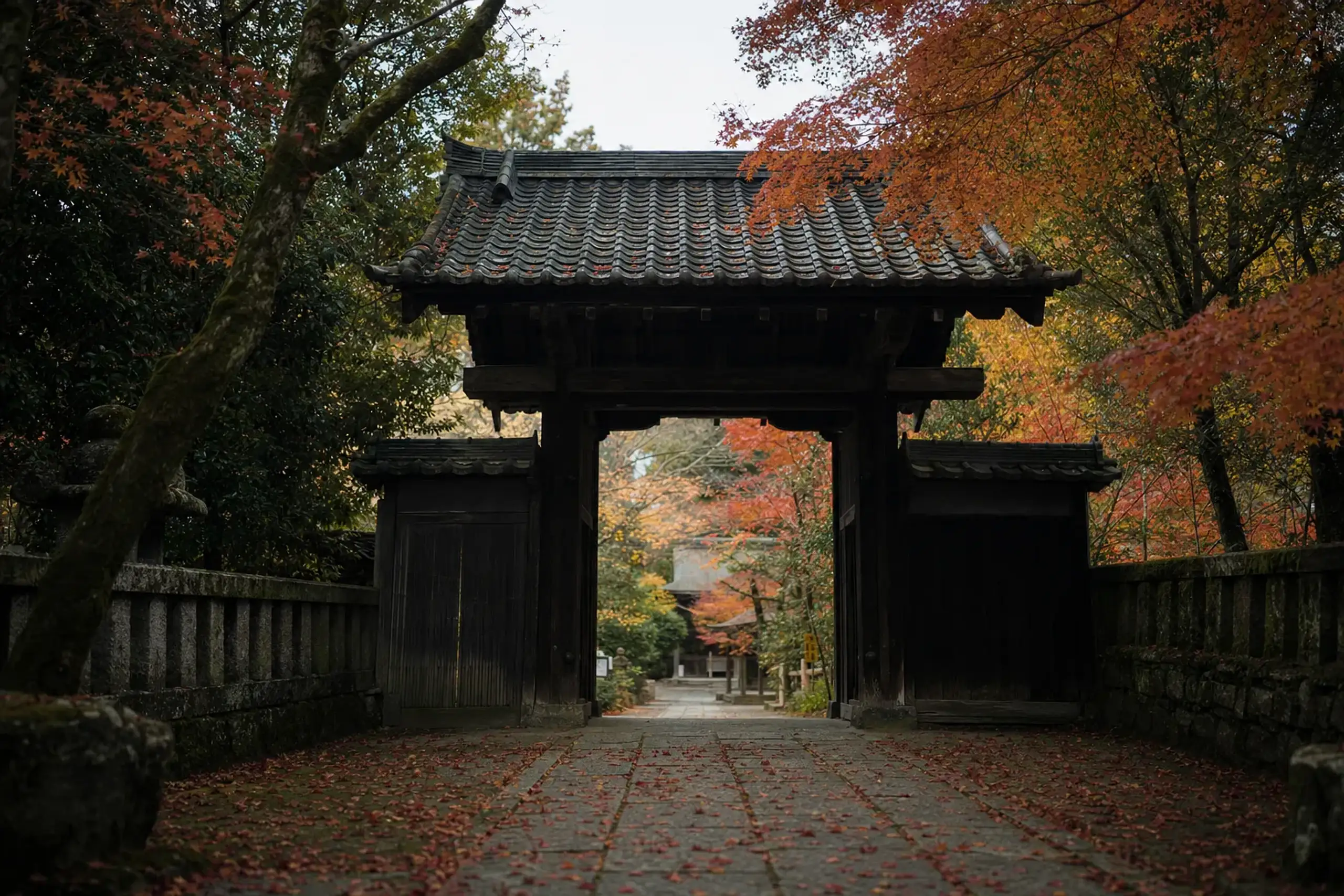
The Kuromon, the Black Gate, was the castle's main gate. In the early Meiji period it was moved to the approach of Suiyo Shrine, where it stands today. About 20 maple trees surround it.
The Nagayamon was the back gate. Both the Kuromon and the Nagayamon are listed as prefectural tangible cultural properties.
The Samurai Town And The Preservation District
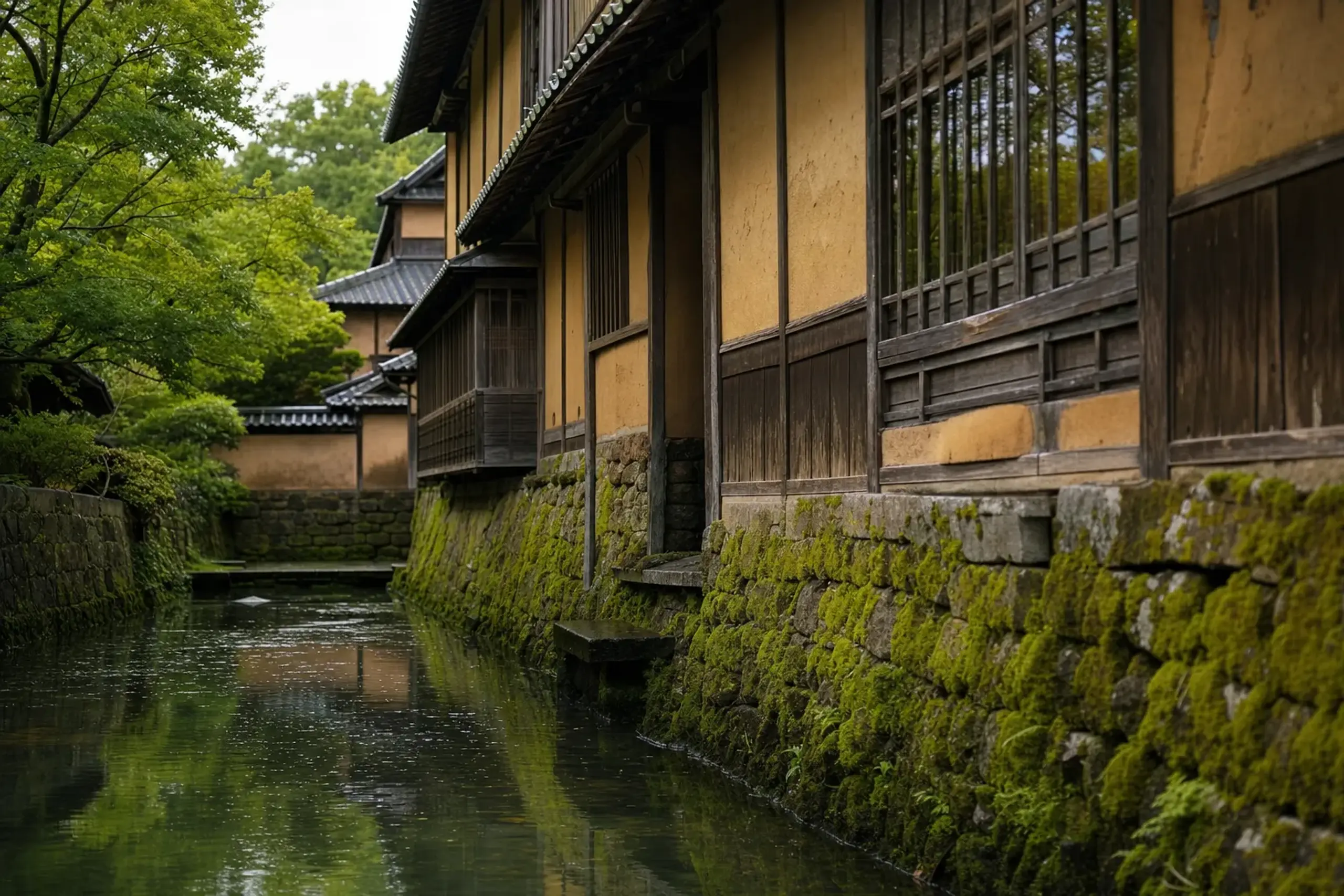
Around the castle site lie the streets of the samurai town. JNTO describes old samurai residences surrounded by clay moats, with latticework on windows and doors and mossy stone walls. The town is a nationally designated Important Preservation District for Groups of Traditional Buildings covering 58.6 hectares.
JNTO uses the label "Chikuzen's Little Kyoto" for Akizuki. An English-speaking cultural interpreter guide can walk the streets with you and read the gates and houses in order. The guide is booked separately from the driver, and the JRS concierge team confirms directly with the guest at time of arrangement which buildings are open.
Everything here is open to the public. If you are weighing a car against rail for the day, our note on private driver versus rail sets out the trade-offs.
Meganebashi, The 1810 Stone Bridge
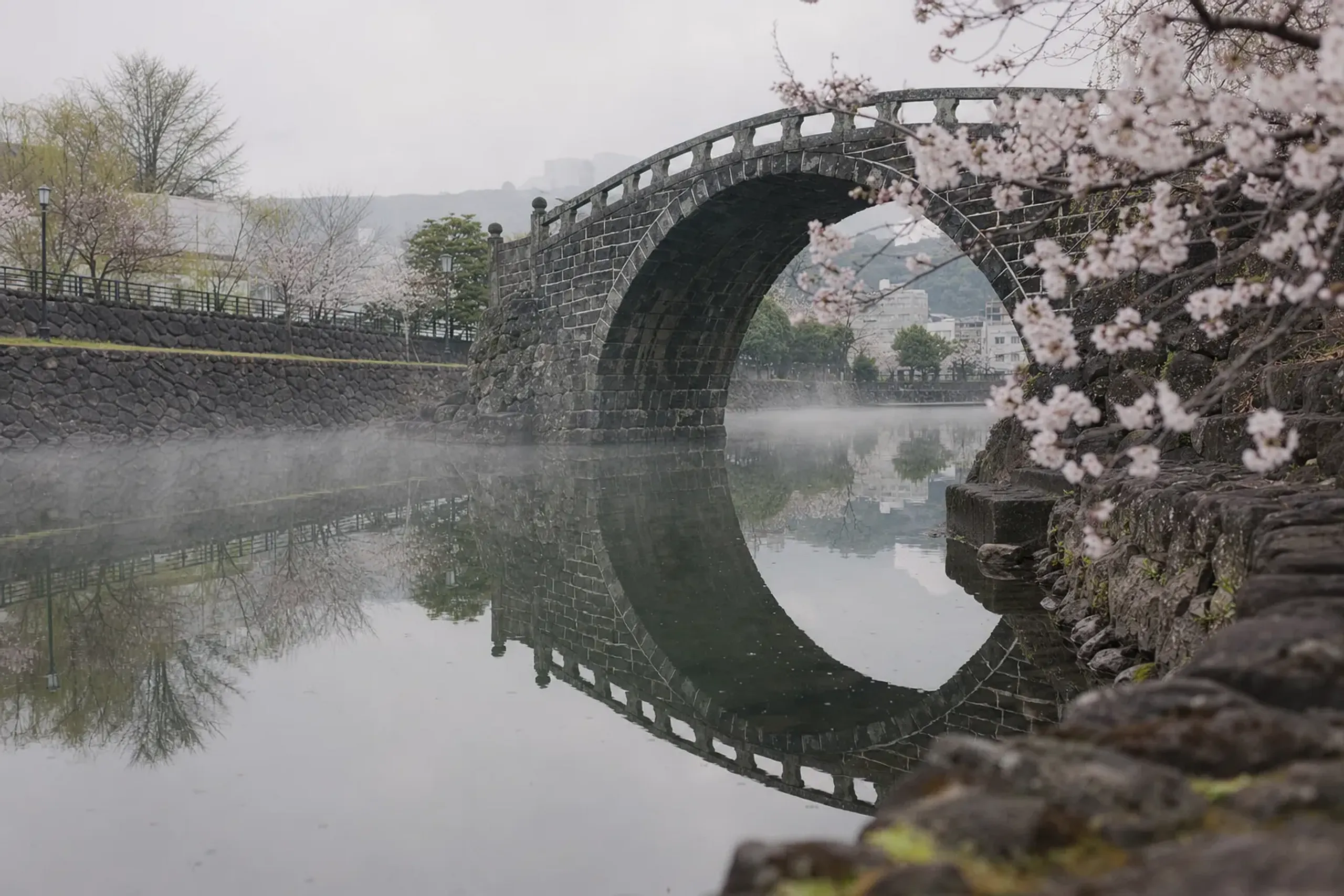
At the entrance to the castle town, a granite arch bridge crosses the Notori River. It was built in 1810 with help from stonemasons from Nagasaki. It was formerly called the Nagasaki Bridge, and was designated a municipal tangible cultural asset in April 1956, according to Crossroad Fukuoka.
JNTO records that it was built by the same stonemasons who built the bridge of the same name in Nagasaki.
Key fact: Meganebashi is a fixed-arch stone bridge of 1810, built of granite with help from Nagasaki stonemasons, spanning the Notori River at the town's entrance.
Sugi-No-Baba, Akizuki Hachimangu And Dairyoji
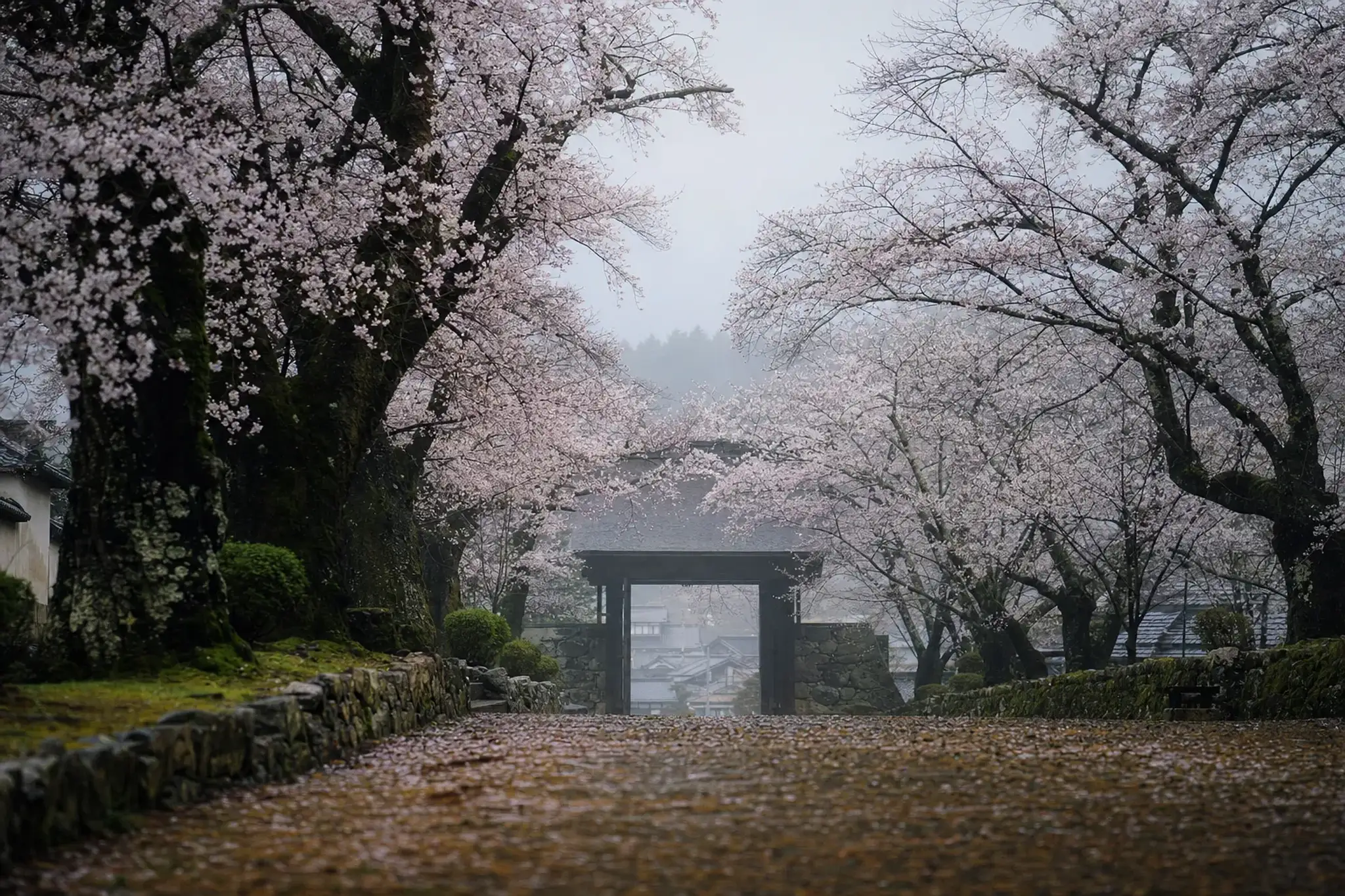
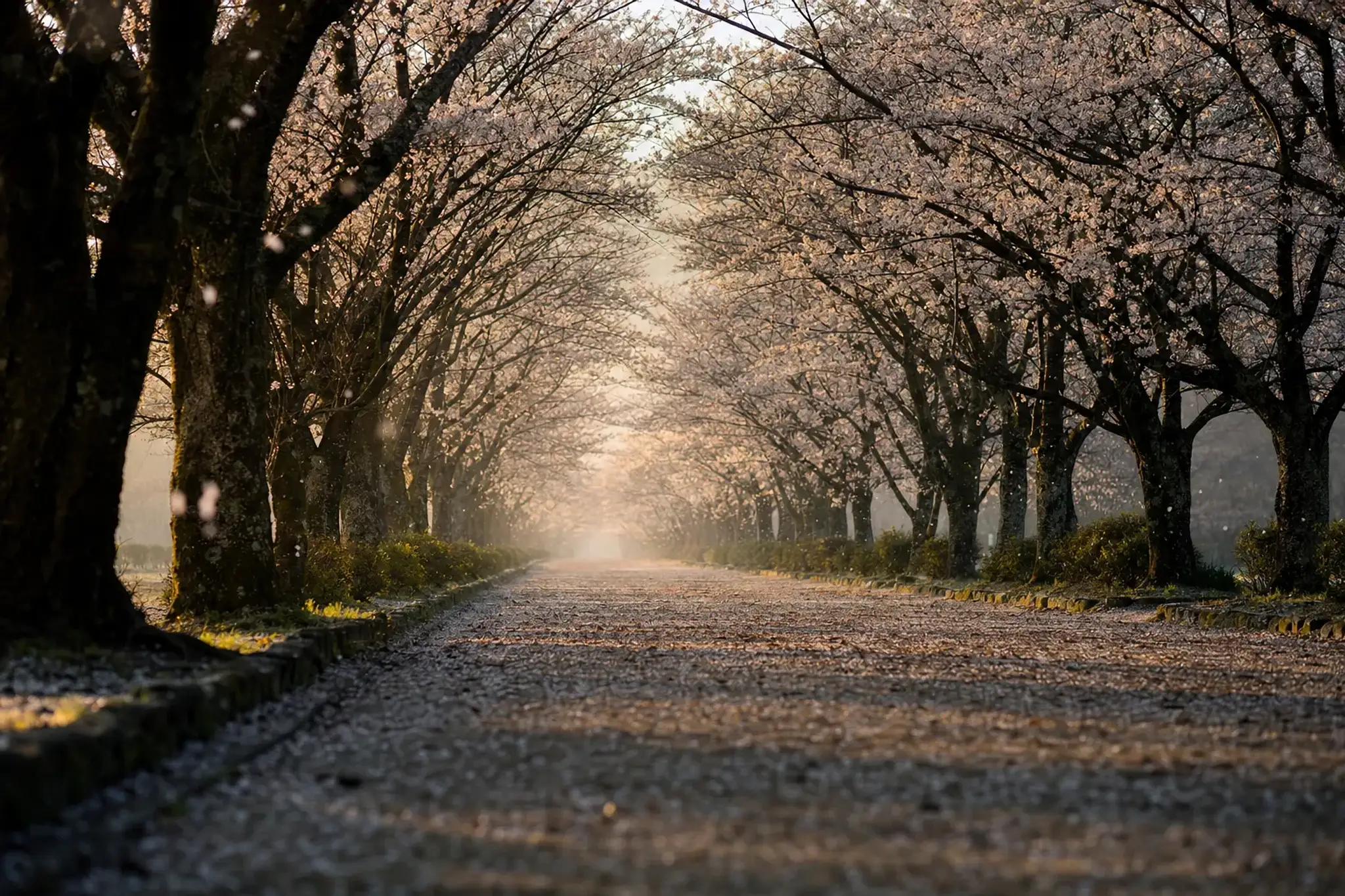
Sugi-no-baba Street runs through the town. Crossroad Fukuoka records it as lined with about 200 Someiyoshino cherry trees over 500 metres.
Akizuki Hachimangu stands on a hill south of the castle. Dairyoji Temple sits north of the castle and holds the graves of many samurai families. The Akizuki Museum is in the town as well.
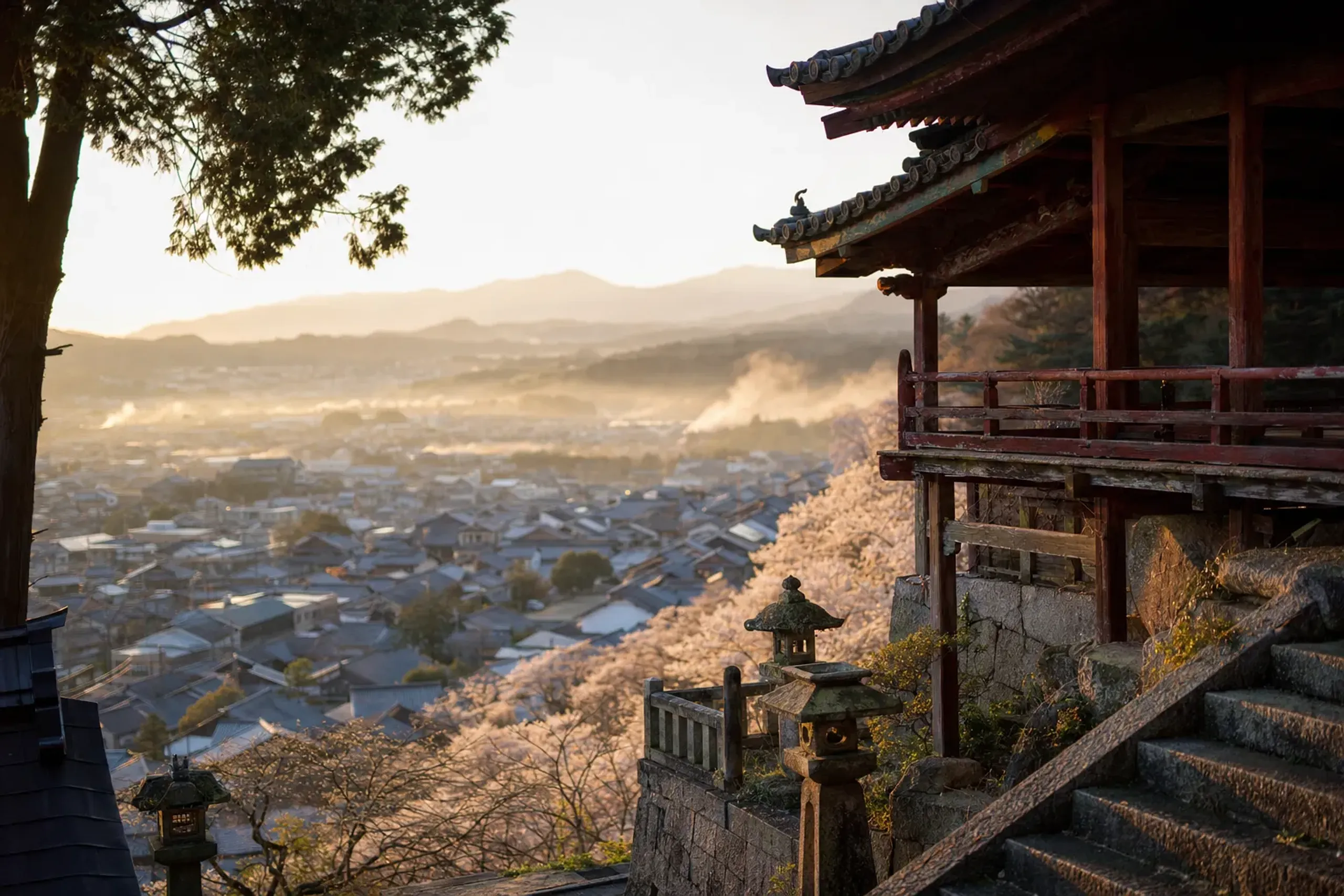
A guide can set them in sequence with the gates and the samurai streets.
How Do You Reach Akizuki From Hakata?
Akizuki is a little over an hour from Hakata by rail and bus, or about 45 minutes by car from Fukuoka city according to JNTO. The last leg is a bus from Amagi Station.
The rail route runs in stages. From Hakata Station, take the JR Kagoshima Main Line to Kiyama Station, about 25 minutes. Change to the local railway to Amagi Station, about 25 minutes. From Amagi, a bus bound for Akizuki takes about 20 minutes to the Kyodokan-mae or Museum-mae stop, then a short walk.
By car, it is about 15 to 20 minutes from the Amagi interchange on the Oita Expressway. The JRS concierge team confirms directly with the guest at time of arrangement the train and bus timings and which buildings are open.
| Leg | Approx. time |
|---|---|
| Hakata to Kiyama (JR Kagoshima Main Line) | About 25 minutes |
| Kiyama to Amagi (local railway) | About 25 minutes |
| Amagi to Akizuki (bus) | About 20 minutes, then a short walk |
| Fukuoka city to Akizuki (car) | About 45 minutes (JNTO) |
Akizuki In A Fukuoka Stay
Akizuki works as a day from Hakata. The concierge team at Japan Royal Service builds it into a Fukuoka stay, with the castle site, the gates and the samurai streets in a single run and the stone bridge at the start.
It pairs with the wider prefecture. For other outings from the city, see our round-up of Fukuoka and Kyushu day trips. In the city itself, Fukuoka Castle and Maizuru Park give a second castle setting, and the summer Hakata Gion Yamakasa festival marks the calendar in Hakata. Akizuki sits within the Kyushu region.
How Japan Royal Service Arranges Akizuki
Within the scope of this day, our team arranges a handful of practical parts. We plan the itinerary so Akizuki fits a Fukuoka stay as a day from Hakata.
- Planning: a tailor-made itinerary that sets Akizuki into your Fukuoka dates.
- Guiding: an English-speaking cultural interpreter guide for the castle site, the gates and the samurai streets, booked separately from the driver.
- Transfer: a vehicle from a partner company with an English-speaking driver between Fukuoka and Akizuki.
- Rail: tickets from Hakata, platform assistance, and luggage forwarding.
- Stays and meals: ryokan and restaurant booking in Fukuoka Prefecture, with dietary needs passed ahead.
- Weather: same-day re-planning when conditions change.
Driver and guide are separate roles. For anything that varies, the JRS concierge team confirms directly with the guest at time of arrangement.
Frequently Asked Questions
Where Is Akizuki And How Long Does It Take From Hakata?
Akizuki is a castle town in Asakura, Fukuoka Prefecture. It is a little over an hour from Hakata by rail and bus, or about 45 minutes by car from Fukuoka city, according to JNTO.
Who Ruled Akizuki?
The Akizuki clan held the town from 1203. In 1623 the Akizuki domain was established for Kuroda Nagaoki, third son of Kuroda Nagamasa, and the castle served as the Kuroda lords' residence until 1868.
What Is The Kuromon Gate?
The Kuromon, the Black Gate, was Akizuki Castle's main gate. In the early Meiji period it was moved to the approach of Suiyo Shrine, where about 20 maple trees surround it. It is a prefectural tangible cultural property.
How Do You Reach Akizuki From Hakata By Rail?
Take the JR Kagoshima Main Line from Hakata to Kiyama, about 25 minutes, change to the local railway to Amagi, about 25 minutes, then a bus to Akizuki, about 20 minutes, followed by a short walk.
Why Choose Japan Royal Service
Japan Royal Service plans Akizuki as part of a wider Fukuoka stay, with the parts confirmed and the day running in order. We arrange the transfer with an English-speaking driver, a separate cultural interpreter guide for the streets and gates, rail tickets from Hakata with platform help, and dining and stays within the prefecture with dietary needs noted ahead.
The aim is a day you can simply follow. The castle site, the Kuromon, the samurai streets and the stone bridge, set in a sequence that makes sense, with the timings and open buildings checked for your dates.
To begin planning, contact our team here.