In this guide
- 01What Daisetsuzan Is: A High Volcanic Country
- 02Does The Asahidake Ropeway Go To The Summit?
- 03When Do The Daisetsuzan Flowers Bloom?
- 04Higher: The Summit Climb
- 05The Kurodake Side From Sounkyo
- 06The Volcano, The Bears And The Weather
- 07Getting There From Asahikawa
- 08How Our Concierge Team Plans The Day
- 09Plan Your Daisetsuzan Summer
- 10Frequently Asked Questions
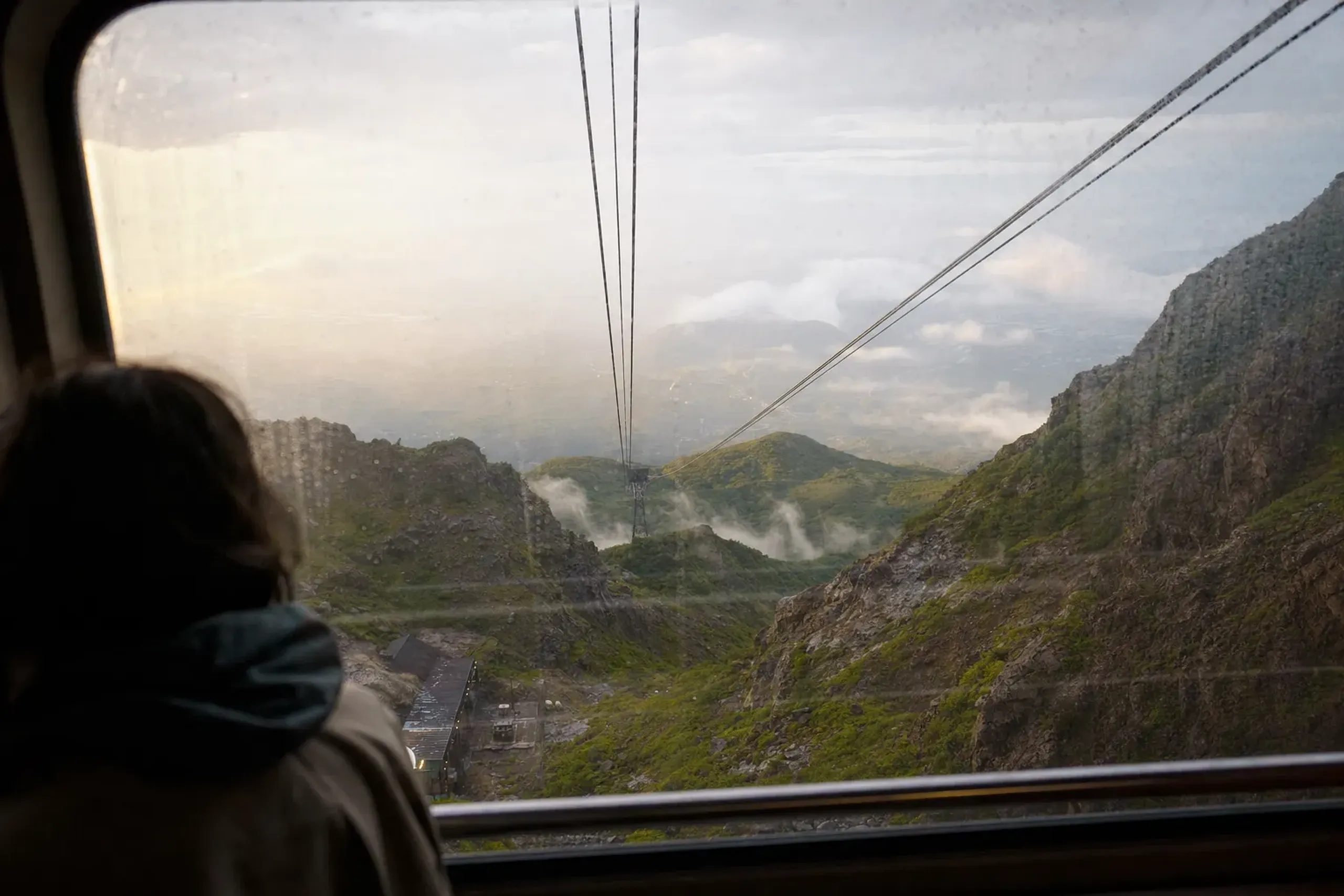
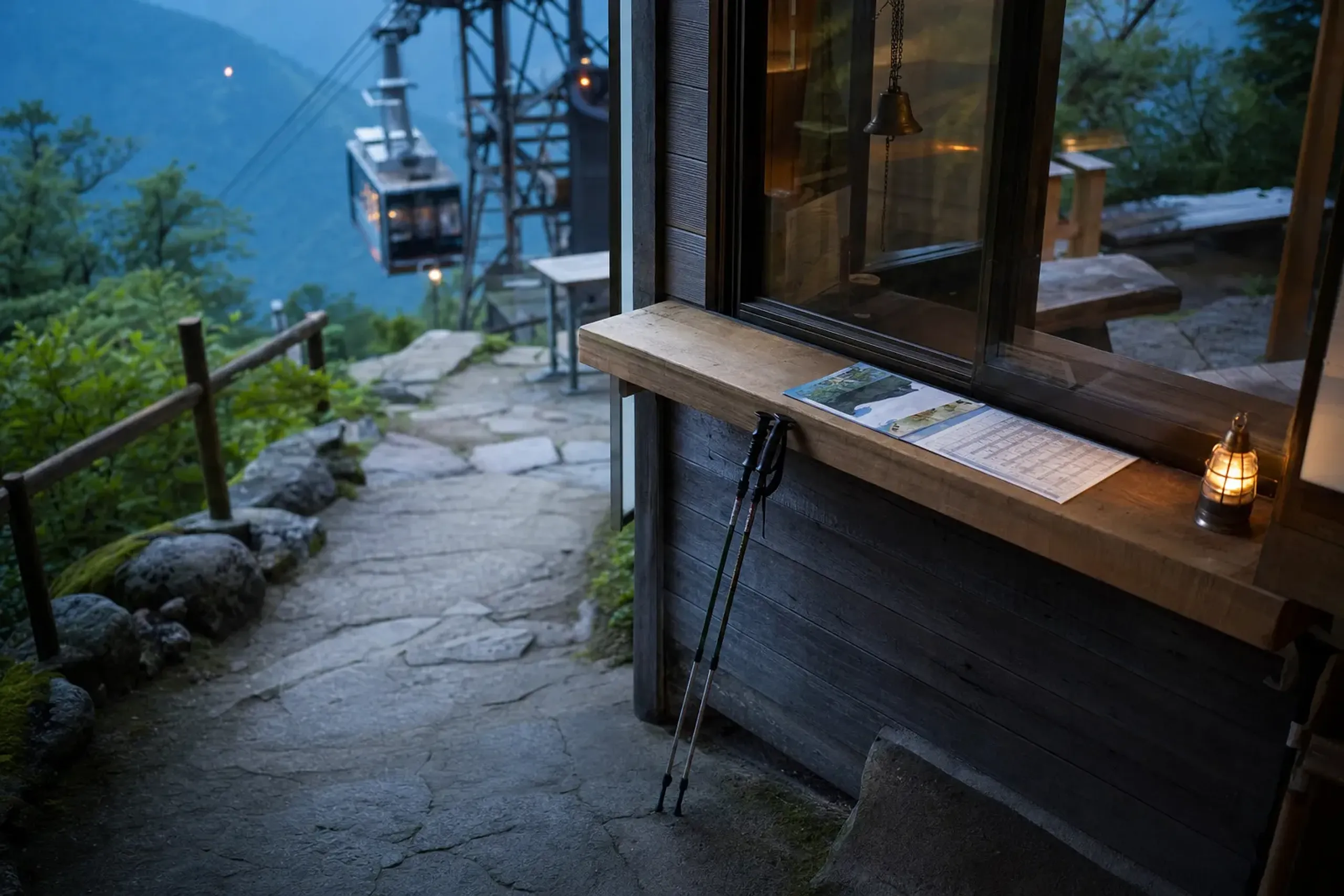
The first car climbs at about half past six. You stand at the foot station, around 1,100 metres, the forest still holding the cold of the night and your breath just visible on the air. Then the cabin lifts. The spruce drops away beneath you, and in roughly ten minutes you step out at Sugatami Station, close to 1,600 metres, into a thinner, sharper air. Steam stands over the ground ahead. Somewhere beyond the cloud, out of reach today, is the summit.
This is the honest picture of Daisetsuzan in summer. Not a quick trip to the top, but a high, exposed volcanic country where snow can linger into August, the flowers bloom in a short, fierce window, and bears walk the same trails you do. Our team at Japan Royal Service builds days here around the first car, the weather and the volcano notices — the quiet logistical reading that lets you meet a wild mountain on composed terms. The mountain itself stays public, plain and watchful. This guide tells the day in order.
What Daisetsuzan Is: A High Volcanic Country
Daisetsuzan is not a single peak. It is a vast roof of mountains in central Hokkaido — a plateau of volcanic ground, alpine marsh and short-season flowers. Daisetsuzan National Park covers 226,764 hectares and was designated on 4 December 1934. Asahidake, at 2,291 metres, is Hokkaido's highest peak.
Think of it as two sides reached by two ropeways. The Asahidake side, above Asahidake Onsen, faces the park's highest summit.
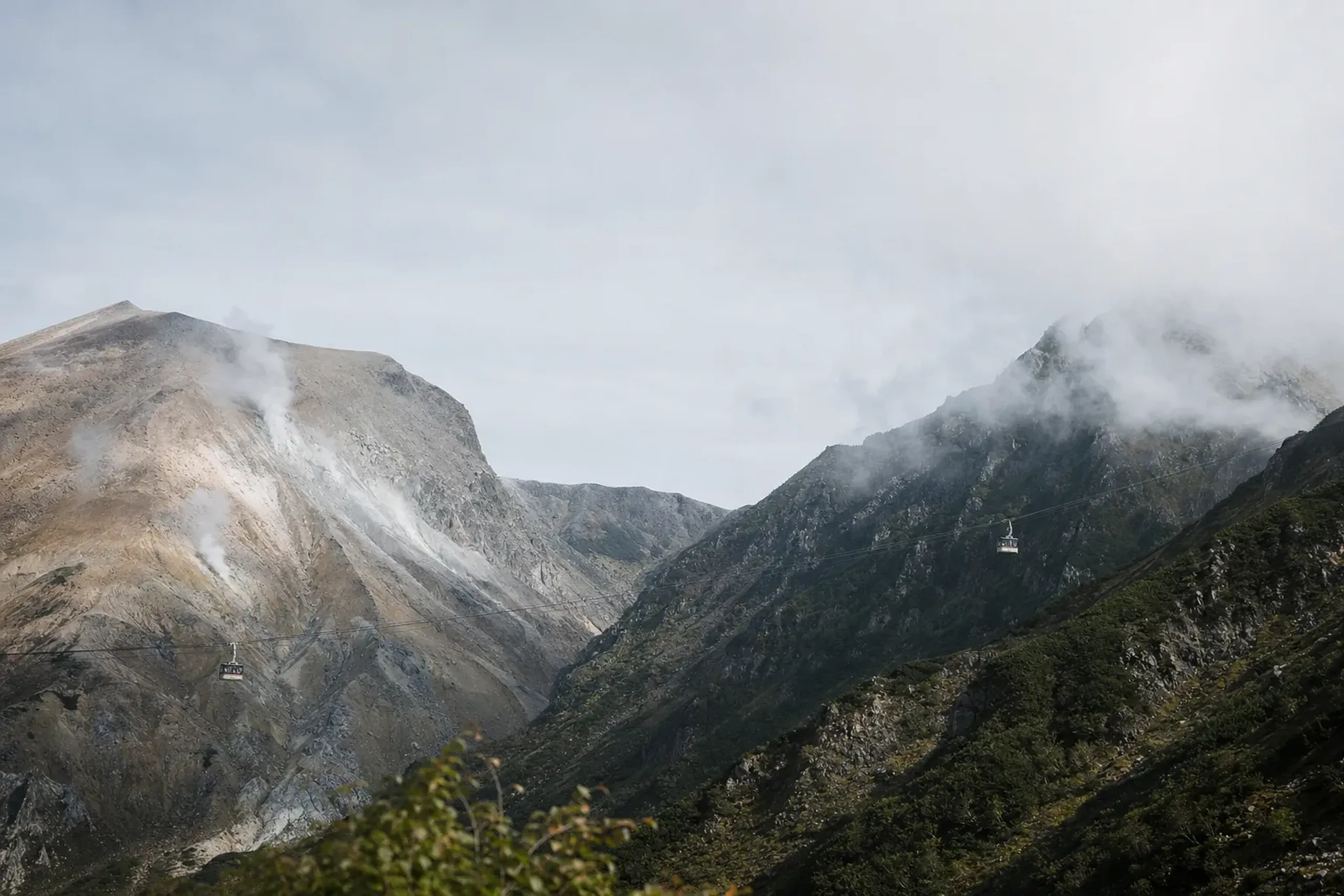
The Kurodake side, above Sounkyo Onsen, opens a different basin. Each ropeway lifts you partway. Neither takes you to a summit. That single fact shapes the whole day.
The appeal is the short summer itself. While Honshu sweats, this high country stays cool. Snow melts late, flowers rush to bloom, and the season is brief. Summer here runs roughly July into early September — a narrow window, and knowing which week within it to come is precisely the sort of seasonal reading our concierge team lives by.
Does The Asahidake Ropeway Go To The Summit?
No. The Asahidake Ropeway reaches Sugatami Station at about 1,600 metres, not the 2,291-metre summit, which is a long walk beyond. The ride takes about ten minutes one way.
From the foot station near 1,100 metres, the cabin rises through forest and out above the treeline. You arrive at Sugatami on the edge of a steaming volcanic basin. In summer the first car runs early in the morning, though dates and hours vary each year and service can be affected by weather. The operator shows live weather for Sugatami Station; the JRS concierge team confirms the season and hours directly with the guest at time of arrangement, and we check status the day before so your morning is never left to chance.
Key fact: The ropeway stops at about 1,600 m. The summit of Asahidake at 2,291 m is a separate, long climb. Confirm the exact first-car time and hours with the operator close to your date.
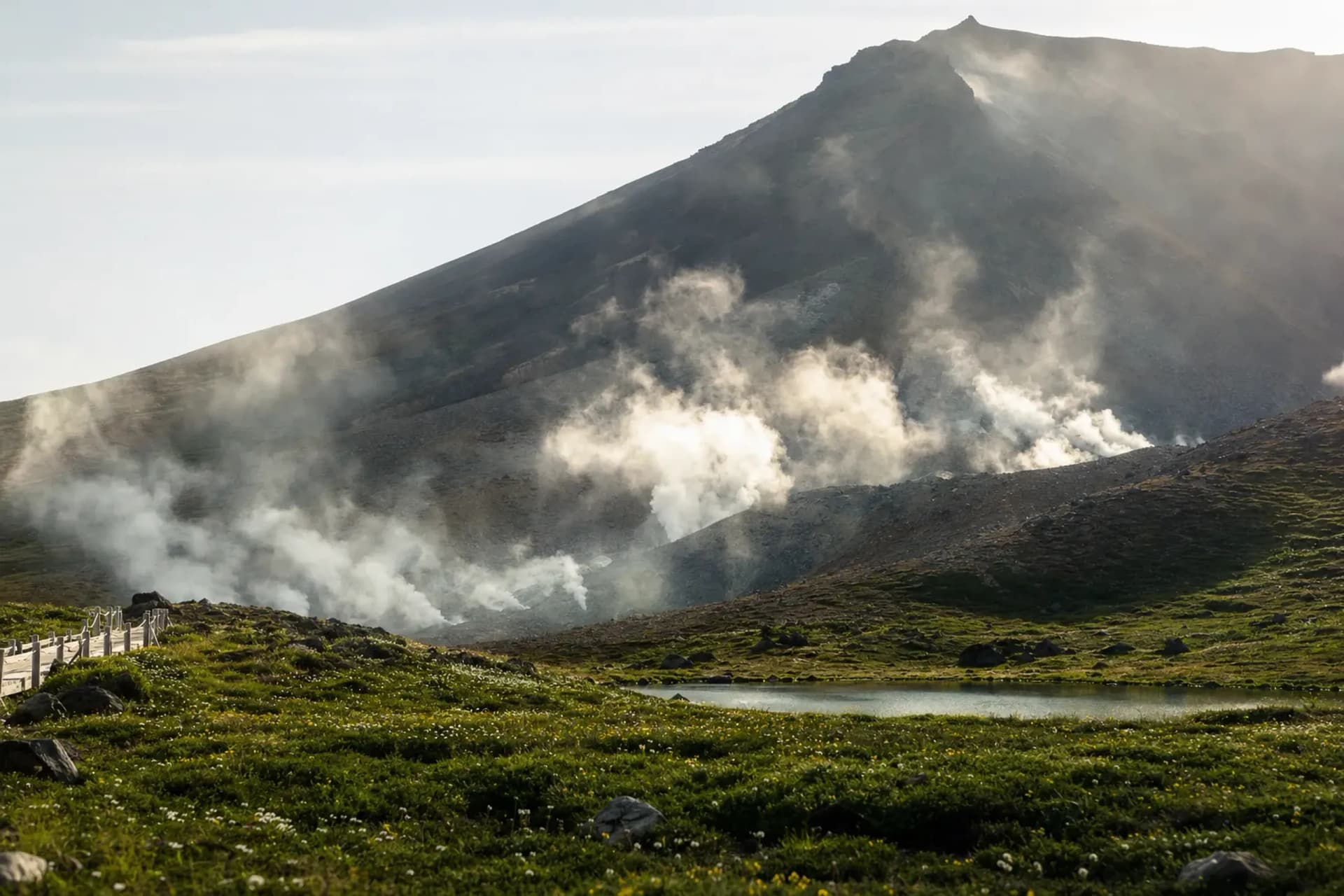
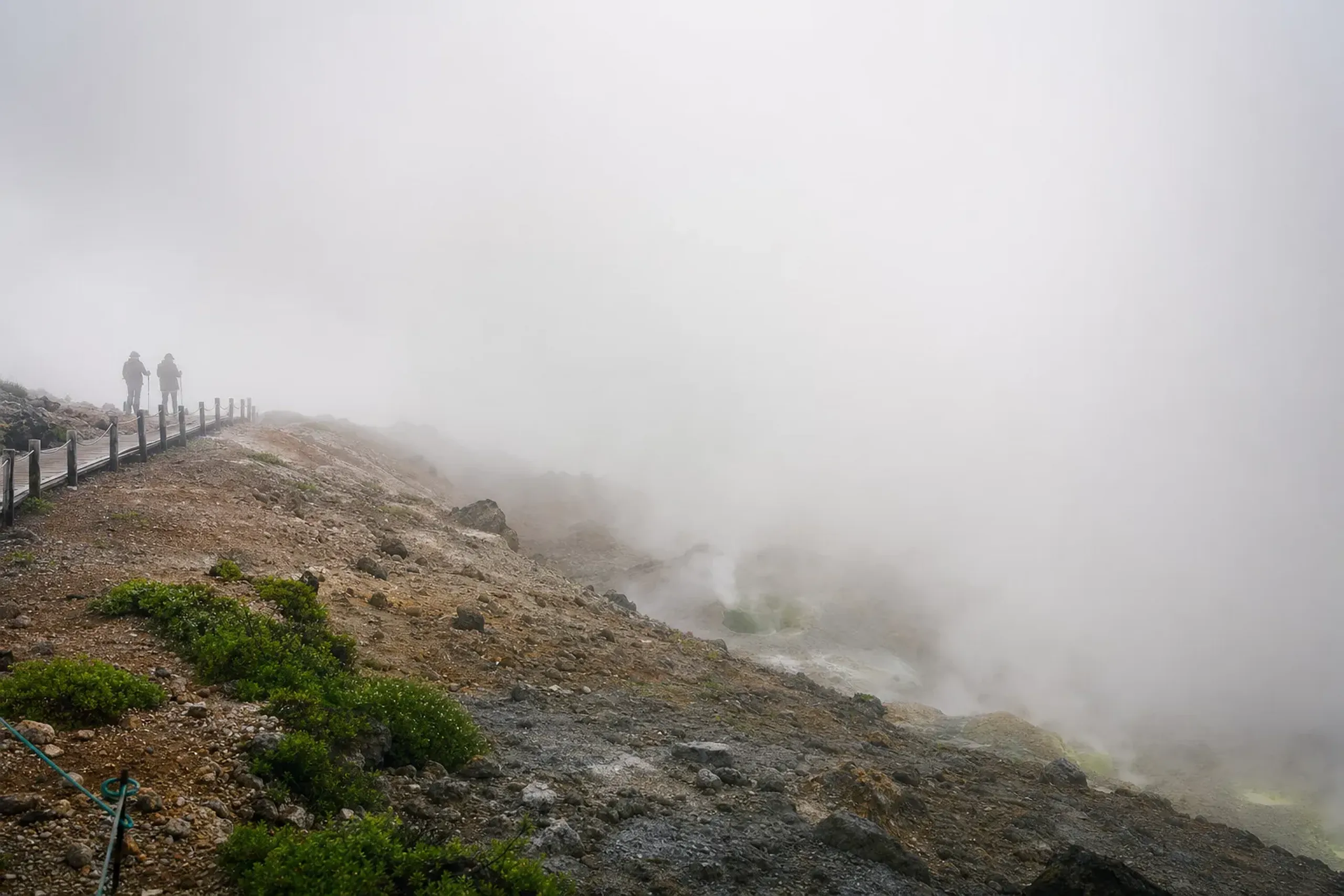
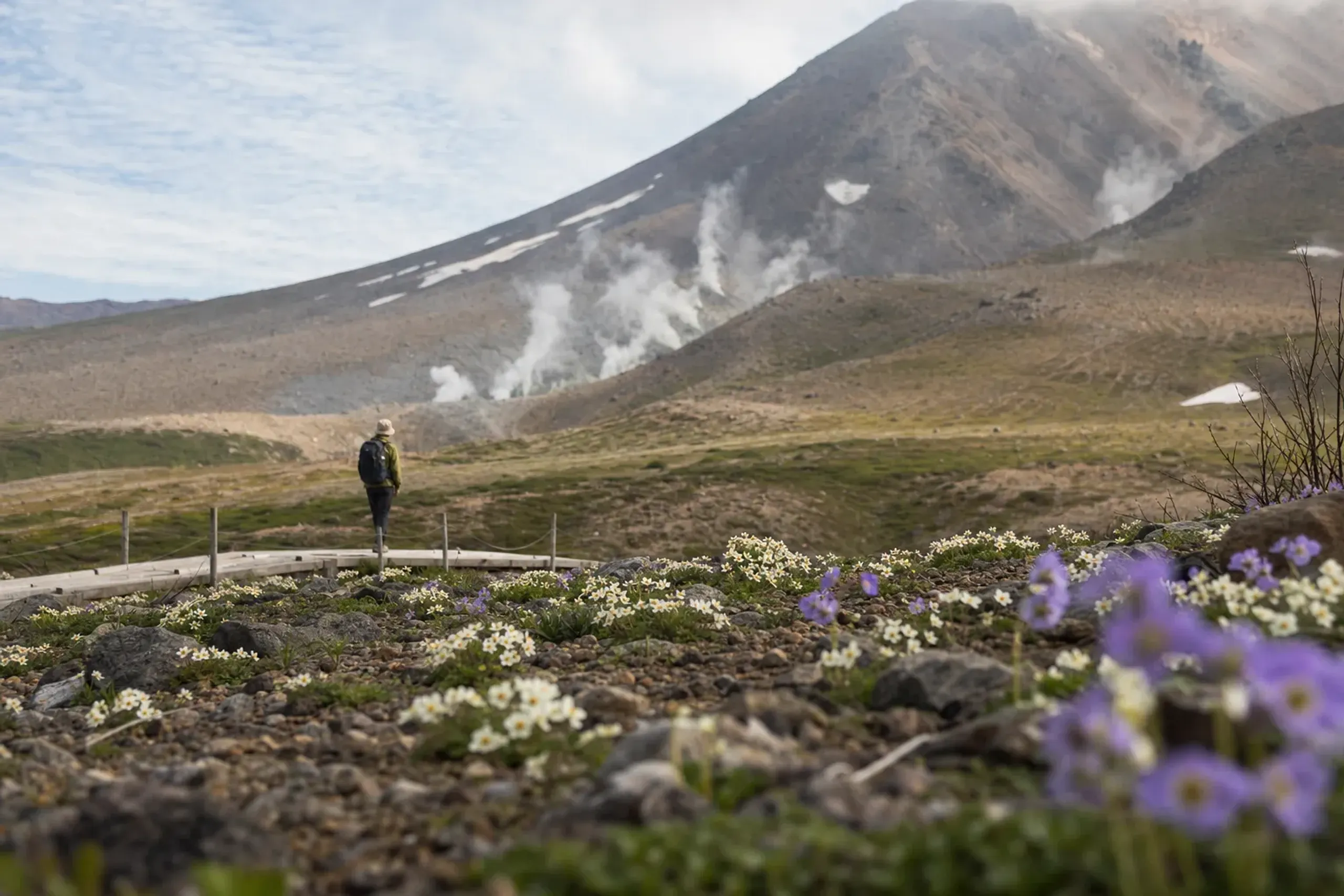
From Sugatami Station the gentle walk is the Sugatami loop. It runs about 1.7 kilometres and takes roughly one to one-and-a-half hours at an easy pace. The path threads past steam vents that release hot, sulfurous gas you can both see and smell. This ground is a Special Natural Monument. Local rules apply and can change; follow your guide's briefing, and the JRS concierge team confirms current conditions directly with the guest at time of arrangement. The reward is a ring of ponds and ridges, with the great scarred shoulder of Asahidake above and the plume of steam standing over the vents — a scene of raw, restrained beauty, all stone, water and silence.
When Do The Daisetsuzan Flowers Bloom?
The alpine flowers peak around late July, within a climbing season that runs late June to early October. In a cool year, snow can still lie beside the boardwalk well into summer.
The bloom is a race against the snow. June brings the first blossoms among the last white patches. July is the main flush, building to a peak around late July. By August it is the tail end. The ground here carries chingruma, ezo-no-tsugazakura, kibana-shakunage, ezo-oyama-rindo, hosoba-urupusou and ezo-kozakura, among others.
Each season runs differently. In late June the Sugatami plateau can still be snow-covered, with the yellow rhododendron only just opening, as the Asahidake Visitor Center field reports show.
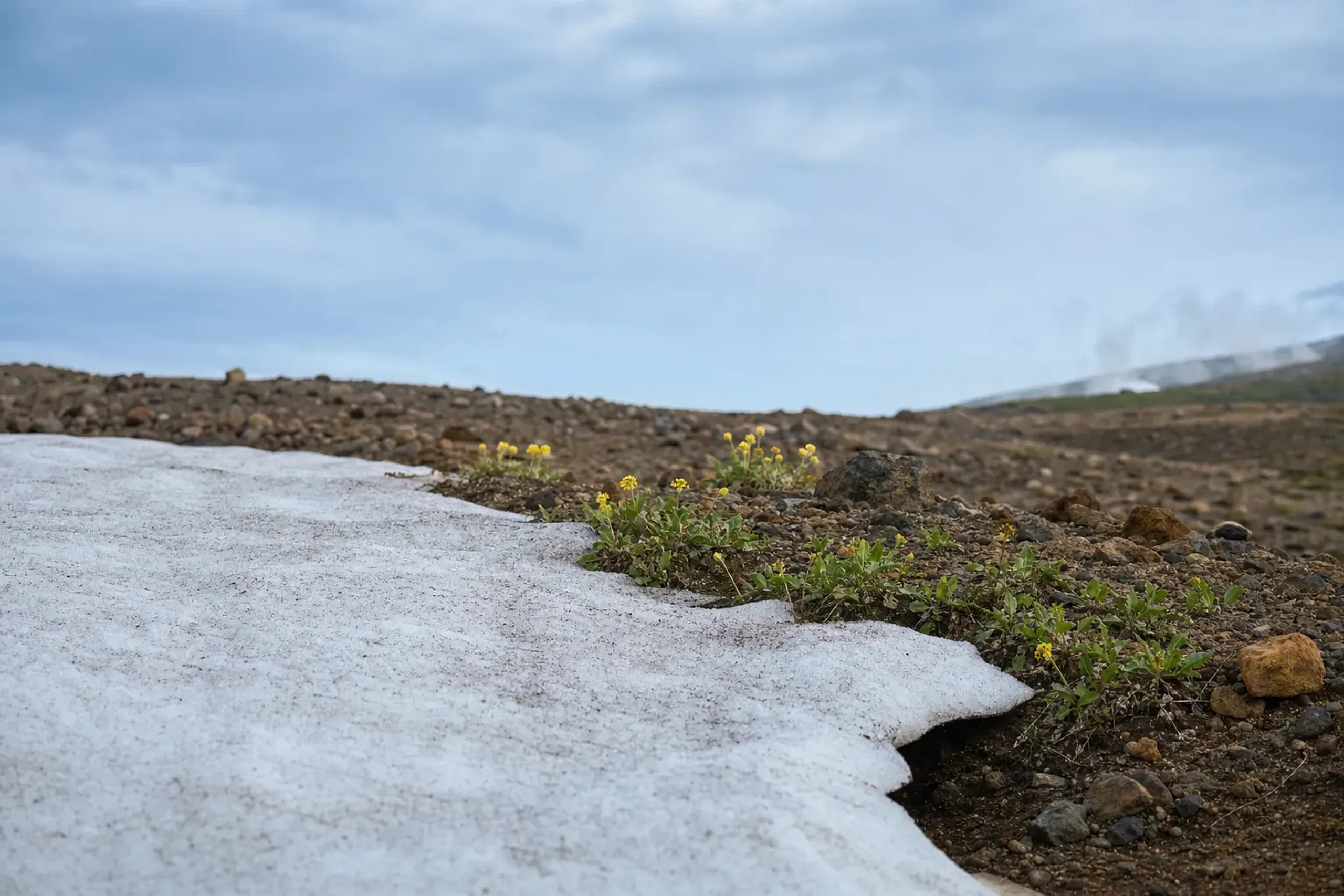
In early August, ezo-no-tsugazakura can be in full bloom on the Ura-Asahi side while chingruma goes to seed at Sugatami, and snow can still hold on the Ura-Asahi slopes. From late August a first hint of autumn colour creeps in. Bloom timing is never a guarantee. Our concierge team reads the Visitor Center's field reports before we set a date, because here a week either way changes everything — this is the practical face of shun, the Japanese sense of being somewhere at exactly the right moment.
Higher: The Summit Climb
Going above Sugatami is a different undertaking, and not for everyone. From Sugatami to the summit of Asahidake is, by JNTO's estimate, about two and a half hours up — a 10.5-kilometre round trip from the ropeway with roughly 690 metres of climbing, and around six hours in all.
This is open, exposed ground with loose volcanic footing and weather that turns fast. Hikers are asked to file a climbing plan with the Hokkaido Police. Local rules apply and can change; follow your guide's briefing, and the JRS concierge team confirms current conditions directly with the guest at time of arrangement. Most of the beauty is within reach of the gentle path.
The Kurodake Side From Sounkyo
The park's second face sits above Sounkyo Onsen, in the gorge country to the northeast.
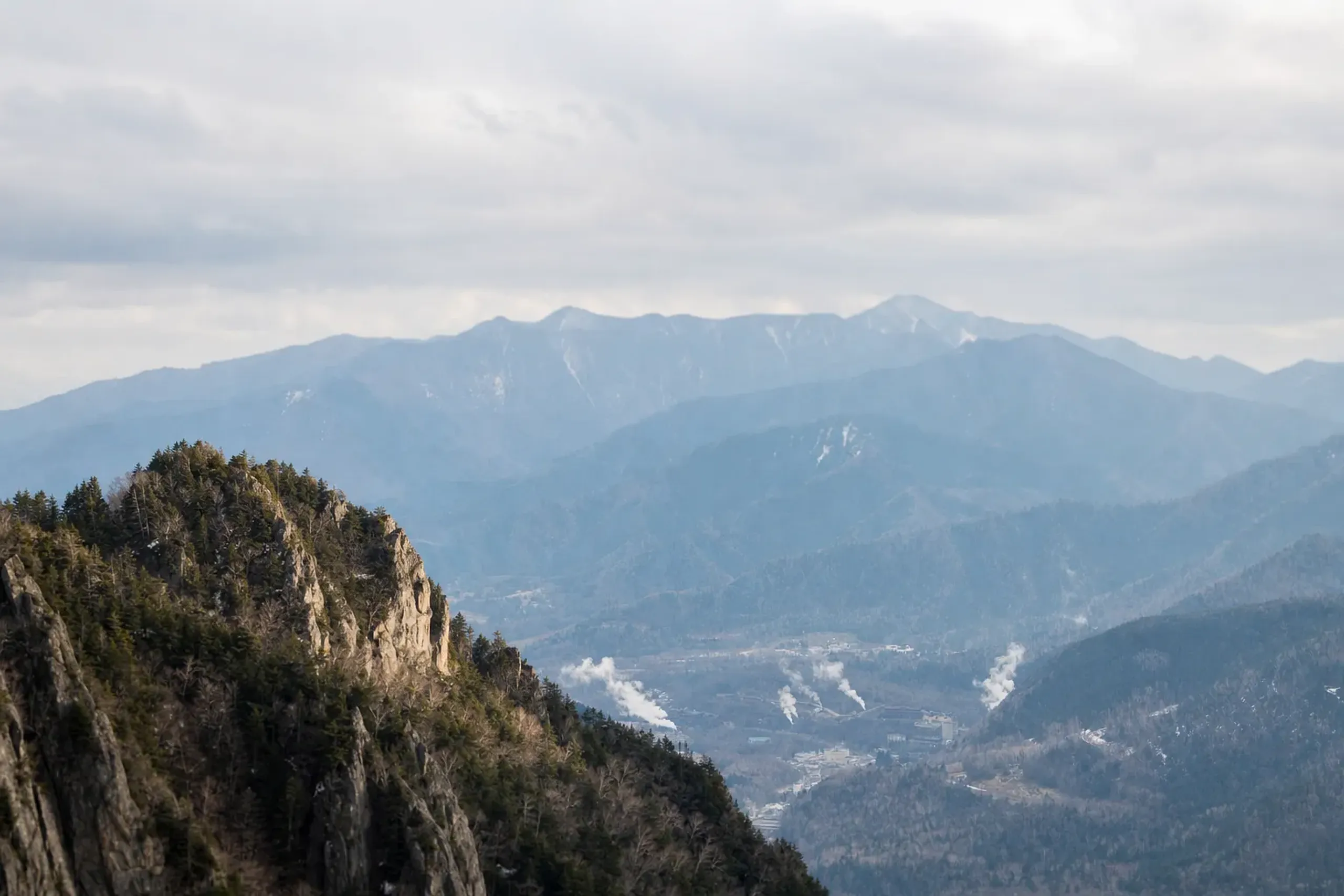
Kurodake is 1,984 metres. The Kurodake Ropeway rises from Sounkyo Onsen, at about 670 metres, to the 5th station at 1,300 metres in roughly seven minutes. From there a chairlift runs on to the 7th station, near 1,520 metres, in about fifteen minutes in summer.
The ropeway and chairlift run through the summer season, with dates and hours that shift year to year. The JRS concierge team confirms them directly with the guest at time of arrangement.
From the 7th station the summit of Kurodake takes roughly one to two hours, about one hour per the Sounkyo association. Sounkyo also gives access to the gorge, a corridor of columnar cliffs and waterfalls, and to the Sounkyo Visitor Center. The two sides make a natural pair across a few days, each with its own base and its own onsen — a quiet rhythm of mountain air by day and hot spring and ryokan hospitality by evening.
The Volcano, The Bears And The Weather
Treat this place plainly as what it is: an active volcano, with bears, under fast-moving mountain weather.
The Volcano
Asahidake (listed by JMA under Daisetsuzan) is an active volcano with a JMA alert level; Level 1, eruption forecast, means an active volcano with no sign of eruption.
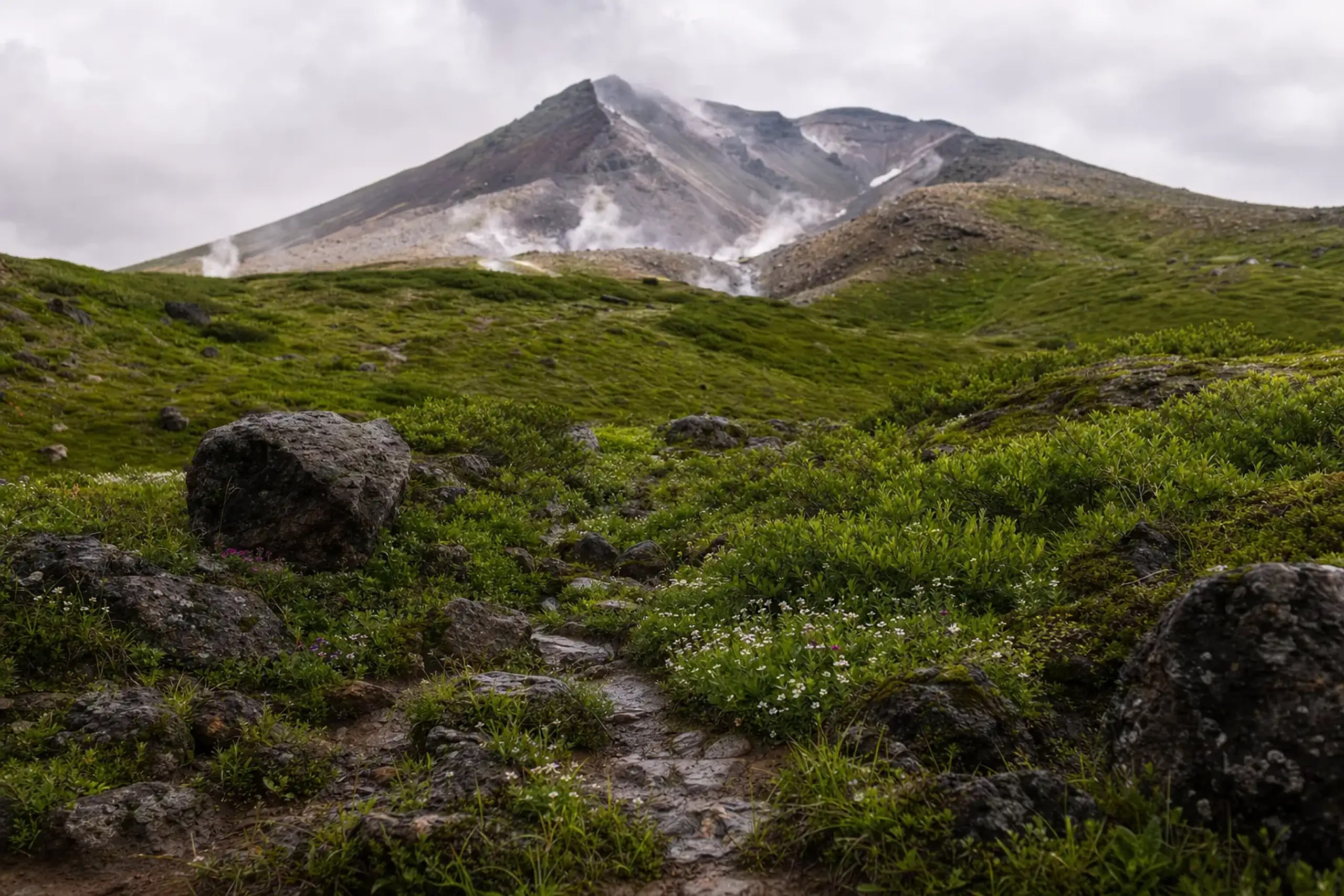
JMA warns that ash, fumarole gas or volcanic gas could be ejected suddenly near the crater. Check the JMA before you travel. Nearby Tokachidake has its own alert level; hikers there must follow local instructions.
Are There Bears On The Trails?
Yes. Brown bears live throughout Daisetsuzan and are seen from May to October on roads, trails and near the ropeway bases. The Visitor Center staff post current notices and know where bears have been seen that week. Local rules apply and can change; follow your guide's briefing, and the JRS concierge team confirms current conditions directly with the guest at time of arrangement.
The Weather
Mountain weather here changes quickly in any season. Snow can fall from mid-September, and Visitor Center field reports have called for windproof, warm clothing above the 9th station even in late June. Bring layers. For reference, Asahikawa's July mean is 20.7°C and August 21.2°C, but the mountain top is colder and far more exposed than the city below. One more practical note: there are no toilets on the mountain trail. The last flush toilet is at Sugatami Station, so bring a portable toilet if you plan to go higher.
Getting There From Asahikawa
Daisetsuzan sits just east of Asahikawa, and the city is the natural gateway. The public bus runs on a short timetable, which is why we arrange a private vehicle from a partner company, with an English-speaking driver, so the day turns on the first car and the weather, not the bus schedule.
| Route | Approx. time |
|---|---|
| Asahikawa Airport → Asahidake (route bus) | about 50–65 min |
| Asahikawa Station → Asahidake (bus) | about 100 min |
| Asahikawa Airport → Asahikawa Station | about 35 min |
| Asahikawa → Sounkyo (Dohoku Bus) | about 110 min |
| Sapporo → Asahikawa (JR limited express) | about 1 h 25 min |
For Sounkyo there is also a rail option: JR limited express to Kamikawa, about 45 minutes, then a bus of about 35 minutes. Bus timetables change through the year, so confirm the day's schedule close to travel. If Daisetsuzan is part of a wider Hokkaido summer, it pairs naturally with Sapporo's summer beer gardens, the Akan and Mashu caldera lakes and the Shiretoko Peninsula to the east — threads we can draw together into a single unhurried itinerary.
How Our Concierge Team Plans The Day
The mountain is public. What we do is shape a clean, unhurried day around it, with the risk read honestly in advance — a quiet, anticipatory care that leaves nothing for you to worry over.
- Planning. Our concierge team builds the day around the first car, the forecast, the JMA level and the bear notices, with rest on either side. The JRS concierge team confirms the ropeway status, the volcano level, the bear notices and the Visitor Center's field reports directly with the guest at time of arrangement.
- Guiding. We can provide an English-speaking cultural interpreter for the day, to share Hokkaido's history, the onsen tradition and the regional culture. This is a cultural guide, not a mountain guide on the trails above the ropeway.
- Private transfer. A vehicle from a partner company, with an English-speaking driver, moves you between Asahikawa, the airport or your hotel and the ropeway bases, so you are not held to the short public bus timetable.
- Accommodation. We coordinate a hotel or ryokan at Asahidake Onsen, Sounkyo or Asahikawa, booked early, since rooms at the onsen bases are limited in high summer.
We do not lead hikes or supply mountain guides.
The trails, the ropeways and the visitor centres belong to everyone. Our work is in the reading and the logistics around them. That is what makes a cold, bear-country mountain feel composed rather than fraught.
Plan Your Daisetsuzan Summer
A summer day on Daisetsuzan rewards those who arrive in the right week, on the right morning, fully prepared for a mountain that answers to no schedule but its own. Let us read the flowers, the weather and the volcano notices for you, and build the quiet logistics around them into a tailor-made itinerary through Hokkaido's high country.
Frequently Asked Questions
Does the Asahidake Ropeway reach the summit of the mountain?
No. The ropeway reaches Sugatami Station at about 1,600 metres in roughly ten minutes. The 2,291-metre summit of Asahidake is a long, exposed walk beyond, around six hours round trip by JNTO's estimate.
How long does the Sugatami loop take to walk?
The Sugatami loop is about 1.7 kilometres and takes roughly one to one-and-a-half hours at a gentle pace. It passes steam vents on a marked boardwalk, and the area is a Special Natural Monument.
When do the alpine flowers bloom at Daisetsuzan?
The flowers peak around late July, within a season from late June to early October. June mixes first blossoms with lingering snow; August is the tail end. Bloom timing varies each year, so check the Visitor Center's field reports.
Are there bears at Daisetsuzan, and is it safe to walk?
Yes, brown bears live here and are seen from May to October, including near the trails and ropeway base. Local rules apply and can change; follow your guide's briefing, and the JRS concierge team confirms current conditions directly with the guest at time of arrangement.
Can I visit Daisetsuzan without a car?
Yes. Route buses connect Asahikawa Airport and Station to Asahidake and Sounkyo, though on short timetables. A private transfer lets the day turn on the first ropeway car and the weather rather than the bus schedule.
To begin planning, contact our team here.