In this guide
- 01Kamakura Matsuri Week At A Glance: Two Sundays, Two Plans
- 02When Is Kamakura Matsuri, And What Days Matter Most For Visitors?
- 03The Setting: Wakamiya-oji, Dankazura, And The Quiet Geometry Of The Shrine Grounds
- 04The First Sunday: Procession On Wakamiya-oji And Shizuka No Mai
- 05The Second Sunday: Yabusame At Tsurugaoka Hachimangu (April)
- 06What Has Changed Recently, And Why It Should Change Your Plan
- 07How To Plan A Kamakura Matsuri Day Trip From Tokyo Or Yokohama
- 08How Our Concierge Team Plans Kamakura Matsuri Without Overpromising
- 09A Note On Autumn Yabusame (September 16)
- 10Frequently Asked Questions
- 11Plan Your Kamakura Matsuri With Us
You arrive early, before the first shout, before the first drumbeat. Wakamiya-oji is still a long, straight breath between the sea and the shrine. People speak in half-voices, as if the morning itself has asked for quiet.
Then you hear it. Hooves, fast and dry. The pause before an arrow leaves the bowstring feels longer than it is, as if the crowd has agreed to hold its lungs for a single shared moment.
Kamakura Matsuri is easy to misunderstand because it looks like one day on a calendar. It is a week. Two Sundays. And two very different kinds of watching.
Our team at Japan Royal Service plans this week the way you would plan a performance with limited sightlines: with honesty, with timing, and with a quiet respect for what is public and what is never promised. For discerning travelers, the appeal here is not spectacle for its own sake — it is the discipline of seasonality, the feel of an imperial-class setting, and the discretion to move through a crowded festival week without ever feeling part of the crowd.
Kamakura Matsuri Week At A Glance: Two Sundays, Two Plans
Kamakura Matsuri runs from the second Sunday to the third Sunday of April and has continued since 1959. Think of it as a city-wide spring week centered on Tsurugaoka Hachimangu, with set pieces that unfold on different days.
Use the 2026 festival as a worked example of how the week can be structured: April 12–19 (the 68th edition). The organiser listed the procession on April 12, tea ceremonies on April 18 and 19, and a yabusame event on April 19 planned for 13:00 as a separate shrine event held during Matsuri week. Dates and formats are confirmed closer to the festival each year.
One Sunday is about the avenue and its pageantry. The other is about the course inside the shrine grounds, where mounted archers ride a track of about 250 meters and shoot three targets in a single, breathless pass.
- First Sunday (example: April 12, 2026): Procession on Wakamiya-oji and Shizuka no Mai at the shrine.
- Second Sunday (example: April 19, 2026): Yabusame (mounted archery) held as a shrine event during the Matsuri period.
Key fact: The procession uses Wakamiya-oji, but the April yabusame course is inside Tsurugaoka Hachimangu’s grounds and crosses the main approach at a right angle near the center.
When Is Kamakura Matsuri, And What Days Matter Most For Visitors?
Kamakura Matsuri runs from the second to the third Sunday of April, and most visitors choose either the first Sunday for the procession and Shizuka no Mai or the second Sunday for the April yabusame event.
This matters because your day plan changes completely depending on which Sunday you target.
The first Sunday is a moving spectacle along roughly 1 km of Wakamiya-oji (example: planned from 10:00 in 2026), with traffic control and shifting crowd edges. The second Sunday is a fixed viewing situation inside the shrine precincts, with limited general viewing space and a premium on knowing exactly where to stand.
If you only have one day, decide what you want to remember. Flowing costumes passing close enough to hear sandals on pavement. Or a rider’s concentration as the horse’s stride stays steady beneath the drawn bow.
The Setting: Wakamiya-oji, Dankazura, And The Quiet Geometry Of The Shrine Grounds
Wakamiya-oji is the ceremonial axis. It links the sea to Tsurugaoka Hachimangu, and during the festival it becomes a corridor where the whole city’s attention gathers and narrows.
Along the way you pass the Dankazura, a raised walkway said, by local tradition, to have been built by Minamoto no Yoritomo in 1182 for his wife’s safe childbirth. It runs about 450 meters, lined with cherry trees that often bloom from late March to mid-April. No promises. Spring does what it wants, and part of the pleasure is accepting that.
Inside the shrine grounds, the feeling changes entirely. The Genpei ponds lie within the precincts, and the yabusame track sits in relation to the main approach in a way first-timers often misread: the course runs across it, not along it.
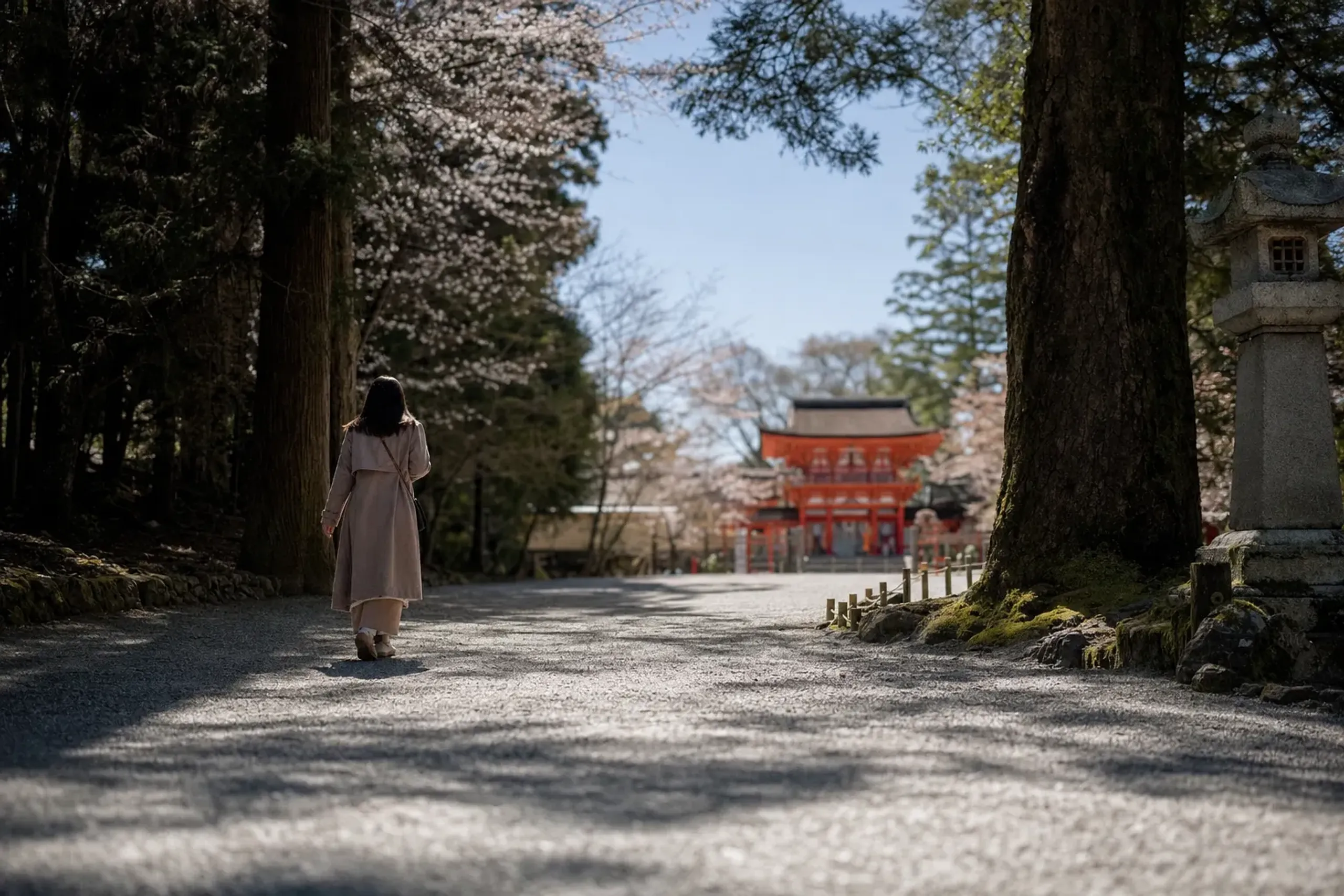
There is a wabi-sabi restraint to this inner world — moss, stone, and water doing the work that gold leaf would do elsewhere — and it rewards the traveler who slows down to read it.
The First Sunday: Procession On Wakamiya-oji And Shizuka No Mai
The first Sunday is when Kamakura shows you its outward face. Costumes, intervals, the soft discipline of a route held open by ropes and staff. It is also the easier day to “get” without prior study.
In 2026 as an example, the organiser listed a procession planned from 10:00, running about 1 km from Geba toward the shrine, with about 1,000 participants. Traffic on Wakamiya-oji was controlled from 10:00 to 12:00. Expect similar controls in future years, but verify the details close to the date.
Later the same day, Shizuka no Mai is performed at the shrine’s dance hall (example: 15:00 in 2026). Shizuka Gozen is said, by tradition, to have danced for Minamoto no Yoritomo. Watching it live feels less like a story being told and more like a space being held — a stillness you are briefly invited inside.
How To Watch Respectfully On Procession Day
Kamakura’s official visitor rules are straightforward. Follow them. People do notice, and the quiet courtesy you show becomes part of the day’s atmosphere.
- Expect roped-off zones and staff instructions along the route.
- Do not sit on planting beds and do not spread leisure sheets.
- Carry your litter out with you.
- Use public transport where possible; road access is restricted during key hours.
If you plan to photograph, keep your presence small.
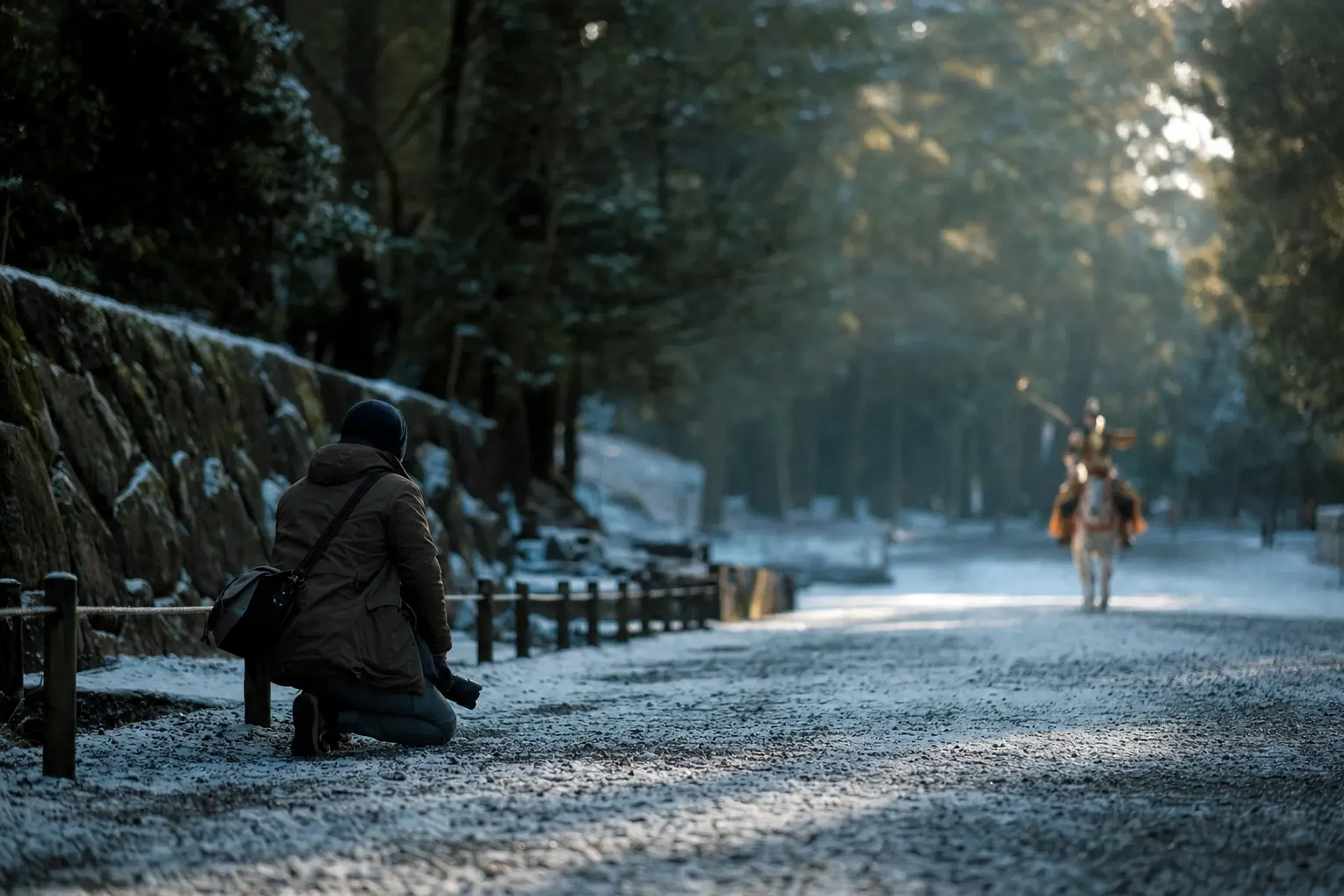
Step back, not forward. A good frame is never worth breaking the line.
The Second Sunday: Yabusame At Tsurugaoka Hachimangu (April)
The April yabusame at Tsurugaoka Hachimangu is held on a separate date during Kamakura Matsuri week, typically the final day, and general viewing is limited and first-come.
In the 2026 programme example, the organiser listed yabusame on April 19 with a planned start time of 13:00, described as a shrine event held during Matsuri week. Treat that structure as a planning model, not a guarantee: each year’s date, format, and viewing guidance are confirmed closer to the festival.
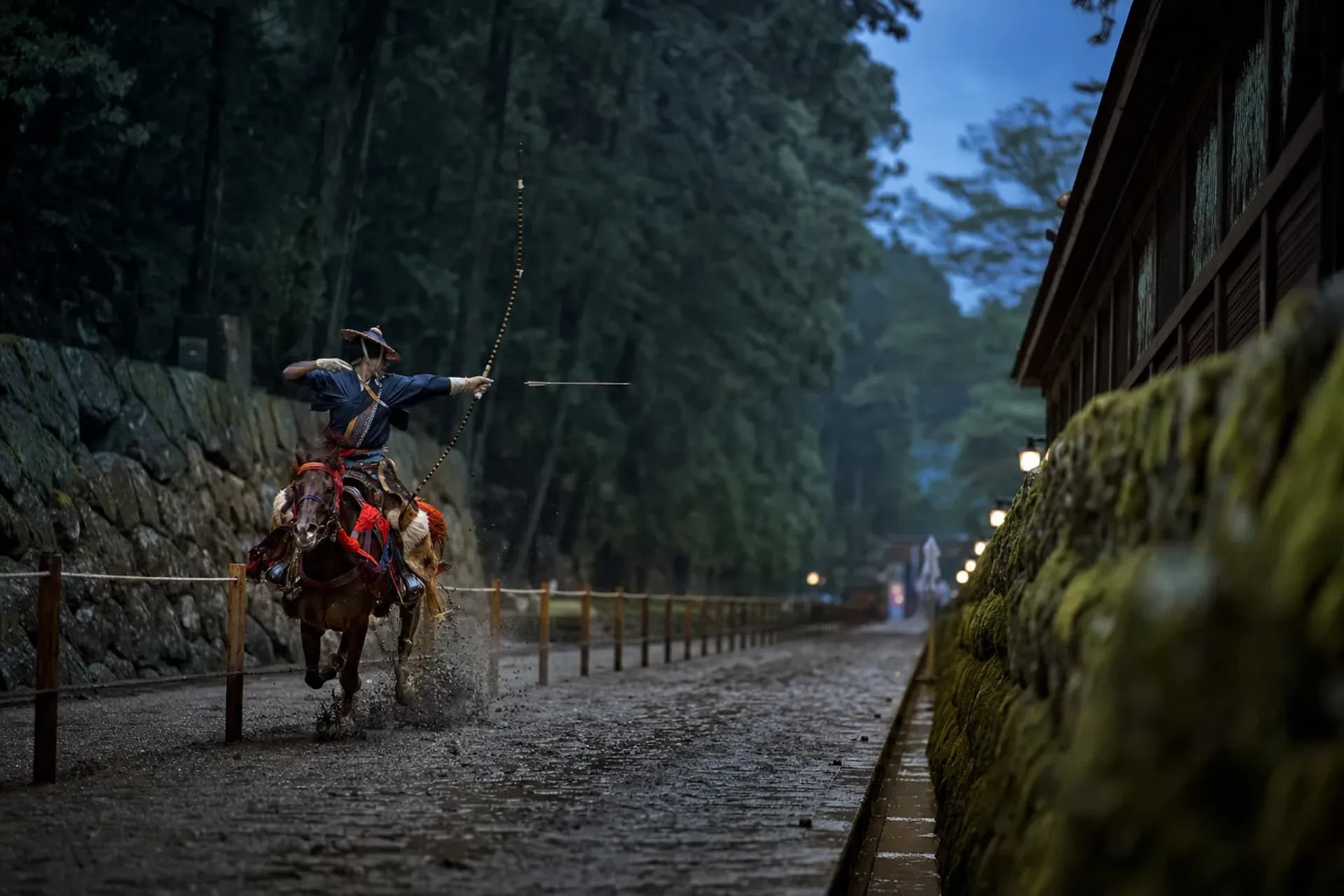
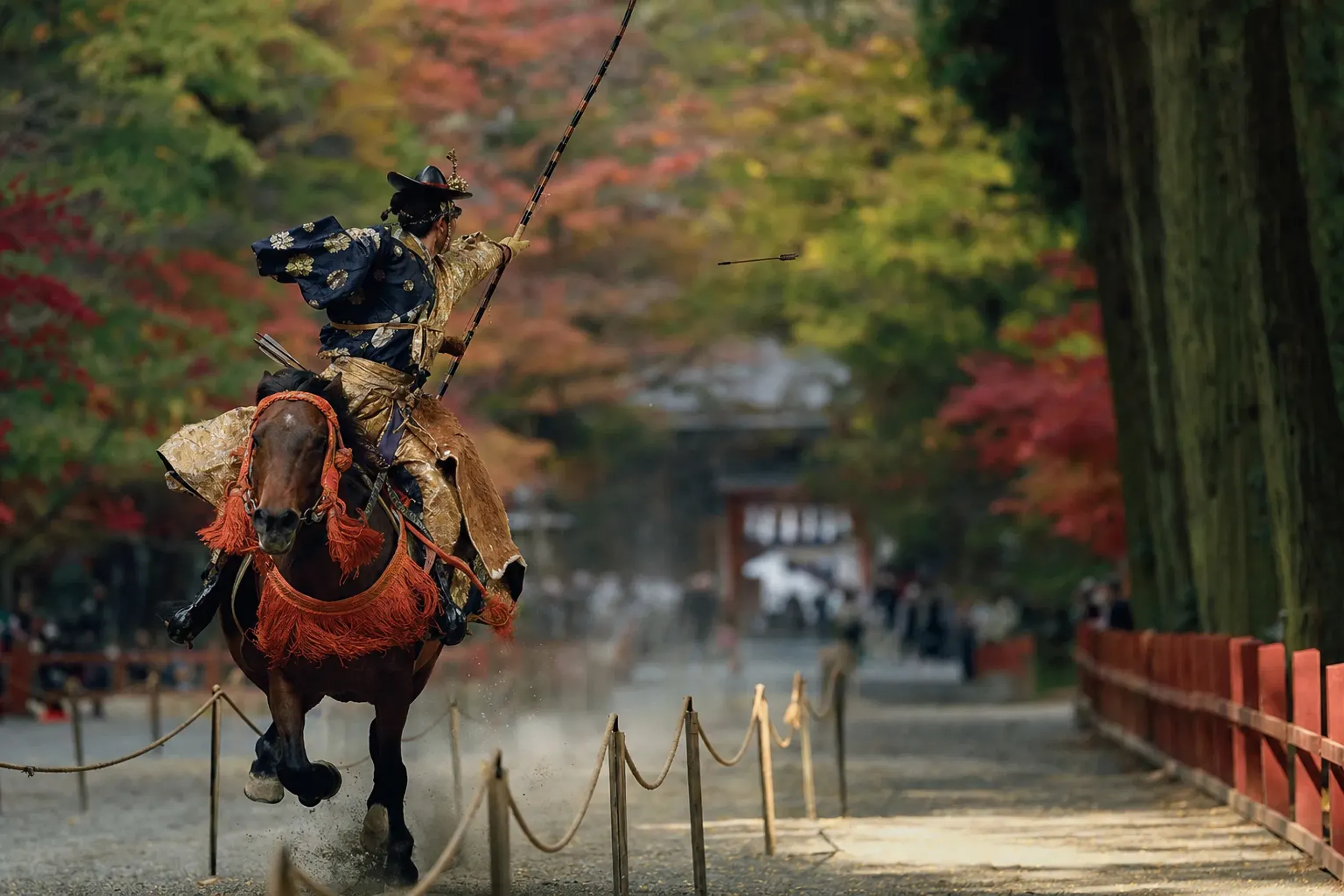
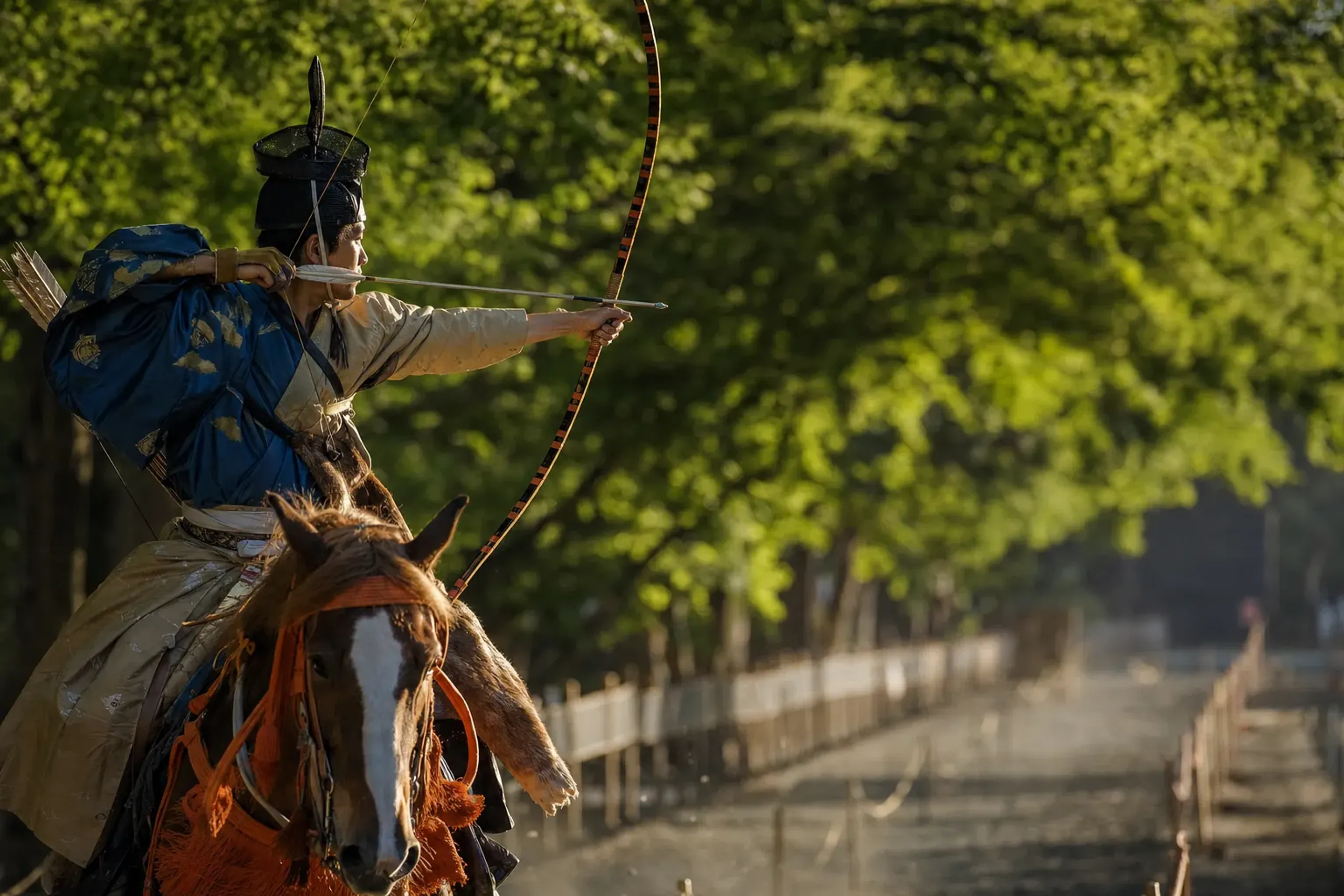
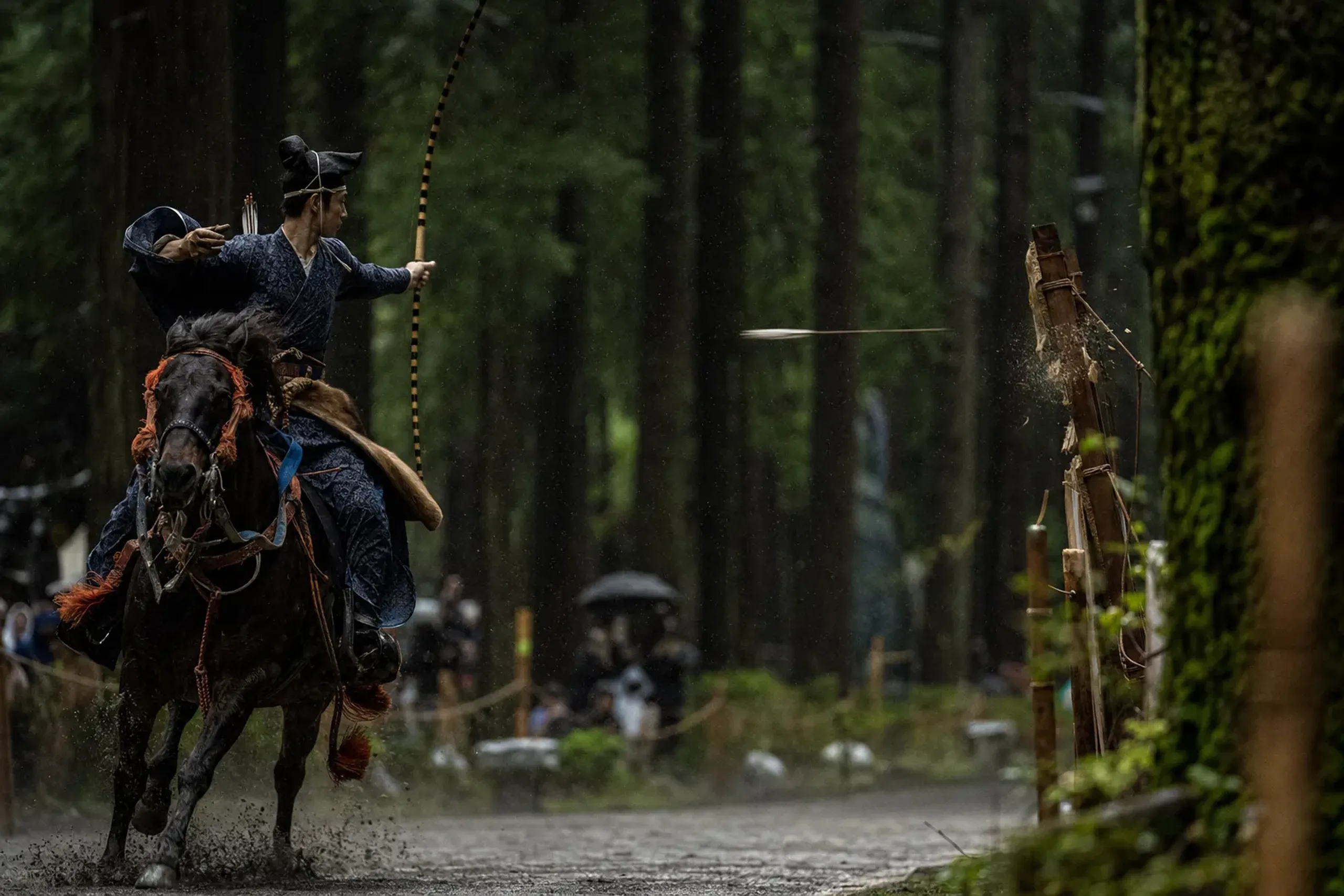
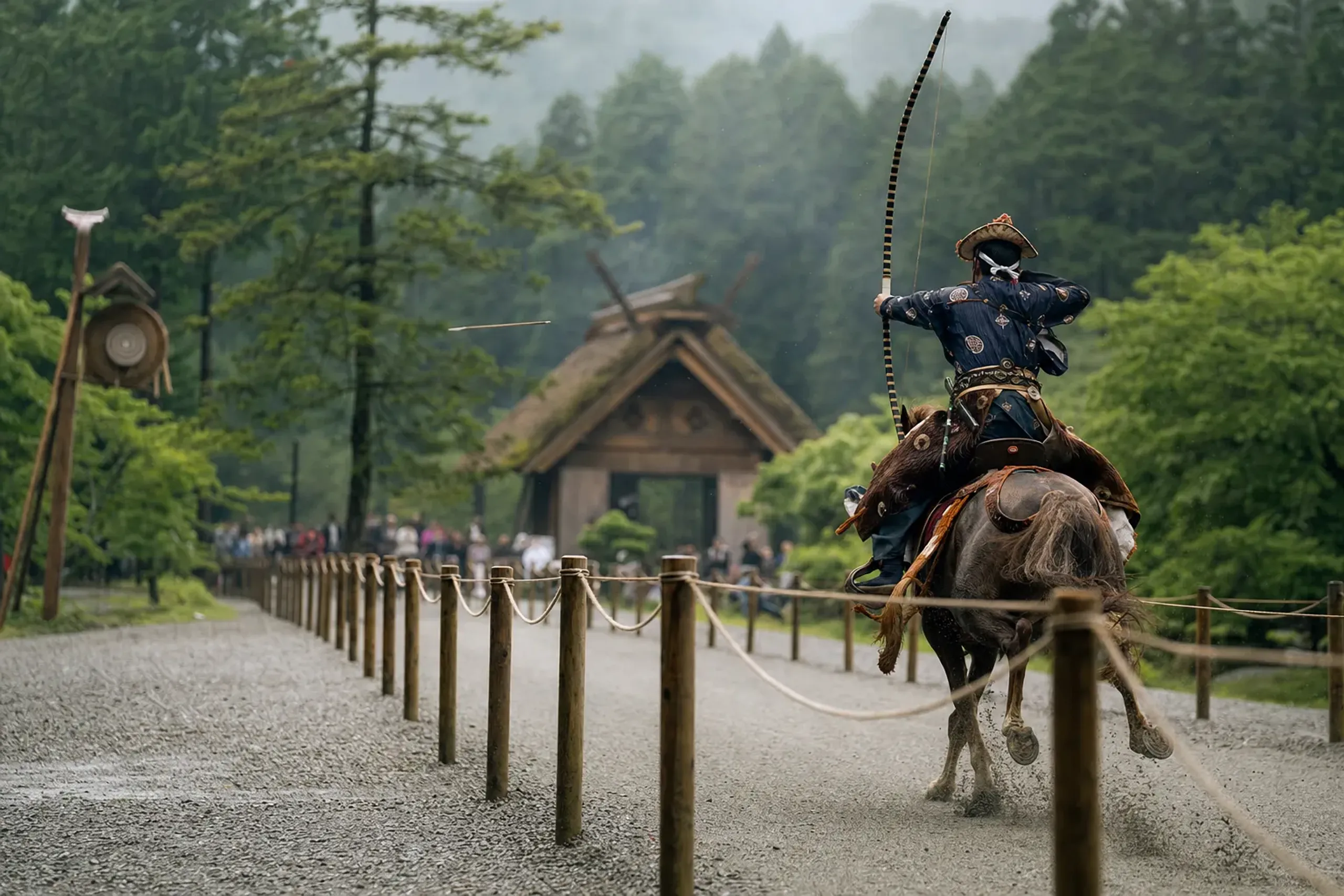
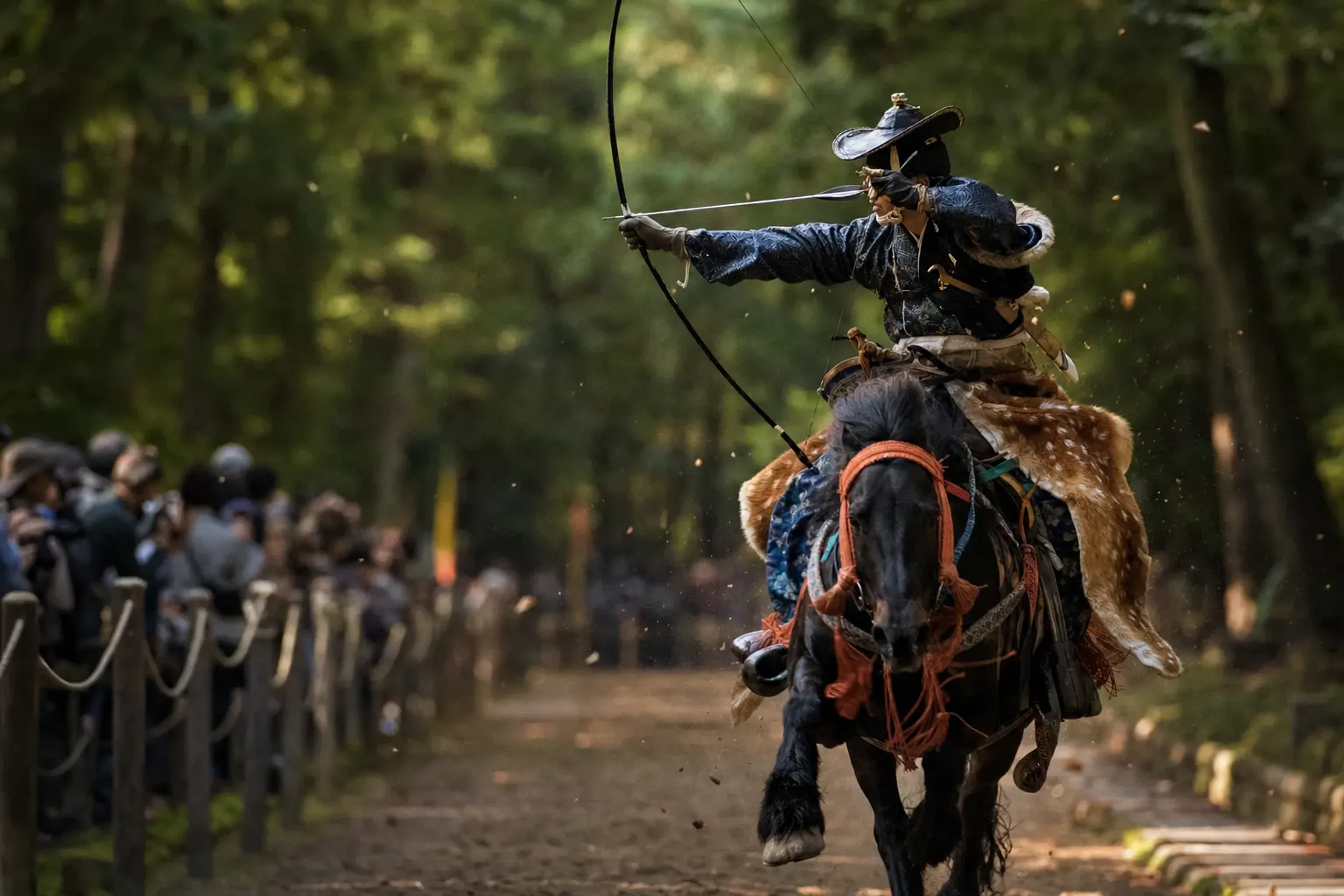
The track is about 250 meters long inside the shrine grounds. Riders gallop the course and shoot three targets. The moment that stays with you is not only the speed. It is the steadiness — the composure of horse and archer under a pressure that has barely changed in eight centuries.
Where The Yabusame Takes Place (And Why It’s Easy To Get Wrong)
Many first-time visitors assume the archery happens on the grand avenue because the procession does. That is the classic mistake.
The April yabusame course is inside the Tsurugaoka Hachimangu precincts.
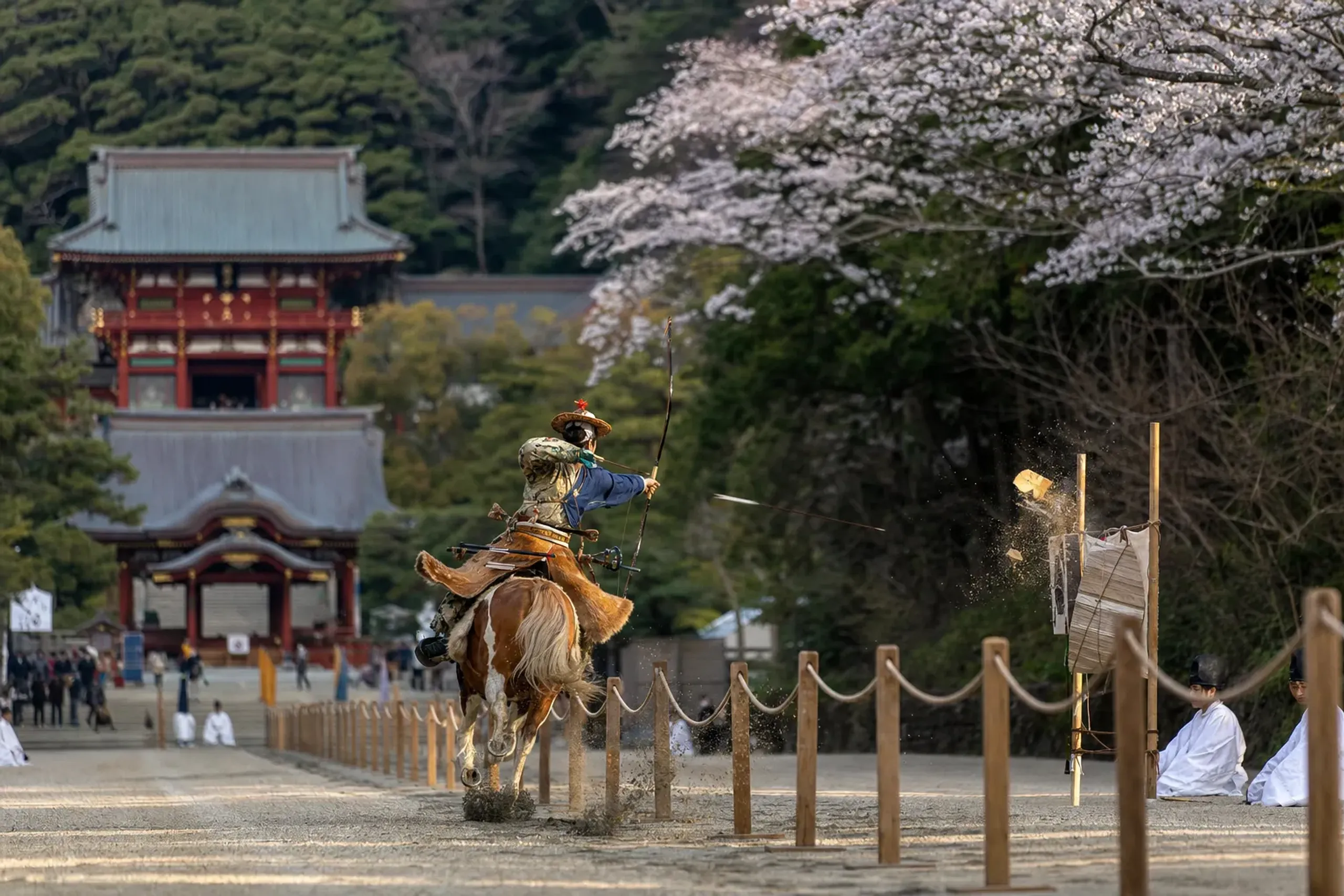
According to site signage referenced in official materials, the course crosses the main approach at a right angle near the center of the grounds. Your goal is to orient yourself early, before the densest crowd settles.
What You Will Actually See
Yabusame is not a show in the modern sense. It is ceremony under pressure — a ritual performed by archers who have trained for years within a living lineage.
- Riders in ceremonial costume.
- A controlled gallop down the straight course.
- Three targets, struck in sequence as the horse runs through.
The tradition is often traced to 1187, when Minamoto no Yoritomo is said to have ordered yabusame. Hold that as tradition, and let the present-day discipline speak for itself.
What Has Changed Recently, And Why It Should Change Your Plan
The practical reality of watching the April yabusame has tightened. That is the part many online guides glide past.
Based on recent reporting and visitor patterns (and without an official April viewing-fee rule found), several shifts matter to planning: the April yabusame was not held in 2024; paid wristband seating sold in 2023 has ended; and front seats have been allocated to members of the shrine’s supporters’ association, with limited general viewing on a first-come basis.
There is also variation in who performs. In recent years the school performing in spring has been Ogasawara-ryu, while earlier years saw Takeda-ryu.
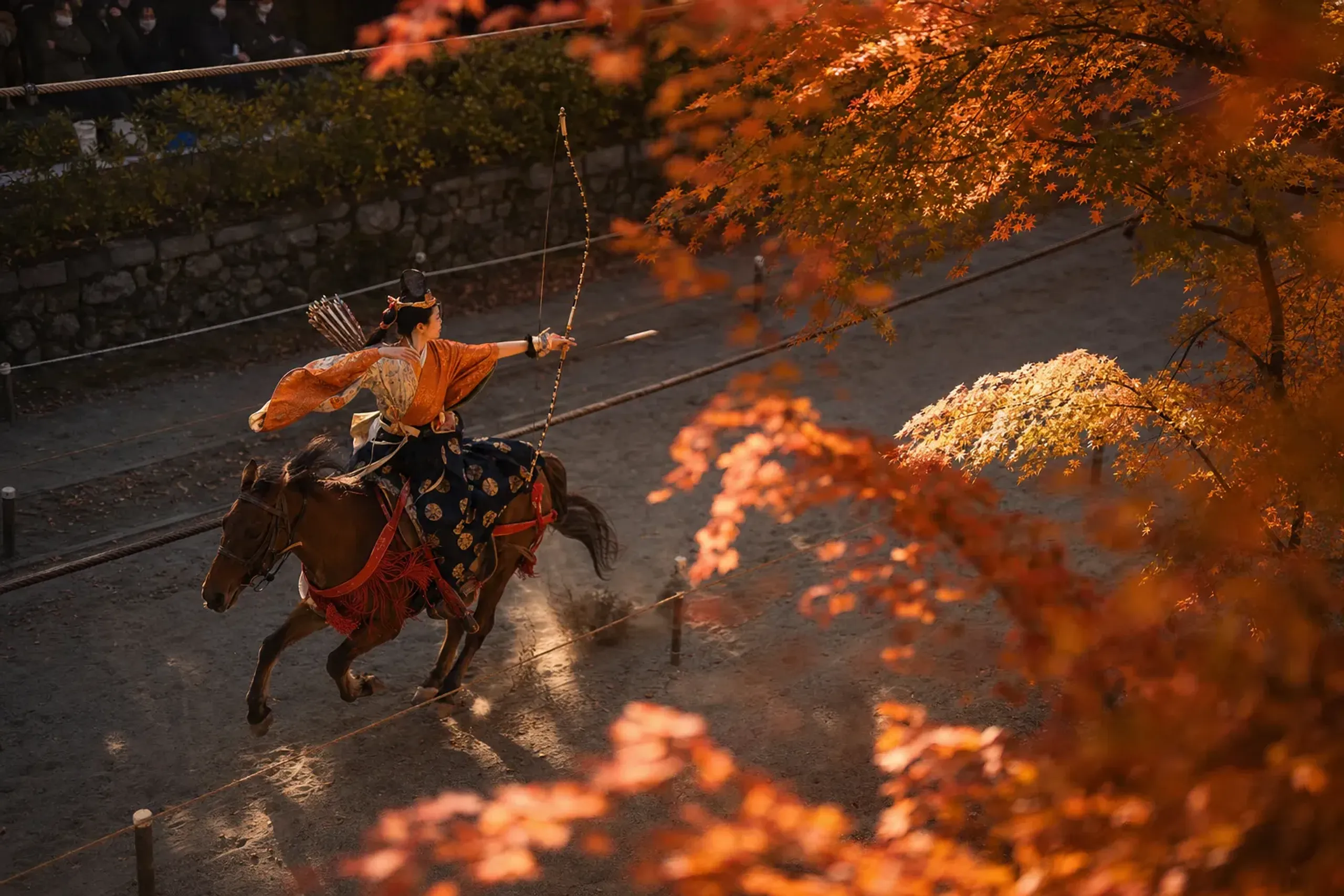
Do not build a trip around one school unless the organiser confirms it for that year.
Key fact: Avoid any guide that promises “seats,” “reserved viewing,” or a fixed fee for the April yabusame without pointing to an official rule for that specific year.
How To Plan A Kamakura Matsuri Day Trip From Tokyo Or Yokohama
Kamakura is about one hour from Tokyo and about 30 minutes from Yokohama, and it is about a 10-minute walk from Kamakura Station’s east exit to Tsurugaoka Hachimangu.
On paper, that sounds simple. On a festival Sunday, the friction is the point: the crowds, the traffic control, and the fact that you must commit to either the morning procession rhythm or the midday yabusame rhythm.
Option A: First Sunday (Procession + Shizuka No Mai) Day Flow
This is the better choice if you want movement, variety, and a clearer experience even if you arrive without perfect local knowledge. You can also reposition along the 1 km route if the first spot feels tight.
- Arrive: Aim to be in place well before the planned start time (example: before 10:00 in 2026).
- Watch: Keep to roped areas and follow staff directions during traffic controls.
- Reset: After the procession, step away from the densest areas to eat and rest.
- Return: Come back for Shizuka no Mai (example: 15:00 in 2026) with time to clear security and crowd pinch points.
Option B: Second Sunday (April Yabusame) Day Flow
This is the choice for travelers who want the archery itself and can tolerate uncertainty about sightlines.
You are aiming for a single event (example: planned for 13:00 in 2026), with limited general viewing.
- Arrive early: Give yourself buffer time to understand the course orientation inside the shrine grounds.
- Stand smart: Choose a position that does not block movement and keeps you stable for the full run.
- Pack light: Big bags make crowds worse, including for you.
- Expect rules on the day: Staff guidance can shift based on safety and crowd density.
Weather And What To Wear (April)
April can feel mild until it doesn’t. The nearest large-station climate normals we use for expectation-setting are Yokohama (JMA 1991–2020): mean 14.5°C, average high 18.9°C, and average low 10.7°C.
Bring one layer too many. You can always take it off. Standing still for long stretches is colder than you expect.
How Our Concierge Team Plans Kamakura Matsuri Without Overpromising
We plan this week like a public event with strict constraints, because that is exactly what it is. No shortcuts. No implied privileges. Just intelligent, discreet preparation.
First, we build the day around what you cannot move: the procession window (example: 10:00–12:00 traffic control in 2026) or the archery start time (example: 13:00 planned in 2026).
Everything else fits around that spine.
Second, we match you with an English-speaking cultural interpreter guide who can explain the archery, the shrine setting, and the procession in plain language when it matters most—right before something happens, not after it is over. Clarity changes what you notice, and the sense of perfect seasonality — knowing precisely what to see, where, and in which April week — is much of what makes the day land.
Third, we plan transport so you are not fighting the worst of the road closures. When a private transportation day makes sense, we use a partner fleet and time drop-offs and pick-ups to the edge of controlled zones; there is no combined driver-guide role.
Fourth, we build a realistic itinerary—often as part of a tailor-made itinerary—with breathing space for crowds and a meal plan that respects the 13:00 archery gravity. Hungry people make bad decisions.
Finally, our concierge team verifies on the client’s behalf, ahead of the visit, the confirmed date, format, and viewing arrangements for that year’s yabusame with the organiser. These details can change. So we treat them as live information, not static copy. Throughout, your identity and itinerary remain entirely confidential — the quiet discretion that our guests value as much as the access itself.
For broader context on how to approach Japanese festivals with confidence, see Japan Matsuri: How To Watch.
If your spring calendar is still flexible, our timing guide can help you judge blossom overlap without wishful thinking: Japan Cherry Blossom Timing.
A Note On Autumn Yabusame (September 16)
Tsurugaoka Hachimangu also holds yabusame on September 16 as part of the shrine’s autumn grand festival (Reitaisai period). It is a separate event with its own date and its own on-the-day rules, so do not apply April viewing advice to September.
Frequently Asked Questions
Which Sunday Should I Choose For Kamakura Matsuri If I Can Only Visit Once?
If you want the procession and Shizuka no Mai, go on the first Sunday; if you want April yabusame, go on the second Sunday when the archery is typically held during Matsuri week.
Using 2026 as a model, the procession and Shizuka no Mai were listed for April 12, while yabusame was listed for April 19. Each year’s exact programme is confirmed closer to April.
Plan Your Kamakura Matsuri With Us
Kamakura Matsuri rewards those who arrive with the right day, the right position, and the right understanding of what cannot be promised. If you would like us to confirm this year’s yabusame arrangements, secure a cultural interpreter guide, and shape the week around your pace in complete confidence, contact us here to begin a tailored proposal.