In this guide
- 01Why Three Sites, And Three Parts Of The City
- 02When Do The Omuro Cherries At Ninna-ji Bloom?
- 03What Is Daigo-ji Known For In Spring?
- 04Heian Jingu: The Four Gardens And The Weeping Cherries
- 05Putting Them In Order: One Day Or Two
- 06What If The Bloom Has Moved?
- 07How The Concierge Team Plans The Days
- 08Frequently Asked Questions
- 09Why Choose Japan Royal Service
Kyoto's cherry blossom season does not close with the first wave. When the early trees along the river have dropped their petals, a second group of sites carries the colour on into April. The planning is simple at its heart: three places, three parts of the city, one stretch of calendar that keeps shifting.
This guide covers three sites that sit outside the usual first-wave list. The low Omuro cherries at Ninna-ji. Daigo-ji, where Toyotomi Hideyoshi held a famous blossom-viewing party in 1598. And Heian Jingu, whose four landscape gardens carry weeping cherries that open mostly in April. We will walk through each place, where it sits, and how to order the three into a day or two with a car, the subway and the Randen line.
Why Three Sites, And Three Parts Of The City
The three places do not cluster. They spread across Kyoto, and that spread shapes the plan.
Ninna-ji sits in the north-west. Daigo-ji lies well to the south-east, on the edge of the mountains. Heian Jingu stands in the east, near Okazaki. A full circuit touches three corners, so the order of the day matters more than it would in a tighter area.
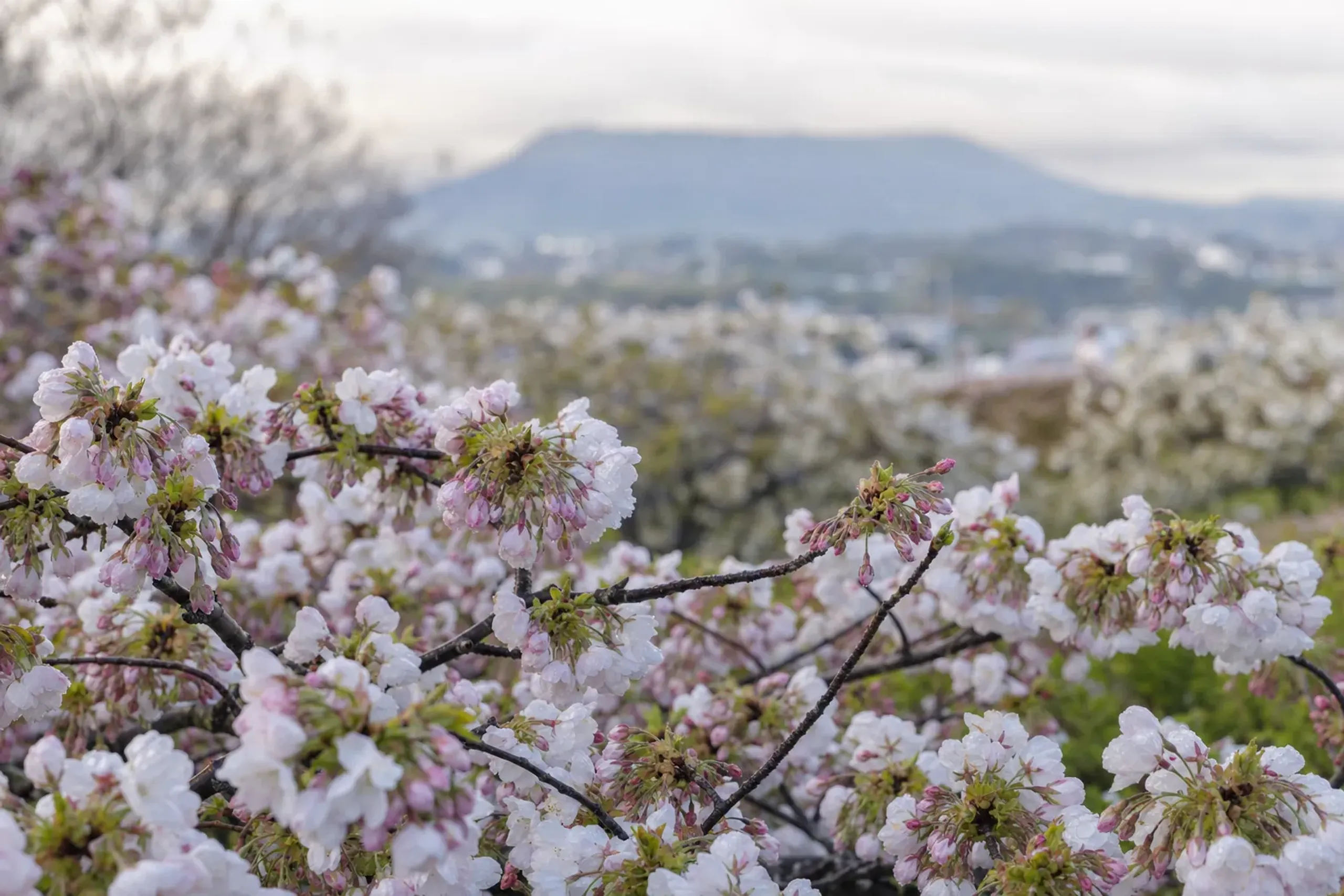
The temple describes Ninna-ji's Omuro cherries as the latest blooming in Kyoto; the bloom stage at Daigo-ji and Heian Jingu varies from year to year.
For the wider picture, our Kyoto cherry blossom guide and our note on cherry blossom timing across Japan give the broader frame. First-wave regulars such as Shimogamo's Tadasu-no-Mori and the approach to Fushimi Inari are covered there, as are wider Kyoto day trips. Here we stay with the three late sites.
One honest note runs through everything below. The bloom stage moves from year to year, and no plan should promise you a precise moment. The three-site frame is built to move with the season rather than against it.
When Do The Omuro Cherries At Ninna-ji Bloom?
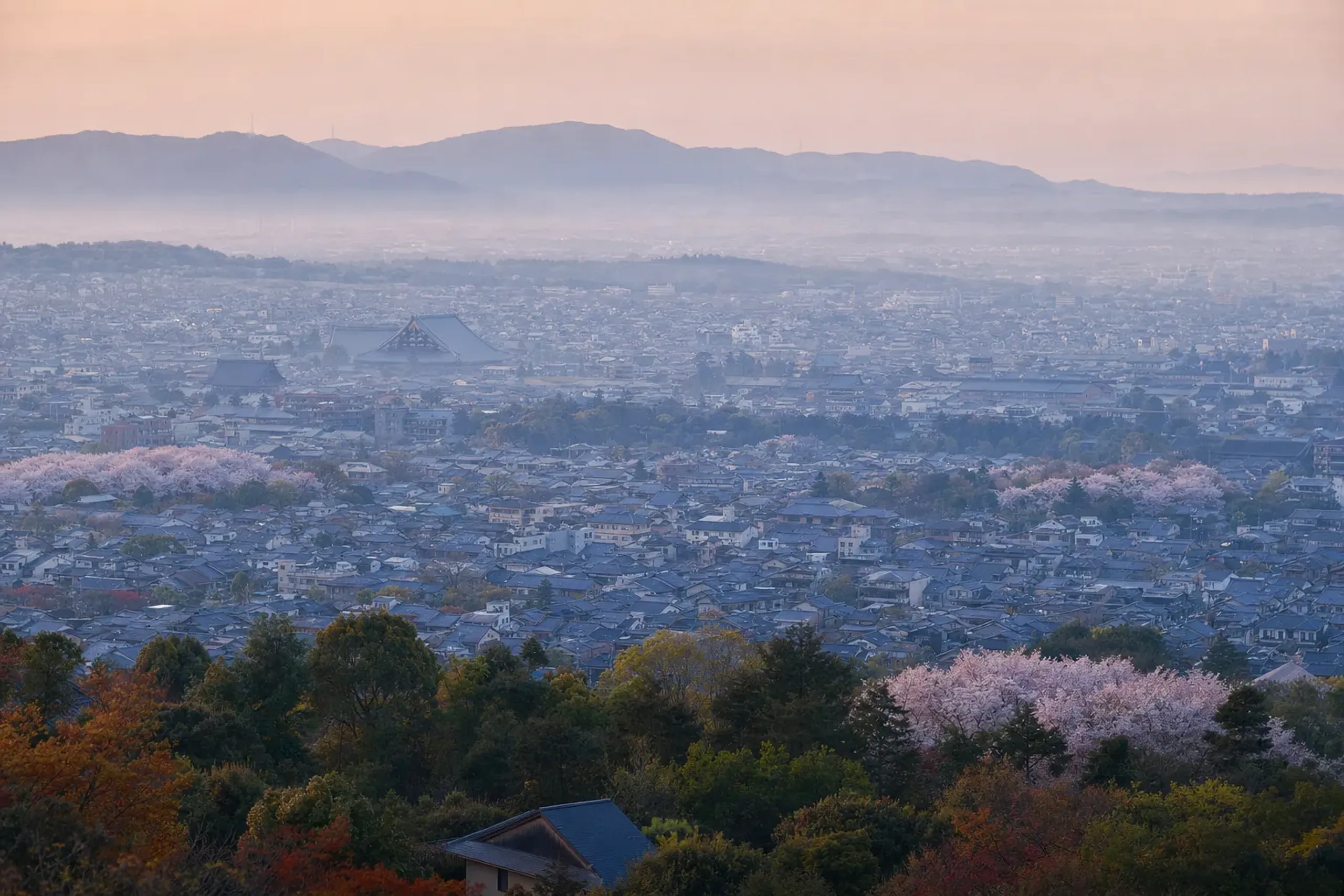
The Omuro cherries at Ninna-ji are usually in full bloom around mid-April, and the temple describes them as the latest-blooming cherries in the whole of Kyoto. That makes Ninna-ji a natural anchor for a late-season day.
Ninna-ji is a Buddhist temple founded in 888 AD, registered as one of the World Heritage Sites in Kyoto. It sits in the north-west of the city. The grove that draws spring visitors is the Omuro cherry — a low-growing variety whose flowers sit close to eye level rather than high overhead.
LEAF Kyoto reports that about 230 trees can be in bloom at once, and that the view is designated a place of scenic beauty. The same source notes the trees were long thought to grow low because of soil that makes deep rooting difficult, with recent research pointing to clay buried around 2.5 metres underground.
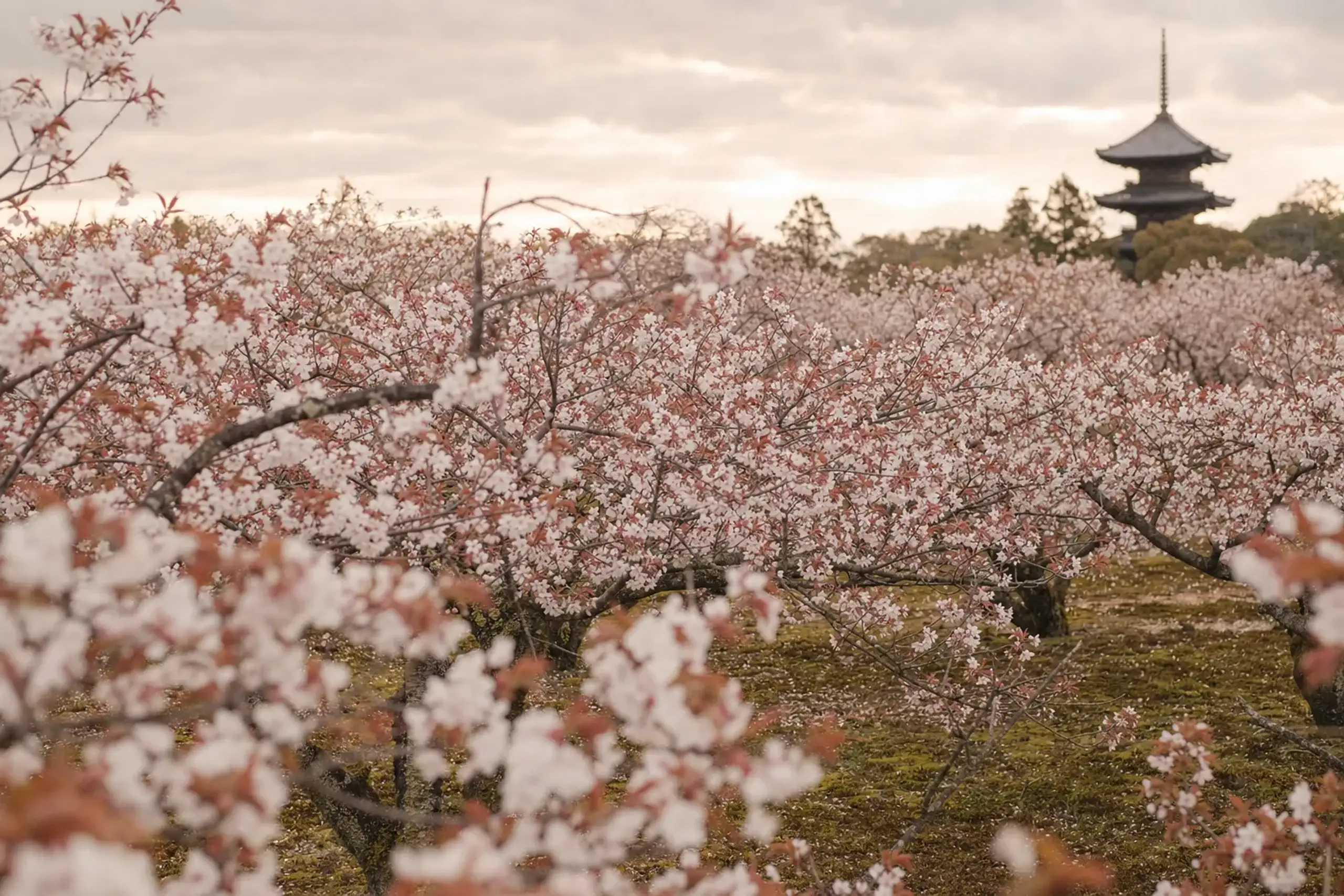
Whatever the cause, the effect is unusual: a mass of blossom at the height of a person, not a canopy above you.
The Omuro Flower Festival runs across this stretch of spring, but the temple notes that the cherry-season admission changes depending on when the cherries reach full bloom. The Goten — the palace and its gardens — is a separate admission area within the grounds. The Japan Royal Service concierge team confirms directly with the guest at time of arrangement the bloom stage, the temple's spring admission period and the opening of each area.
Access is straightforward. Omuro-Ninnaji Station on the Randen line sits about three minutes on foot from the temple, which makes Ninna-ji easy to pair with other stops along that small railway line.
What Is Daigo-ji Known For In Spring?
Daigo-ji is known in spring for the Daigo-no-Hanami, the blossom-viewing party Toyotomi Hideyoshi held in 1598, for which the temple says he had more than 700 cherry trees planted. The grounds still carry that story into April.
The temple was officially built in 874. The Emperor Daigo later raised it to Imperial Temple status, and in 1994 it was added to the UNESCO World Heritage List. Its five-storied pagoda is a National Treasure. The complex divides into two parts: Shimo-Daigo, the lower area that holds the Garan, the Sanboin and the Reihokan; and Kami-Daigo, the upper reaches on Mount Daigo itself.
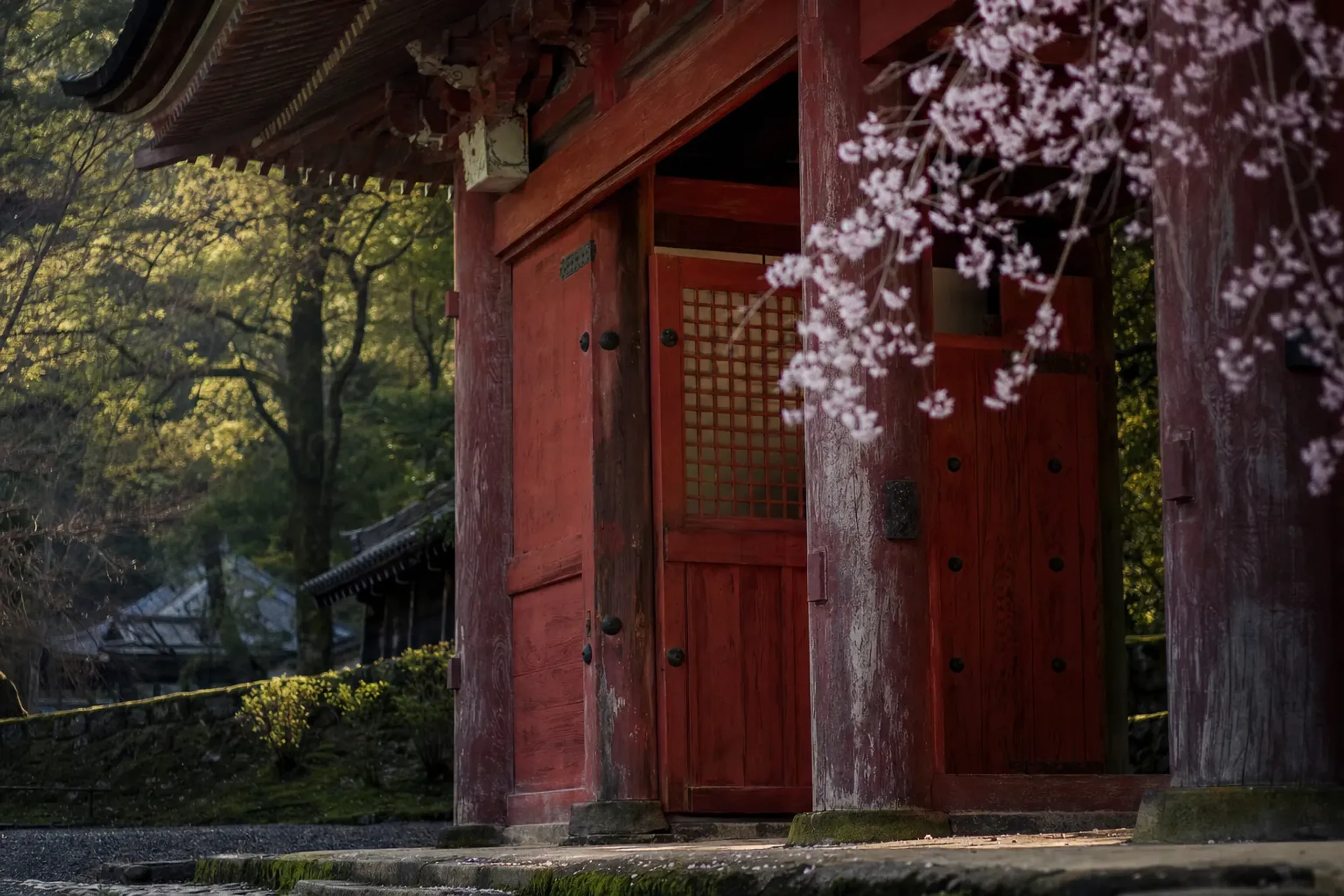
Sanboin is worth its own line. Founded as a sub-temple of Daigo-ji in 1115, it was revamped in 1598 on Hideyoshi's orders — the same year as the great party — and its celebrated garden holds about 800 stones. Kyoto City Tourism gives Daigo Station on the Tozai subway line as a ten-minute walk from Sanboin.
Spring admission applies to the Reihokan area across a period the temple sets each year. The JRS concierge team confirms the spring admission period directly with the guest at time of arrangement. What stays constant is the history. You walk a place where one of Japan's great figures of the sixteenth century staged a blossom viewing that people still talk about more than four centuries on. An English-speaking cultural interpreter guide can carry that story as you move through the grounds, which is where a visit here earns its depth.
Heian Jingu: The Four Gardens And The Weeping Cherries
Heian Jingu was built in 1895 to mark the 1,100th anniversary of the founding of Heian-kyo. It stands in the east of Kyoto, in the Okazaki area. The draw in spring is not the vermilion halls out front but the gardens behind them.
Those gardens — the Shin-en — form four landscape gardens that cover 30,000 square metres and carry a designation as a National Site of Scenic Beauty.
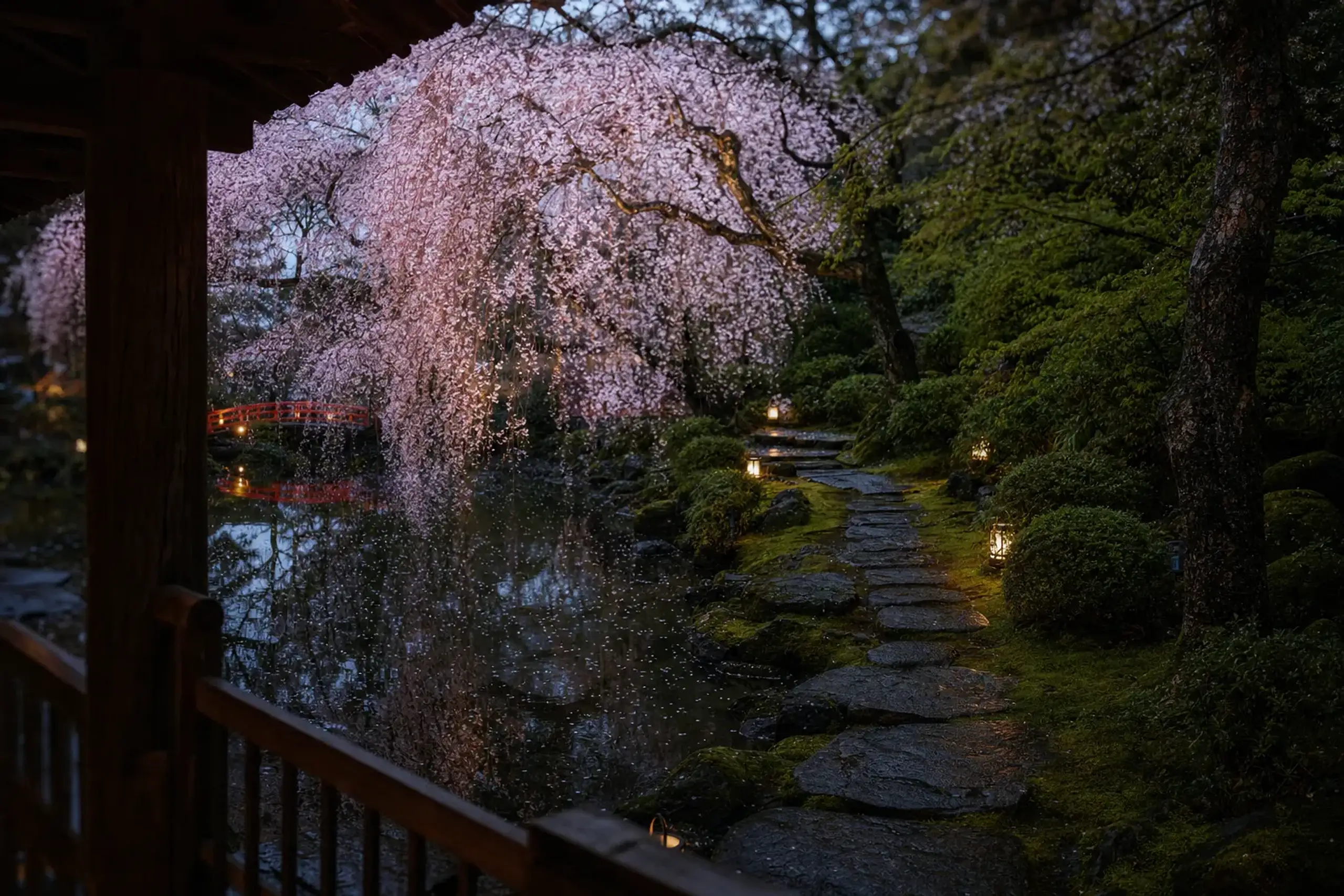
The shrine states plainly that cherry trees in each of the four gardens bloom mostly in April. The signature tree is the yaebeni shidare, the double-petaled weeping cherry, whose heavy pink sprays fall toward the water and the paths.
The architecture frames all of it. The Otenmon gate and the Daigokuden are Important Cultural Properties, and the scale of the forecourt is deliberately grand. But it is the walk through the four gardens, under and around the weeping cherries, that holds people in April. A guide can draw the line between the 1895 construction, the Heian-kyo anniversary it honoured and the planting choices that give the gardens their spring character.
Putting Them In Order: One Day Or Two
Three corners of the city invite two honest approaches. Here are both, stacked rather than rushed.
Option A: One Full Day
A single day can take in all three if you accept a longer car-heavy loop. The practical shape is to pair the geography with the transport that suits each site.
- Ninna-ji, north-west. Reached in about three minutes on foot from Omuro-Ninnaji Station on the Randen line, so it slots neatly into a morning that starts on that small railway.
- Daigo-ji, south-east. Set against the mountains; Daigo Station on the Tozai subway line is roughly a ten-minute walk from Sanboin. A car bridges the long gap from the north-west cleanly.
- Heian Jingu, east. In Okazaki, a natural close to the day as you work back toward the centre.
A one-day loop moves a great deal.
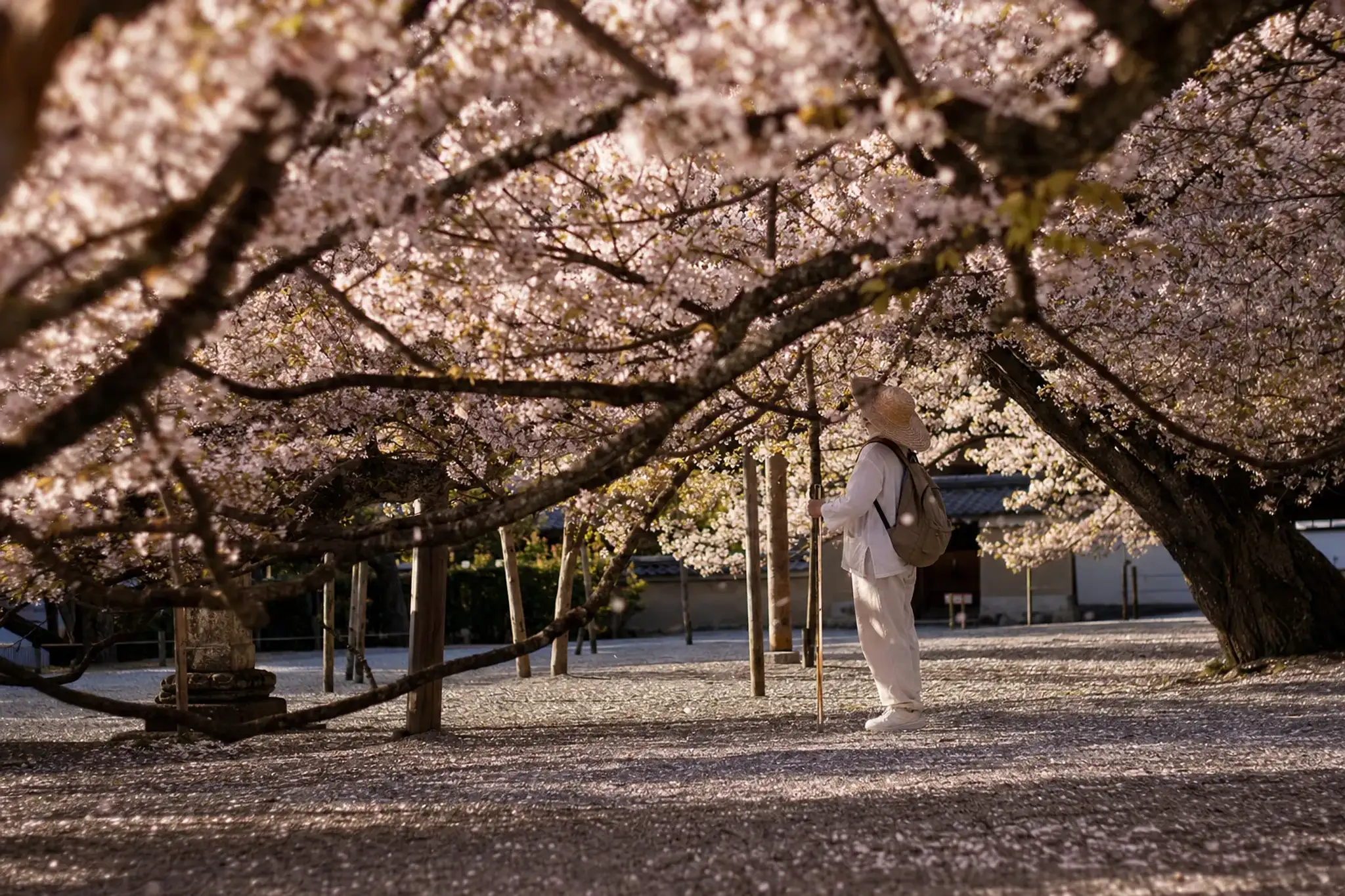
The reward is seeing the full span of the late season — low eye-level cherries, a historic blossom site and weeping cherries over water — in a single arc.
Option B: Two Unhurried Days
Two days let each place breathe. One shape is to give the south-east its own morning — Daigo-ji and Sanboin, with time for the pagoda and the stone garden — then hold the north-west and east for a second day, pairing Ninna-ji on the Randen line with Heian Jingu's gardens in the afternoon.
Because the three sites sit apart, a vehicle from a partner company with an English-speaking driver links them without the stitching of multiple transfers. The subway and the Randen line still have their place — the Randen approach to Ninna-ji is part of the pleasure — and a good plan uses rail where rail is pleasant and the car where distance makes it sensible. For a fuller view of that choice, our note on private driver versus rail may help.
What If The Bloom Has Moved?
If the bloom has shifted earlier or later than expected, the plan shifts with it rather than breaking. The three-site frame is built as a range, not a single date.
Here is how that works in practice. If the first wave has already gone, Ninna-ji's Omuro cherries, described by the temple as the latest blooming in Kyoto, can anchor the days.
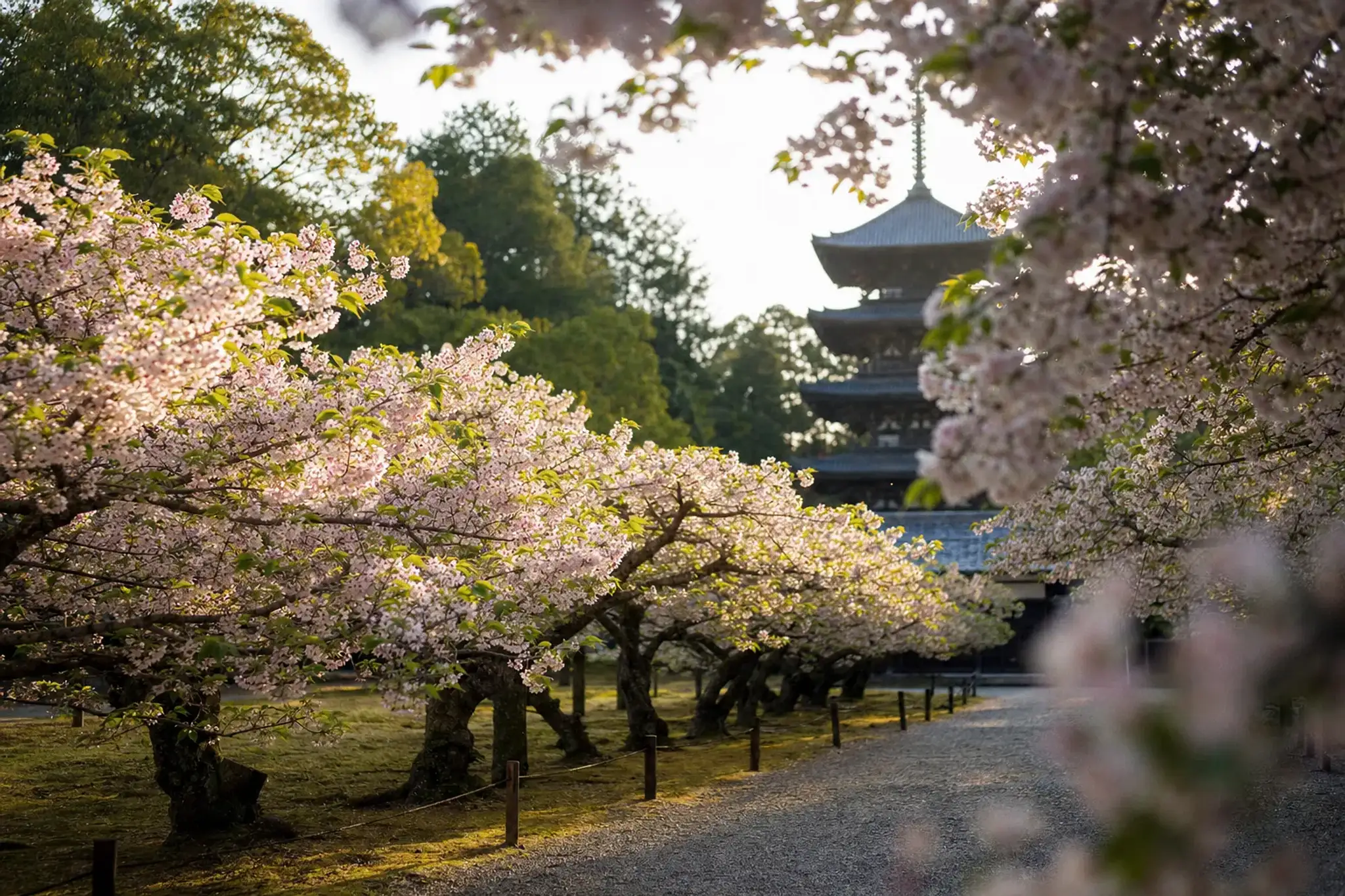
If a given site has passed or not yet opened, the order of the two days can flip, and a fallback day sits in reserve for rain or wind. The bloom stage changes from year to year, and the JRS concierge team confirms the current stage directly with the guest at time of arrangement.
Key point: All three sites are public. The plan is built around the bloom stage and the weather, with a fallback day held back. No plan here promises a precise moment of bloom.
How The Concierge Team Plans The Days
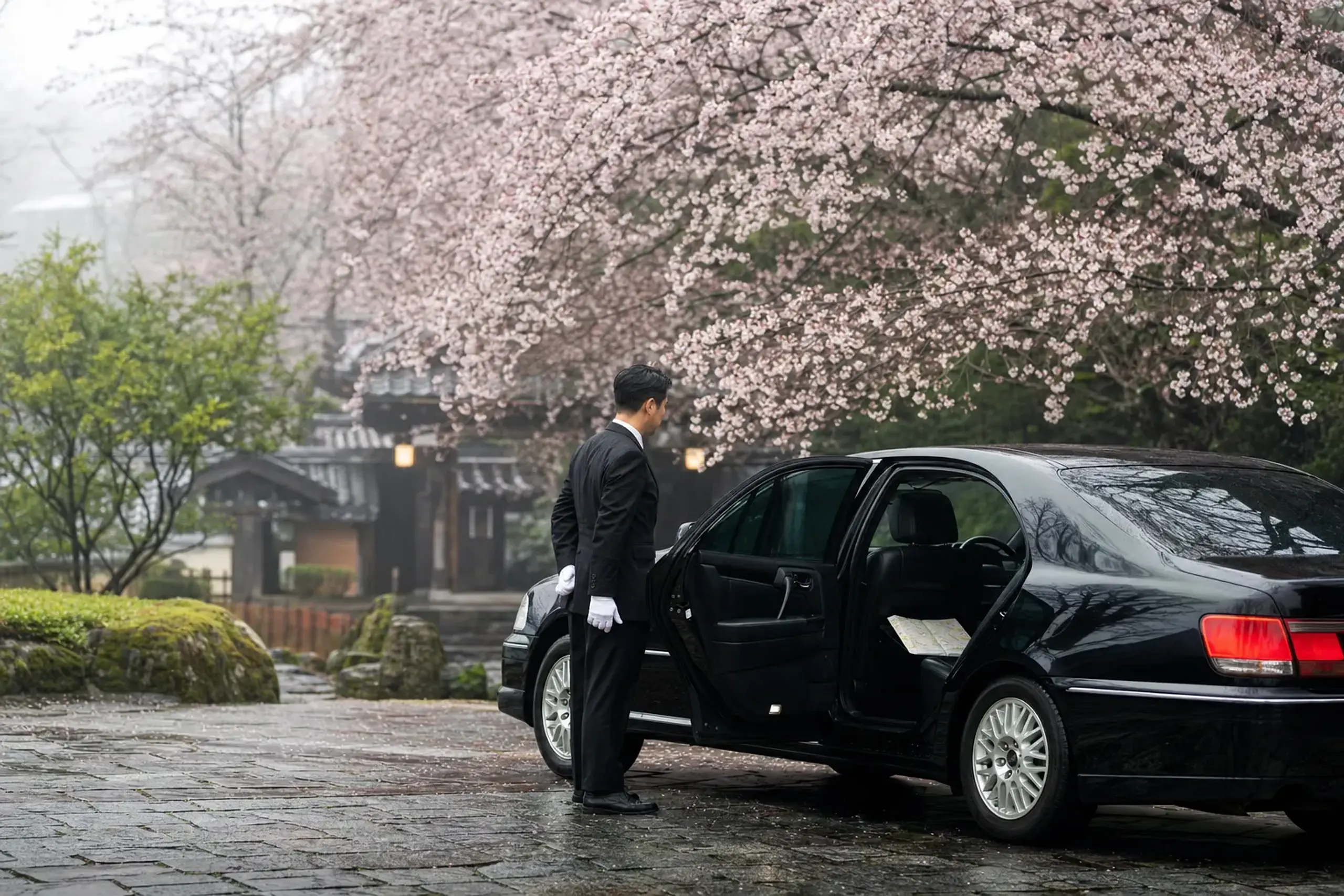
Within the scope of these three sites, the work divides into clear parts. Our concierge team orders the sites around the bloom stage and the weather, holding a fallback day in case rain or wind arrives. An English-speaking cultural interpreter guide — booked separately from the driver — carries the temple histories, the Hideyoshi story and the gardens of Heian Jingu.
Transport comes from a partner company with an English-speaking driver, because the three sites lie in different parts of Kyoto; the driver and guide are separate roles. We can also handle ryokan and restaurant booking in Kyoto with dietary needs passed ahead, and Shinkansen tickets to Kyoto — including Green Car and Gran Class where available — with platform assistance and luggage forwarding.
For the rail leg up from Osaka, see our Osaka to Kyoto guide. If spring also draws you to the geiko districts, our note on the Kamogawa Odori and the spring dances runs alongside the blossom season.
Same-day re-planning is part of the service when the weather turns. The Japan Royal Service concierge team confirms directly with the guest at time of arrangement the bloom stage, each temple's spring admission period and the opening of each area.
Frequently Asked Questions
When do the Omuro cherries at Ninna-ji usually bloom?
The Omuro cherries at Ninna-ji are usually in full bloom around mid-April. The temple describes them as the latest-blooming cherries in the whole of Kyoto, which makes Ninna-ji a strong anchor for a late-season visit.
What is Daigo-ji known for in spring?
Daigo-ji is known for the Daigo-no-Hanami, the blossom-viewing party Toyotomi Hideyoshi held in 1598, for which the temple says more than 700 cherry trees were planted. The complex was added to the UNESCO World Heritage List in 1994.
Are Ninna-ji, Daigo-ji and Heian Jingu in one area?
No. The three sit in different parts of Kyoto — Ninna-ji in the north-west, Daigo-ji in the south-east and Heian Jingu in the east. That spread is why a car works well alongside the subway and the Randen line.
How do you reach Ninna-ji?
Ninna-ji is about three minutes on foot from Omuro-Ninnaji Station on the Randen line. The short walk makes it easy to pair with other stops along that small railway during a north-west morning.
What happens if the bloom has already passed?
Ninna-ji's Omuro cherries, described by the temple as the latest blooming in Kyoto, can anchor the days. If a site has passed or not yet opened, the order of the days flips and a fallback day covers rain or wind; the concierge team confirms the current stage before fixing the plan.
Why Choose Japan Royal Service
The late season rewards patience and a plan that can move. Our strength here is the ordering: three sites across three corners of Kyoto, read against the bloom stage and the weather, with a fallback day held in reserve. A tailor-made itinerary lets the two days bend around what the trees are actually doing, rather than a fixed route set weeks ahead.
Around that sit the practical parts — an English-speaking cultural interpreter guide for the histories, a partner vehicle with an English-speaking driver to link the distances, ryokan and restaurant booking with dietary notes passed ahead, and Shinkansen arrangements into Kyoto. Each role is kept distinct, and each day is confirmed directly with you before it is fixed.
To begin planning, contact our team here.