In this guide
- 01Why Almost Everyone Skips Nagoya
- 02The Four-Railway Junction: What Makes Nagoya Different
- 03How Far Is Ise Jingū From Nagoya By Train?
- 04What Else Runs From Nagoya Station
- 05The Repacking Argument
- 06Where Basing In Nagoya Is Wrong
- 07How Do Nagoya Hotel Rates Compare To Kyoto?
- 08Centrair: The Arrival Almost Nobody Plans
- 09Nagoya-meshi: The City's Own Table
- 10What Our Team Arranges Around A Nagoya Base
- 11Frequently Asked Questions
- 12Why Choose Japan Royal Service
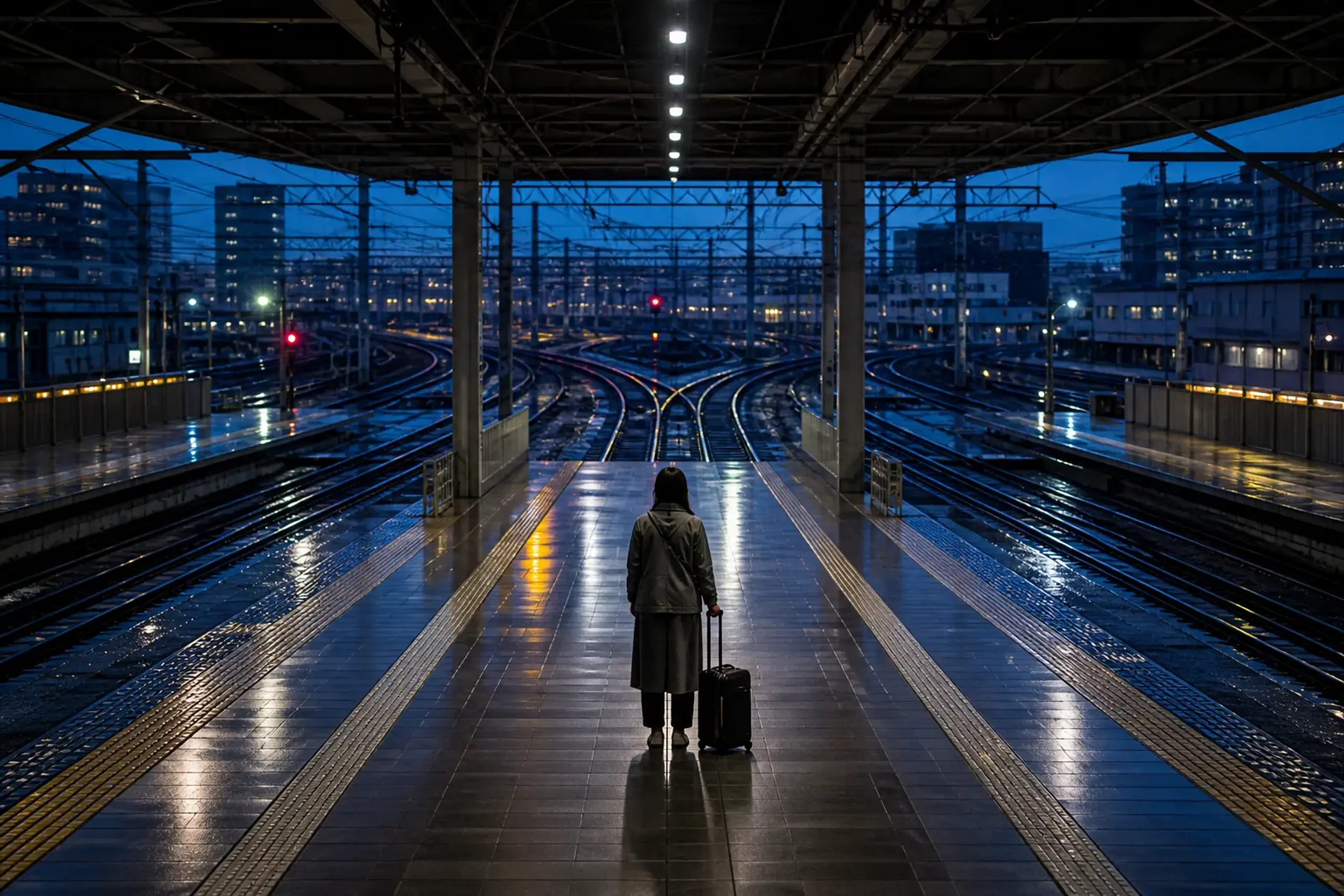
The 07:43 to Takayama pulls out of Nagoya Station while the concourse below is still quiet. Limited Express Hida 1. Two hours and thirty-three minutes of river gorge and cedar. A traveler who slept in Nagoya the night before boarded with a small day bag and left the rest of the luggage in a room that will still be theirs tonight. That is the whole argument in one departure.
Most itineraries treat Nagoya as a place to change trains. Our team at Japan Royal Service treats it as a place to sleep. This is not a case for Nagoya as a destination. It is a case for Nagoya as the best base in central Japan — a structural argument, and one worth stating plainly.
Why Almost Everyone Skips Nagoya
Nagoya is Japan's fourth-largest city and the one international travelers pass through without looking up. It is a working city. Manufacturing, castles rebuilt in concrete, wide avenues. The glamour lives elsewhere — Kyoto's temples, Tokyo's towers, the coastlines beyond.
We will not pretend otherwise. Base a client in Nagoya and they see the region, not the city. That is the point. Saying so is more honest than overselling a place that does not need to be oversold. The value here is judgment, not spectacle.
The Four-Railway Junction: What Makes Nagoya Different
Nagoya Station is where four separate railway networks meet in one building. The Tōkaidō Shinkansen. The JR Takayama Main Line. The Kintetsu network. The Meitetsu network. Nothing else in central Japan does this.
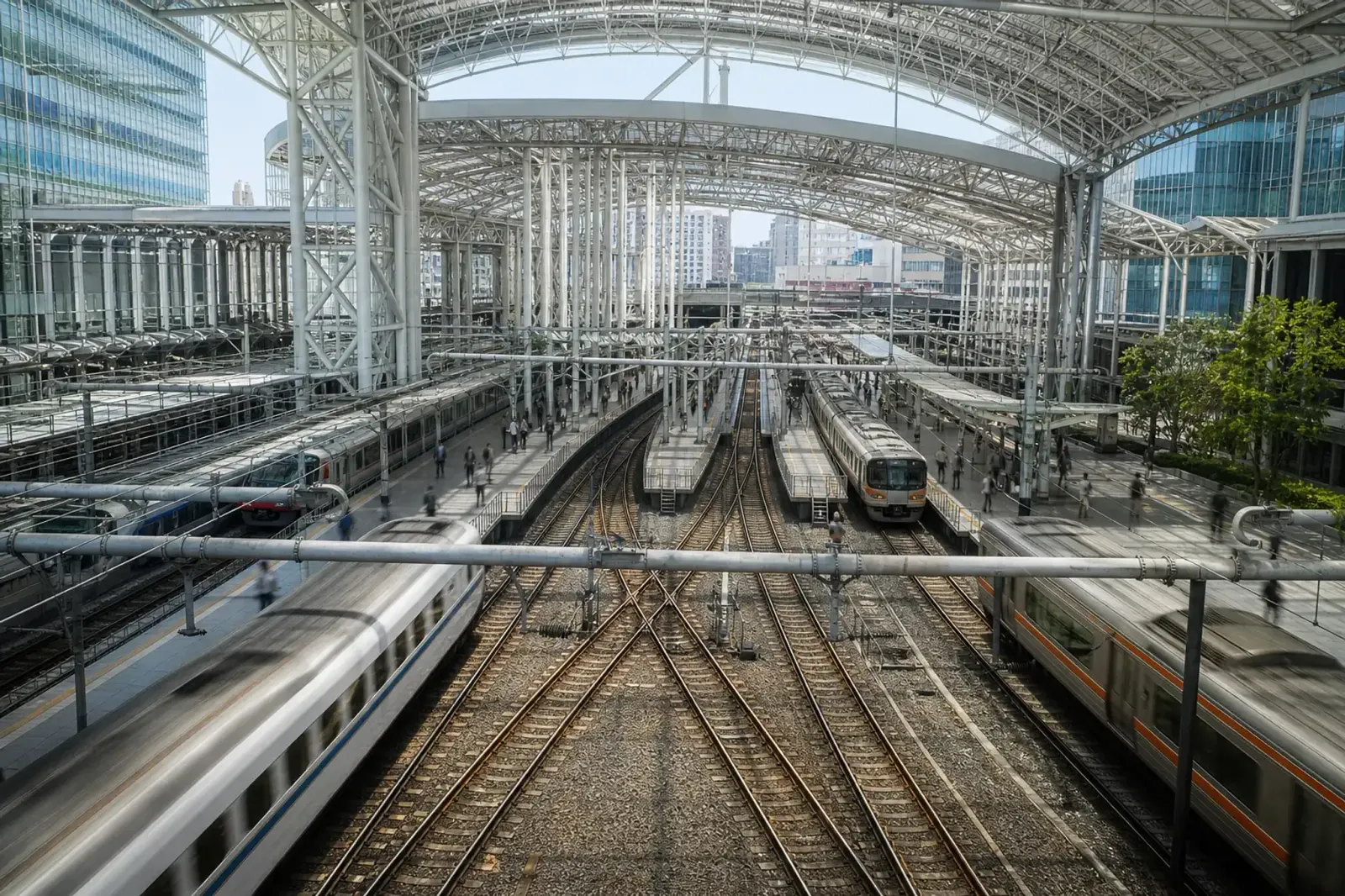
Read that practically. From a single hotel lobby, a client can reach a sacred shrine complex, a mountain onsen town, a castle town, and an international airport — on different days, in different directions, without moving hotels. The Kintetsu terminal sits directly beside JR Nagoya. Meitetsu runs from the same complex. One address unlocks four compass points.
Key fact: Four rail networks — Shinkansen, JR Takayama Main Line, Kintetsu, and Meitetsu — radiate from Nagoya Station. It is the only single junction in central Japan that does this.
How Far Is Ise Jingū From Nagoya By Train?
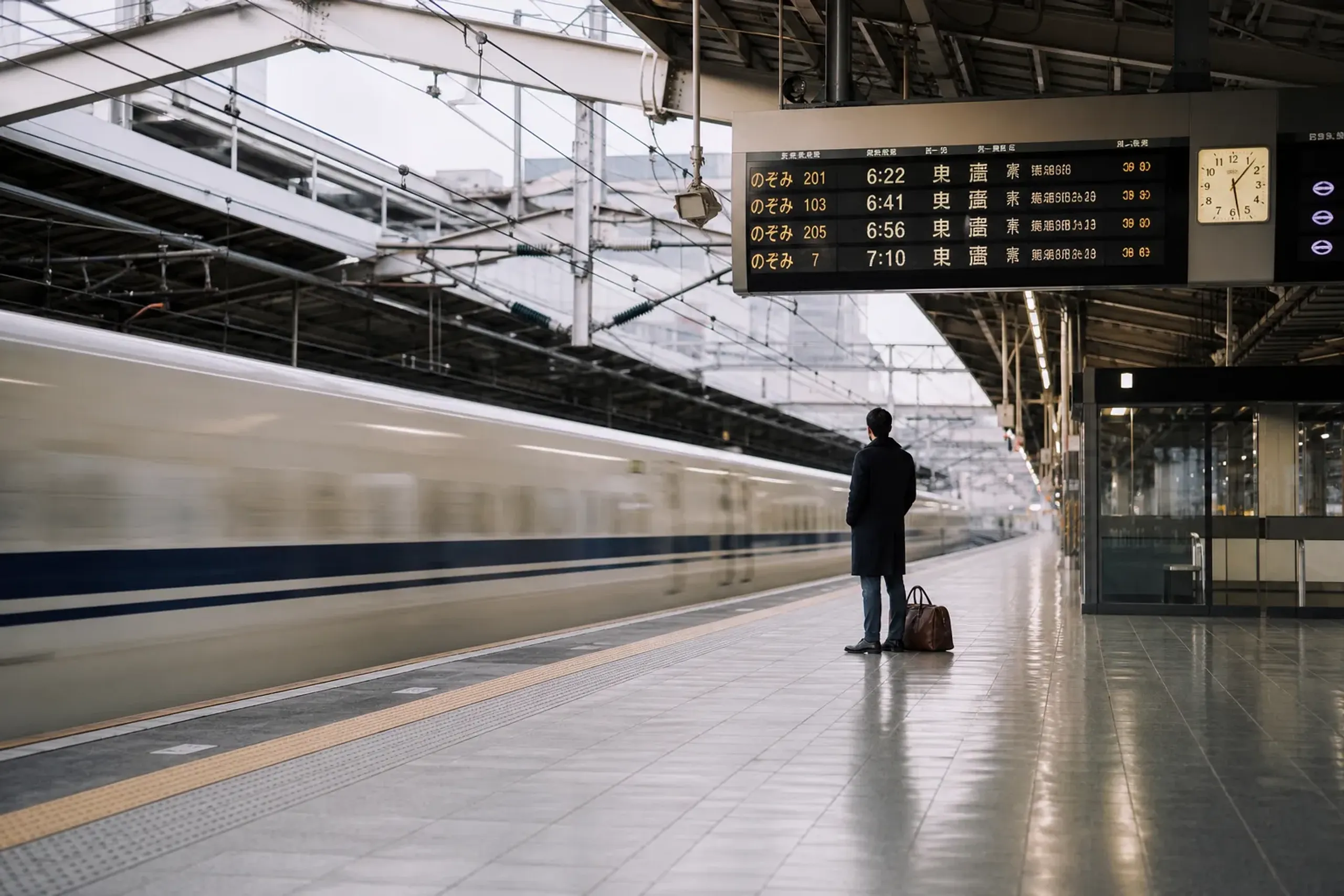
Ise Jingū is roughly 80 minutes from Nagoya on the Kintetsu limited express, direct, with no change of train. Two to three limited expresses run each hour.
This single connection is the strongest evidence the base argument has. Ise Jingū is Japan's most significant Shinto shrine complex. From a Nagoya hotel, a client reaches Ise-shi station in roughly 80 to 86 minutes, direct, for a fare of ¥3,080 — a ¥1,740 base fare plus a ¥1,340 limited express supplement. Slower express services run 98 to 105 minutes at ¥1,740 with no supplement. For those who want the journey to be part of the experience, the Shimakaze observation train runs at ¥3,920.
Compare that to the alternative. From Kyoto or Tokyo, reaching Ise is a half-day each way. A full day gone to transit. From Nagoya, a client leaves after a proper breakfast and is back before dinner, in the same bed.
We name Ise here as a destination and describe only its access. The visit itself — the inner shrine, the Isuzu River, the twenty-year rebuilding cycle — deserves its own treatment, and its own quiet.
What Else Runs From Nagoya Station
The junction earns its keep across the region. Here is what departs, with times worth confirming against the current timetable before travel — schedules revise every March.
- Ise (Ise-shi) — Kintetsu Limited Express — ~80–86 min, direct
- Takayama — Limited Express Hida — ~2 hr 33 min
- Gero Onsen — Limited Express Hida — ~100 min
- Inuyama — Meitetsu Inuyama Line — ~26–33 min
- Kyoto — Tōkaidō Shinkansen — ~35 min
- Chūbu Centrair Airport — Meitetsu Airport Line (μ-Sky) — ~28 min
The Hida service is the scenic one. Hida 1 leaves Nagoya at 07:43 and reaches Takayama at 10:16, tracing the Hida River through the mountains. Around seven services run to Takayama each day; roughly three continue to Toyama. Gero Onsen sits on the same line, about 100 minutes out, with every limited express stopping there.
The Repacking Argument
Here is the real reason to base in Nagoya. It has nothing to do with proximity and everything to do with luggage.
A classic Takayama-and-Ise itinerary usually means three properties across five nights. Pack. Unpack. Check out. Check in. Repeat. For a couple traveling light, this is a minor tax. For a family with children, or a party that includes an older parent, or anyone with the amount of luggage a two-week trip demands, it is the single largest source of friction in the whole journey.
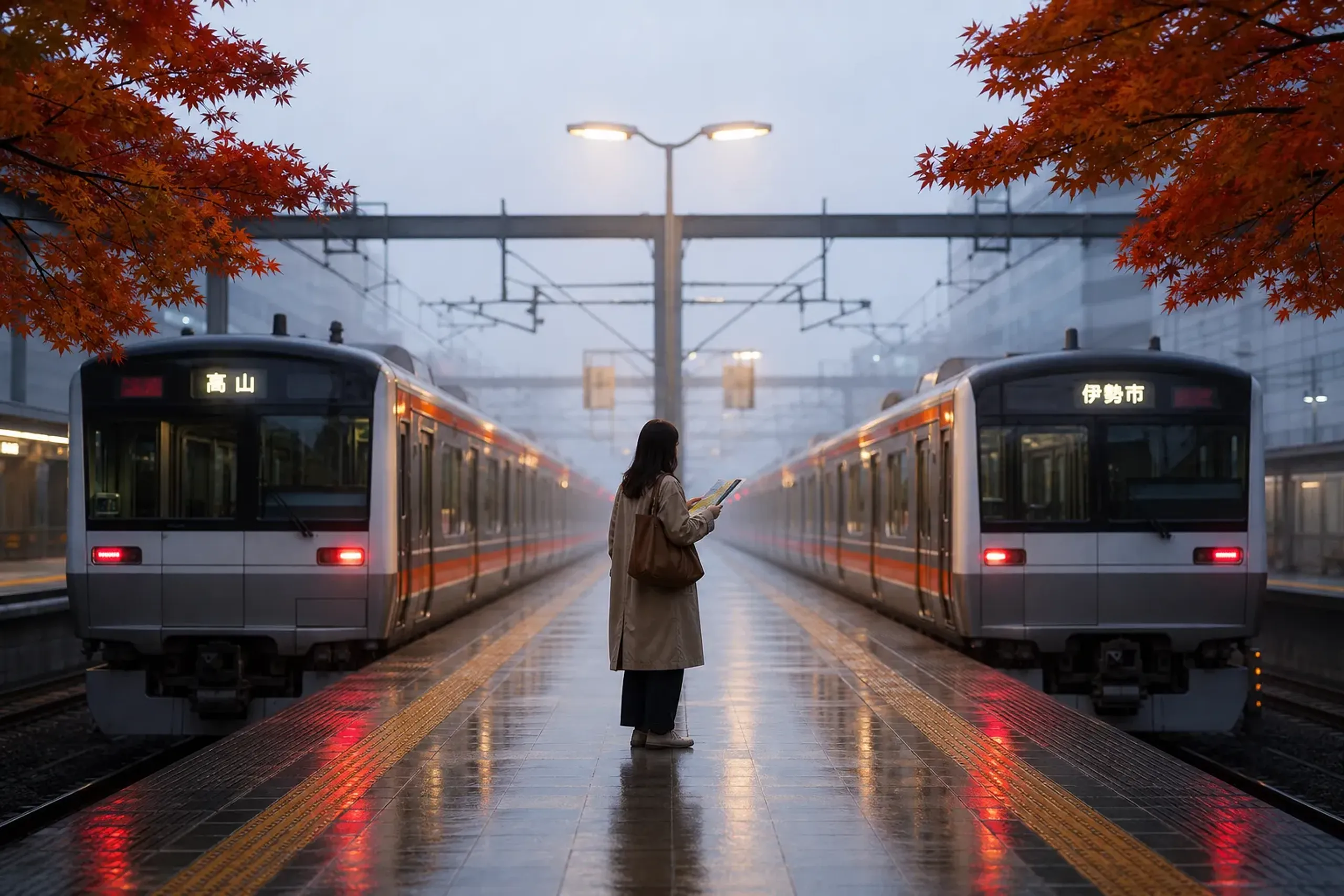
Based in Nagoya, that same itinerary becomes one property. One check-in. One room that stays yours. Ise on Monday, Takayama on Wednesday, Inuyama on Friday — each a day trip, each returning to the same bed. The suitcase never leaves the closet. In our experience arranging multigenerational family travel, this one decision removes more stress than any upgrade money can buy.
Where Basing In Nagoya Is Wrong
Do not day-trip Gero Onsen. An onsen town is meant to be slept in, and a client who visits Gero for an afternoon has missed the entire point of it.
The base argument works cleanly for Ise, Takayama, and Inuyama — places you visit, absorb, and leave. It fails for onsen. The ritual of a hot-spring town is the evening: the bath at dusk, the kaiseki dinner, the second soak before sleep, the morning steam over the river. Compress that into a train return and you have thrown away everything worth going for. When Gero enters the plan, it enters as an overnight. Our approach to slower, place-led journeys follows the same logic — some places reward staying, not sampling.
How Do Nagoya Hotel Rates Compare To Kyoto?
Nagoya offers proper international hotel stock at a fraction of Kyoto's rates, and without Kyoto's accommodation tax. The gap is significant for anyone booking a suite across several nights.
Kyoto's lodging market in 2026 is under real strain — booked out, priced up, and now carrying a lodging tax with bands that climb steeply at the top end.
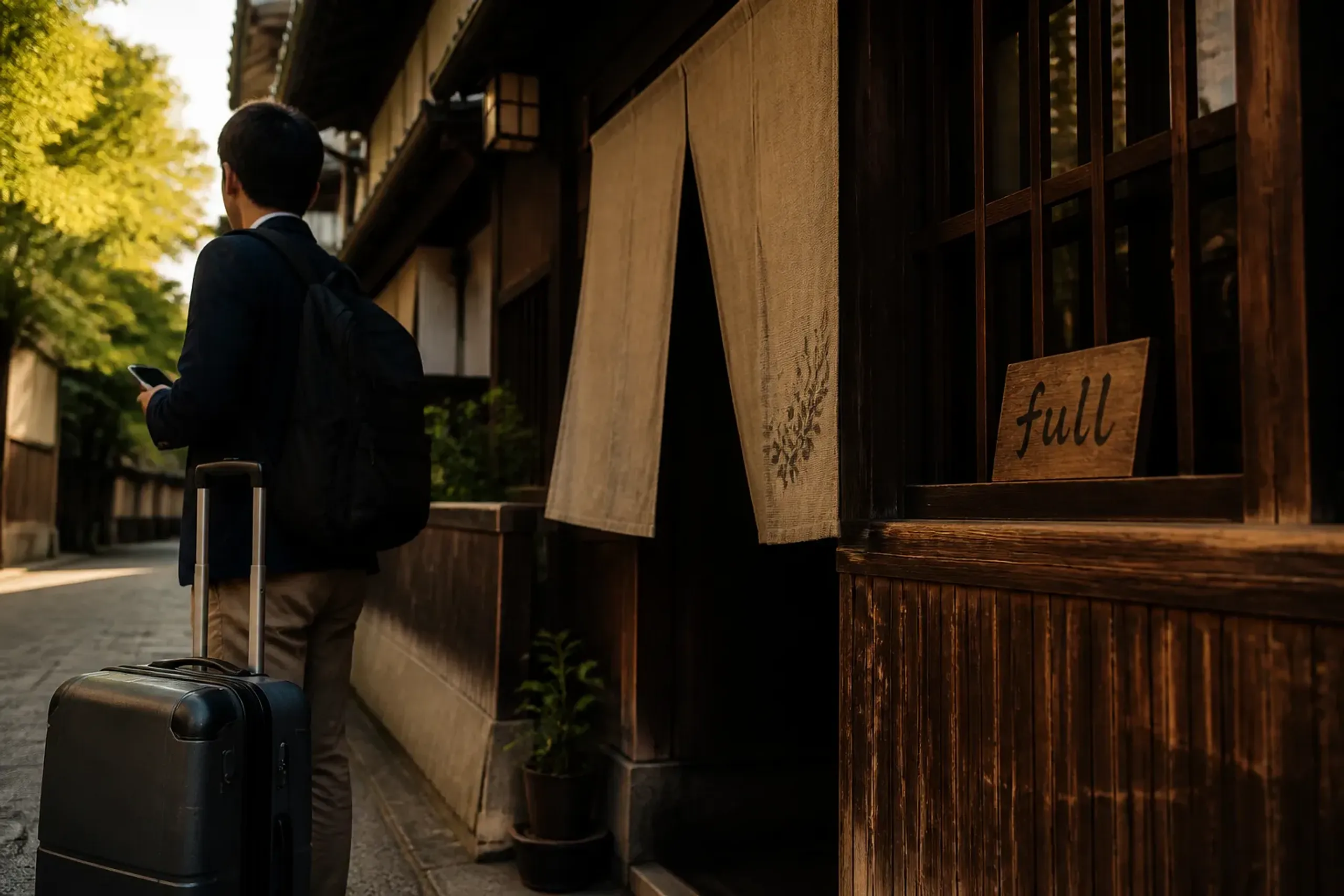
We set out those tax bands in our guide to alternatives when the new openings are full. Nagoya carries none of that. A client can hold a serene, spacious suite in Nagoya, take the 35-minute Shinkansen into Kyoto for a morning at the temples before the crowds thicken, and be back for a calm evening away from the crush. The city becomes a decompression chamber for the Golden Route rather than a stop on it.
Centrair: The Arrival Almost Nobody Plans
Chūbu Centrair International Airport is the underused way into central Japan. A client beginning a Nagoya-based itinerary can fly into Centrair rather than Haneda or Kansai and reach a city-center hotel in under half an hour on the Meitetsu μ-Sky limited express.
Almost nobody plans this way, which is precisely why it works. No Tokyo transit, no Kansai sprawl, no cross-country Shinkansen leg to open the trip. Arrive, transfer, sleep — and the base is live from the first night. For arriving parties who prefer a held car waiting at the terminal, our private chauffeured transfer makes the door-to-lobby run entirely quiet.
Nagoya-meshi: The City's Own Table
Nagoya has a food culture that owes nothing to Kyoto or Tokyo. Hitsumabushi — grilled eel served three ways over rice, the last with dashi poured over. Miso katsu, pork cutlet under a dark, sweet hatchō miso. Tebasaki, the peppered chicken wings. Kishimen, the flat wheat noodle.
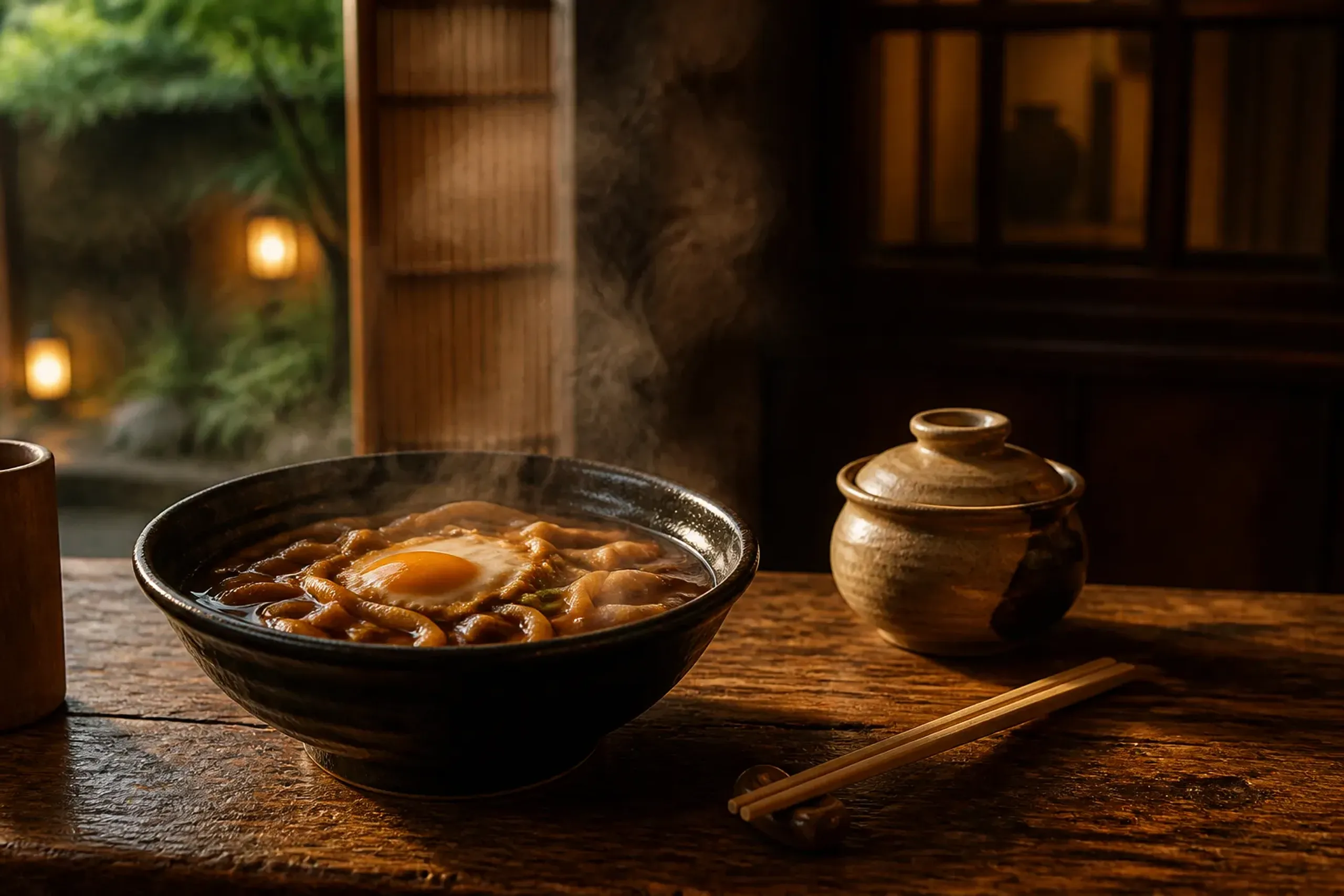
And the morning-service tradition, where a coffee order arrives with toast and egg at no extra charge.
This is not a food guide. It is enough to establish that a client basing here eats well on the nights they return — the city has its own table, and it is worth the evenings the base gives back.
What Our Team Arranges Around A Nagoya Base
A base itinerary lives or dies on its transfers. That is the friction the base was meant to solve, and it is where we concentrate.
Our concierge focuses on three things: accommodation matched to the party and the length of stay; a tailor-made itinerary that sequences the day trips sensibly by direction and season; and transport. That last point is functional, not decorative. A base means repeated station runs — to Kintetsu for Ise, to the Hida platform for Takayama, to Meitetsu for Inuyama. A held car, ready when the party is, removes exactly the friction the base was chosen to avoid. It is the difference between a plan that reads well and a week that runs well.
One note on timing: Nagoya hosts the 20th Asian Games from September 19 to October 4, 2026, and premium hotel stock will tighten sharply across that window. Anyone considering a base in that period should plan early.
Frequently Asked Questions
Is Nagoya A Good Base For Visiting Ise, Takayama And Inuyama On Day Trips?
Yes. Nagoya is the best base in central Japan for these three. Ise is roughly 80 minutes direct on Kintetsu, Takayama about 2 hours 33 minutes on the Hida, and Inuyama 26 to 33 minutes on Meitetsu — all from one station.
How Long Does The Shinkansen Take From Nagoya To Kyoto?
About 35 minutes on the Tōkaidō Shinkansen. This makes Nagoya a practical base for day-tripping into Kyoto while sleeping away from the city's 2026 crowds and lodging tax, returning to a calmer evening.
Should I Day-Trip To Gero Onsen From Nagoya?
No. Gero Onsen is an overnight town, not a day trip. The value of a hot-spring town is the evening ritual — the dusk bath, the kaiseki dinner, the morning steam. Compress it into a return train and you lose the point entirely.
Can I Fly Into Nagoya To Start A Central Japan Trip?
Yes. Chūbu Centrair International Airport connects to central Nagoya in under 30 minutes via the Meitetsu μ-Sky limited express, and is a quieter arrival than Haneda or Kansai for a Nagoya-based itinerary.
Why Choose Nagoya Over Staying In Kyoto?
Nagoya offers international-standard hotels at lower rates than Kyoto, no lodging tax, and one base for the whole region. Kyoto remains 35 minutes away by Shinkansen, so you lose nothing and gain a calmer evening.
Why Choose Japan Royal Service
The Nagoya base argument is structural — it works because the connections are real. But a plan on paper is not a week on the ground. What turns a well-sequenced itinerary into a genuinely frictionless one is who holds the moving parts.
Japan Royal Service is a Tokyo-headquartered, native concierge with an in-house fleet — from the Lexus LM 500 to executive Alphard and Mercedes V-Class — and coordinators who work in English, Japanese, Thai, and Filipino. Where international firms subcontract the ground logistics that make a base itinerary work, we run them ourselves. That means the held car at Centrair, the driver who knows which Nagoya Station entrance faces the Kintetsu gates, and the discretion to keep a guest's movements entirely their own. In our experience, the base only feels effortless when the transfers are invisible — and that is precisely the part we own.
If a single-base, region-wide central Japan itinerary appeals to you, reach our team privately via WhatsApp or LINE, or contact us here, to begin a quiet conversation about the shape of your journey.