In this guide
- 01Why Tomonoura Mattered: Tides, The Manyoshu And Korean Envoys
- 02The Edo-Period Harbour And The Joyato Lantern
- 03Fukuzenji And Taichoro
- 04The Iroha Maru And Sakamoto Ryoma
- 05The Ota Residence And The Townhouses Of The Preservation District
- 06Sensuijima By Ferry
- 07How Do You Reach Tomonoura From Fukuyama Station?
- 08Fitting Tomonoura Into A Seto Inland Sea Route
- 09How Japan Royal Service Arranges Tomonoura
- 10Frequently Asked Questions
- 11Why Choose Japan Royal Service
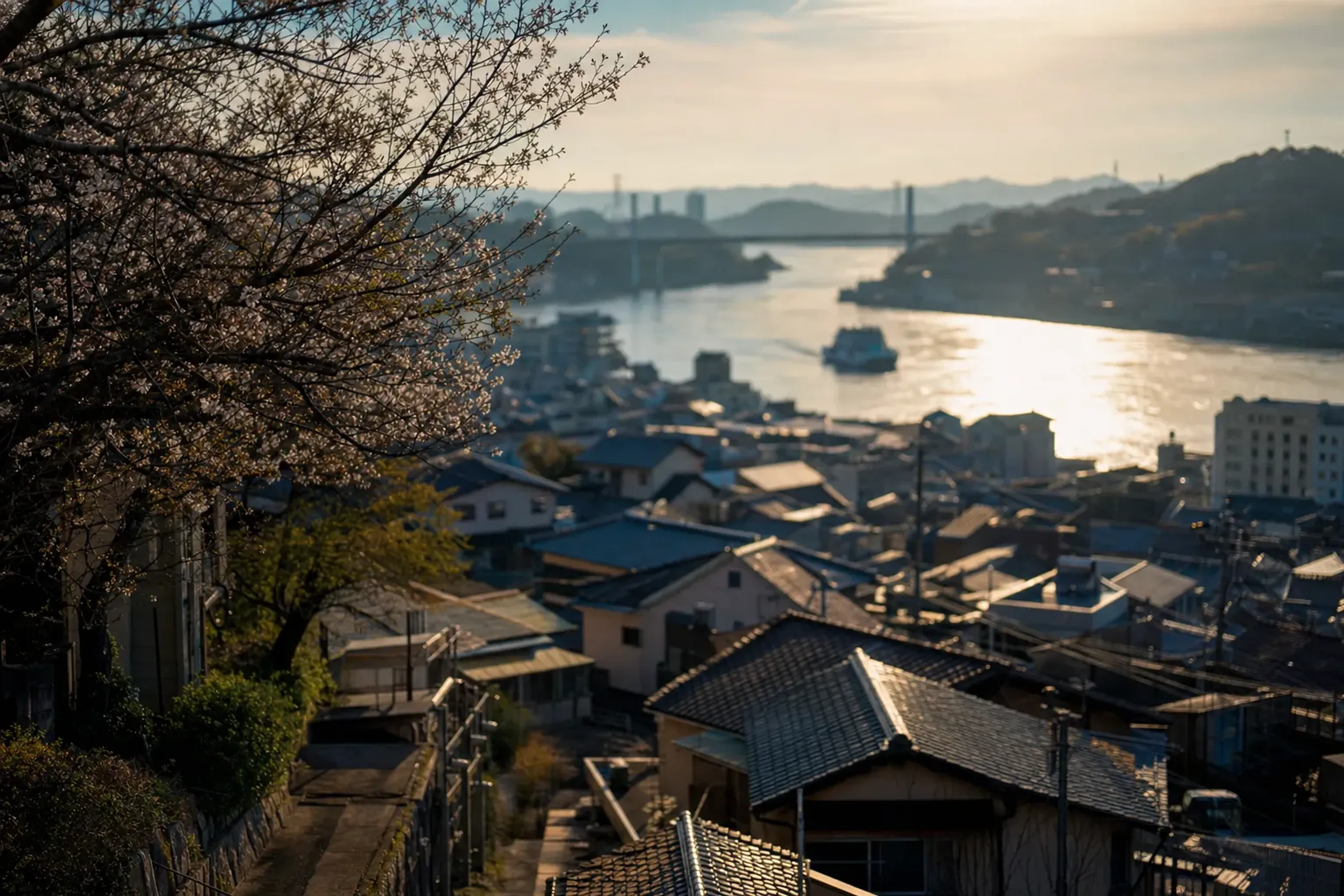
Tomonoura is a port town on the Seto Inland Sea, 14 kilometres south of Fukuyama Station in Hiroshima. For centuries, ships here waited for the tide.
This guide covers what there is to see, why the port mattered, how to reach it from Fukuyama Station, how long to allow, and how Tomonoura fits with Onomichi, Kurashiki or the Shimanami Kaido. Our concierge team at Japan Royal Service builds it into a Hiroshima, Okayama or Seto Inland Sea route, as a half day or a full day from Fukuyama.
Why Tomonoura Mattered: Tides, The Manyoshu And Korean Envoys
Tomonoura grew rich in the age of sail. According to dive-hiroshima.com, the town long flourished as a port where ships waited for favourable tides, and it appears in the Manyoshu.
In the Edo period, dive-hiroshima records, Tomonoura was a port of call for Kitamae ships. Korean envoys often stopped here on their missions to Japan. japan-guide adds that merchant ships on the Seto Inland Sea docked at Tomonoura while waiting for a favourable tide in the age of sailboats.
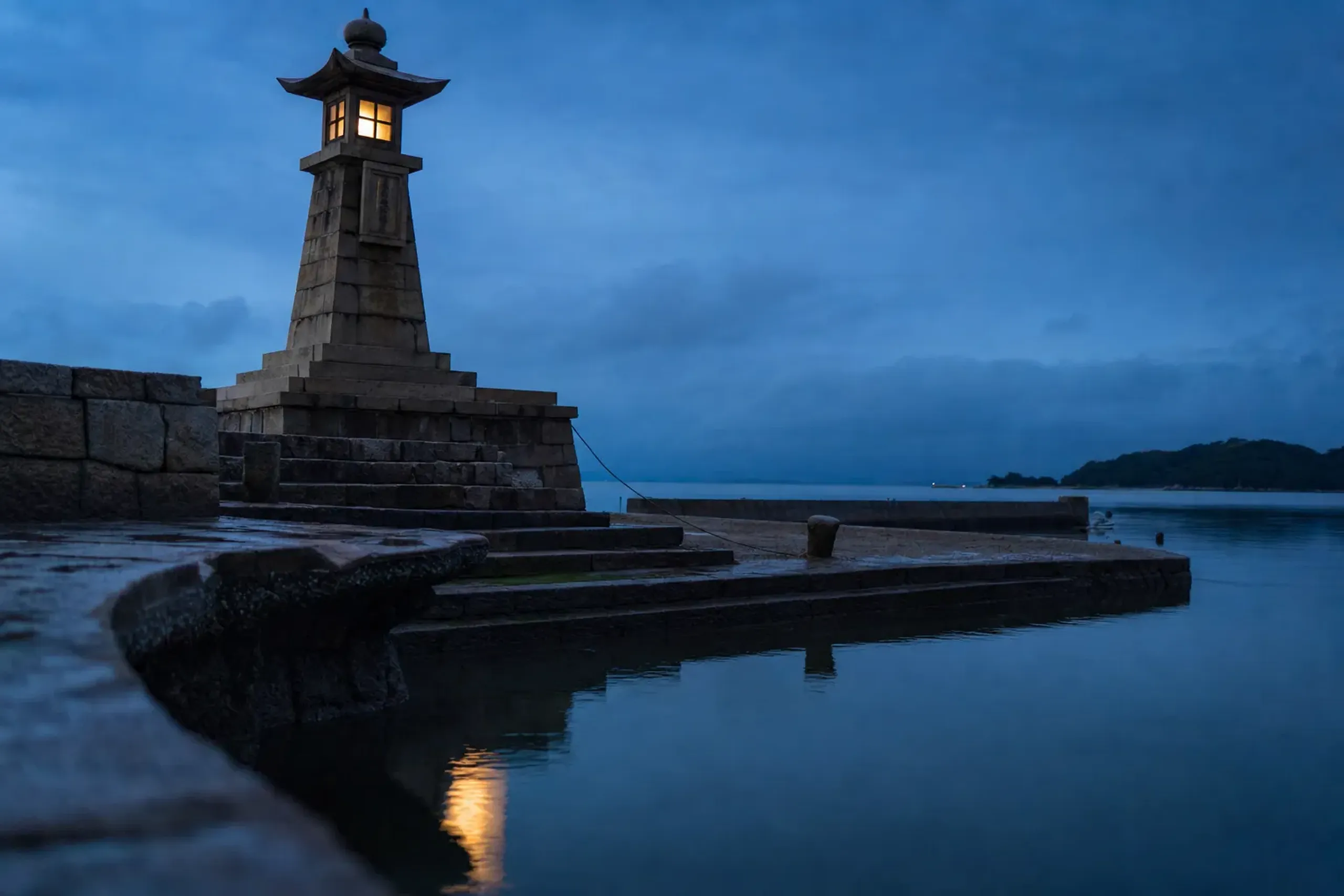
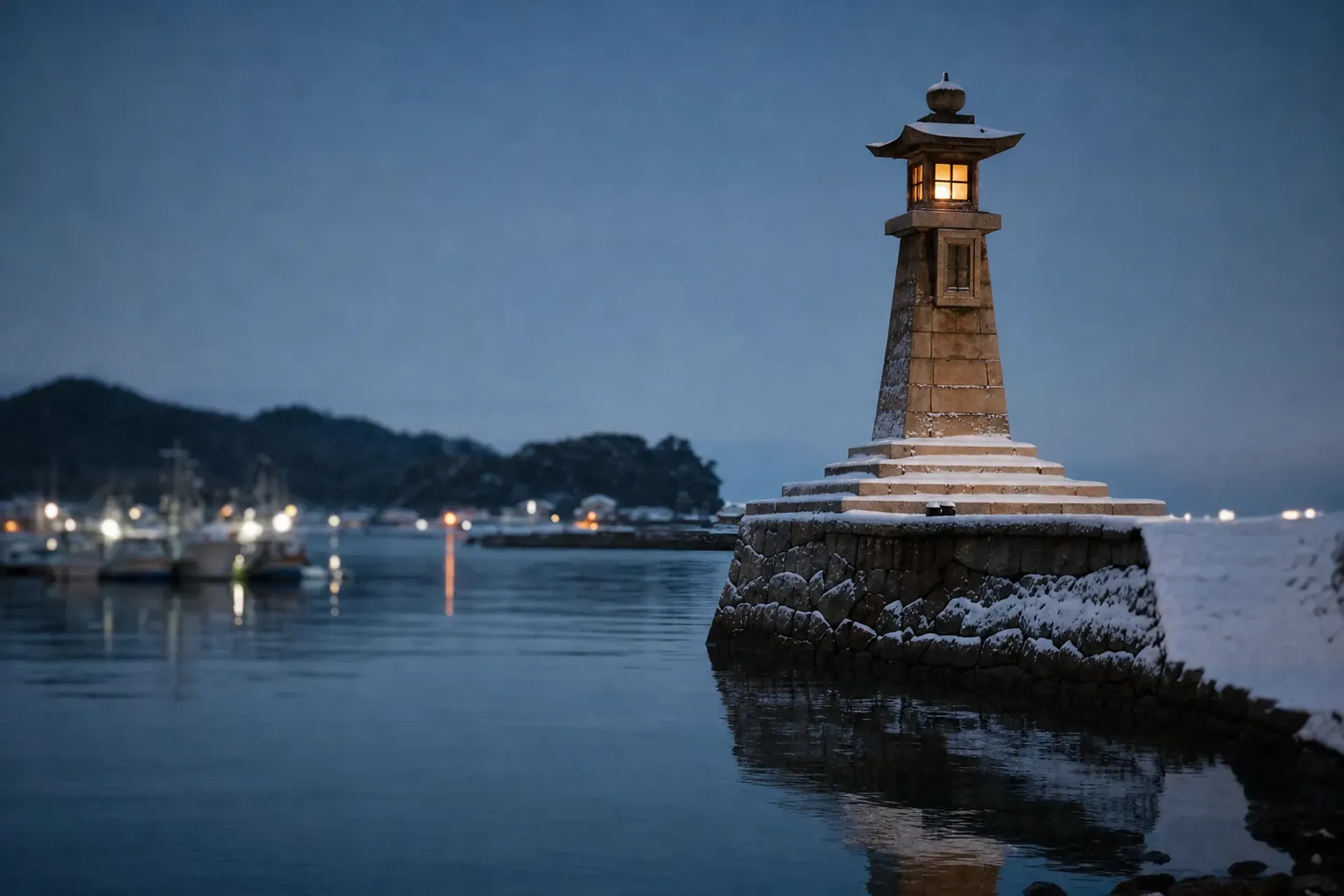
The Joyato lantern on the Tomonoura waterfront, part of the surviving Edo-period harbour.
The Edo-Period Harbour And The Joyato Lantern
The Fukuyama city tourism leaflet names five elements of the old harbour:
- Gangi — a stepped boat landing.
- Ohato — a large breakwater.
- Tadeba — the remains of an old dock for ship maintenance and repair.
- Funabansho — the remains of an old coast-guard station.
- Joyato — an all-night lantern.
The Joyato stands at the waterfront. It is a stone lantern of the Edo period that once burned through the night. The Fukuyama tourism leaflet describes it as exceeding 10 metres from its foundation platform and calls it the tallest existing Joyato lantern of the Edo period; japan-guide gives its height as eleven metres.
Fukuzenji And Taichoro
At Fukuzenji Temple, beside the main hall, stands Taichoro. dive-hiroshima dates Taichoro to around 1690. The Fukuyama leaflet records that it was built as a reception hall and served as a guesthouse for Korean envoys, overlooking the Seto Inland Sea.
The envoys who lodged here were part of the diplomatic missions that travelled between Korea and Edo-period Japan. Taichoro was the room where they were received.
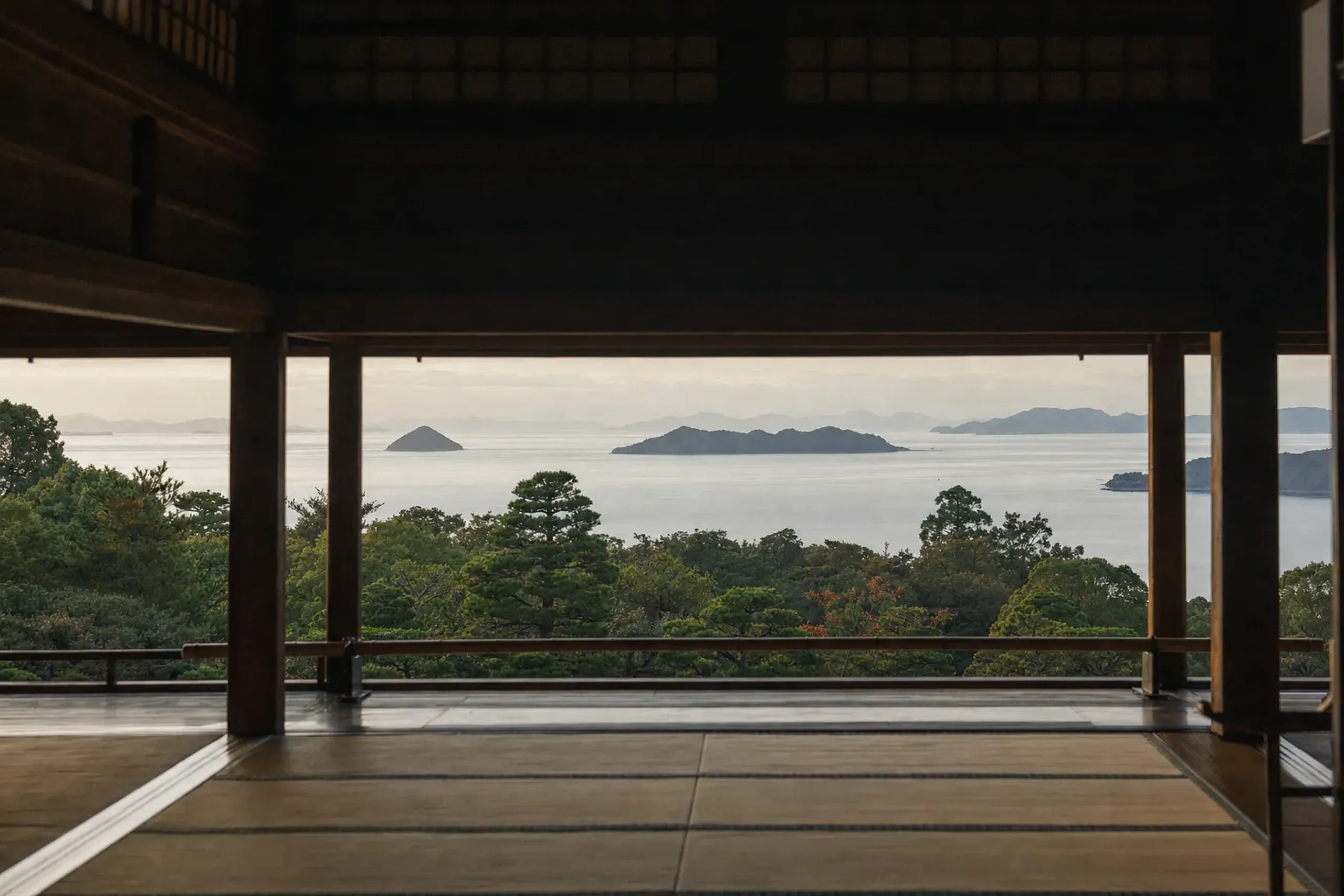
japan-guide notes that the temple veranda frames a view of Bentenjima and Sensuijima islands across the water.
An English-speaking cultural interpreter guide, booked separately from the driver, can carry that context through the harbour, Fukuzenji and the town.
The Iroha Maru And Sakamoto Ryoma
In 1867 the merchant ship Iroha Maru sank off Tomo, as the Fukuyama leaflet and japan-guide both record. On board was Sakamoto Ryoma.
After the sinking, Ryoma and other Kaientai members lodged at the Masuya Seiemon house. The house held a hiding room, found in 1989, which is open to the public. Nearby, the Irohamaru exhibition building — an Edo-period warehouse on reclaimed land — shows items recovered from the ship and a diorama of the sinking, according to the Fukuyama leaflet.
japan-guide notes that the museum carries few English explanations. That is a practical reason to travel with an interpreter guide, who can translate the displays and set the Iroha Maru story in its wider frame as you go.
The Ota Residence And The Townhouses Of The Preservation District
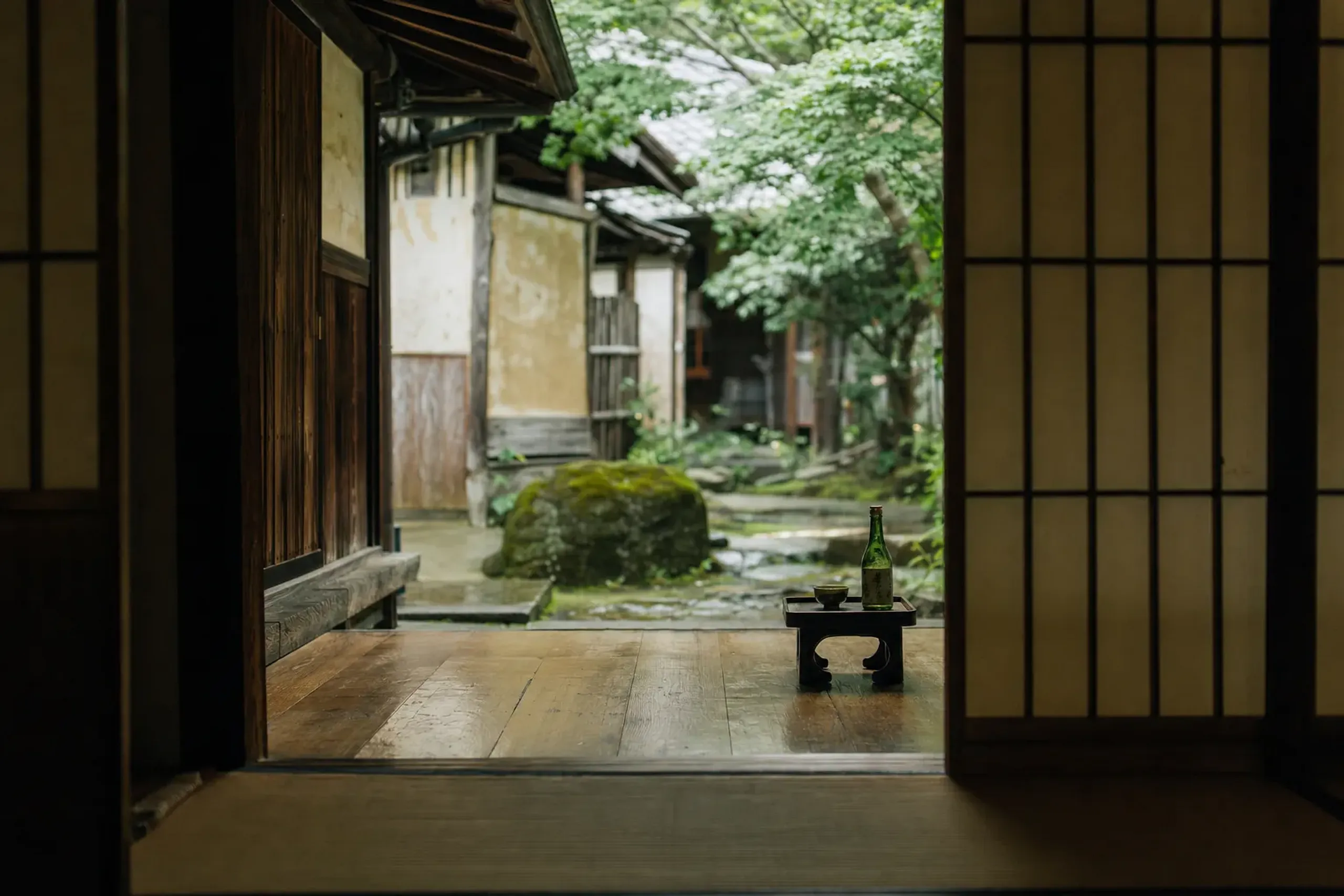
According to japan-guide, the Ota family began brewing homeishu, a herb liquor made from shochu and sixteen herbs, in the late 17th century, and held a monopoly on it from 1710 until the Meiji period. Visitors see tatami rooms, tea rooms and storehouses.
On 28 November 2017, according to visittomonoura.com and Fukuyama city tourism, the Minister of Education, Culture, Sports, Science and Technology designated the area a Preservation District for Groups of Traditional Buildings. The district covers about 8.6 hectares in the Nishi-machi area of southern Tomonoura.
It protects buildings from the Edo period to before the Second World War, mainly machiya townhouses with narrow frontages of 2.7 to 3.6 metres.
Sensuijima By Ferry
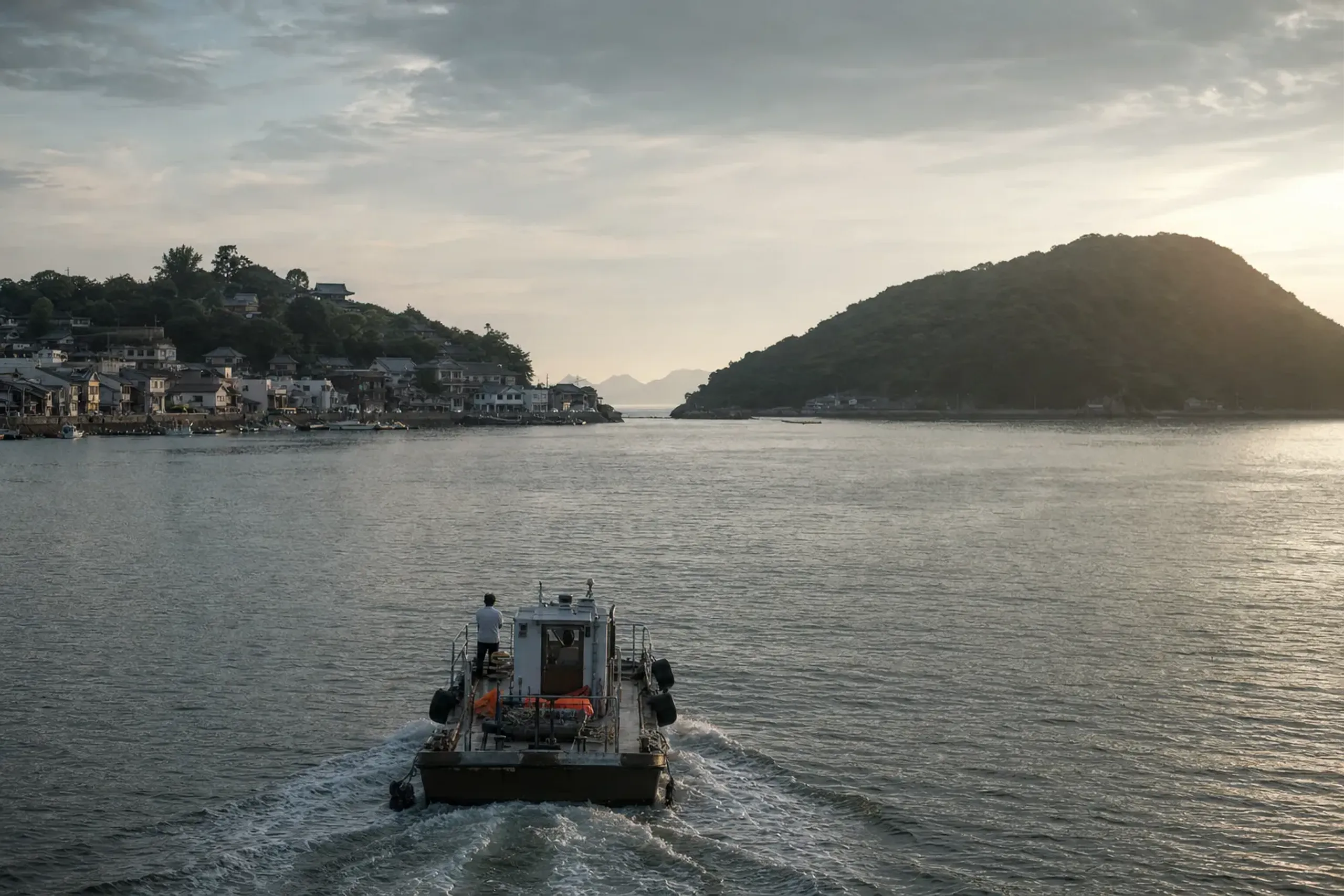
Across a short stretch of water lies the island of Sensuijima. According to the Fukuyama leaflet, a town ferry runs from Tomonoura to Sensuijima in about five minutes. japan-guide notes that bicycles can be hired at the ferry terminal.
Japan Royal Service does not run the ferry. The crossing is operated by the town, and the timetable varies. The JRS concierge team confirms the bus and ferry timings and which buildings are open directly with the guest at time of arrangement.
How Do You Reach Tomonoura From Fukuyama Station?
Tomonoura is about 30 minutes by bus from JR Fukuyama Station, or a short drive by car with a driver. Fukuyama Station sits on the Sanyo Shinkansen, so it is straightforward to reach from Tokyo, Kyoto, Osaka or Hiroshima.
According to japan-guide, buses run every 20 to 30 minutes from stop number 5 in front of the station, taking about 30 minutes to the Tomonoura stop by the visitor centre and about 35 minutes to Tomo Port, where buses turn round. dive-hiroshima gives the same approximate 30-minute journey.
A car with an English-speaking driver removes the waiting and lets you link Tomonoura to Onomichi, Kurashiki or the Shimanami Kaido in one unbroken day. Our team at Japan Royal Service arranges vehicles from partner companies with English-speaking drivers between Fukuyama Station and Tomonoura, and onward. The driver and the guide are separate roles.
Fitting Tomonoura Into A Seto Inland Sea Route
Tomonoura works well as a half day or day trip anchored on Fukuyama. From there, several routes open along the inland sea and its hinterland.
Onomichi lies to the west, the mainland start of the island-hopping road to Shikoku. Kurashiki, with its canal and white-walled merchant quarter, sits to the east in Okayama; we cover it in our guide to the Kurashiki Bikan Historical Quarter. The Shimanami Kaido, the sequence of bridges linking Hiroshima to Ehime, runs south from Onomichi; see our Shimanami Kaido in spring guide and our fuller Shimanami Kaido cycling guide.
Further west lies Itsukushima and its torii; our overnight on Miyajima sets out that stay.
How Japan Royal Service Arranges Tomonoura
Within this town, our concierge team handles the practical shape of the visit. We build Tomonoura into a Hiroshima, Okayama or Seto Inland Sea route as a half day or a full day from Fukuyama.
- Planning: the route that places Tomonoura beside Onomichi, Kurashiki or the Shimanami Kaido.
- Guiding: an English-speaking cultural interpreter guide for the harbour, Fukuzenji and the town, booked separately from the driver.
- Transfer: a vehicle from a partner company with an English-speaking driver between Fukuyama Station and Tomonoura, and onward to Onomichi, Kurashiki or the Shimanami Kaido.
- Accommodation and meals: ryokan and restaurant booking in Fukuyama or the area, with dietary needs passed ahead.
- Rail: tickets to Fukuyama on the Sanyo Shinkansen, including Green Car where available, platform assistance and luggage forwarding.
- Re-planning: same-day adjustment when weather changes.
The ferry to Sensuijima is run by the town, not by us. The JRS concierge team confirms the bus and ferry timings and which buildings are open directly with the guest at time of arrangement. Everything described here is open to the public.
Frequently Asked Questions
Where Is Tomonoura?
Tomonoura is a port town on the Seto Inland Sea, 14 kilometres south of Fukuyama Station in Hiroshima Prefecture. Fukuyama Station sits on the Sanyo Shinkansen.
What Is The Joyato Lantern In Tomonoura?
The Joyato is an all-night stone lantern of the Edo period at the Tomonoura waterfront.
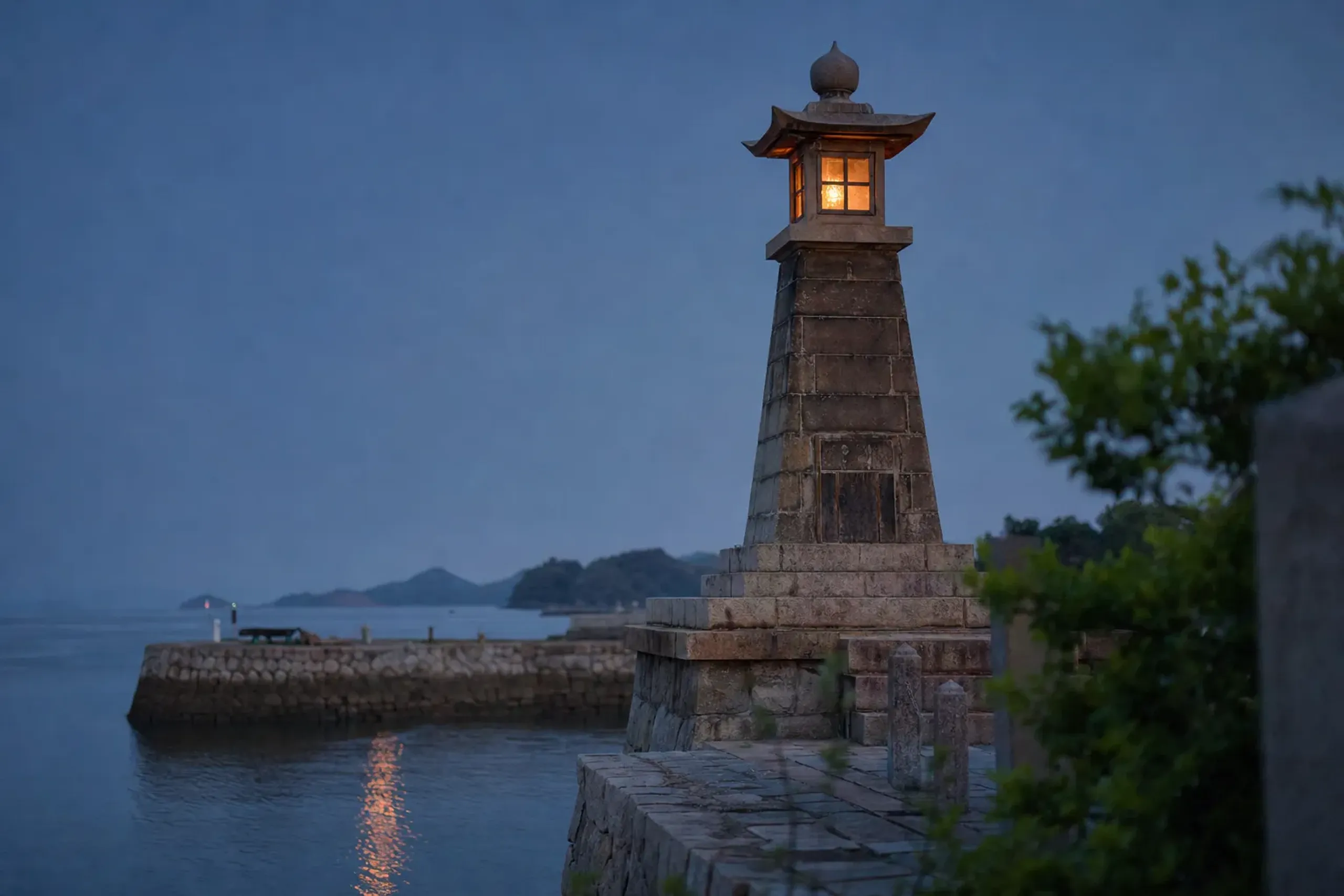
The Fukuyama tourism leaflet describes it as exceeding 10 metres from its platform and calls it the tallest existing Joyato lantern of the Edo period.
How Do You Reach Tomonoura From Fukuyama Station?
Tomonoura is about 30 minutes by bus from JR Fukuyama Station, or a short drive by car with a driver. According to japan-guide, buses leave from stop number 5 in front of the station every 20 to 30 minutes.
What Is Taichoro At Fukuzenji?
Taichoro is a reception hall built around 1690 beside the main hall of Fukuzenji Temple. According to the Fukuyama leaflet, it overlooks the Seto Inland Sea and served as a guesthouse for Korean envoys.
Why Choose Japan Royal Service
Japan Royal Service plans tailor-made journeys across Japan with calm, accurate groundwork. For Tomonoura, that means fitting the harbour town into a workable Seto Inland Sea route, arranging a vehicle from a partner company with an English-speaking driver, and pairing it with a separate cultural interpreter guide for the harbour, Fukuzenji and the town. We handle rail tickets to Fukuyama, accommodation and meals in the area with dietary needs noted, and same-day re-planning when weather changes. Where timings and building openings vary, our team confirms them with you directly as the trip is arranged.
To begin planning, contact our team here.