In this guide
- 01A Dance Kyoto Is Said To Have Lost, Still Walking Tsuwano’s Streets
- 02When Is The Tsuwano Heron Dance (Sagi-mai) Held Each Year?
- 03What Will You Actually See At Tsuwano’s Sagi-mai?
- 04The Two Festival Days, Explained Without Guesswork
- 05How Do You Get To Yasaka Shrine (Tsuwano) And Tonomachi Street From Tsuwano Station?
- 06Etiquette And Photography: A Shrine Rite, Not A Stage
- 07The Story Tsuwano Tells About Origins (And How To Hold It Lightly)
- 08UNESCO Recognition: Where Tsuwano’s Herons Sit In A Larger Family
- 09Practical Planning For 20 And 27 July: Heat, Rain, And Viewing Flow
- 10How To Build A High-Comfort Festival Day In Tsuwano (Without Turning It Into A Town Guide)
- 11What Japan Royal Service Can Handle For Tsuwano’s Heron Dance
- 12Frequently Asked Questions
- 13Why Choose Japan Royal Service
White wings appear first.
Not feathers, but carved hinoki cypress, held wide in the afternoon heat as a bell ticks, a drum answers, and a narrow street in Tsuwano—Shimane’s old castle town—briefly turns into a moving stage.
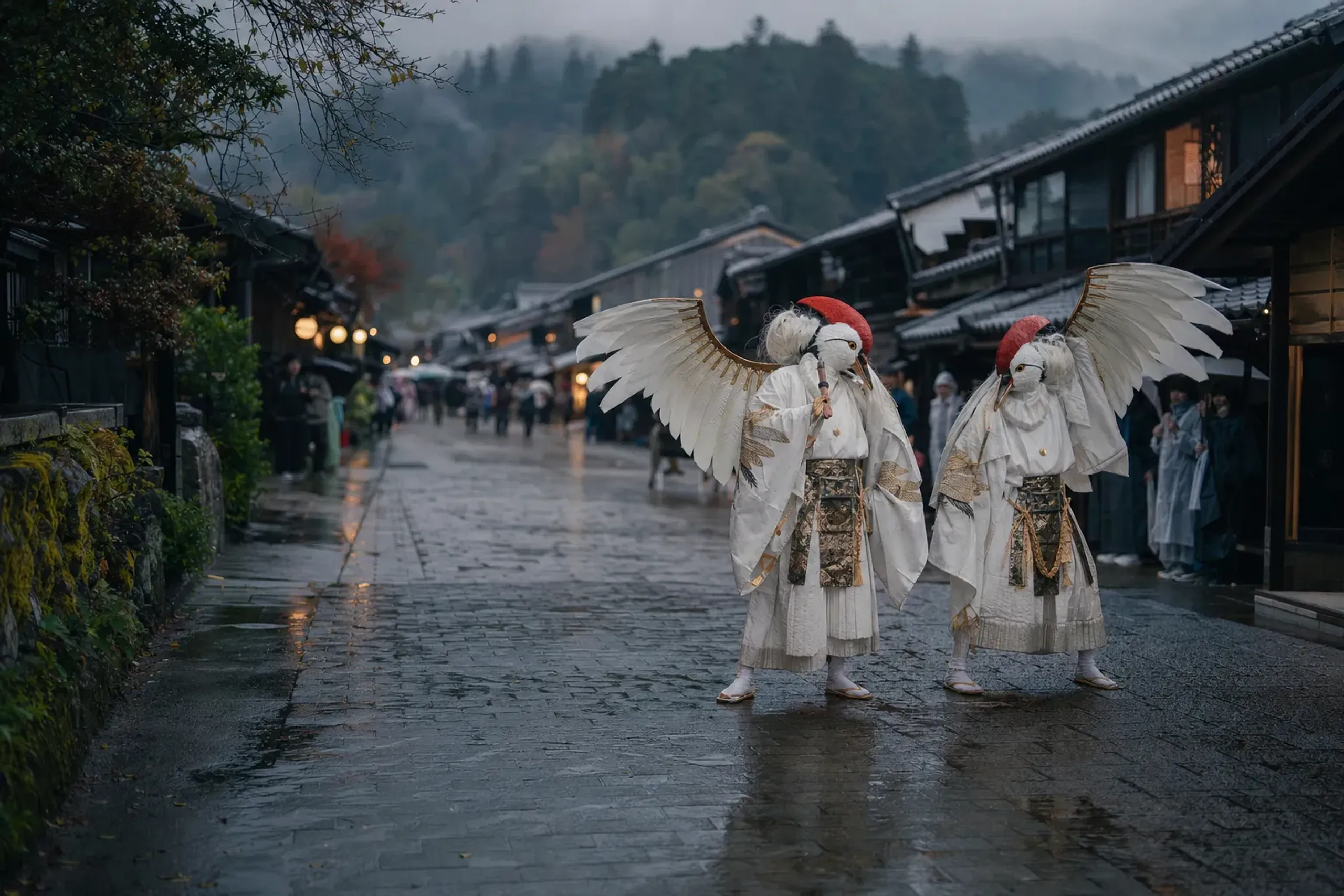
Two herons dance. One male, one female. They step, clap their wings in unison, and glide onward to the next stop, leaving only the sound behind them.
This is Tsuwano’s Sagi-mai (Heron Dance), performed every year on 20 July and 27 July as part of the Gion festival rites of Yasaka Shrine (Tsuwano).
A Dance Kyoto Is Said To Have Lost, Still Walking Tsuwano’s Streets
Local tradition links Tsuwano’s Sagi-mai to Kyoto’s Gion festival, passed via Yamaguchi and brought to Tsuwano in 1542 (traditionally), while Kyoto’s own heron dance is said to have lapsed.
That is the pull. Not novelty, but continuity.
On these two July afternoons, you are not watching a “show.” You are watching a shrine rite move through town, stopping at about ten fixed points. The herons do not hurry. The street sets the pace.
In our experience at Japan Royal Service, luxury travelers who have “done Kyoto” often want a quieter, rarer cultural line—something with provenance, yet still lived-in, not staged for visitors. Tsuwano’s herons meet that desire without asking for spotlight.
When Is The Tsuwano Heron Dance (Sagi-mai) Held Each Year?
The Tsuwano Heron Dance is held every year on 20 July and 27 July as part of Yasaka Shrine’s Gion festival rites in Tsuwano, Shimane.

Those two dates matter because the festival has a clear rhythm.
20 July is the day of the deity’s procession out. 27 July is the day of the return. On both days, the heron dance is performed at set spots around town—sources variously describe 9, 10, or 11 locations, so we recommend planning for about ten.
The dance typically begins in the afternoon and continues into late afternoon. Exact times can shift year to year, and published schedules do not always match across listings. For clients, our concierge team verifies the current year’s route and timing ahead of the visit.
What Will You Actually See At Tsuwano’s Sagi-mai?
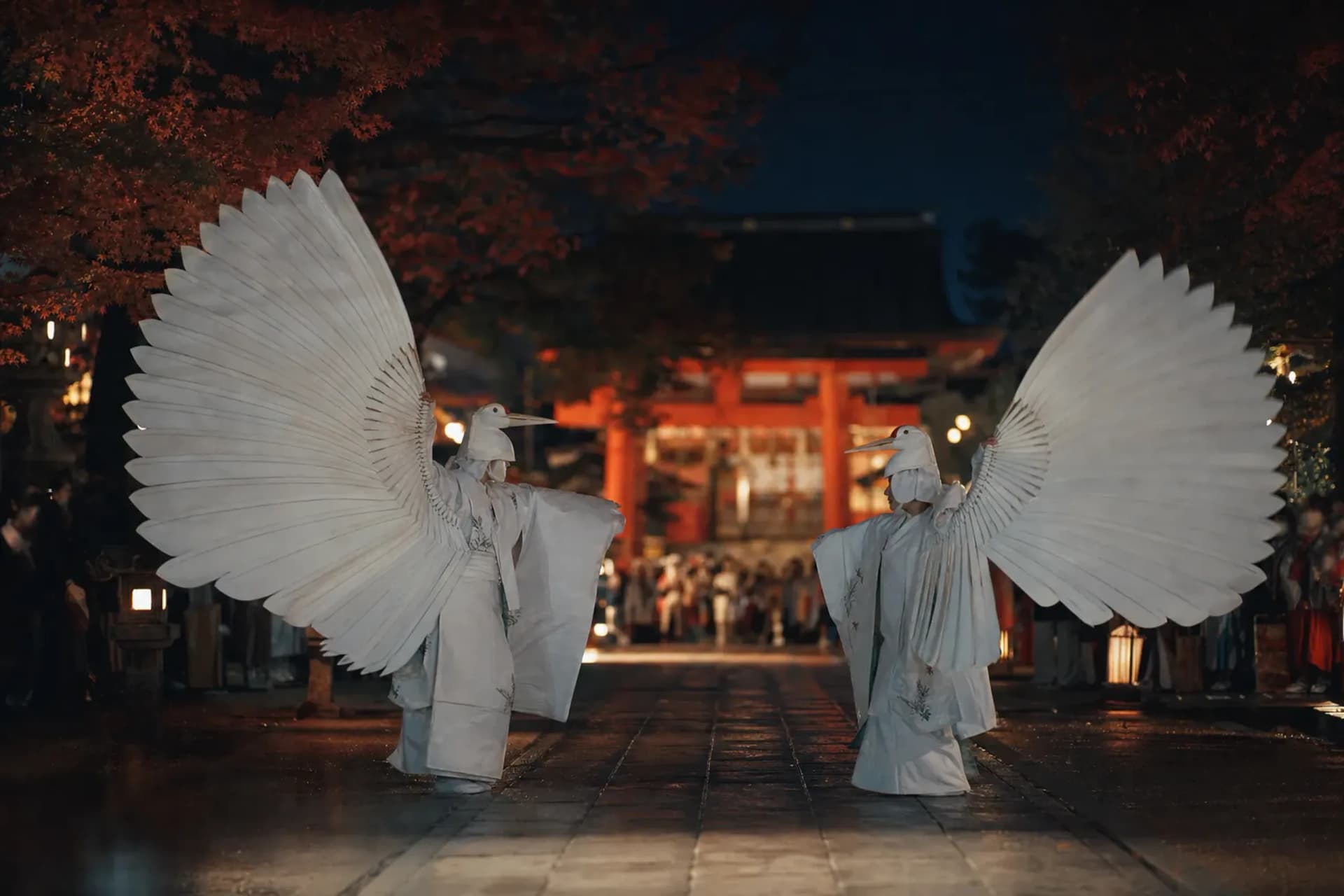
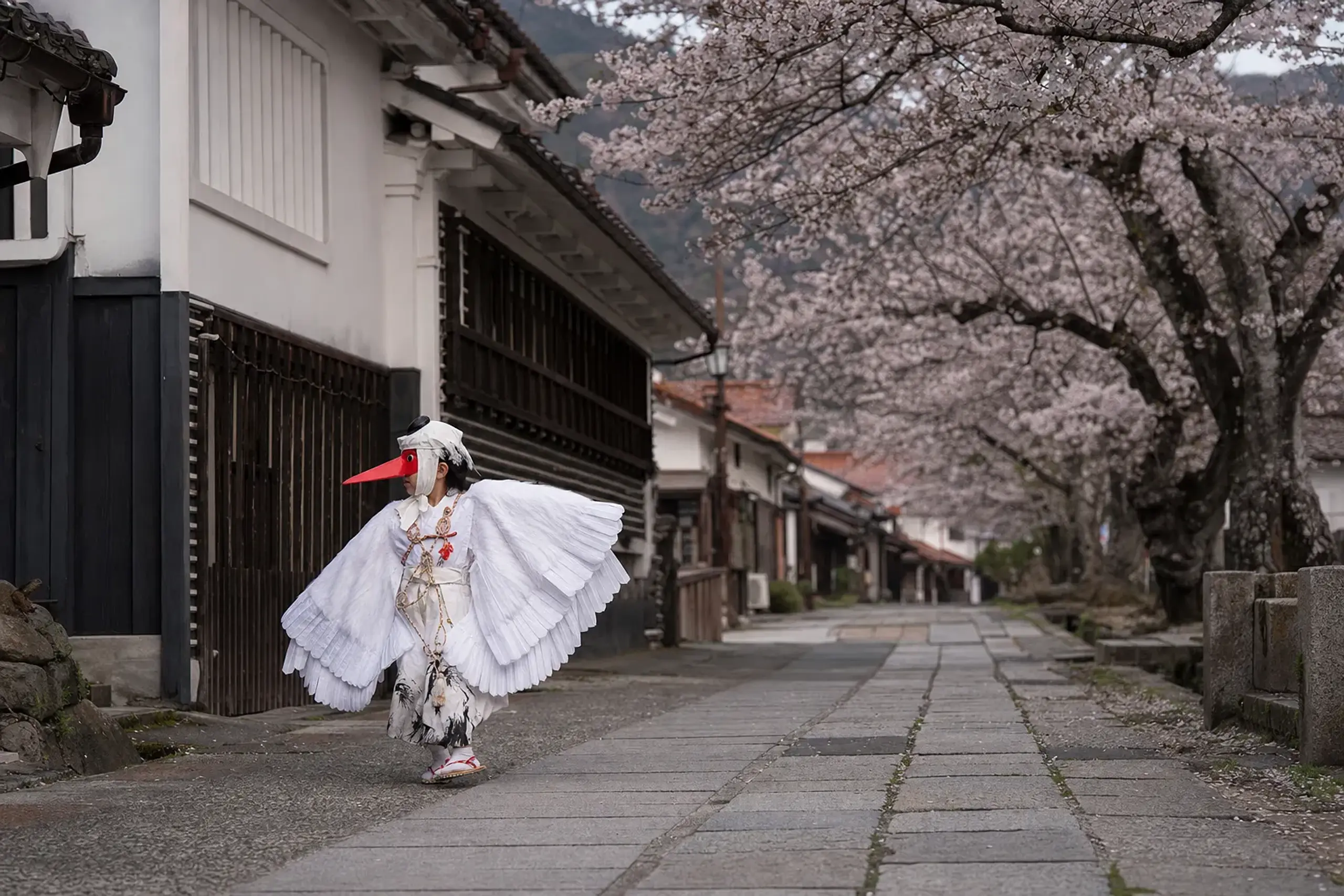
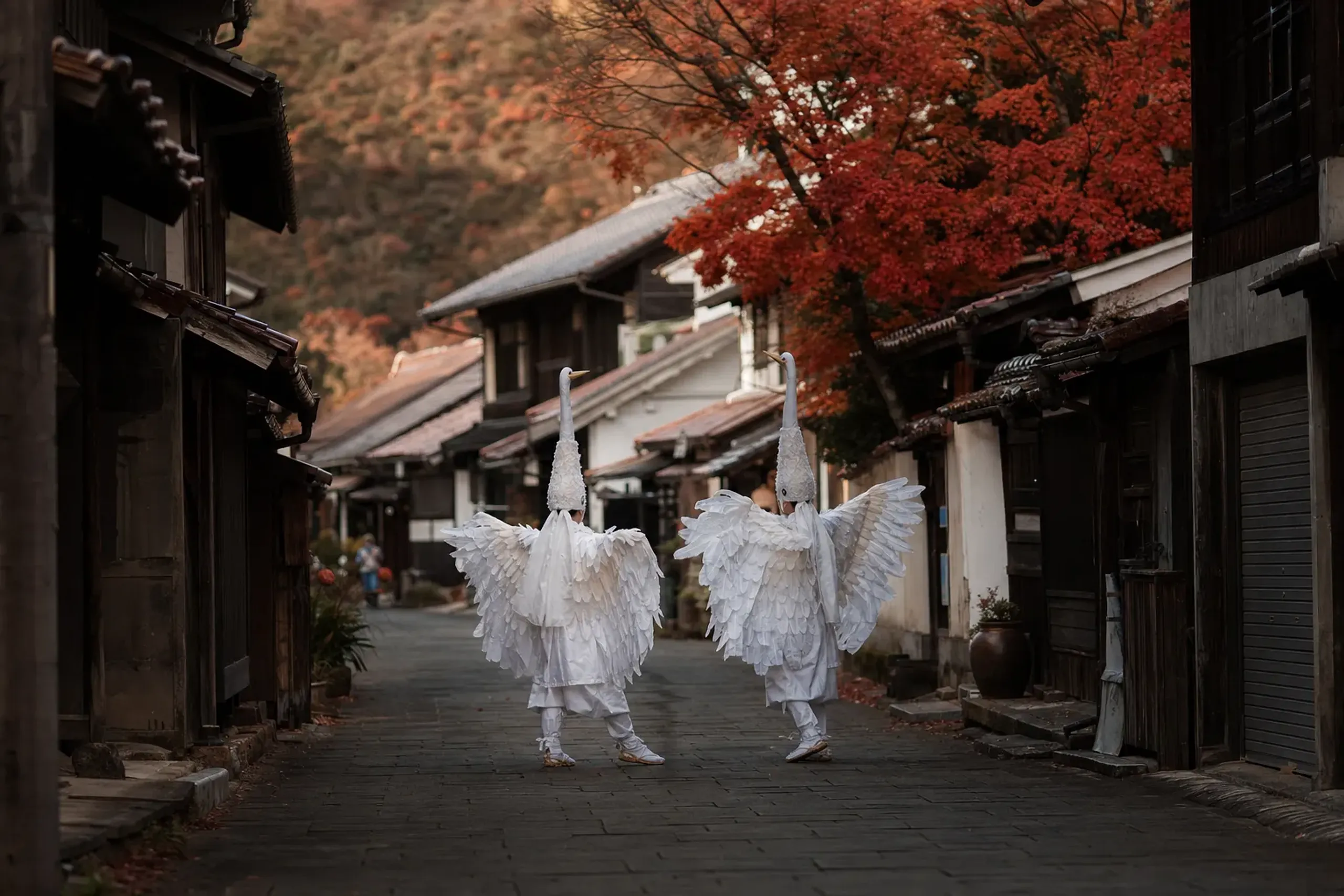
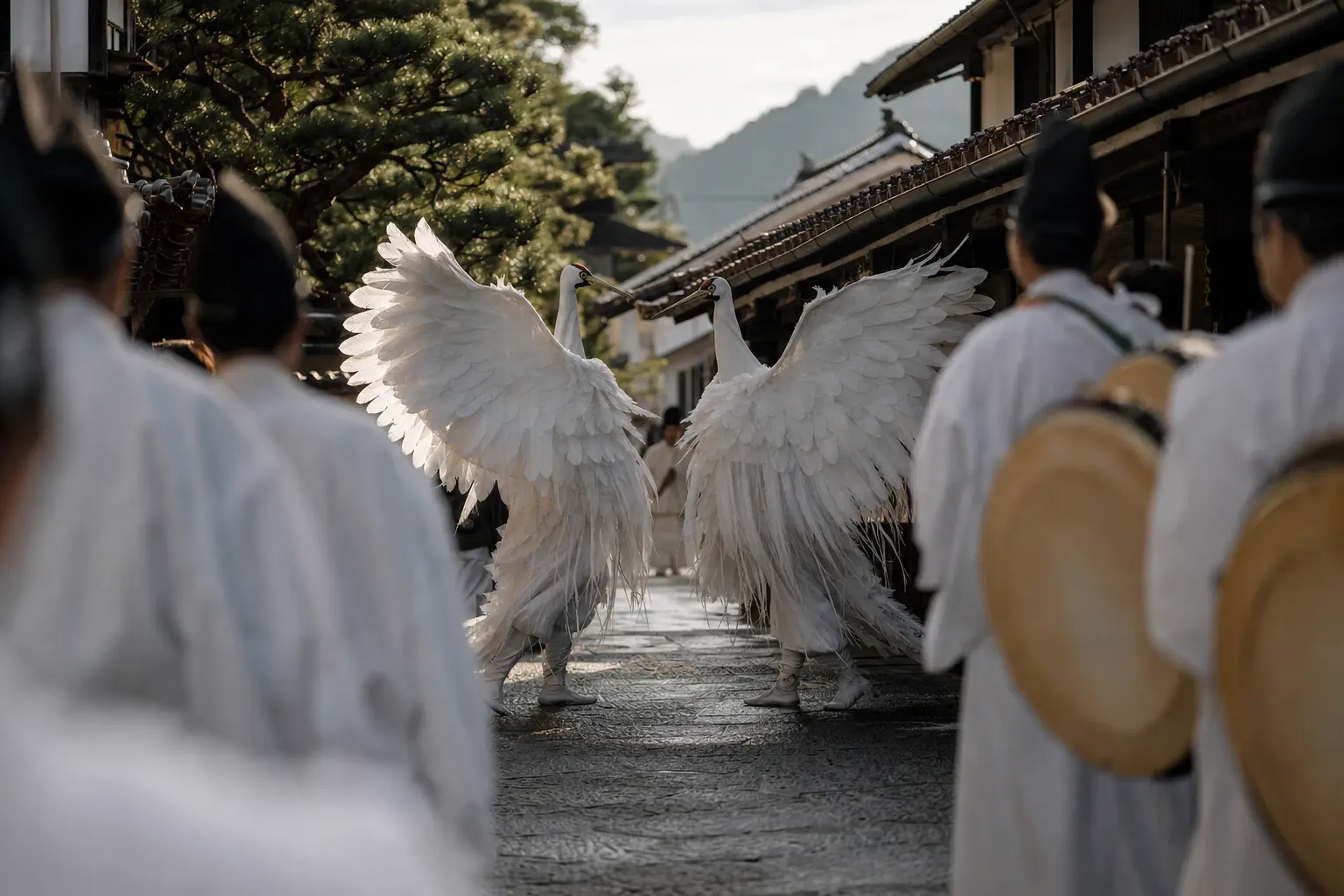
You will see two dancers in white heron costumes stop, spread and clap hinoki wings in unison, then proceed through town to the next performance point, accompanied by song, bell, and drum.
The herons are a pair. Male and female. Their movement is precise, almost clipped, as if the air itself has weight.
One reading, shared in local commentary, notes that the male’s beak is open and the female’s is closed, and interprets the dance as courtship. Treat that as a lens, not a rule. The rite holds more than one meaning at once.
Earlier in the day, Tsuwano also presents a “young heron” version danced by elementary-school children, said to be about 60 years old as a local tradition. If you arrive early, it adds a second register: the same form, carried by smaller hands.
The Two Festival Days, Explained Without Guesswork
Think of 20 July and 27 July as two chapters with the same characters.
On 20 July, the deity’s procession moves outward from the shrine context into the town. On 27 July, the return brings the energy back toward the shrine. In both chapters, the heron dance punctuates the route at designated points.
Where should you stand? The simplest answer is also the best one: Tonomachi Street and the area near Yasaka Shrine are the usual viewing points. They give you repeated chances to see the wings open and close, and they keep your walking manageable in midsummer.
We avoid publishing a fixed “best spot list” because the exact order and points can be revised. What we do instead is plan your afternoon around flow: where you begin, where you pause, and where you step aside when a crowd thickens.
How Do You Get To Yasaka Shrine (Tsuwano) And Tonomachi Street From Tsuwano Station?
Yasaka Shrine and Tonomachi Street are about a 10–15 minute walk from Tsuwano Station, making the heron dance practical to attend even without a car.
Tsuwano is served by the JR Yamaguchi Line. The Japan National Tourism Organization notes it is a little over an hour from Yamaguchi to Tsuwano by train, which is why many visitors approach from that side.
If you arrive on foot, plan your timing with the heat in mind.
Bring water. Wear shoes you trust on pavement. Small choices decide whether the afternoon feels ceremonial or simply exhausting.
By car, access is often described as about an hour from Mutsukaichi IC. Parking can be paid and limited, especially on festival days, so we plan conservative buffers and a clear drop-off approach when we design a day with private transportation guidance.
Etiquette And Photography: A Shrine Rite, Not A Stage
This is a public street rite, and that is part of its dignity.
Stand to the side and leave a clear line for the procession. Keep your voice low when the music begins. If you are traveling with children, set expectations before the herons arrive—once the wings open, it feels wrong to negotiate behavior in the moment.
Photography is generally possible in public streets, but avoid turning the dancers into props. No stepping into the route for a “clean shot.” No flash at close distance. If you carry a long lens, use it as a tool of discretion, not intrusion.
Our team at Japan Royal Service also briefs guests on shrine manners in plain language—what matters, what does not, and how to move with quiet confidence.
The Story Tsuwano Tells About Origins (And How To Hold It Lightly)
Tsuwano’s tradition says the Sagi-mai began in 1542 under the Yoshimi lord, Yoshimi Masayori, as a rite connected to warding off plague.
There is also a story of interruption.
The dance is said to have been suspended under the Sakazaki lord who replaced the Yoshimi. One account adds that the Kamei lord revived it in 1643 by sending men to learn it in Kyoto.
These are traditional histories, carried the way festival histories often are: partly record, partly memory, partly pride. We recommend receiving them as the town presents them, without forcing them into courtroom certainty.
One local association also links the dance to the Tanabata legend. Mention it once and move on. The herons do not need an origin story to be convincing when they pass within arm’s length.
UNESCO Recognition: Where Tsuwano’s Herons Sit In A Larger Family
Tsuwano’s Sagi-mai is designated as a National Important Intangible Folk Cultural Property in Japan.
It is also part of the 2022 UNESCO Intangible Cultural Heritage inscription under furyū-odori, a grouping that includes other dances such as Gujō Odori and Nishimonai Bon Odori.
We keep that word—furyū-odori—in mind when planning. It points you toward the right kind of attention: processional, communal, grounded in place. Not a ticketed performance with fixed seats.
If you want context on the wider UNESCO family, we suggest reading our notes on Gujō Odori and Tenjin Matsuri for how street ritual changes when the setting changes. Different scale. Different pressure.
Practical Planning For 20 And 27 July: Heat, Rain, And Viewing Flow
Start with the weather. July in western Japan is midsummer, and Tsuwano is no exception.
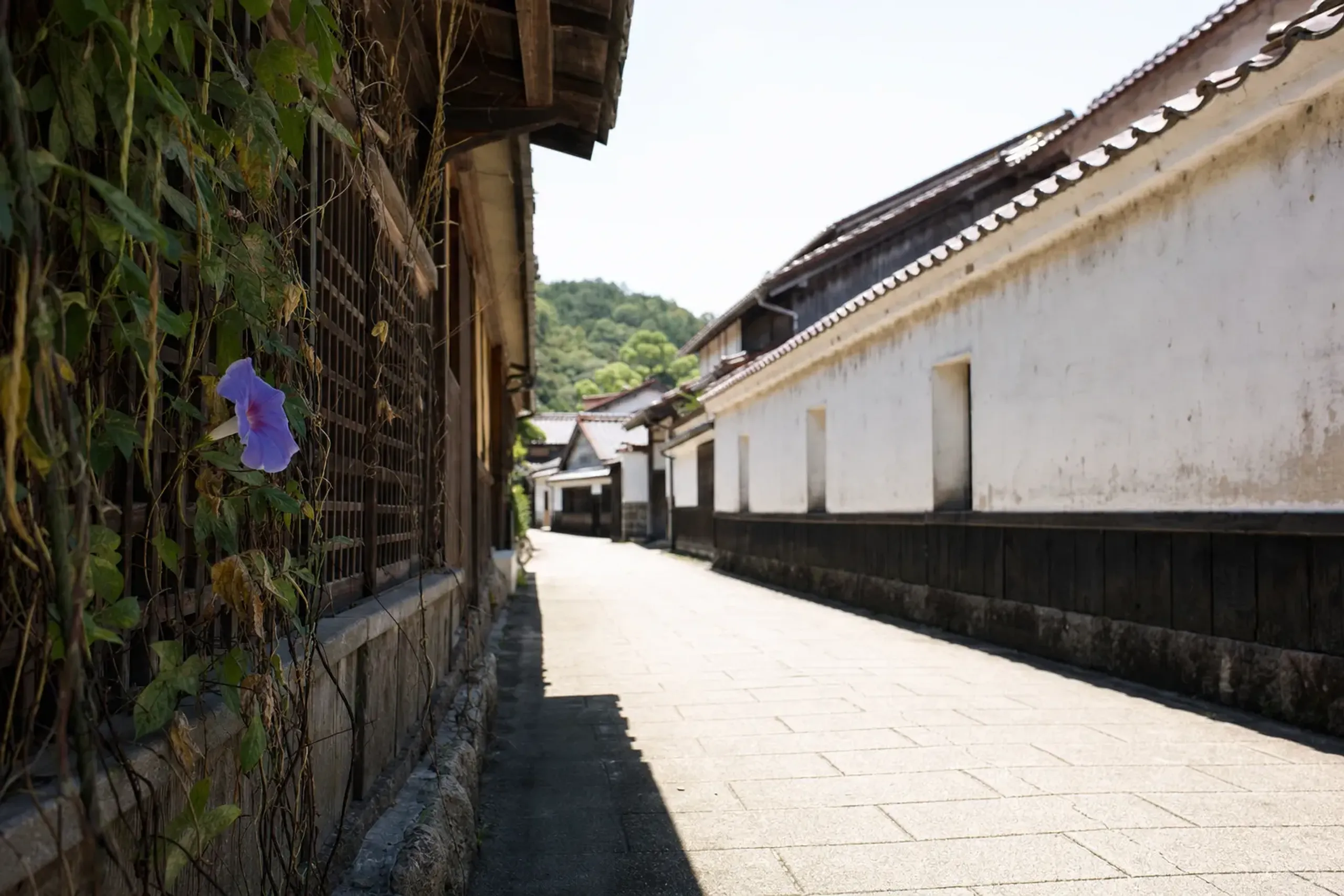
Plan light clothing that still feels respectful at a shrine. Build in pauses. A shaded corner and a cold drink can reset the whole afternoon.
Key fact: If it rains, the heron dance may move indoors to the town community center gym (often described as the Town People’s Center).
Because the dance stops at multiple fixed points, the most common mistake is chasing every stop. Big mistake.
Choose two or three positions you can reach easily—often Tonomachi Street and the shrine area—then let the procession come to you. You will see more detail. You will take better photographs. You will also leave Tsuwano with your nerves intact.
How To Build A High-Comfort Festival Day In Tsuwano (Without Turning It Into A Town Guide)
Arrive with one goal: see the herons well, without rushing.
A simple plan works best for most HNW travelers:
- Midday arrival in Tsuwano, with time to orient yourself near Yasaka Shrine and Tonomachi Street.
- Afternoon viewing as the dance begins and moves through about ten stops.
- One quiet break in the shade between appearances, rather than trying to “collect” every stop.
- Exit plan that avoids the tightest crowding right after a performance point clears.
If you want one line of setting: Tsuwano is sometimes called the “Little Kyoto of San’in.” The phrase is overused. The streets still have a hush that helps the herons feel plausible.
For guests who want a Shimane anchor beyond the festival day, we may suggest pairing the region with a separate visit to Matsue Castle.
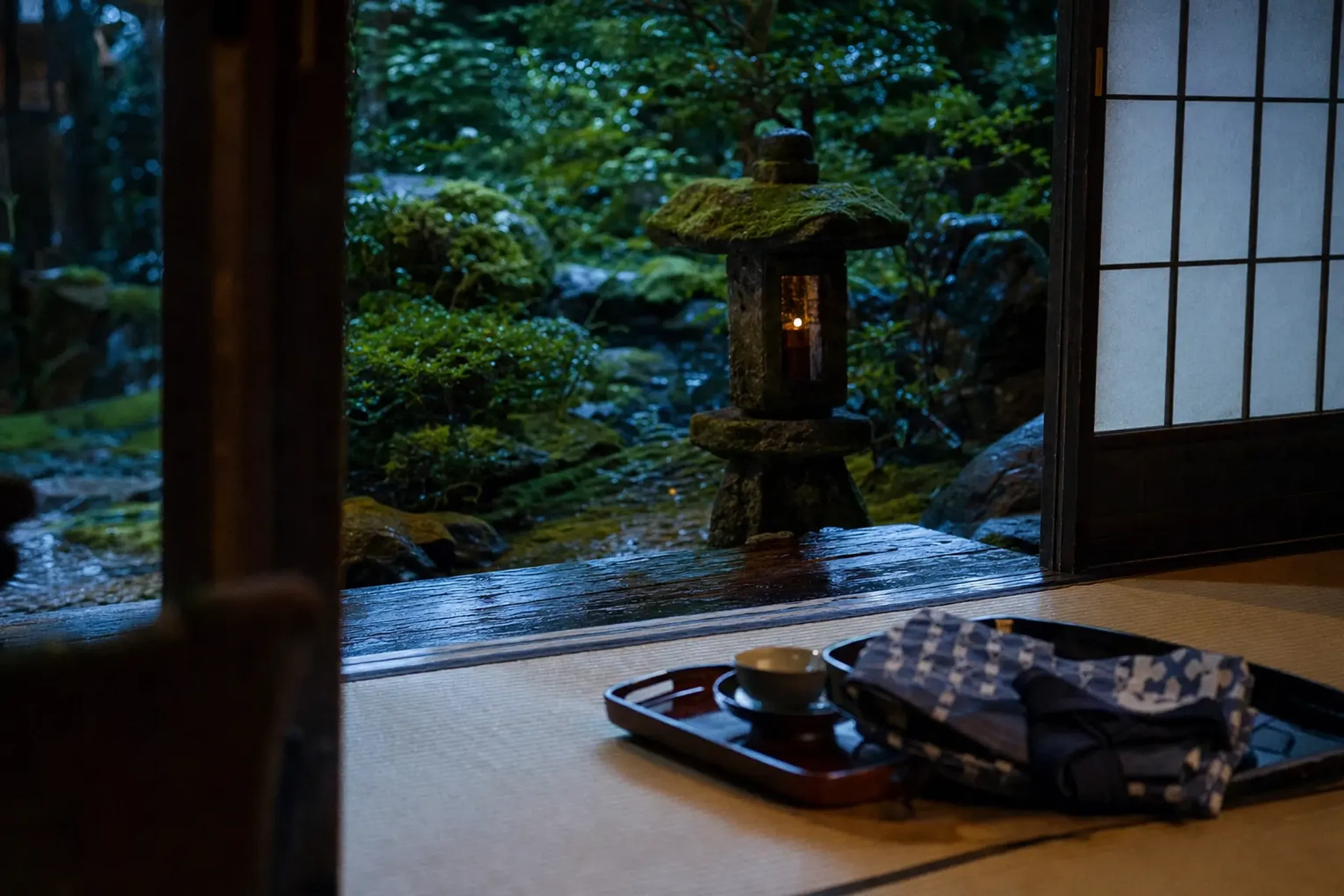
Only if it suits your route. No padding.
What Japan Royal Service Can Handle For Tsuwano’s Heron Dance
Japan Royal Service supports Tsuwano Sagi-mai visits with guiding, transfers, accommodation coordination, and viewing planning, while the rite itself remains a public shrine procession performed in the streets.
That boundary matters. We do not imply special access to the dancers, the procession, or the shrine rites.
What we do provide is the part luxury travelers actually feel: calm movement and clean decisions. Which station arrival makes sense for your wider trip. How much walking is realistic in the heat. Where to stand so you can see the wings open without being pressed by the crowd.
And because public schedules can shift, our concierge team verifies the current year’s route, approximate timing, and rain contingency details ahead of your visit, then briefs you in plain English.
Frequently Asked Questions
Is Tsuwano’s Heron Dance Free To Watch?
Yes, Tsuwano’s Sagi-mai is a public street rite and is free to watch along the route and at performance points around town.
It is still worth planning like a serious event. The crowd density and heat are what tend to surprise first-timers, not the “ticketing.”
What Is The Difference Between 20 July And 27 July In Tsuwano?
20 July is the outward procession day and 27 July is the return, and on both days the heron dance is performed at about ten fixed points in Tsuwano.
If you care about the narrative arc, many guests prefer seeing the “out and back” structure across the two dates. If you are choosing only one day, we advise deciding based on your wider itinerary and how much walking you want in midsummer.
What Happens If It Rains During The Tsuwano Heron Dance?
If it rains, organizers may move the performances indoors to the town community center gym (often described as the Town People’s Center).
Because the decision can depend on conditions, our concierge team confirms the current year’s rain plan close to your travel dates.
How Far Is Yasaka Shrine (Tsuwano) From Tsuwano Station?
Yasaka Shrine and the usual viewing areas like Tonomachi Street are about a 10–15 minute walk from Tsuwano Station.
If you are arriving by car, we plan time buffers because festival-day parking can be paid and limited.
Why Choose Japan Royal Service
Luxury in rural Japan is rarely about access. It is about judgment.
Our team at Japan Royal Service plans Tsuwano’s Sagi-mai with discretion, steady logistics, and a feel for quiet cultural weight—so you experience the herons as a living rite, not a rushed checklist.
We also know when to keep things simple: two viewing positions, one shaded pause, and a clear exit plan can do more for your day than an over-engineered route.
For private coordination, reach our team privately via WhatsApp or LINE, or contact us here.