In this guide
- 01Why Order Matters As Much As Selection
- 02Should Your First Night In Kyoto Be A Formal Dinner?
- 03The Escalation: What Each Kind Of Meal Asks Of You
- 04Why The Most Demanding Meal Belongs Late
- 05The Two Light Nights, And What They Are For
- 06Why Returning To The Same Counter Twice Can Beat Two Different Ones
- 07Is Lunch A Better Time For A Formal Kyoto Meal Than Dinner?
- 08Matching The Meal To The Day Around It
- 09How Party Composition Changes The Ceiling
- 10What To Decide First, And What Can Wait
- 11The One Rule Worth Stating Plainly
- 12Frequently Asked Questions
- 13Why Choose Japan Royal Service
A couple we advised once ate the finest meal of their trip on the first night. A long, formal dinner. Fresh off a thirteen-hour flight, both of them time-shifted and glassy-eyed, they sat through course after course and remembered almost none of it. By dessert one of them was fighting sleep at the counter. They had chosen well and arrived at the wrong moment.
That is the problem this article addresses. Not which restaurants to choose in Kyoto, and not how to get into the hard ones. Which meal goes on which night. At Japan Royal Service we plan a great many Kyoto weeks, and the order of the meals shapes the trip as much as the names on the list.
Why Order Matters As Much As Selection
A palate adjusts over several days. So does a party. What lands as extraordinary on night four passes unnoticed on night one, when everyone is tired and running on the wrong clock. The same meal, moved three nights later, becomes a different experience.
Access is a separate question, and a real one. Some of Kyoto's most sought-after tables open only through introduction, and the timing of when to reserve them is its own discipline. We cover access in our guide to reservation timelines. This article assumes you can get the seats. It asks a narrower thing: given the seats, in what order should you use them.
Selection is what most guides stop at. Sequence is the part that gets skipped, and it is the part that decides whether the week builds or simply repeats.
Should Your First Night In Kyoto Be A Formal Dinner?
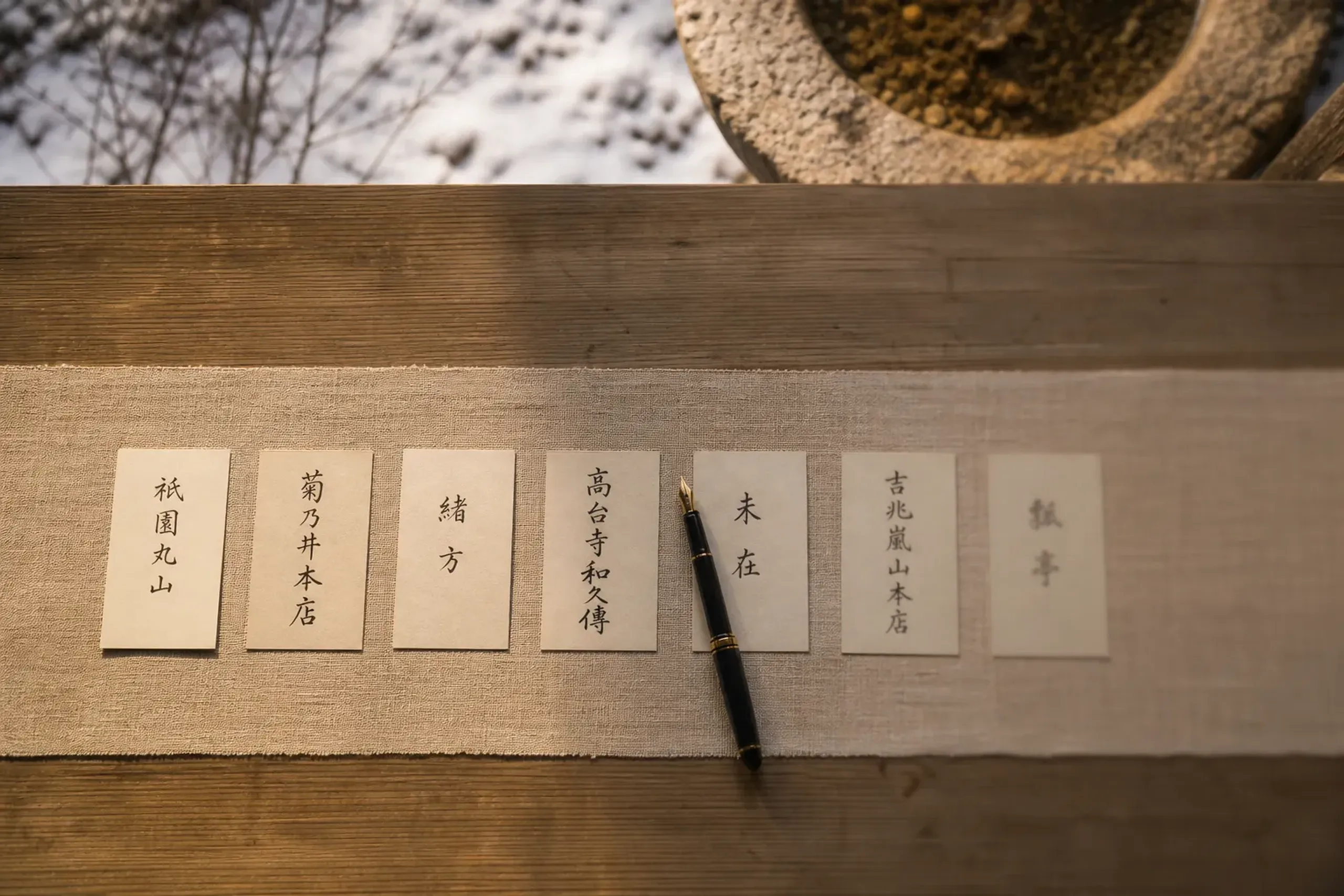
No. Keep the first night light. Arrival fatigue and jet lag mean a long formal dinner on night one is endured rather than enjoyed, and the finest meal deserves a rested party.
The reasons stack up. You have crossed several time zones. Your appetite is confused, your attention is short, and a structured meal that asks for three hours of focus is exactly the wrong thing to sit down to. Even excellent food struggles against a body that thinks it is four in the morning.
A light first night is not a wasted night. It is a landing. Something simple, near the hotel, with no obligation to linger. You want to sleep early, wake on Kyoto time, and let the real eating start once you are actually present for it.
The Escalation: What Each Kind Of Meal Asks Of You
Think of your dinners not by category but by what they demand of you as a guest. That is the useful axis. Some meals ask very little. Some ask for your full evening and your full attention.
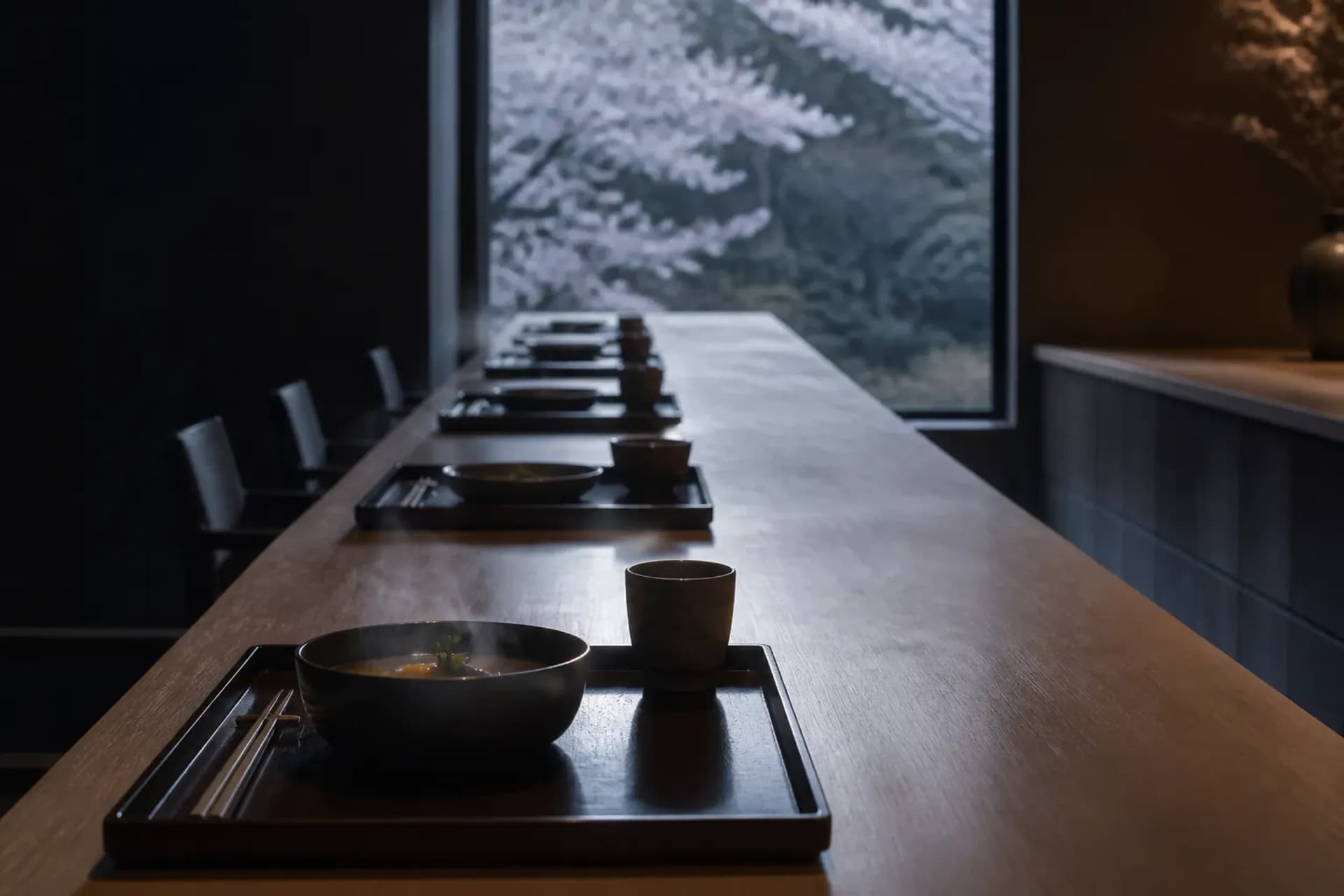
A Counter Where The Chef Cooks In Front Of You
This is the least demanding of the serious meals, and often the most enjoyable early in a trip. It is direct. The chef works an arm's length away, the pace is conversational, and the whole thing tends to run shorter.
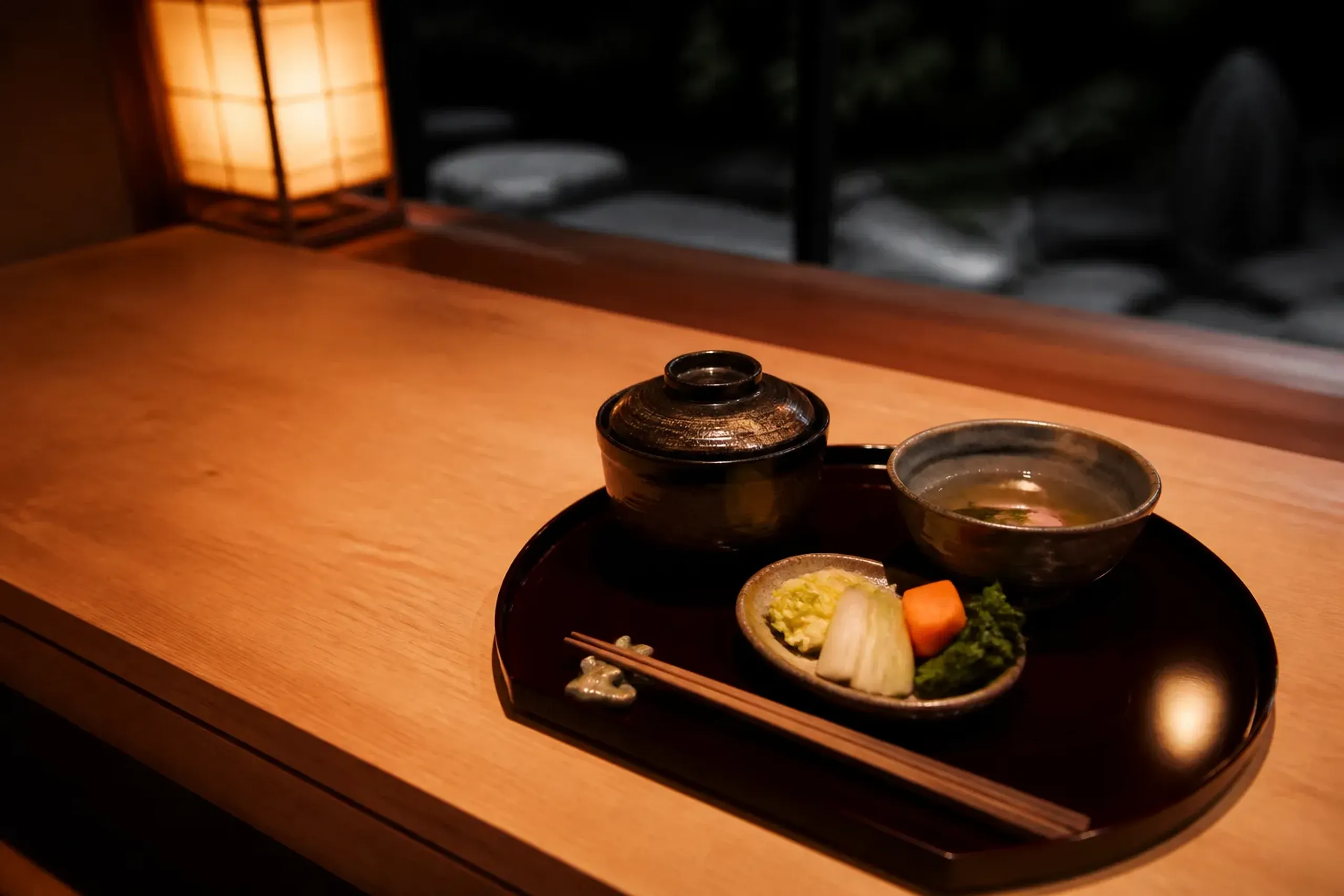
You can talk. You can watch. There is no long procession to sit through, and nothing to endure if your energy dips. A counter like this suits the second or third night well.
A Longer, More Structured Meal
The next step up runs longer and follows a set progression of courses. There is a shape to it, an intended arc from first plate to last, and the meal expects you to follow that arc. It rewards attention more than the counter does. Slot this once the party has found its rhythm.
A Traditional Restaurant With Private Rooms And Its Own Garden
This is the most formal and the most demanding. The longest sitting, the most courses, the fullest claim on your evening and your attention. A private room, often a garden view, a pace that will not be hurried. It is a wonderful thing when you are ready for it. It is a slog when you are not.
Why The Most Demanding Meal Belongs Late
Put the hardest meal near the end. By then the party is rested and adjusted to the hour, and it has context. Four days of eating in Kyoto teaches your palate what the region does with its water, its vegetables, its restraint. You arrive at the formal dinner already fluent.
That fluency is the whole point. The most structured meal in Kyoto is built on subtlety, on what is left out as much as what is added. A first-night palate misses half of it. A fourth-night palate catches the whole.
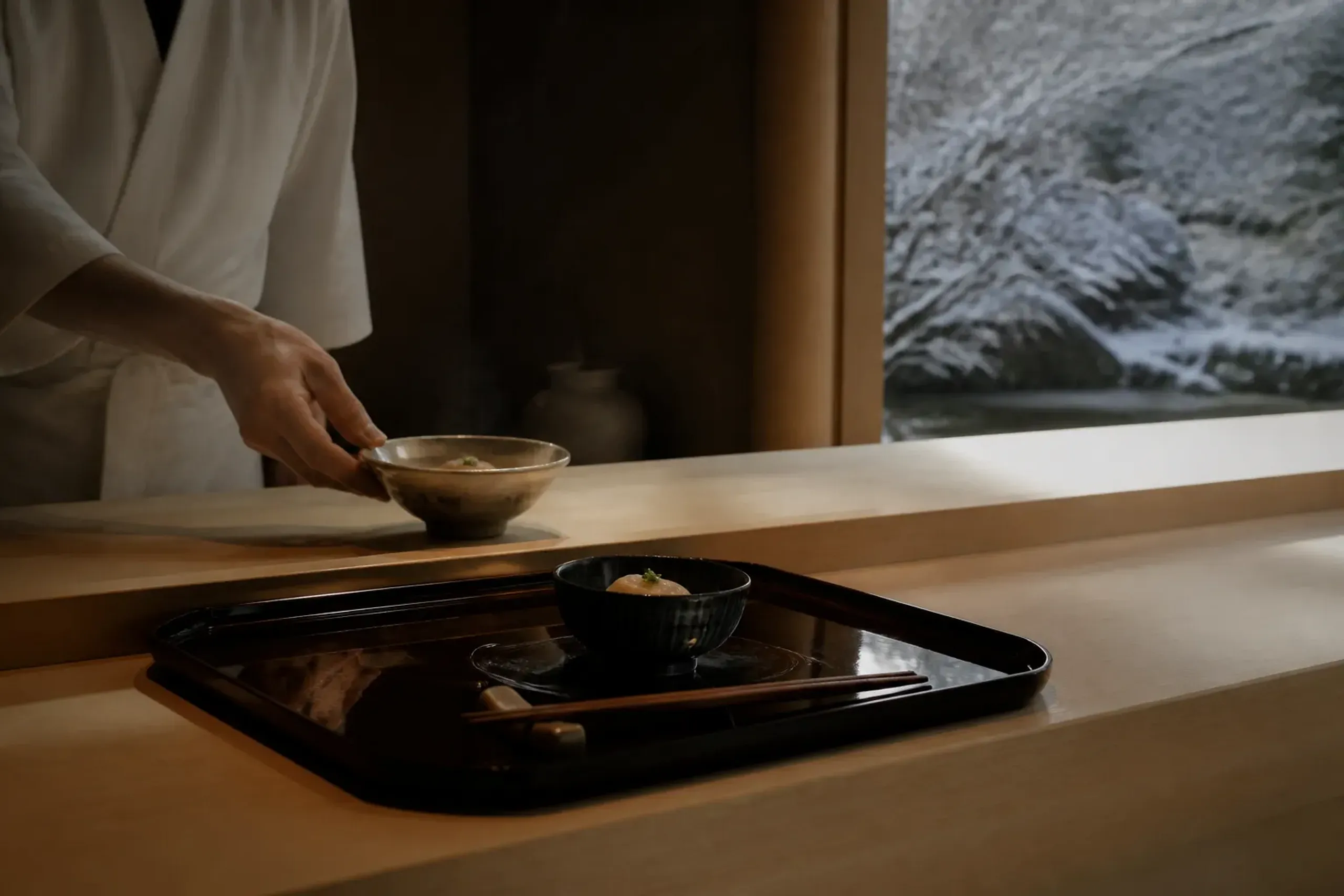
When the party is rested and the room is quiet and the garden is going dark outside the paper screen, a meal like this lands the way it is meant to.
Conduct at these tables matters too, especially in a private room. We handle that in our piece on dining by introduction and how to conduct yourself once you are seated, so we will not repeat it here. Sequence is our subject.
The Two Light Nights, And What They Are For
Five formal dinners in five nights is too many. Three is the ceiling. In a five-night week, plan two nights deliberately light, and treat them as seriously as the formal ones, because they are what make the formal ones work.
A light night can take several shapes. A supper brought up to the room from a department-store food hall, eaten in a robe with your feet up. A small local place with no reservation, chosen on a walk. A night with no plan at all, which after a long structured dinner is a mercy rather than a gap.
The food-hall option deserves particular respect. Kyoto's basement food halls hold some of the best casual eating in the city, and a supper assembled there and carried back is one of the quiet pleasures of a trip. We wrote about eating well this way, without a reservation, in our one-base itinerary guide. The principle travels to Kyoto.
Key idea: The light nights are not filler between the important dinners. They are the recovery that makes the important dinners register. Remove them and the formal meals blur into each other.
Why Returning To The Same Counter Twice Can Beat Two Different Ones
Going back to the same counter twice in a week is often better than booking two different ones.
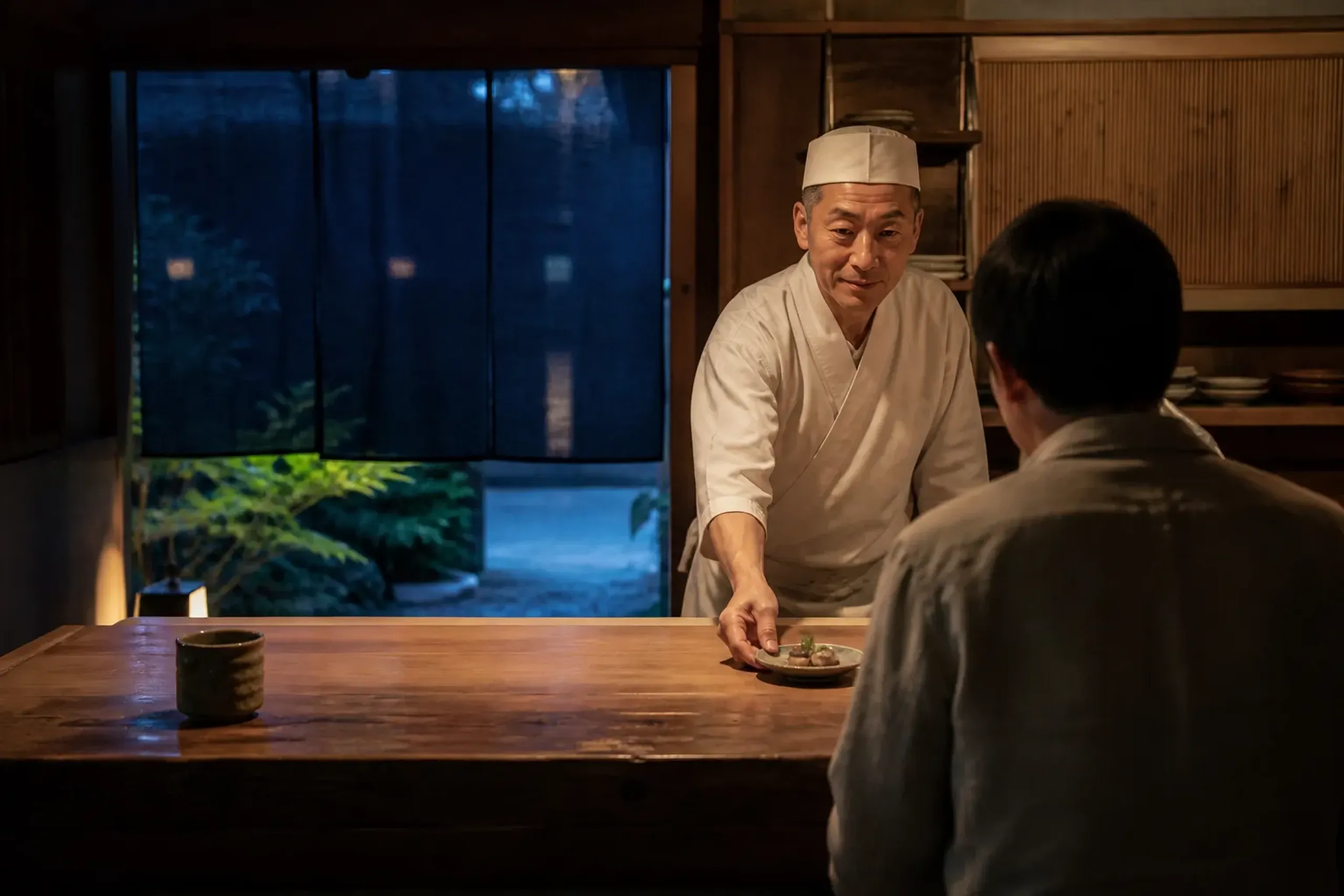
The second visit removes the first-visit friction, and the chef reads you better once you are not a stranger.
The first time at any counter, you spend energy orienting. Where to sit, how the room runs, what the chef's rhythm is. By the second visit that is all gone. You settle in faster, the conversation picks up where it left off, and the food often comes with small adjustments made in your favour because you are no longer an unknown quantity. Familiarity, in a room this small, is worth more than novelty.
This runs against the instinct to try as many places as possible. Resist it. A week of six different tables is a week of six first visits. A week that returns to one is a week that goes somewhere.
Is Lunch A Better Time For A Formal Kyoto Meal Than Dinner?
Often, yes. A formal lunch is shorter than the equivalent dinner, gentler on the schedule, and it leaves the entire evening free. Some of Kyoto's best kitchens are also easier to reach at midday.
Lunch is the most underused lever in a Kyoto week. It lets you experience a serious kitchen without surrendering a whole evening to it, and it frees the night for a light supper or nothing at all.
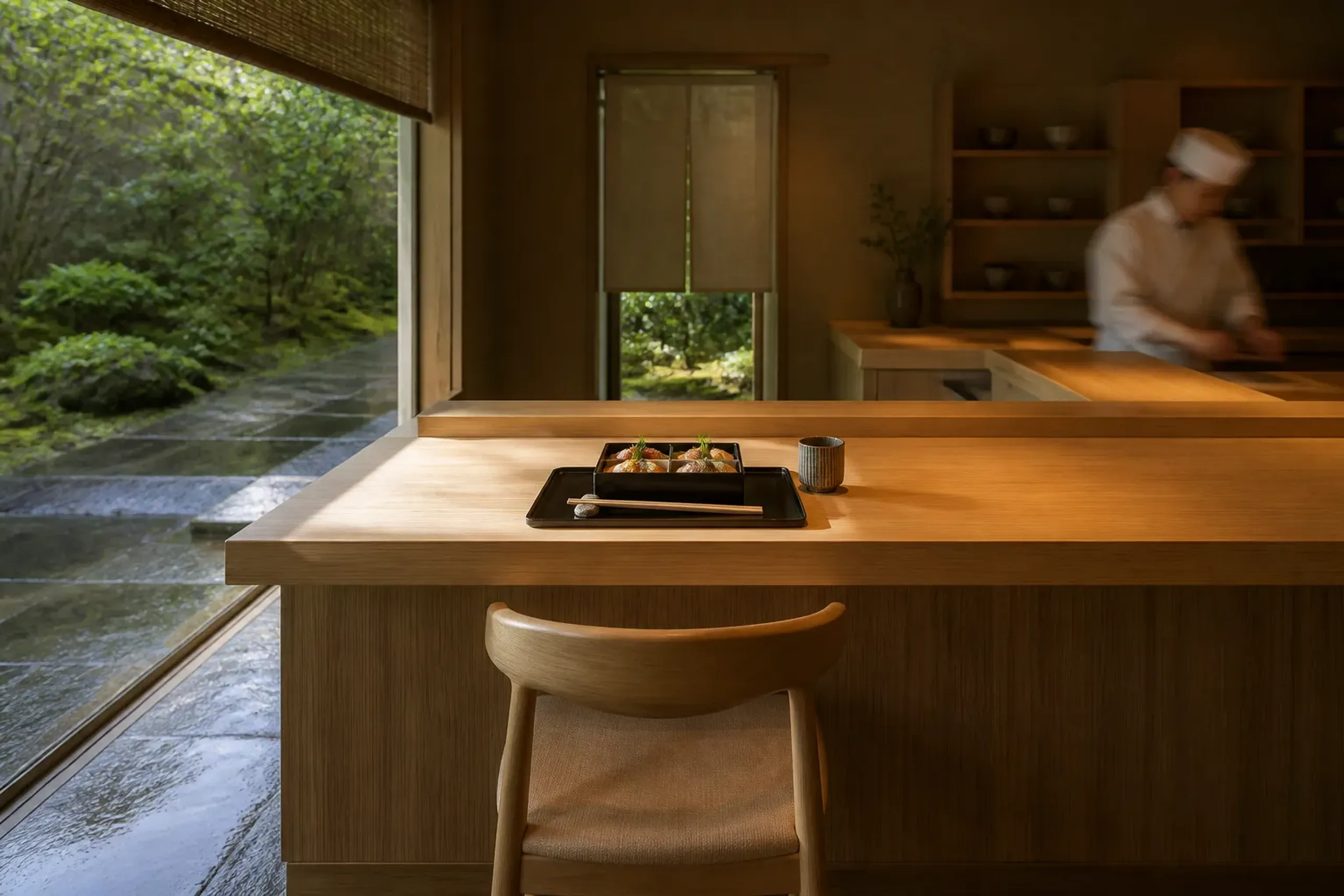
The pacing arithmetic changes entirely once you stop assuming every important meal has to happen after dark.
It also softens the party's load. A formal lunch followed by a quiet evening is far easier on older guests and children than a formal dinner that ends late. Move one of your structured meals to midday and the whole week breathes more.
Matching The Meal To The Day Around It
A long formal dinner after a full day of walking fails. Kyoto is a walking city, and its temples and gardens are spread across hills and riverbanks that take a toll on the legs. Sit an exhausted party down to a three-hour meal and the meal loses.
So plan the day before a demanding dinner to be lighter. Fewer sites, more rest, an afternoon that does not empty the tank. The meal is not a standalone event. It sits inside a day, and the day decides whether the party arrives ready or spent. For the shape of a well-paced Kyoto day, our approach to timing a cultural itinerary shows the principle, and a private car does a great deal to keep the walking optional. Our private chauffeured transport in Kyoto exists partly for this: to keep the party fresh for the table.
How Party Composition Changes The Ceiling
The three-dinner ceiling drops when the party is mixed. Children rarely sit happily through the longest, most formal meals, and older guests may tire before the last course.
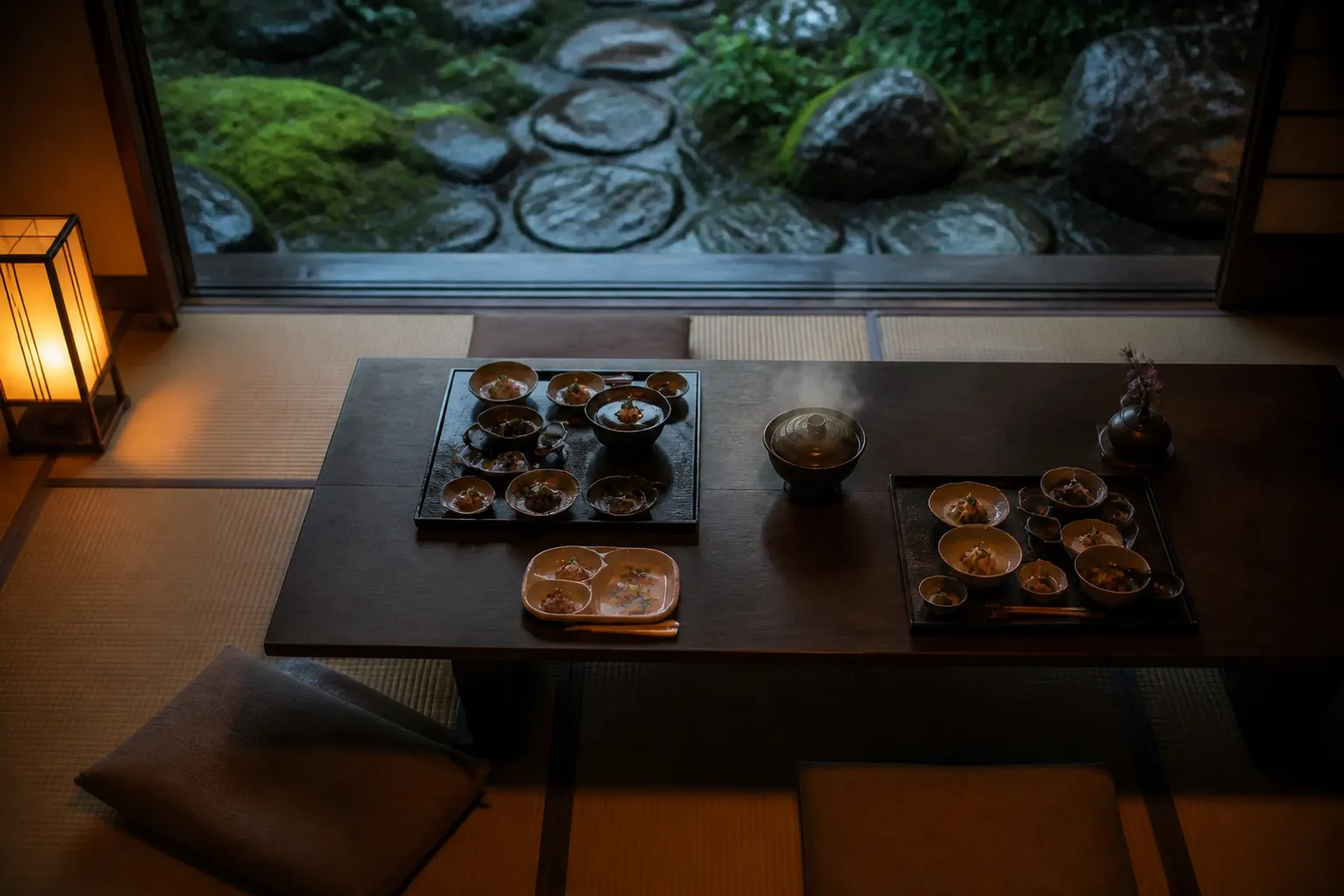
A party of adjusted, seasoned diners can push toward three formal dinners. A multigenerational group should plan for fewer.
With children, lean on lunches and light suppers, and reserve one formal dinner rather than several. With older guests, watch the end time as much as the start; a meal that finishes late costs more than it looks. For groups spanning three generations, we lay out the wider logic in our guide to travelling across generations in Japan.
The general rule holds: the more mixed the party, the lower the ceiling, and the more the light nights carry the week.
What To Decide First, And What Can Wait
Decide the shape first. How many formal nights, which nights they fall on, and where the light nights sit. That skeleton drives everything, and the hardest-to-reach tables need the longest lead time, so they anchor the calendar.
Once the shape is set, the flexible pieces fill in around it. Lunches, light suppers, and no-plan nights can be settled far later, some of them on the day. The timing of when to lock each type of reservation is its own subject, and we cover it in detail in our reservation-timelines guide. Read that alongside this one: it answers when, this one answers in what order.
The One Rule Worth Stating Plainly
Three formal dinners is the ceiling in a five-night Kyoto week. Most parties are happier with two. Two demanding meals, well-rested and well-placed, beat five that run together into a single exhausted memory.
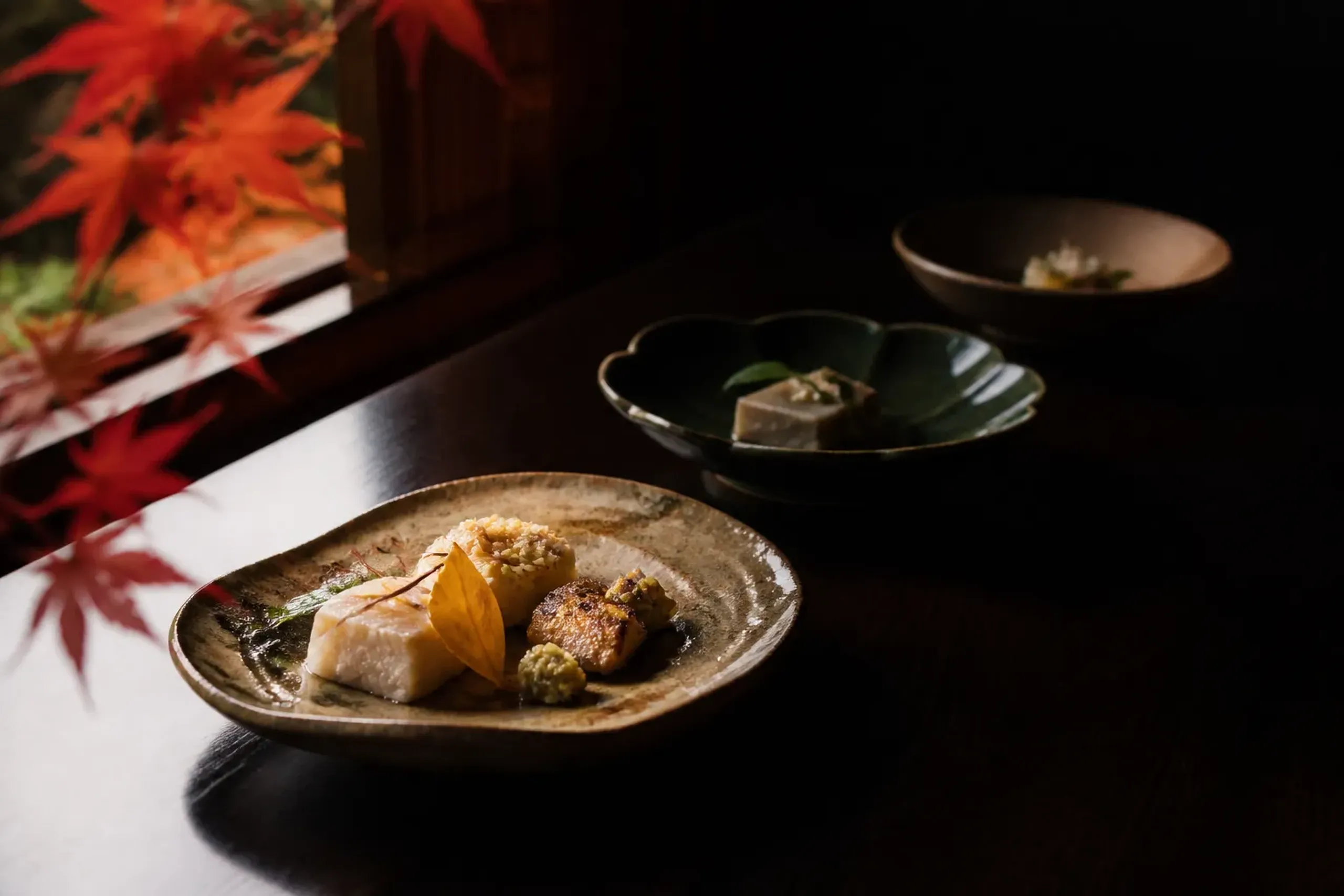
Restraint is the luxury here. The week that eats less formally, more deliberately, and returns to what it loves is the week people remember clearly a year on. The week that fills every night blurs.
Frequently Asked Questions
How many formal dinners should I plan in a five-night Kyoto trip?
No more than three, and most parties do better with two. Two well-rested, well-placed formal dinners land more clearly than five in a row, which tend to blur into a single tired memory.
Which night should be the most formal meal of a Kyoto stay?
One of the later nights, once the party is rested and adjusted to the hour. A palate that has spent several days eating in Kyoto reads a formal meal far better than a jet-lagged one on night one.
What should I do for dinner on my first night in Kyoto?
Keep it light and close to the hotel. Arrival fatigue and jet lag make a long formal dinner something to endure rather than enjoy, so save the demanding meals for later in the week.
Is it worth booking a formal Kyoto meal for lunch instead of dinner?
Yes, often. A formal lunch runs shorter than the dinner equivalent, leaves your evening free, and some of Kyoto's best kitchens are more reachable at midday. It is the most underused lever in a Kyoto week.
Does travelling with children or older guests change the dining plan?
Yes.
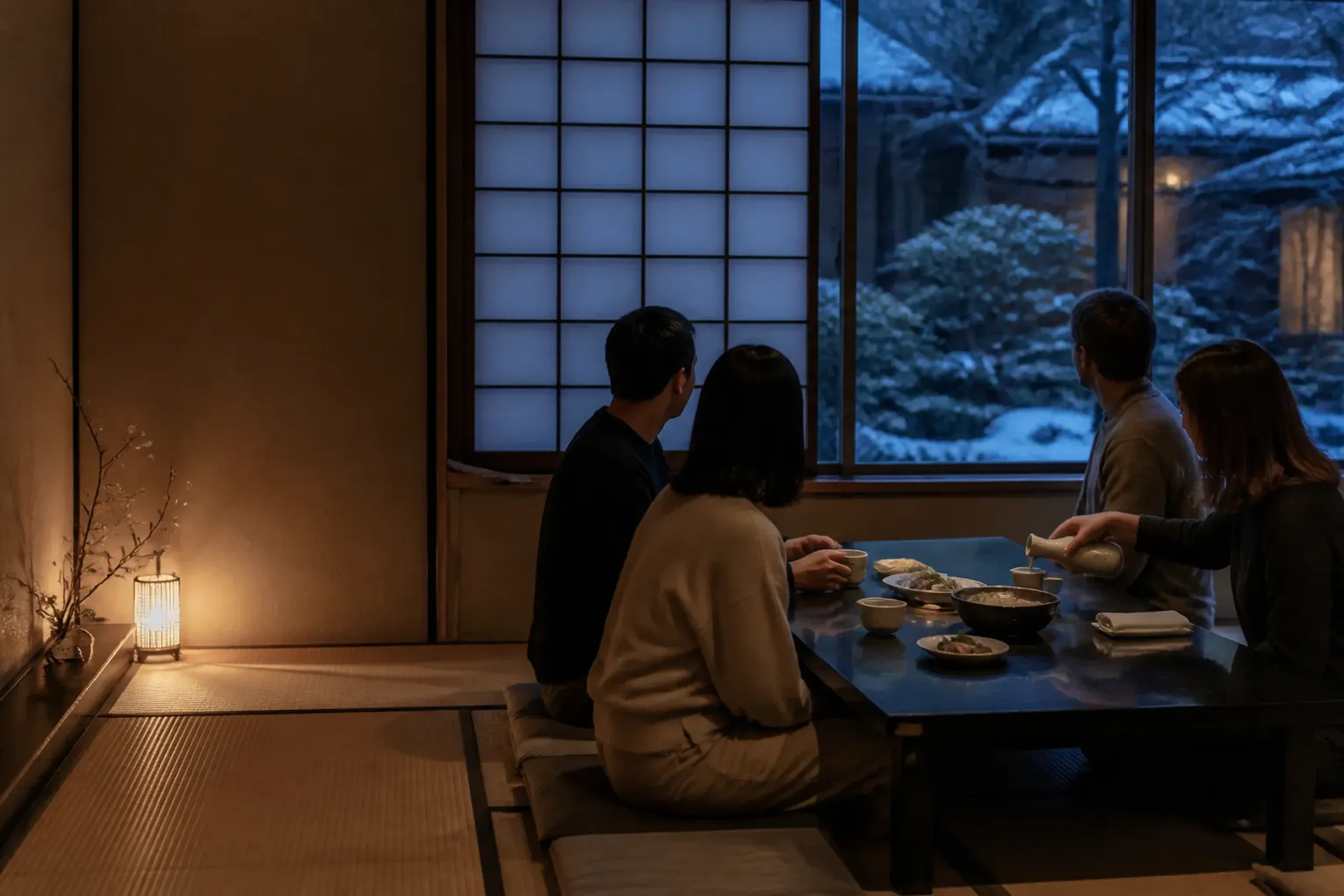
Mixed parties lower the ceiling on formal dinners. Lean on formal lunches and light suppers, watch late finishing times for older guests, and plan fewer long structured meals overall.
Why Choose Japan Royal Service
The shape of the week is yours to decide. How many formal nights, where they fall, which two nights stay light. Our role at Japan Royal Service begins once you have decided it. In our experience the clients who plan the order of their meals, not just the list, come home with a week that reads as a progression rather than a run of dinners.
We are a Tokyo-based concierge with our own team and our own fleet, and we plan Kyoto weeks continually. Once you have settled the shape, our team books the week around it, holds the difficult tables, and keeps the days paced so the party arrives at each meal ready for it. The sequencing is your call. The execution is ours.
To plan a Kyoto week that builds rather than repeats, reach our team privately via WhatsApp or LINE, or contact us here.