In this guide
- 01Where Is The Nagato And Hohoku Coast, And Why Is It A Drive?
- 02Tsunoshima Bridge, The Island And The Lighthouse
- 03Motonosumi Shrine, And What Limits Visiting
- 04Senjojiki, Omijima And The Rest Of The Coast
- 05Summer On The Coast: The Senzaki Gion Festival, Beaches And August Weather
- 06Getting There: Shinkansen, The Bus, And Why A Car With A Driver Fits
- 07How Our Concierge Team Plans The Coast Day
- 08Plan Your Nagato Coast Day
- 09Frequently Asked Questions
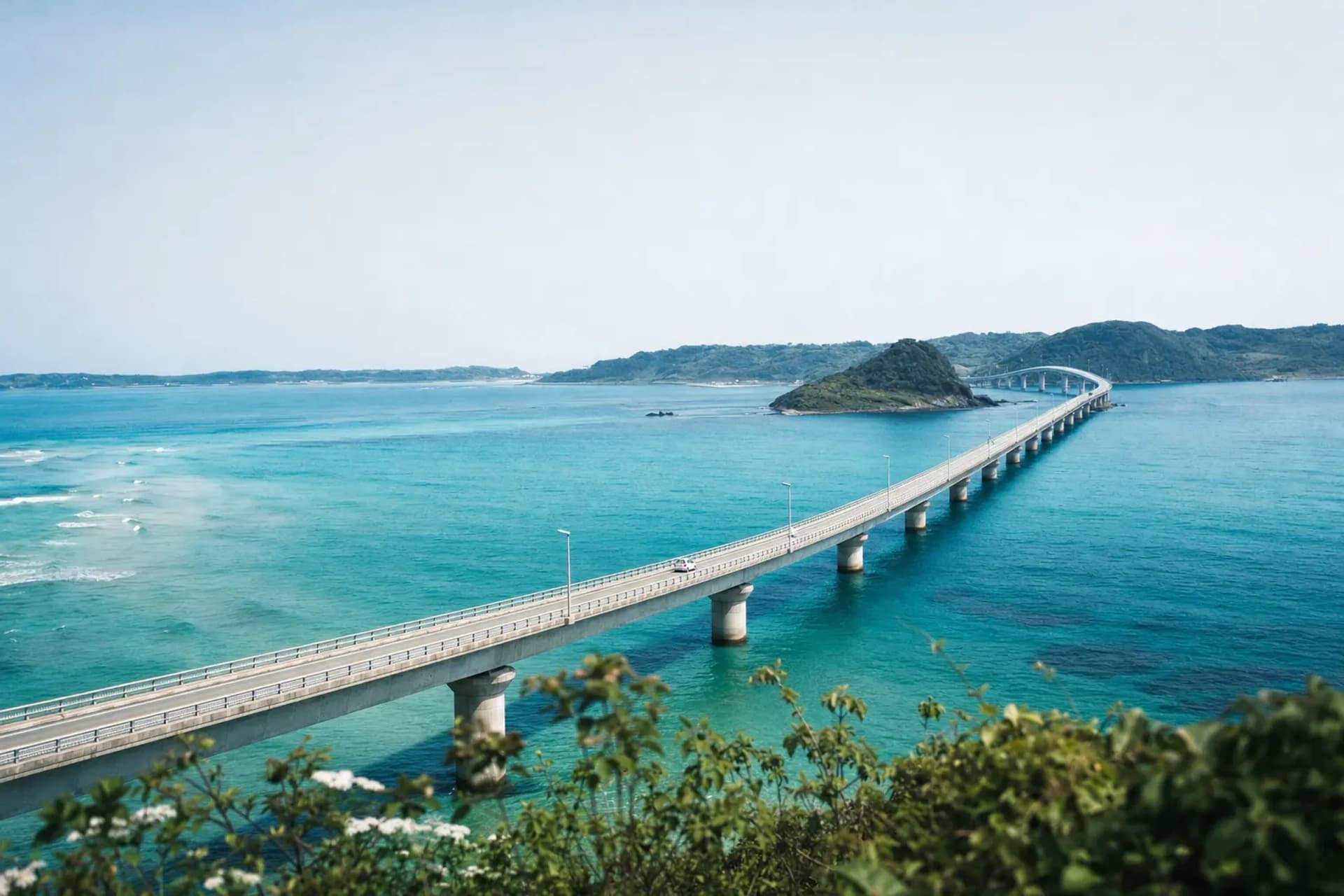
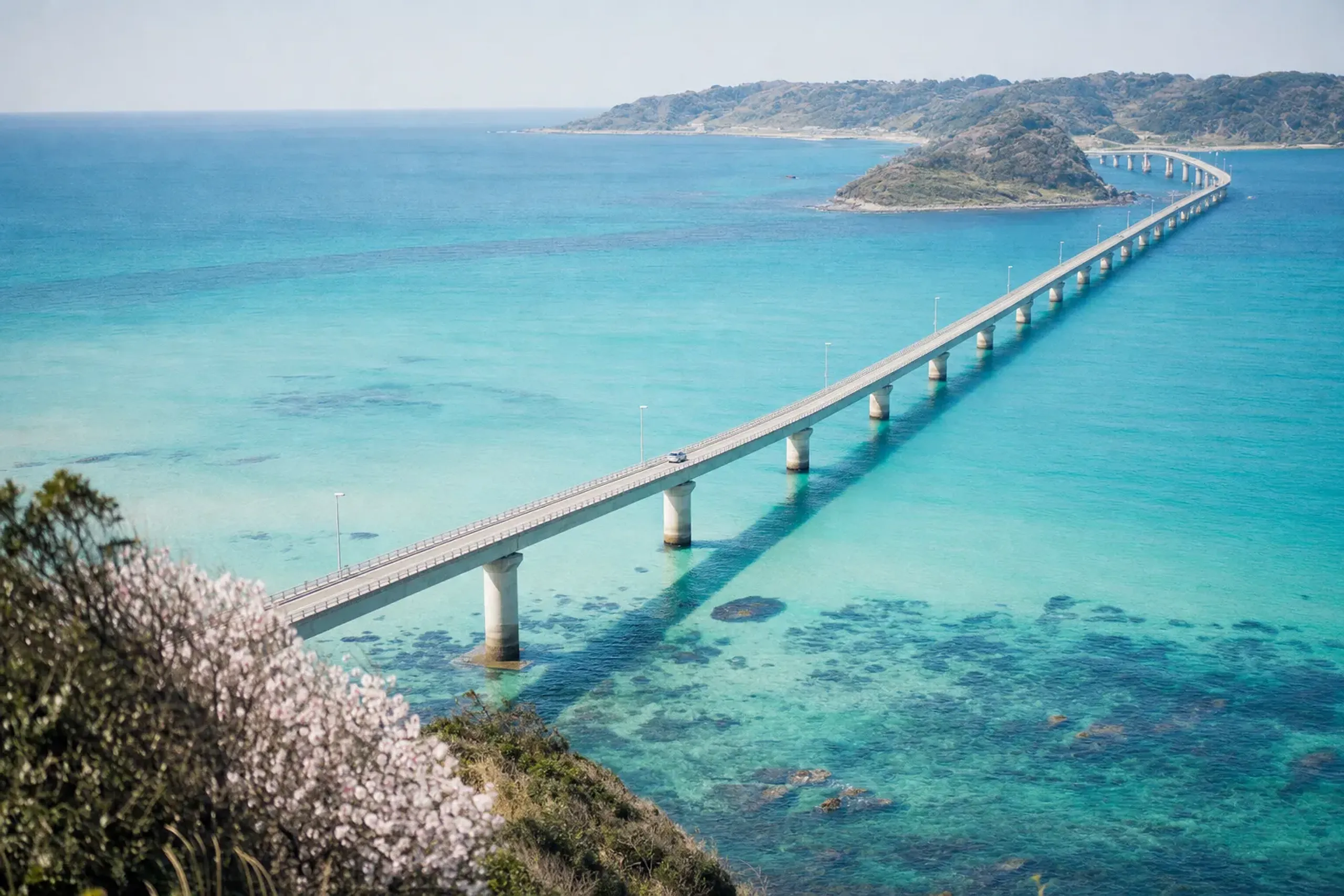
You see the water first. Long before the bridge itself, the colour arrives — a blue so clean it reads as paint, then as glass, then as something the eye does not quite trust. The road bends. The Tsunoshima Bridge opens out ahead of you, 1,780 metres of low, pale concrete laid flat across the Sea of Japan, and the island waits at the far end like a thought you have not finished.
This is a coast you drive. The sea is the subject, the road is the story, and the sights are strung out along the Yamaguchi shore with real distance between them. The honest picture matters: narrow roads, wind that can shut the bridge, a shrine whose famous torii line has limits, and a summer that is warm and humid. What follows is how one unhurried coast day fits together, in order — the kind of restrained, wind-washed quiet that rewards those who come not to tick off sights but to stand with them.
Where Is The Nagato And Hohoku Coast, And Why Is It A Drive?
The Nagato and Hohoku coast sits on the Sea of Japan side of Yamaguchi Prefecture, at the far western end of Honshu. No train line threads the key sights together, and no bus reaches the shrine. You drive.
That single fact shapes everything. The Tsunoshima Bridge belongs to Hohoku, part of Shimonoseki; Motonosumi Shrine sits above the sea in Nagato.
The two headline sights lie in different cities on the same coast, with a grass headland and an island in between. Distances are modest on a map and longer in practice, because the roads are two-lane, sometimes single-lane, and shared with large tour buses that cannot slow quickly.
Why come in summer? The sea air moves. While Kyoto and Osaka sit heavy under August heat, this coast draws the wind off the water, the colour of the sea deepens under a high sun, and a local festival gives the trip an anchor. The trade-off is humidity and the chance of a windy day that closes the bridge. Both are manageable with a plan — and the privacy of this corner of Honshu, far from the crowded headline cities, is part of its appeal.
Tsunoshima Bridge, The Island And The Lighthouse
The Tsunoshima Bridge opened in 2000 and crosses toll-free to the hourglass-shaped island of Tsunoshima, about 4.1 square kilometres of low farmland and shore. JNTO describes the water beneath it simply as a "cobalt blue sea," and on a bright, still morning that is exactly what you get — the bridge seems to float on it.
Two viewpoints frame the crossing. On the Honshu side, Amagase Park gives you the long shot: the bridge receding across open water toward the island. On the island side, Seesaki Akari Park turns you back the way you came.
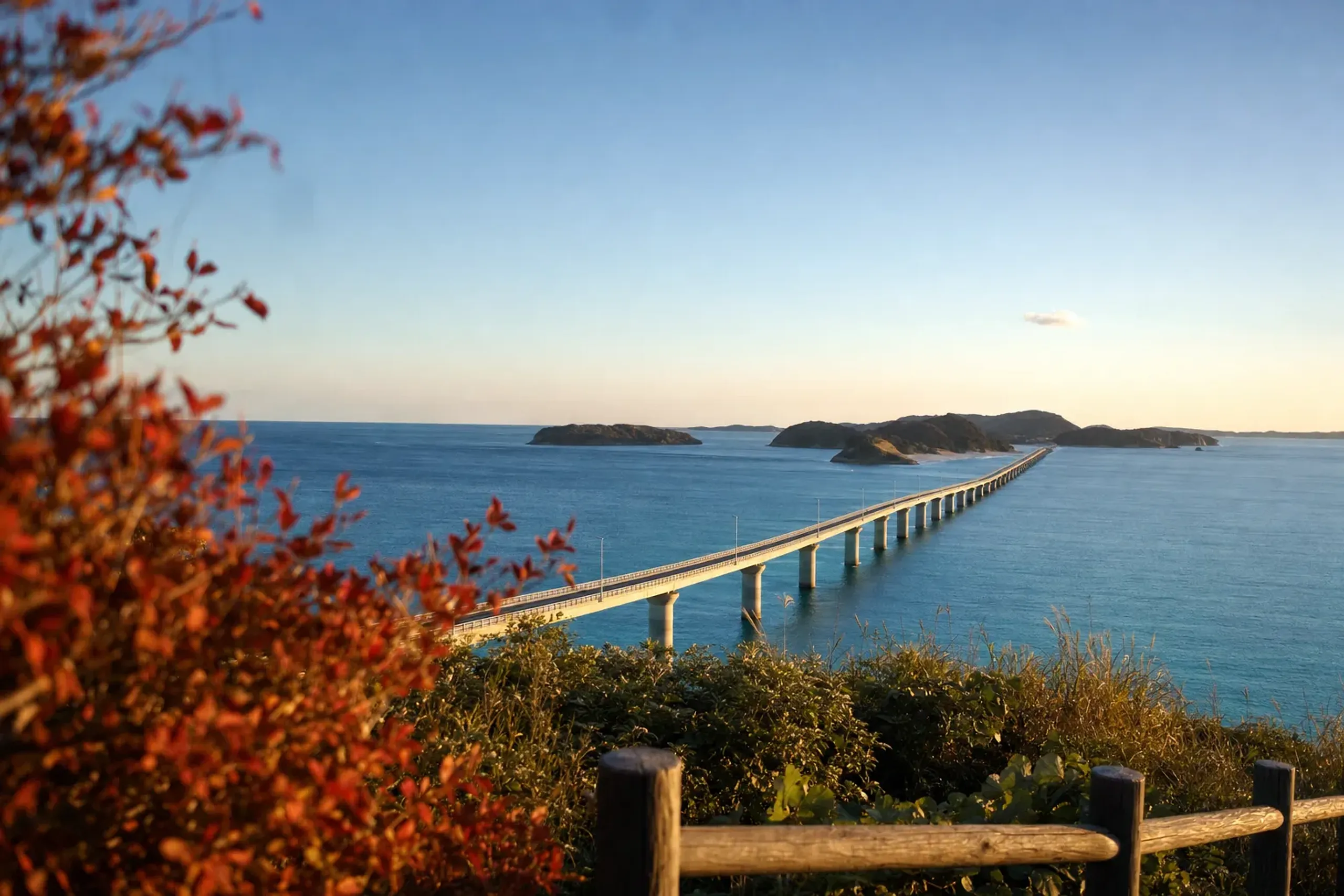
Both reward an early arrival, before the light goes flat and the day warms.
Key fact: The bridge has no footpath, so it is driven, not walked, and traffic needs care. In strong winds it may be closed outright. Always keep a fallback sight in the plan.
On the island, the Tsunoshima Lighthouse stands white against the grass. It was first lit in 1876 — Meiji 9 — and was designed by the British engineer Richard Henry Brunton. It is an Important Cultural Property, a Meiji-era lighthouse worth the stop. A spiral stair of 105 steps can be climbed on calm days for the view back over the bridge and the shore. In rough weather the climb may not open, which is one more reason the wind decides the shape of your morning.
Give the island an hour or two. It is small, the pace is slow, and the pleasure is the shore itself rather than any single attraction — the restraint of a place that asks nothing of you but your attention.
Motonosumi Shrine, And What Limits Visiting
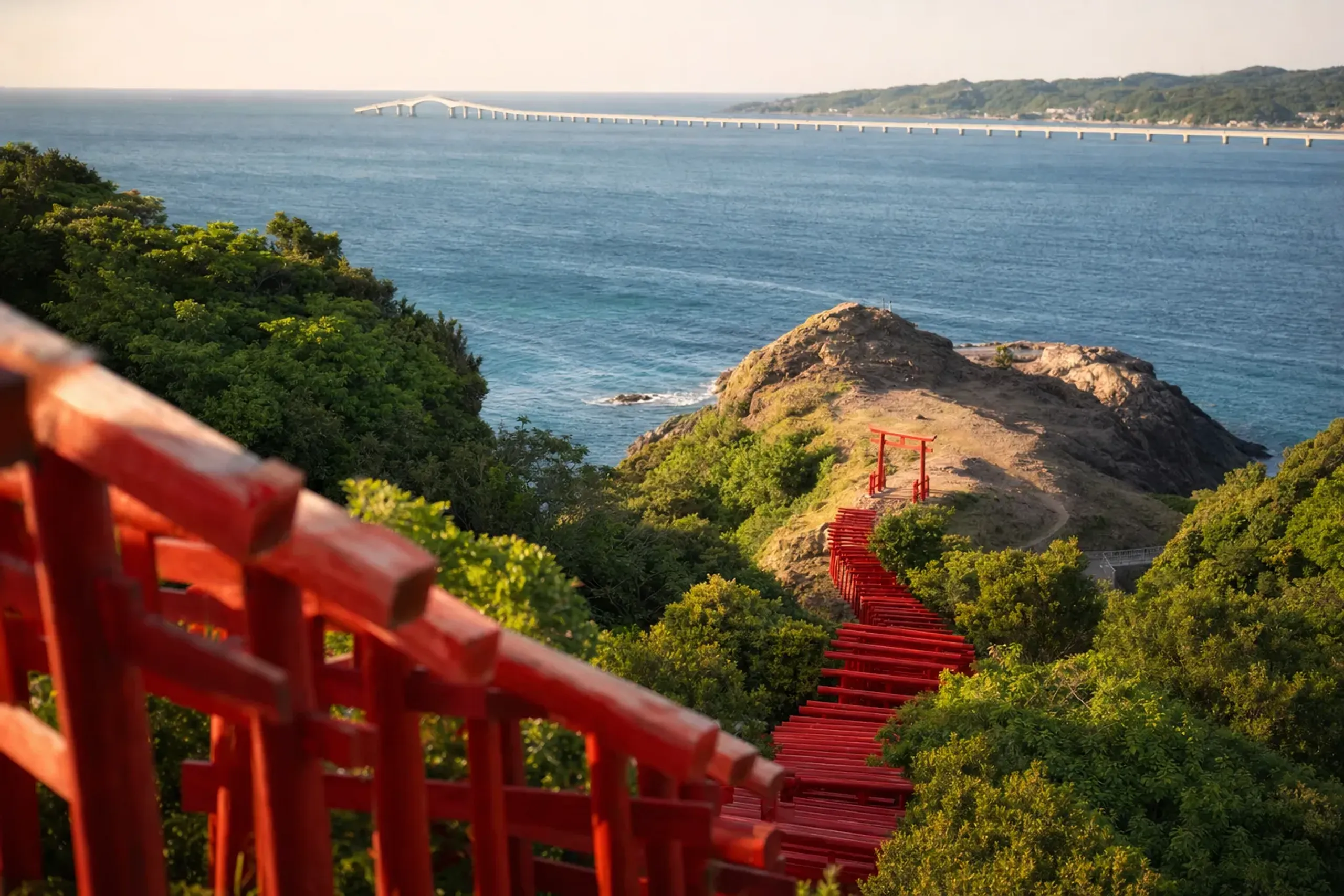
Motonosumi Shrine runs down a cliff toward the sea in a line of 123 vermilion torii. JNTO puts it well: "the red color of the gates stands in striking contrast to the cobalt blue" of the waves below. The shrine was established in 1955, and the torii, the prefectural tourism page notes, were dedicated over roughly ten years from 1987. It is said the shrine was founded after a fox oracle came to a local fisherman — a quiet origin story for a place now known across Japan.
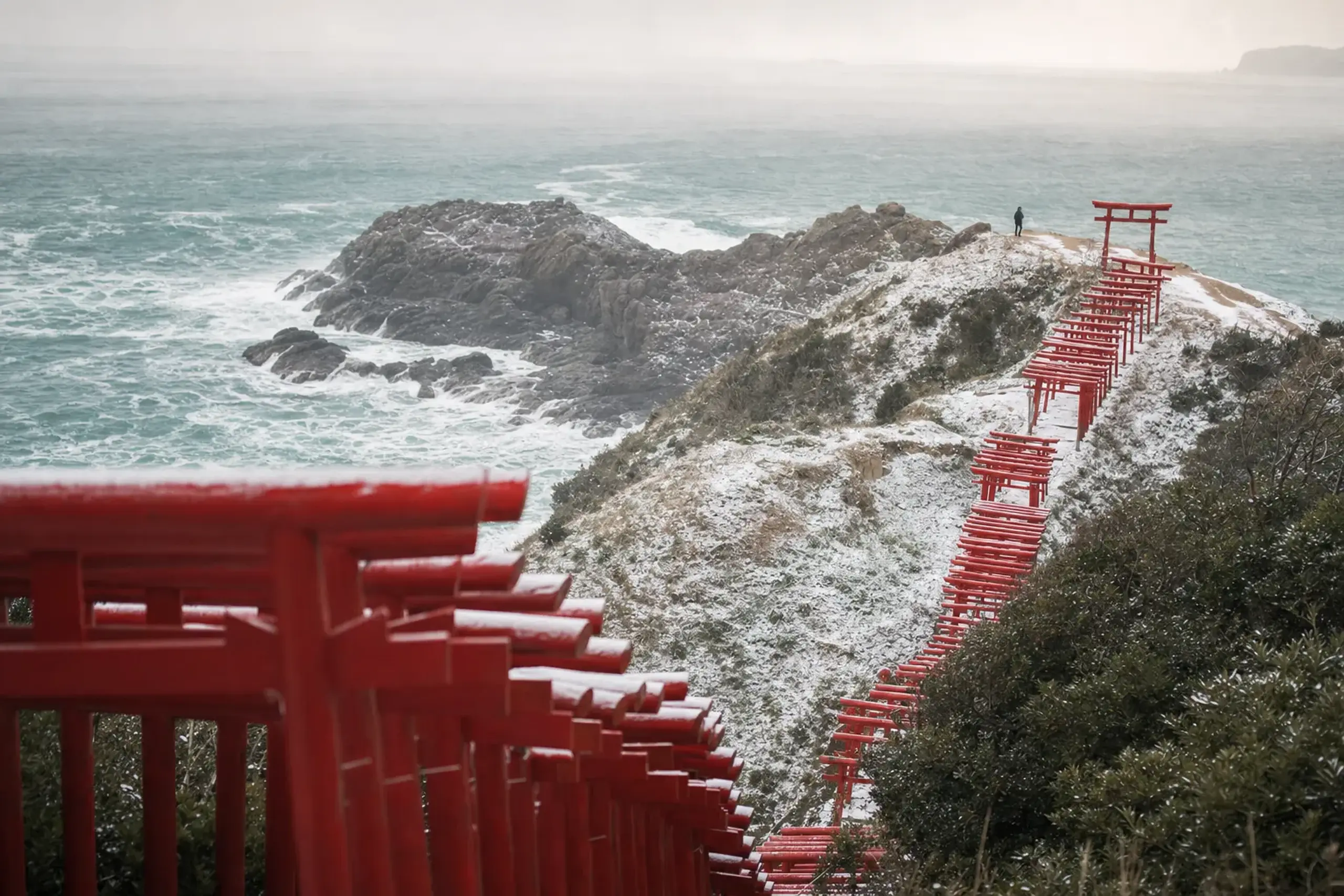
Here honesty serves you better than romance. The torii line has had visiting limits and repair work. Walking days can be suspended, the line itself can be closed for repair, and the prefectural page divides the site into zones: no-entry areas under repair, areas under renovation, and open zones where photography is allowed.
Plan around this: Visiting days and the torii line can be limited; follow the posted zones; check the Nagato tourism association's notices before you go. Our concierge team confirms the shrine's current visiting and torii status directly with you at the time of arrangement.
Even from an open zone, the sight holds. The red gates stepping down toward the water, the horizon beyond, the grass moving in the wind — it does not need you to walk through it to work. Treat it as a view to stand with rather than a corridor to pass along, and you will not be disappointed by the current conditions.
How Do You Get To Motonosumi Shrine?
By car or taxi only. No bus or train reaches the shrine. A taxi takes about 20 minutes from Nagato-Furuichi Station, or about 40 minutes from Nagato-shi Station; by car it is roughly 60 minutes from Mine IC on the Chugoku Expressway.
The approach road is narrow, single-lane in places, and shared with large buses.
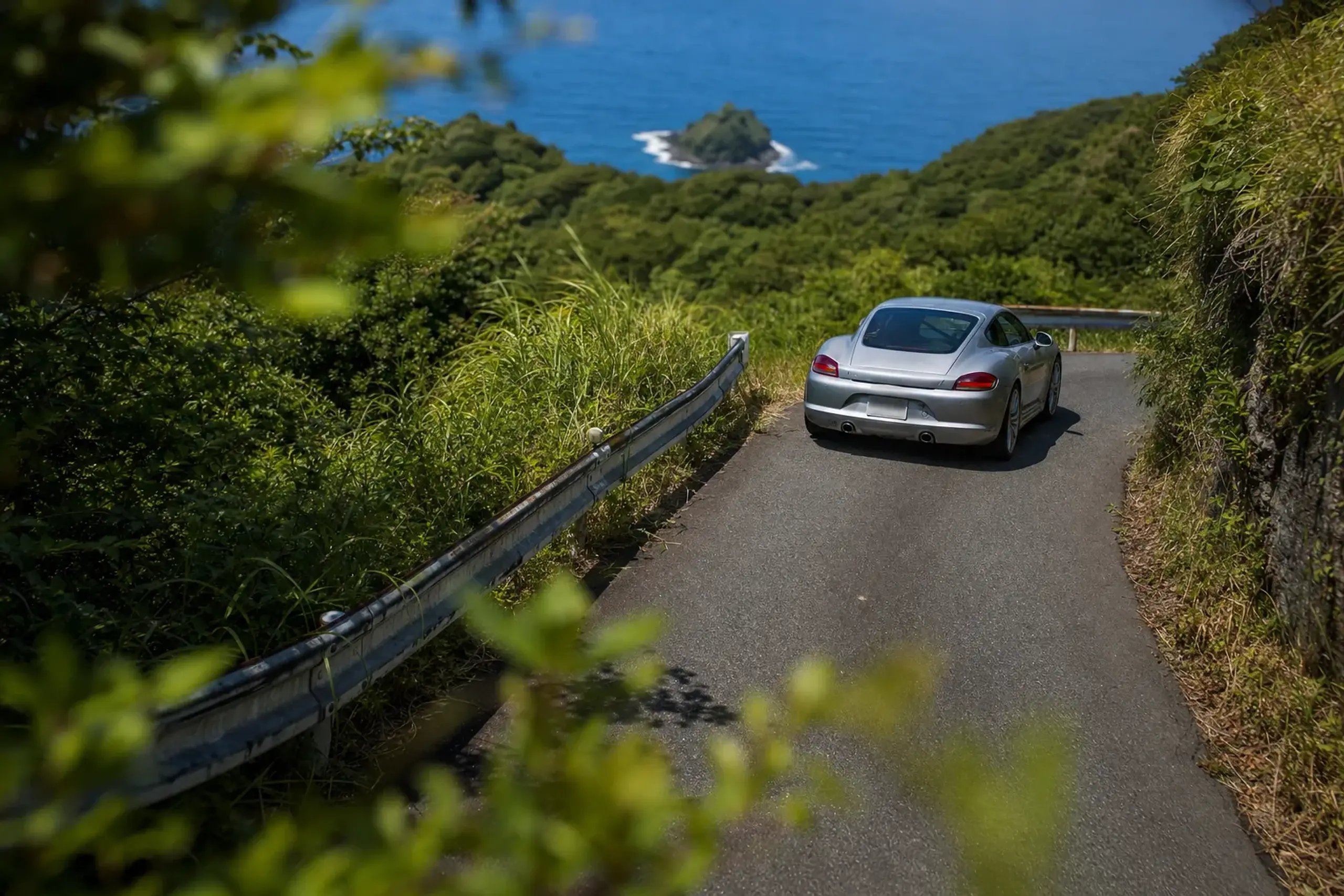
Parking at the shrine is paid. This is precisely the kind of rural, low-signage, bus-crowded lane where an English-speaking private driver earns their place — you watch the sea, not the mirrors.
Senjojiki, Omijima And The Rest Of The Coast
Between the bridge and the shrine, the coast keeps giving. Senjojiki is a grass headland of 26,400 square metres sitting high above the sea, long loved as a place to watch the sun go down. It lies about 5 km from Motonosumi and roughly 10 minutes by taxi from Nagato-Furuichi Station. In late afternoon the grass turns gold and the wind drops; it is a fitting place to end a driving day.
Offshore sits Omijima, at the centre of the Kita-Nagato Coast Quasi-National Park. Its sea cliffs have earned the island the nickname "Sea Alps," and sightseeing boats run from the Senzaki area to trace the rock faces from the water. Weather governs the boats, and a windy summer day can cancel a sailing — one more reason to keep the plan loose. Our team does not arrange the boats themselves; we build the day so a sailing can slot in when the sea allows.
A few quieter stops reward the curious. The Kaneko Misuzu Memorial Museum honours the Nagato-born poet Kaneko Misuzu. Tainei-ji is a temple set back from the shore, its grounds carrying the moss-and-stone stillness that makes the detour worthwhile. And the terraced rice fields at Higashi Ushirobata step down toward the sea in neat green stages.
Each is a single stop, not a detour that eats the day.
If you want to extend the trip inland, the great limestone cavern of Akiyoshido lies within reach, and the old castle town of Hagi sits along the same coast to the east. Further afield, the arched Kintai Bridge at Iwakuni and the heron dance of Tsuwano each carry their own guides.
Summer On The Coast: The Senzaki Gion Festival, Beaches And August Weather
Summer gives this coast an event to plan around. The Senzaki Gion festival takes place each year at Yasaka Shrine in Nagato, running from 20 to 26 July, with the festival floats appearing on the 20th and the 26th. Attendance is public; we hold no seats and make no claim over it, but we can time a coast day so you are near Senzaki when the floats come out — a matter of knowing precisely what to experience where, and in which days of the month, which is the quiet art behind planning a Japanese summer.
The city's beaches open through summer, generally from late July to mid-August, though the exact dates move each year and the Tsunoshima beach season is not confirmed. Local rules apply and can change; follow your guide's briefing, and our concierge team confirms current conditions directly with you at the time of arrangement.
How Hot Is The Nagato Coast In August?
Warm and humid.
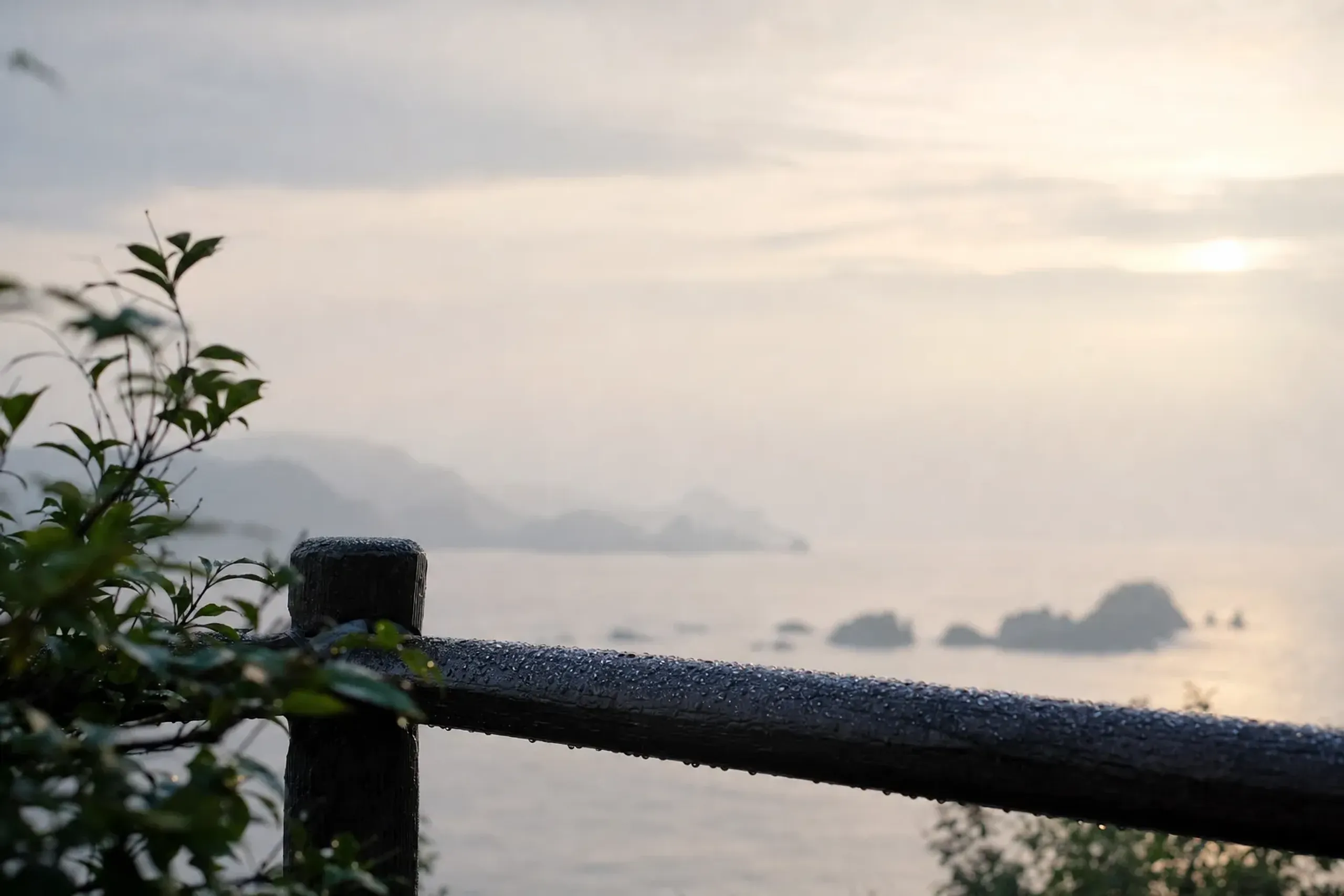
At Shimonoseki, the nearest weather station, the August mean is 27.9°C, with a mean maximum of 31.3°C and a mean minimum of 25.6°C. Rain averages about 190 mm across roughly nine days with measurable rainfall.
Shimonoseki sits about an hour and a half by car from the coast sites, so treat these as the regional picture rather than a reading taken at the bridge. The practical takeaway: the sea breeze helps, but midday is hot and sticky. Start early at the viewpoints, take the lighthouse and the shrine in the cooler hours, and keep water in the car.
Getting There: Shinkansen, The Bus, And Why A Car With A Driver Fits
Most journeys begin on the Shinkansen. From Hakata, it is about 40 minutes to Shin-Shimonoseki. From Shin-Yamaguchi, a direct bus reaches Nagato City in about 1 hour 20 minutes. By road, the Tsunoshima Bridge is roughly 1 hour 10 minutes by car from Shimonoseki IC, and about 60 minutes from Kozuki IC or Mine IC.
Once you are on the coast, the car becomes the trip. The two headline sights sit in different cities on the same shore, and the JRS concierge team confirms the driving time between Motonosumi and Tsunoshima directly with the guest at time of arrangement.
Why a car with a driver rather than rail and taxi? Three plain reasons. No bus or train reaches Motonosumi. The roads are narrow and shared with large buses, and large buses cannot park at the bridge viewpoint, so a smaller private vehicle moves where the coaches cannot.
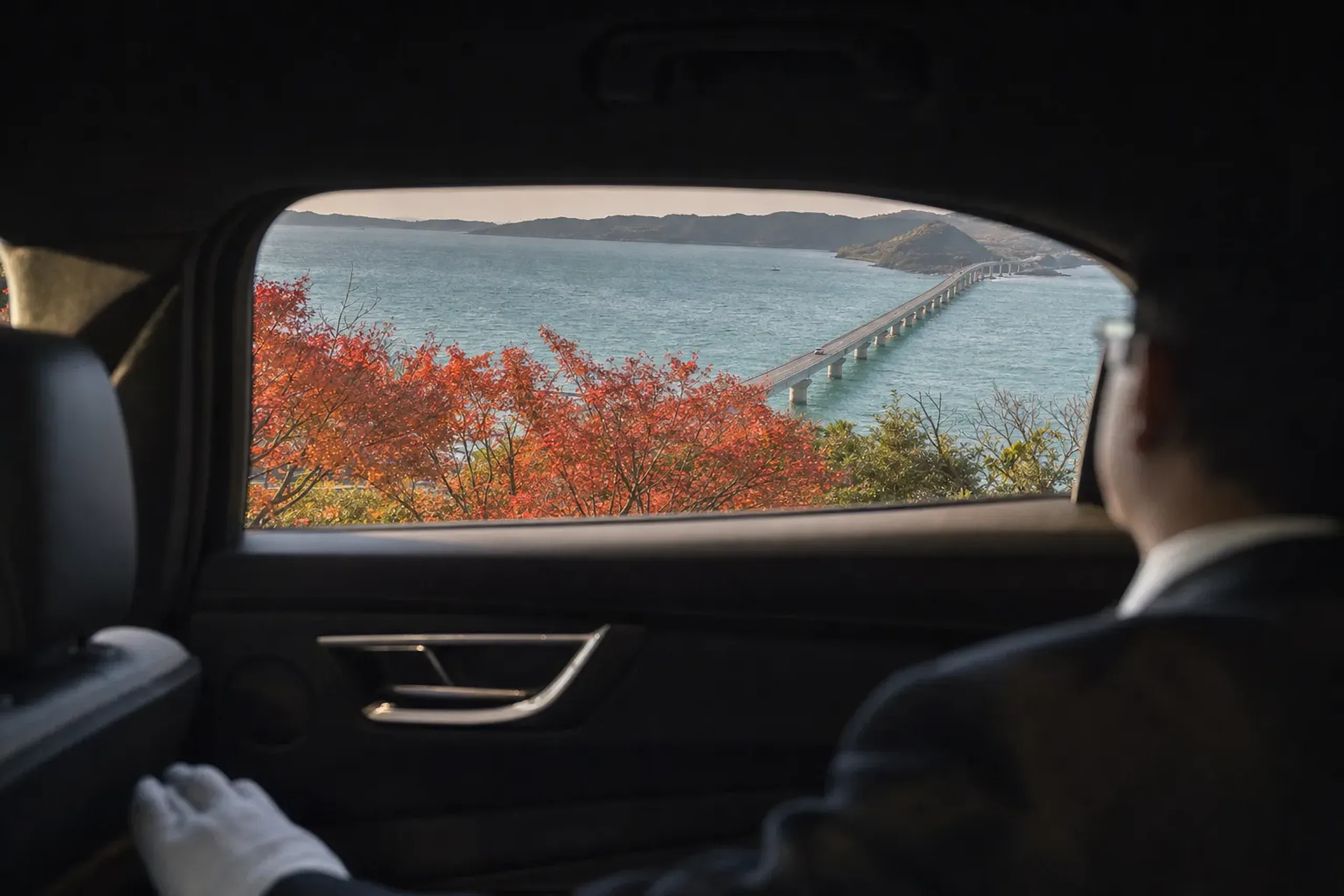
And when the wind closes the bridge or the lighthouse, a driver who knows the coast can re-route the same day rather than leave you stranded at a station. If you are weighing the choice in general, our note on choosing a first private guide and which days to book may help.
How Our Concierge Team Plans The Coast Day
We build this day around the sea and the sky rather than a fixed list. In our experience, the coast rewards a plan with give in it.
The planning starts with the roads, the wind, the sea state and the weather, and always carries a fallback for the day the bridge or the lighthouse closes. We arrange a bespoke itinerary with the moving parts in the right order, and we keep the pacing gentle — a long drive deserves pauses, not a race.
- Private transfer: a vehicle from a partner company with an English-speaking driver, sized to reach the narrow lanes and the viewpoints where coaches cannot stop. We do not own the vehicles, and the driver and the guide are separate roles.
- Guiding: an English-speaking cultural interpreter guide, booked separately, for the shrine, the lighthouse and the coast's history.
- Stays and meals: ryokan and restaurant arrangements in the Nagato or Hagi area, with dietary needs passed ahead.
- Rail: tickets including Green Car where available, platform assistance for the Shinkansen to Shin-Shimonoseki or Shin-Yamaguchi, and luggage forwarding so you travel light to the coast.
- Same-day re-planning: when the weather turns, we reshape the day around it.
Motonosumi and the bridge are public sites, and JRS has no role in the shrine or the festival.
What we offer is quiet, watchful coordination — the kind that turns a long, wind-prone drive into an easy one, with every unspoken need anticipated before it surfaces.
Plan Your Nagato Coast Day
The Nagato and Hohoku coast is not a place you conquer in a hurry; it is a place you let unfold, with the sea setting the pace and the wind writing the schedule. If you would like a summer day built around the bridge, the shrine and the stops in between, the JRS concierge team plans it with an English-speaking driver, a separate cultural interpreter guide and a weather fallback. To begin planning, contact our team here.
Frequently Asked Questions
How Do You Get To Motonosumi Shrine Without A Car?
With difficulty — there is no bus or train to the shrine, so the only realistic options are taxi or a private vehicle. A taxi runs about 20 minutes from Nagato-Furuichi Station or about 40 minutes from Nagato-shi Station.