In this guide
- 01What Is Chūson-ji, And Why Does It Matter In Japanese History?
- 02A Pure Land Built For Reconciliation, Not For Victory
- 03How Large Was Hiraizumi At Its Peak?
- 04The Northern Fujiwara: Three Generations, Then 1189
- 05What Is The Konjikidō Golden Hall, Exactly?
- 06Why Is The Golden Hall The Only Original Building Still Standing?
- 07What Is Inside The Golden Hall At Chūson-ji?
- 08The Lotus Seeds Behind Chūson-ji: A Quiet Continuation
- 09Do You See The Golden Hall Outdoors Or Inside A Building?
- 10Chūson-ji In 2026: What To Know About Anniversary And World Heritage Dates
- 11How Do You Reach Hiraizumi For Chūson-ji From Tokyo?
- 12How To Visit Hiraizumi As A Pure Land Landscape, Not A Single Stop
- 13Tohoku Is Not Only Festivals And Snow: Start Here
- 14Frequently Asked Questions
You arrive expecting a temple complex. You find a wooded approach and a quiet slope. Then, inside a modern protective building, there is a small gold room. It is not a decorative flourish—it is the last intact fragment of an entire 12th-century attempt to build a Buddhist Pure Land on Earth.
What Is Chūson-ji, And Why Does It Matter In Japanese History?
Chūson-ji is a Tendai sect Buddhist temple in Hiraizumi, Iwate Prefecture, and its Konjikidō (Golden Hall) is the only structure remaining in original form from Hiraizumi’s 12th-century Pure Land project. One survivor. Almost everything else vanished.
Chūson-ji may have roots as early as the 9th century, yet its defining moment came in the early 12th century under Fujiwara no Kiyohira, founder of the Northern (Ōshū) Fujiwara. That distinction matters. This was not a minor provincial effort, and it was not a side note to Kyoto’s story.
In our experience at Japan Royal Service, Chūson-ji is the place where well-traveled guests stop saying “I’ve seen Japan.” Because what you see here is scale and collapse in the same frame. A whole designed landscape was imagined—and then erased.
A Pure Land Built For Reconciliation, Not For Victory
Kiyohira’s intention was explicit: to pray for and comfort the souls of all who died in two long regional wars, regardless of which side they fought for.
Not triumph. Not propaganda.
This founding motivation changes how you should read the gold. It is easy to treat Konjikidō as spectacle if you arrive cold. Big mistake. The “all gold” finish belongs to a religious and political project that aimed to calm the dead and stabilize a wounded region.
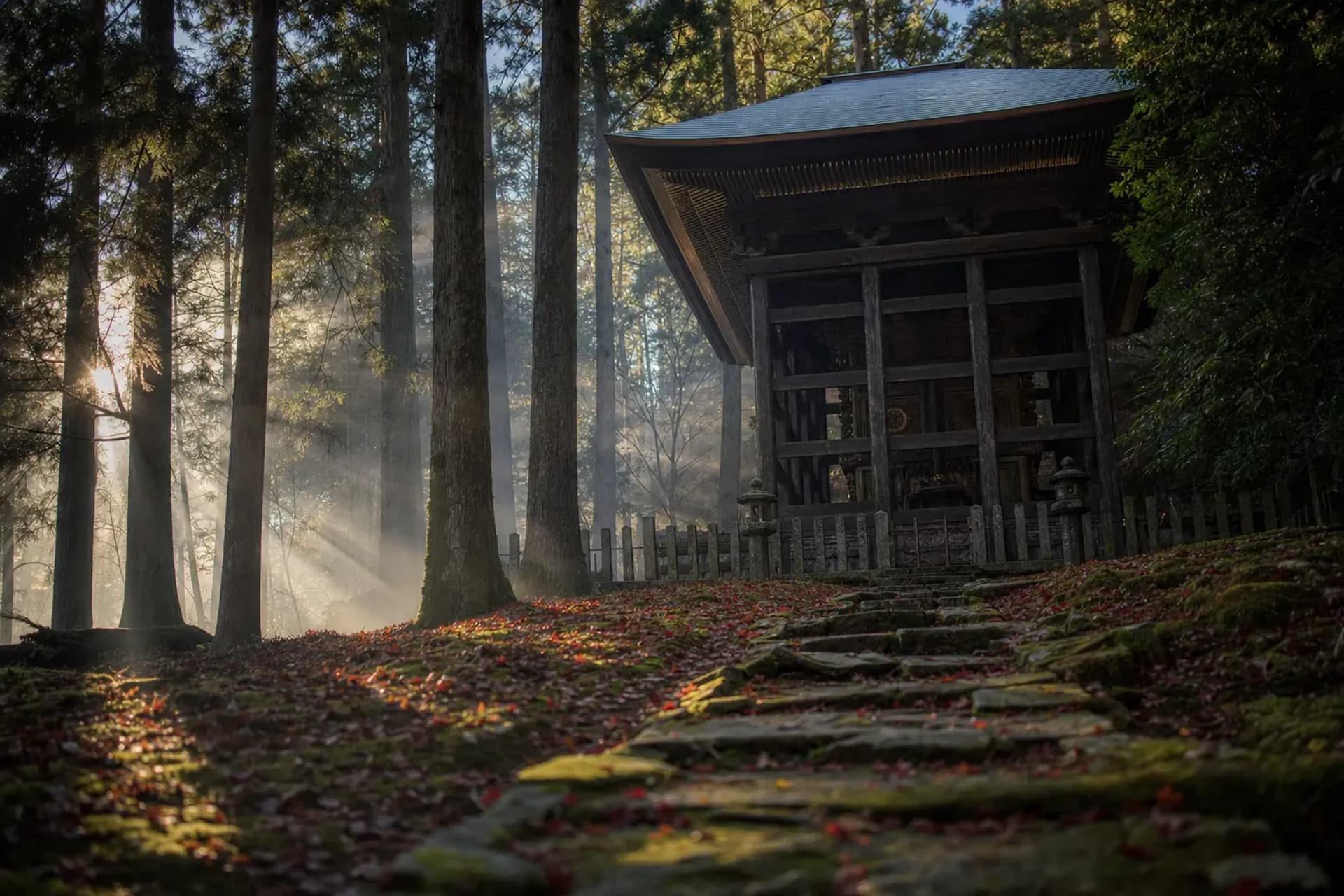
The wider ambition was a physical manifestation of the Buddhist Pure Land on Earth. Temples, gardens, and ponds were arranged in relation to Mount Kinkeisan. The point was not a single building. It was a total environment meant to be walked, contemplated, and believed.
How Large Was Hiraizumi At Its Peak?
At its height, Chūson-ji’s complex held as many as 40 buildings and more than 300 monks, and Hiraizumi rivaled Kyoto politically and commercially in that period. Not a backwater. A contender.
Those numbers are worth sitting with, because the modern visit can feel restrained. A few steps in the forest. A few key structures. The mismatch is the story.
Hiraizumi’s importance is now recognized under the UNESCO World Heritage property “Hiraizumi – Temples, Gardens and Archaeological Sites Representing the Buddhist Pure Land,” inscribed in 2011. It is an official framing, and it is the right one. You are not visiting “a nice temple.” You are stepping into the footprint of a designed civilization.
The Northern Fujiwara: Three Generations, Then 1189
Three generations of the Ōshū Fujiwara ruled the region, beginning with Kiyohira.
Then the story breaks. In 1189, war erupted again, Hiraizumi was almost entirely destroyed, and the clan’s rule ended.
This is the hinge that makes Chūson-ji different from other famous sacred sites. Nikkō Tōshō-gū can be read as ornateness as a political statement that succeeded; the Tokugawa order lasted more than 250 years. Hōryū-ji is survival through continuous restoration and rebuilding. Chūson-ji is the opposite posture: an ambition that failed so thoroughly that one small room became the last intact witness.
If you are following our “Sacred Japan” sequence, link the arc for contrast and clarity. For Nikkō, see One Reversed Pillar Is Famous. A Guide To Nikkō Tōshō-gū. For Izumo’s living devotional gravity, see The Month Without Gods, Except Here. For Hōryū-ji’s maintained survival, see Hōryū-ji: The Temple Standing Today Is A 1,300-Year Rebuild.
What Is The Konjikidō Golden Hall, Exactly?
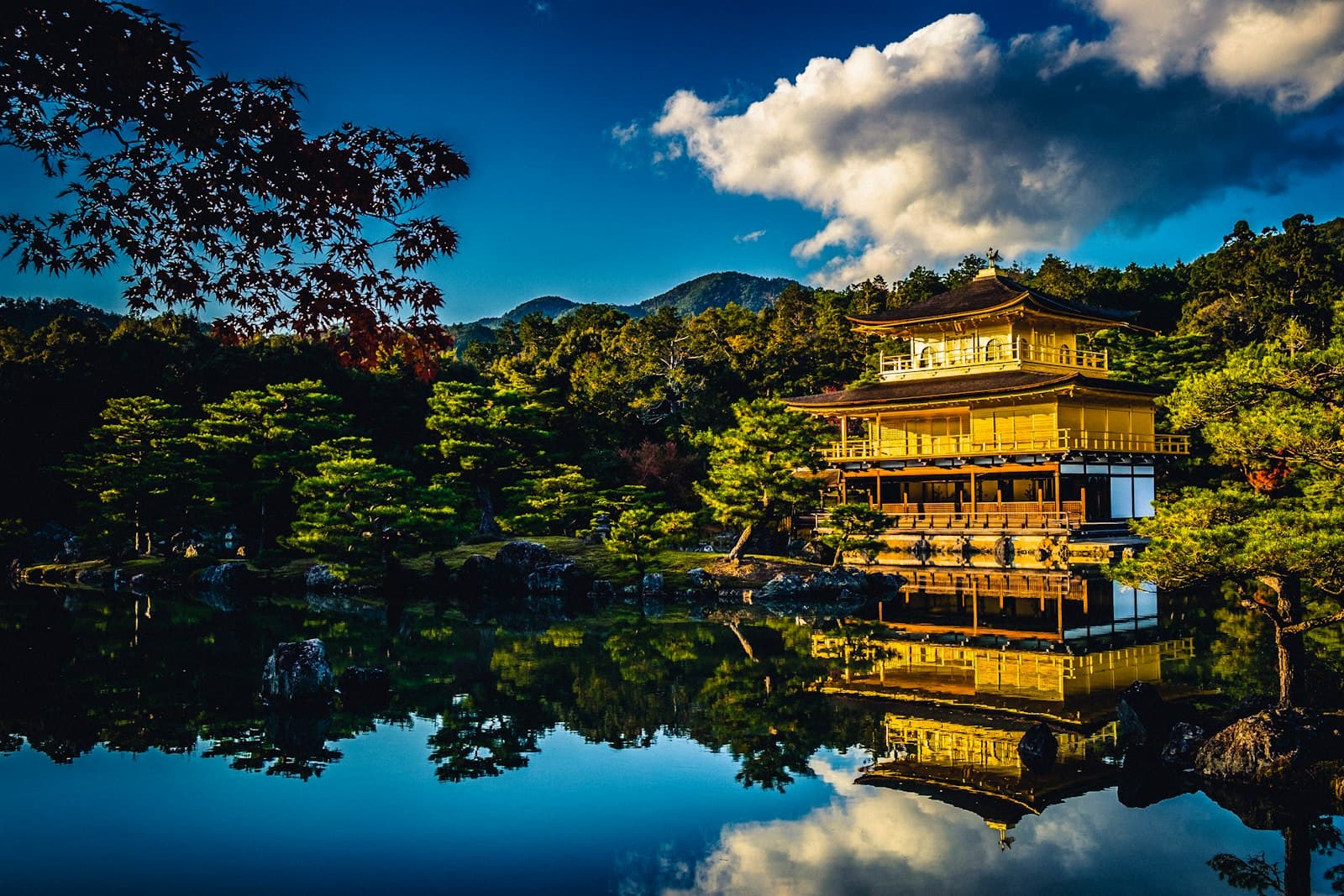
The Konjikidō (Golden Hall) is a small mausoleum-like hall completed in 1124, roughly 5.5 meters per side and about 8 meters tall, covered almost entirely in gold leaf in an “all gold” style known as kai-konjiki. Small scale. Heavy meaning.
Konjikidō is also identified as a National Treasure (building) in the UNESCO nomination materials for Hiraizumi. That designation is not about glitz. It is about irreplaceable survival and craftsmanship bound to a specific historical project.
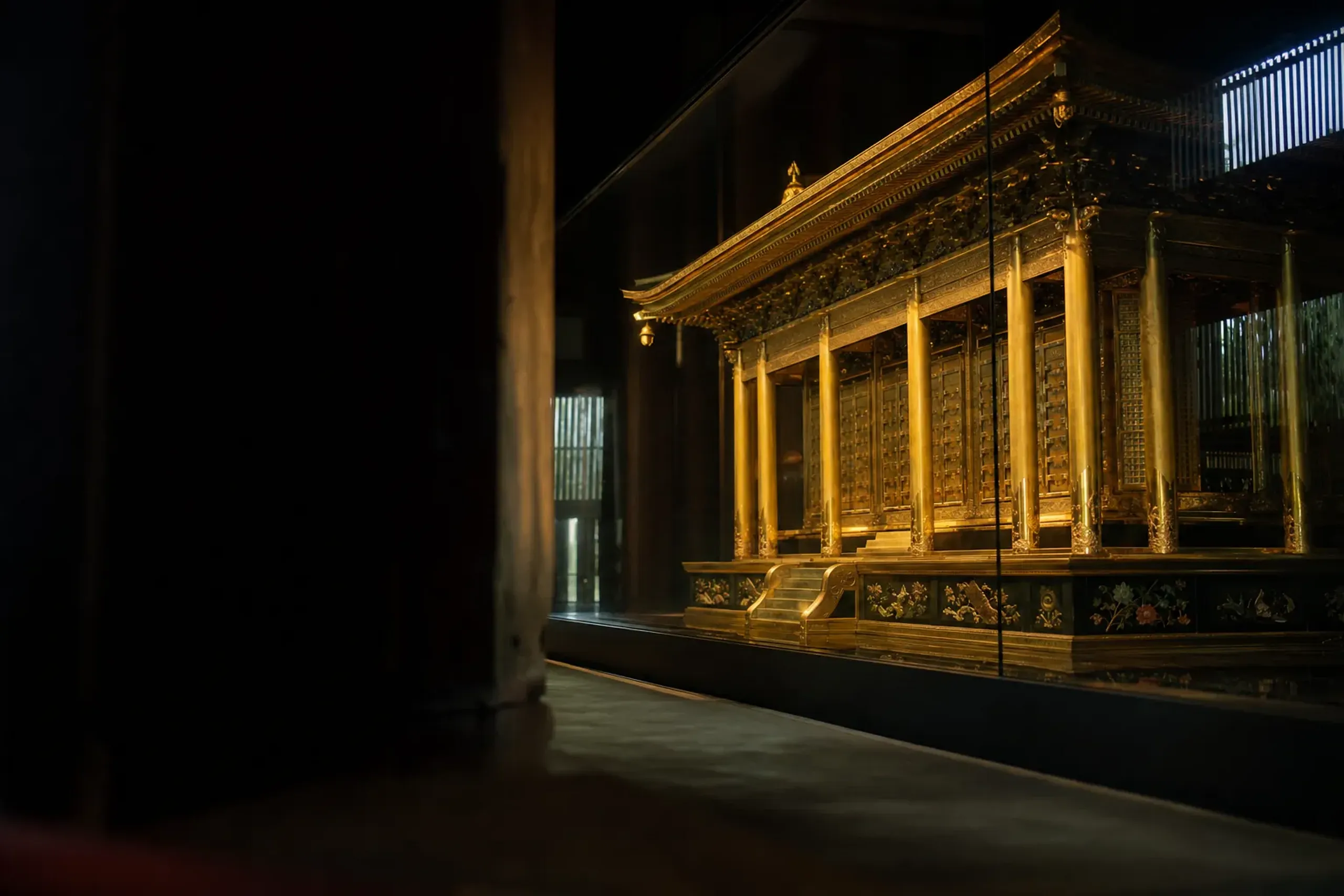
There is a quiet, shokunin truth here. The work is precise and unforgiving, and the passage of time has not softened it. If you care about craft, not theatrics, Konjikidō reads like a statement made in gold leaf and patience.
Why Is The Golden Hall The Only Original Building Still Standing?
Because it escaped the 1189 destruction that ended Hiraizumi’s 12th-century vision, while the rest of the complex was lost. That survival is not a centuries-long victory march of intact preservation. It is closer to near-chance.
This matters for how you feel inside the enclosure today. You are not seeing a site that “naturally” endured because power protected it. You are looking at what happened to slip through the firestorm of history.
For many HNW travelers, that is the real luxury here: proximity to what did not make it into the usual story. Hidden Japan is not always a secret restaurant. Sometimes it is a major site whose meaning has been thinned by quick visits and shallow captions.
What Is Inside The Golden Hall At Chūson-ji?
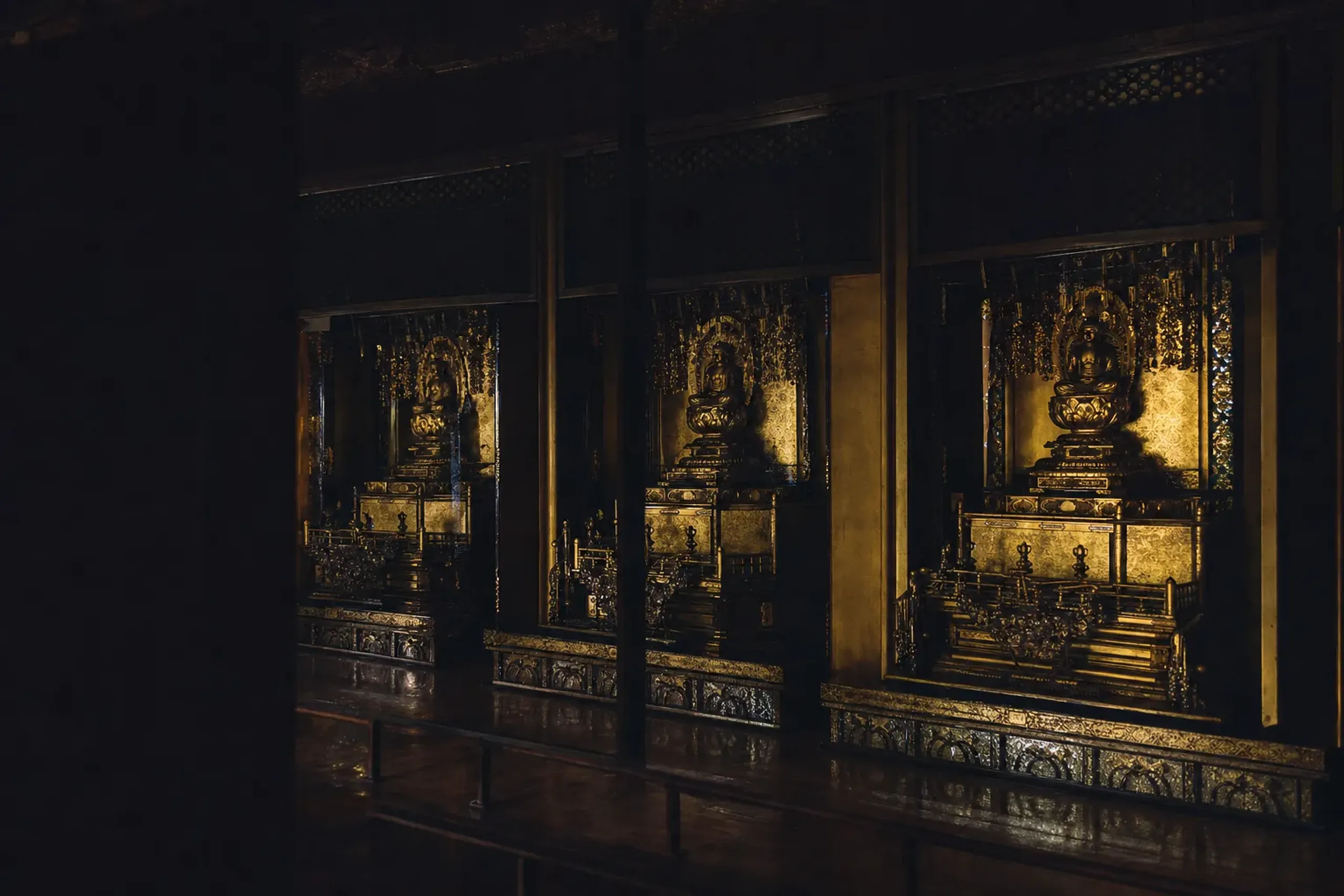
The Konjikidō contains the mummified remains of Fujiwara no Kiyohira, his son Motohira, and his grandson Hidehira, and it also enshrines the recovered head of Yasuhira, later returned and interred there. A mausoleum. Not a museum display.
This is the moment where tone matters.
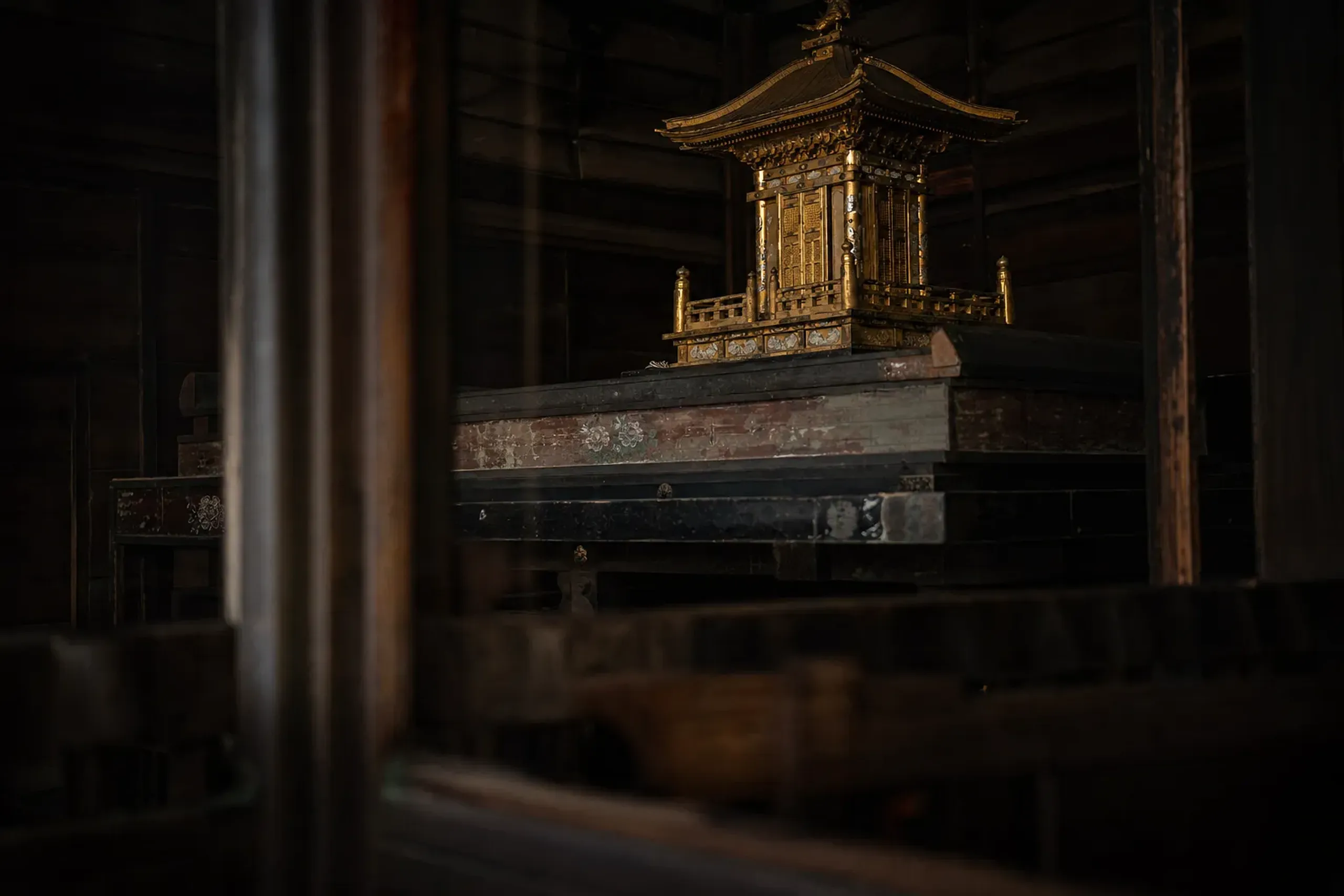
The remains are not a curiosity to gawk at. They make the hall a burial place, and they bind the gold to mourning, prayer, and lineage.
If you travel with family, this is also where you may choose how much context to share before you arrive. Our concierge team at Japan Royal Service often suggests setting expectations in advance, so the visit lands with dignity rather than surprise.
The Lotus Seeds Behind Chūson-ji: A Quiet Continuation
When Yasuhira’s head was returned, lotus seeds were found in the container used to bring it back. Those seeds were later planted. They bloom each year behind the temple.
It is a small detail, and it stays with you. In a story defined by collapse, the lotus is a continuation without fanfare. It is not a performance of peace. It is a living afterimage of the original intention to comfort the dead.
Do You See The Golden Hall Outdoors Or Inside A Building?
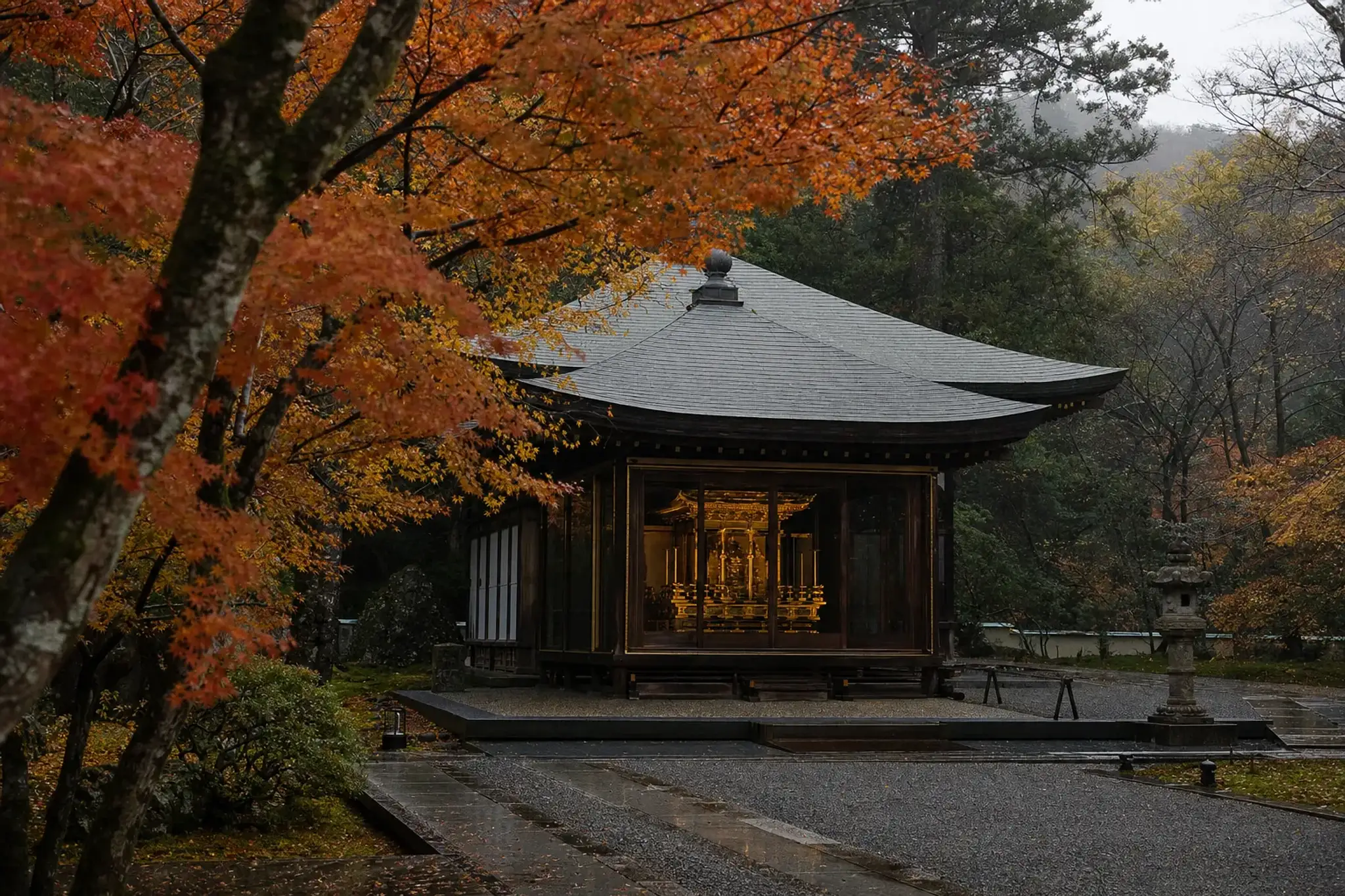
You see the Konjikidō inside a modern protective outer structure that shields it from weather. Expect an enclosed hall, not an open-air gold pavilion.
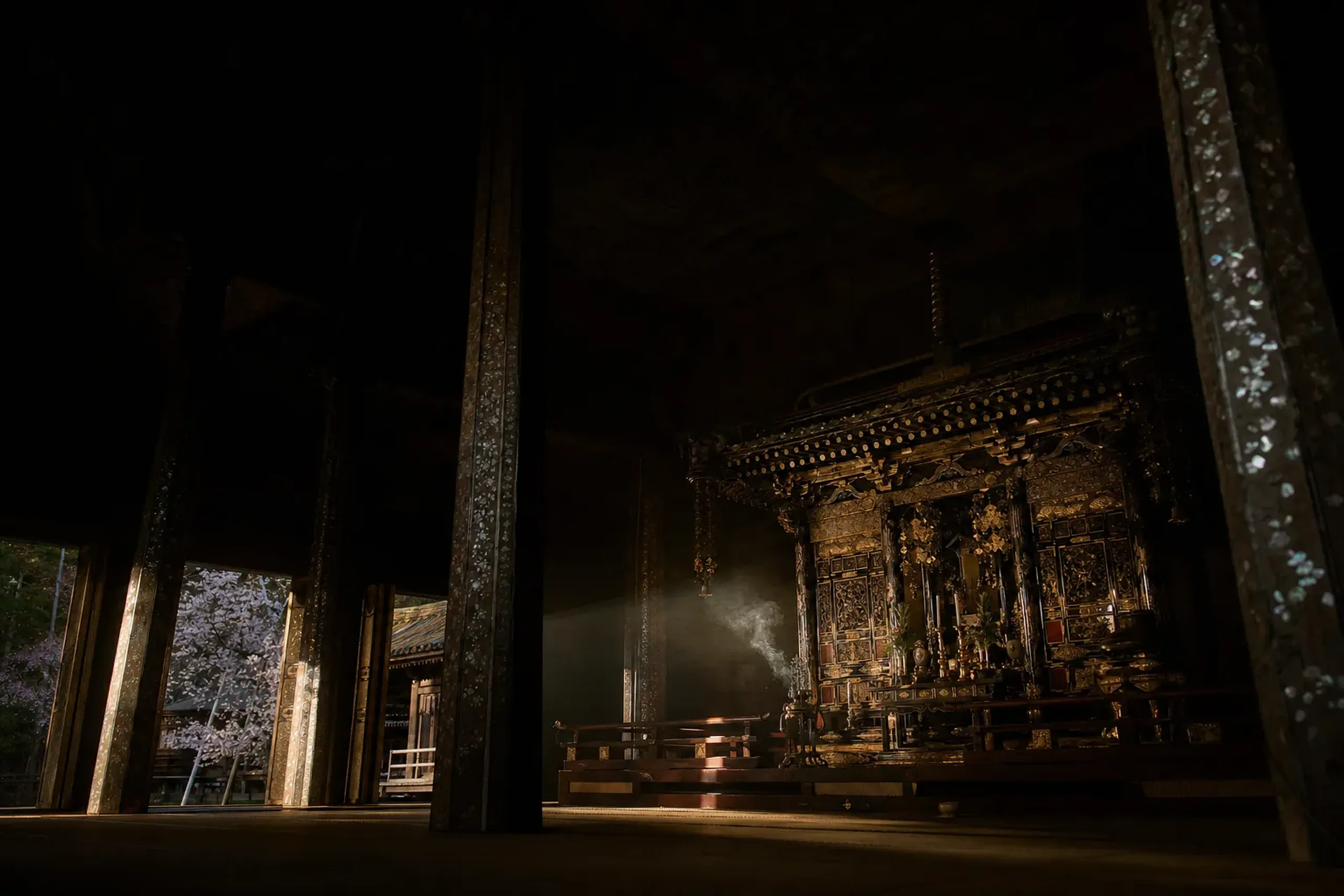
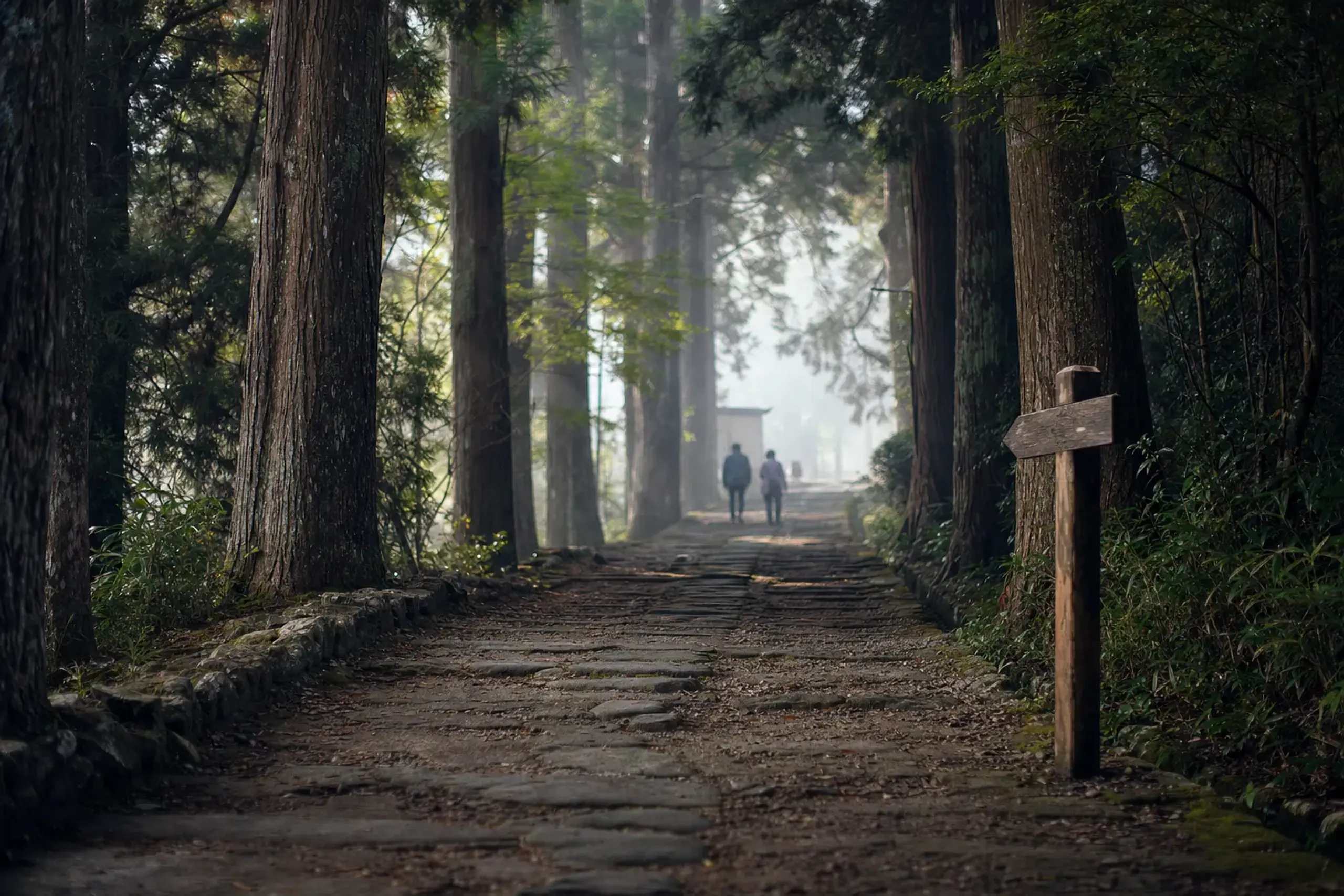
This practical point saves a lot of confusion. The approach is still atmospheric, with forested quiet and a sense of removal from the street. Then the experience tightens into an interior encounter, where gold catches low light rather than sunlight.
Chūson-ji In 2026: What To Know About Anniversary And World Heritage Dates
In 2026, Chūson-ji marks the 900th anniversary of its completion, and Hiraizumi marks the 15th anniversary of its UNESCO World Heritage registration, with commemorative programming referenced by Iwate tourism under “900th Anniversary of the Opening of the Secret Buddha.” A timely year. Not a random one.
If you prefer a fixed-date reason to travel, a Hiraizumi World Heritage festival site lists “世界遺産祭 in 平泉” scheduled for August 29–30, 2026 (10:00–16:00) at the Hiraizumi Smart IC parking area. It is public programming, and it will change local rhythm.
There are also 2026 operational updates posted by the Iwate Prefectural Hiraizumi World Heritage Information Center, including notices dated April 1, 2026 (fee revision) and July 17, 2026 (planned special exhibition), and a note that March–October 2026 is planned to have no closed days. We do not publish admission prices or daily hours here. Our team confirms current details directly when planning a visit.
How Do You Reach Hiraizumi For Chūson-ji From Tokyo?
Japan’s official tourism site notes access from Tokyo via the JR Tōhoku Shinkansen. Fast rail. Clear logic.
From there, the visit becomes about how you want the day to feel. Some guests want a simple station-to-site transfer and a measured walk. Others want a longer arc that includes other UNESCO components in Hiraizumi, without rushing or decoding logistics on the fly.
When private ground movement is part of your plan, our first recommendation is to keep transitions quiet and predictable. That usually means a private transportation plan that matches your party size and your tolerance for tight timing.
How To Visit Hiraizumi As A Pure Land Landscape, Not A Single Stop
Hiraizumi is a UNESCO-inscribed landscape concept, not a one-room attraction, and the best visits connect Chūson-ji’s Konjikidō to other Pure Land elements in town, such as Mōtsū-ji’s garden. Think in sequences. Not snapshots.
Mōtsū-ji Temple in Hiraizumi is known for its Pure Land garden, and its grounds display designations that include Special Historic Site, Special Place of Scenic Beauty, and World Heritage Site. The garden gives you spatial understanding. Konjikidō gives you the concentrated relic.
For HNW travelers, this is the difference between “I saw it” and “I understood why it exists.” Two temples can be one argument, if you walk them as a pair.
Tohoku Is Not Only Festivals And Snow: Start Here
Tohoku holds one of Japan’s most significant medieval religious sites, and Chūson-ji is the clearest entry point if you want heritage with real stakes. Serious history. A human cost.
If your picture of the region is still “summer festivals” and “winter landscapes,” we suggest widening it.
For festival intensity, see Tohoku’s Three Great Festivals in One Week. For other nearby heritage depth in Iwate, see Iwate’s Chūson-ji: The Golden Hall Is Still Here 900 Years.
Chūson-ji belongs in that same regional conversation. It is a reminder that power once sat here, prayed here, and then disappeared almost completely.
Frequently Asked Questions
Is Chūson-ji Part Of A UNESCO World Heritage Site?
Yes—Chūson-ji is part of the UNESCO World Heritage property “Hiraizumi – Temples, Gardens and Archaeological Sites Representing the Buddhist Pure Land,” inscribed in 2011.
UNESCO’s framing is useful when you plan your time. It points you toward a designed landscape idea, not only a single building.
Will I Actually See The Konjikidō Golden Hall Up Close During A Visit?
Yes—you view the Konjikidō within a modern protective outer building designed to shield it from weather, so expect an interior viewing rather than an outdoor pavilion.
That enclosure changes the mood. Gold reads differently in low, controlled light, and the encounter feels more like entering a reliquary than approaching a façade.
What Should I Know Before Visiting A Temple That Contains Human Remains?
The Konjikidō is a mausoleum holding the mummified remains of three Fujiwara leaders and the interred head of Yasuhira, so it is best approached as a burial place with a quiet, respectful mindset.
If you are traveling with children or a multi-generation group, it can help to share this context in advance. The visit lands better when no one is caught off guard.
Is 2026 A Special Year To Visit Chūson-ji And Hiraizumi?
Yes—2026 is tied to the 900th anniversary of Chūson-ji’s completion and the 15th anniversary of Hiraizumi’s UNESCO inscription, with commemorative programming referenced by Iwate tourism.
There is also a listed World Heritage festival date (Aug 29–30, 2026) in Hiraizumi. Our concierge team confirms current local schedules and onsite operations when you inquire.